Hal and Nancy's South America Tour, November 2025 [Part 2]
This is Part 2 of my (Hal's) notes on Hal and Nancy's trip to South America (Argentina, Patagonia, Chile) with Smithsonian Journeys.
Since this is a lengthy report with lots of photos (iPhone 17 Pro Max), I have broken it into two parts:
Contents – Part 2
Wednesday, November 26 — Torres del Paine
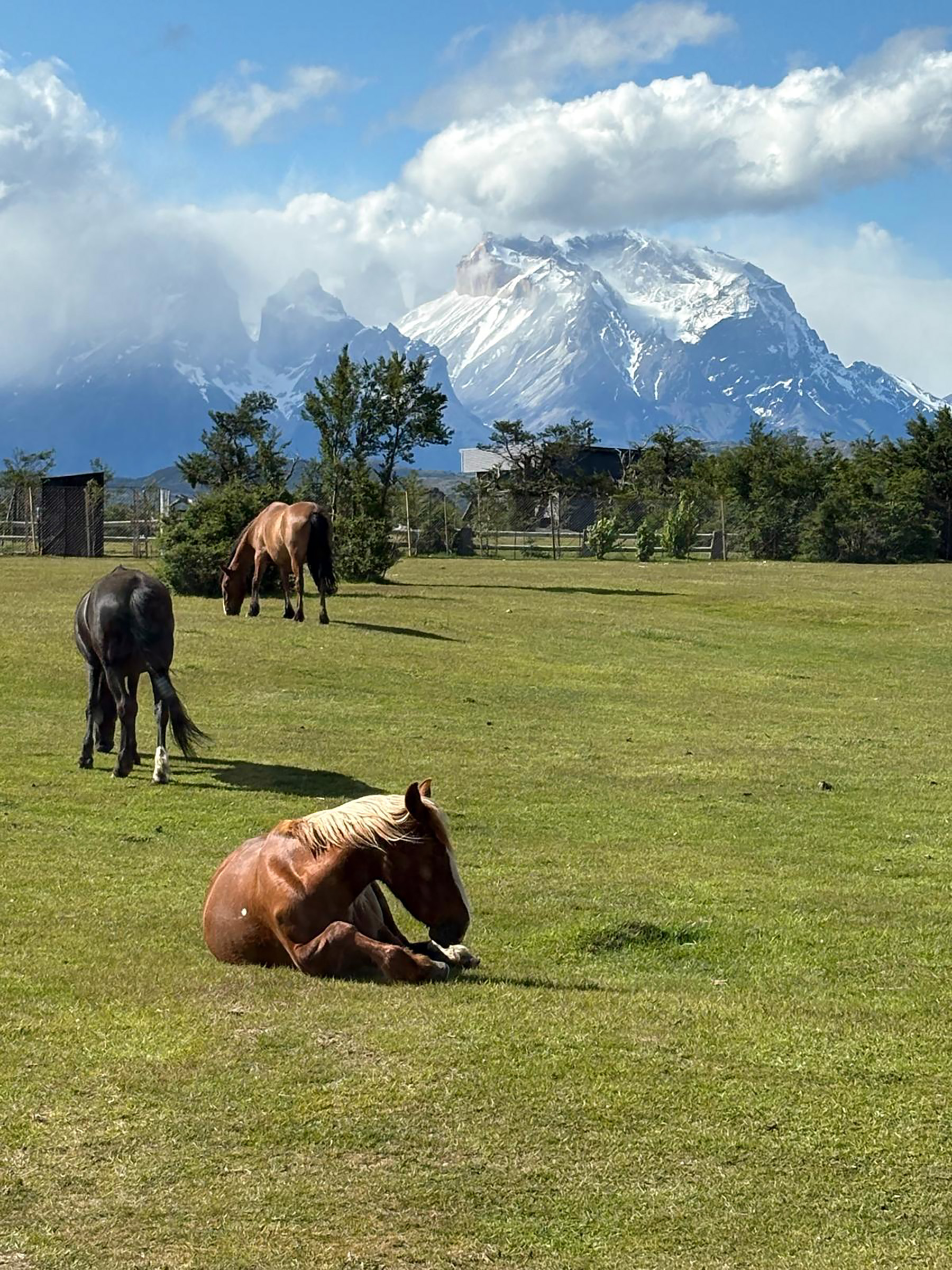
Our room at the Rio Serrano is directly facing the impressive Paine Massif, but this morning the peaks are partially covered by low clouds. Nancy was excited to see a small herd of horses being run by a gaucho. (Ray decided yesterday to buy a gaucho’s distinctive large floppy beret. I resisted a similar temptation, although Ray later reported that it was quite suitable for walking into high winds.)
We bused 50 minutes over a rough dirt road into the next-door national park and stopped at a parking area with a cafeteria called Rio Pingo. On the way, Allen briefed us on the two major rocks found here: granite and shale. He cast some shade on the kitchen countertop industry that calls its material granite. He described some of his scientific field work in Yosemite, using uranium-lead decay analysis, that changed the prevailing theory about how magma reaches the surface.
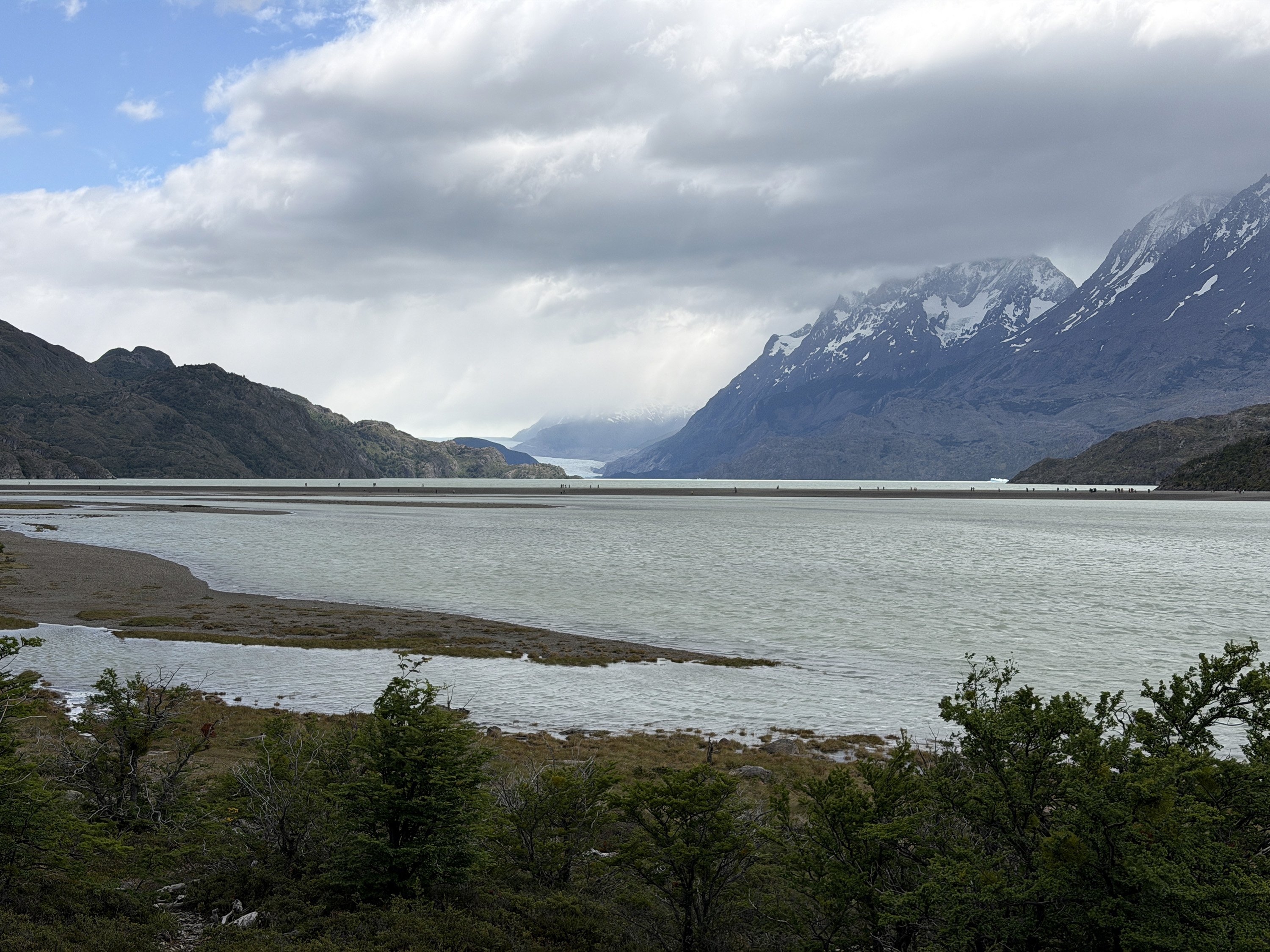
We started a walk scheduled for two hours. We passed a few orchids and other flowers and eventually reached Grey Lake, which was cut off at its southernmost end by a berm (not a terminal moraine, but probably wind generated); the southern portion below the berm was a dry and pebbly beach, somewhat like the shingle on Normandy beaches. We walked on this about a half mile in the cold, heavy winds and then Nancy and I bailed out, having been promised only a glimpse of a sliver of Grey Glacier ten miles away. We’re willing to endure discomfort on the way to something interesting, but this wasn’t that. So we returned to the cafeteria to relax with coffee and tea (and free trail mix from the hotel minibar).
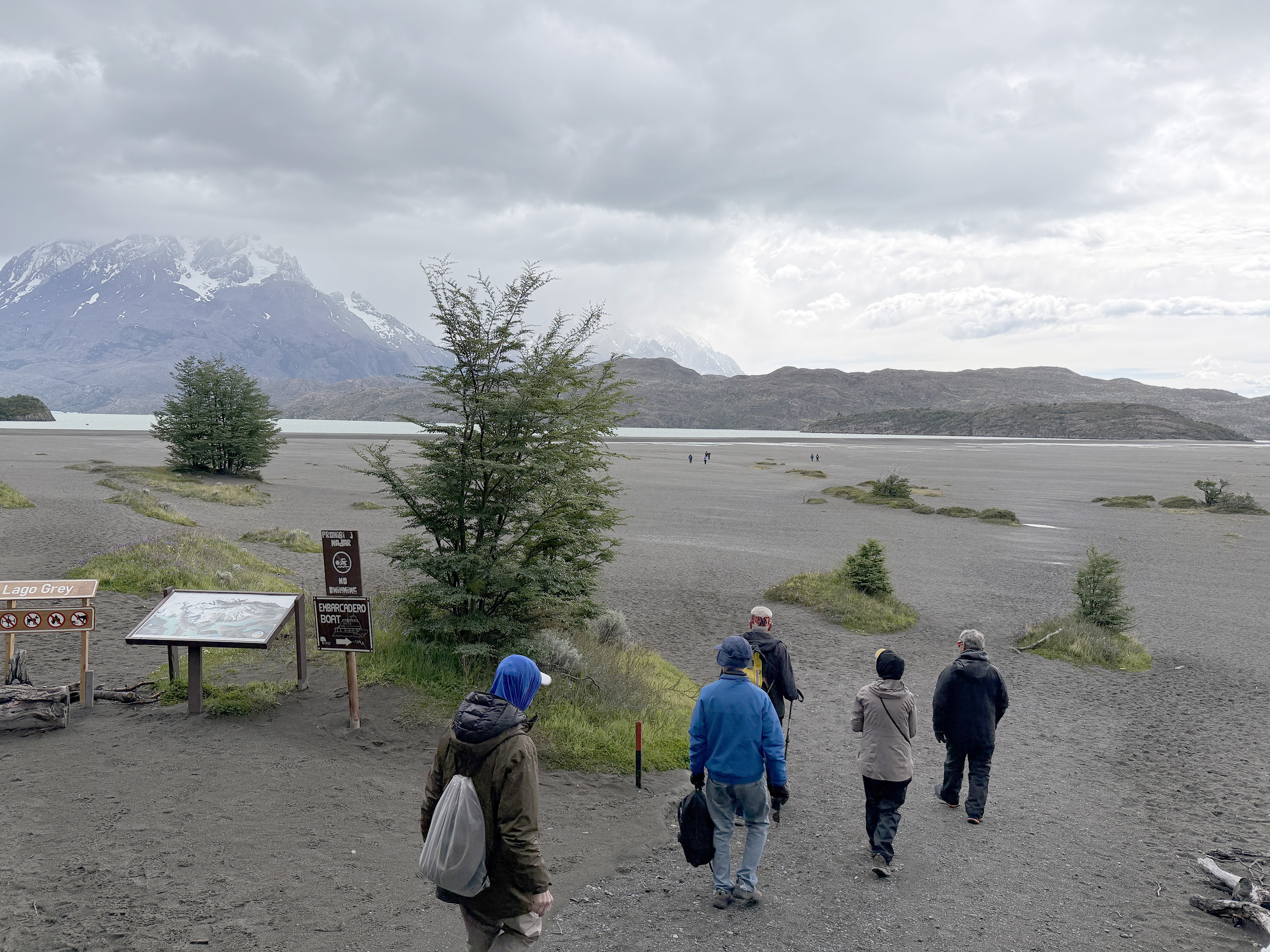
Once the rest of the group returned—an abbreviated walk for them, too—we took another walk of about 20 minutes through the forest to the Lago Grey hotel, where we had a nice lunch. We were able to see the entire area of the long walk from a distance. After a 30-minute rough drive to the park ranger station, we stood around a 3-D map to discuss how the massif was formed.
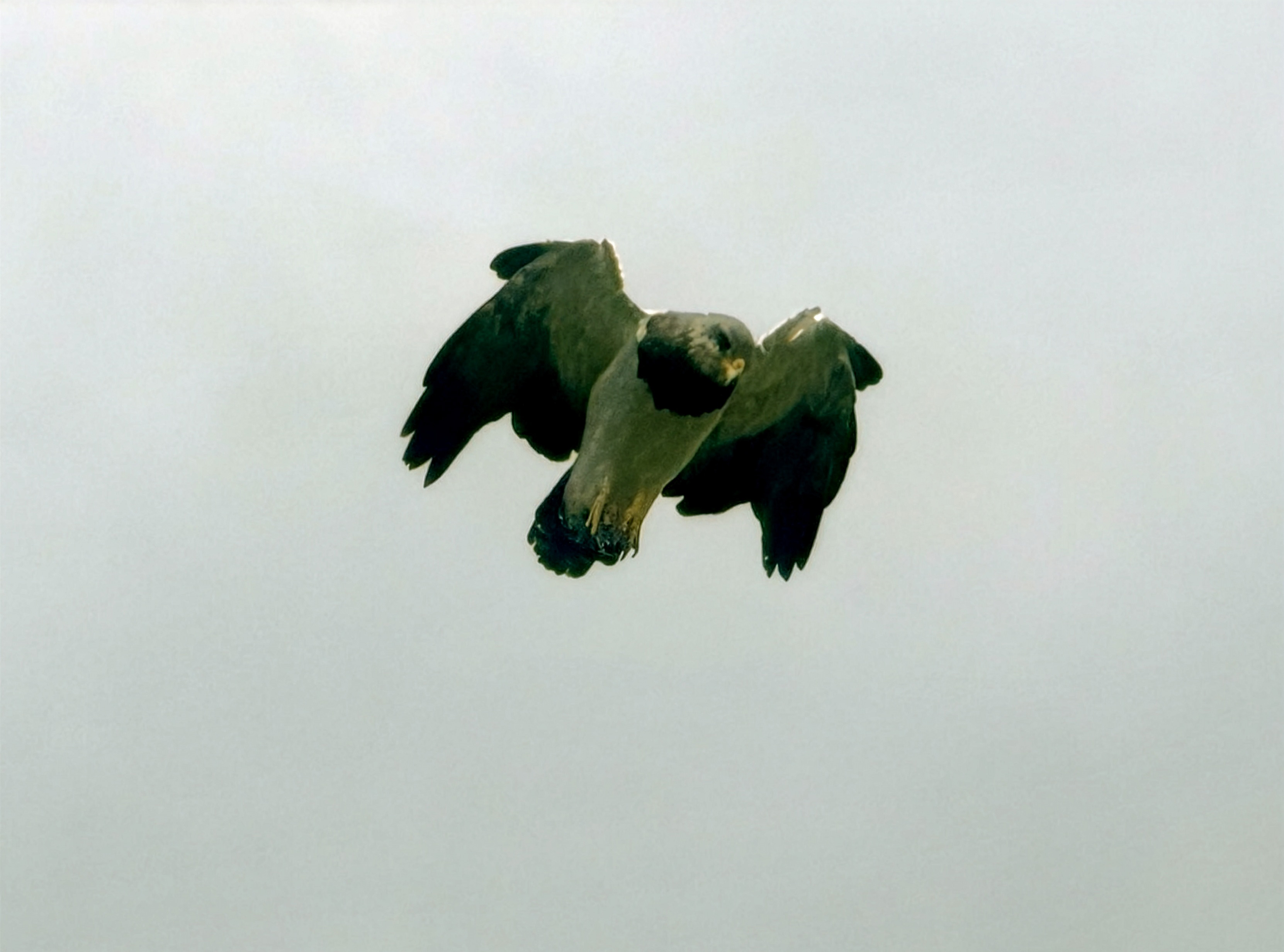
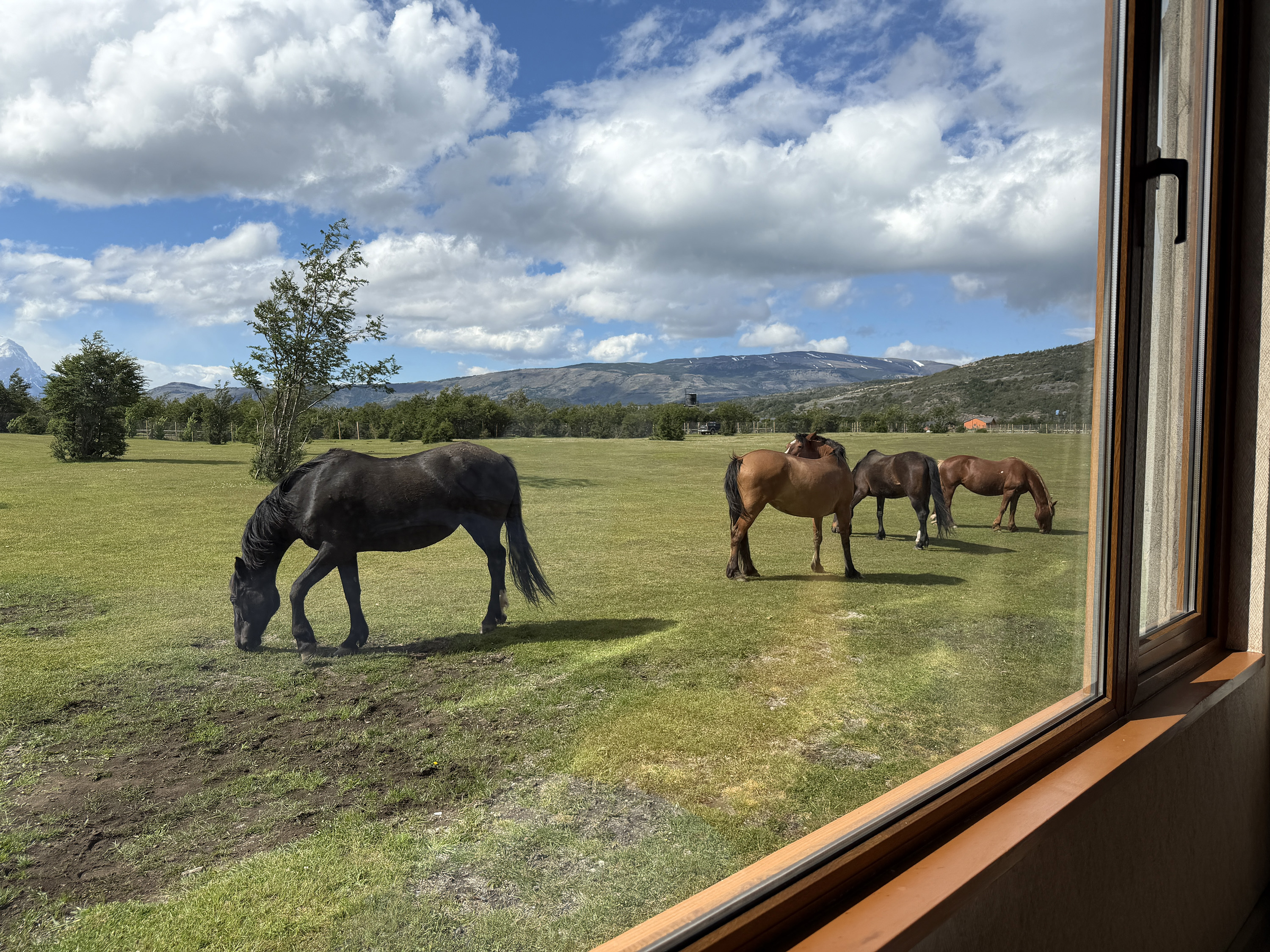
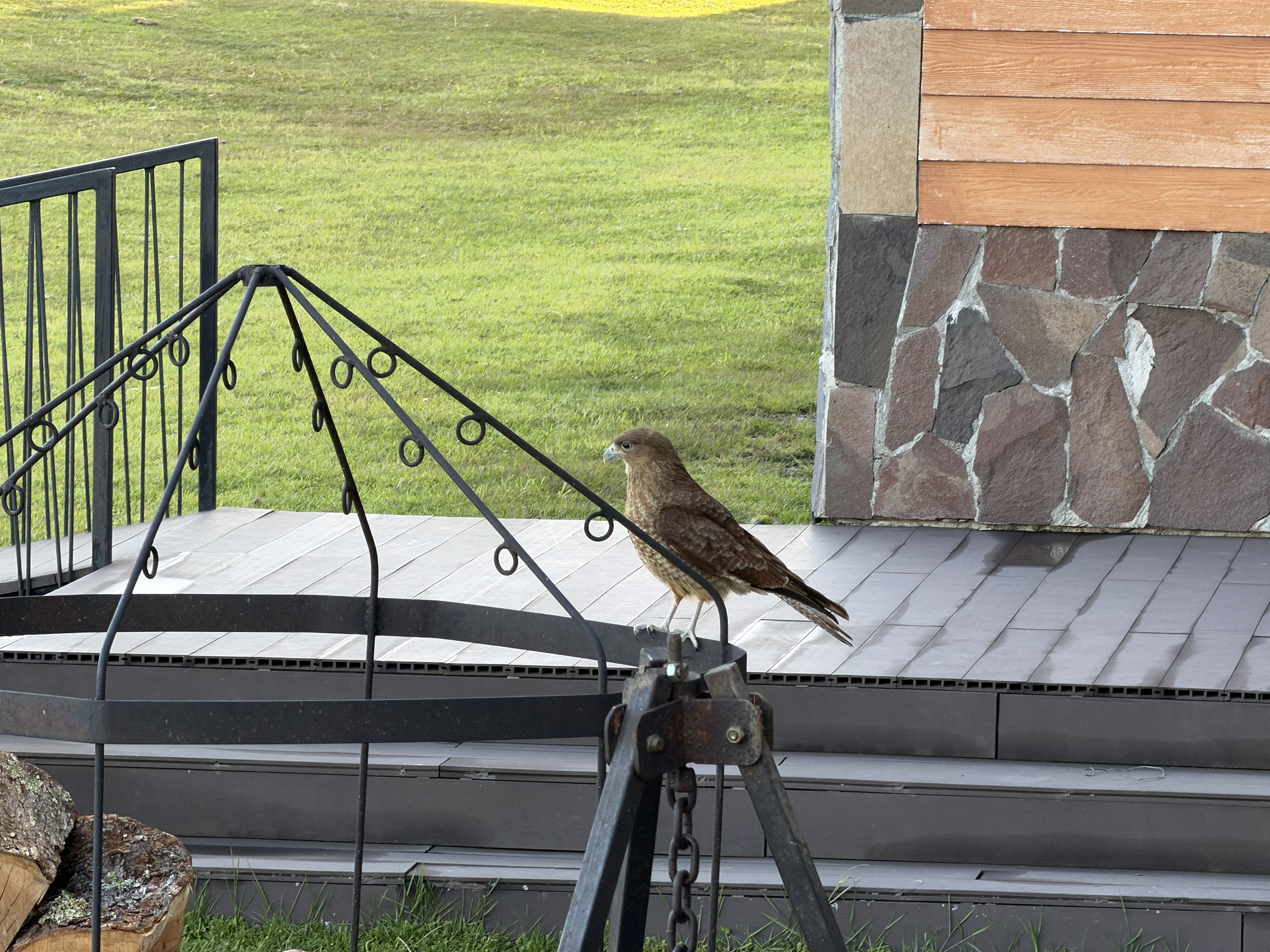
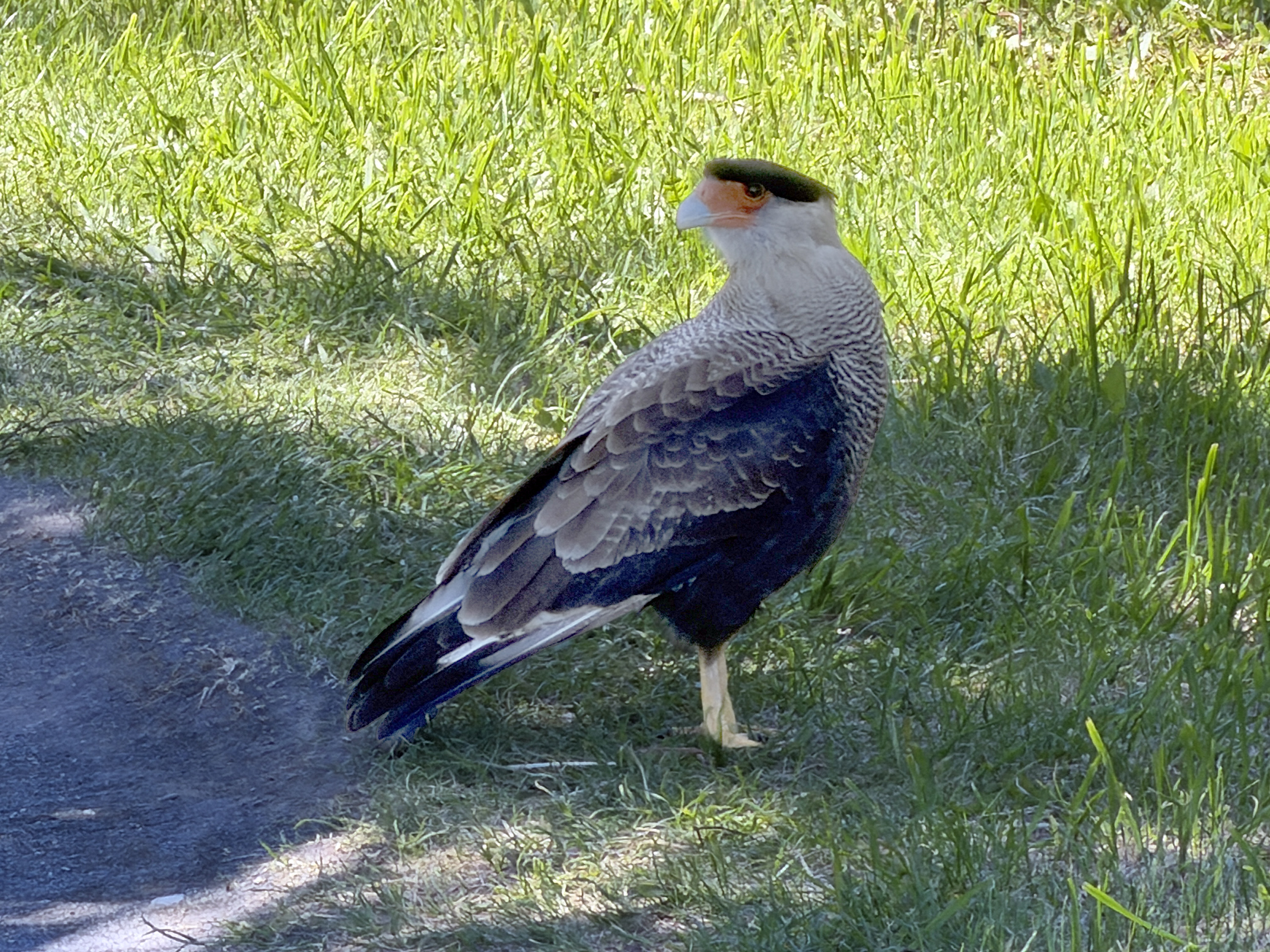
We returned to the hotel. On the way, we stopped to see a black-chested buzzard-eagle that was interesting because it hovered in the wind without moving an inch, apparently waiting until our bus moved away from its target. In our room, we enjoyed watching a small herd of horses grazing right outside our window. At 6, Allen delivered another lecture, “Shake ‘n Bake: Chile in the Pacific Ring of Fire,” about earthquakes and volcanoes. Dinner was in the upstairs restaurant, a little more formal. Excellent.

Thursday, November 27 — Torres del Paine
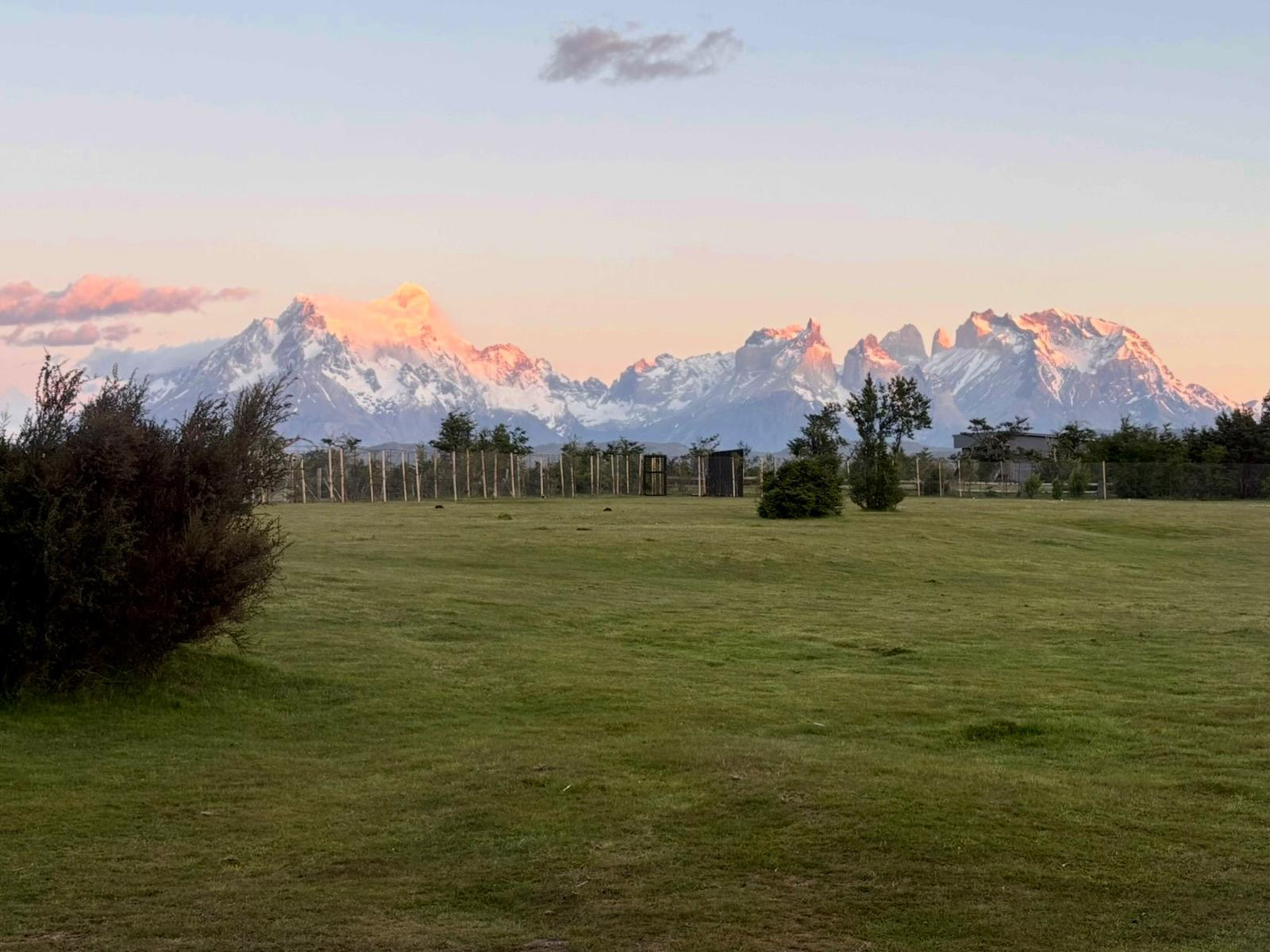
Beautiful sunny weather and an absolutely stunning view of the Massif from our room. The dawn photo below was shared by Christy. Happy Thanksgiving! Today will be a long one visiting numerous places in the park.
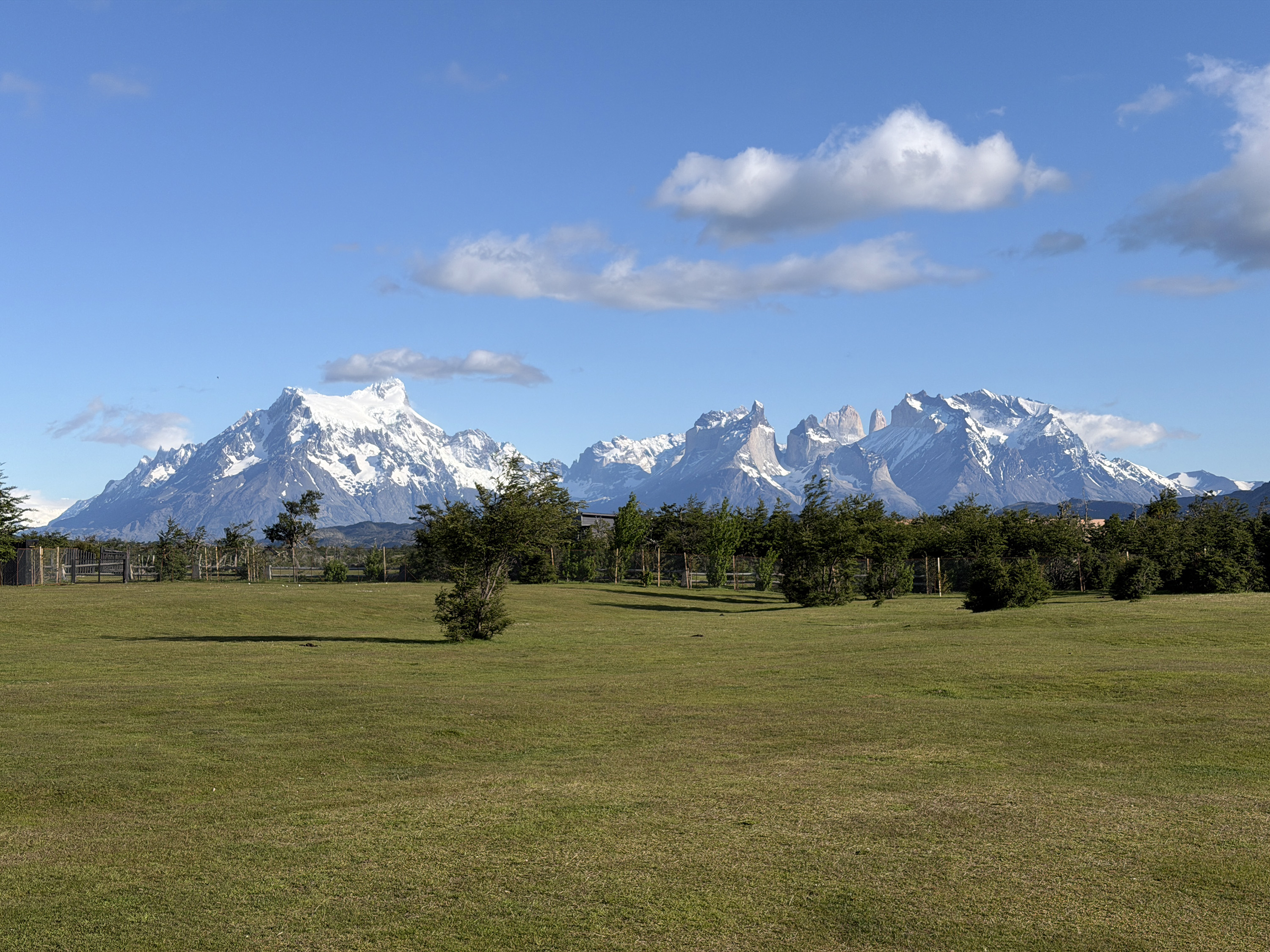
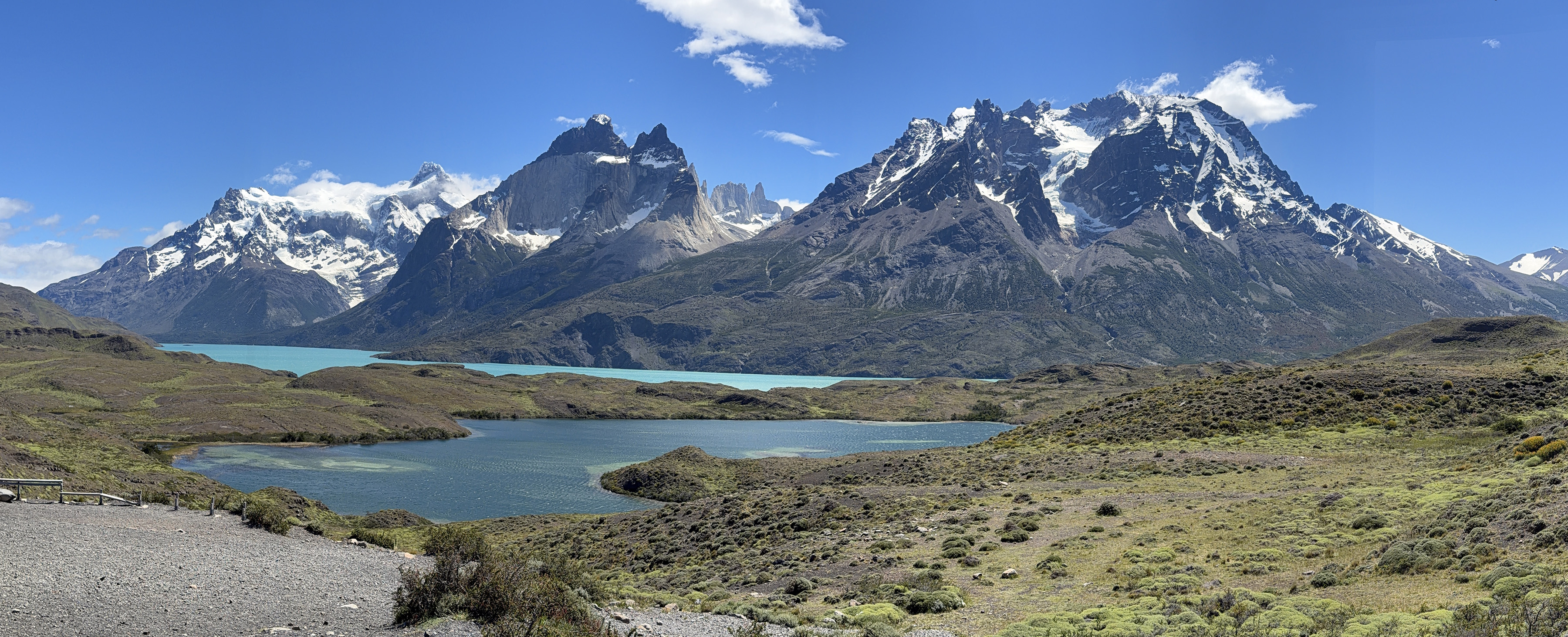
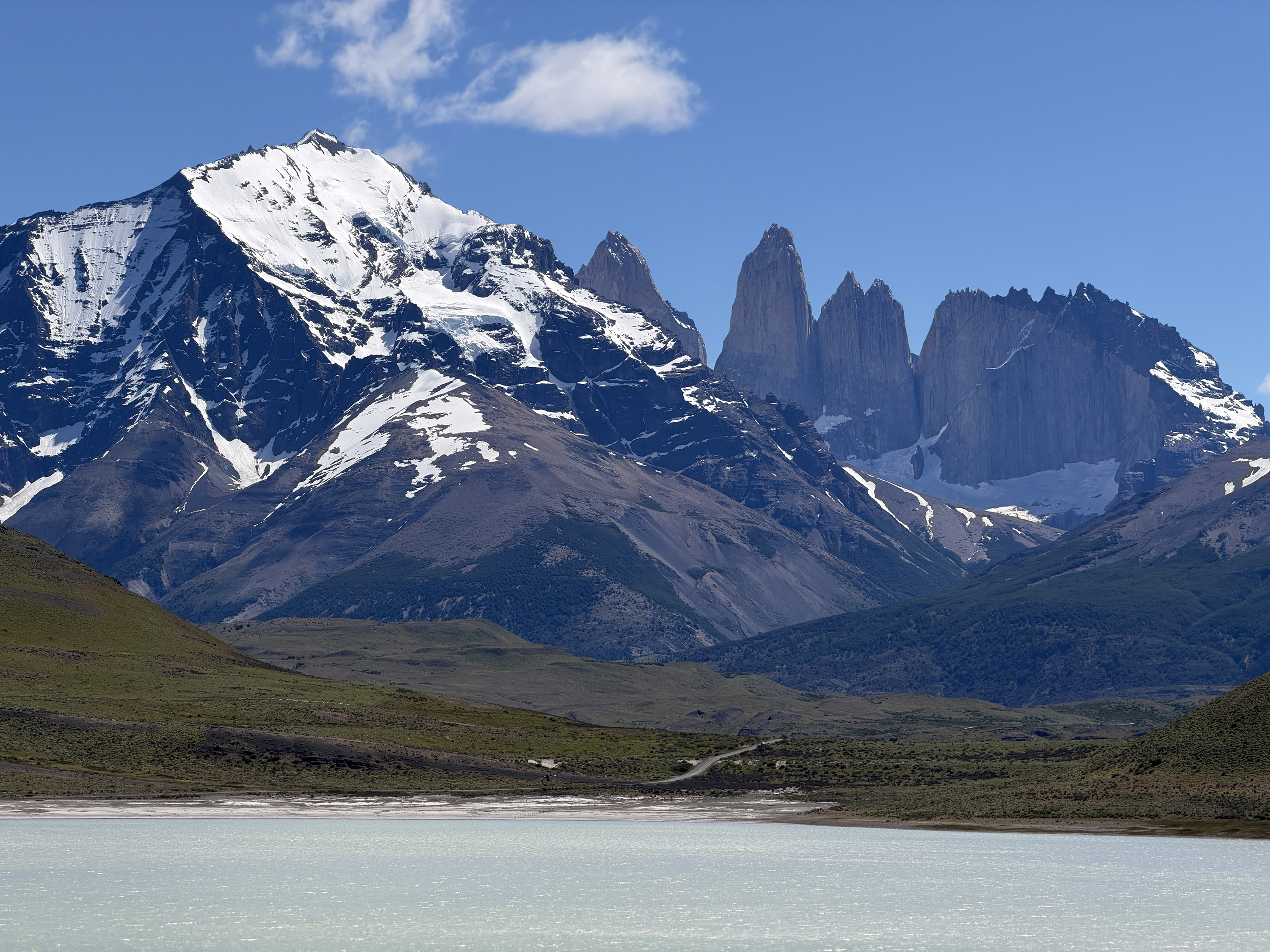
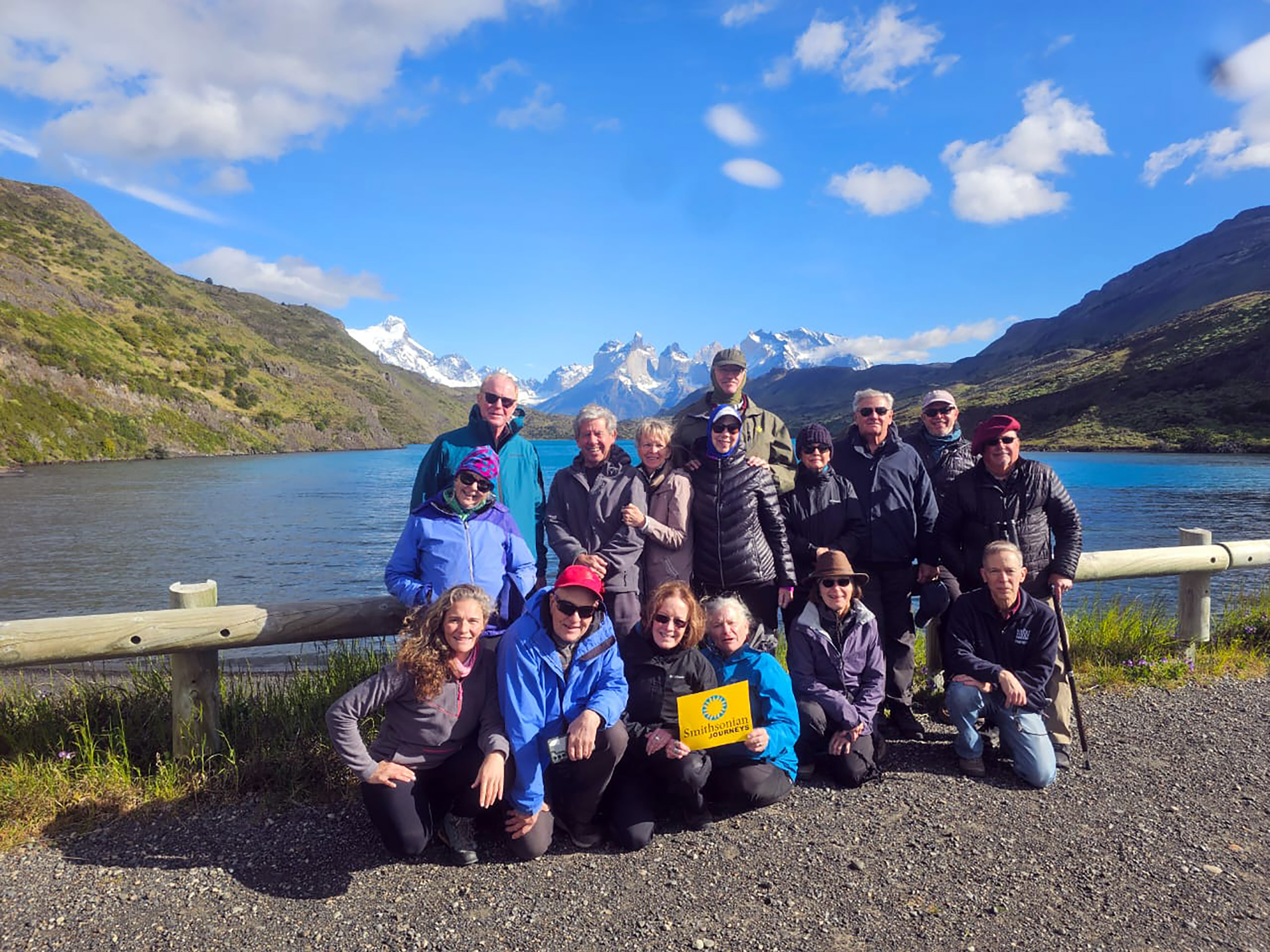
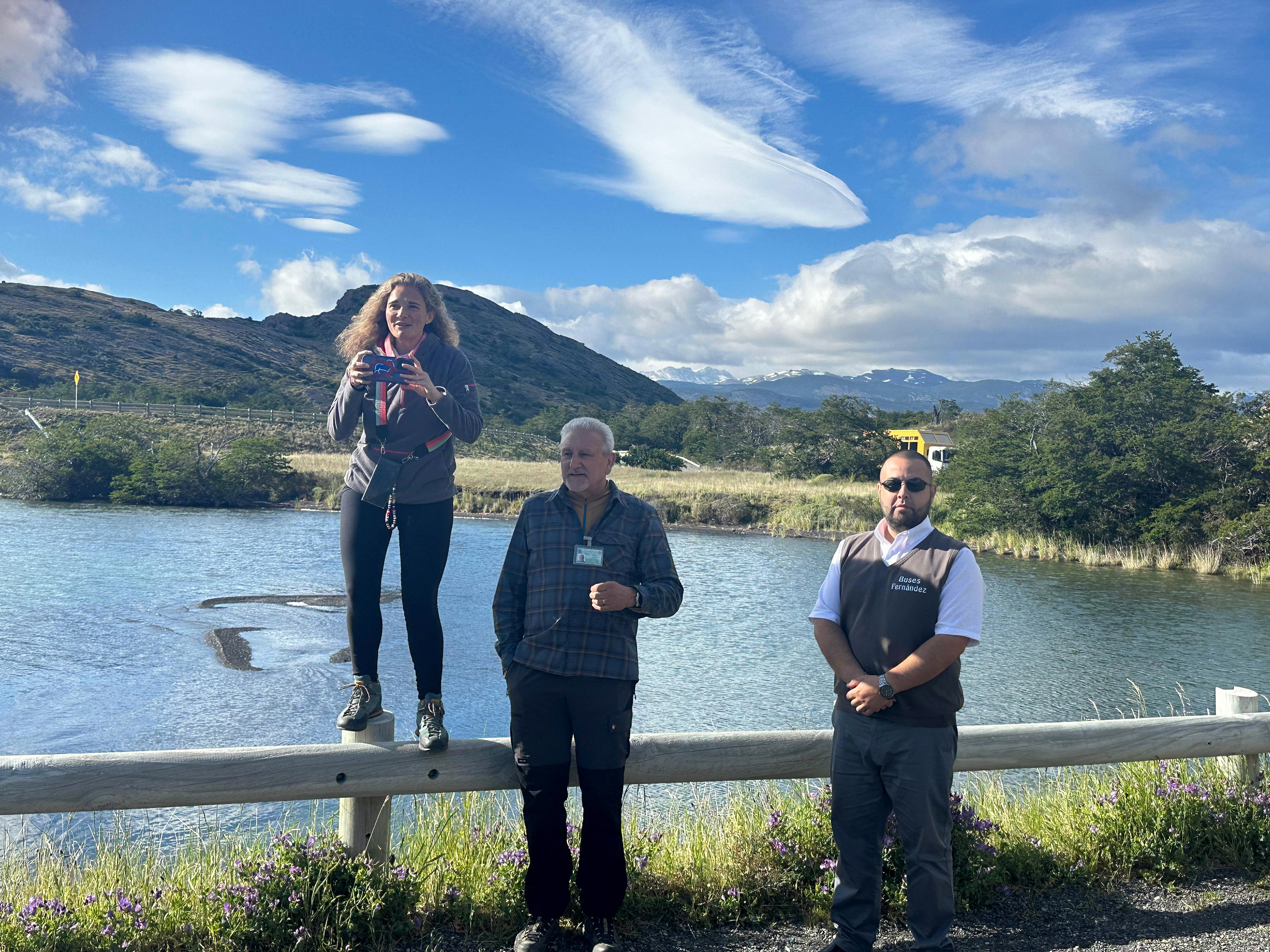
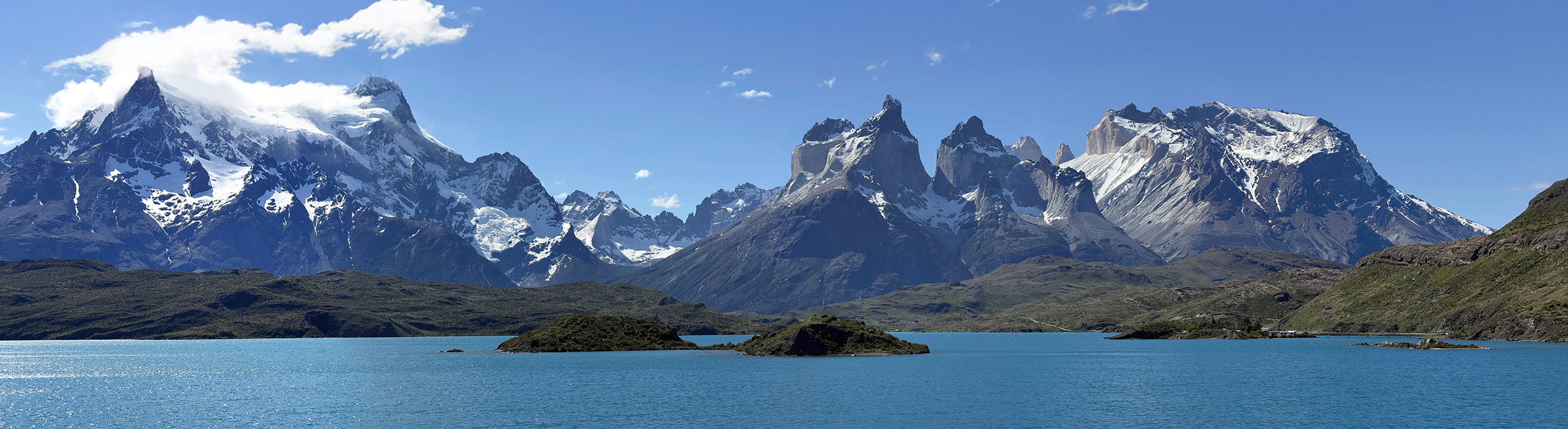
We drove into the park and stopped at Webber Bridge, where we enjoyed a nice view and took some group photos. But better views were to come. At Lago Pehoé, we had fantastic views of the towers and a gorgeous blue lake colored by glacial flour. We were intrigued by a perfectly round lenticular cloud that looked like an alien spacecraft hovering over us.
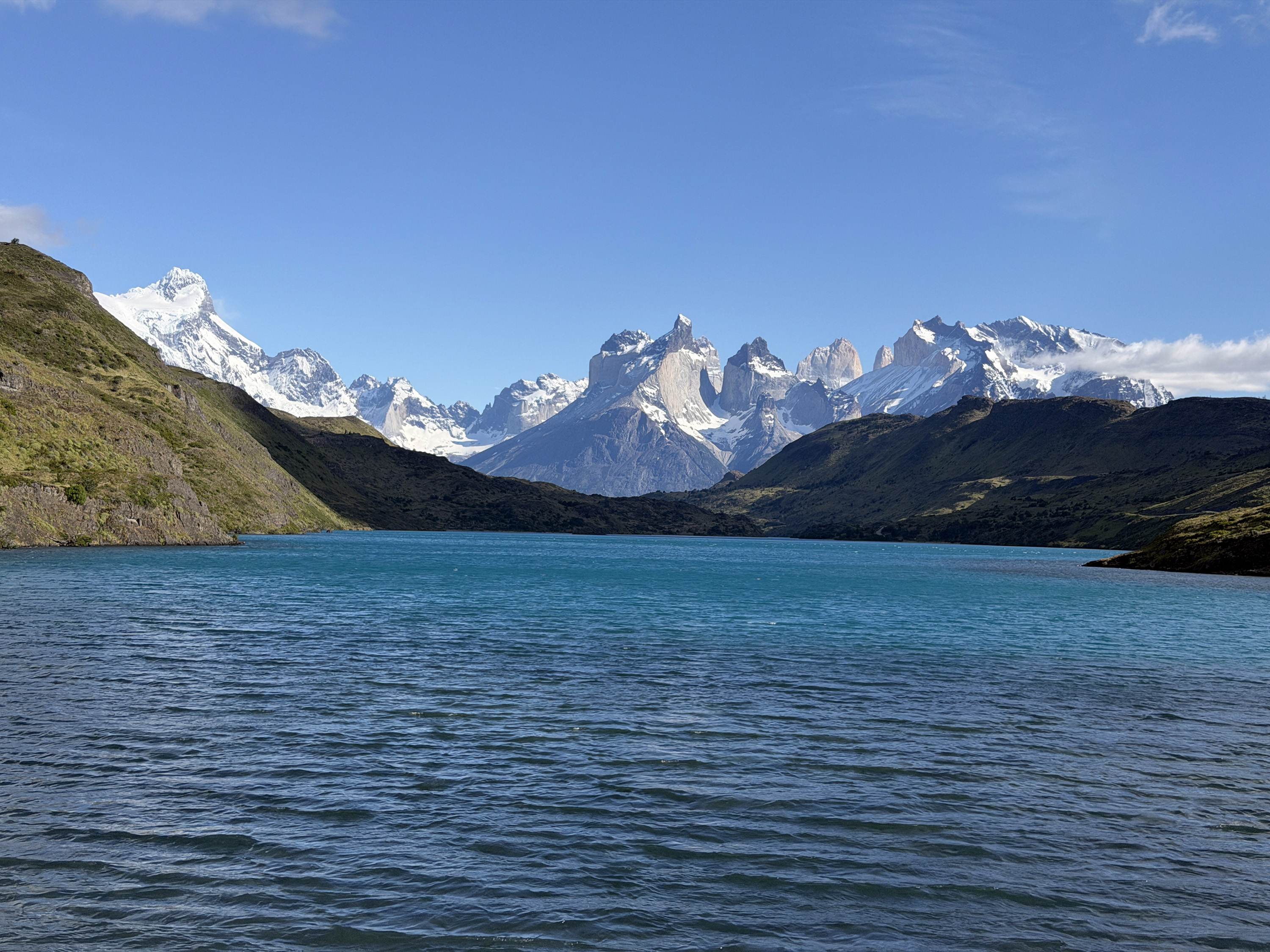
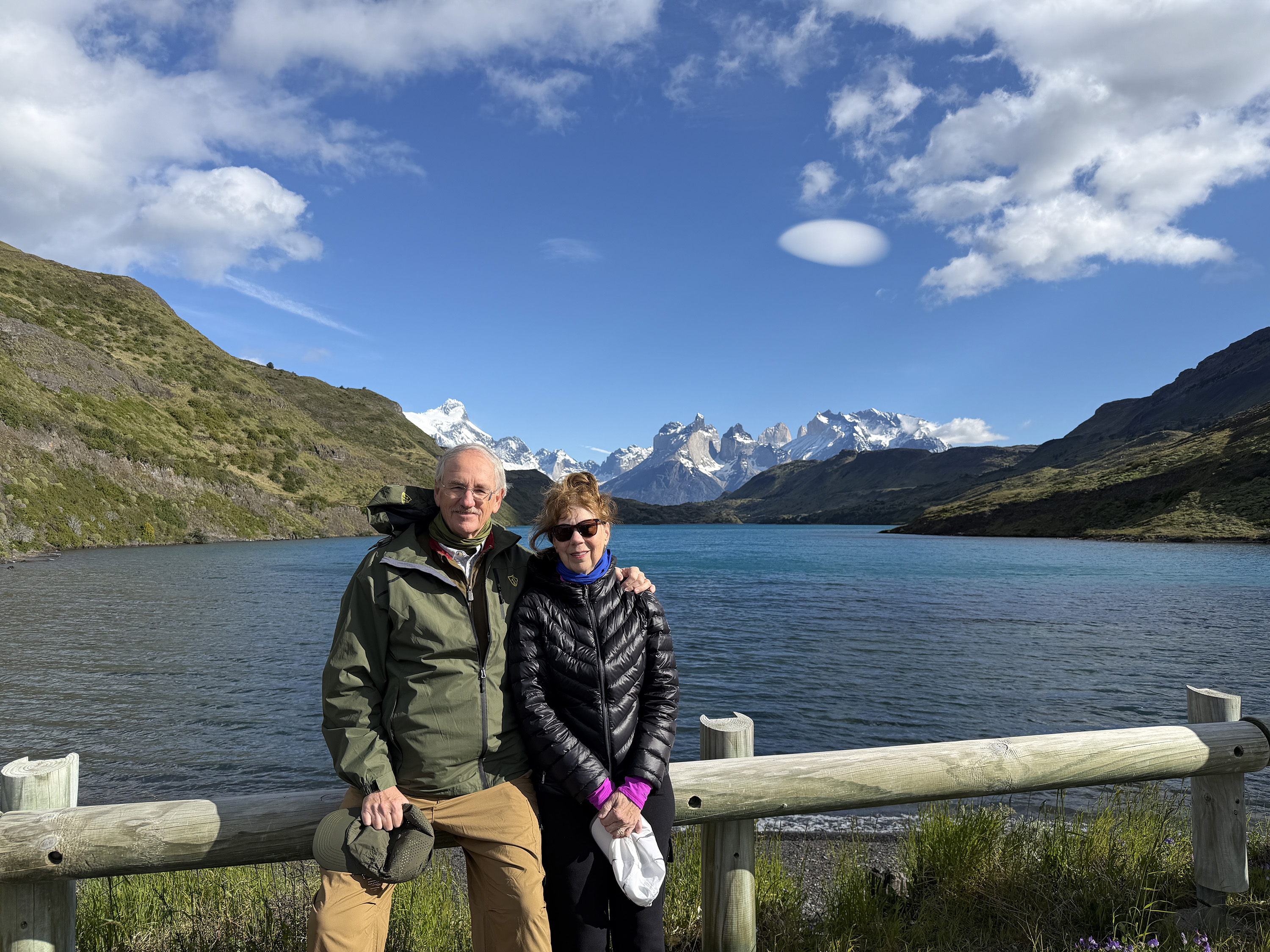
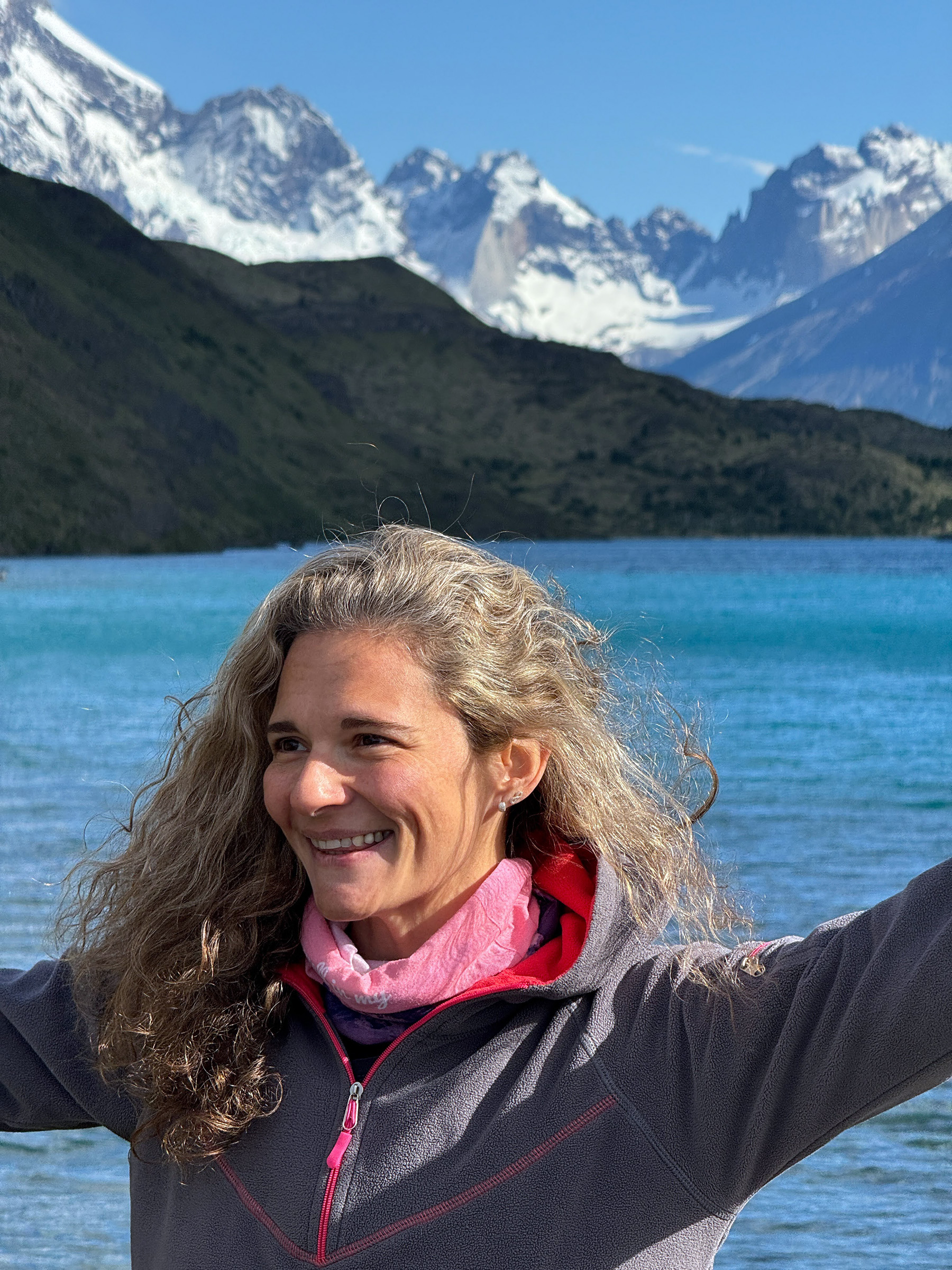
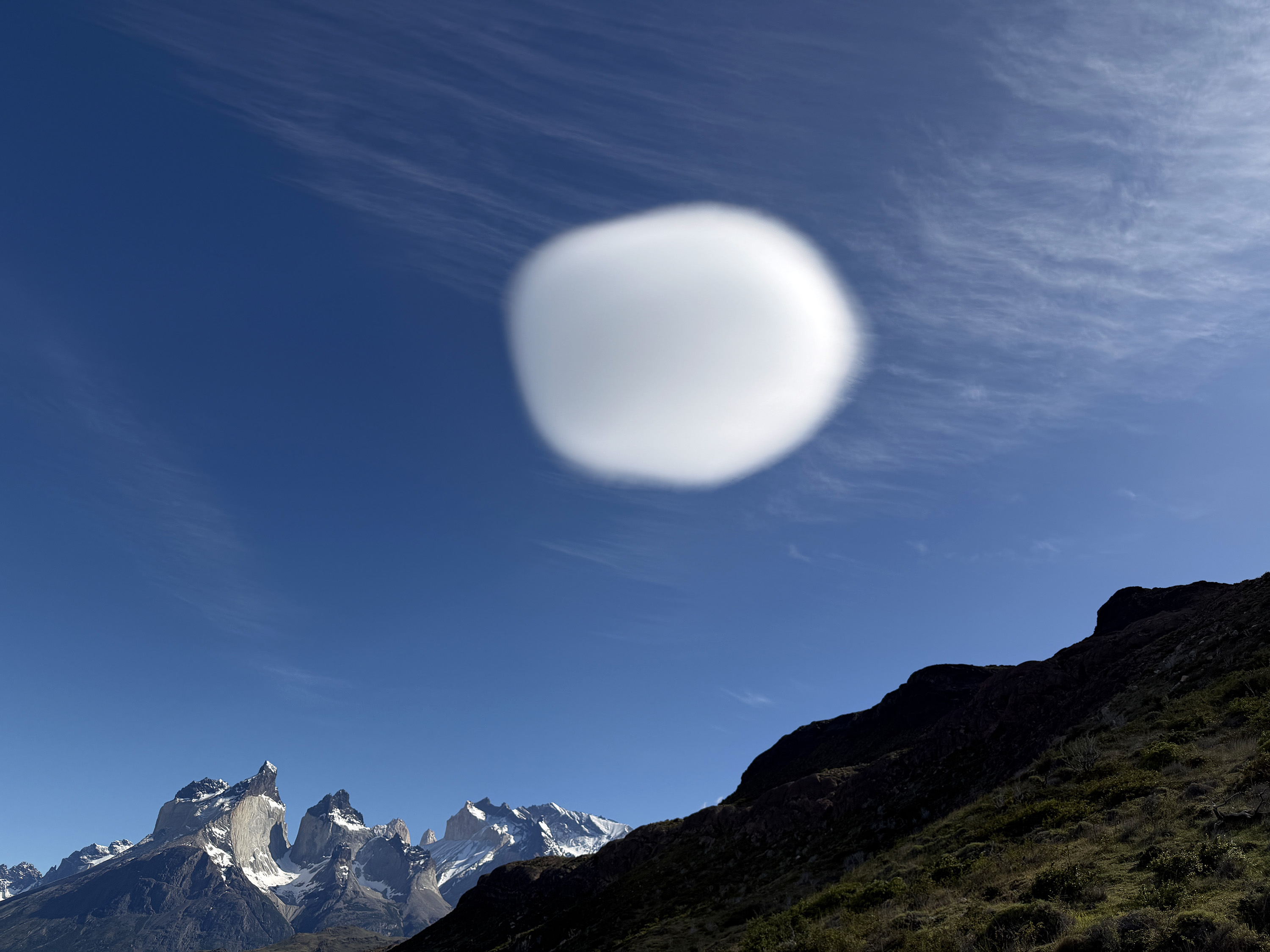

A photo of Cerro Espada was two-toned with a light granite underneath and a darker layer above that was originally shale but got cooked into metamorphic rock. This was an elevation above the layer carved by the glaciers.
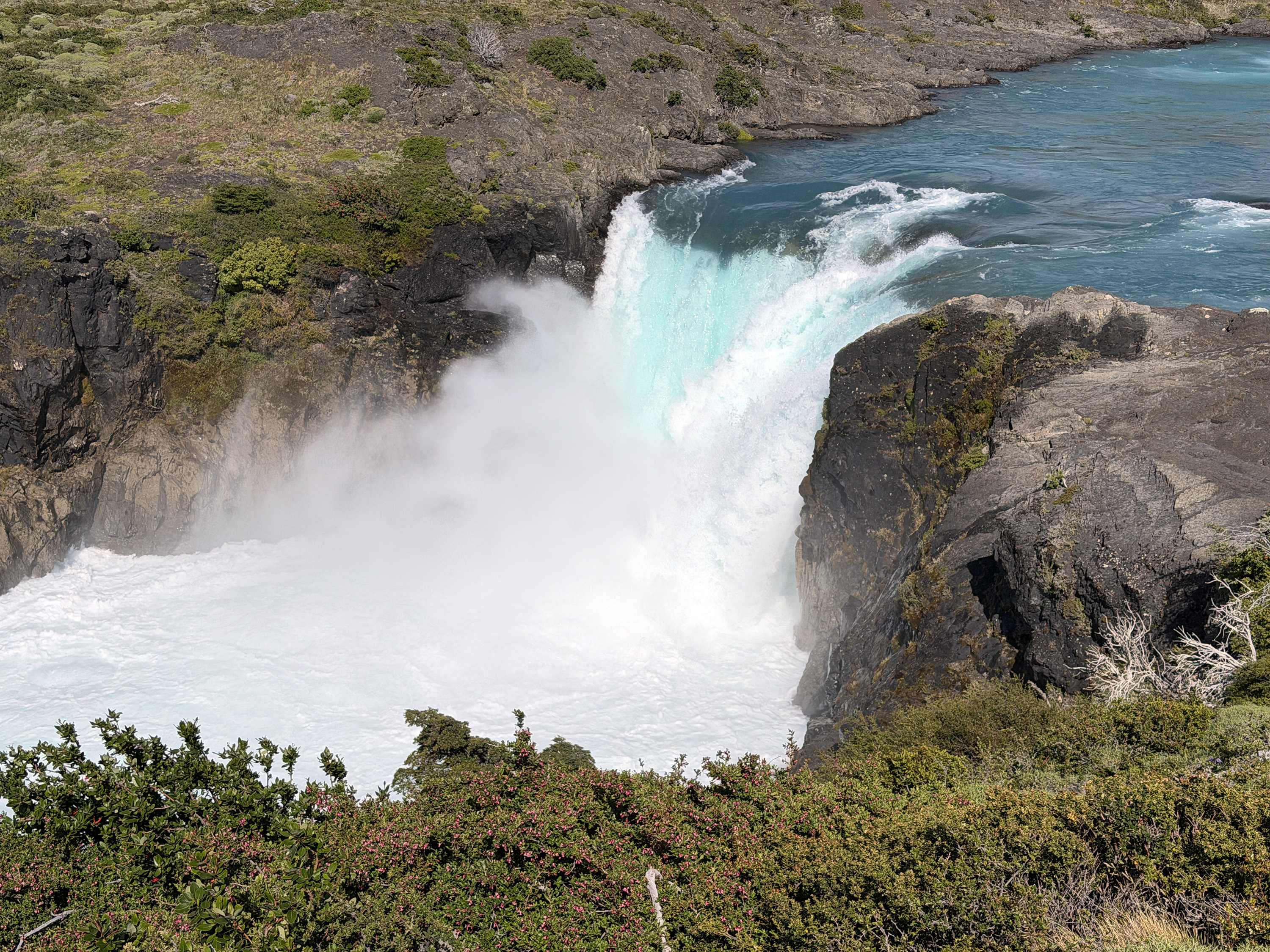
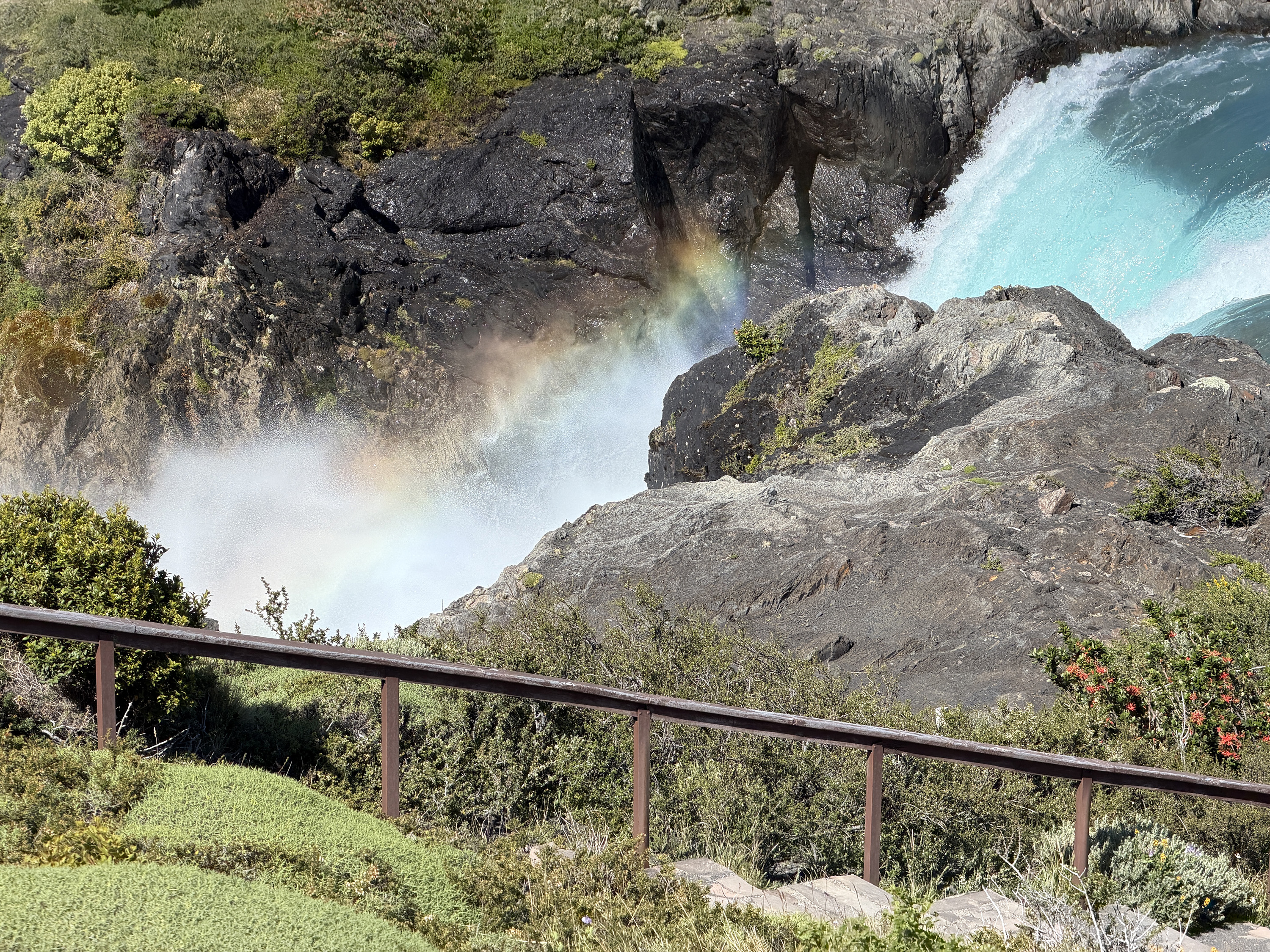
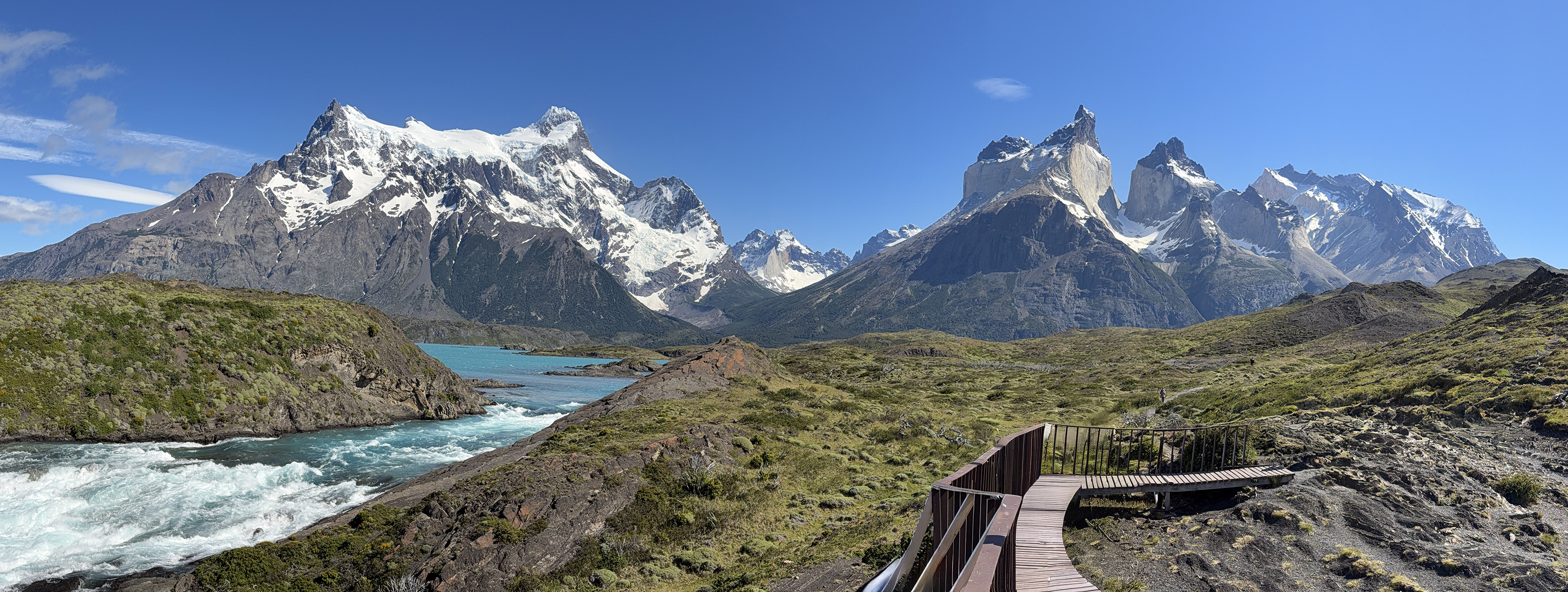
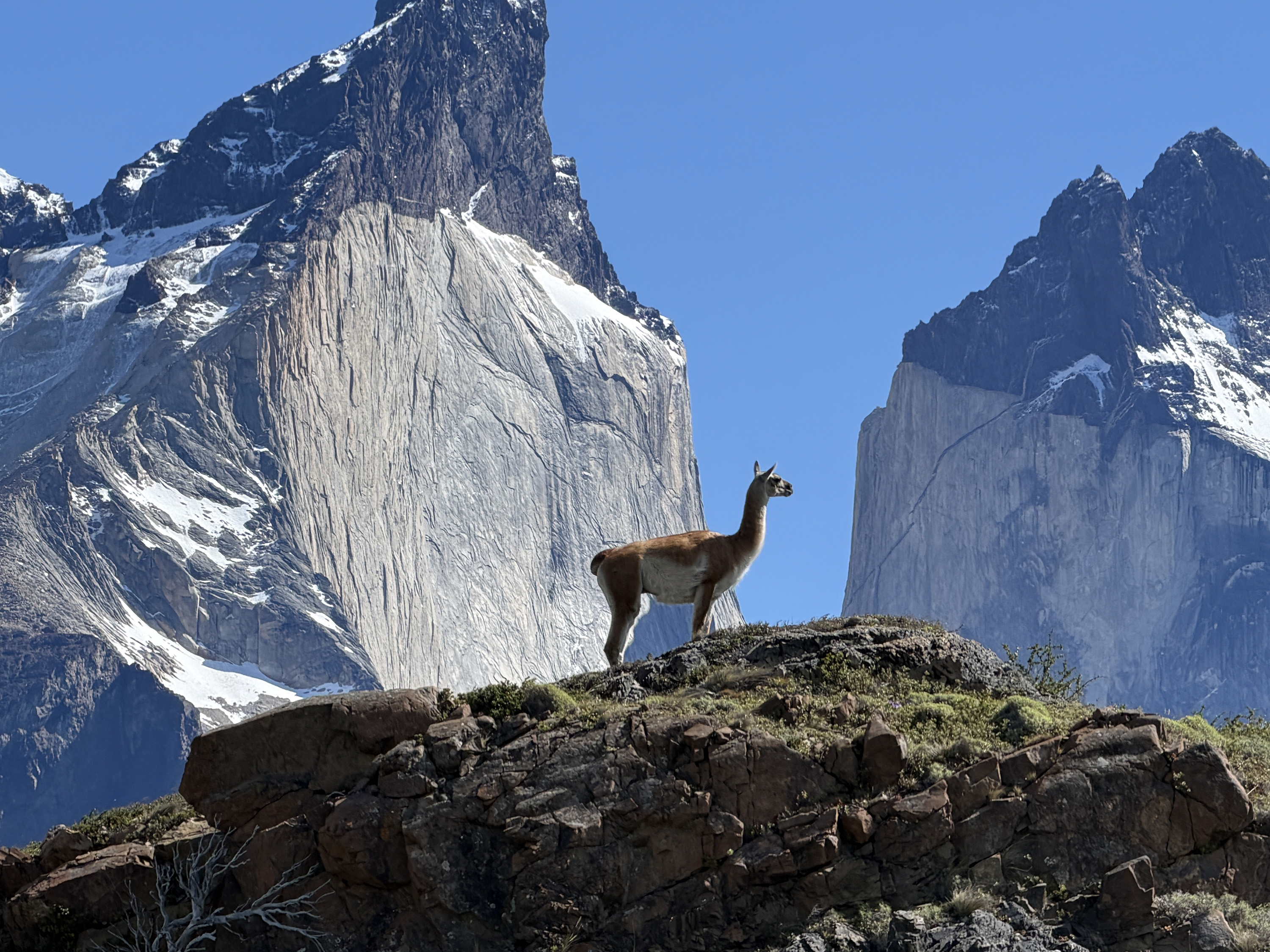
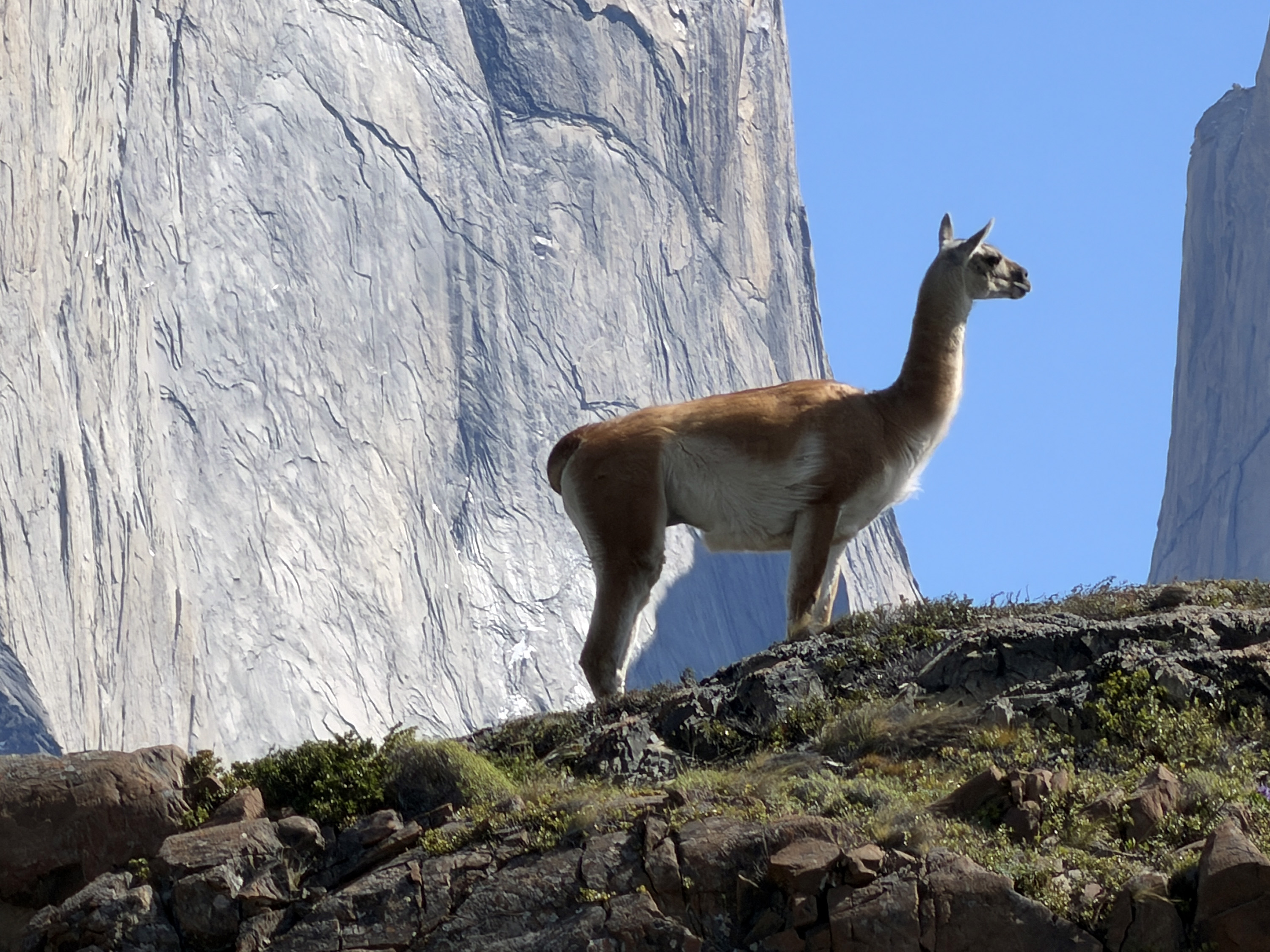
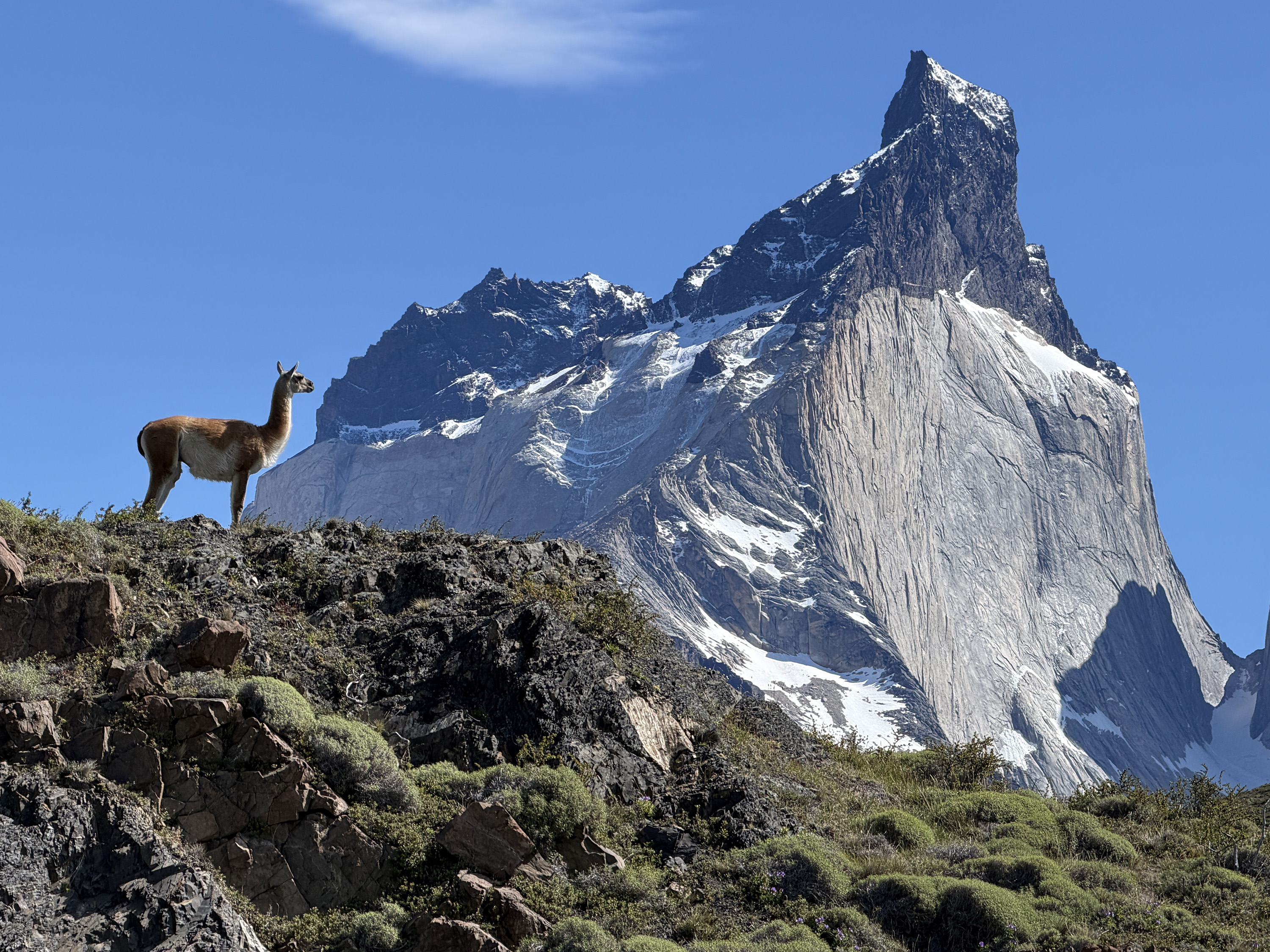
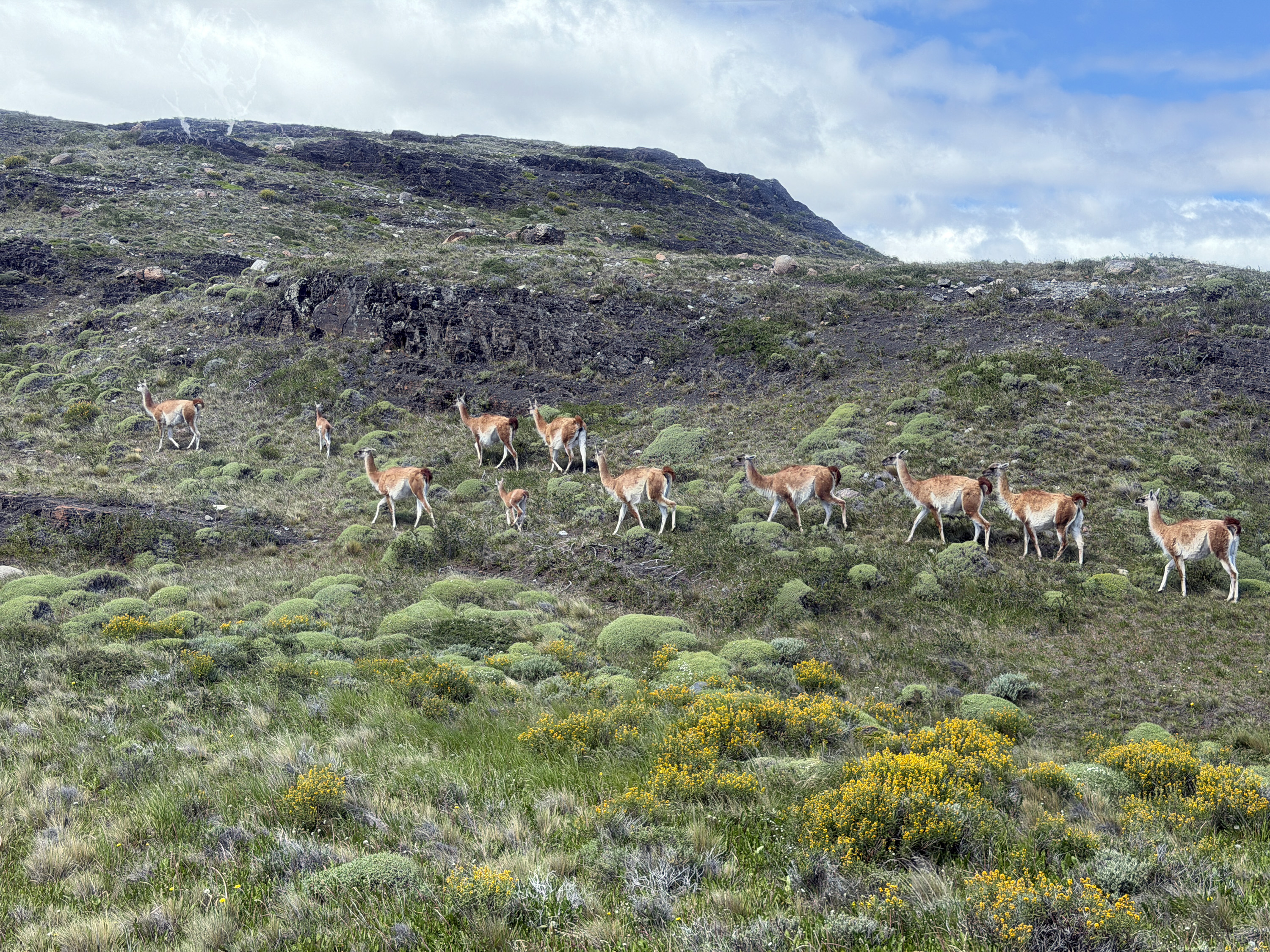
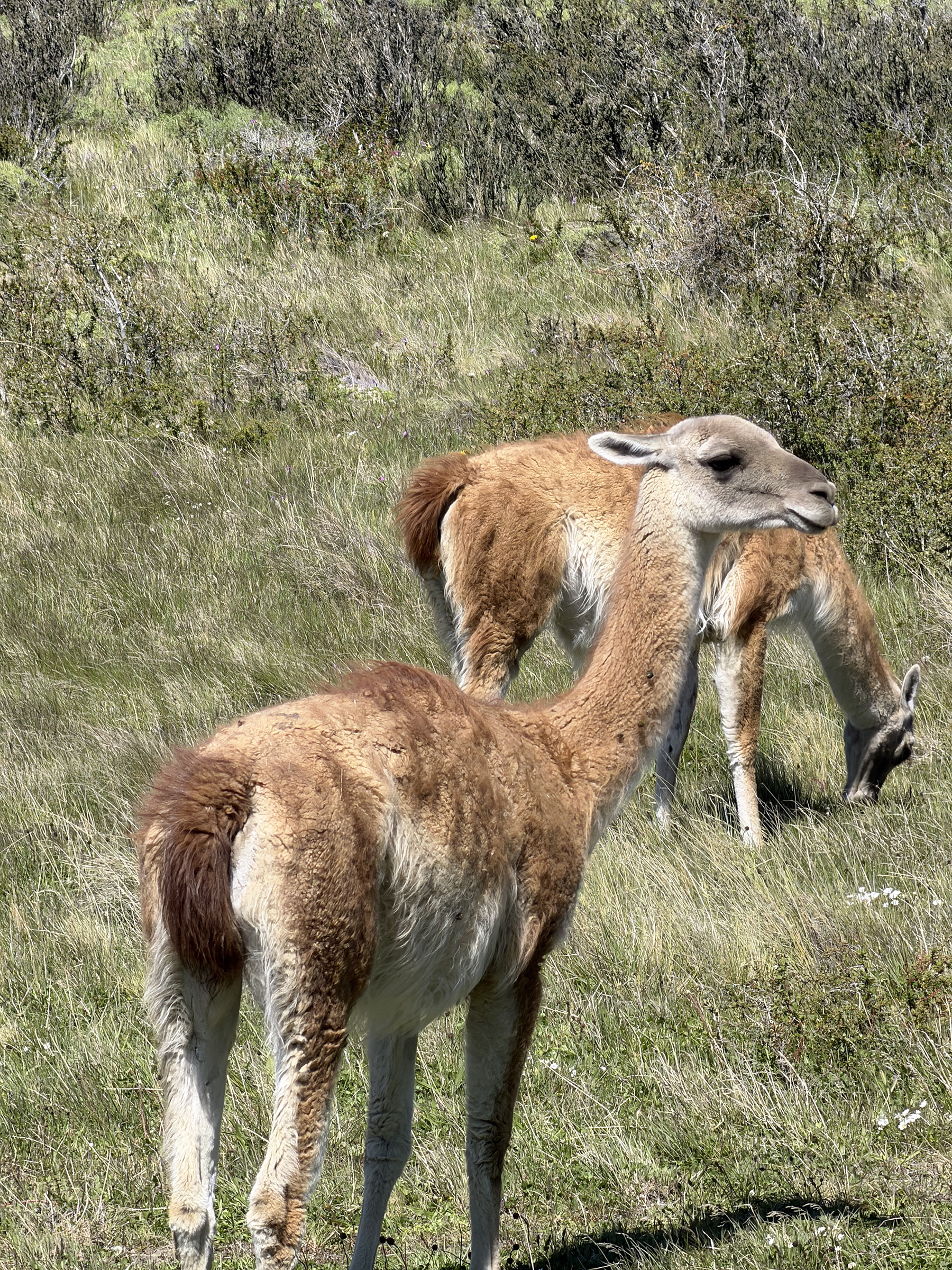
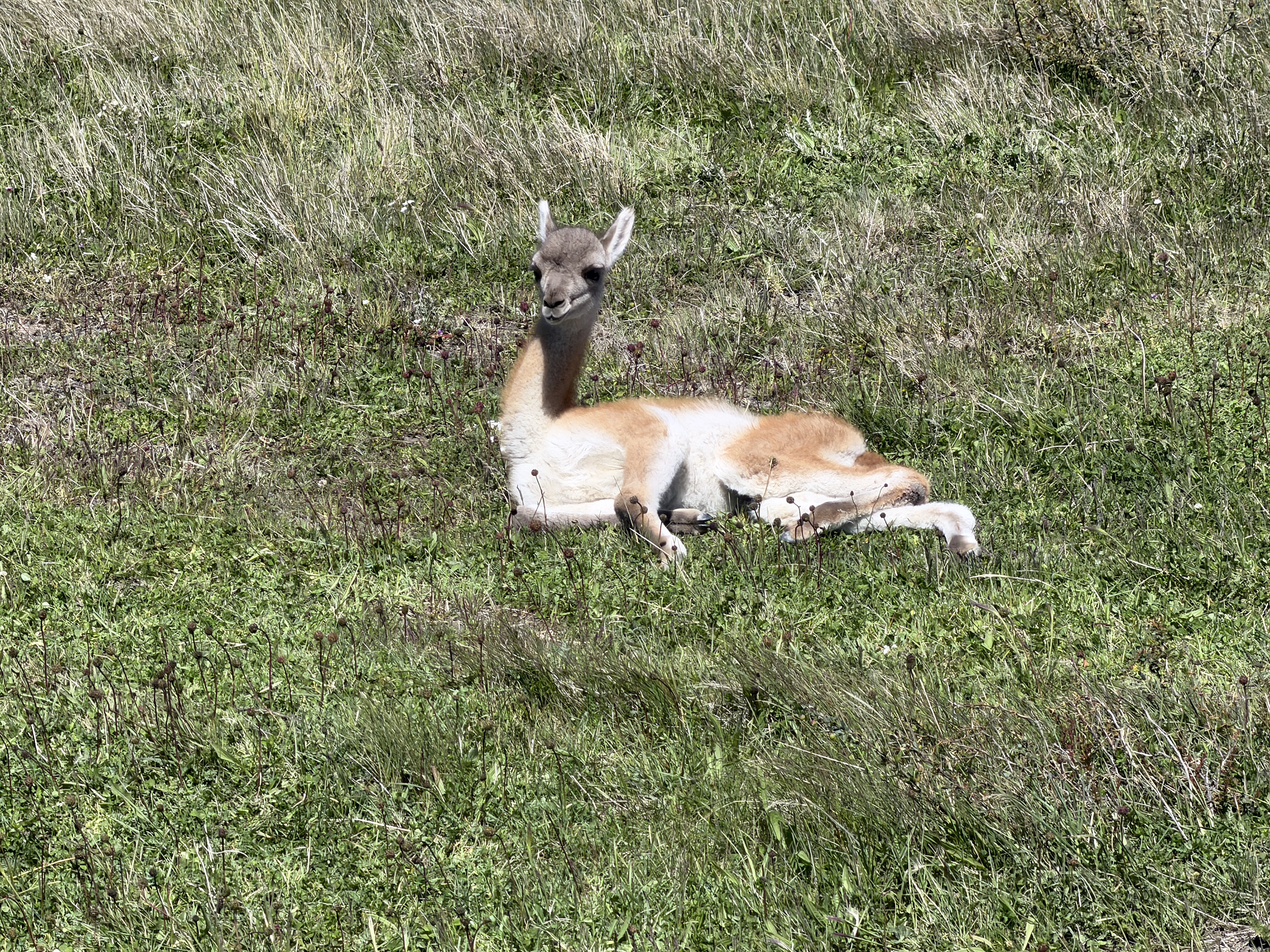
We started on a two-hour walk. After a half mile, we reached an overlook of the Salto Grande waterfall, quite vigorous. The views of Paine Grande (10,006 feet above sea level) and the towers (8–9,000) were spectacular. I walked another short distance and had fun watching a family of guanacos (a camelid related to the larger llama) prancing around. There was a mighty male standing guard on an outcropping above the herd, a sentry protecting his family. But Nancy decided she wanted to rest her previously broken leg, so we returned to the bus 90 minutes early. Another reason was the very strong, cold wind that made walking stressful. Most of the rest of the group managed to complete the full walk and came back rather tired out.
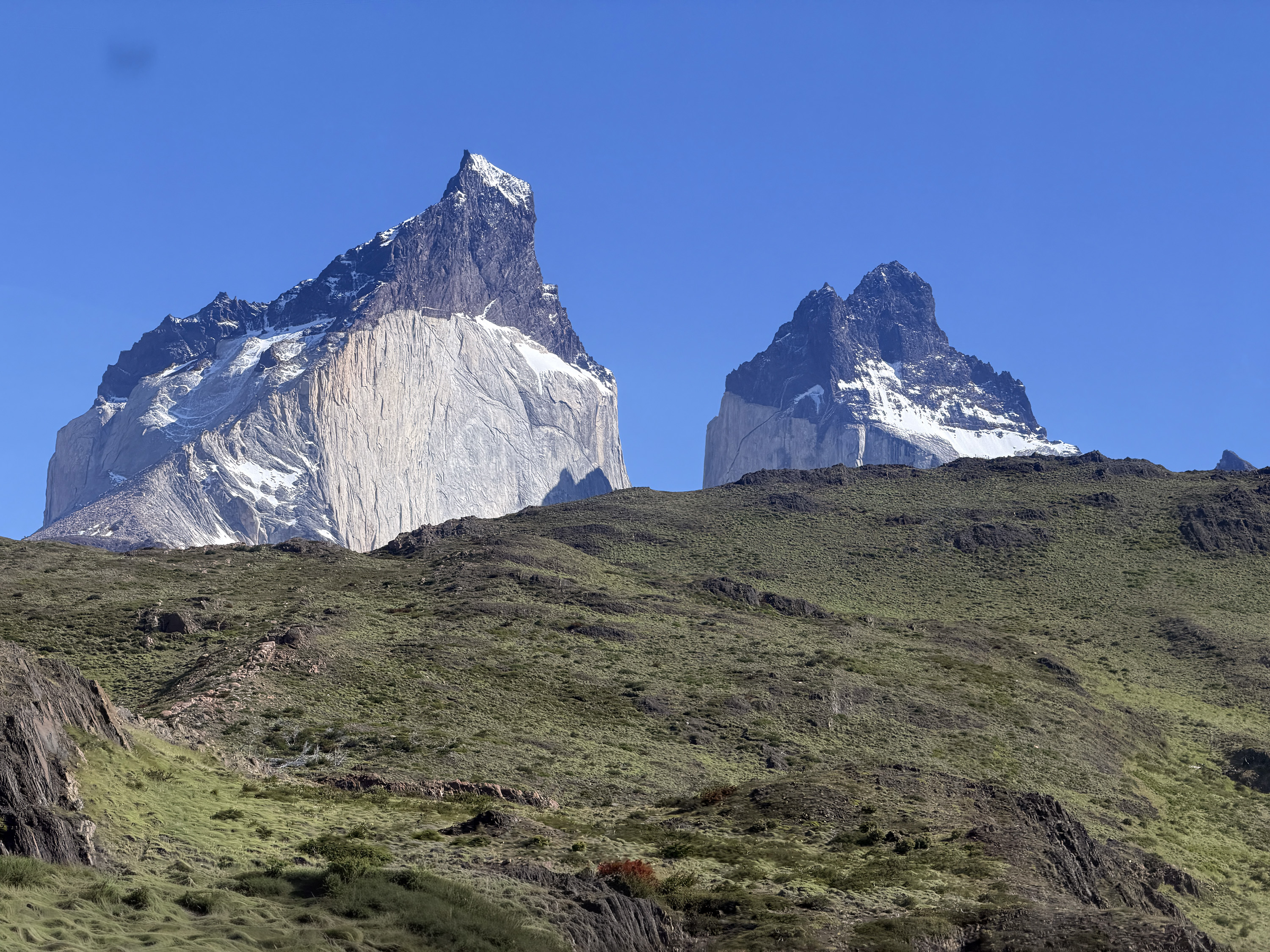
We stopped at a small café for a rest break and to eat bag lunches at picnic tables. Pretty good sandwiches. Then we drove around for well over an hour, first stopping at a lookout at Lago Nordenskjöld to view the pretty lake facing the giant Monte Almirante Nieto. The lakes here are a gorgeous blue color from the glacial flour. We stopped at Laguna Amarga for a view of the eponymous three towers, only two of which (Torres Monzino and Torres Central) are visible from our hotel. Our final stop was a place not designated as an official lookout, but behind some buildings, which Lu said is rarely visited. We got a great view across Lago Pehoé of the Cuernos (Horns) of the Massif.
We had another Allen lecture, this time sort of a travelogue of his previous hiking trip to Patagonia and a comparison of Paine and Yosemite granite structures. Then we went outside for a lamb barbecue and shoehorned this into Thanksgiving by sharing what we’re grateful for. Dinner again in the upstairs restaurant, excellent as usual. This hotel is really one of the best I’ve stayed in, particularly food and drink-wise.
Friday, November 28 — Back to Punta Arenas
Allen presented his final lecture, “South American Animal Evolution and Plate Tectonics.” He had a lot of pictures of extinct megafauna and compared various species across North and South America. After the Panama Isthmus was created about 3–4 million years ago, species that had been evolving in isolation on each island continent started intermixing. In general, the North American species were more successful in migrating south than vice versa.
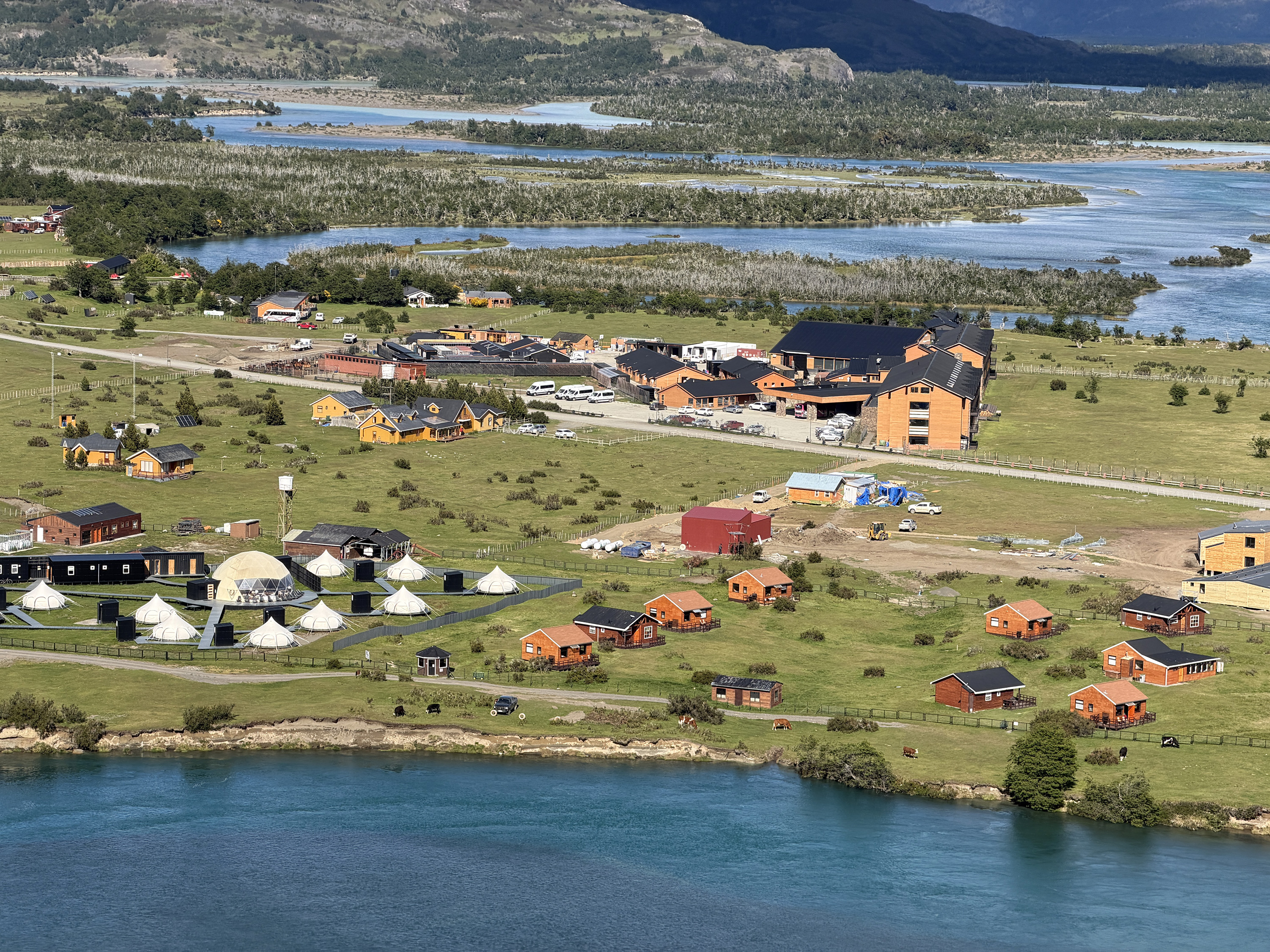
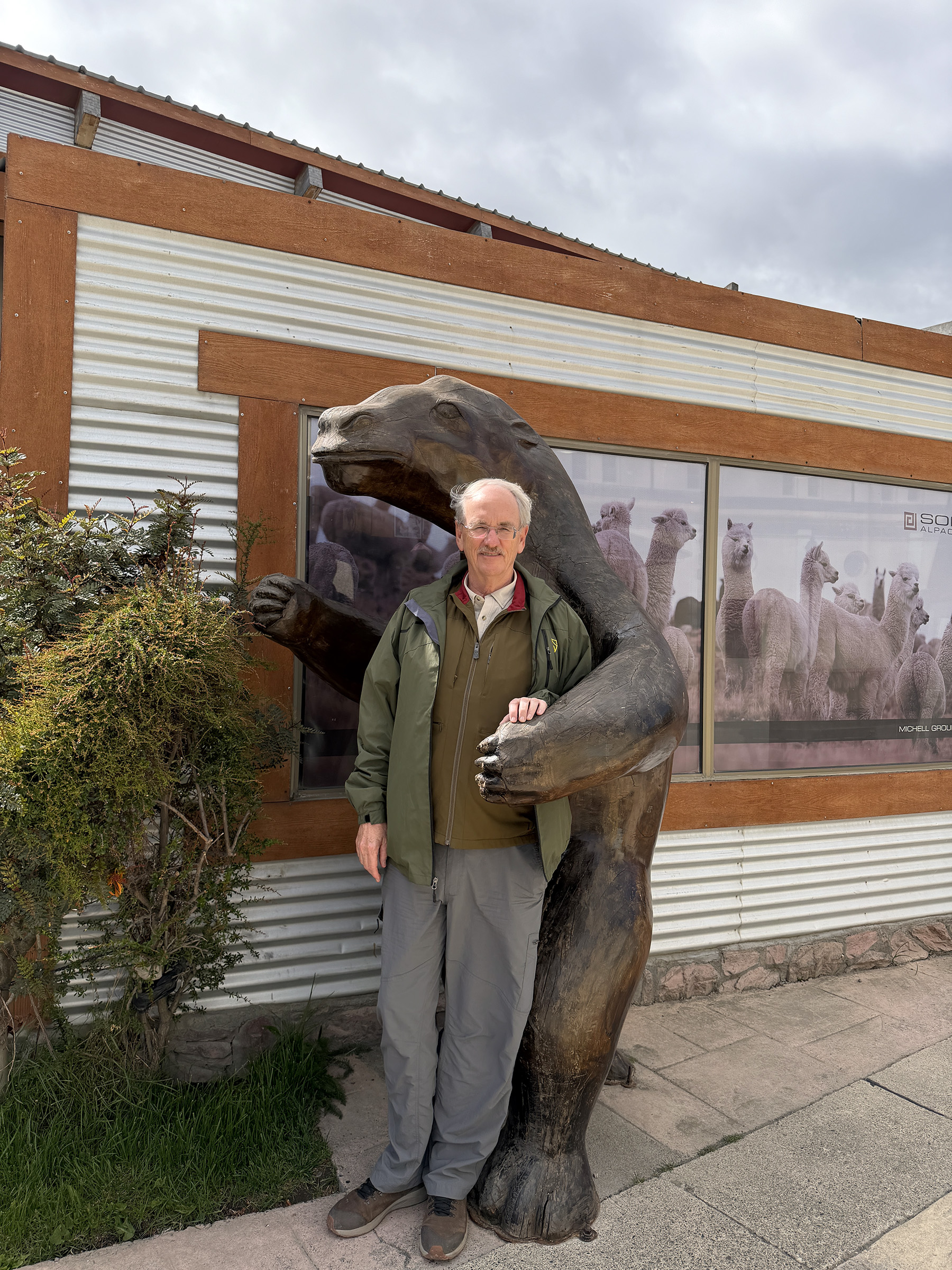
We departed by bus at 9:20 for the long drive back to Punta Arenas. First, a brief stop at a high overlook of Rio Serrano Village and the Massif; the perfect weather prompted this unplanned stop. Lu wanted us to emphasize to our friends back home that our photos will not be reliable indicators of typical Patagonian weather. After about two hours, we reached Puerto Natales, which Pancho claimed was the tourist capital of Chile. It’s a port town apparently visited by cruise ships but is quite small. We found a statue of a Mylodon, an extinct giant sloth, and I posed with it. We ate lunch here at a restaurant named Cacique Mulato. Pretty good, nice view of the harbor. On the drive out of town, we saw Monte Reclus in the distance, an active stratovolcano. Its last eruption was in 1908.

It was another three hours to Punta Arenas. We are staying in the Cabo de Hornos hotel, which, despite its outward appearance as a historic building on the main square, is quite modern and luxurious. Dinner in the hotel was good.
Saturday, November 29 — to Santiago
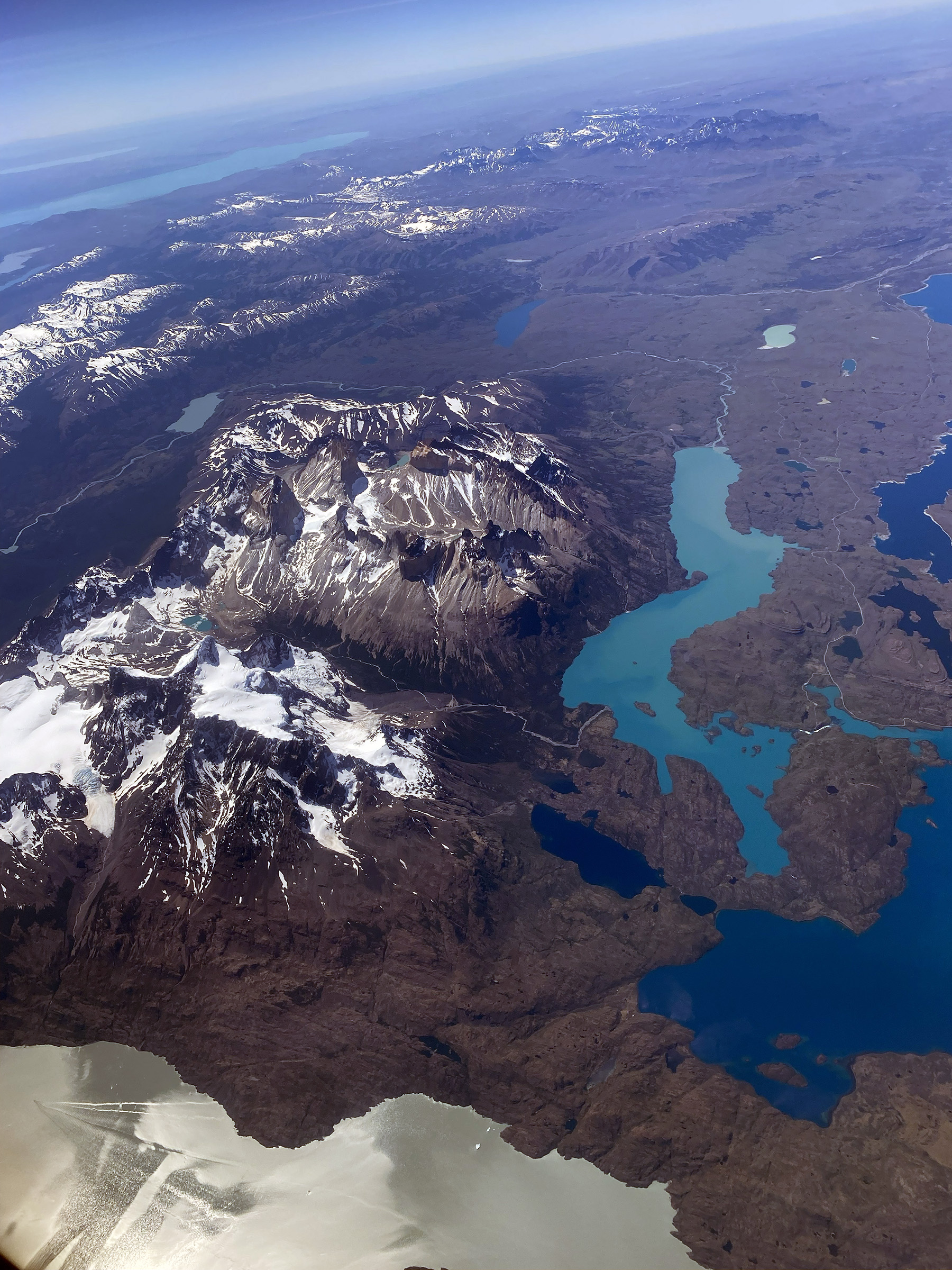
Another beautiful day, quite unusual in Patagonia. We had most of the morning off before our flight at 1 p.m. LATAM Airlines offered me a chance to pay extra for premium economy, so we’re in seats with a tiny degree of more legroom, and the center seat in the row is blocked off so I can manspread. In an unusual move, they called our group to board before the incoming plane was empty, so we stood in the jetway for 15 minutes. Our flight stopped in a town called Puerto Montt and then on to Santiago, about five hours total. We met our local guide, Ignacio (“Nacho”, like in TV's Better Call Saul), and drove a half hour to the Pullman Vitacura Hotel in a modern residential district. In fact, the whole city of 7 million seems modern in comparison to Buenos Aires. They have very severe earthquakes here, so that weeded out a lot of the old colonial buildings, although Nacho said a lot of the demolition was deliberate urban development.
We had dinner nearby in a very nice restaurant, Cuerovaca. Excellent filet mignon and an intriguing thick, soupy pudding dish made with creamed corn called Pastel de Choclo.
Sunday, November 30 — Valparaíso
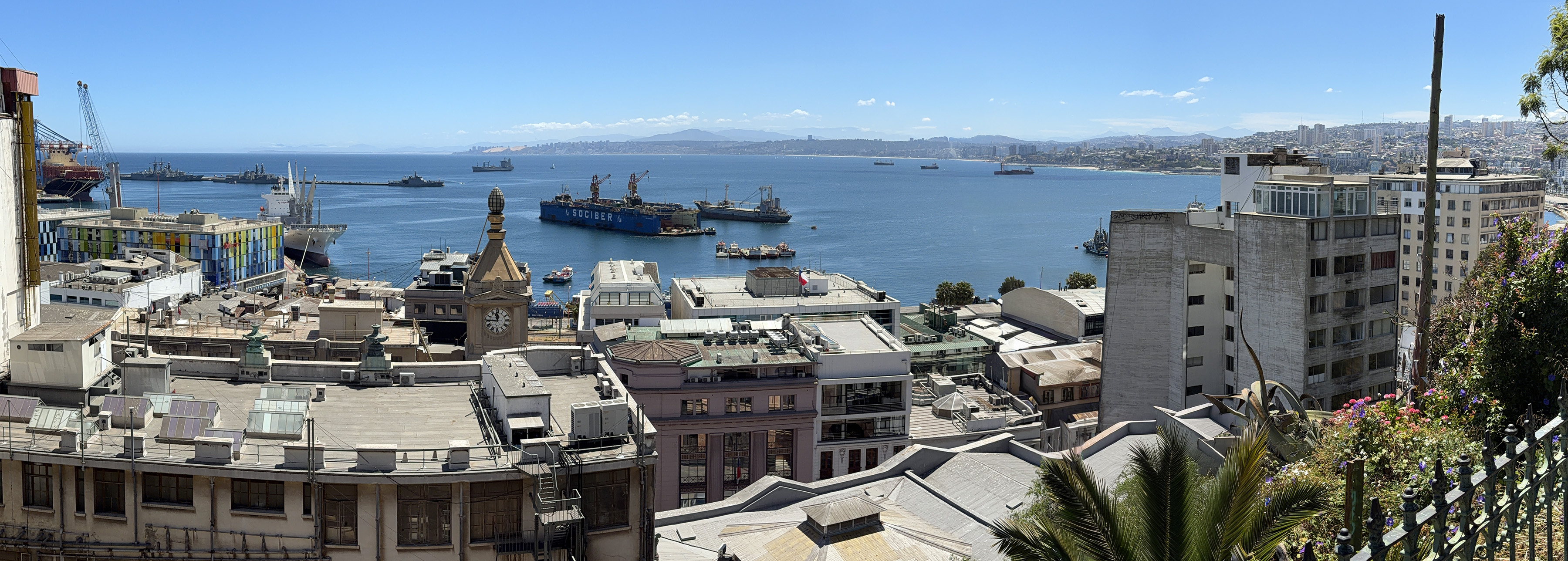
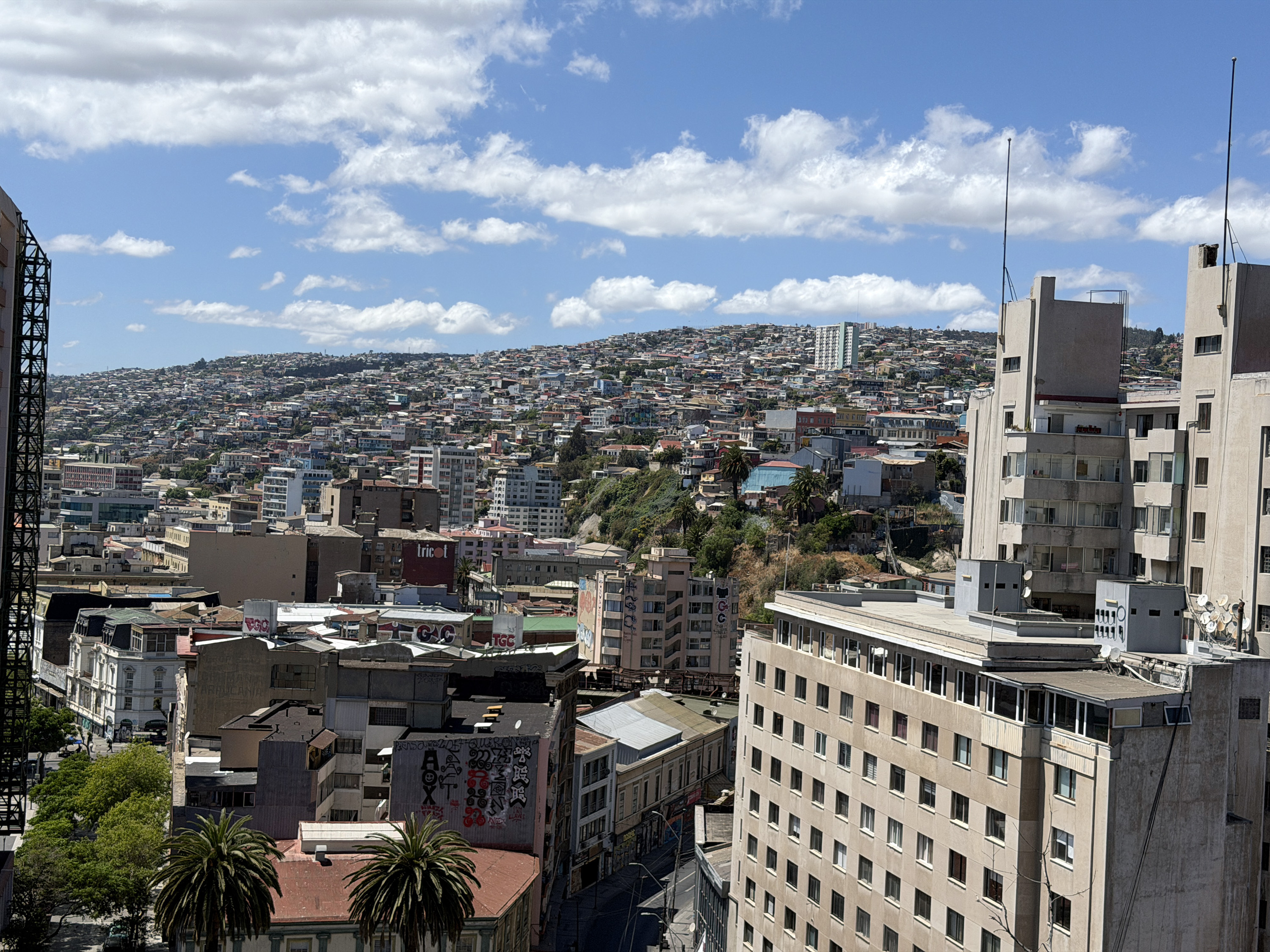
We drove about two hours west to the Pacific port of Valparaíso (val-para-EE-so), which was a critical place in international shipping until the Panama Canal opened in 1914. It was devastated by an 8.2 earthquake in 1906, the same year as San Francisco. The downtown in the flat area is uninteresting and marred by ubiquitous vandalous graffiti. Elsewhere in the city, there is some beautiful “street art,” but not this stuff. We drove up winding streets on really steep hills (in a bus smaller than we’ve had throughout the trip) and reached the Concepción district, where we started a walking tour at Seven Corners. This area is funky and colorful, similar to a San Francisco neighborhood like Telegraph Hill or Haight–Asbury, but shabbier. It is part of an area designated as a UNESCO World Heritage Site. We had to negotiate a lot of stairs, uneven cobblestone streets, and “dog mines.”
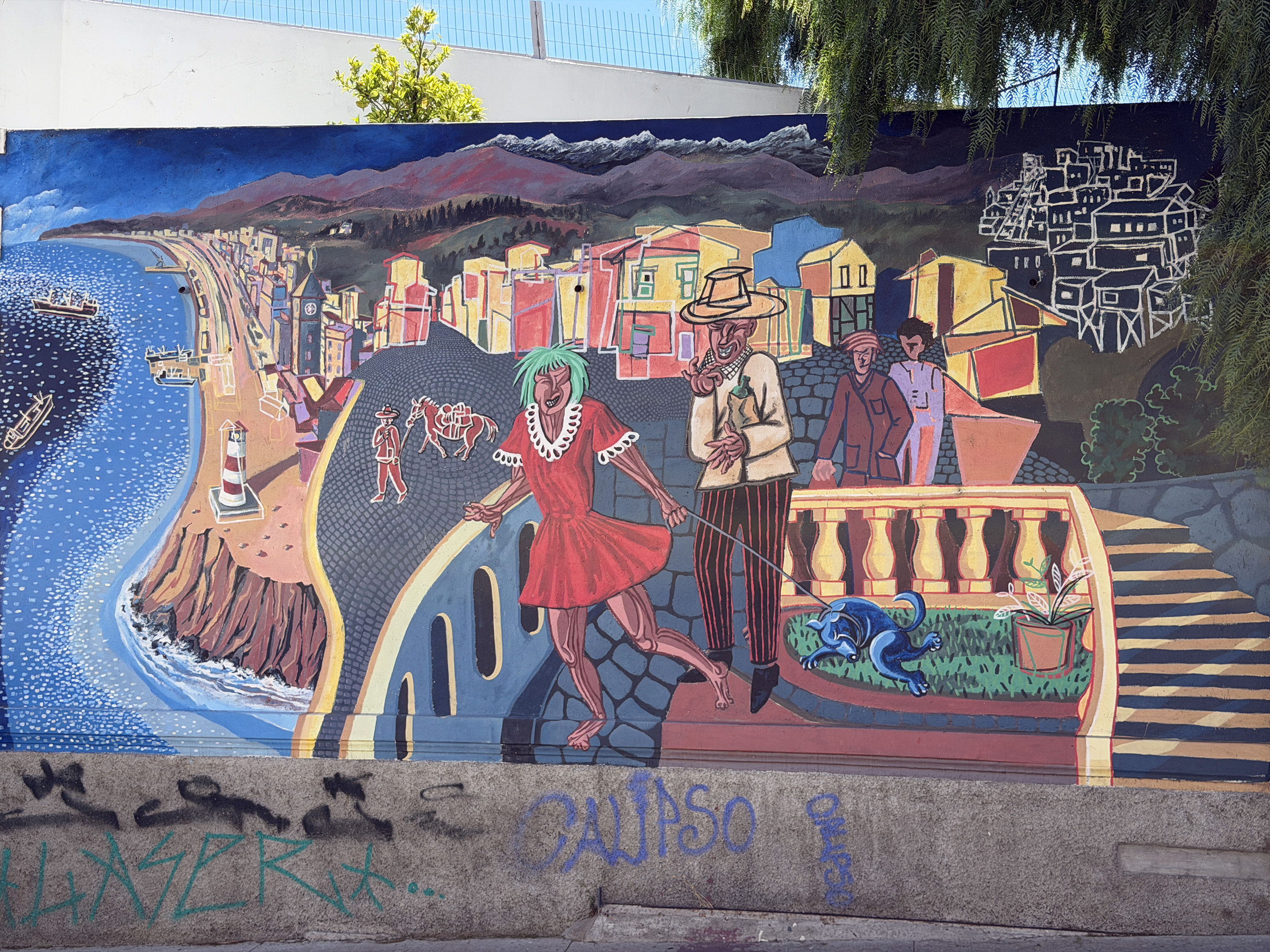
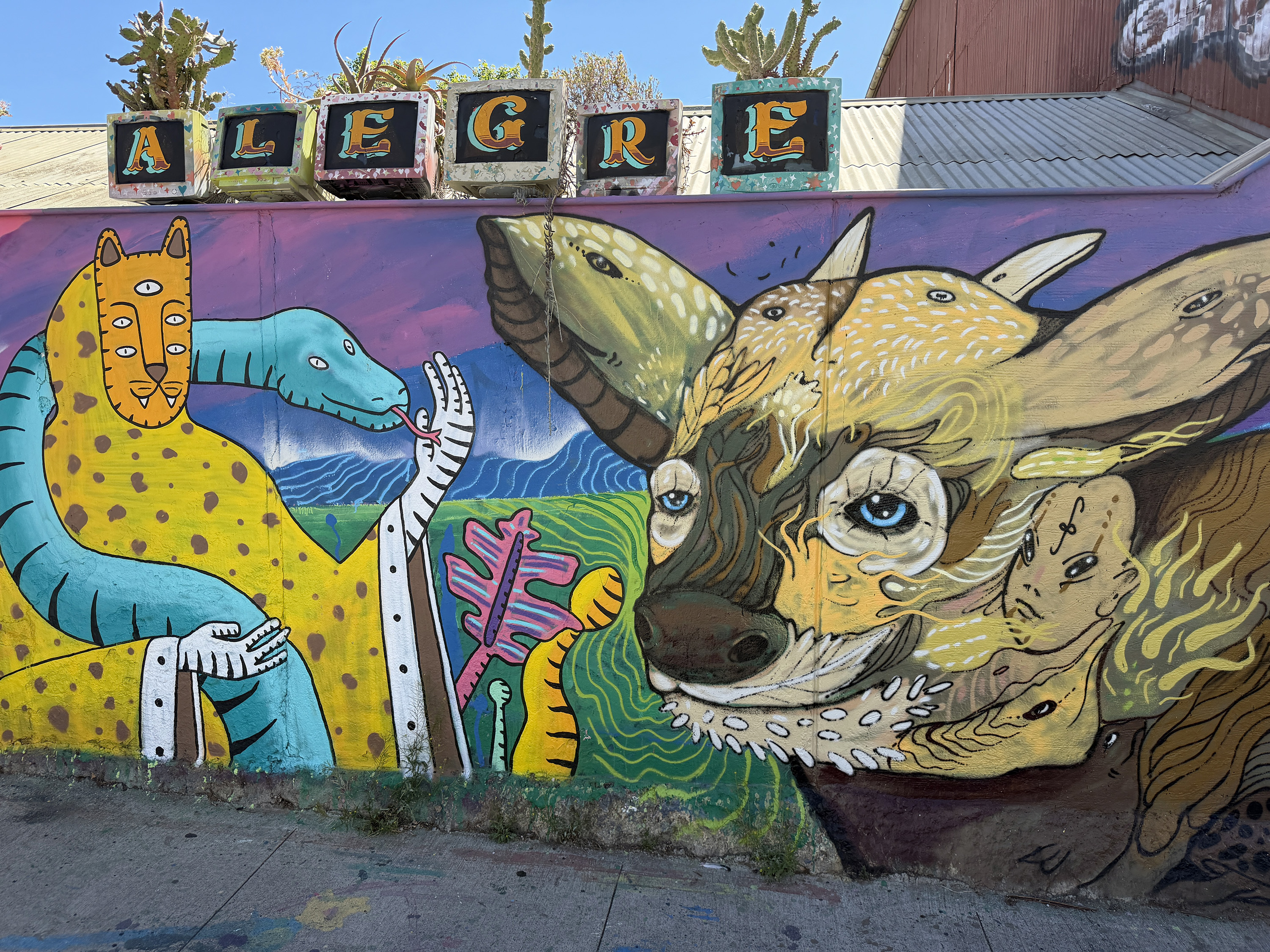
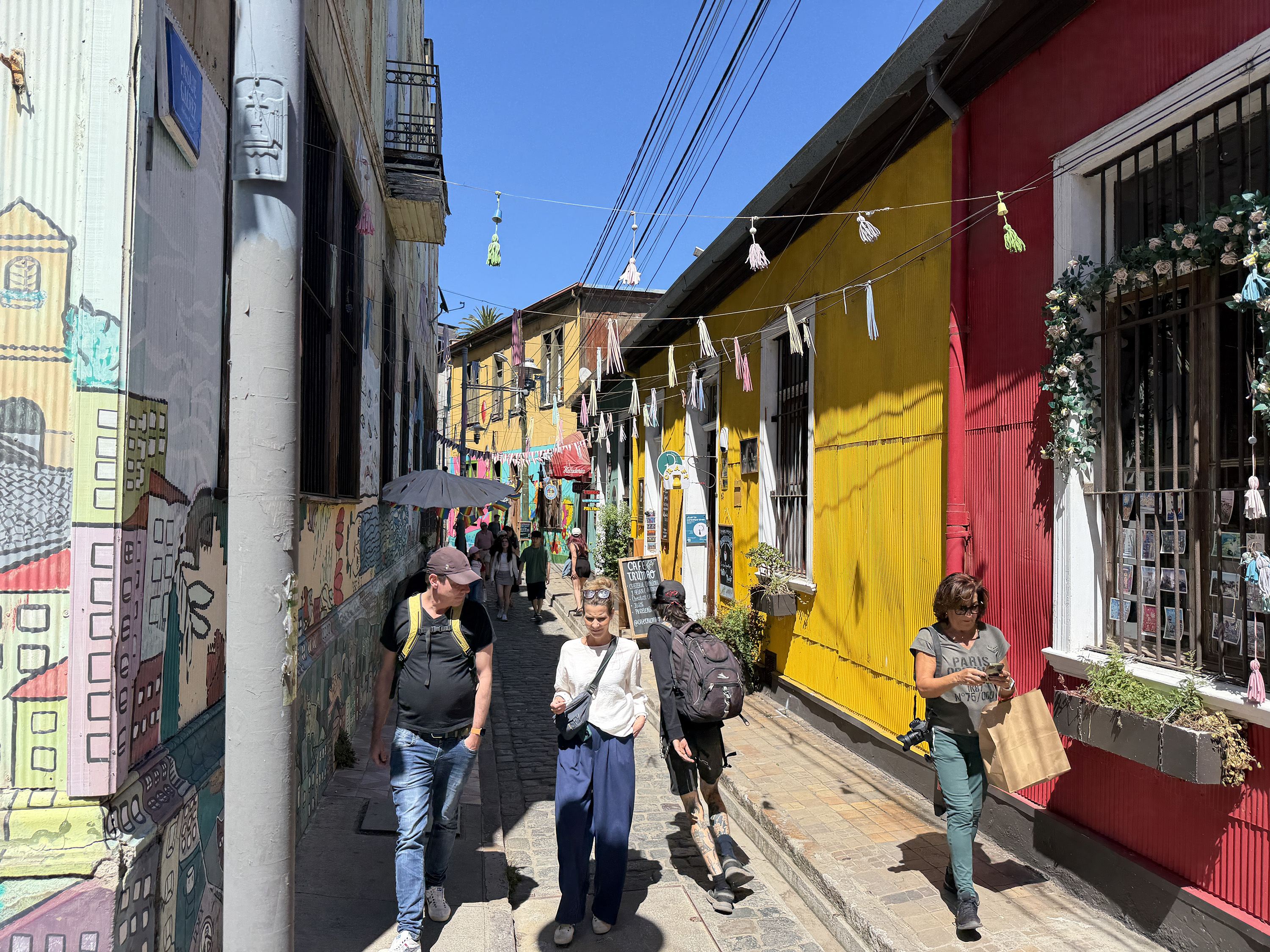
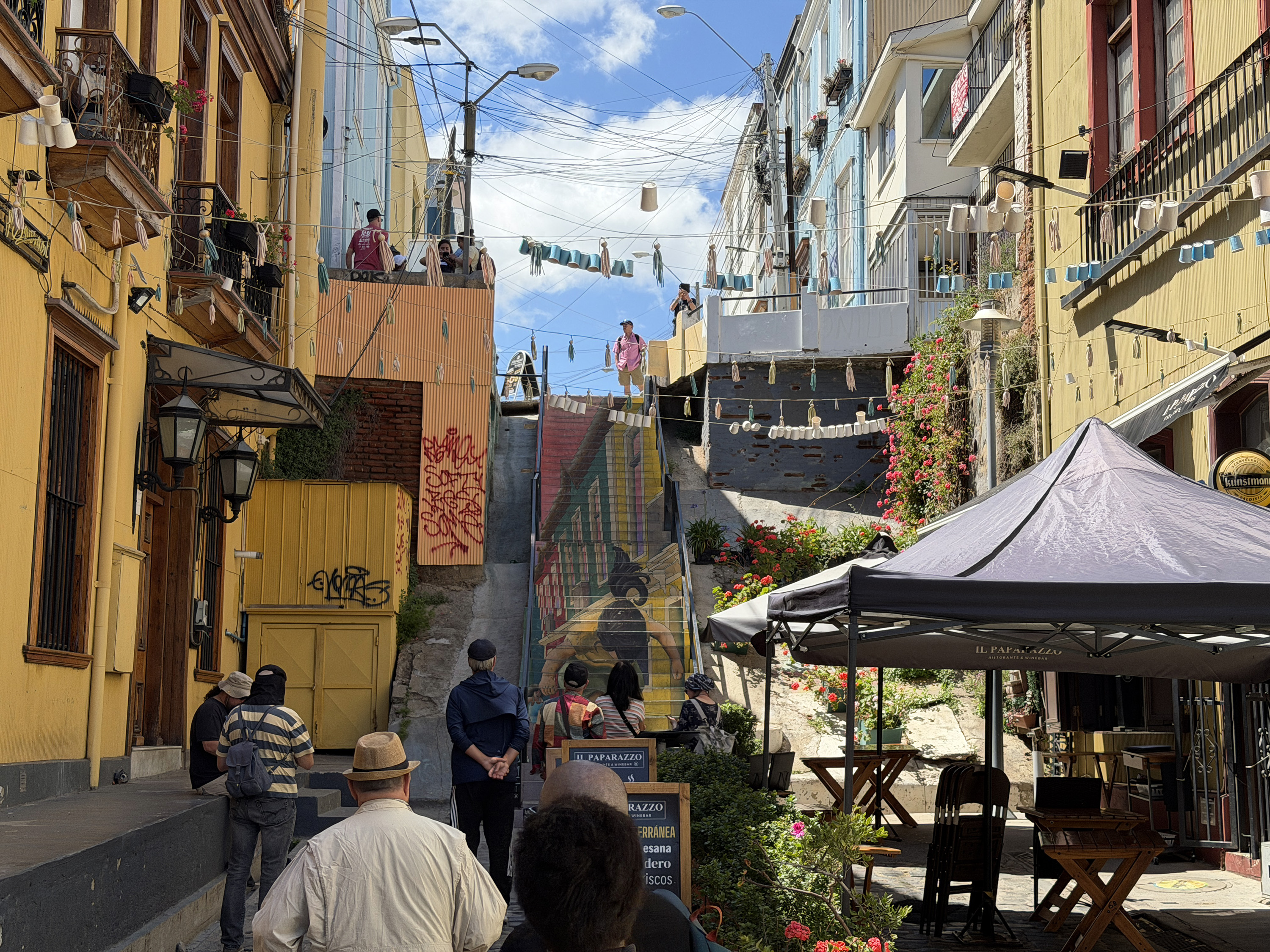
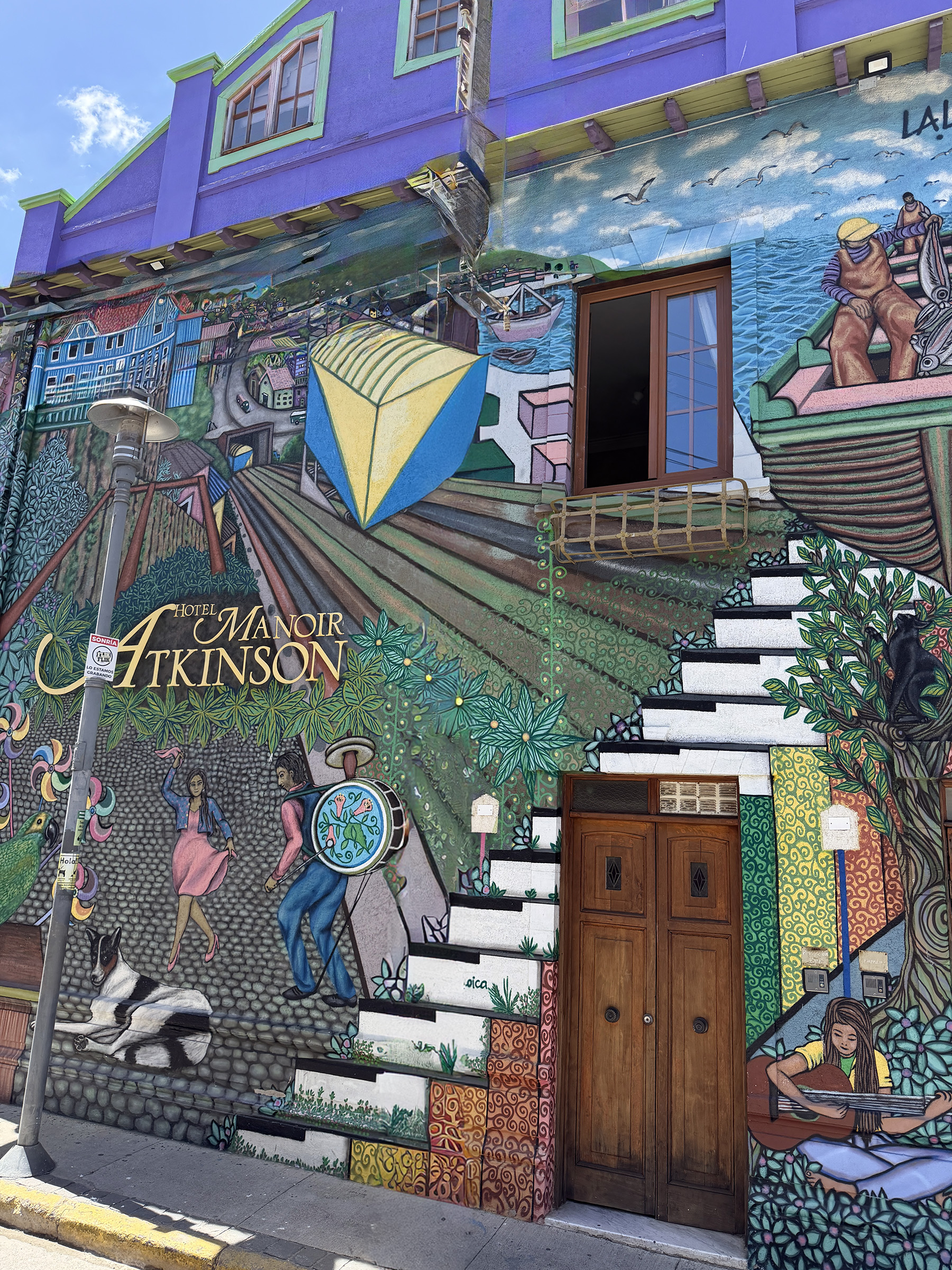
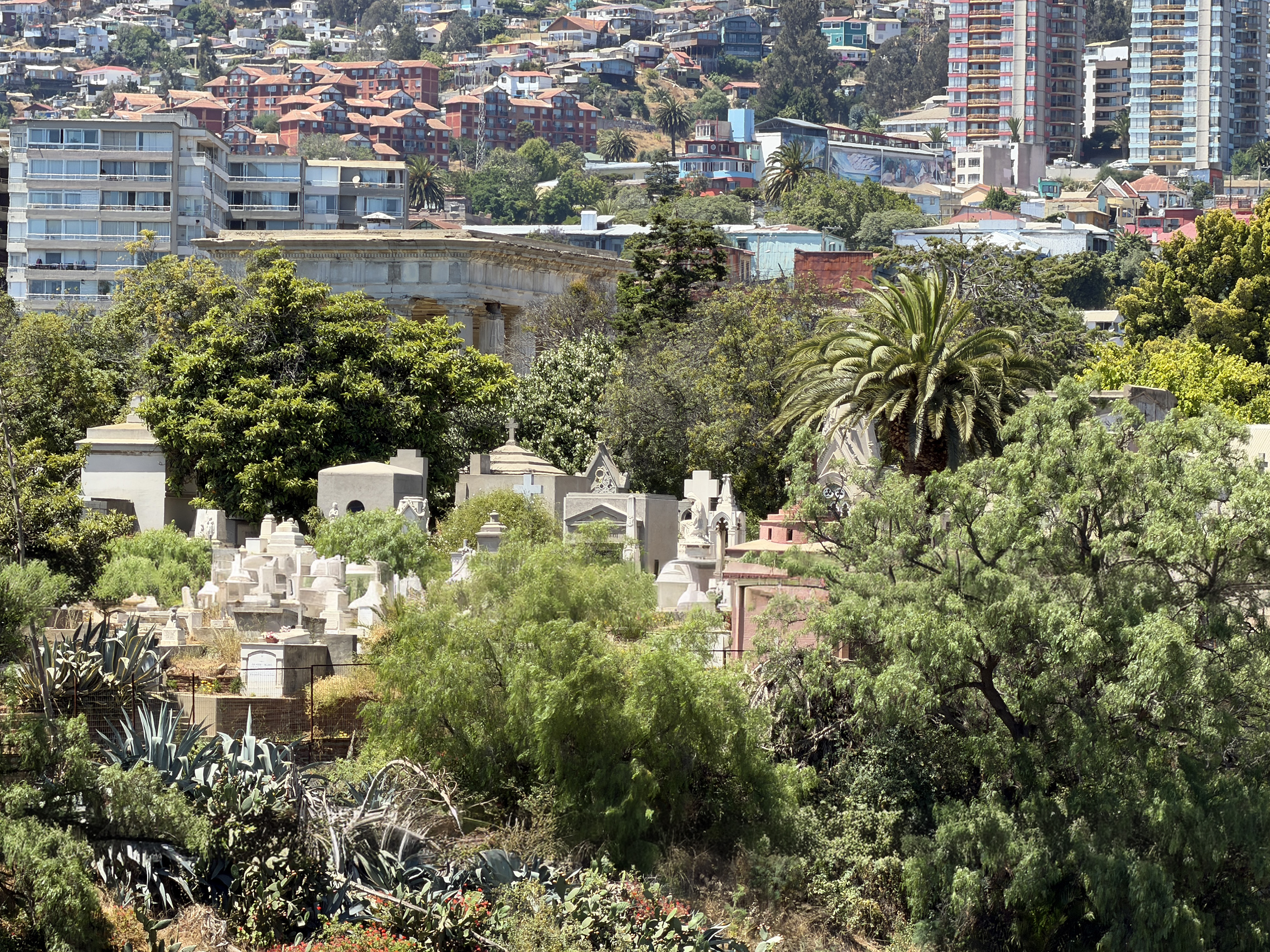
We got nice views of the harbor and the Chilean Navy home port. And of masses of homes spread over the impossibly steep hills. In the distance, we could see the peak of Ojos del Salado, the tallest mountain (22,615 feet) in the western hemisphere; Allen later told me that for various technical reasons, it is the mountain peak farthest from the center of the Earth. Across a wide ravine, we saw a cemetery that contains a mausoleum for the sailors killed during the British capture of USS Essex in 1814; her captain was David Porter, who later named the town of Valparaiso, Indiana. He was the father of Civil War Admiral David Dixon Porter. Along the way, we concentrated our attention mostly on some really beautiful murals.

We had lunch on our own at a small restaurant called La Bruschetta, serving mediocre pizza and really poor bruschettas. Then we descended from the steep hill on a funicular named in honor of Queen Victoria to rejoin our bus. We drove to the Casablanca Valley, an emerging wine region, to visit the rather modern Veramonte winery, owned by the Spanish company González Byass, primarily famous for their Tio Pepe sherry. In addition to a typical wine production tour, we engaged in a fun competition to blend three red wines into a single bottle by adjusting percentages of the grape varietals. Nancy’s group won; she designed an original label for the bottle, and Ray was the primary architect of the blend. My group came in a close second. The sommelier of the winery judged the results and provided expert commentary. The winning bottle was gifted to Nacho, celebrating his birthday today. We plowed through 12 bottles of wine to do this exercise, but none of them were expensive.
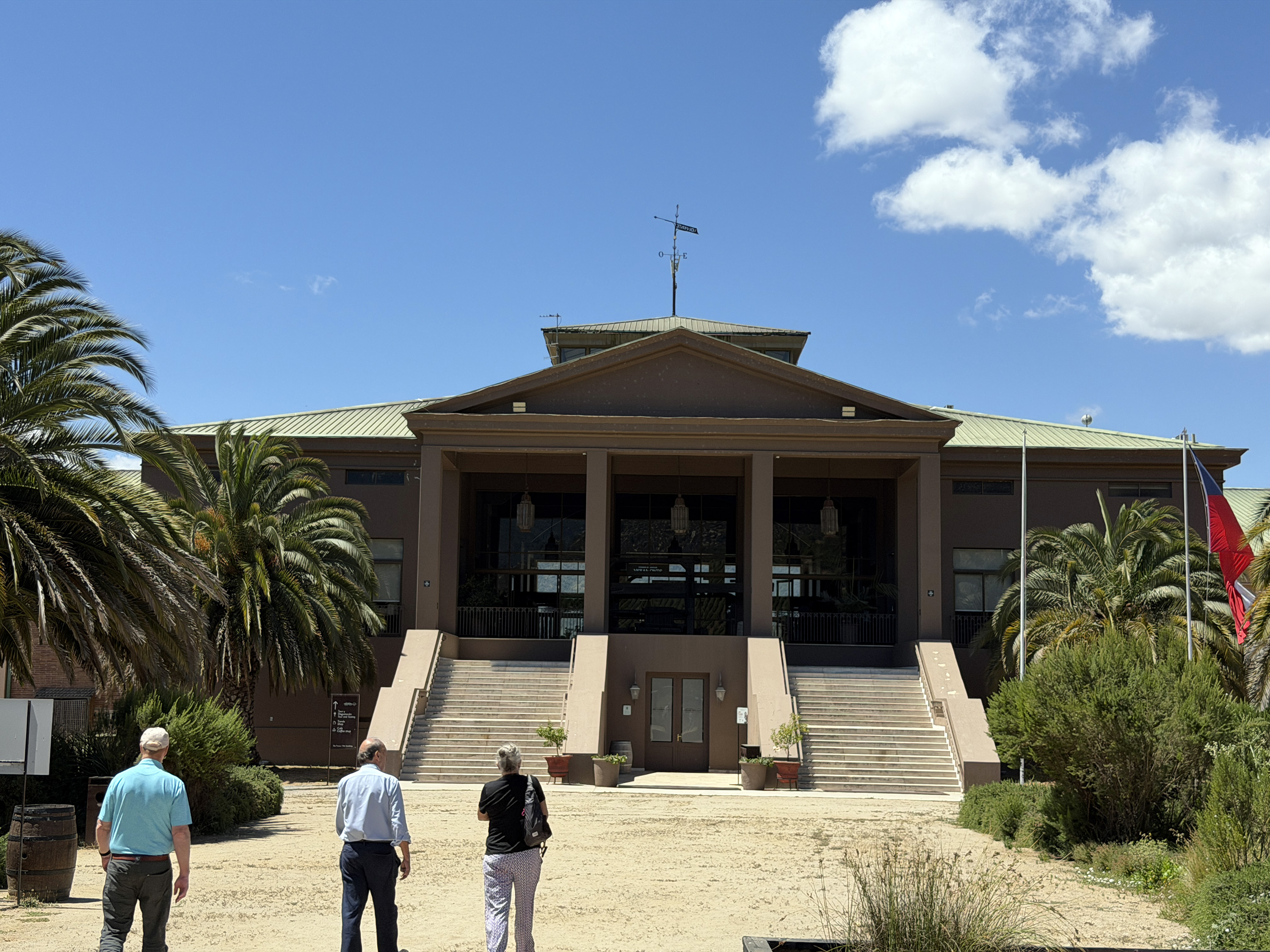
After an hour on the bus we returned to the hotel for our farewell dinner. A very nice time was had by all, reminiscing about the trip. Lu presented a gift of a Lapis Lazuli pen to Allen.

Monday, December 1 — Santiago and Home
Our final day here started with a city tour of Santiago. Another beautiful day. Lu was adamant about not carrying passports, worrying about pickpockets. We saw no one like that, but I guess that’s their M.O. We walked around the Plaza de Armas, the main square where the city was founded in 1541. They used to conduct bullfights here, but now it’s a park surrounded by official buildings. We examined a brass map of the city in the 1700s and walked past the Metropolitan Cathedral. As our walk continued, we passed the Supreme Court, the Pre-Columbian art museum (which we were originally intended to visit, but all museums seem to be closed on Mondays), the Central Bank, and Constitution Square.

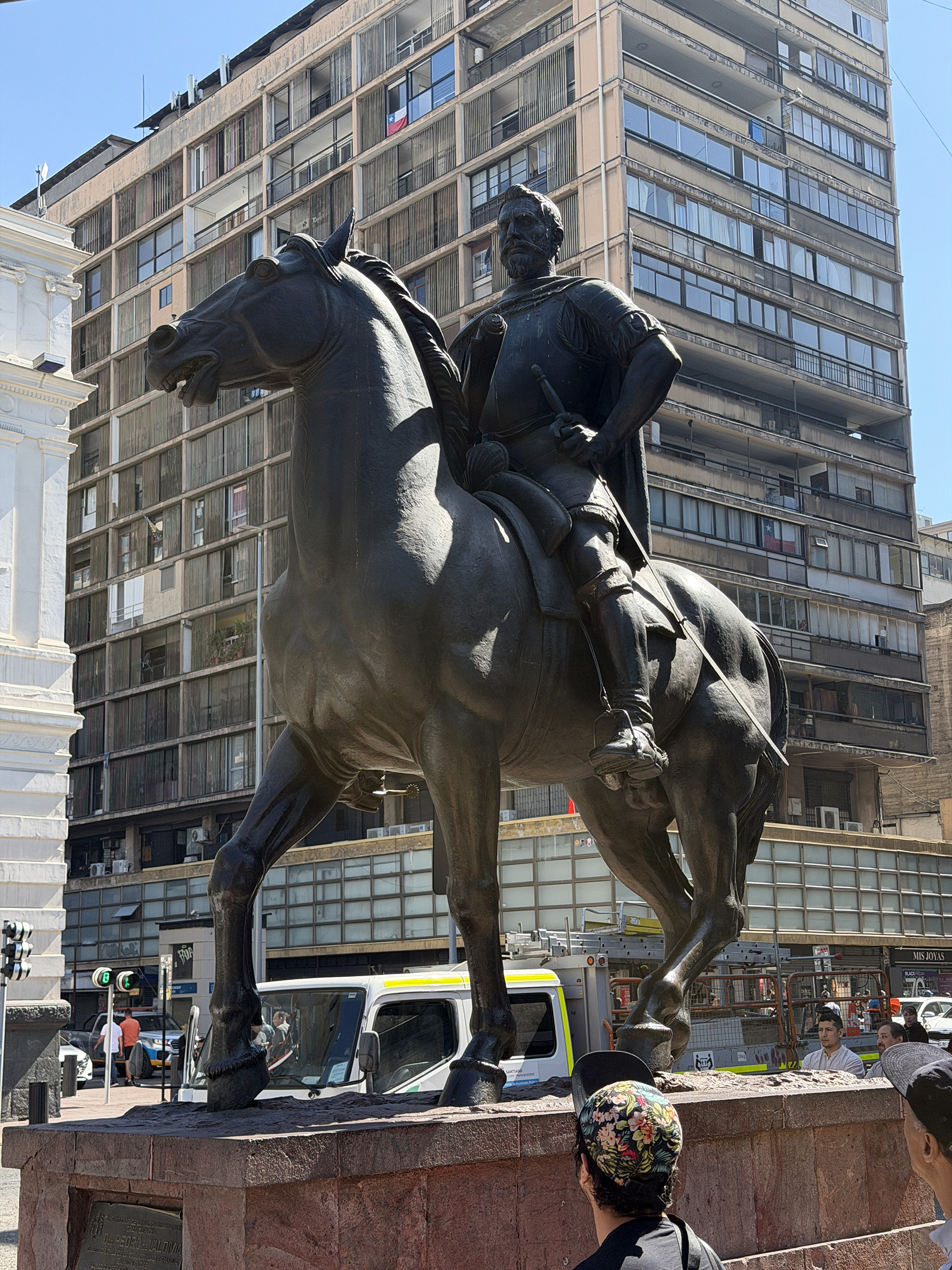
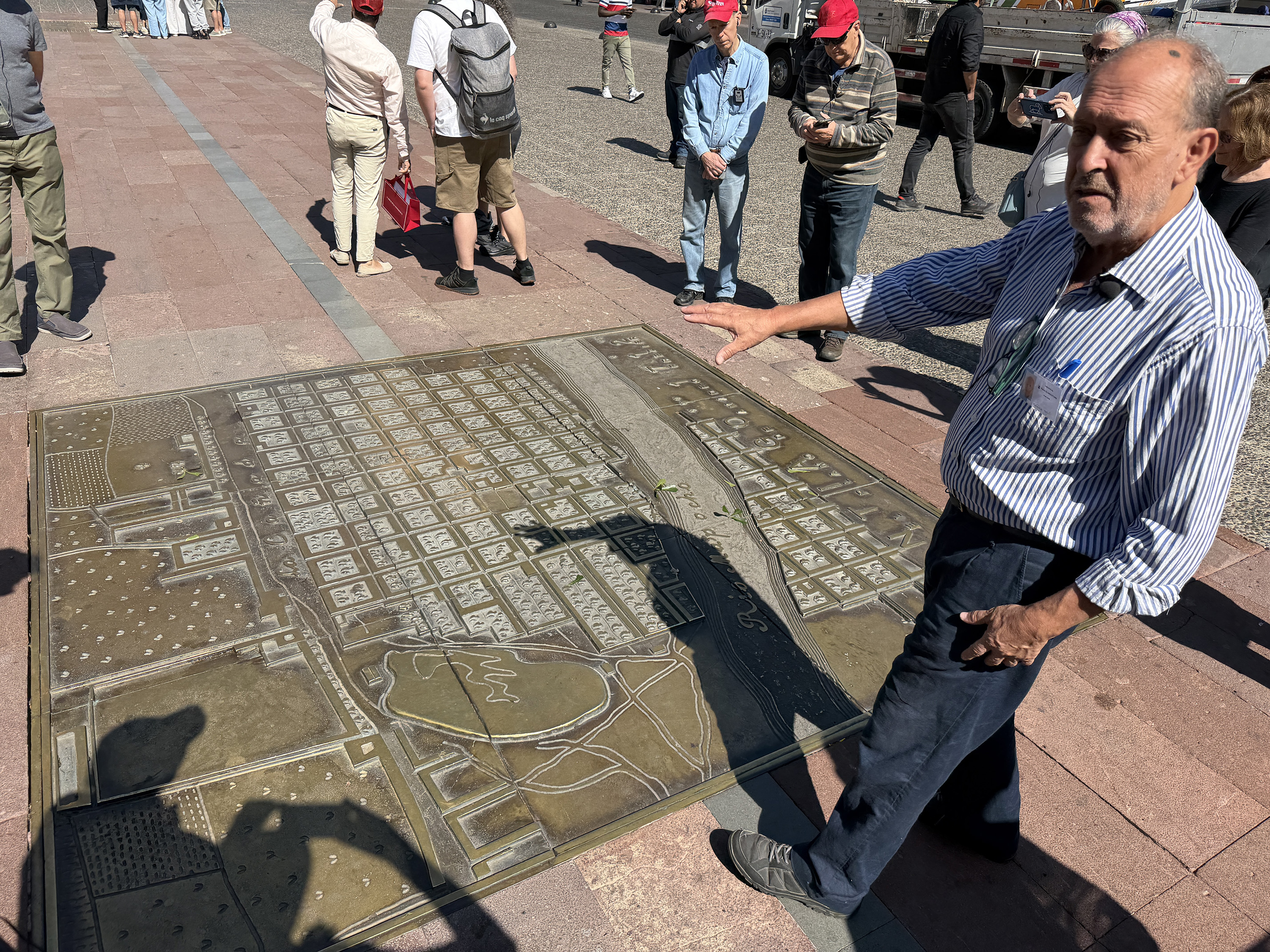
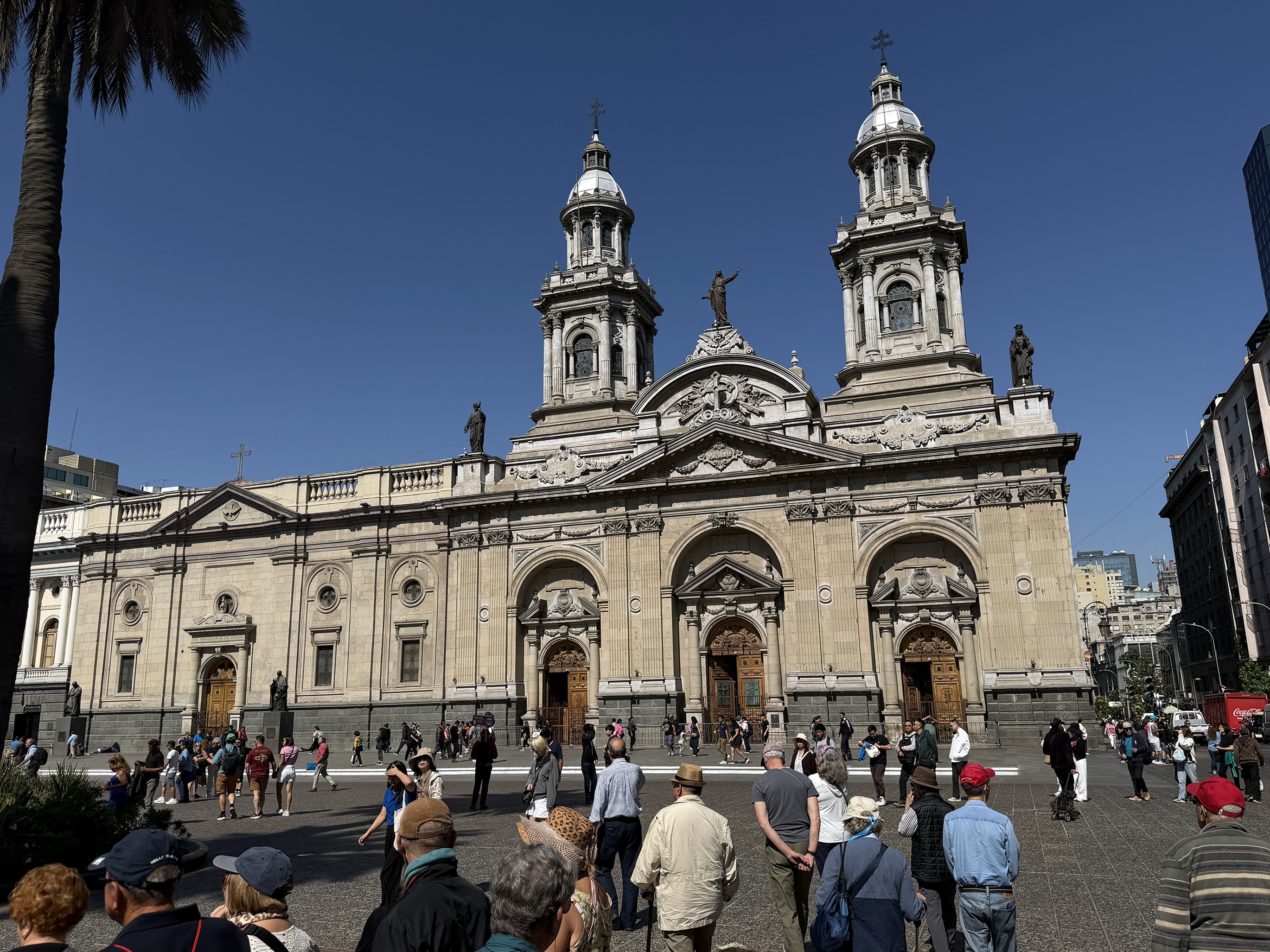
A full block was taken by the Palacio de La Moneda (“Palace of the Mint”), or simply La Moneda, the seat of Chile’s president and the offices of a few cabinet ministers. The southern facade of La Moneda, the Centro Cultural Palacio, is a facility intended to place the Chilean capital in the international cultural circuit. Today it was a rest stop. Nacho told an interesting story about Marxist president Salvador Allende, who tried to resist the 1973 military coup (Nacho says “coop”) here in La Moneda, but committed suicide using a machine gun that was gifted to him by Fidel Castro.
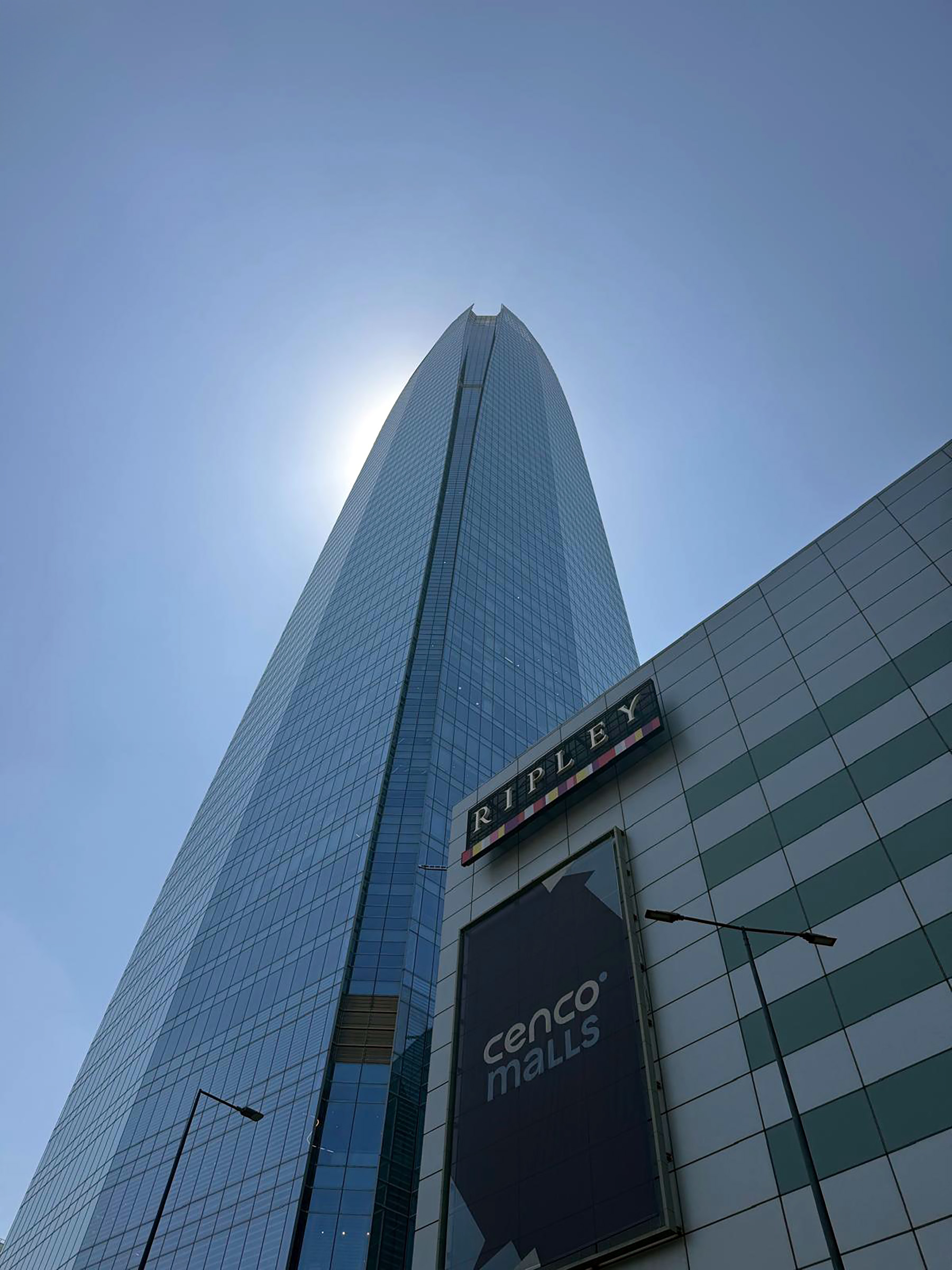
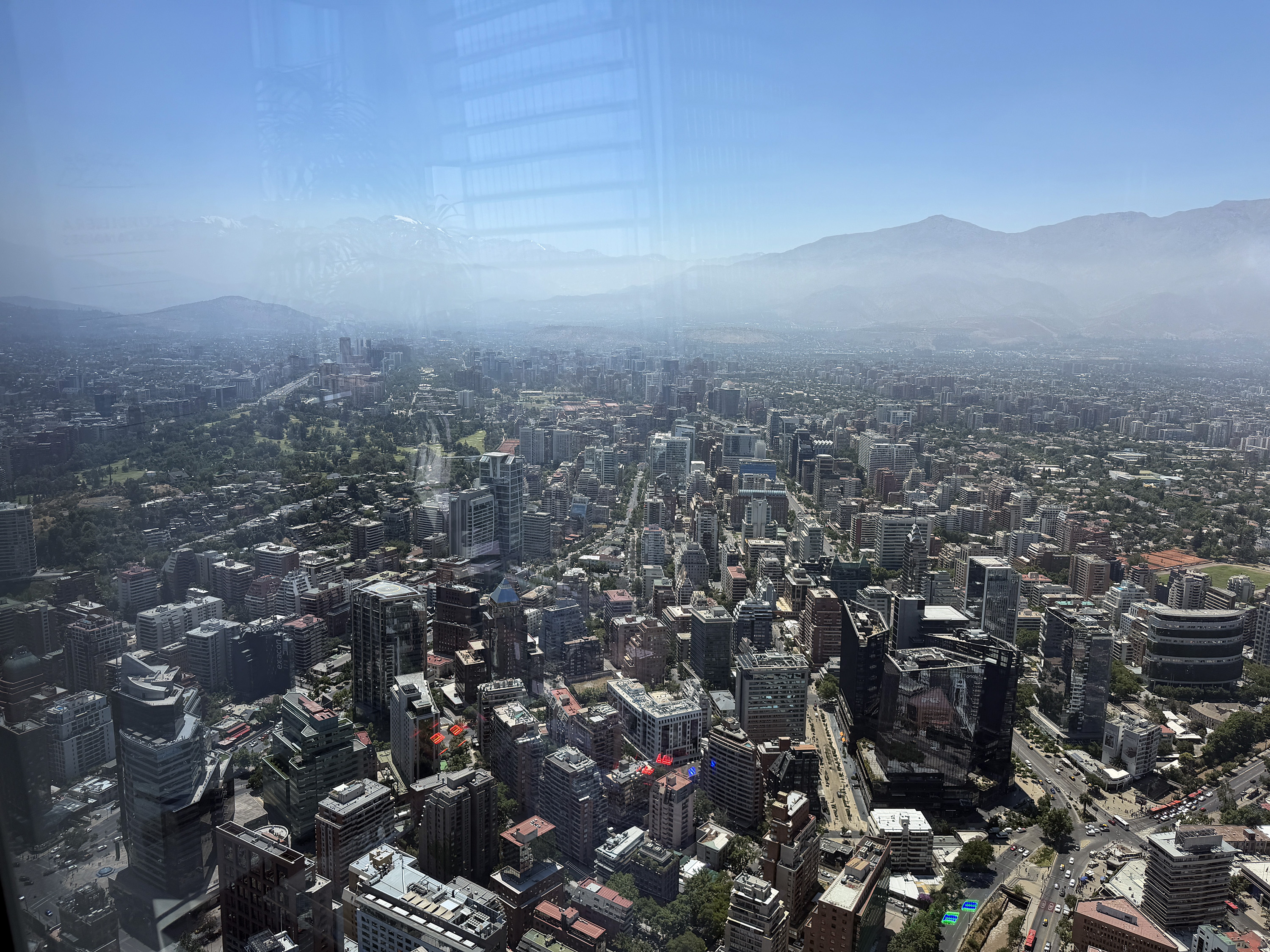
Back on the bus, we drove down the Alameda, where lots of the rich folks used to live, and passed by virtually the only remaining colonial building, a church from 1622. We drove back toward the hotel to the modern Providencia district, where we visited Sky Costanera, the tallest building in South America at 300 meters, 62 floors. It is quite similar in appearance to the Salesforce Tower in San Francisco. Unfortunately, the good weather of the last couple of days meant that the smog enveloping the city had not been blown away. From what we could see, the large city is fully surrounded by mountains, so it is quite reminiscent of Los Angeles. A difference is that here there is a paucity of single-family homes in view, replaced by numerous mid-sized apartment buildings.
Our final stop was in the Bellavista district, where we had over an hour to eat in a collection of restaurants and shops called Patio Bellavista. Lu described the area as bohemian, but the part we visited was mostly touristy. We had decent hamburgers made from Chilean beef. Lu had to depart for a flight a lot earlier than the rest of us, so we all got goodbye hugs. We were allowed to remain in our hotel rooms until 6 p.m. for packing, napping, etc., and then bused to the airport with Nacho. Ray and Pat remained for two additional days in Santiago, but all of the rest of us had late-evening red-eye flights today. Ours was on American to Miami, arriving at 5 a.m., then our separate 8:30 a.m. booking on United to San Francisco, arriving home at 1 p.m. Tuesday, a door-to-door journey of 24 hours. A grueling night/day of travel.
We had an excellent time on our trip (when some stressful airport experiences are overlooked) and learned a lot about South American geography and geology, history, food, culture, native peoples, glaciers, and some wildlife. Allen was outstanding in his lectures and technical commentary and Lu was simply the best tour director we’ve had in forty years of group traveling—super efficient, knowledgeable, and friendly in a very personal way. Everyone in our small group was a good travel companion and had interesting stories to tell and photos to share.