Hal and Nancy's South America Tour, November 2025 [Part 1]
These are my (Hal's) notes on Hal and Nancy's trip to South America (Argentina, Patagonia, Chile) with Smithsonian Journeys. This is our third trip with SJ (actually subcontracted to a tour company called Odysseys Unlimited). The first was to New Zealand, and the second to Glacier National Park and the Canadian Rockies, both excellent trips. Other than a one-day stop in Caracas, Venezuela, on a Caribbean cruise in the 1980s, this is our first trip to South America.
Since this is a lengthy report with lots of photos (iPhone 17 Pro Max), I have broken it into two parts:
Contents – Part 1
Friday/Saturday, November 14/15 — to Buenos Aires
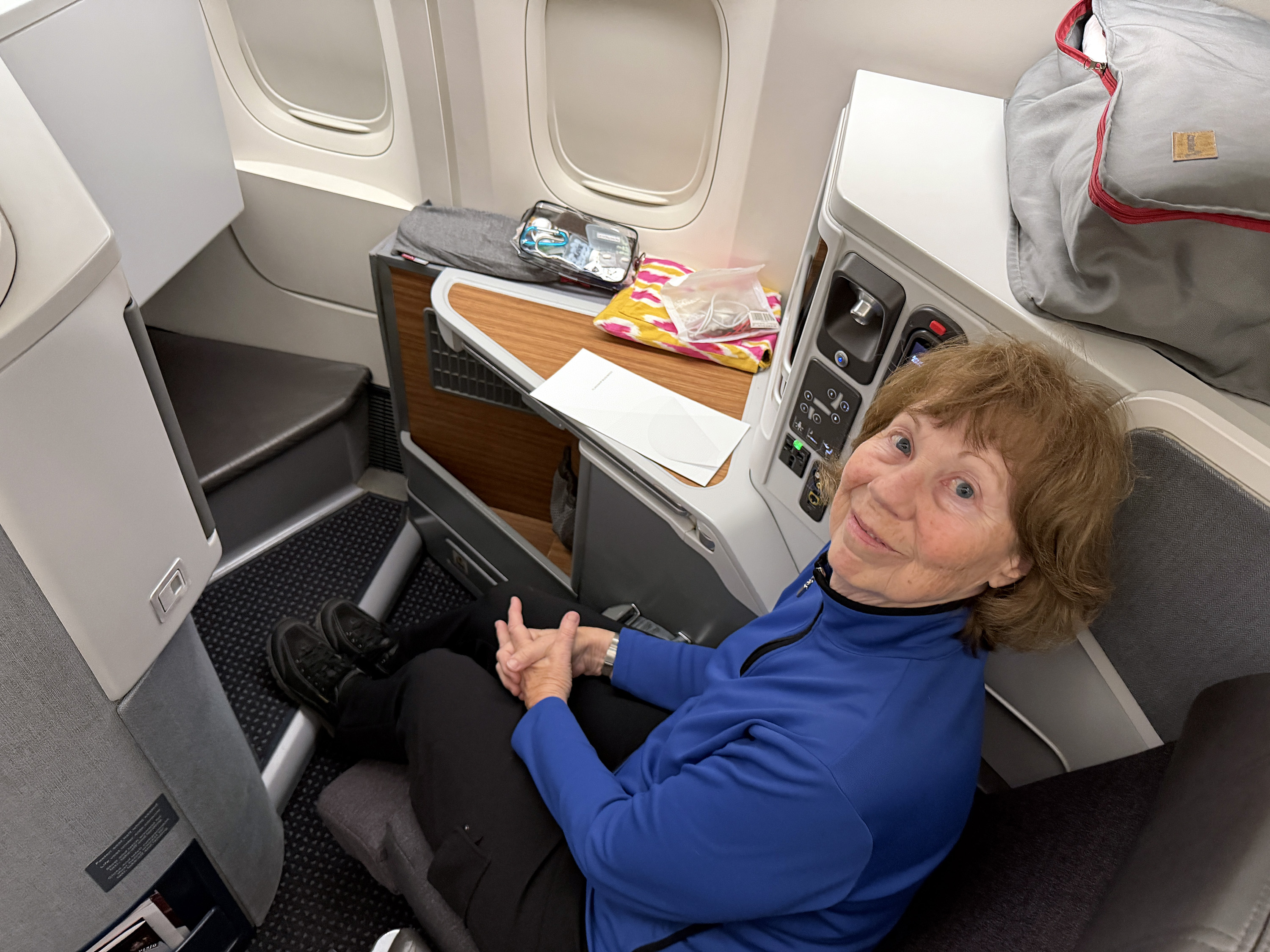
We flew in a two-step process, arranged primarily for cost savings. The first flight from San Francisco to Miami was on United Airlines in coach, exit-row seats. Then a 4-hour layover and a separate booking and check-in on American Airlines business class overnight to Buenos Aires (EZE). We were sweating out the details for over a week before flying because of the US government shutdown and the risk that the United flight would be canceled. Having heard that international flights were generally unaffected, we had little concern about the American flight, which turned out to be very comfortable. It was the first lie-flat seat I have encountered that was longer than I am, maybe only by an inch, but that’s good enough. In the night, we flew mostly down the west coast of South America but turned east over Santiago, Chile. After flying over the Andes in the dark, we had beautiful views of the pampas, the prairie-like farm areas, across to Buenos Aires.
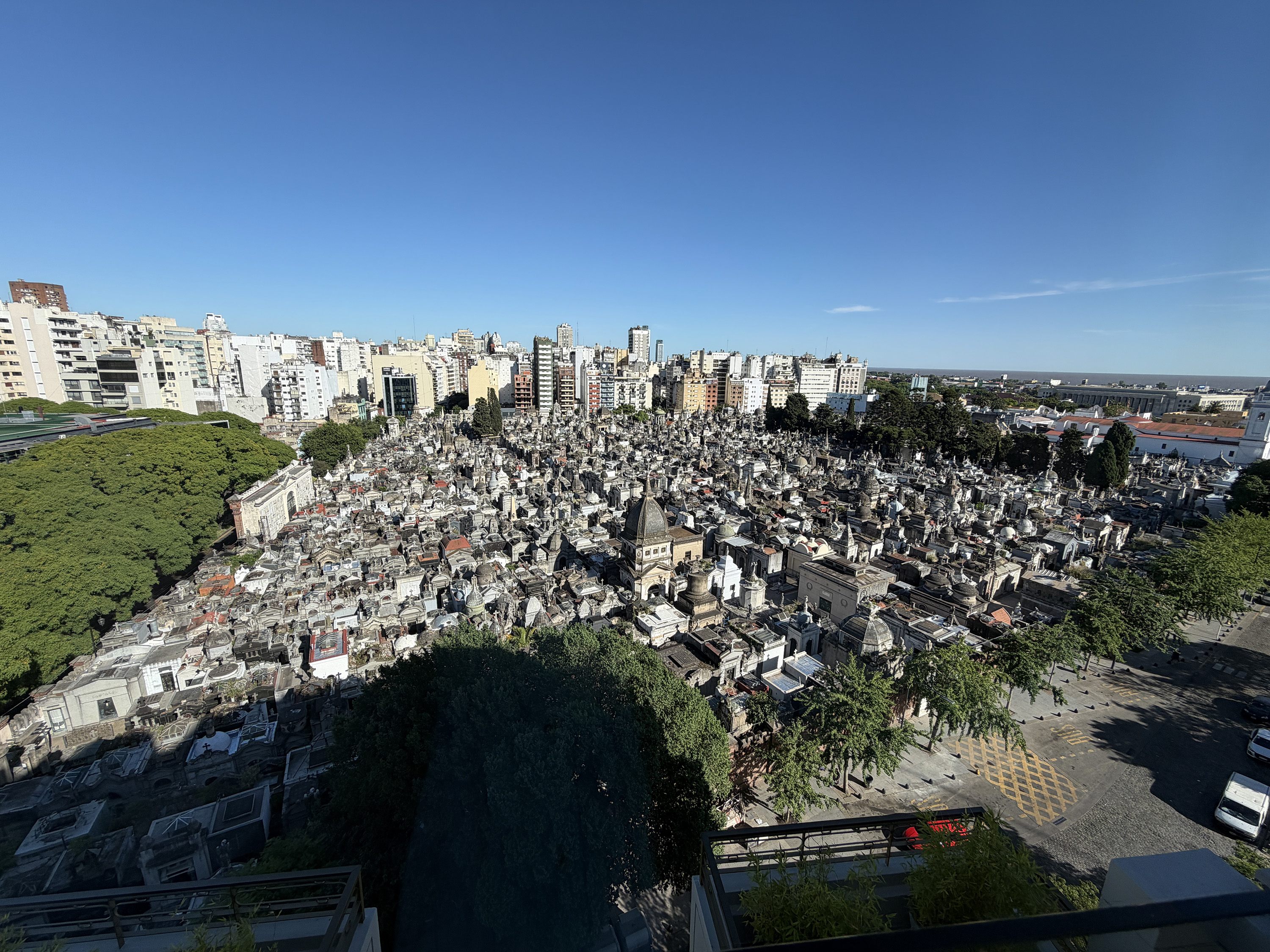
We Ubered about 40 minutes to the upscale Recoleta district and left our bags with the Urban Suites boutique hotel. We met up with our long-time travel friends, Ray and Pat, and paid a brief visit to the nearby Fine Arts Museum. Small but pretty decent. They had a number of impressionist works that I enjoyed, including minor works by Degas, Manet, Monet, Cézanne, Renoir, Van Gogh, Toulouse-Lautrec, and Gauguin. There were many other eras of paintings, most of less personal interest, but we had to bail out for another appointment. Nancy and I took another Uber to Serrano Plaza in the Palermo-Soho district. This is the area we probably should have found a hotel in because it is much more bohemian, picturesque, and interesting than the relatively staid Recoleta district.
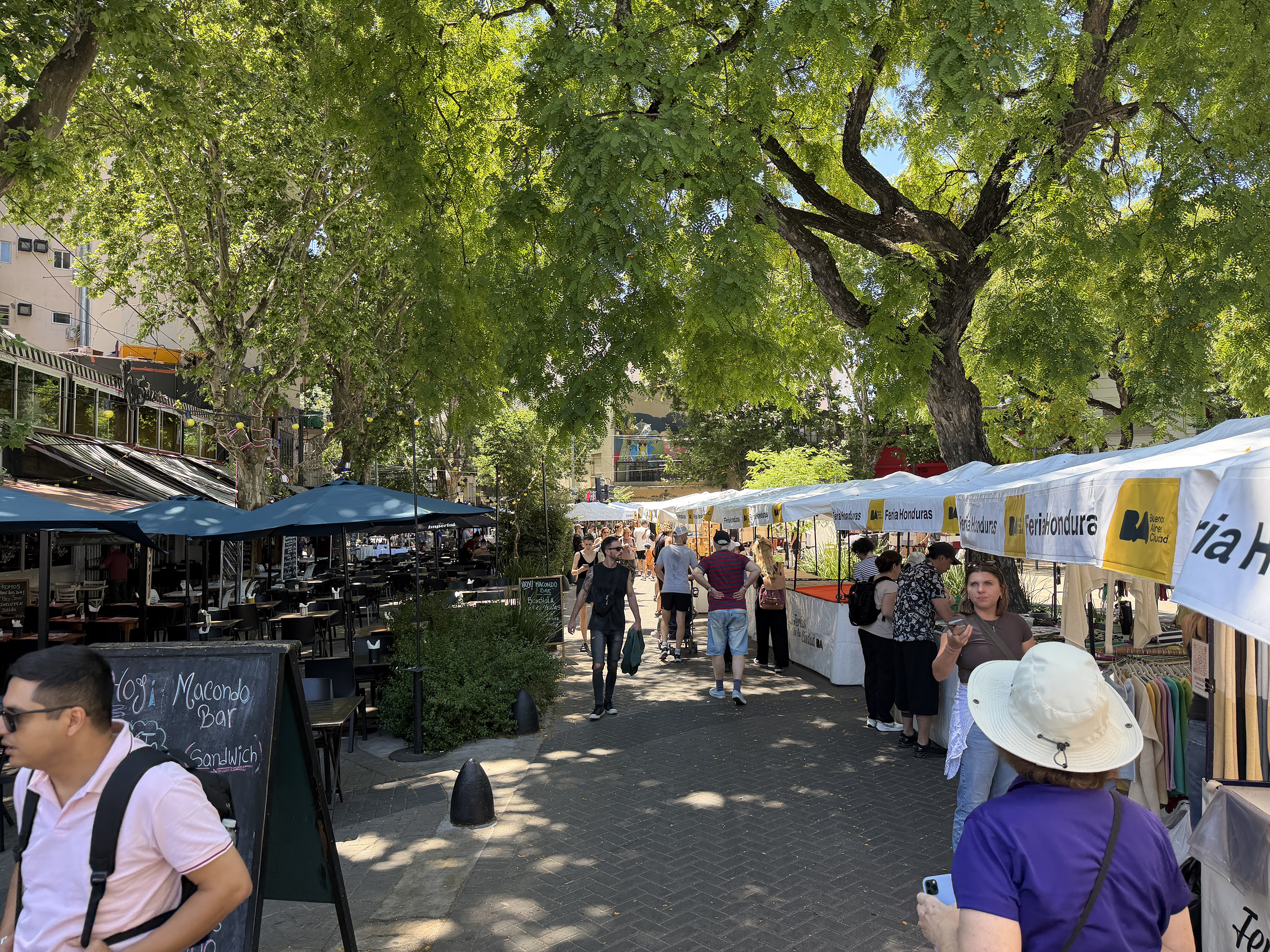
We arrived at Serrano Plaza to see a big street fair setting up. We met our guide, Amalia, for a “Secret Food Tour,” a company we’ve dealt with in a number of worldwide cities. Amalia is young and personable, a good English speaker since she attended Canadian schools as a child. There were three others on the tour, including two US college professors and a Panamanian software developer. We had an excellent 3.5-hour tour, although we all ate way too much.
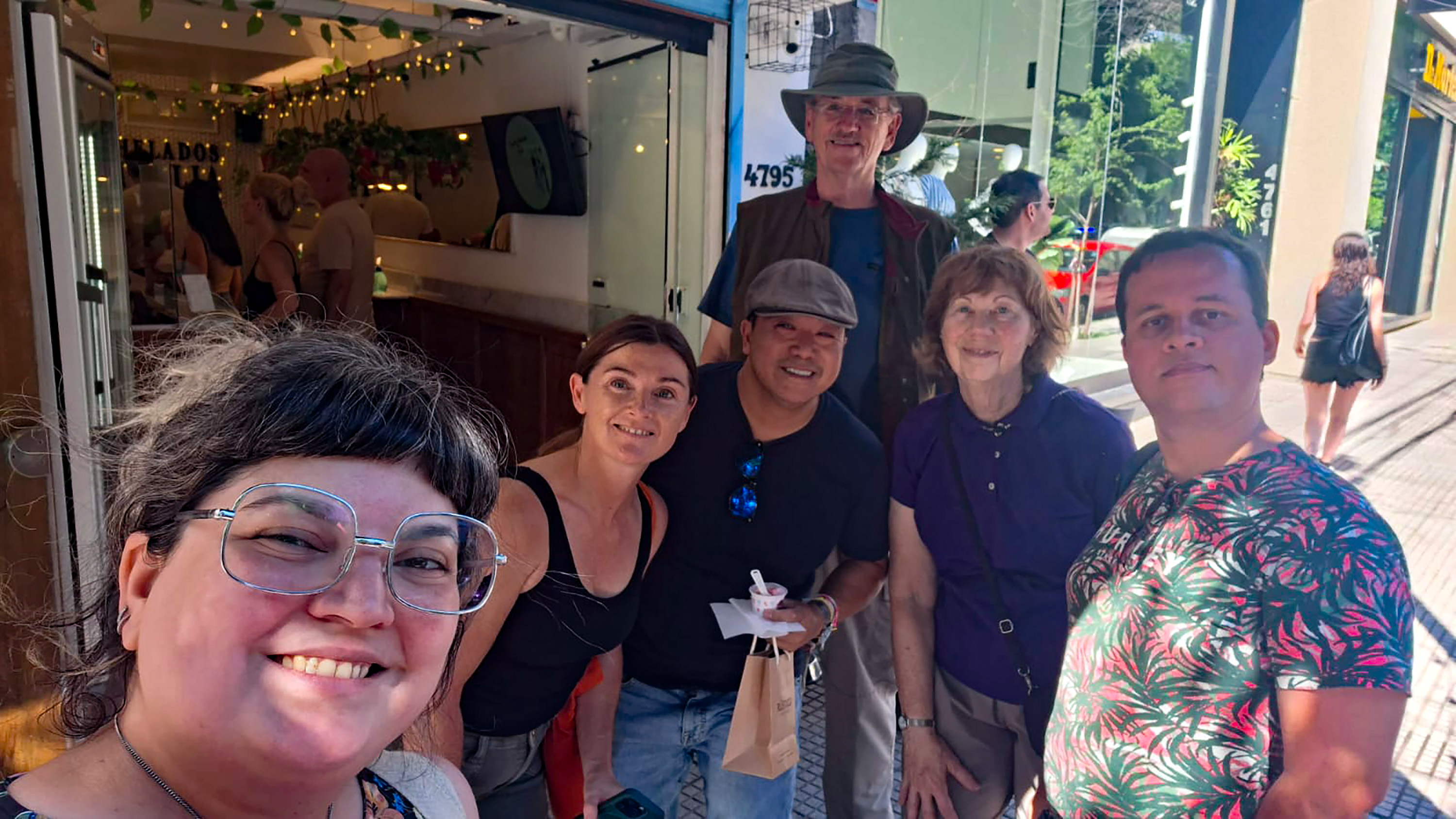
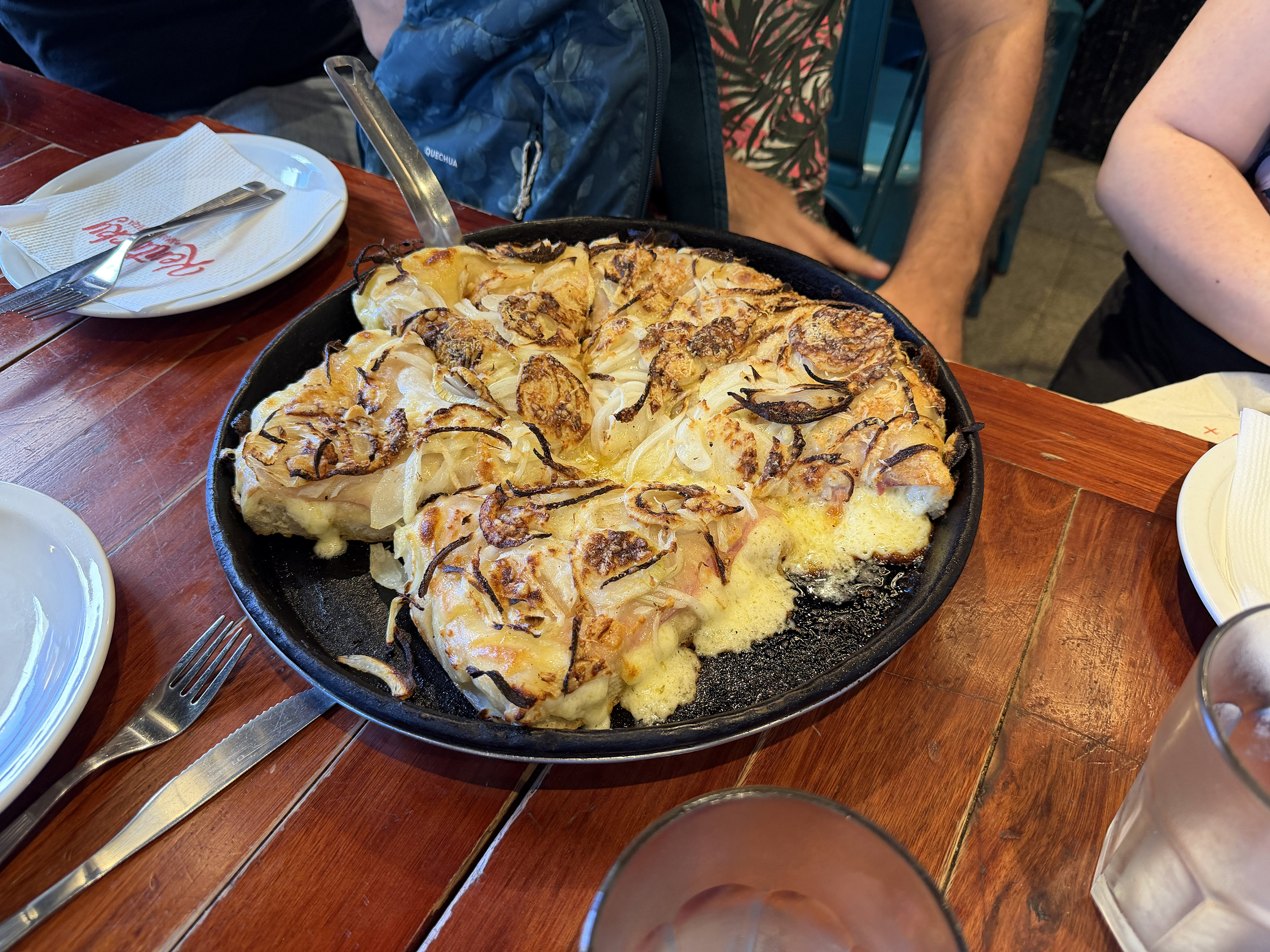
Our first stop was a pizzeria chain (named Kentucky for some unexplained reason). We had a style of Argentinian pizza called la fuggazetta, which is essentially a stuffed cheese and onion pizza with no red sauce. It is thick and spongy pizza dough filled with mucho mozzarella cheese and topped with a generous amount of onions, olive oil, and oregano. The cheese is baked between two thin layers of dough, and the raw onions on top retain their crunch. Absolutely delicious.
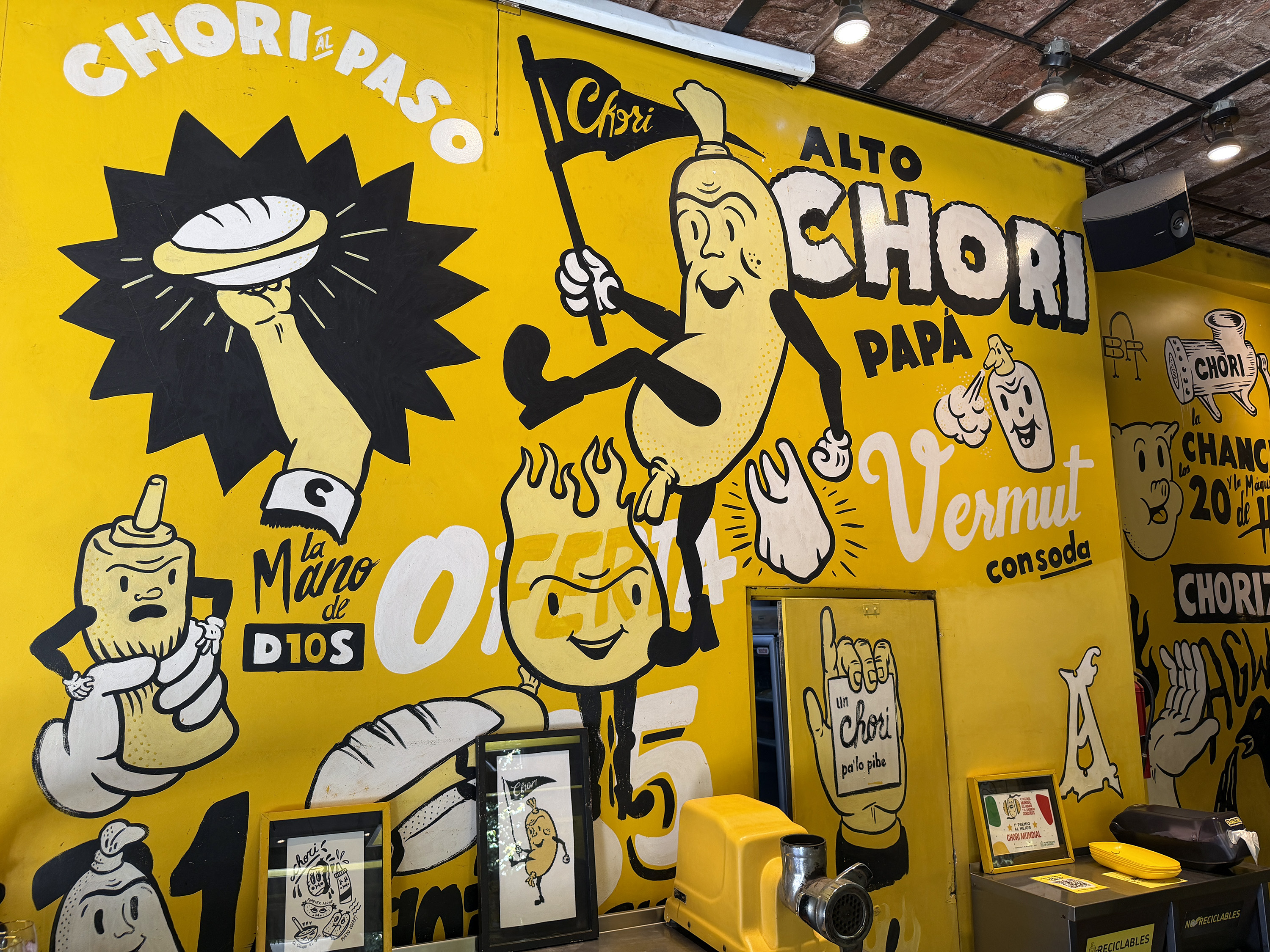
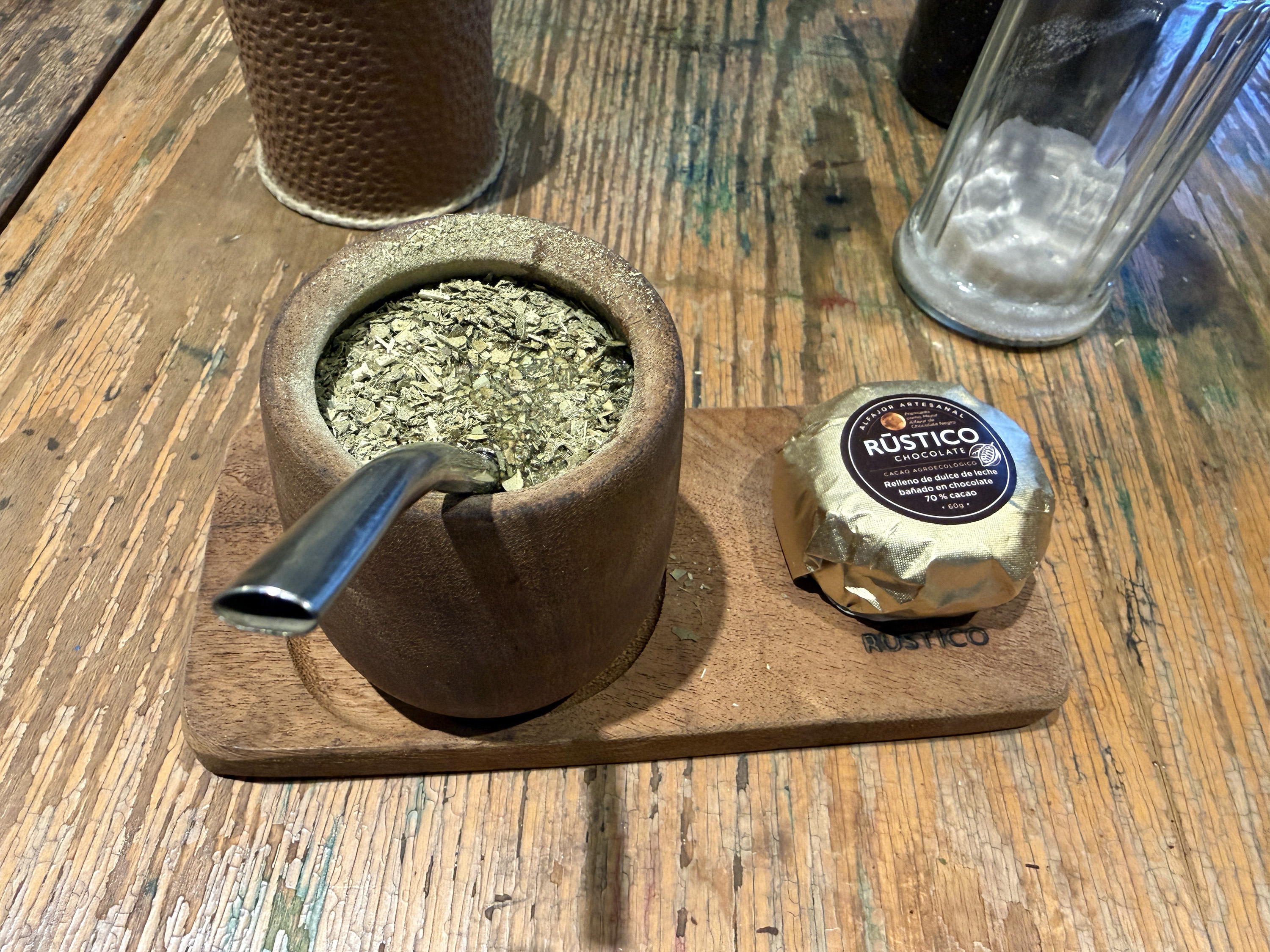
Next was a small place called Chori, which features choripán, an Argentinian relative of the hotdog, a grilled chorizo sausage on a crusty bread roll. The one we sampled was called Cerdo Ahumado and it featured mushrooms, lettuce, orange reduction, and some kind of aioli-like sauce. The roll was round, not an elongated hotdog shape. Then a chocolate shop called Rustico where we were introduced to mate (MAH-tay), a famous tea-like drink that has an elaborate ritual for preparing the yerba (SHER-ba) mate leaves. It really tastes a lot like matcha tea to me, although Nancy objects to that description. I had only a few sips because online sources say it is rich in caffeine, a drug I try to avoid in the afternoon. Amalia claims it actually contains “mateina” and doesn’t have the same stimulative effects as caffeine, but I still demurred. Accompanying the tea was a delicious chocolate layered cookie called an alfajor, for which Rustico has won awards. (Subsequent visits to stores indicate that such types of cookies are widespread in Argentina and Chile.)
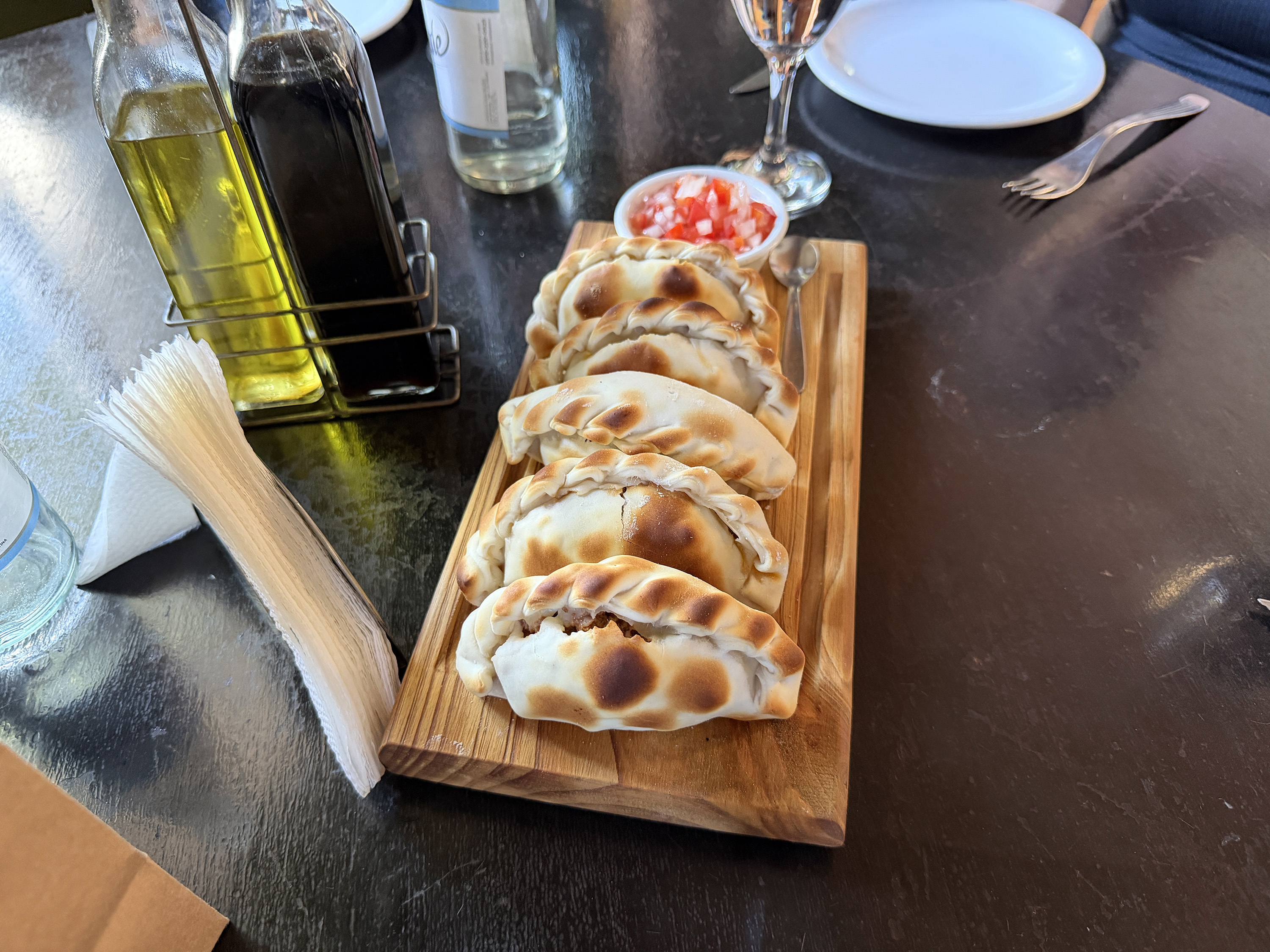
At La Colonia de Cosme, a cozy neighborhood place, we had a good beef empanada and saw a diagram showing the distinct dough-crimping styles for all the various fillings that are popular. Next was another highlight, La Escondido, where we had a small asada meal, an Argentinian tradition, featuring a superbly delicious Bife de Chorizo steak—a New York strip sirloin—perfectly cooked. Our finale was a gelato place called Helados Italia. So, an excellent, but overly indulgent, afternoon.
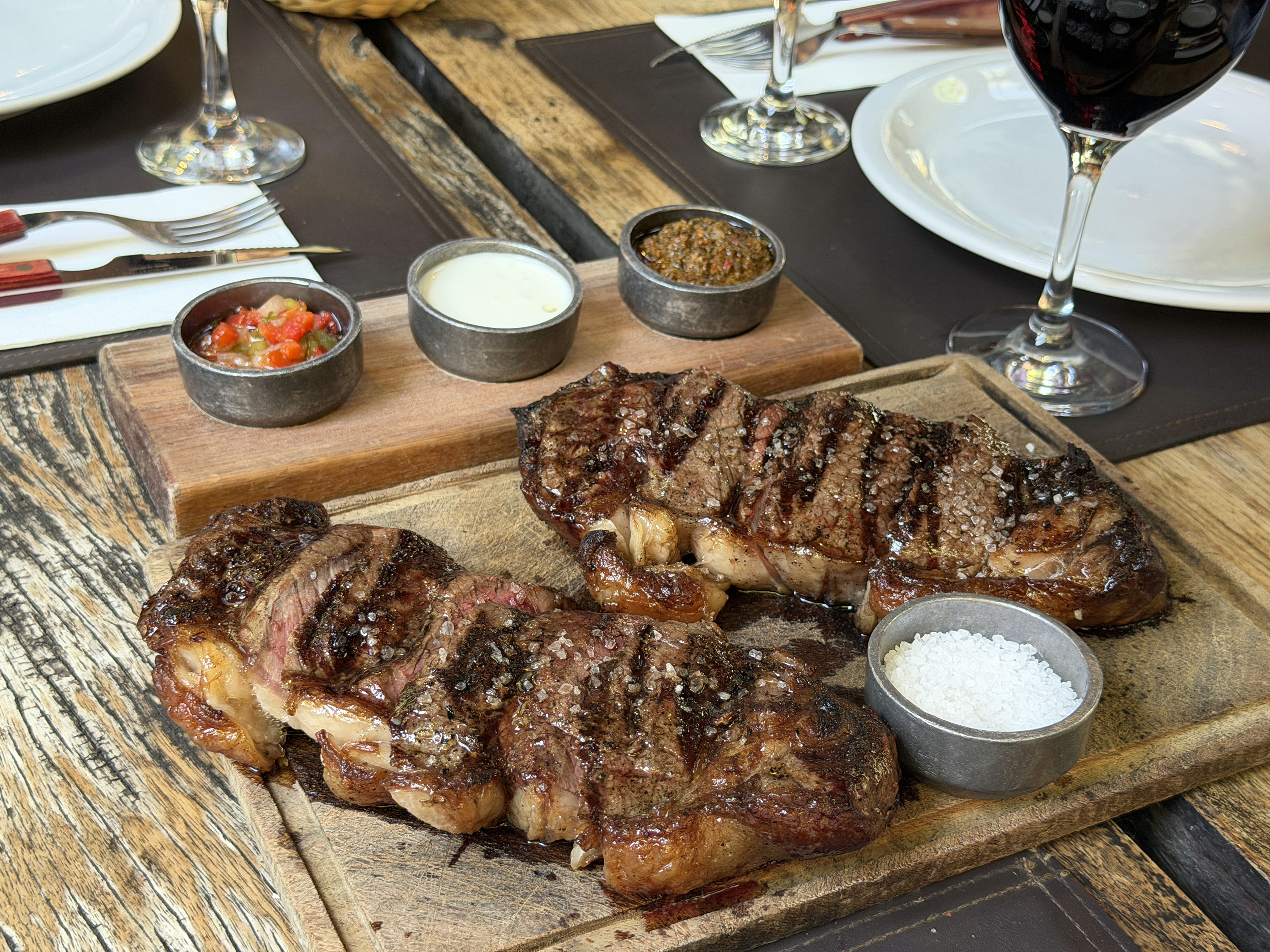
We Ubered back and rested up at the hotel. A rather nice room in a modest hotel. We are across the street from a huge cemetery that is apparently a major tourist attraction with guided tours. Eva Perón is buried there. We met Ray and Pat for dinner. On our Viking expedition cruise to the Great Lakes, we had an Argentine cruise director who recommended a pizzeria in Buenos Aires called Güerrin, so despite the overlap today with Kentucky, we had to try it. We had another fuggazetta, although this one had mushrooms and no ham. Excellent, but I’d say Kentucky beat it by a nose. We got a table immediately at 7, but by the time we left after 8:30, the huge place was completely packed with a long line out the door.
Sunday, November 16 — Buenos Aires and Tigre on our own
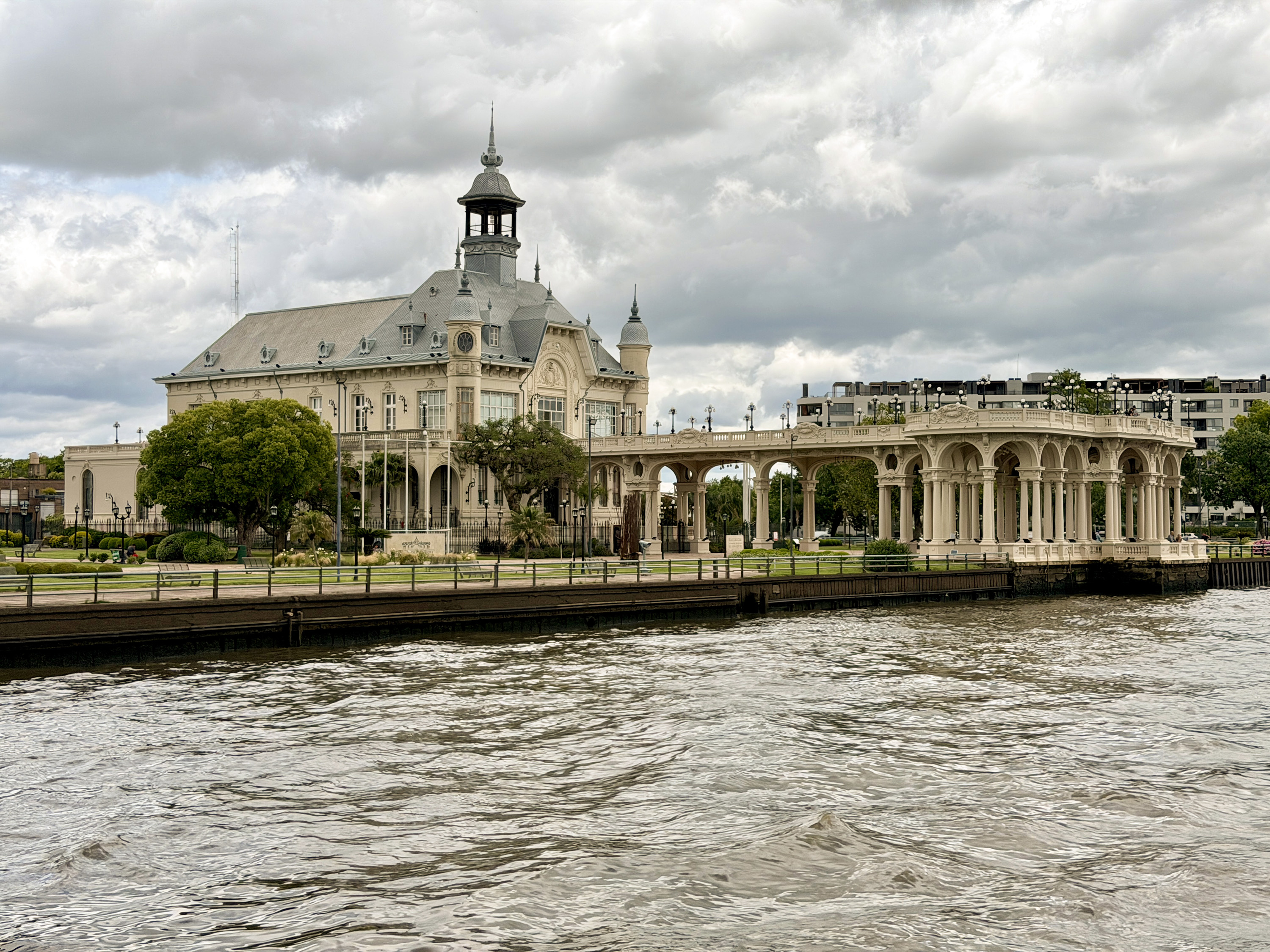
Ray booked us a guided tour today. We were picked up at the hotel in a van and driven 45 minutes north to the city of Tigre. Our guide Andre did trilingual commentary—Spanish, Portuguese, and English. Driving through Buenos Aires we appreciated how pretty a lot of the city is, particularly in blooming season for the ubiquitous Jacaranda trees. We stopped outside the ornate Tigre art museum and walked around the modest gardens. The site was developed in 1906 as a casino for rich city folks. Tigre was named by Spanish explorers who found local jaguars and thought they were actually tigers. We spent about an hour at a large outdoor marketplace call Puerto de Frutas. Lots of little food stands, virtually all offering hamburgers as favored choices. The stands with artifacts were not exceptional and Nancy thought much of the merchandise was crafted in China.
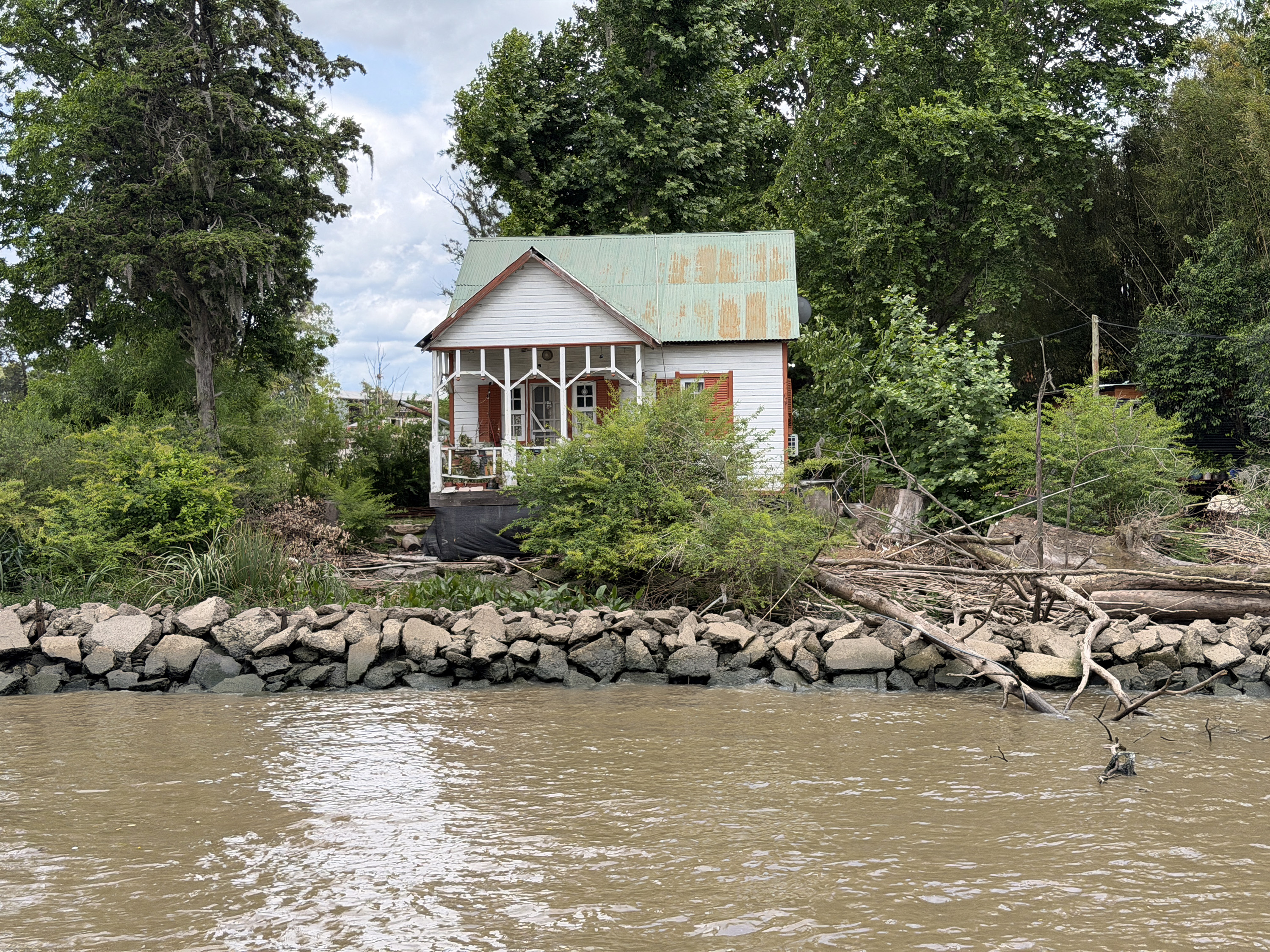
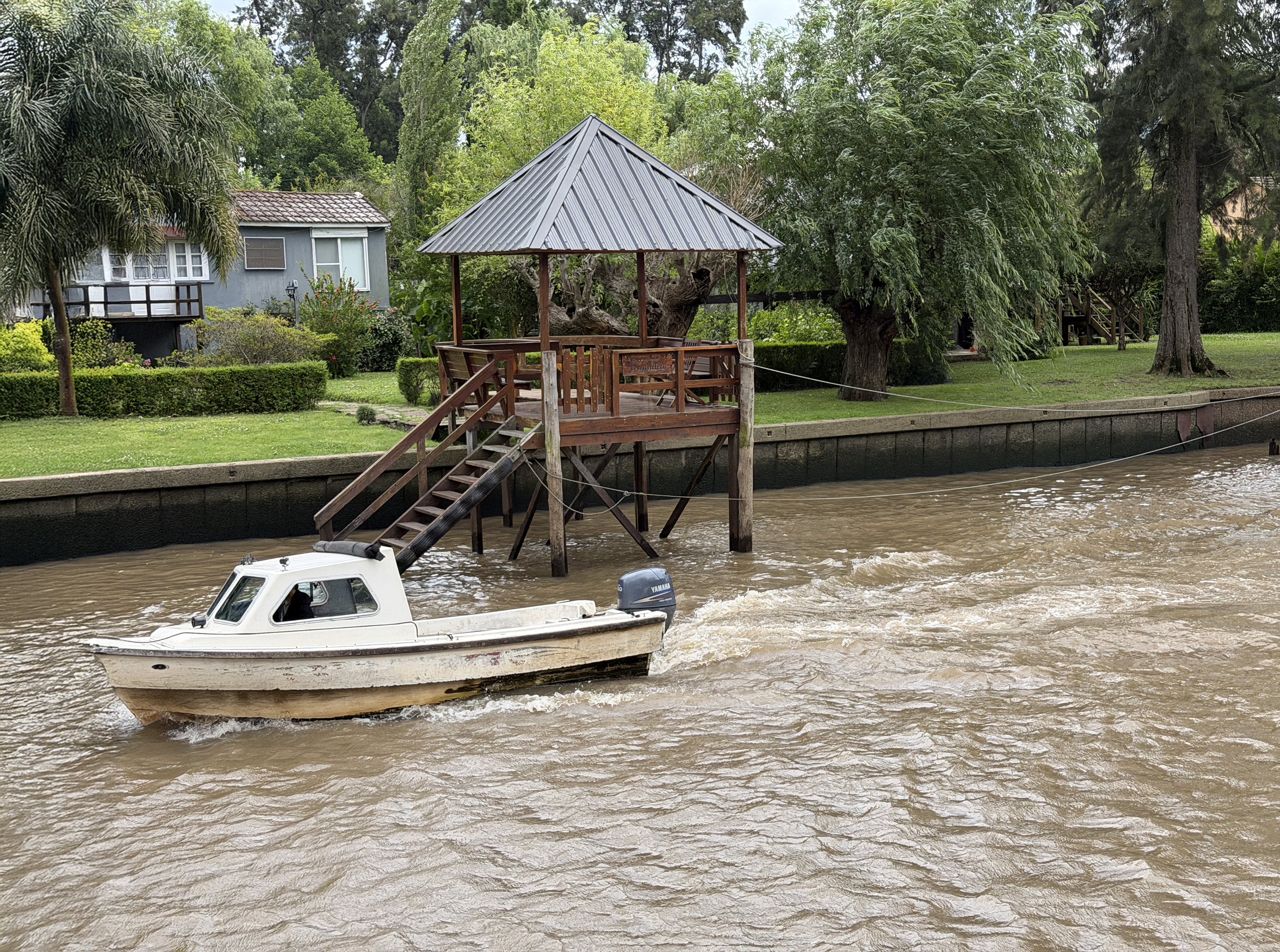
We boarded a boat on the Tigre River for a tour of the Paraná Delta islands and canals. The main island we circumnavigated had no road access, and the inhabitants were supplied entirely by boats, like grocery boats, fuel boats, etc. We saw an ambulance boat speeding along to a potential emergency. There were dozens of small boats out, including a lot from rowing clubs. Some of the houses and their docks were pretty ramshackle, but there were some nice properties here and there, mostly on stilts to withstand flooding. Our trip took us over Rio Luján, Rio Carapachay, Arroyo Espera Grande, and Rio Sarmiento; the latter river had the nicest properties. It was there that our boat broke down, and we waited about 30 minutes for a replacement to arrive. All of this river system, or delta, feeds into Rio de la Plata, an estuary that runs past Buenos Aires to the sea. Some consider it an actual river, and if so, it is the widest (140 miles) in the world. It was interesting to hear on our tour yesterday that the city residents pay little attention to this massive river and have invested nothing in promoting its waterfront for noncommercial uses.
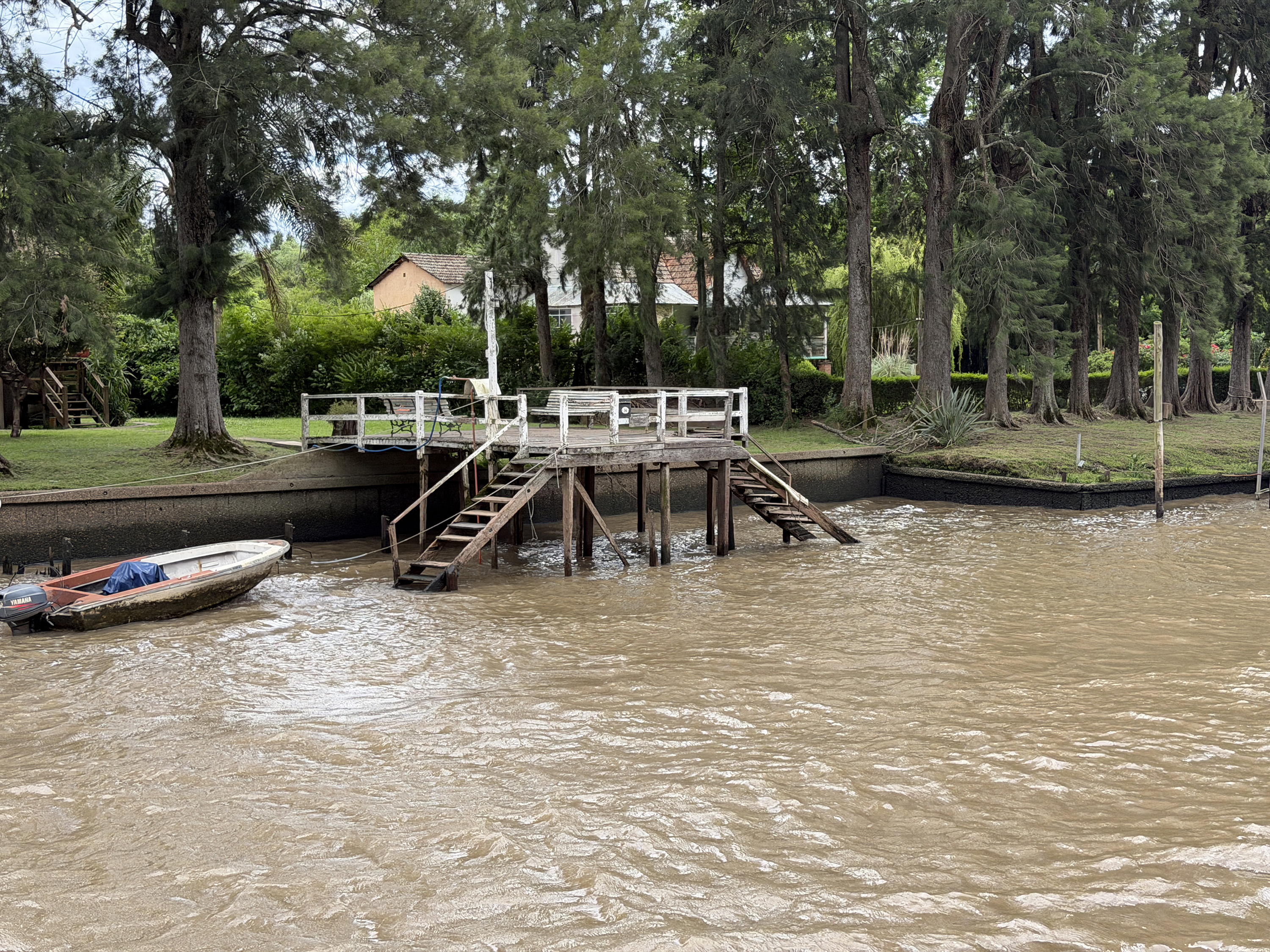
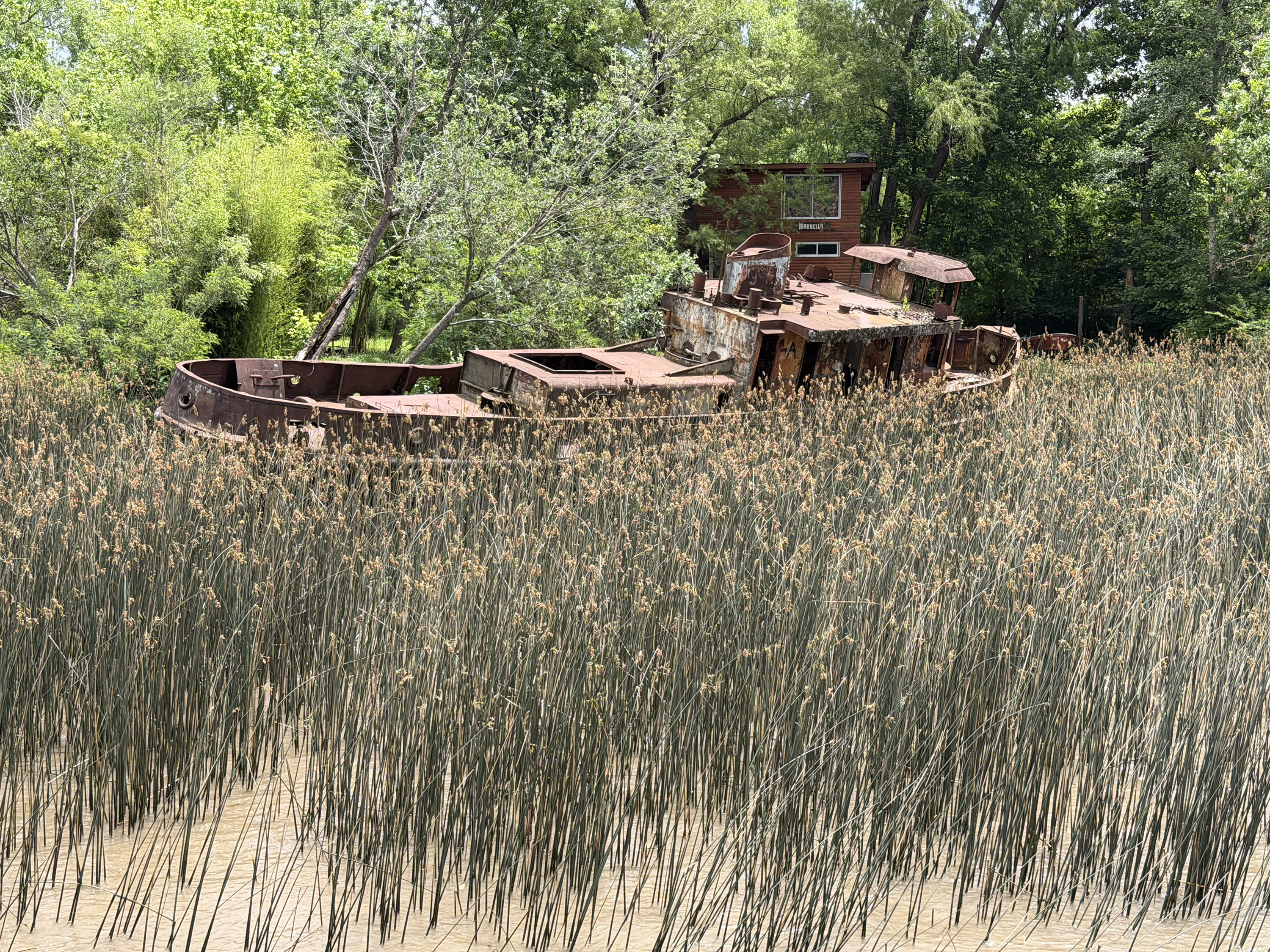
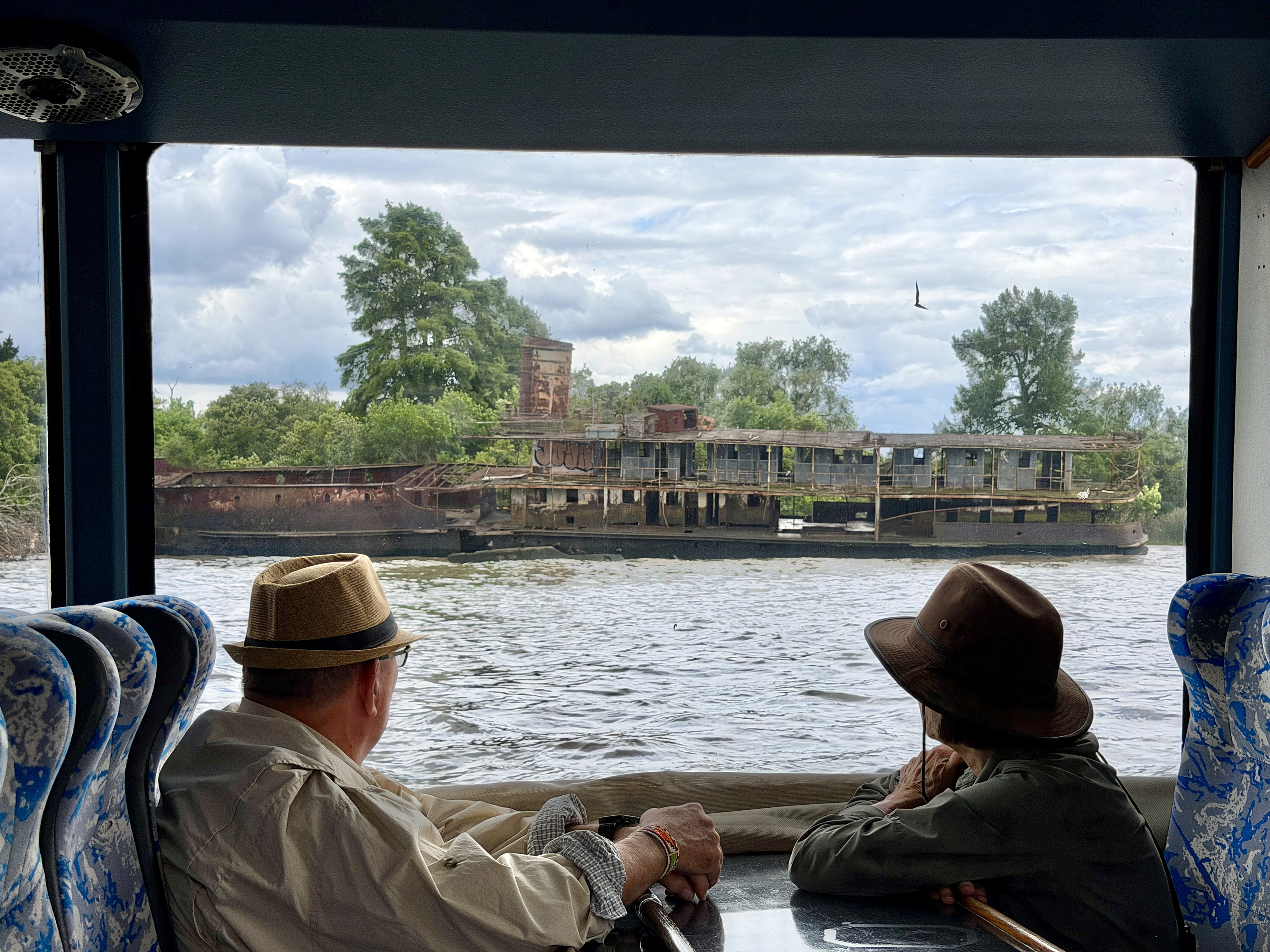
After the van deposited us back in the city, we decided on a late lunch in lieu of dinner, so we returned to a stop on our food tour, La Escondida in Palermo Soho, where we had an excellent steak meal started off by a delicious dish of charcoal-grilled provolone cheese called provoleta. The place is huge, a former factory with tall brick walls, and very lively. And quite a bargain at $99 for the four of us.
Monday, November 17 — to Iguazú Falls
Today starts our involvement with Smithsonian Journeys, and it was a miserable day (through no fault of theirs). We purchased a two-day pre-extension to the famous Iguazú Falls at the Argentine/Brazil border. We took a car service to the local airport, Aeroparque Internacional Jorge Newbery (AEP), a lot closer to downtown than EZE. We arrived for our flight on Aerolineas Argentinas two hours early but found hundreds of people in line to check in. After about an hour and forty-five minutes in line, we reached the desk, the flight had been oversold, and there were no seats available. Ray and Pat may have received the last seats. So we were reassigned to a flight four hours later, but within minutes, it was delayed another two and a half hours. This airline was also a thorn in our side because they limited checked bags to 33 pounds, and I usually have 36–40, particularly when packing for three weeks in various climates from hot to glaciers. So I needed to juggle items between the big bag, my carry-on backpack (max 17 lbs), and my 26-pocket SCOTTeVEST. In the bedlam of the severely overcrowded airport, I’m not sure they even checked the weight of the bags. So two lessons learned: avoid government-owned airlines and always check in early online, even when the web interface is not in English.
After an unpleasant nine-hour stay at the airport, we finally took off and reached Puerto Iguazú after 9 p.m. We were met by our guide, Val, who graciously stayed up late and escorted us to our hotel, the Loi Suites, which is a very nice modern resort in a woodsy (subtropical rainforesty) area well outside of the city. We’re right on the Iguazú River, so only a few hundred yards from Brazil. In the 30-minute car ride, Val gave us a full briefing about the Falls and the plan for tomorrow. He pointed out that the property is right next to a Guaraní indigenous tribe reservation.
Tuesday, November 18 — Iguazú Falls
The day started on a negative note when I tried to check in for the return flight on Wednesday. It showed me checked in, but Nancy was not, and no seats were available. So I escalated to the Odysseys Unlimited emergency contact, and they straightened it out in a couple of hours, replacing our messed-up reservation with a new one, this time in premium economy! (This is apparently the best seat in an Embraer regional jet.)
We had a decent buffet breakfast in the very beautiful hotel and then met Val for a 30-minute bus ride to the Iguazú Falls (ee-wah-SOO) visitor center. There are only six guests on this extension tour, so logistics were simple all day. The weather was perfect—sunny in the mid-70s. We did extensive walking, 15,000+ steps, on nicely maintained concrete paths and a lot of sturdy steel bridges and causeways. The Falls are spectacular, well worth the trip. We visited Niagara Falls earlier this year, and although they have more water flow, Iguazú is much wider and much more interesting, with many trail observation points very close to different levels of the falls, 275 in all. Water flow today was above average.
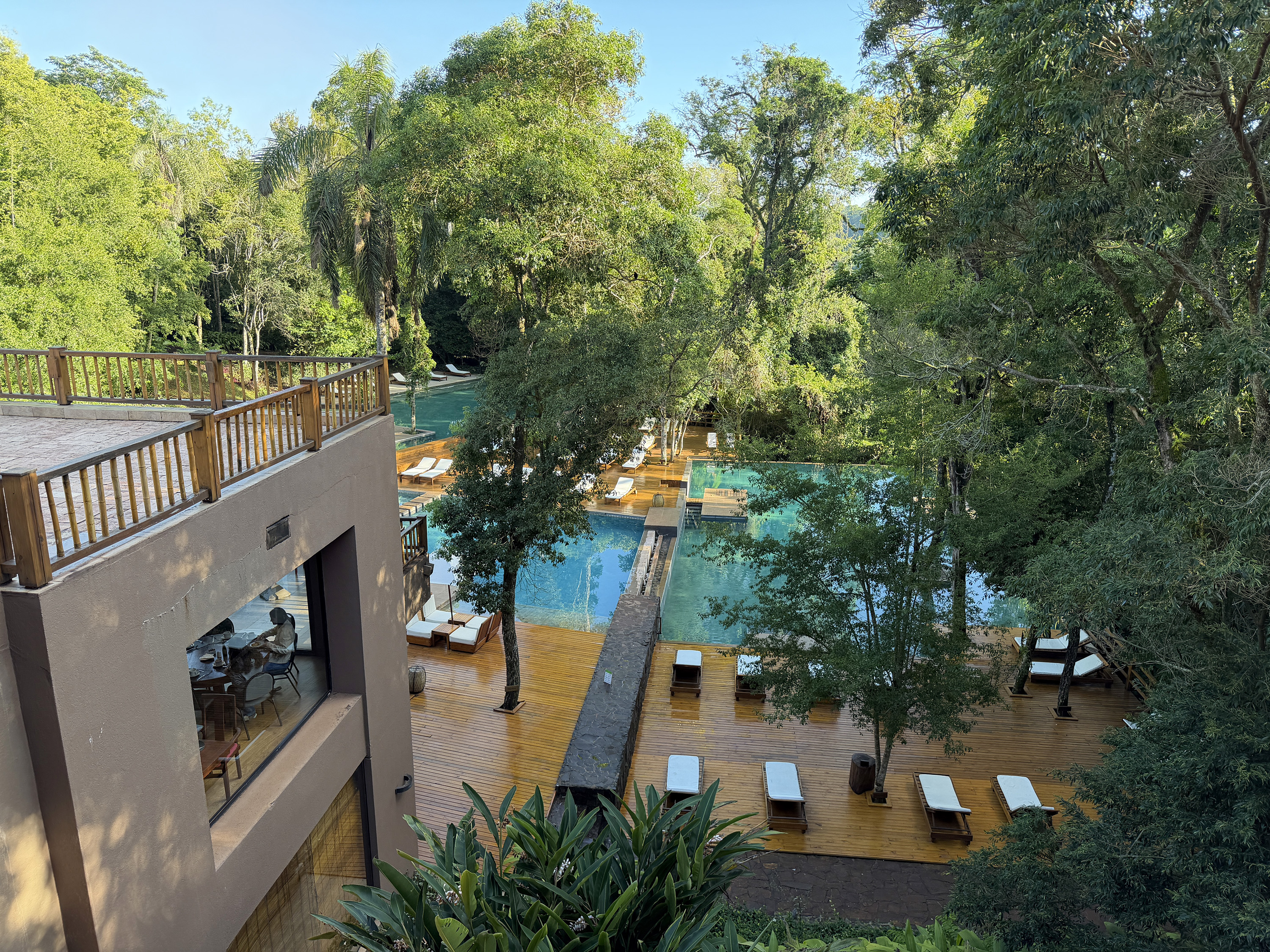
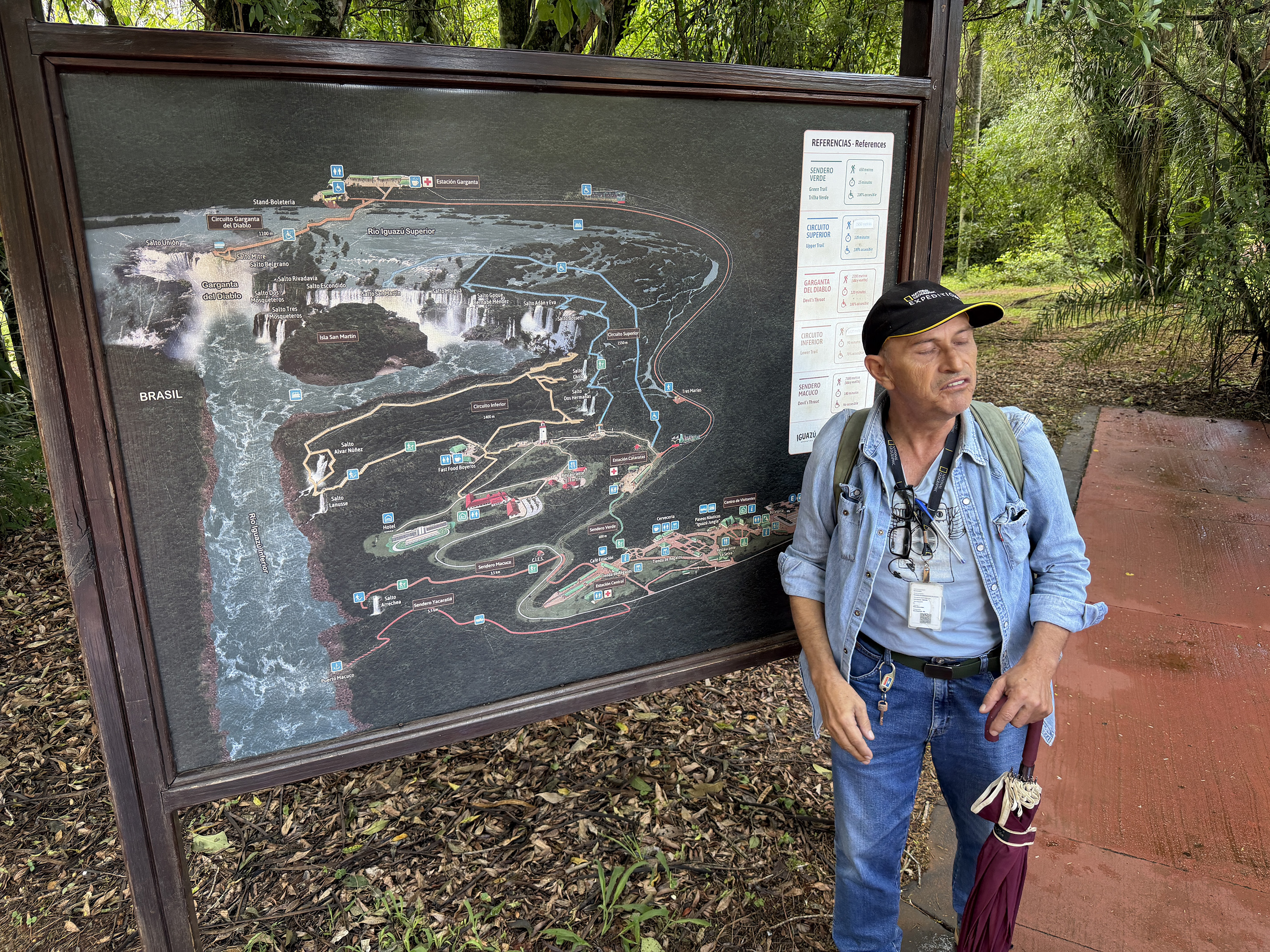
I concentrated on visuals instead of taking notes, so my photos and the compendium of short videos I spliced together on YouTube aren’t all that well documented. (Val is like an encyclopedia of knowledge about the Falls, Argentina, and South America, so it was difficult to keep with the data flow.) Two of the modestly sized falls that were individually interesting were Dos Hermanas (Two Sisters) and [General] San Martin. We traversed the Upper Trail along the top of the falls (1550 m), the Lower (1400 m), and the Garganta del Diablo (Devil’s Throat, 2200 m). The latter was the most spectacular with flows colliding from three sides, creating a rainbow and huge clouds of mist, a few of which drenched us without warning. Val said that this small rainstorm was caused by winds from the Brazilian side of the falls. We took a narrow-gauge railroad about fifteen minutes to a station for the Devil’s Throat and then walked 1100 m over a narrow bridge to see the best views of the day.
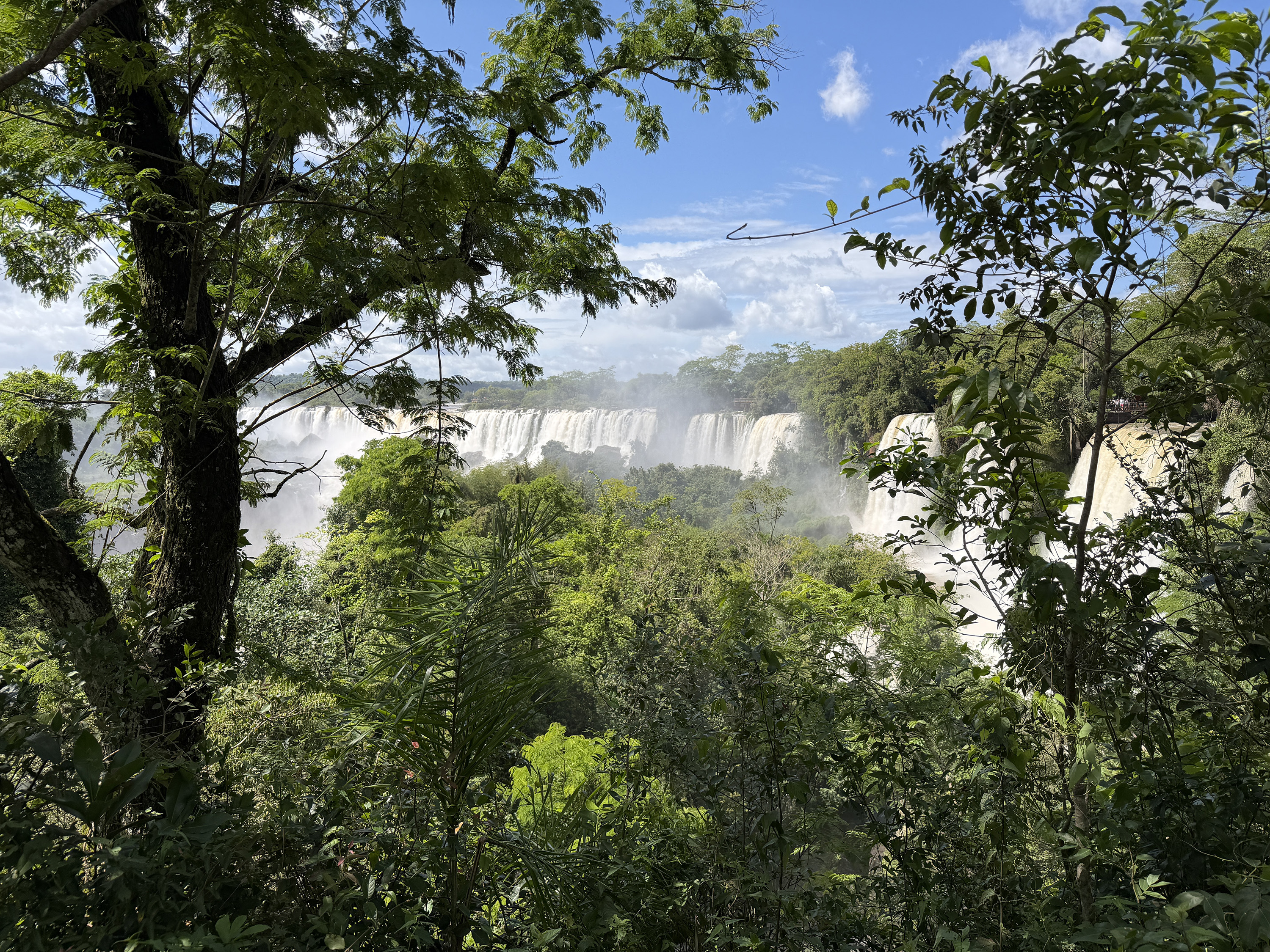
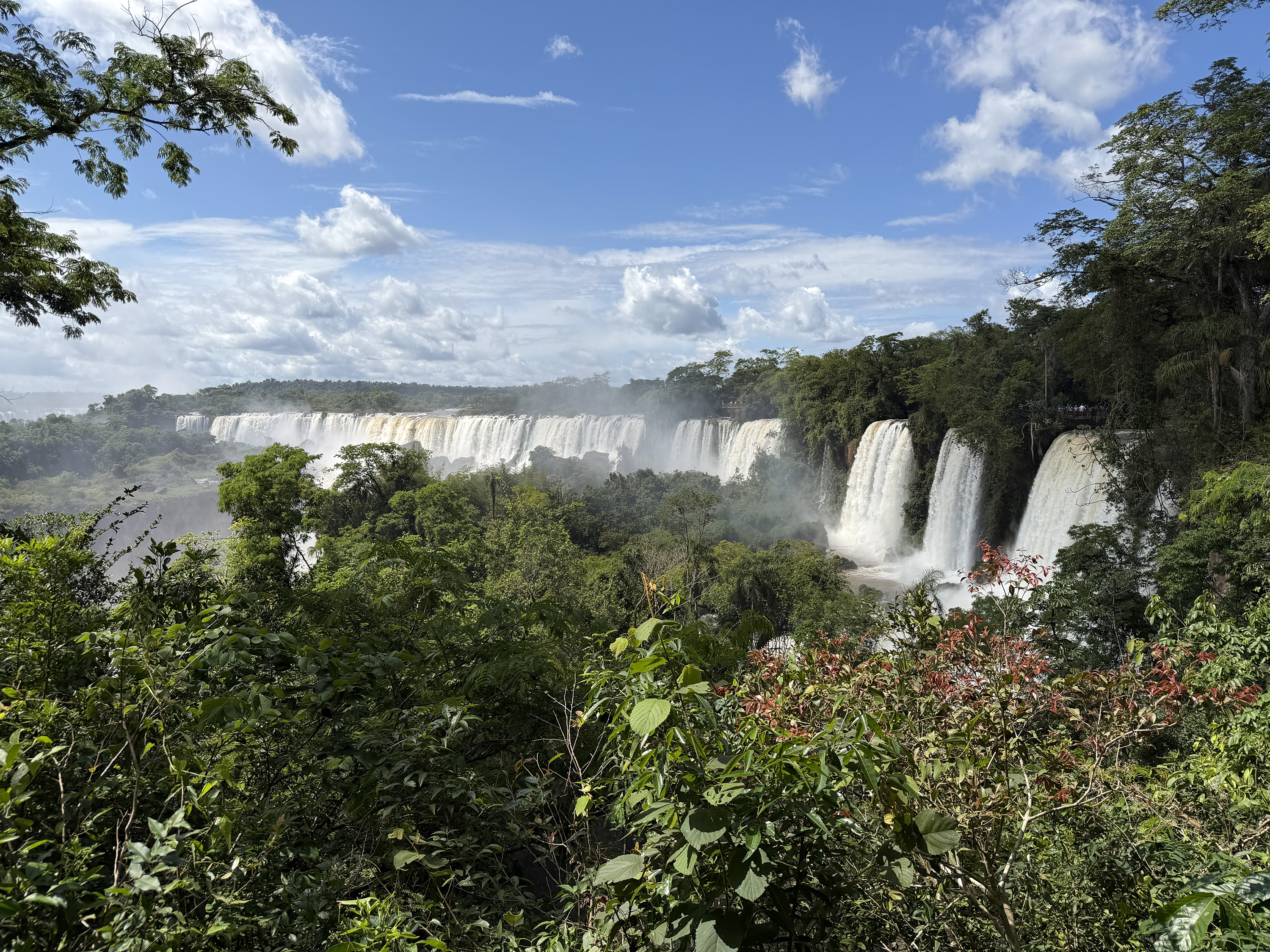
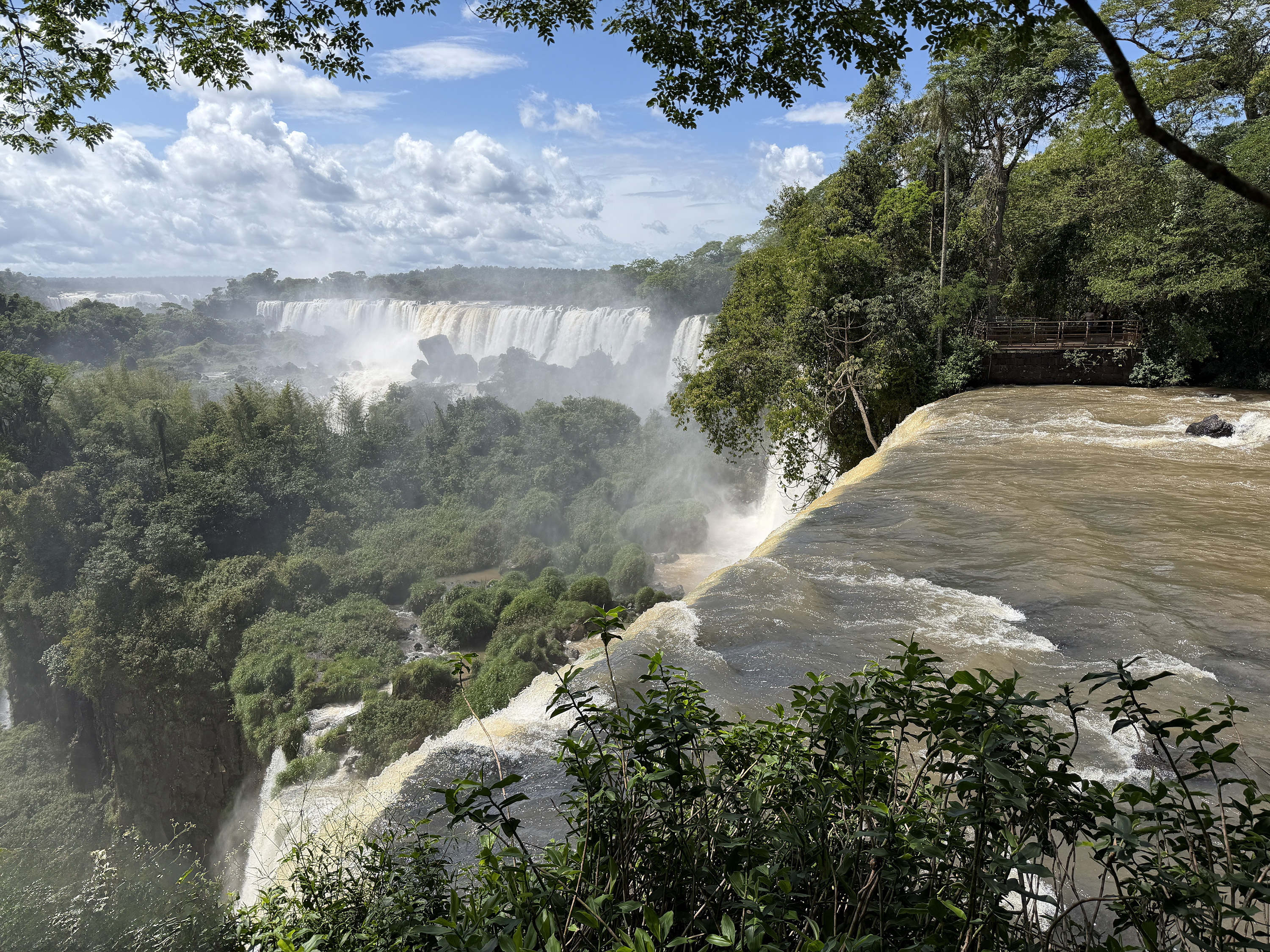
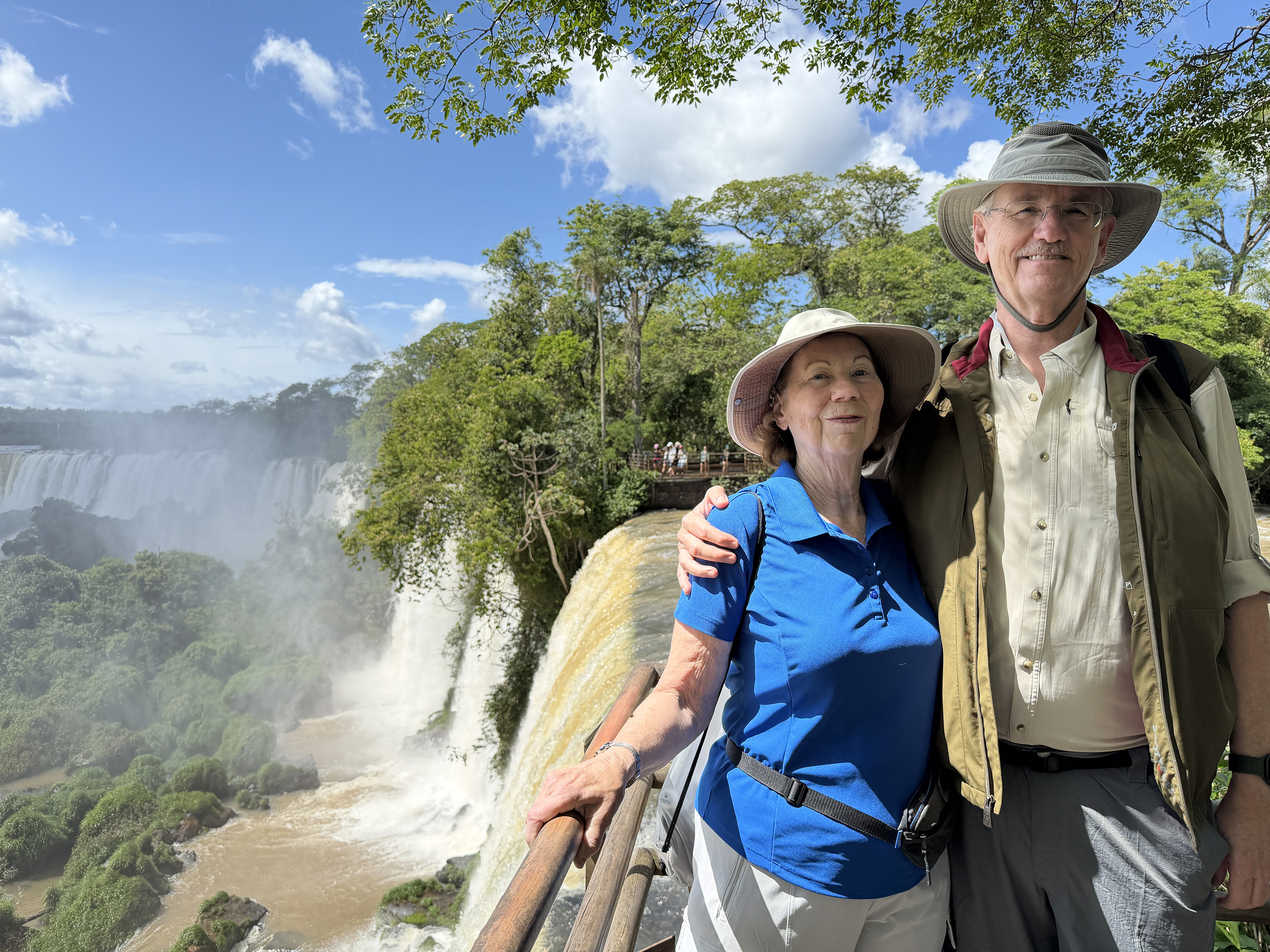
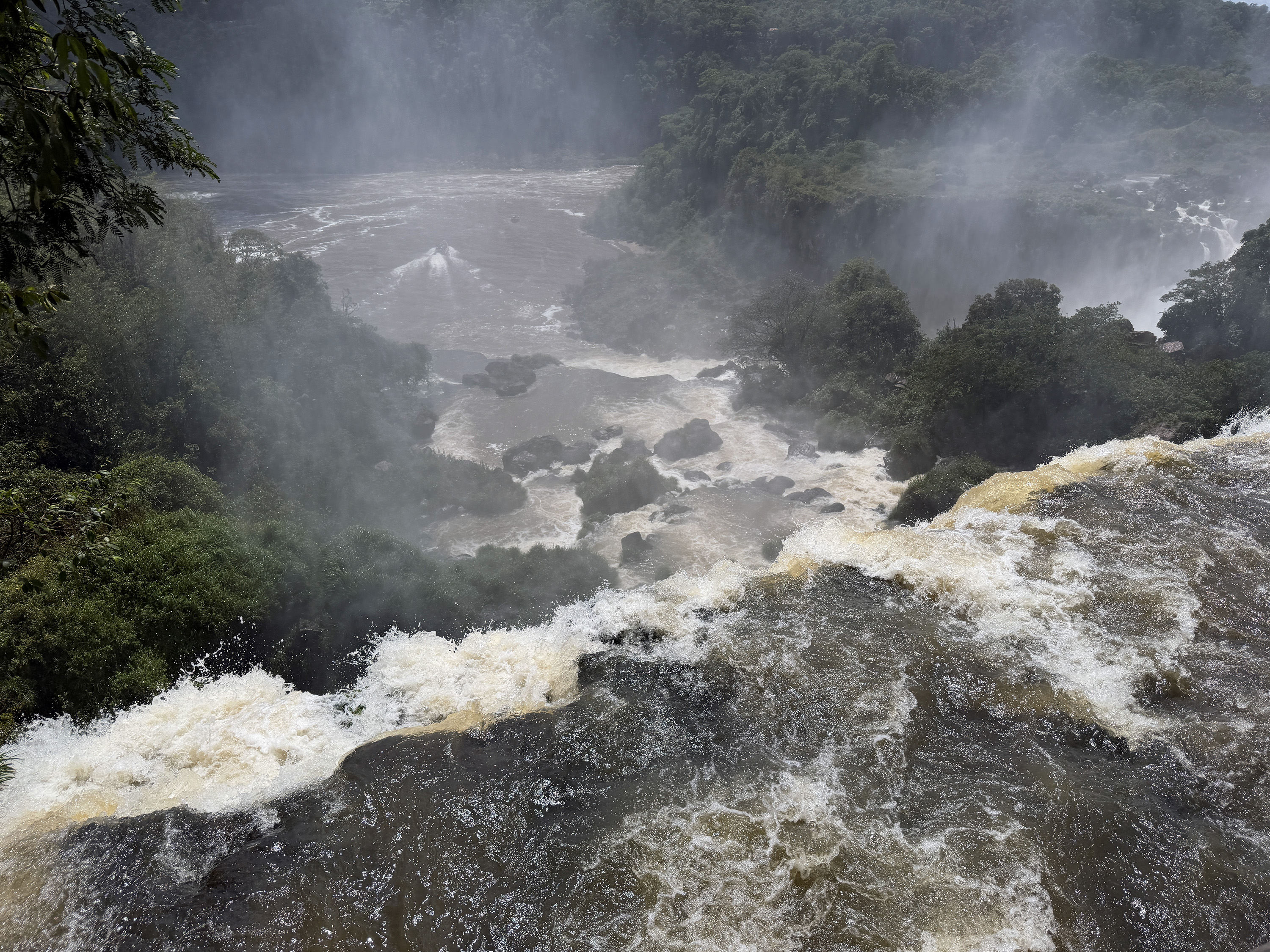
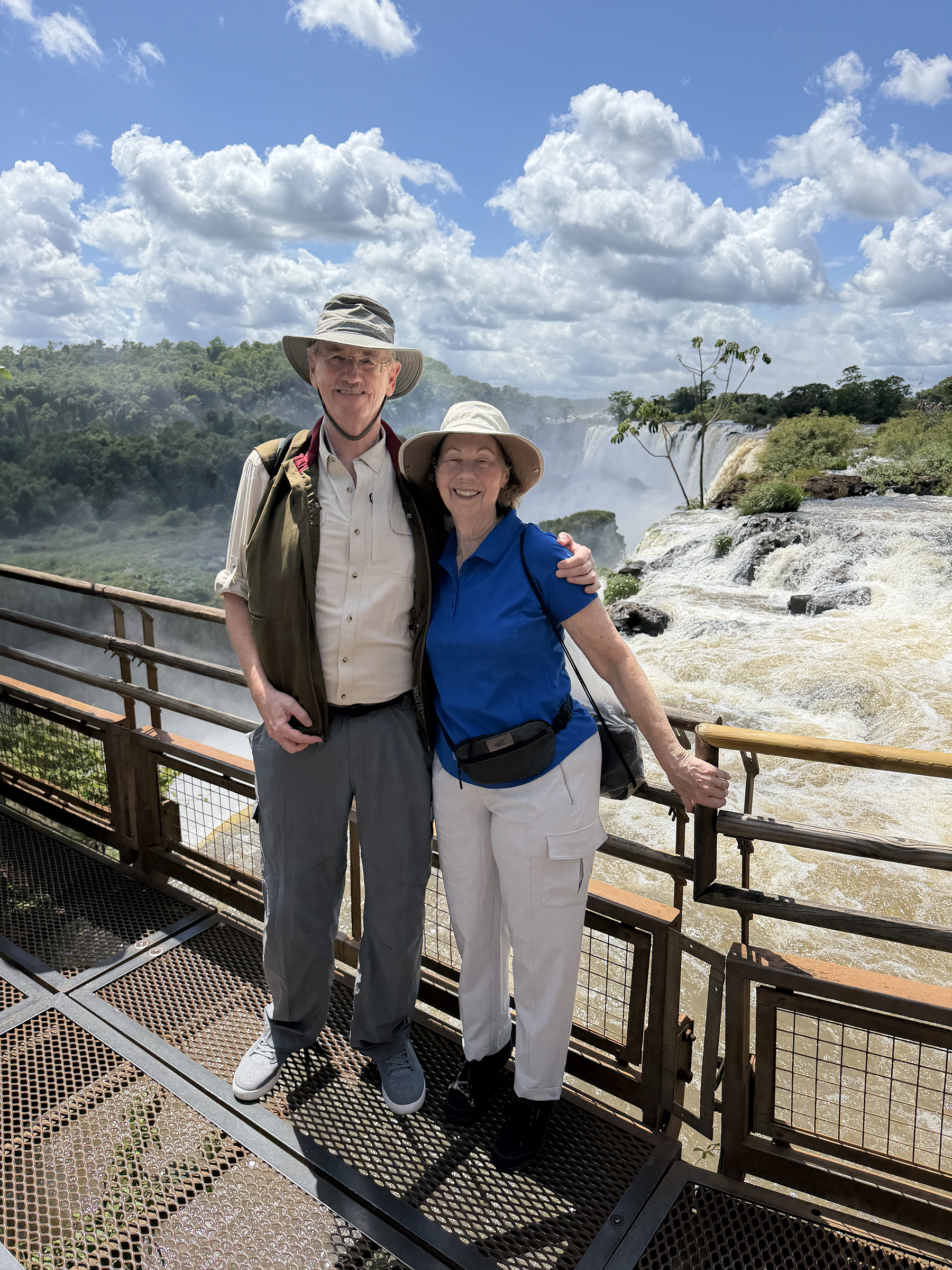
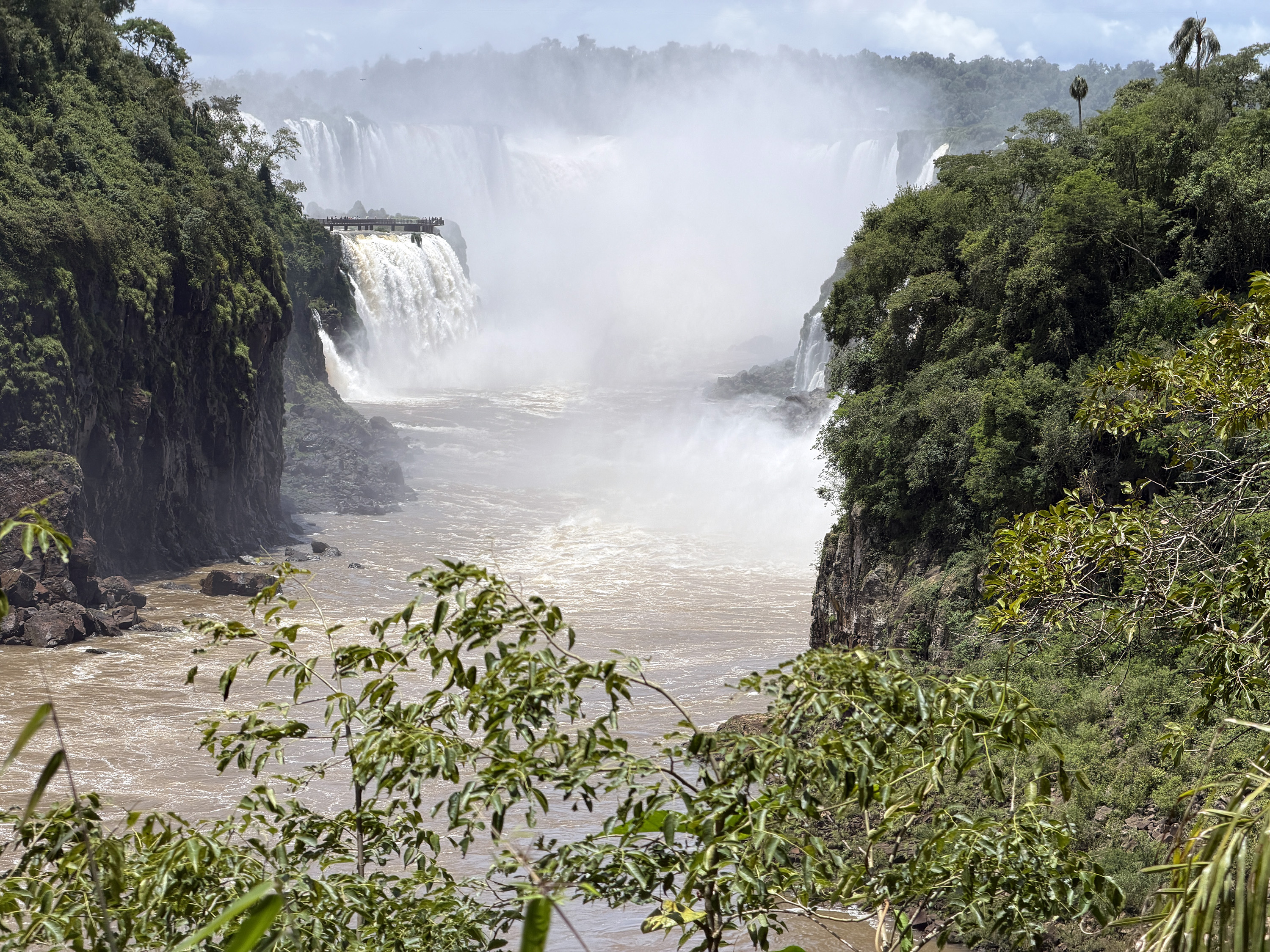
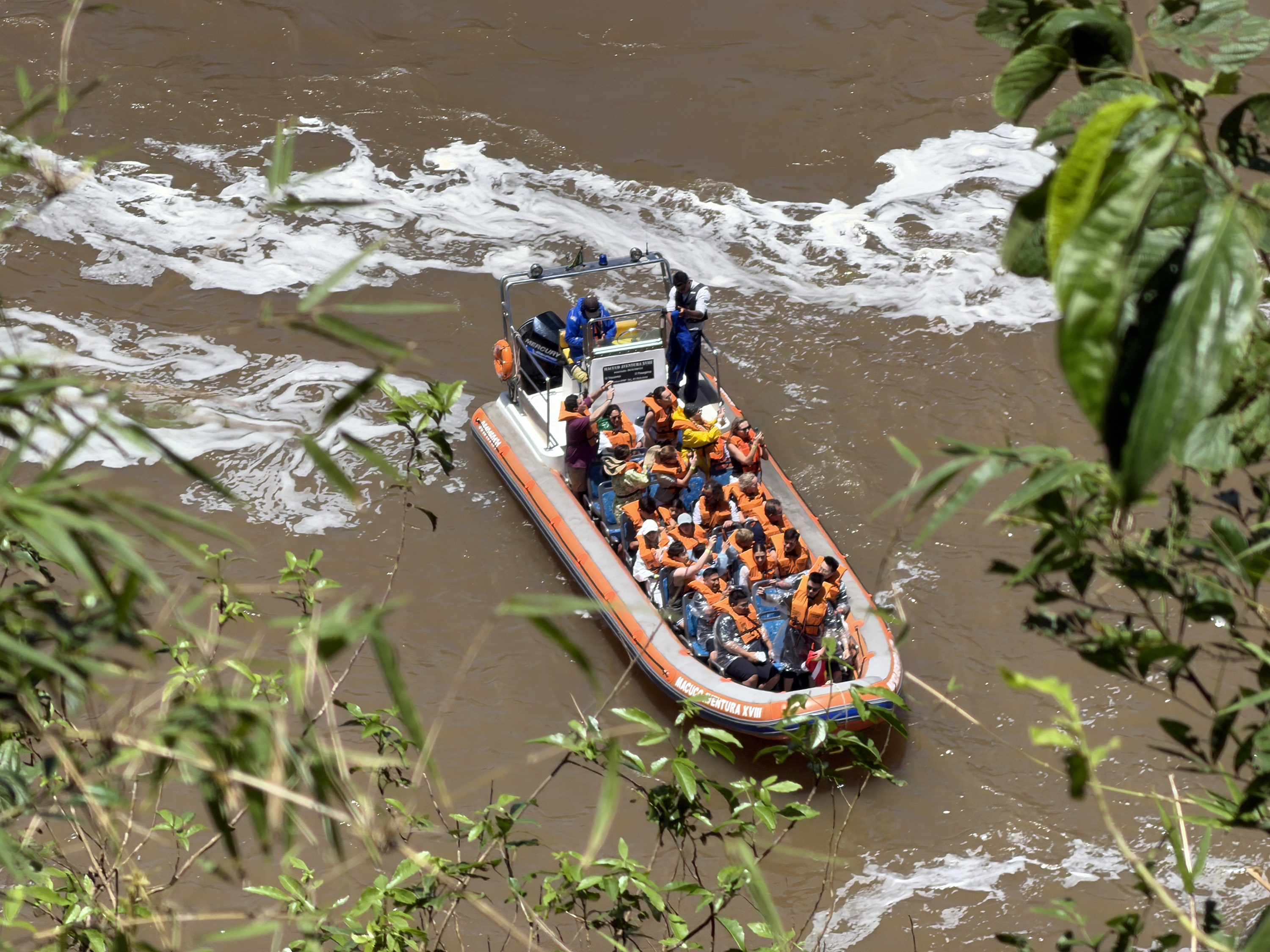
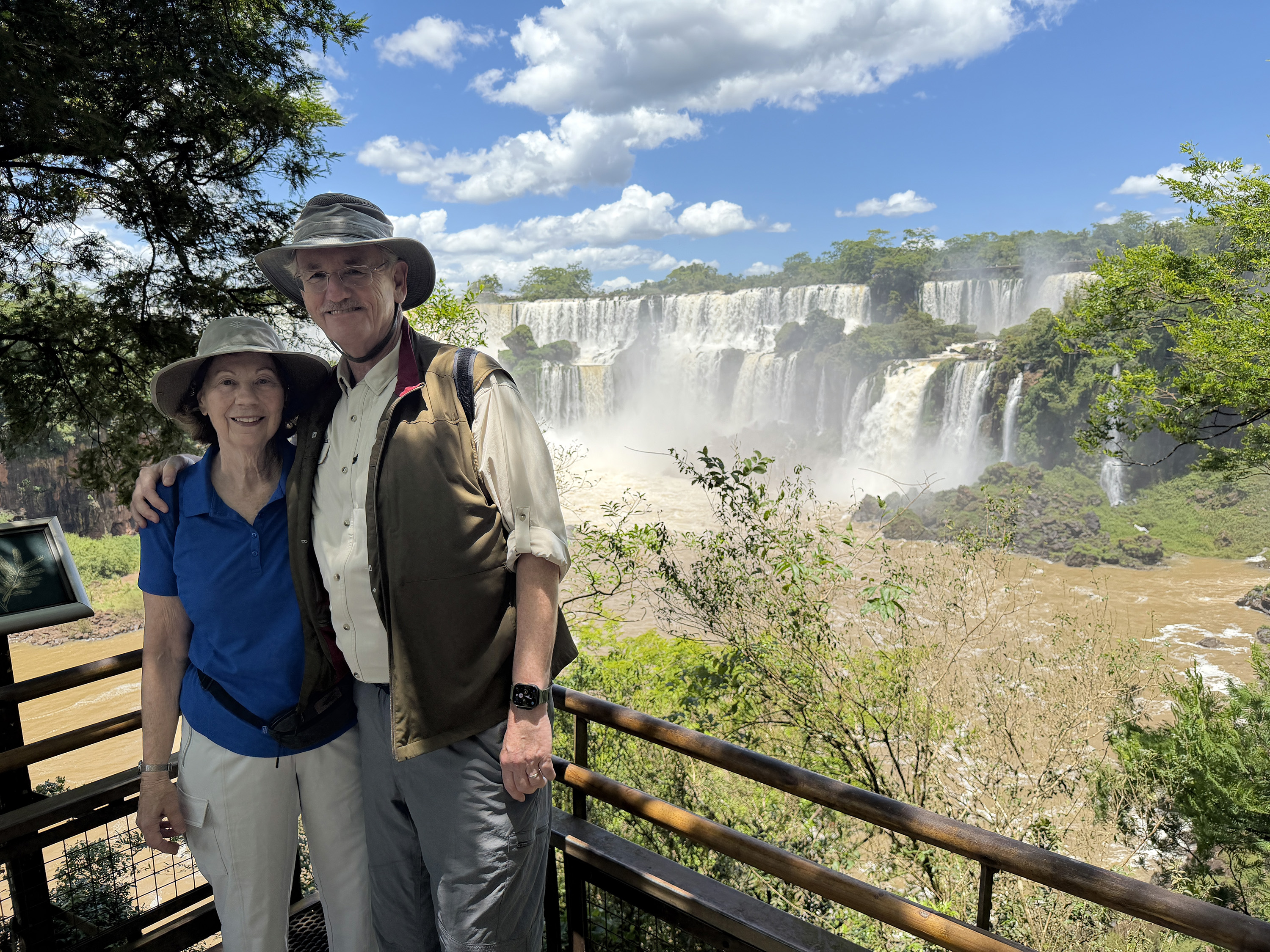
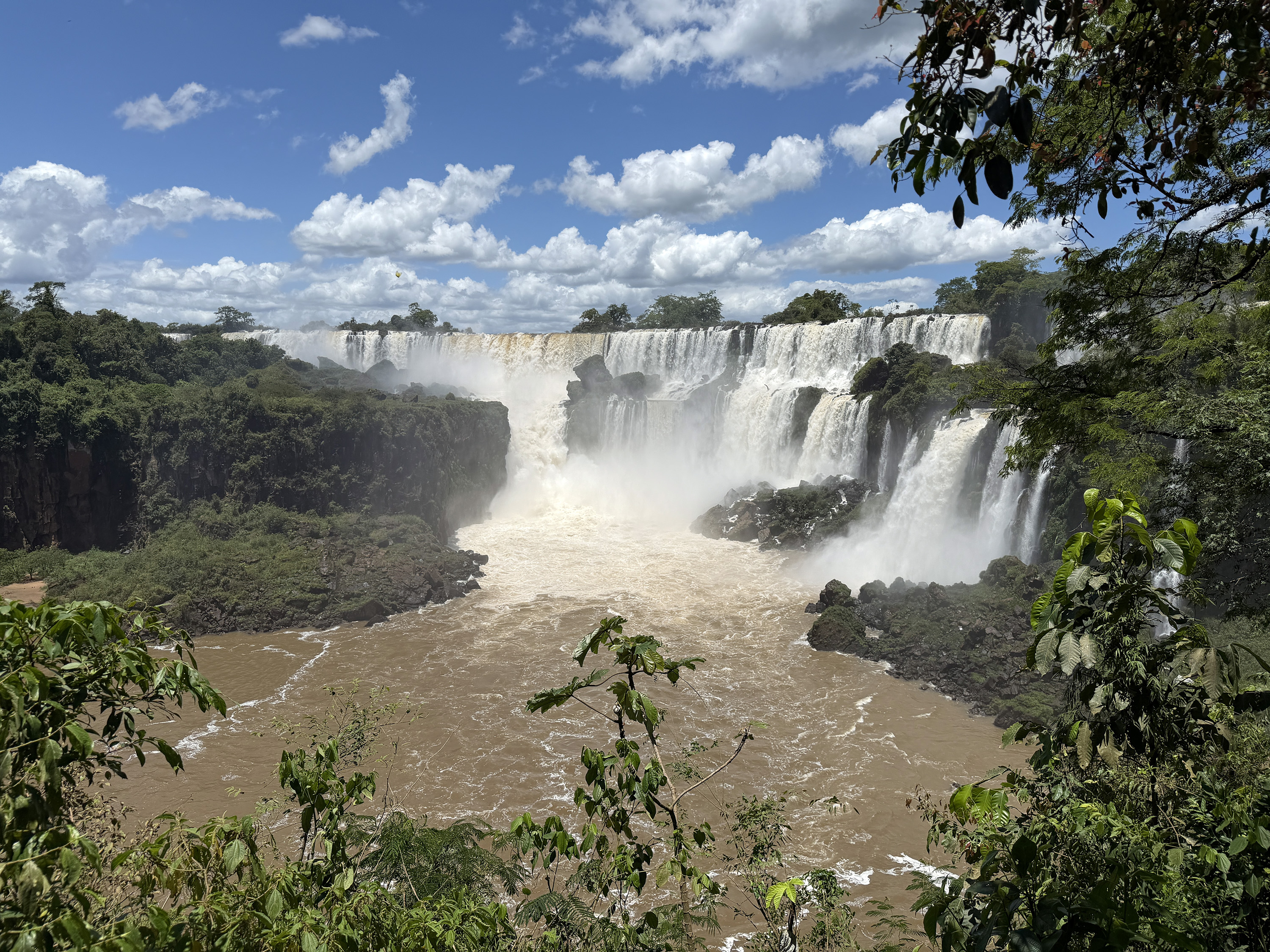
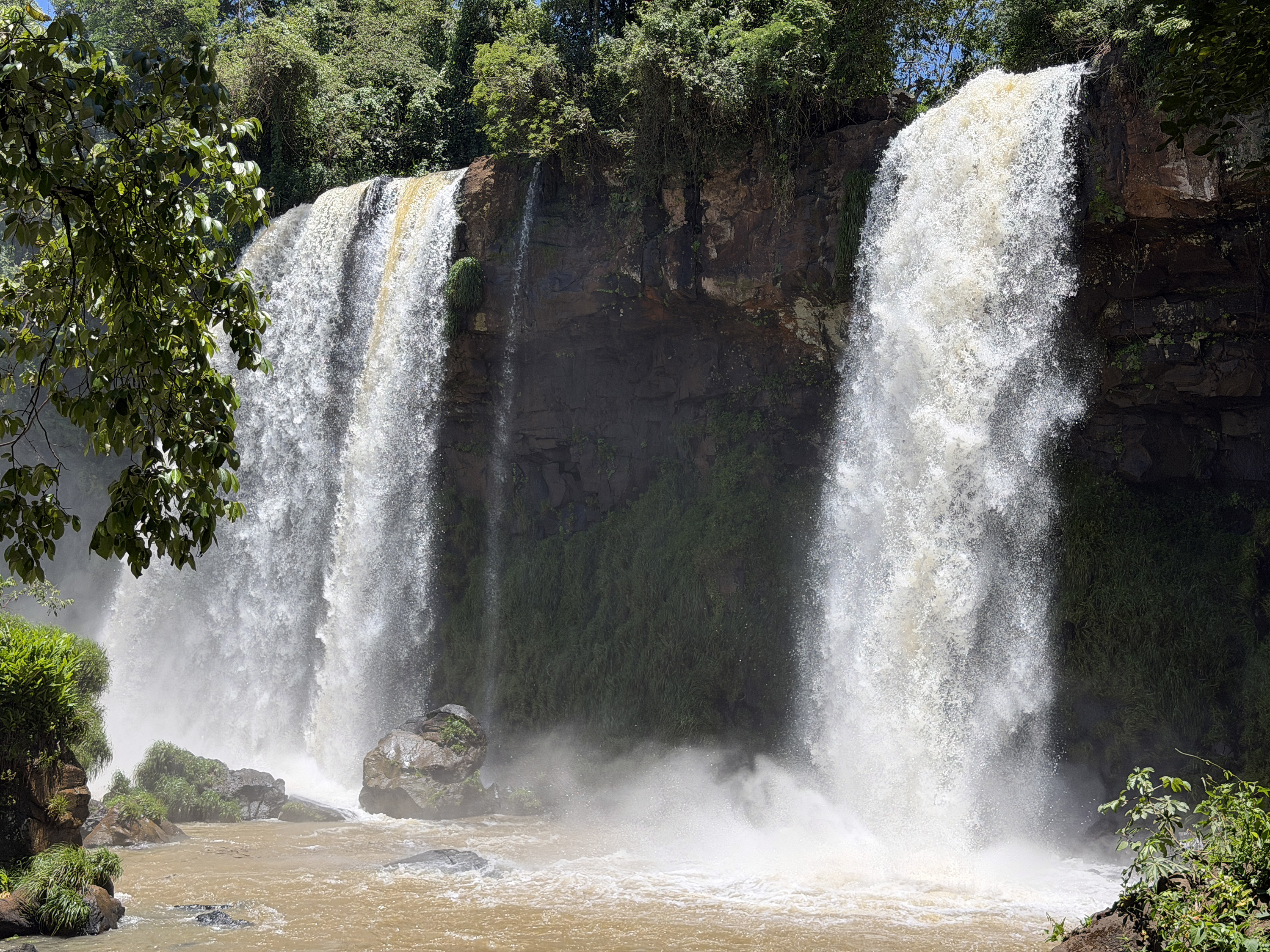
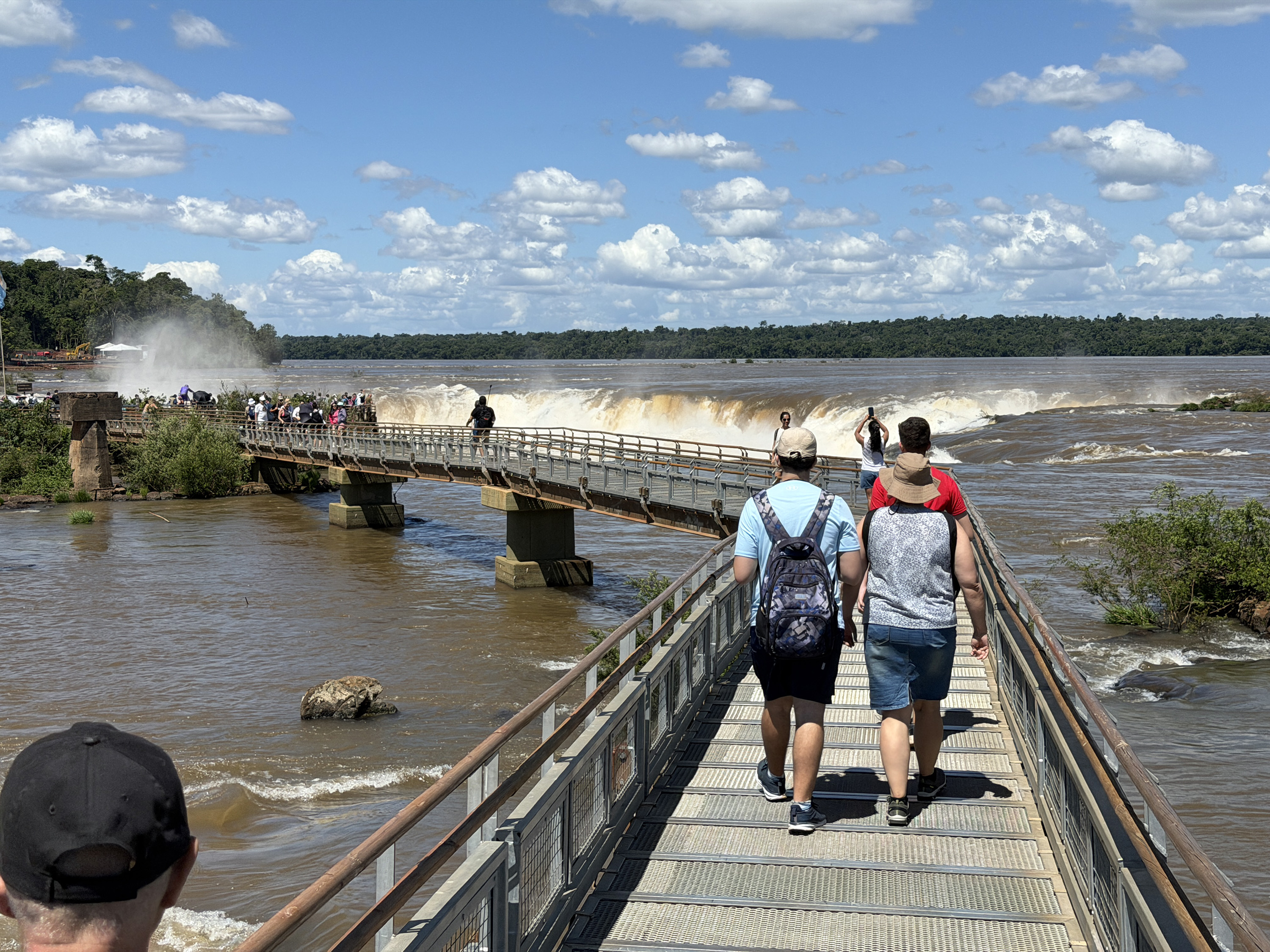
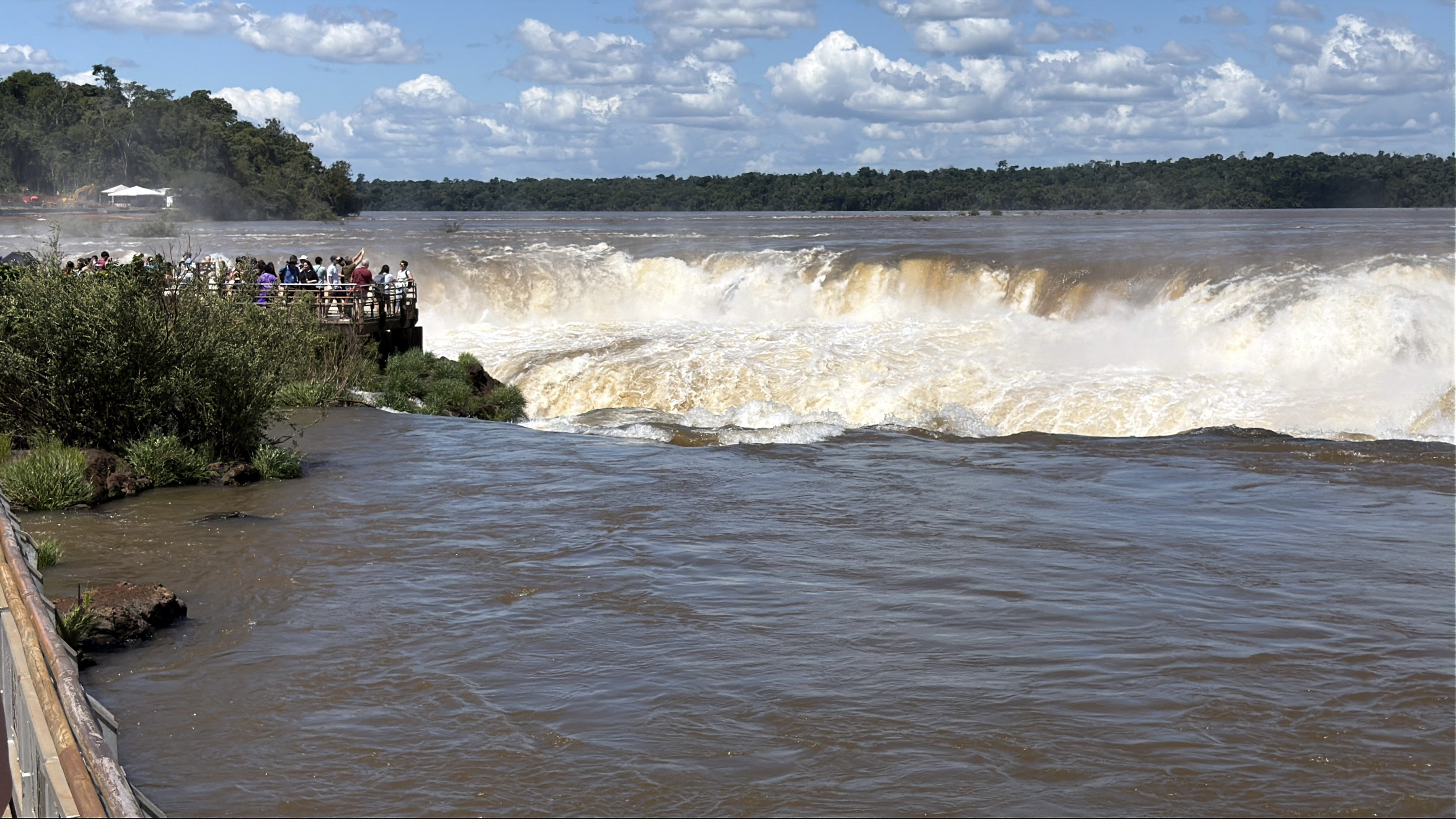
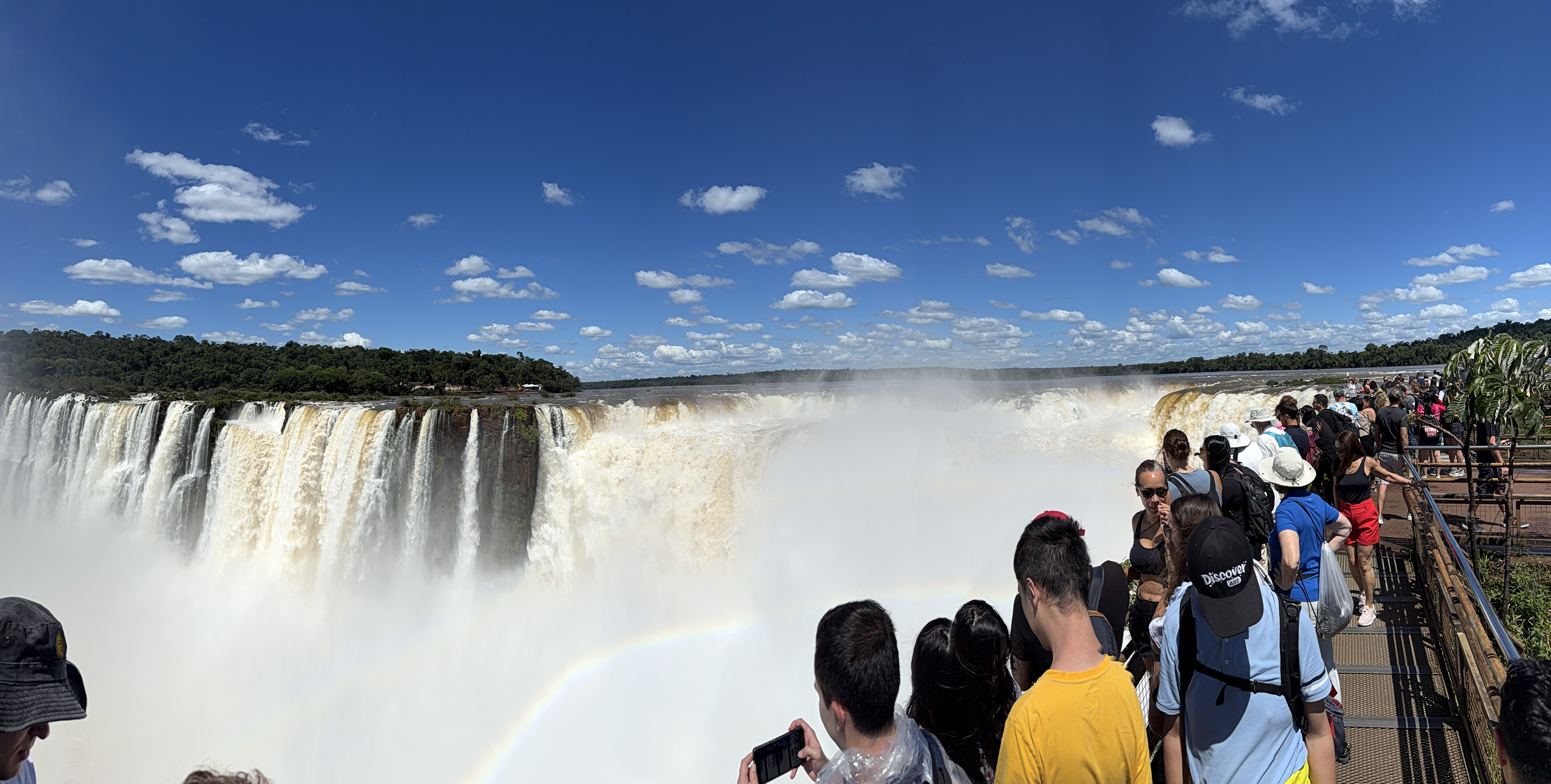
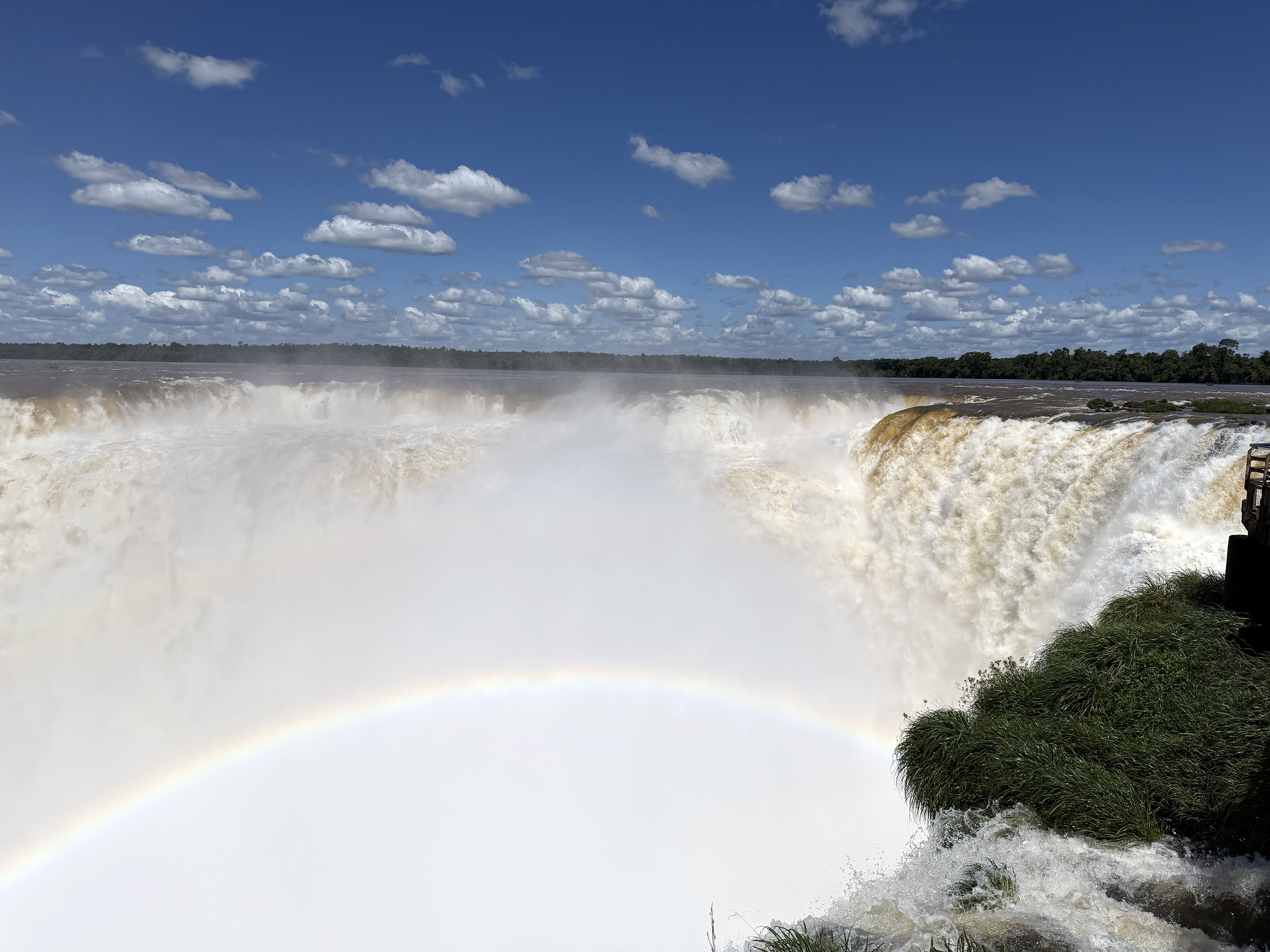
Here is a compilation of random video clips that I recorded at the Falls.
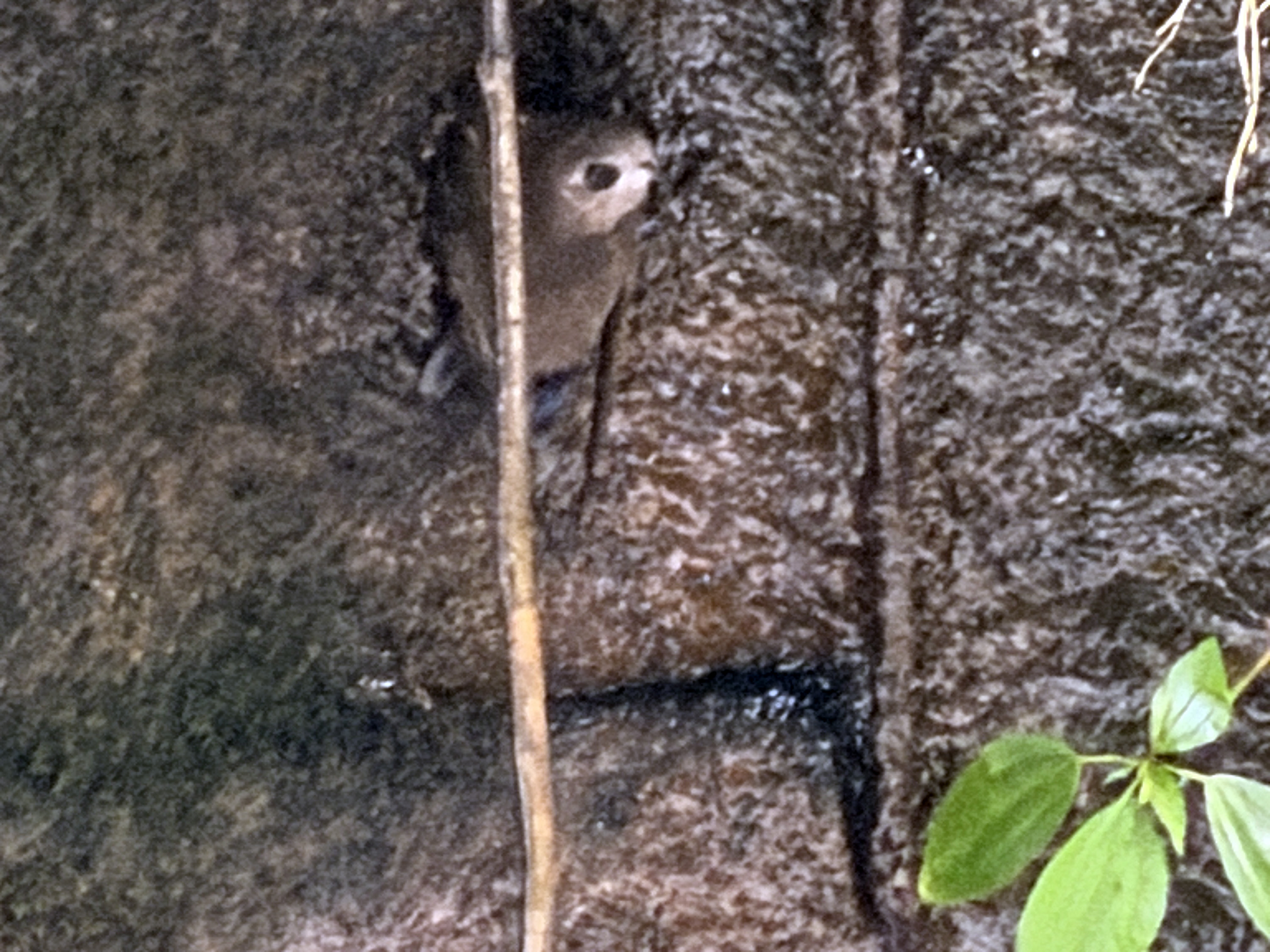
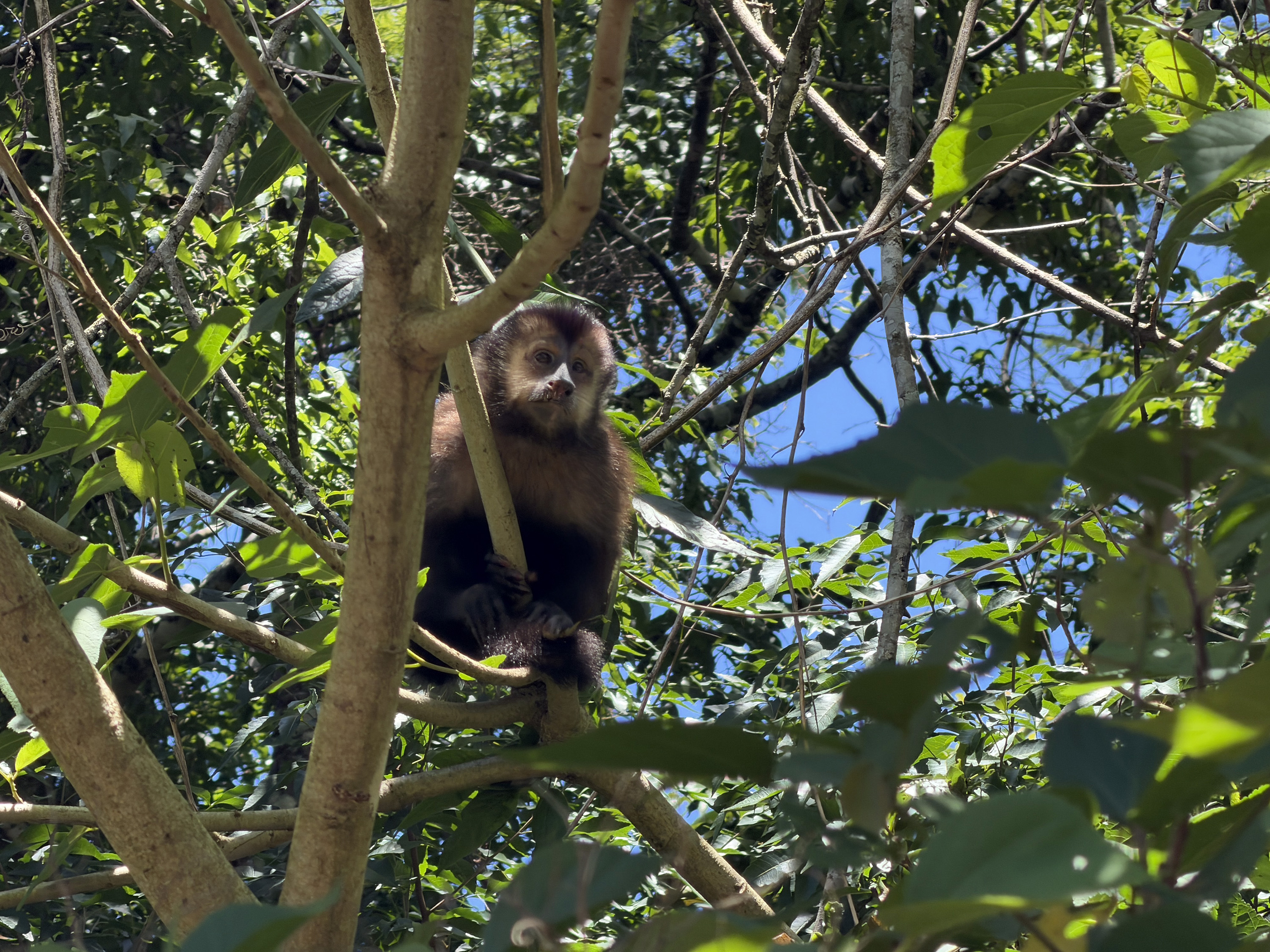
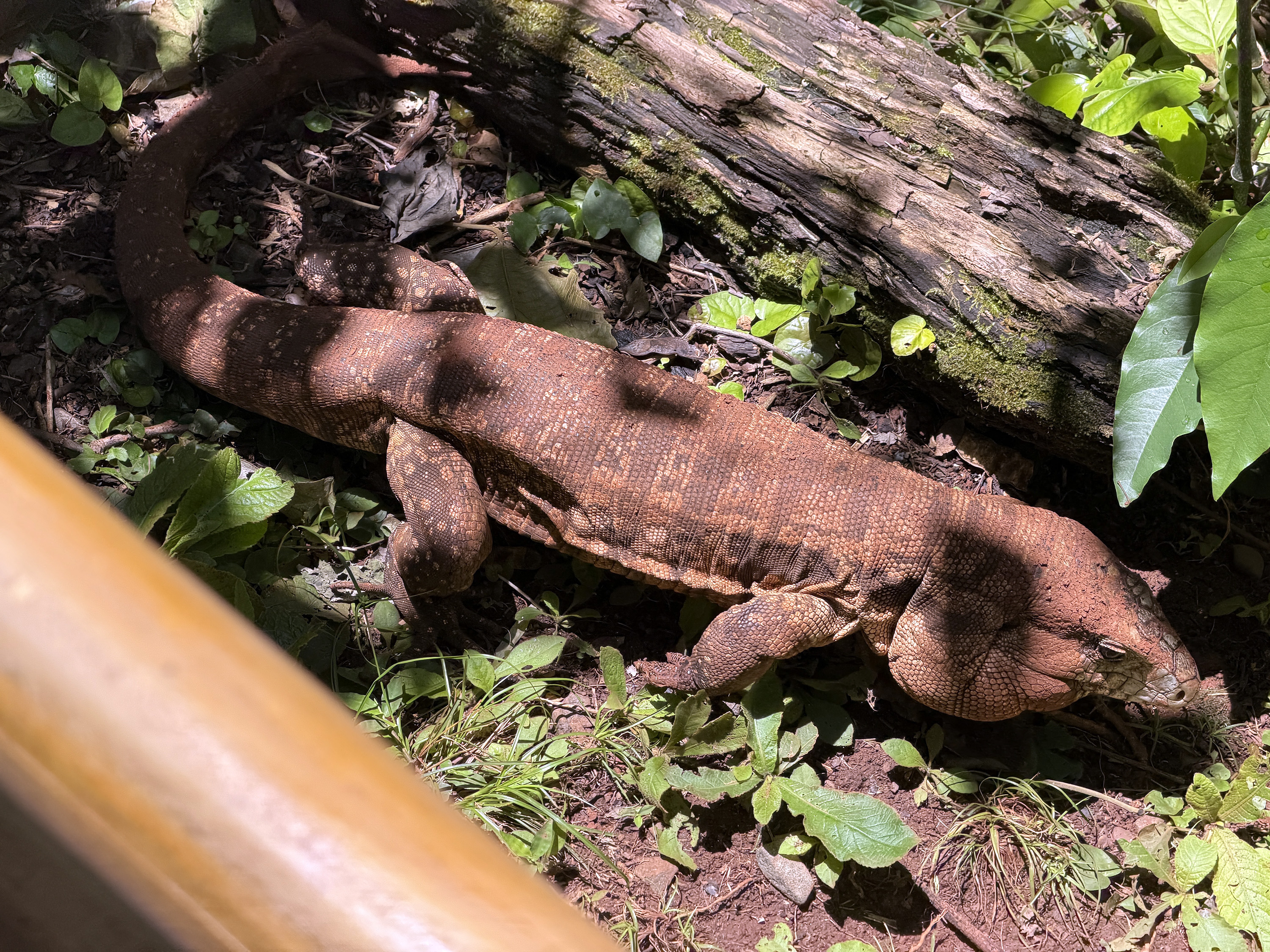
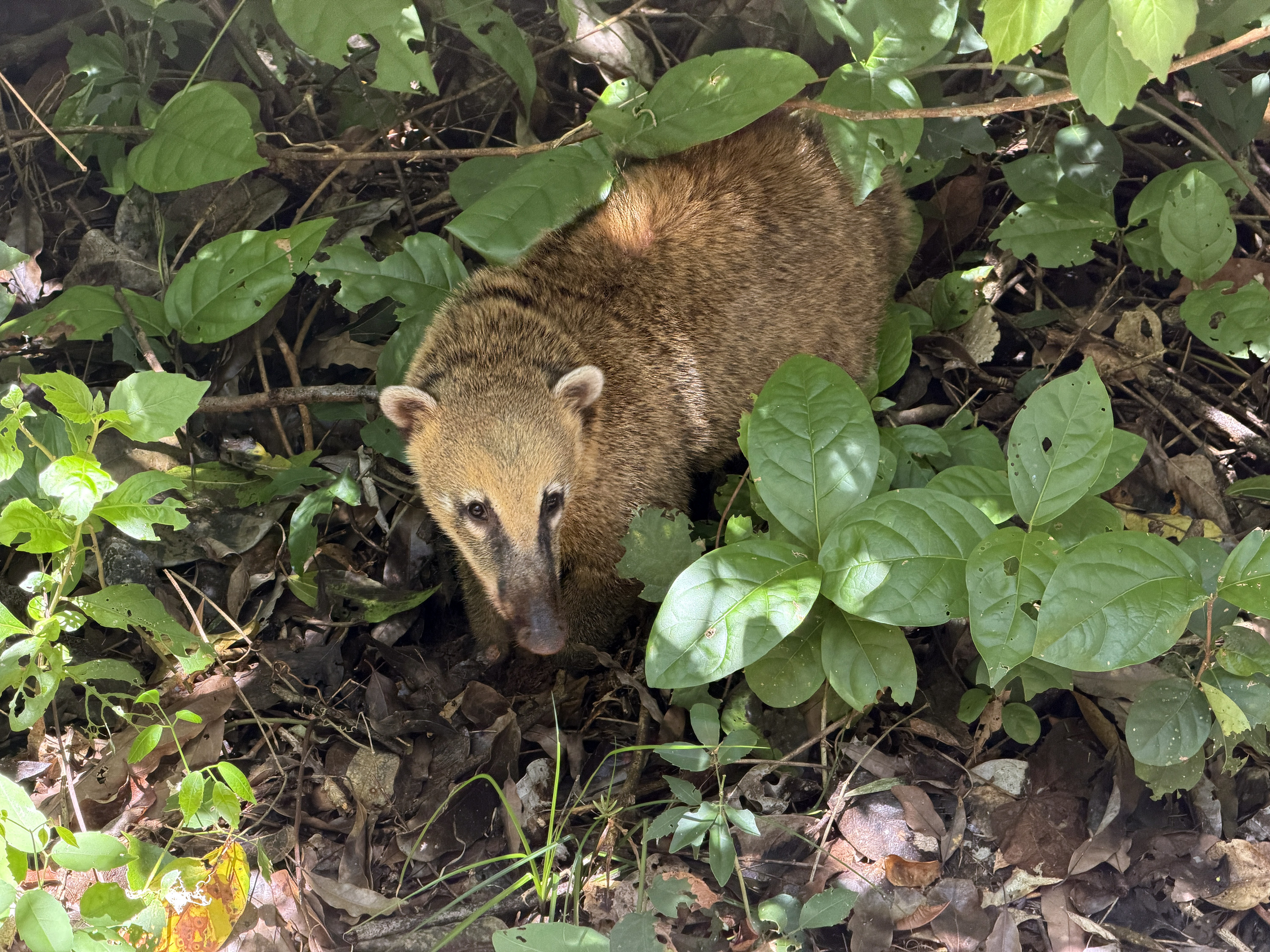
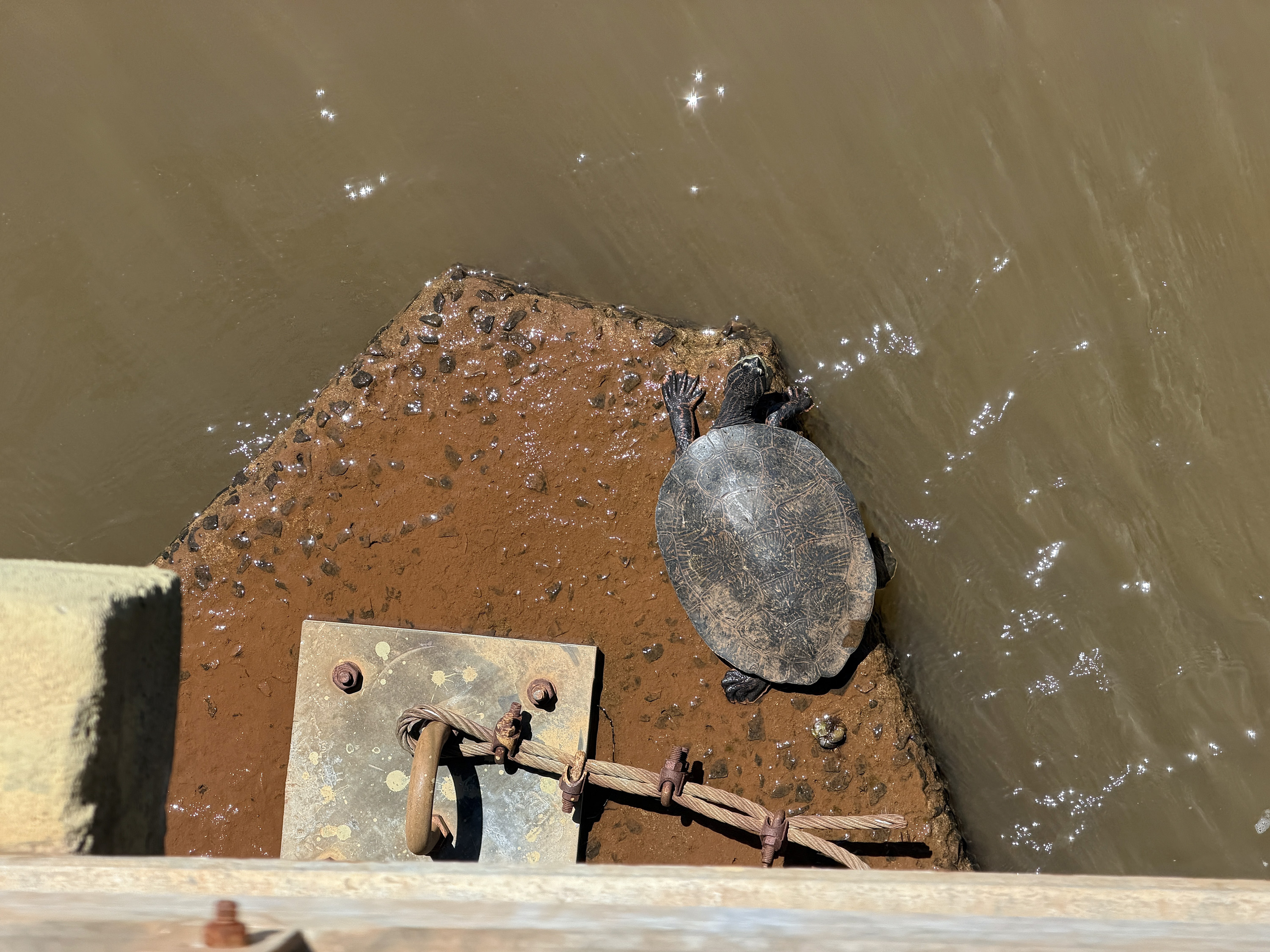
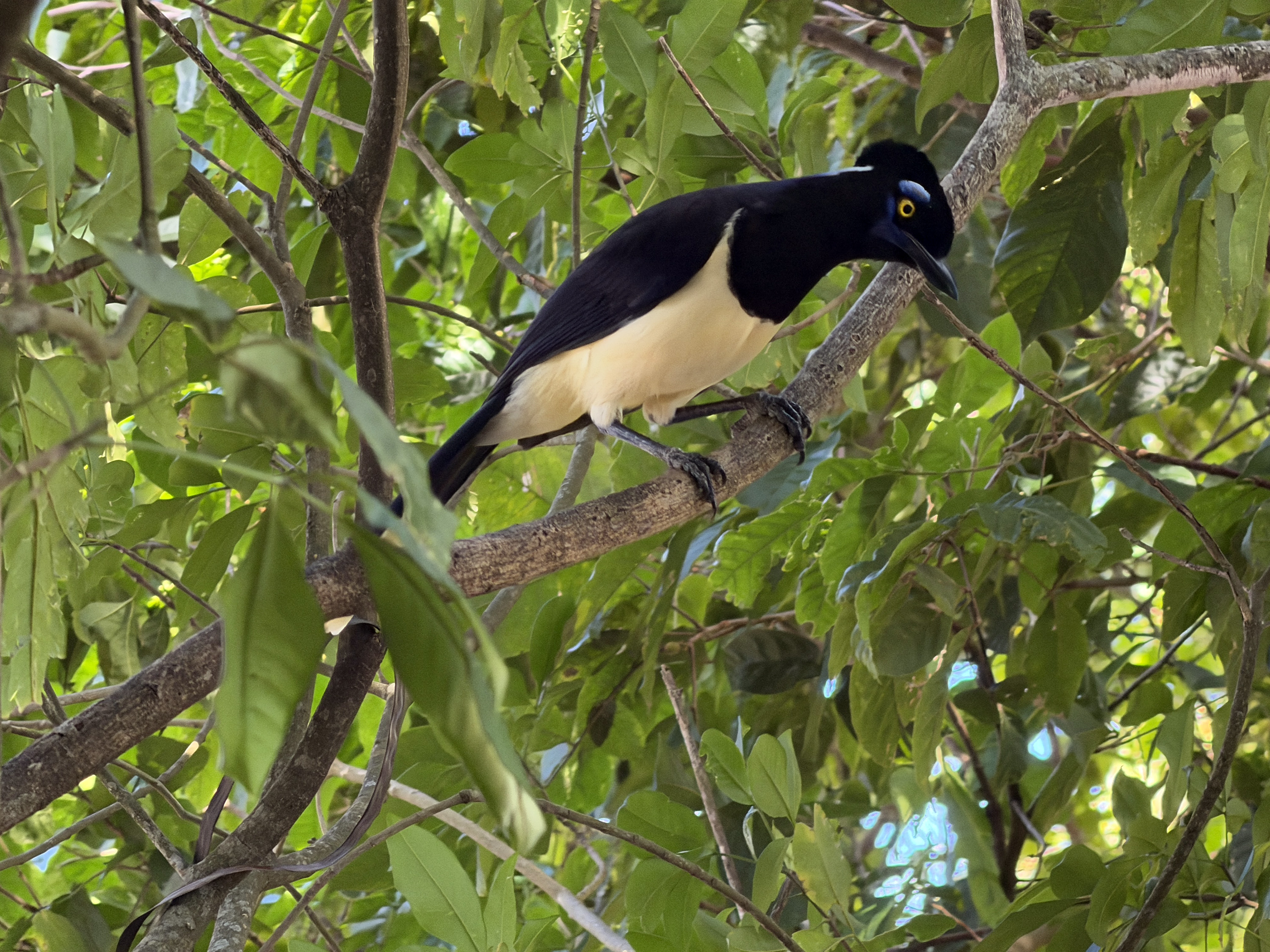
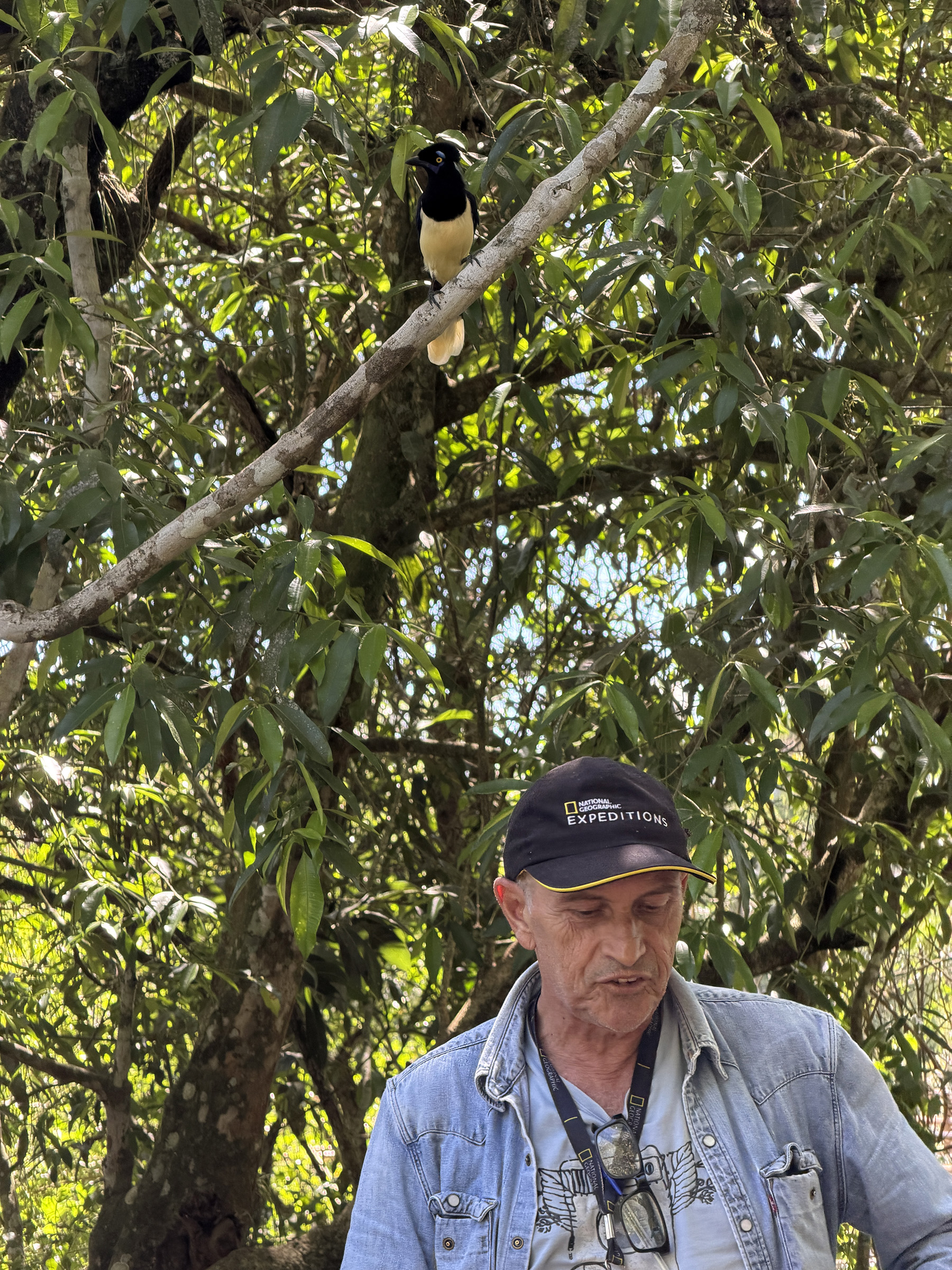
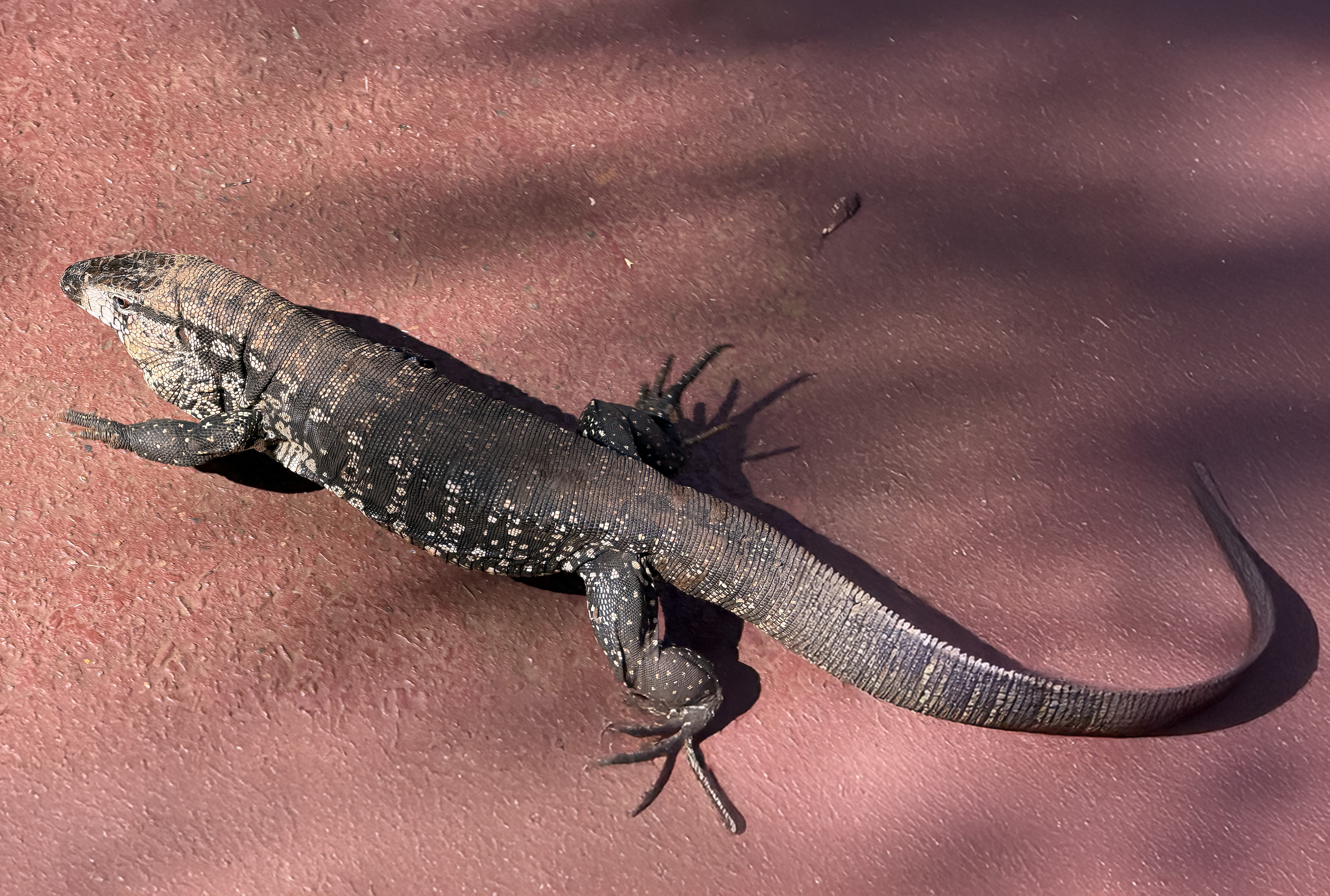
Throughout the day, we met up with a lot of wildlife. Ubiquitous butterflies. A coati (similar to a raccoon) searching for earthworms just a yard from the path, unconcerned about the humans. Two species of large lizards, which looked like iguanas, but were the Argentinian red tegu and black-and-white tegu. Some plush-crested jays. A Great Dusky Swift bird that nests on the cliff right next to a waterfall to deter predators. Two side-necked turtles (a species I had never heard of). And a capuchin monkey. There are other notable species in the national park that we did not observe: jaguars, pumas, ocelots, capybaras, agoutis, tapirs, and toucans.
We arrived late yesterday, so we did not get to eat the complimentary dinner with the other four guests, but we had our own tonight in the hotel’s Tiki Bar. Nancy was excited to see cowboys attending a cattle owners meeting.
Wednesday, November 19 — Back to Buenos Aires
We met Val at 8:30 to return to the airport for a 10:45 flight to Buenos Aires. The check-in process was vastly better than at frenetic AEP, taking about 5 minutes. We arrived around 12:30, collected our bags in minutes, and met our Odysseys rep, Victoria. We were bused to the Retiro district downtown, the Emperador Hotel, which is quite luxurious. With the afternoon free, some of us Ubered over to MALBA, a museum of Latin American contemporary art. One floor was Brazilian Pop, which chronicled mostly protest art from the sixties and seventies. Another was a variety of recent works, some very unusual, but with a few well-known (to us) artists, including Frida Kahlo and Diego Rivera. There was a railway museum nearby the hotel, but i was tired and Nancy uninterested in visiting.
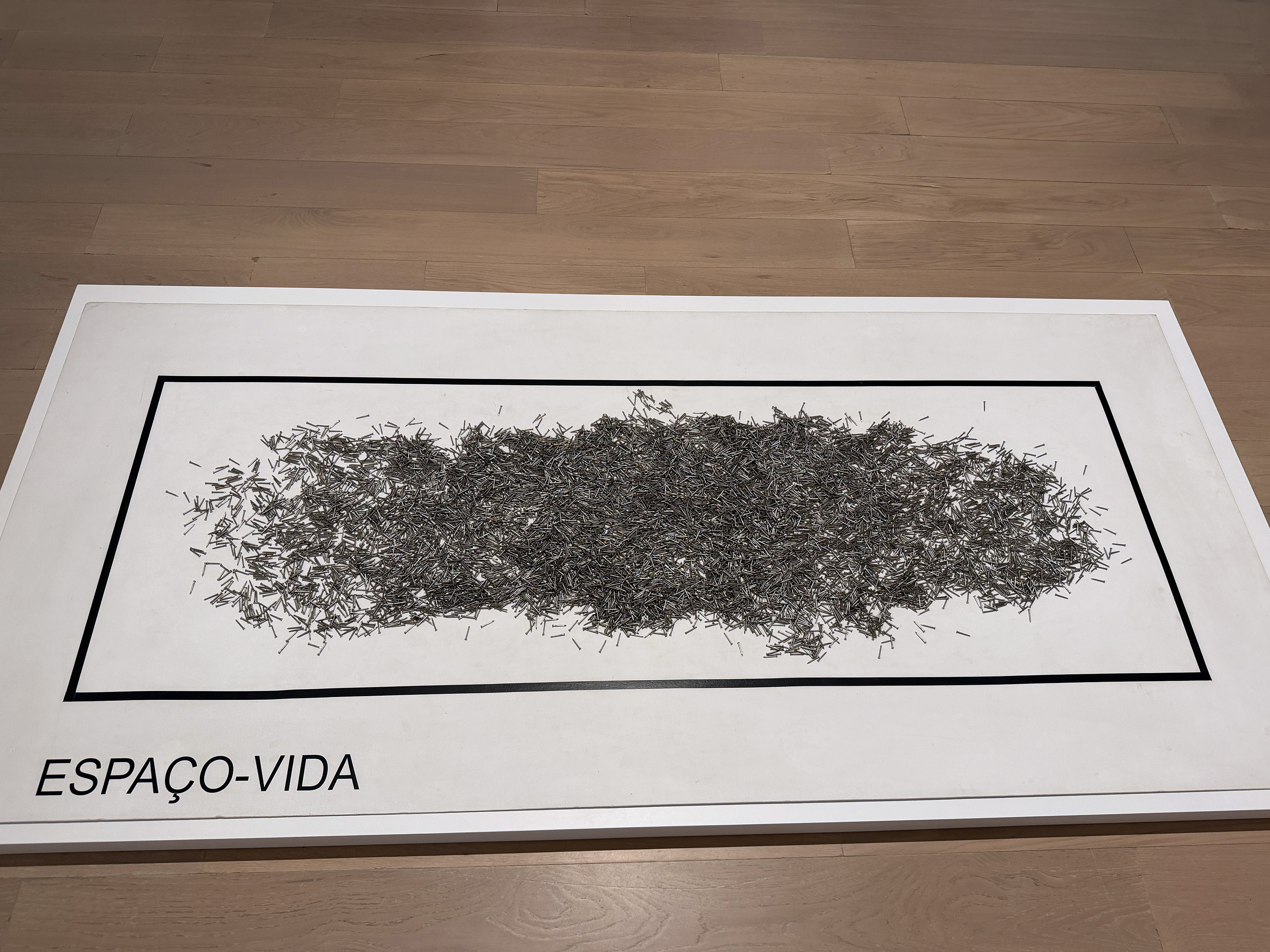
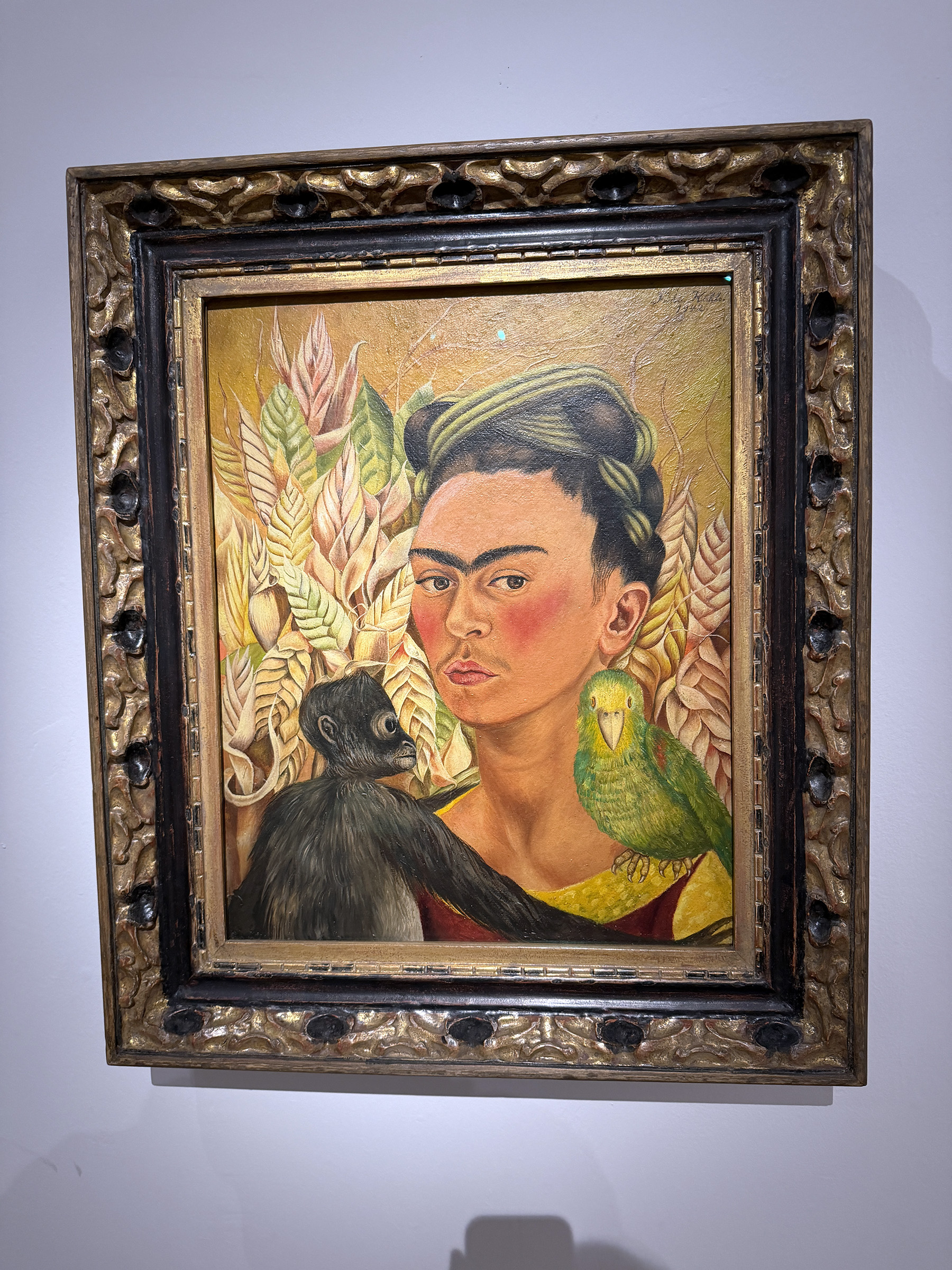
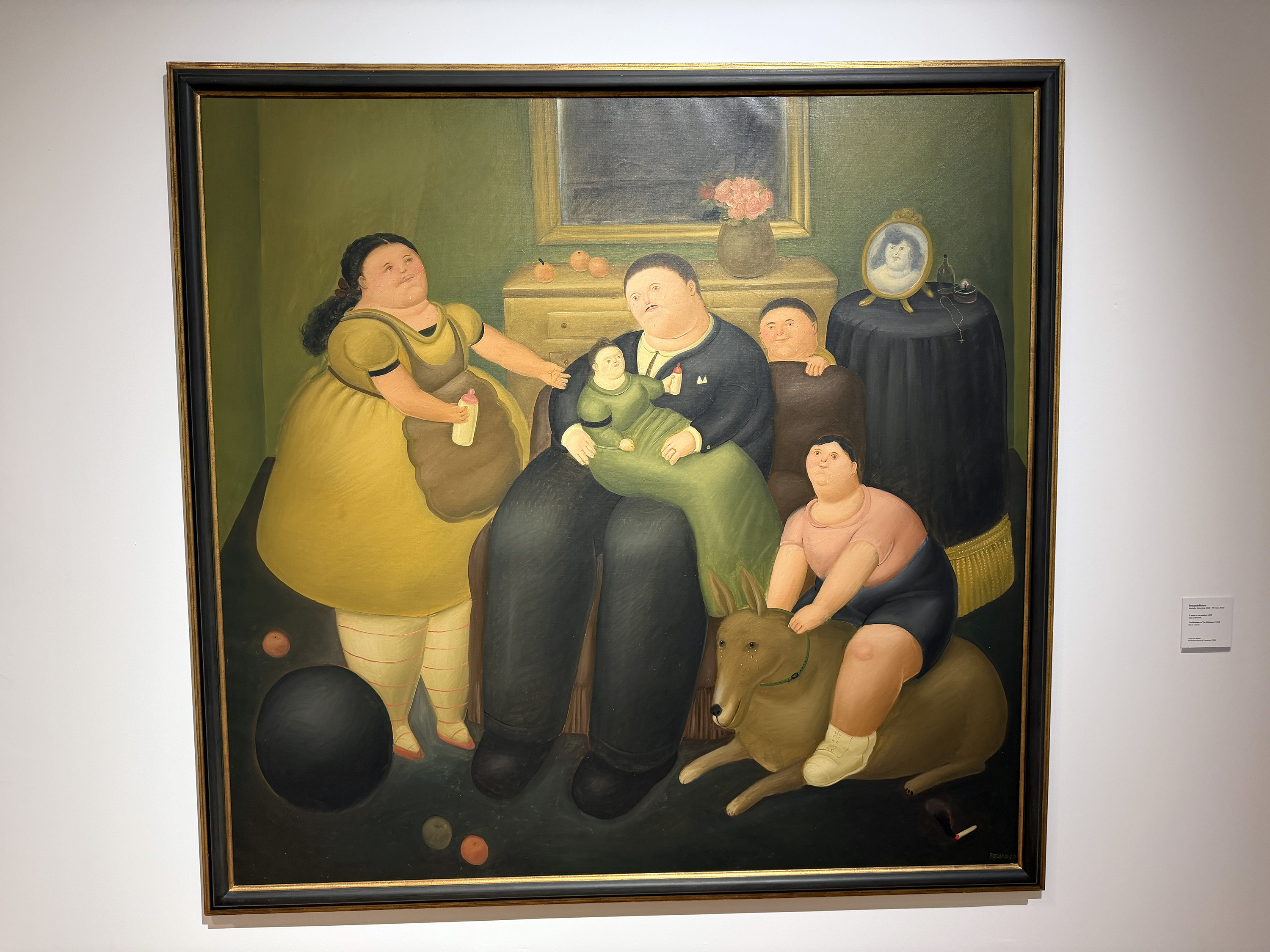
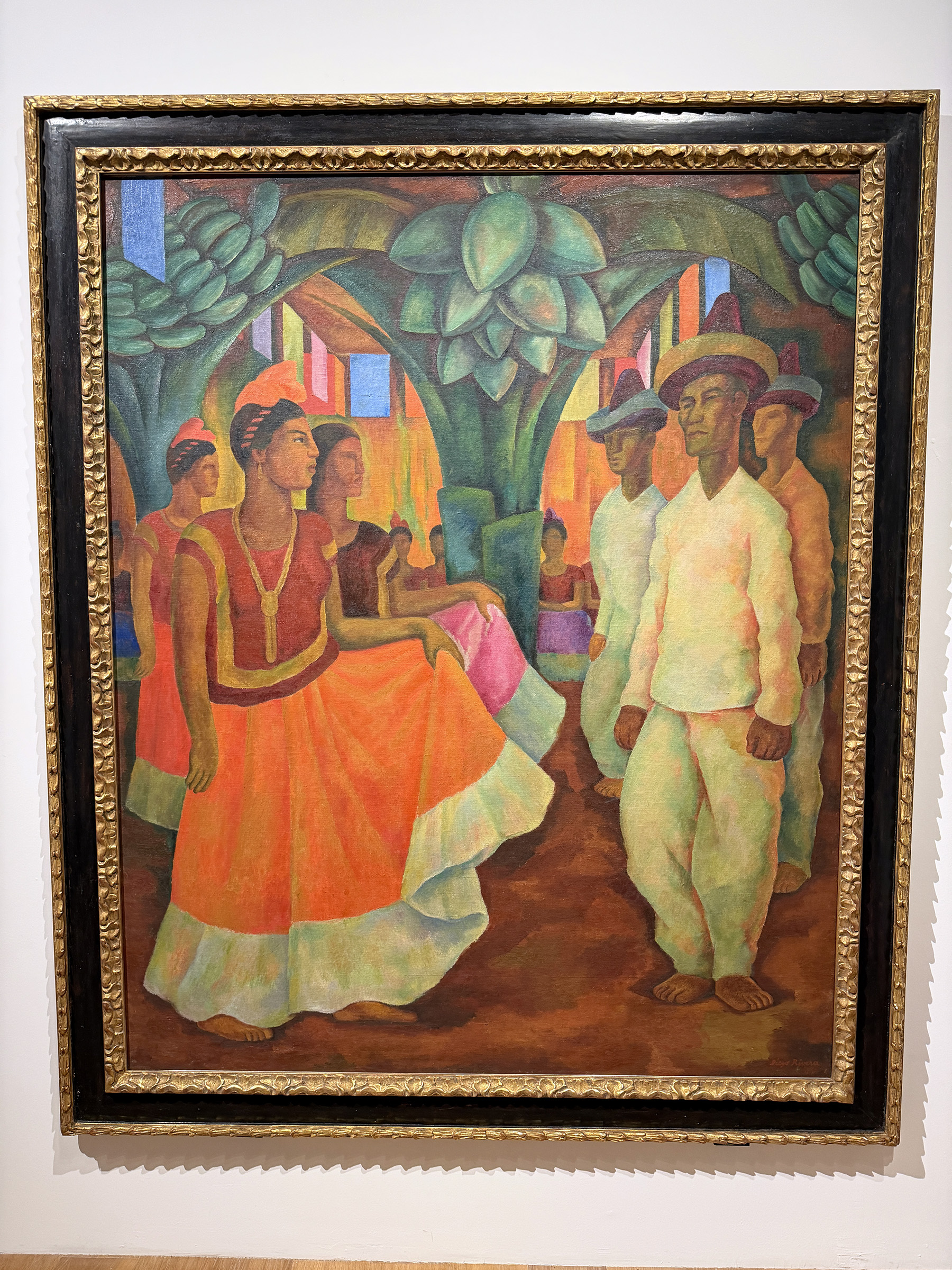
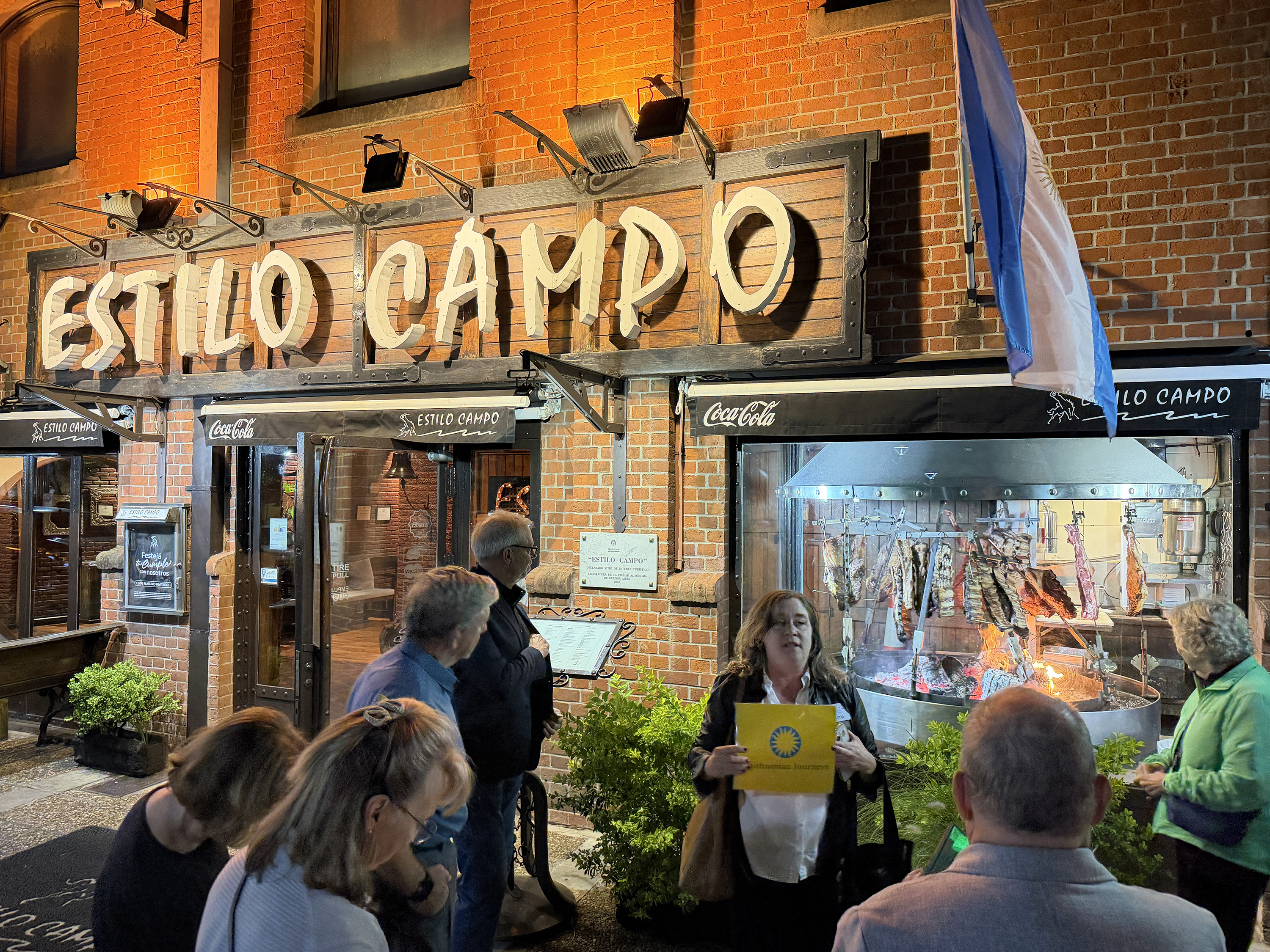
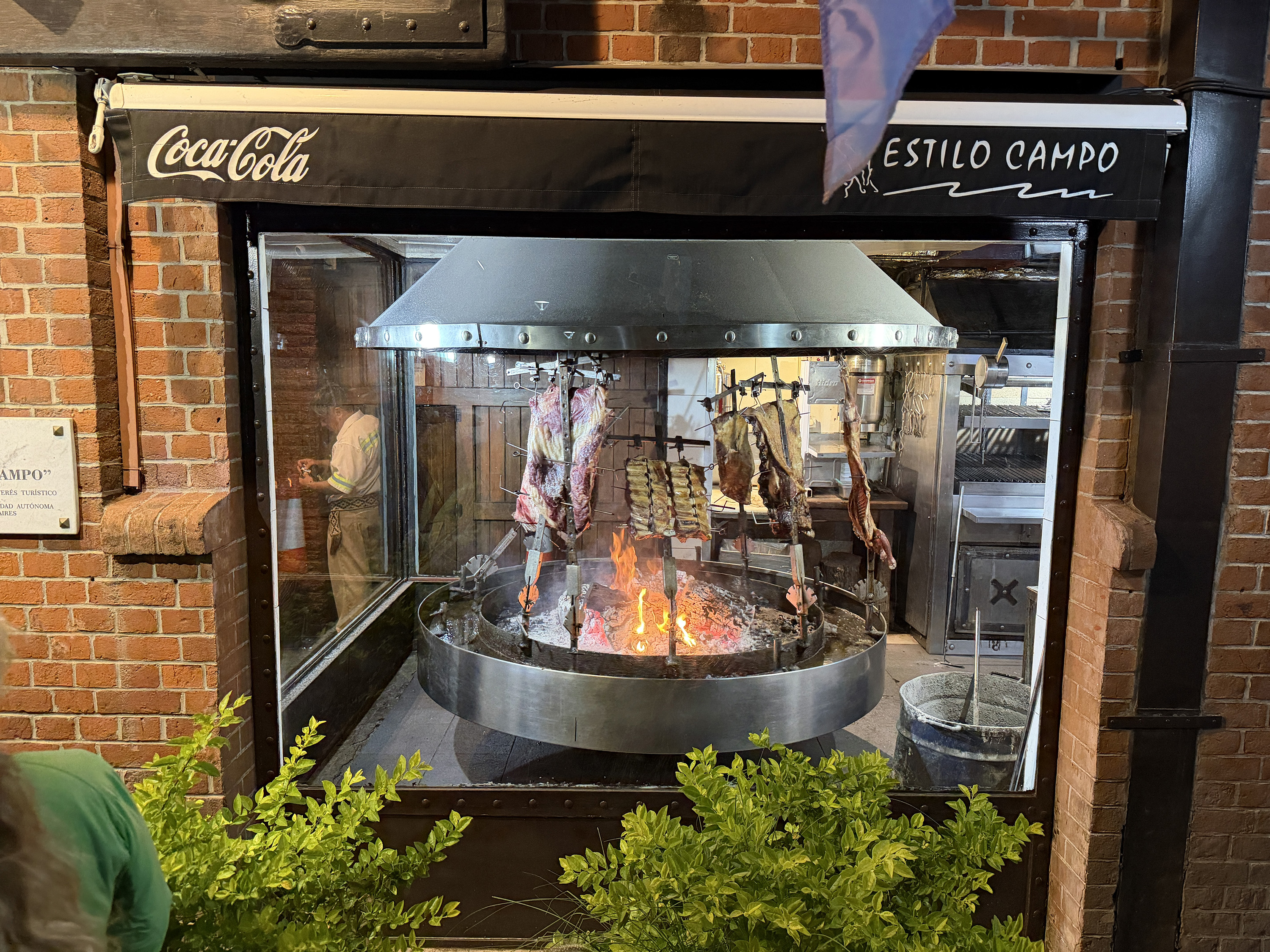
We gathered at 6:30 to meet the full group of 14 guests, our tour manager Lu (Lucelia), and our Smithsonian expert Allen Glazner. We first met Allen, an emeritus professor of geology at the University of North Carolina, on our trip to the northern Rockies. We bused to dinner at a great restaurant called Estilo Campo and had a delicious asado dinner, including provoleta (grilled provolone with herbs), grilled vegetables, a mini chorizo, a ribeye steak, and dessert. It was a little difficult to adjust to coming back to the hotel after 11 p.m. and trying to sleep on a full stomach.
Thursday, November 20 — Buenos Aires
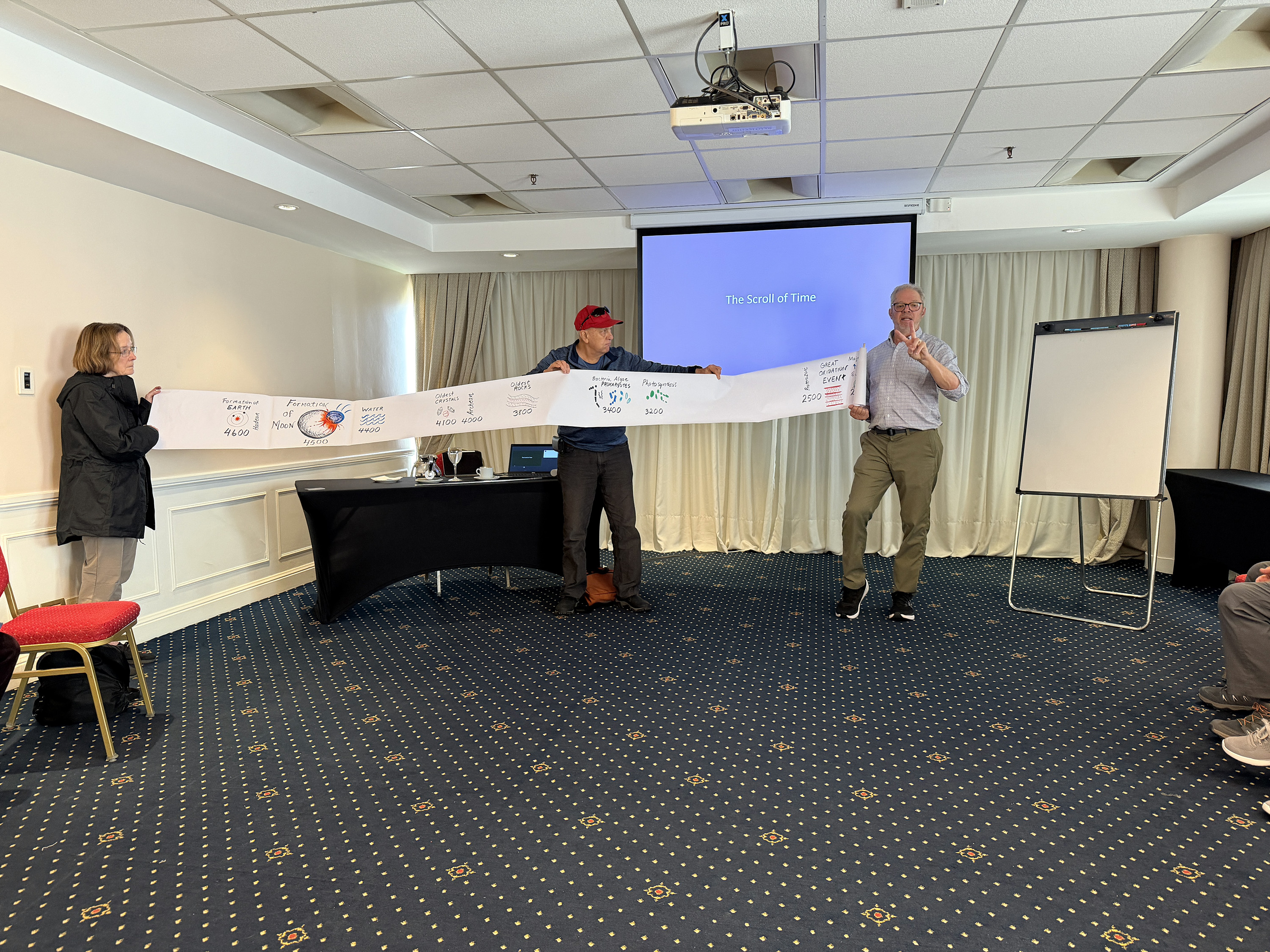
After a night of digesting late-eaten steak, we breakfasted in the hotel. Allen presented the first of four lectures at 8:30, “Where in the World is Patagonia?” He gave us a full briefing of the geography, compared latitudes of cities north and south of the equator, mapped the terrain and weather, described ocean currents and Coriolis forces, and finished up with his scroll of geologic time from the formation of the Earth.
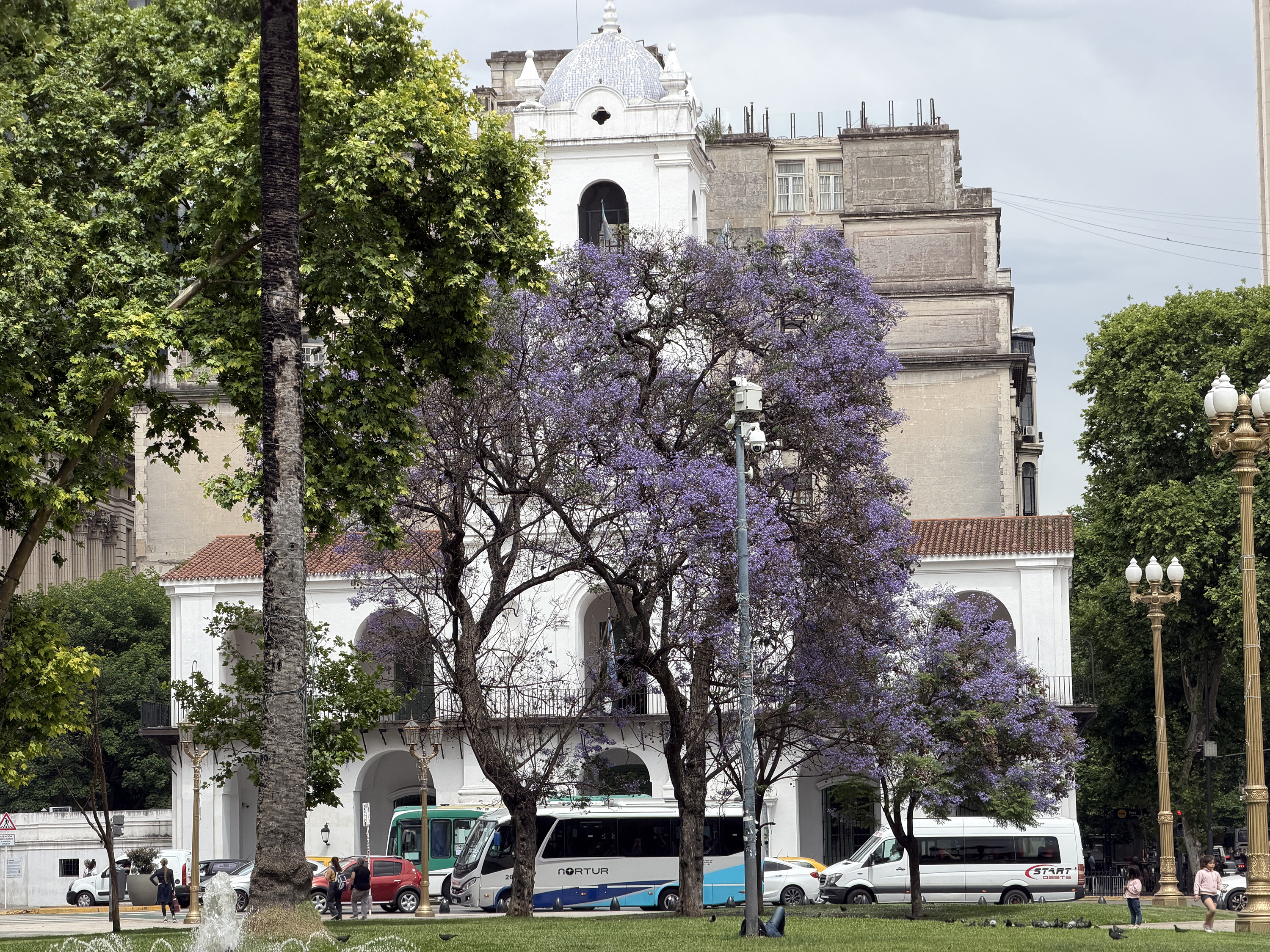
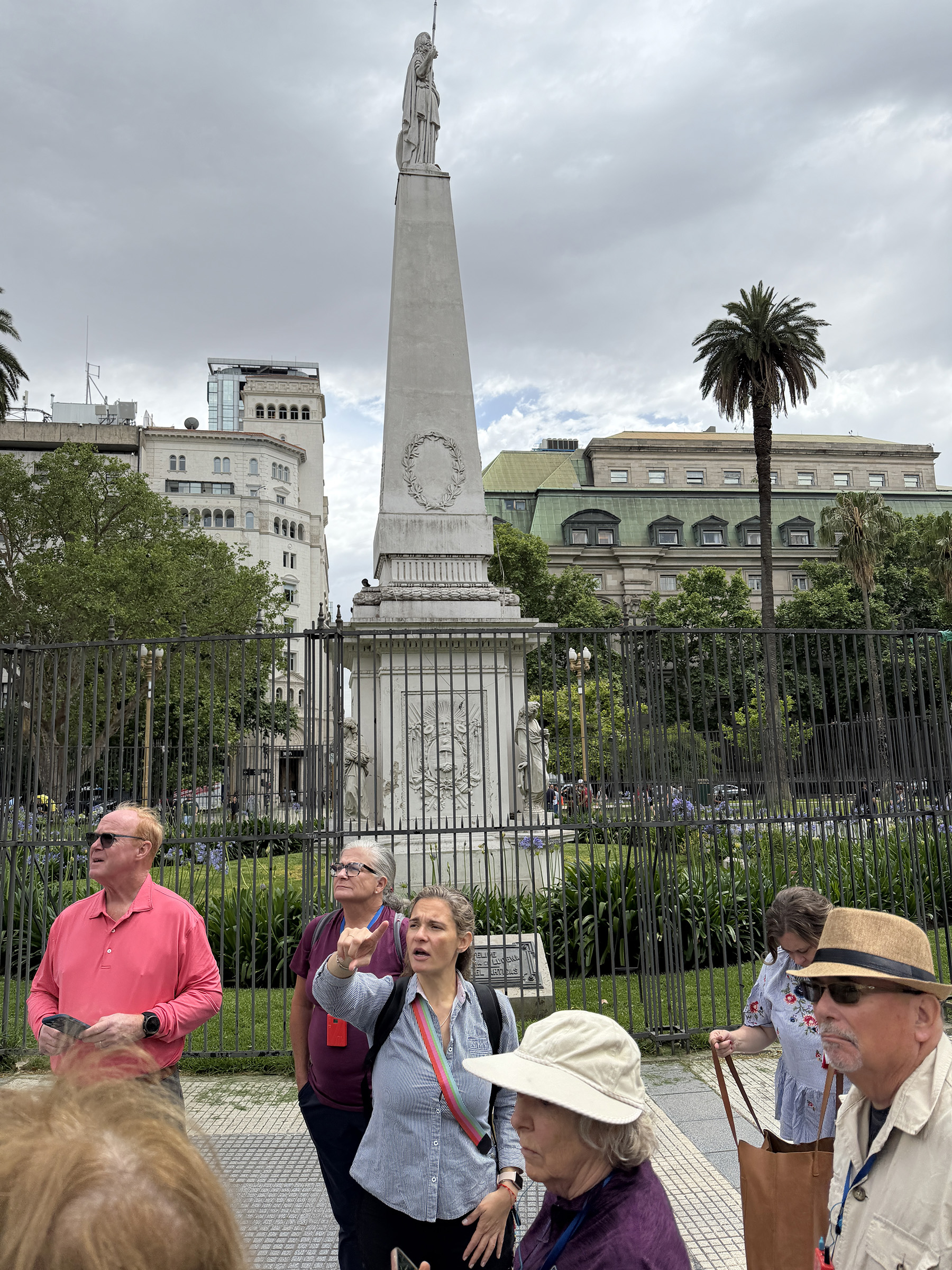
We departed by bus for a city tour. Lu took us through Argentina’s history, including the founding of the city, the extermination of many of the native tribes, and the Revolution of 1816. We entered the area from the Obelisk to the river called the Old Town. We walked around the main square, the Plaza de Mayo, where the city was founded in 1580. Lu described the British Invasion and how they were kicked out in 1807, and then the independence from Spain on July 9, 1816. We saw the oldest building in the city, the hated tax department, and the government building, or “pink house.” We talked about the Jewish community and various bombings conducted by Iran against them; the Perón regime and the subsequent state terrorism; and the mothers and grandmothers who marched around the square with white scarves (diapers actually) to silently protest children who had been disappeared.
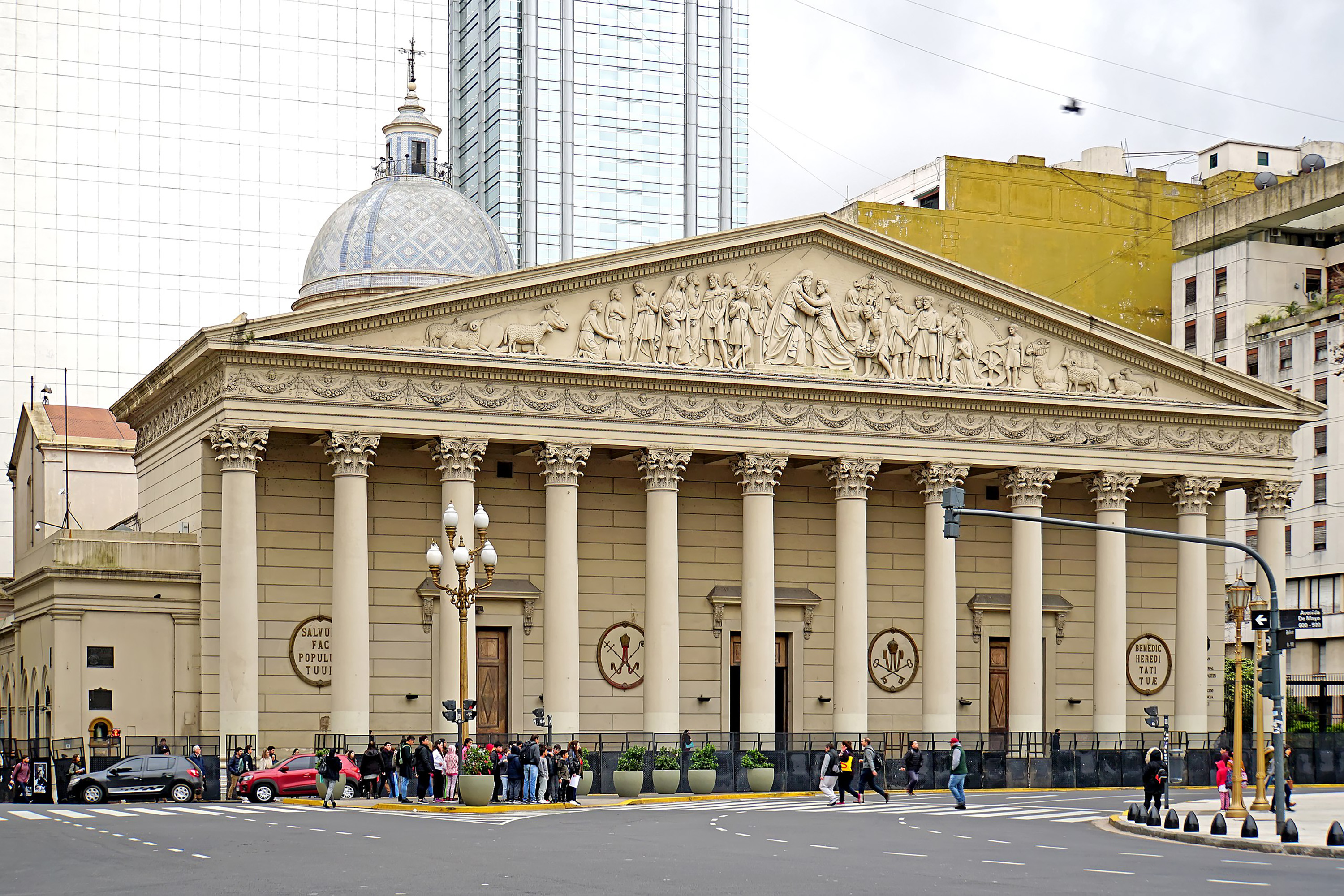
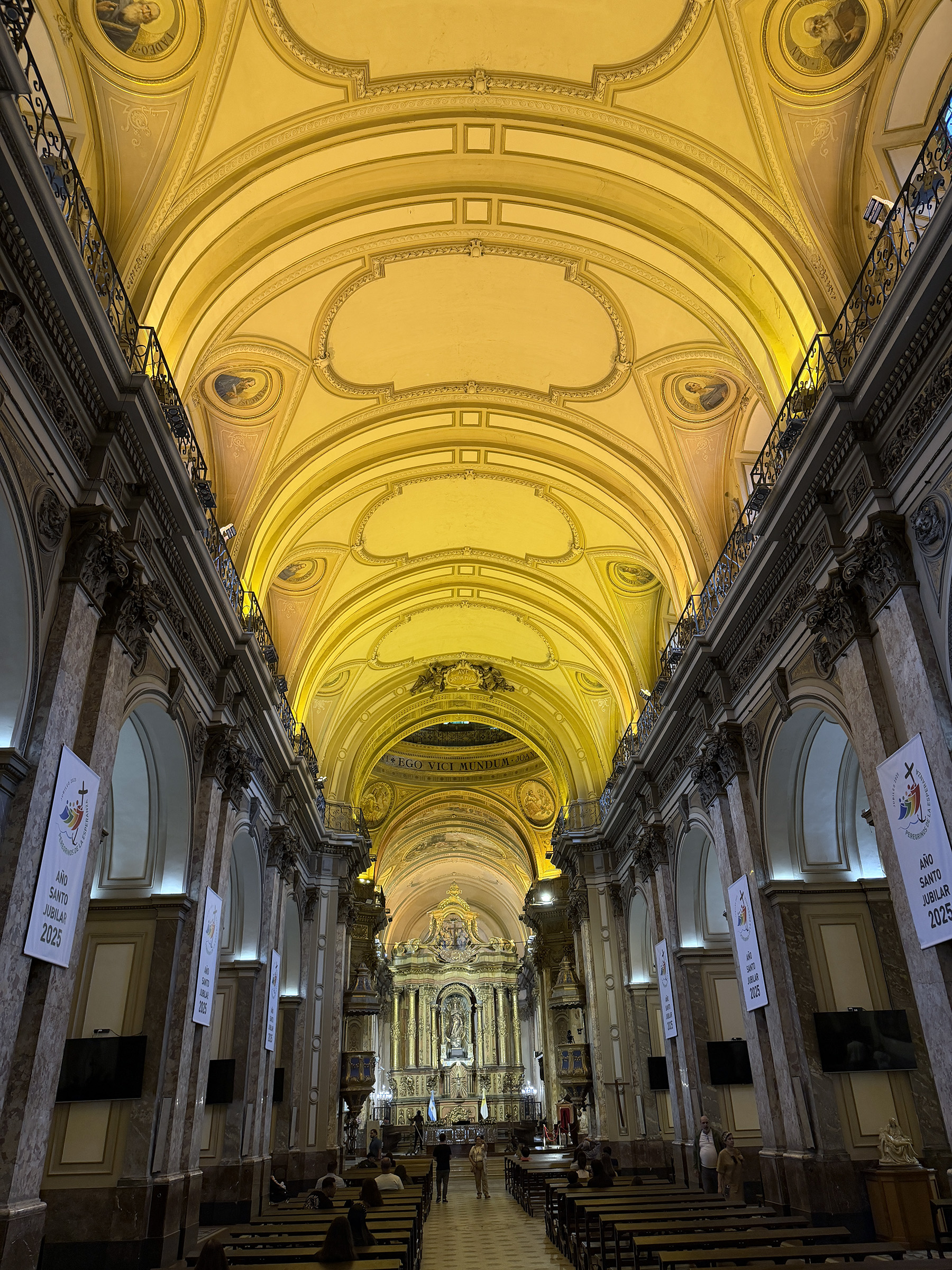
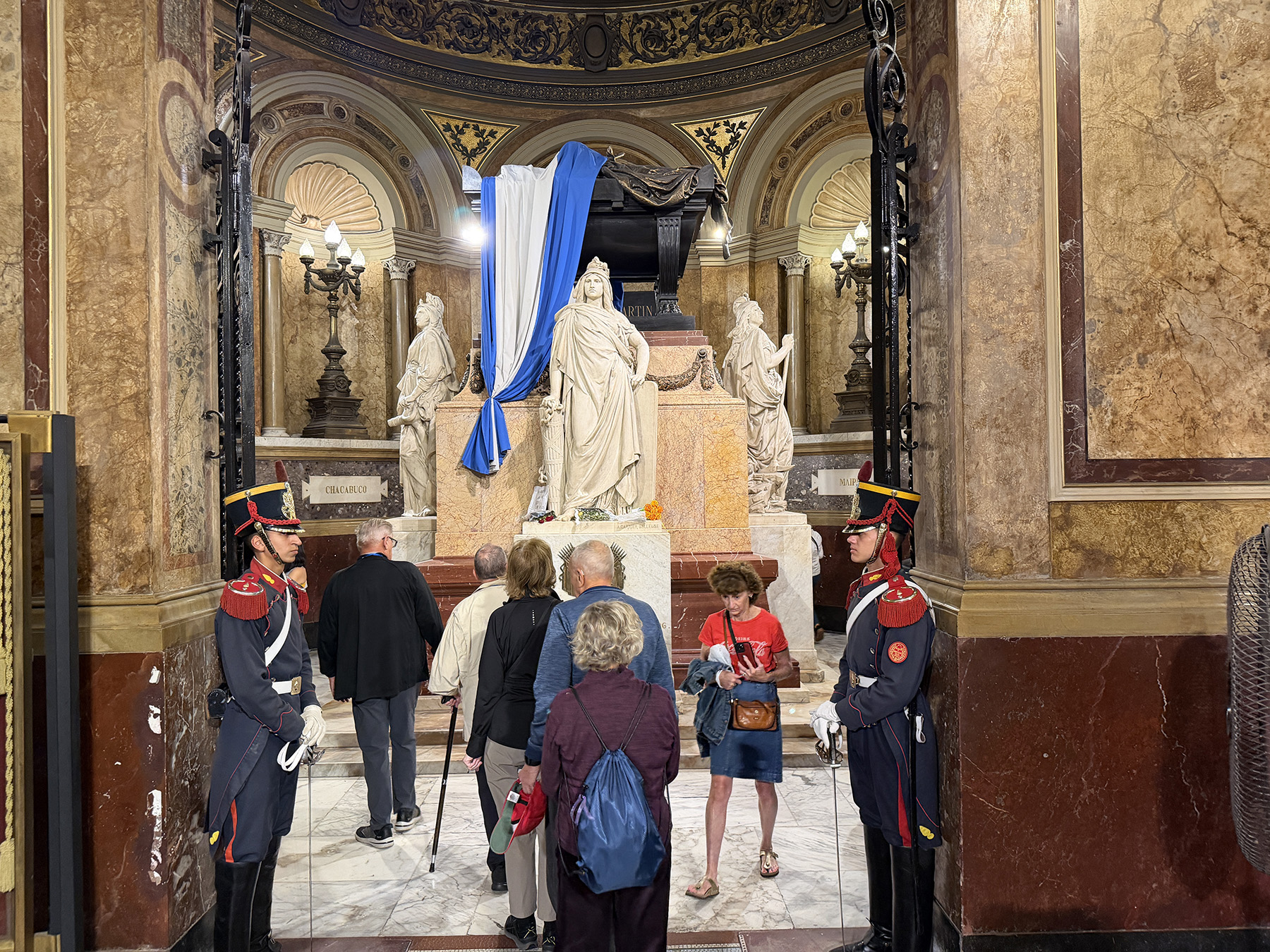
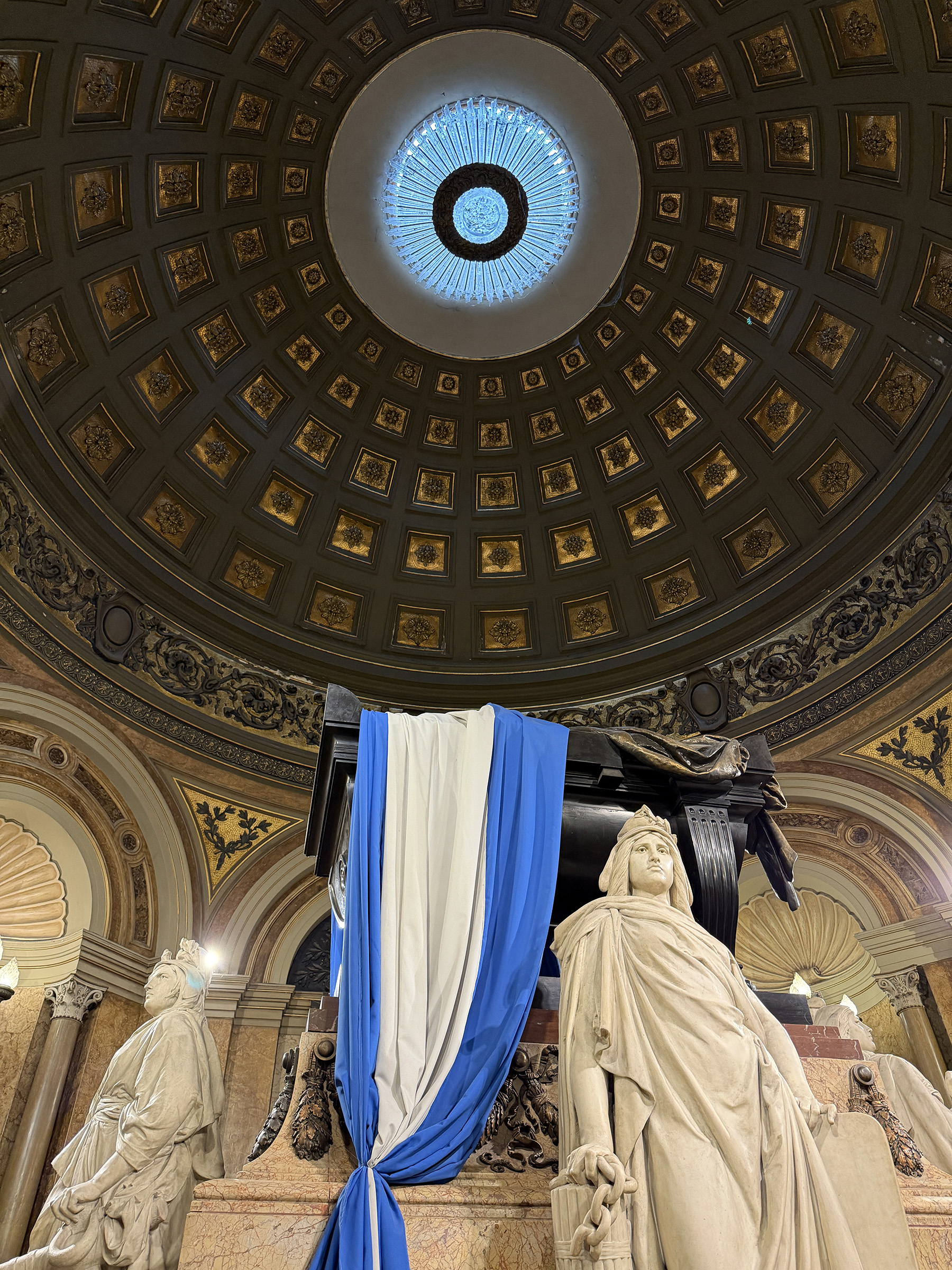
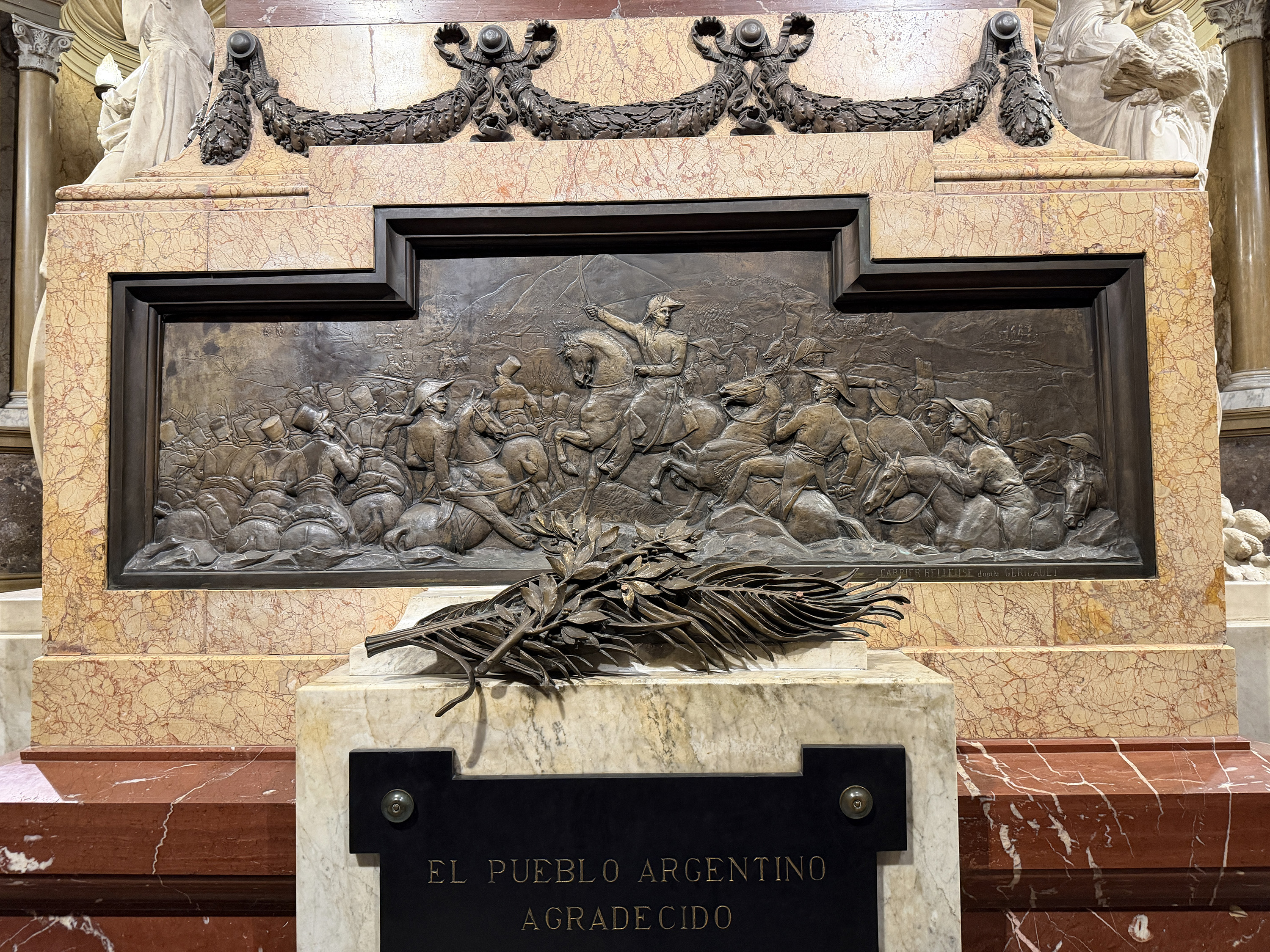
We entered the Catedral Metropolitana de la Santísima Trinidad, the central cathedral, where Pope Francis presided as an archbishop. Inside is the Mausoleum of General San Martín, the hero of the revolution. It is surrounded by statues of three ladies representing Argentina, Chile, and Peru. Also inside is a small exhibit of Jewish documents recovered from Holocaust sites.
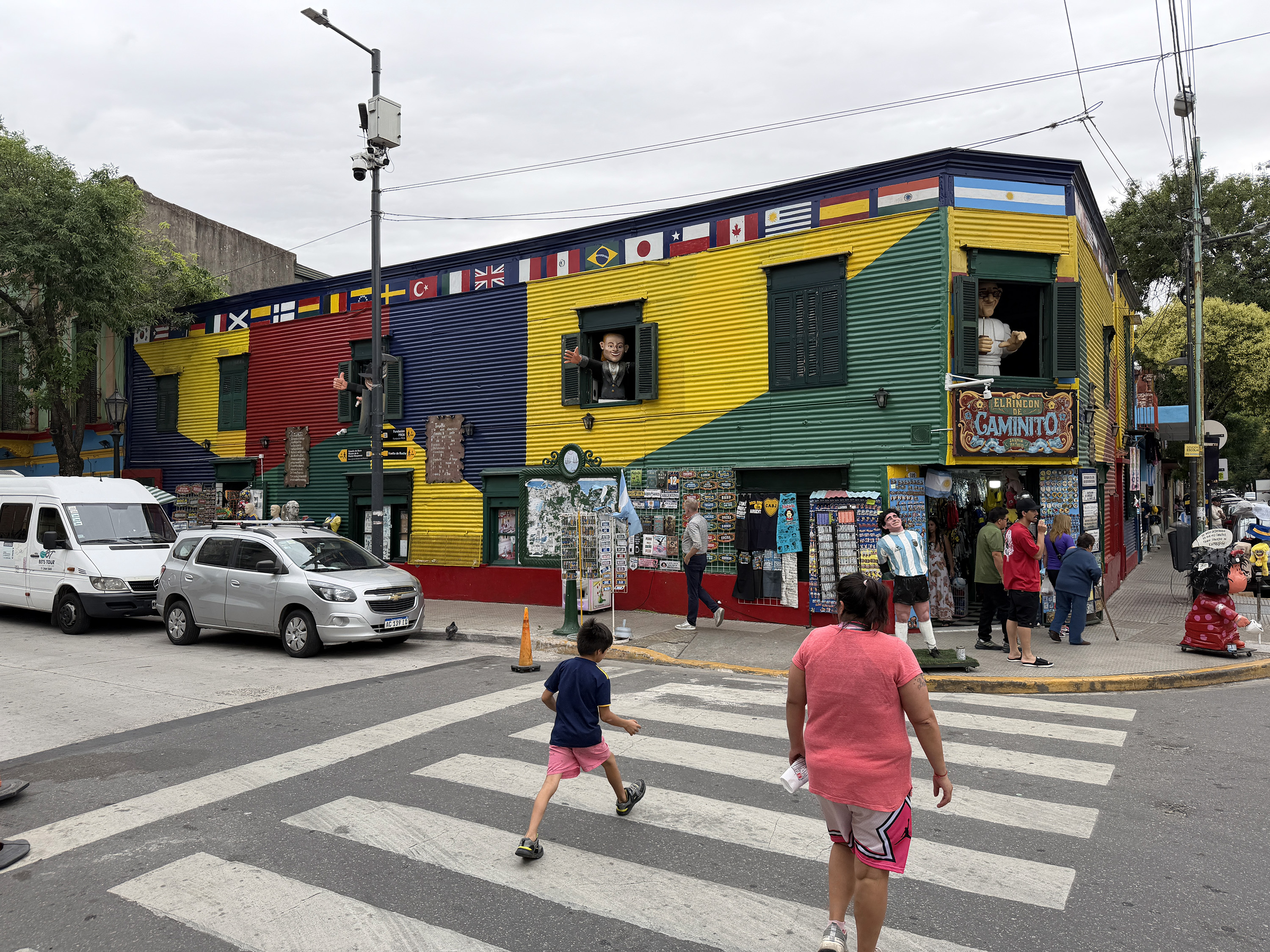
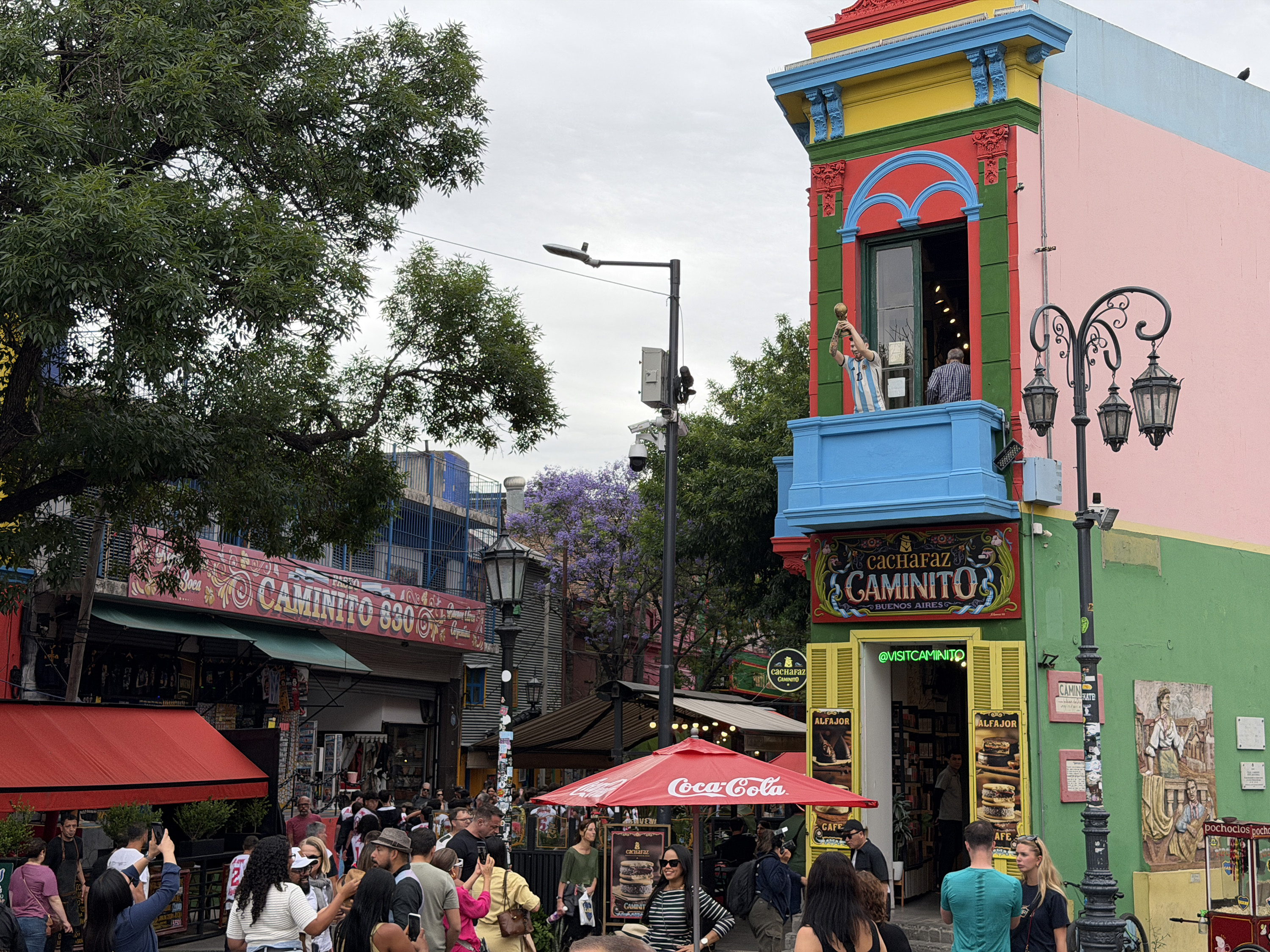
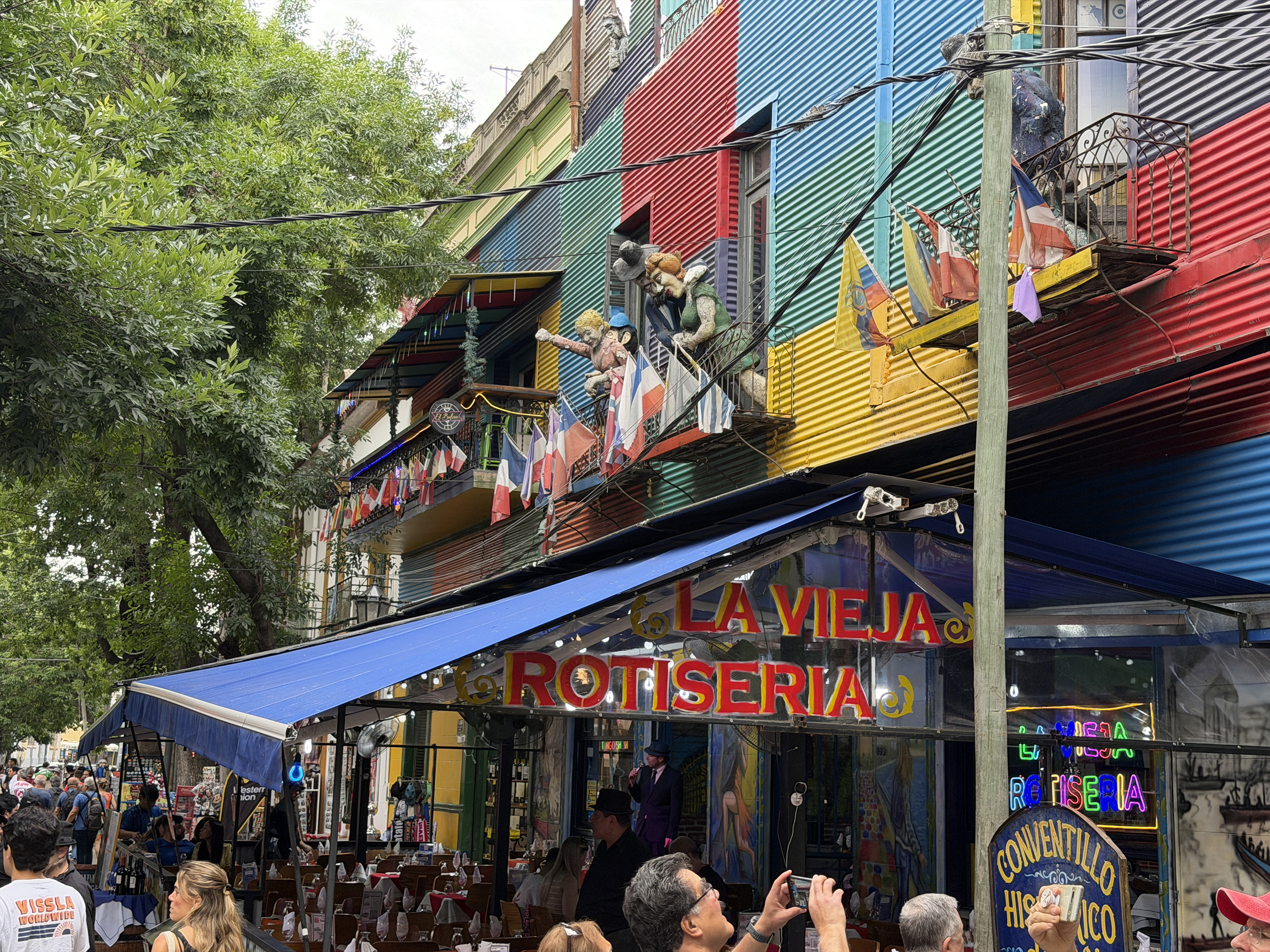
We drove for a while through the neighborhoods of San Telmo and La Boca. Lu talked about the Argentinian soccer obsession. The teams have randomly selected English names like the La Boca Juniors. We stopped at an area called Caminito that has lots of tourist businesses. It is characterized by ramshackle buildings with corrugated zinc siding that had been salvaged from shipping containers and painted in colorful patterns. There are many cartoonish mannequins of Argentinian characters looking out of balconies and upper windows.
We drove through two ports. Lu pointed out that the city residents are called Porteños by people outside of Buenos Aires. The area called Puerto Madero is very upscale with modern buildings. As we drove through the Retiro district, which is where the hotel is located, Lu gave us a brief history of the Falklands War. She was very adamant that they be called the Malvinas and was obviously peeved about the outcome.
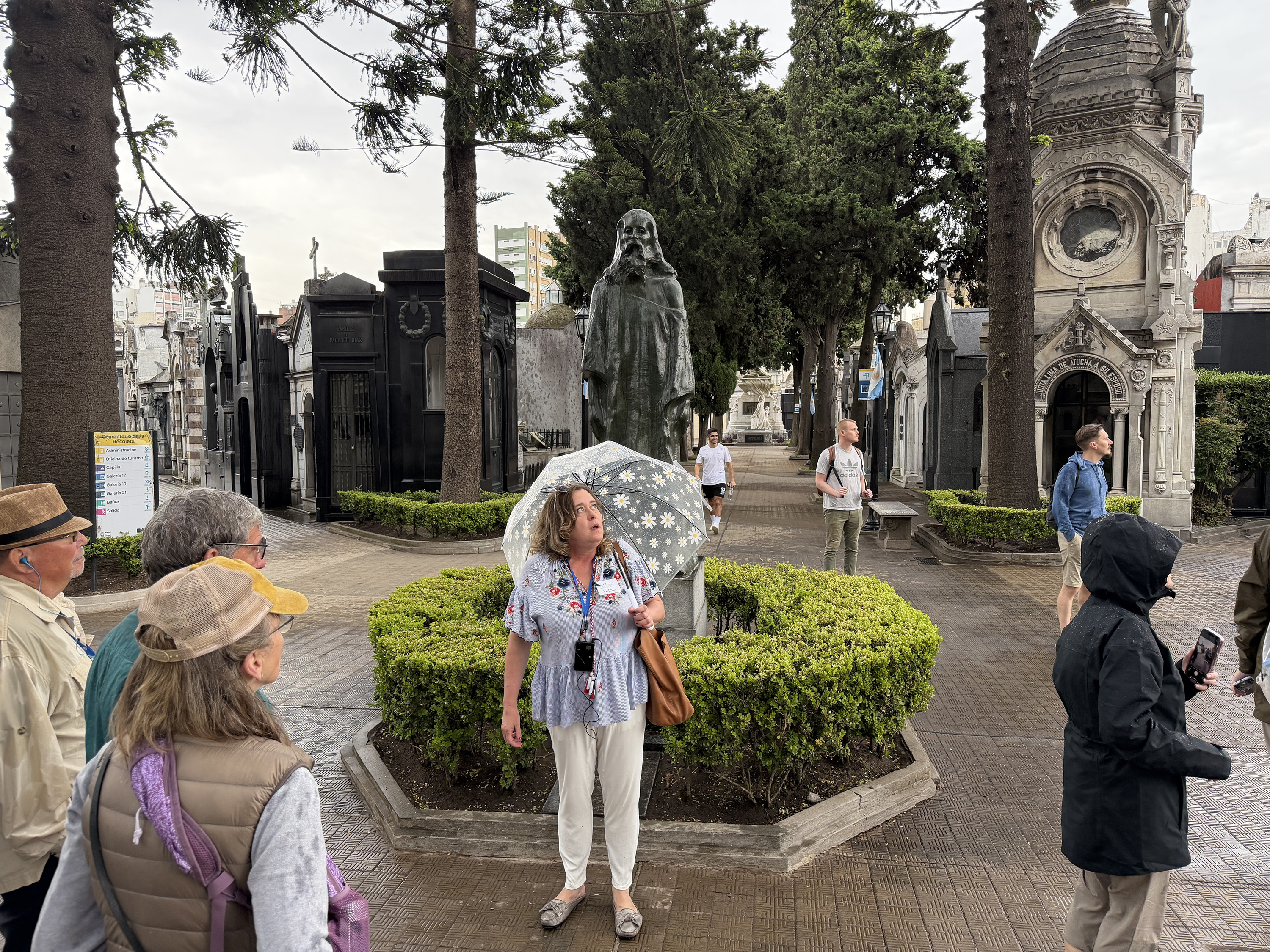
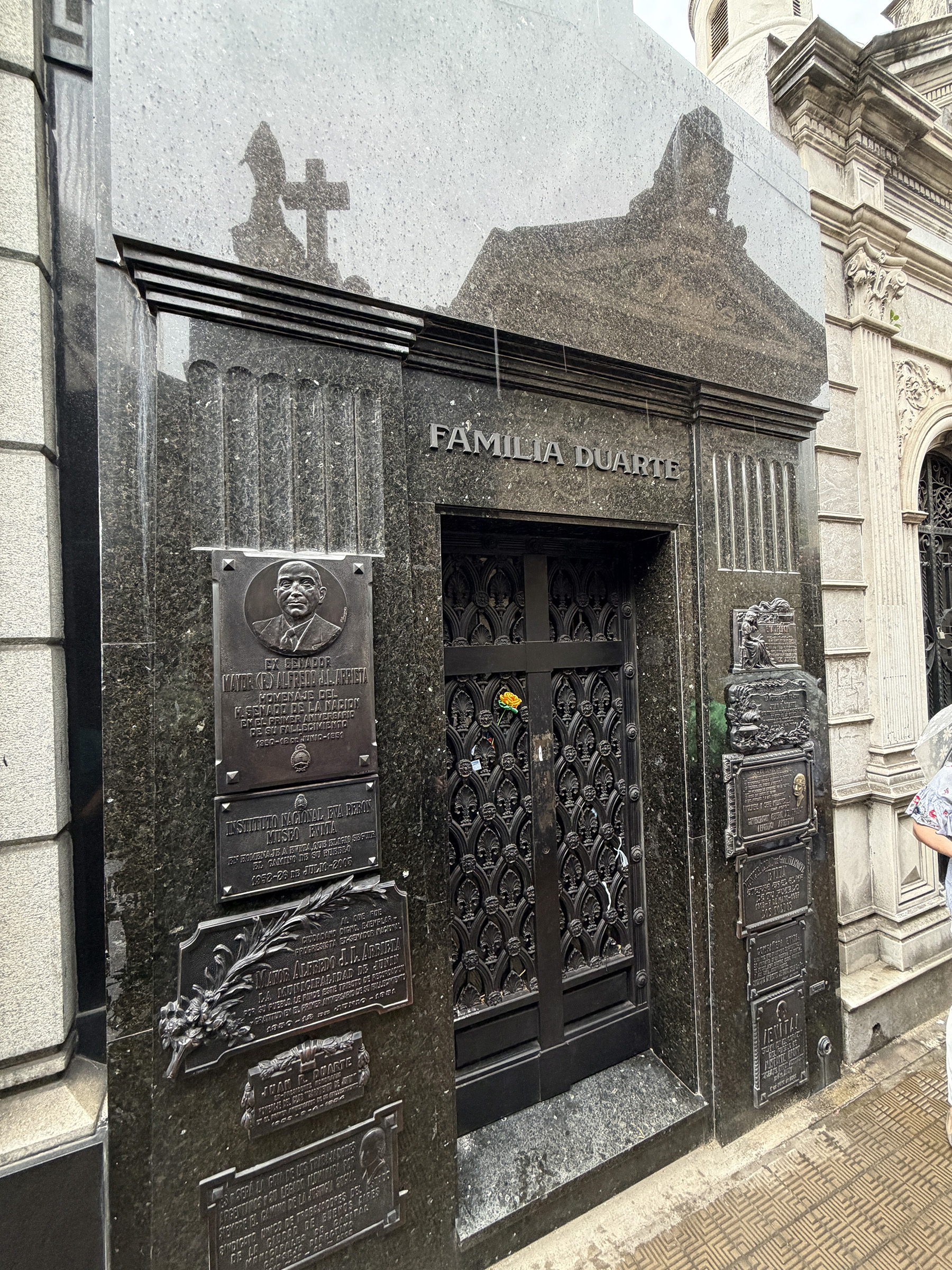
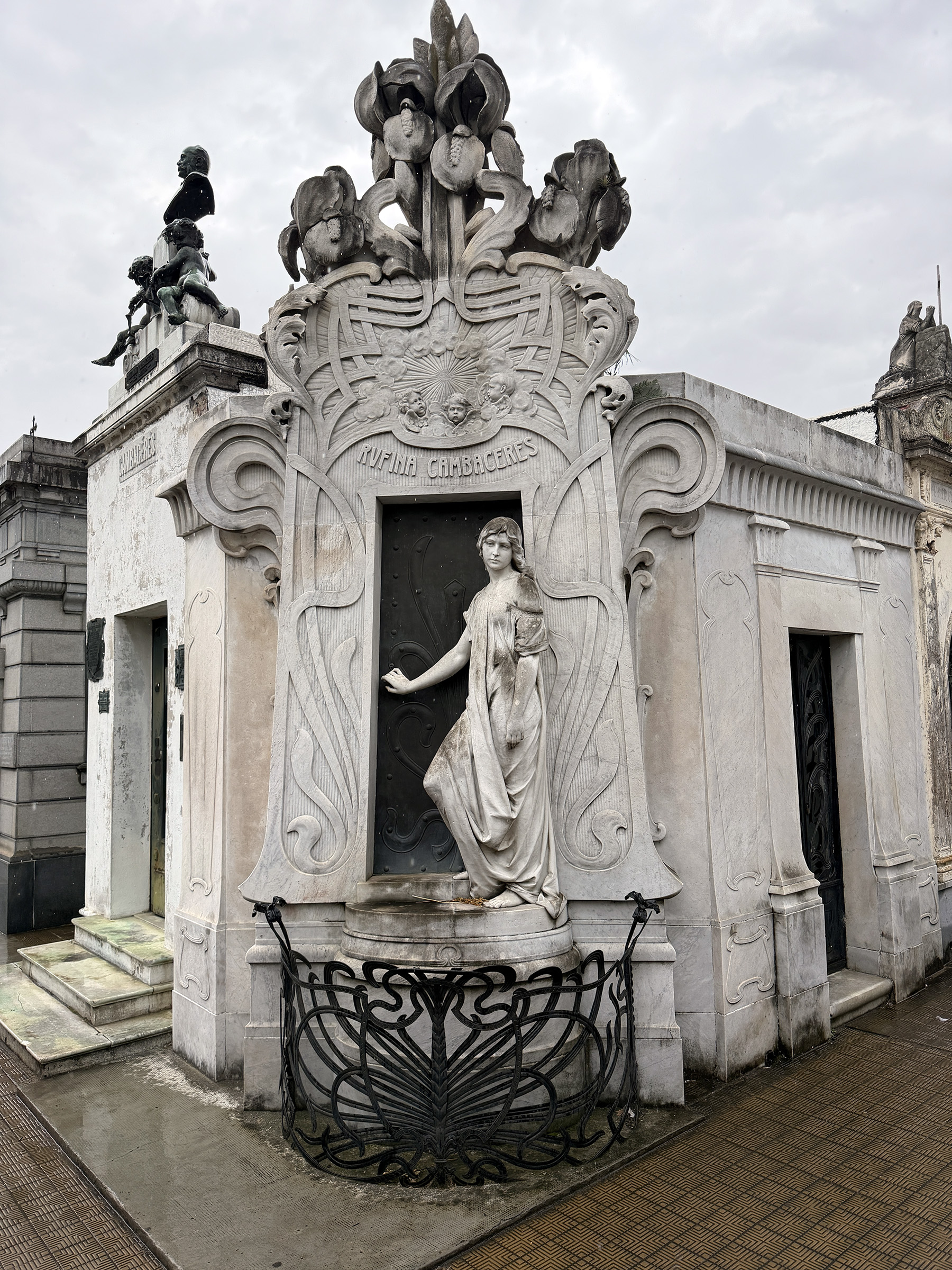
We took a rainy walking tour of Recoleta Cemetery, the one directly across the street from our previous hotel. It was actually pretty interesting with extremely elaborate mausoleums that must have been super expensive to build. Vicki, our secondary tour guide, told us some poignant stories about some of the deceased. Eva Perón is entombed in a modest family vault (the Duartes) with a small plaque.
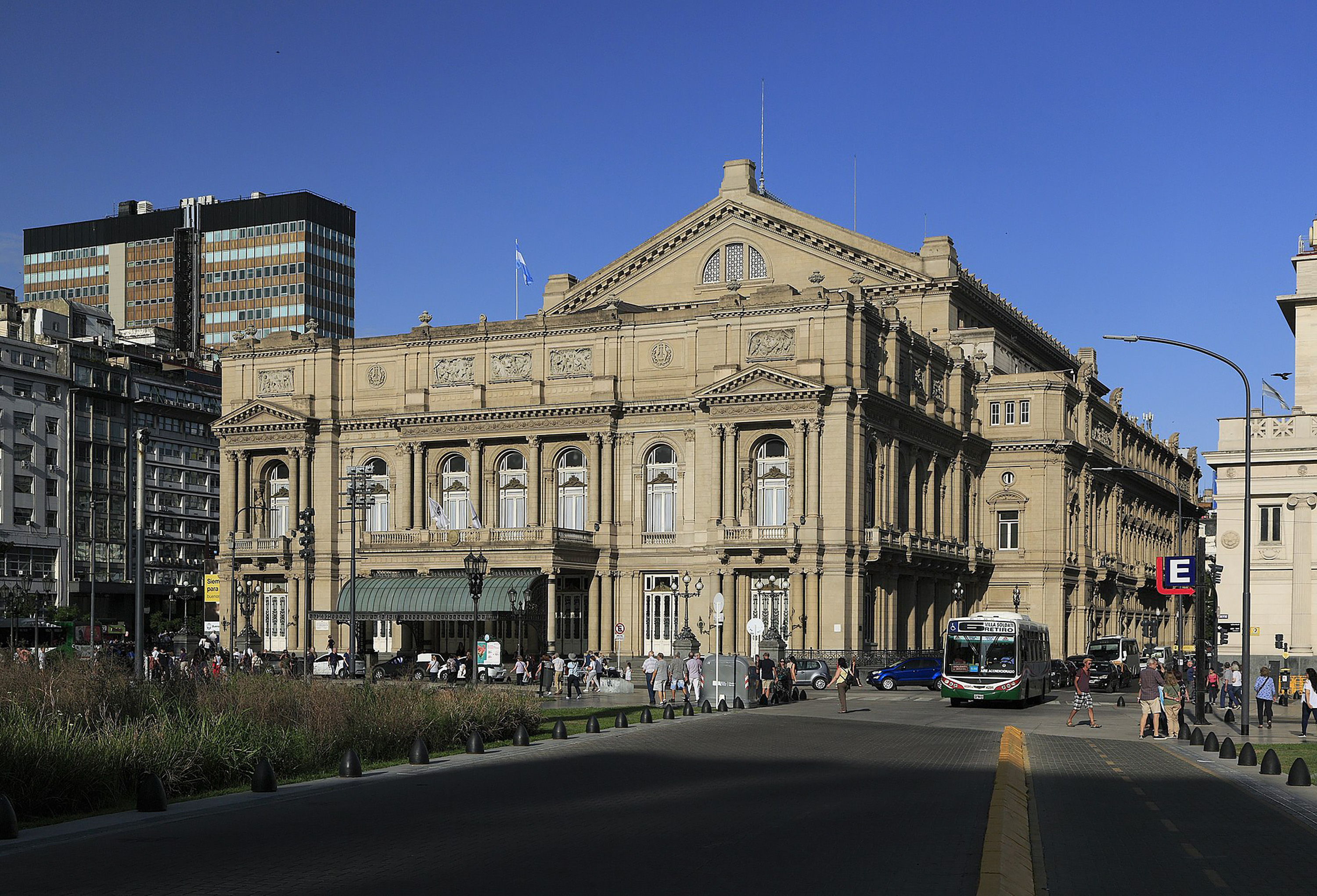
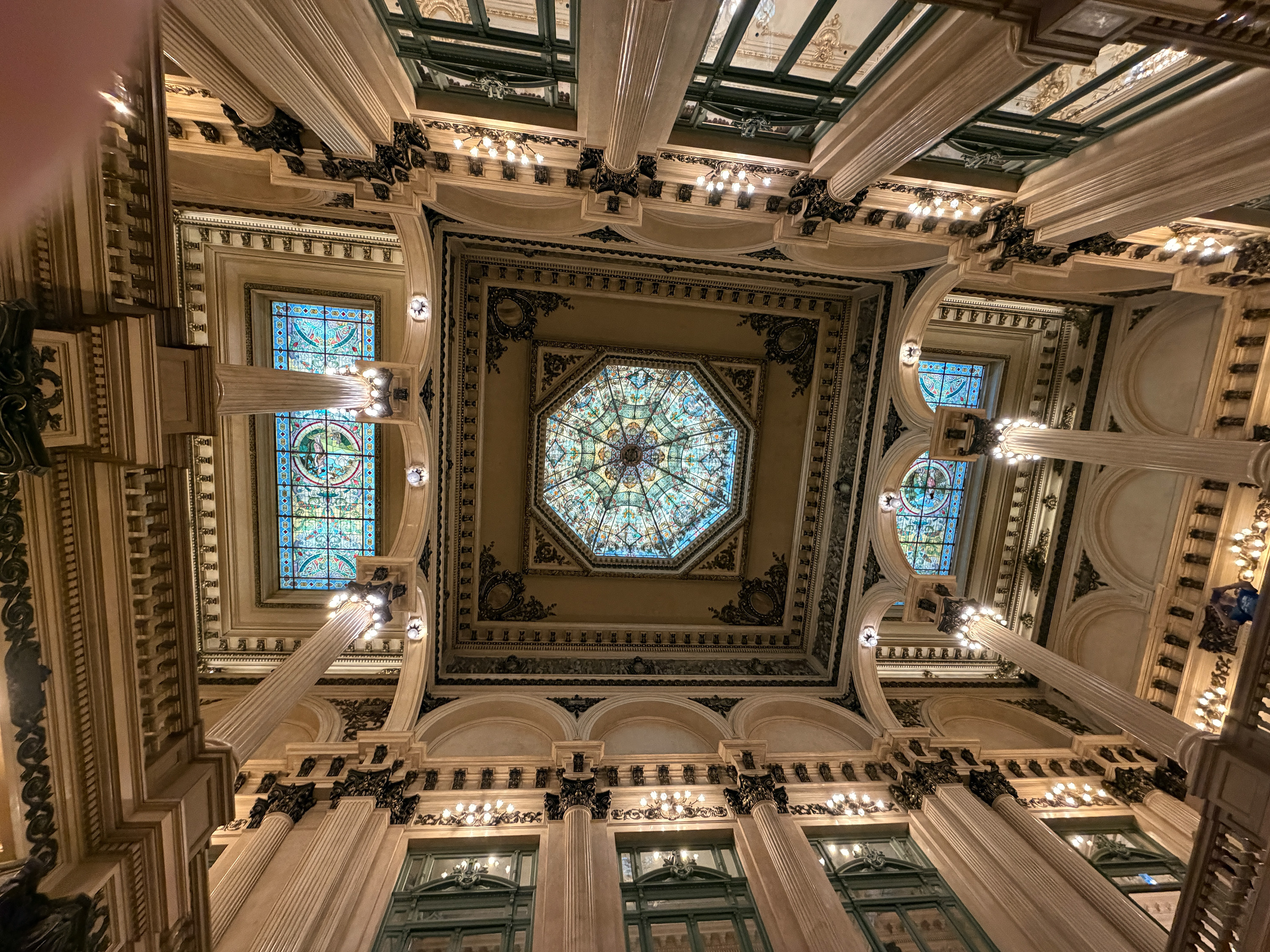
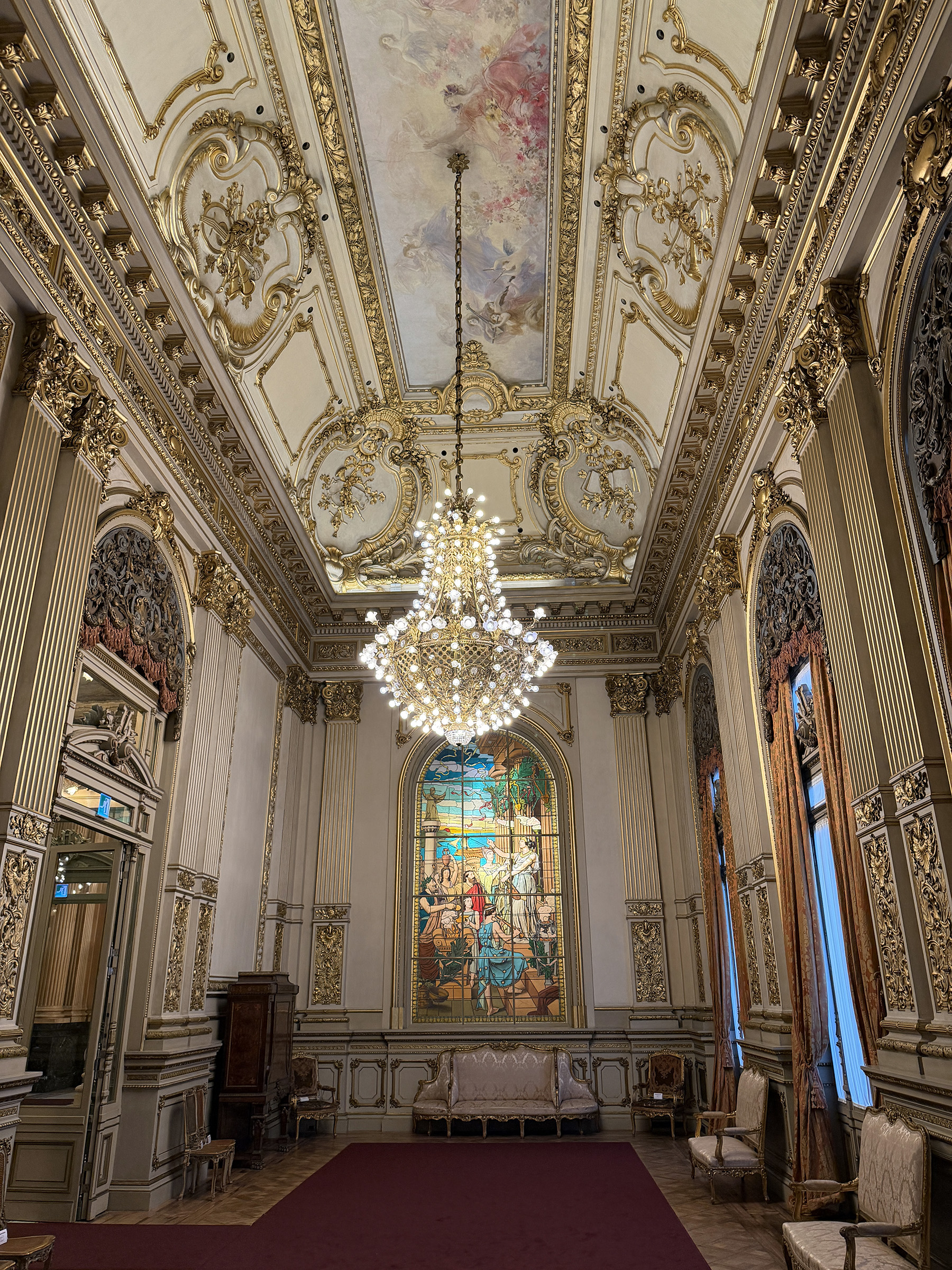
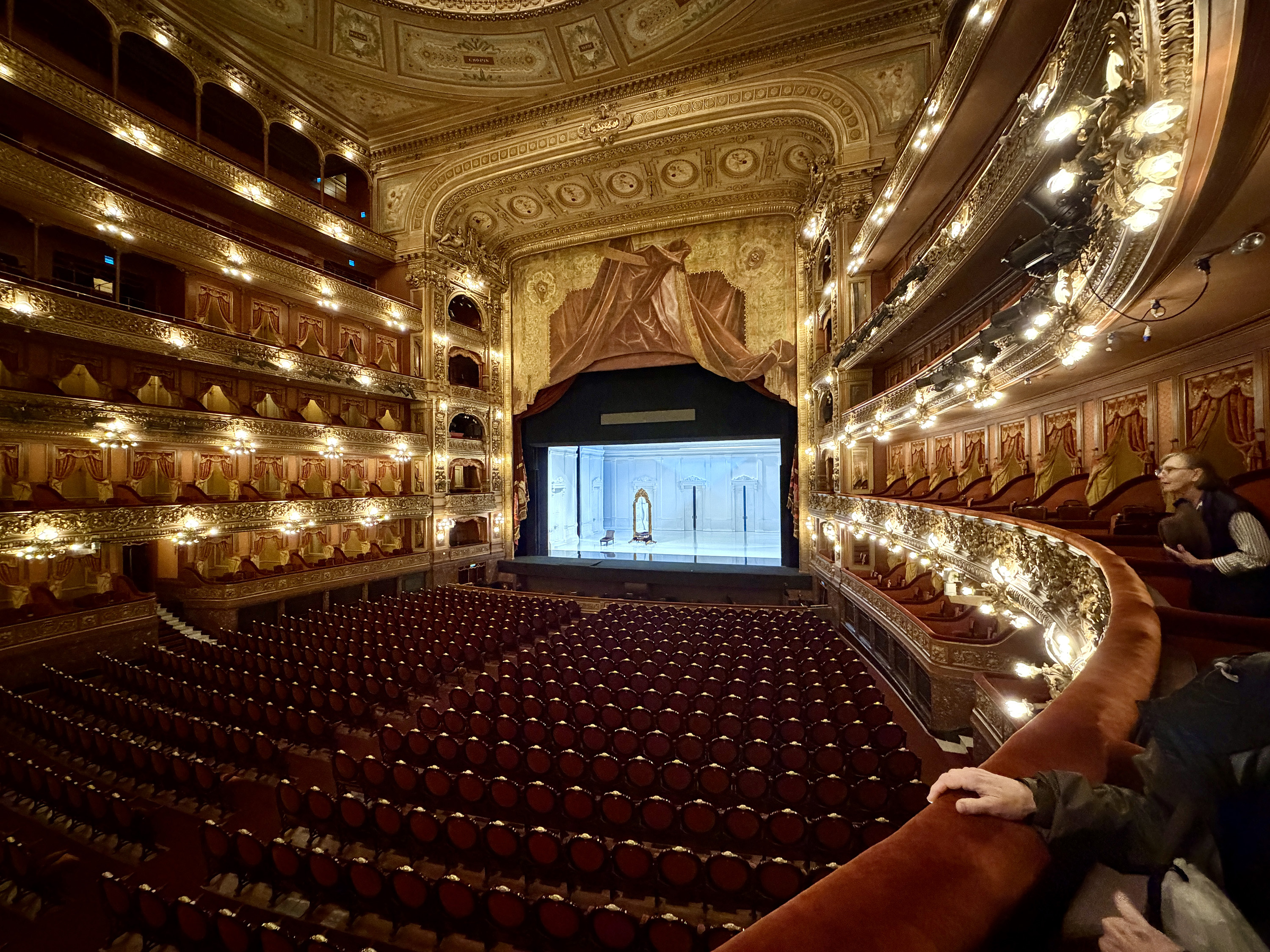
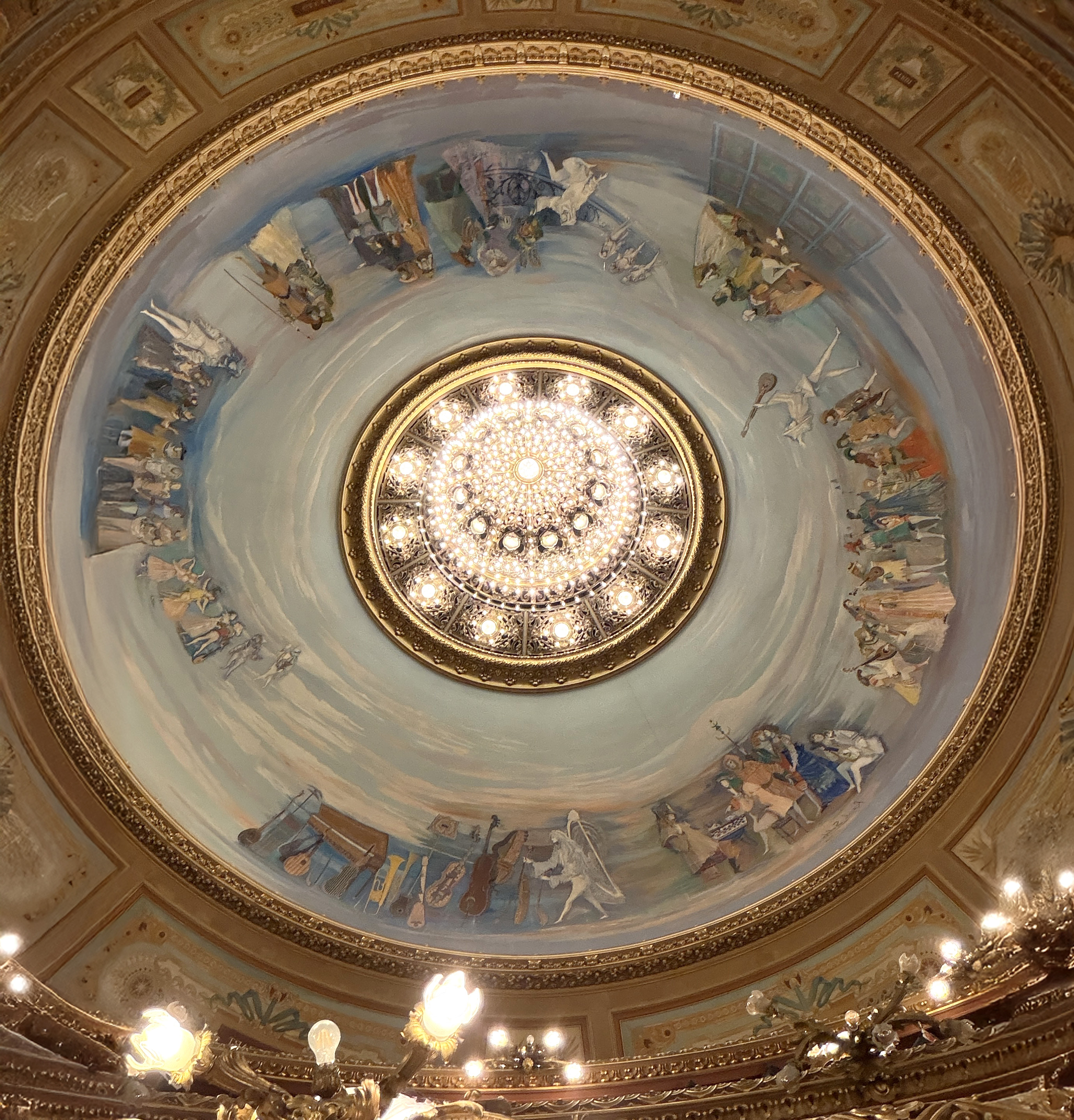
Our final stop was Teatro Colón, the massive opera house. National Geographic considers it one of the top ten opera houses in the world, and researchers rate it as having the world’s best acoustics for opera. It was built in 1908. We took a very long tour that went through all of the different public areas, and then we ended up seating in boxes on the third level. Very impressive. Since we had to get up very early tomorrow morning, we did not go out to dinner on our own, but went to a local grocery store for some comestibles.
Friday, November 21 — Ushuaia
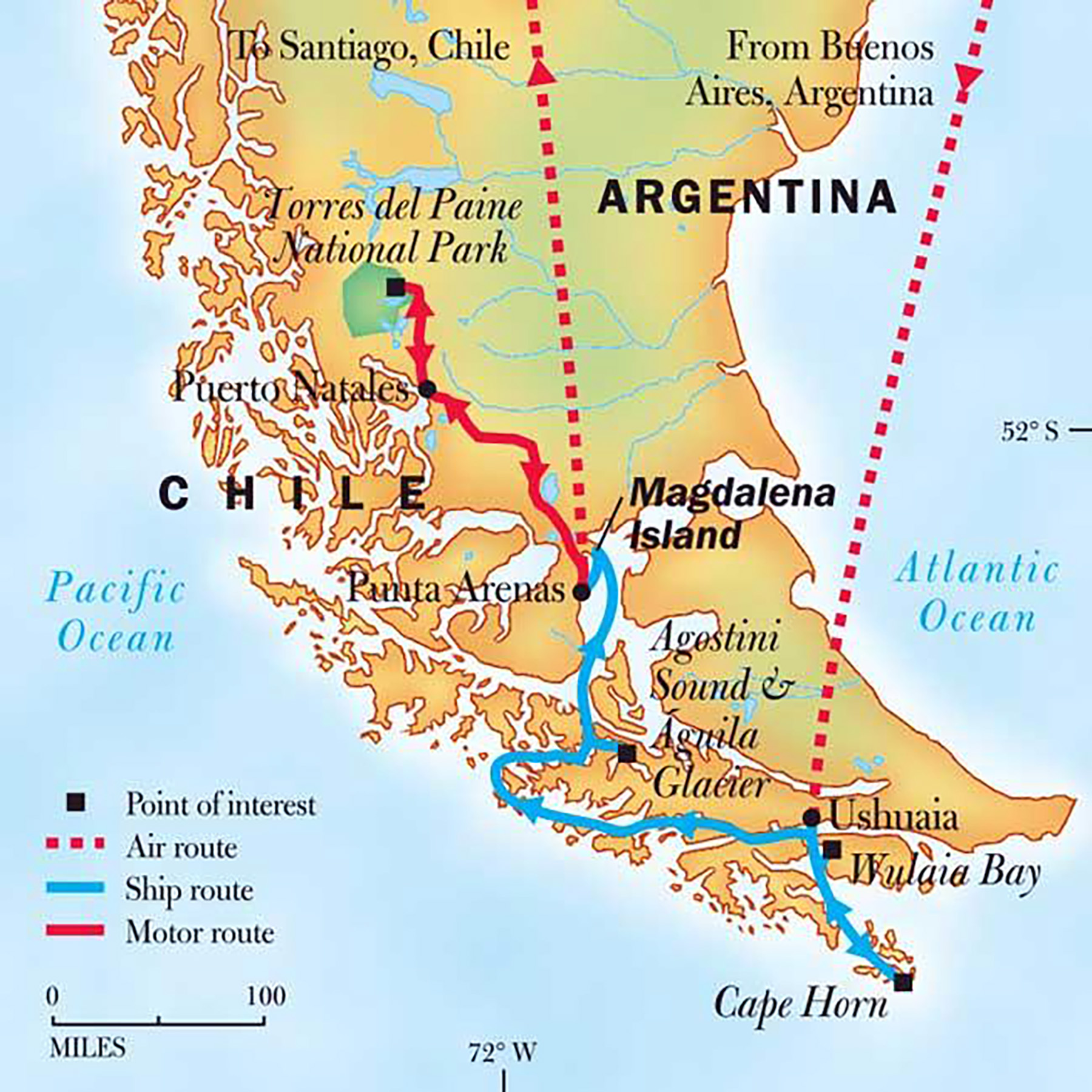
A 4 a.m. wake-up call for a 5:15 bus to EZE. It’s a holiday weekend, so the terminal is very busy, and about 200 people are in line to check bags. Fortunately, we are all checked in with boarding passes. I did ours myself, but Lu did it for everyone else. The line moved faster than at AEP, but it still took over 90 minutes. Unlike the Iguazú flight, I had confidence Lu would manage us through. She had to run ahead to the gate to hold the plane, but we all boarded okay. Lu and a friendly flight attendant took pity on my long legs and put us into exit row seats! The flight was fine, about 3.5 hours. We boarded a large bus and met our local guide Iris, ready for a tour of Ushuaia and a small corner of Tierra del Fuego. The city of 100,000 is the southernmost city in the world. There was a minor discussion of whether this is actually Patagonia, because some sources say it goes no farther south than the Strait of Magellan, but sources vary. Iris reported that some say it is everything south of 42°. Patagonia is named after the word Patagon, which means big feet.
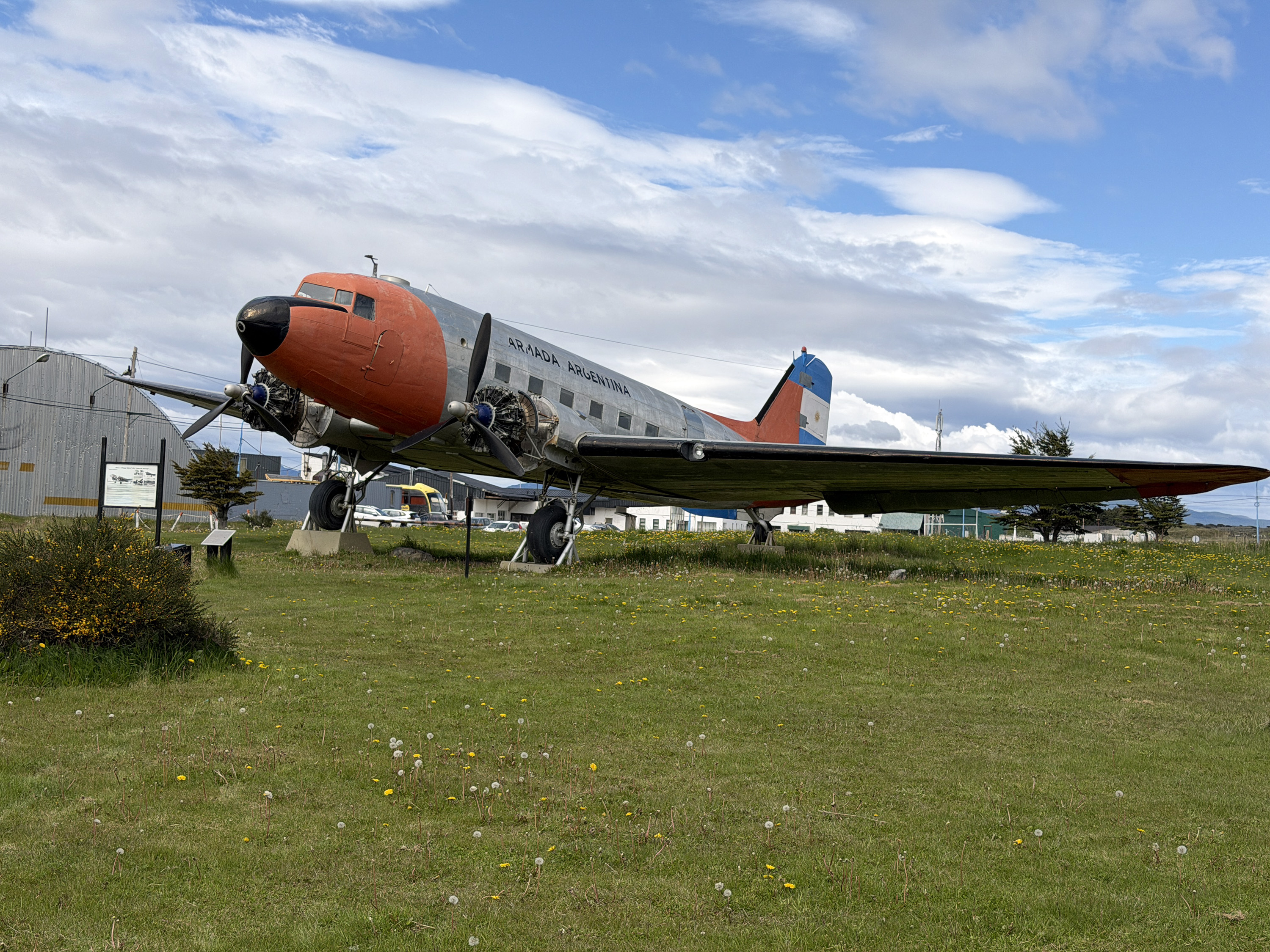
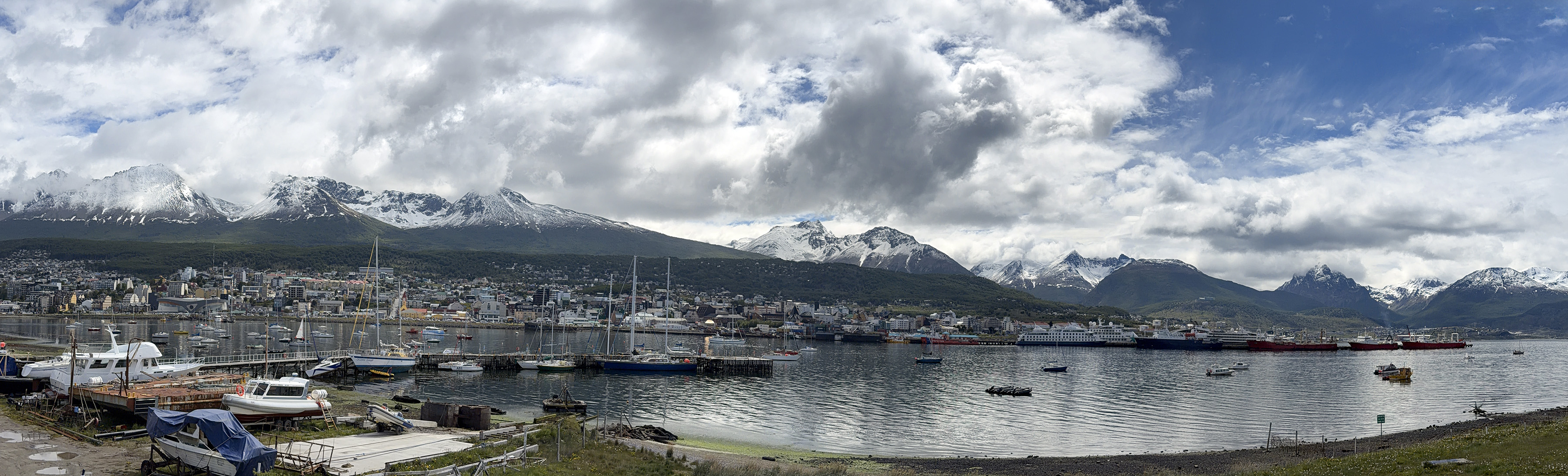
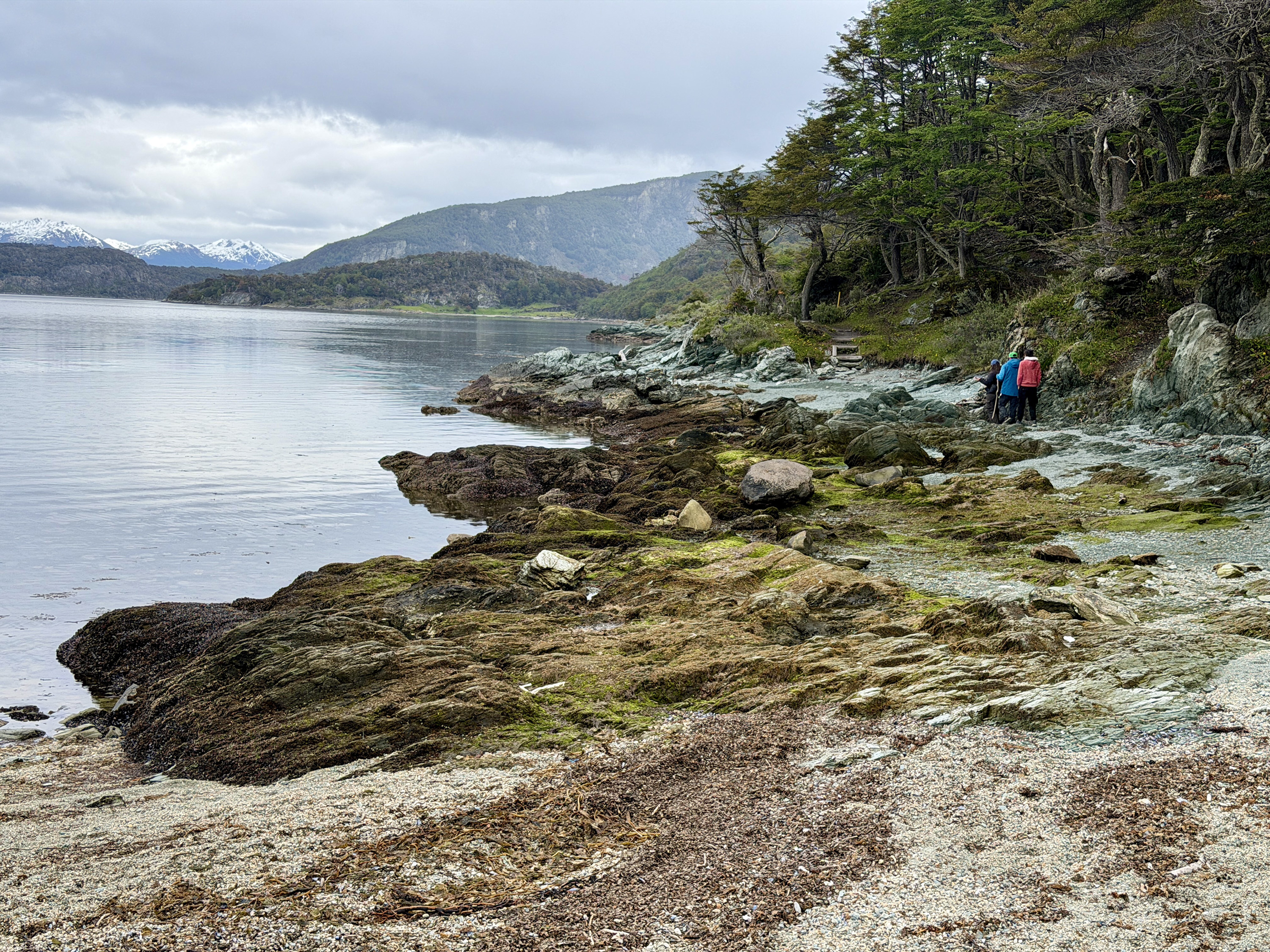
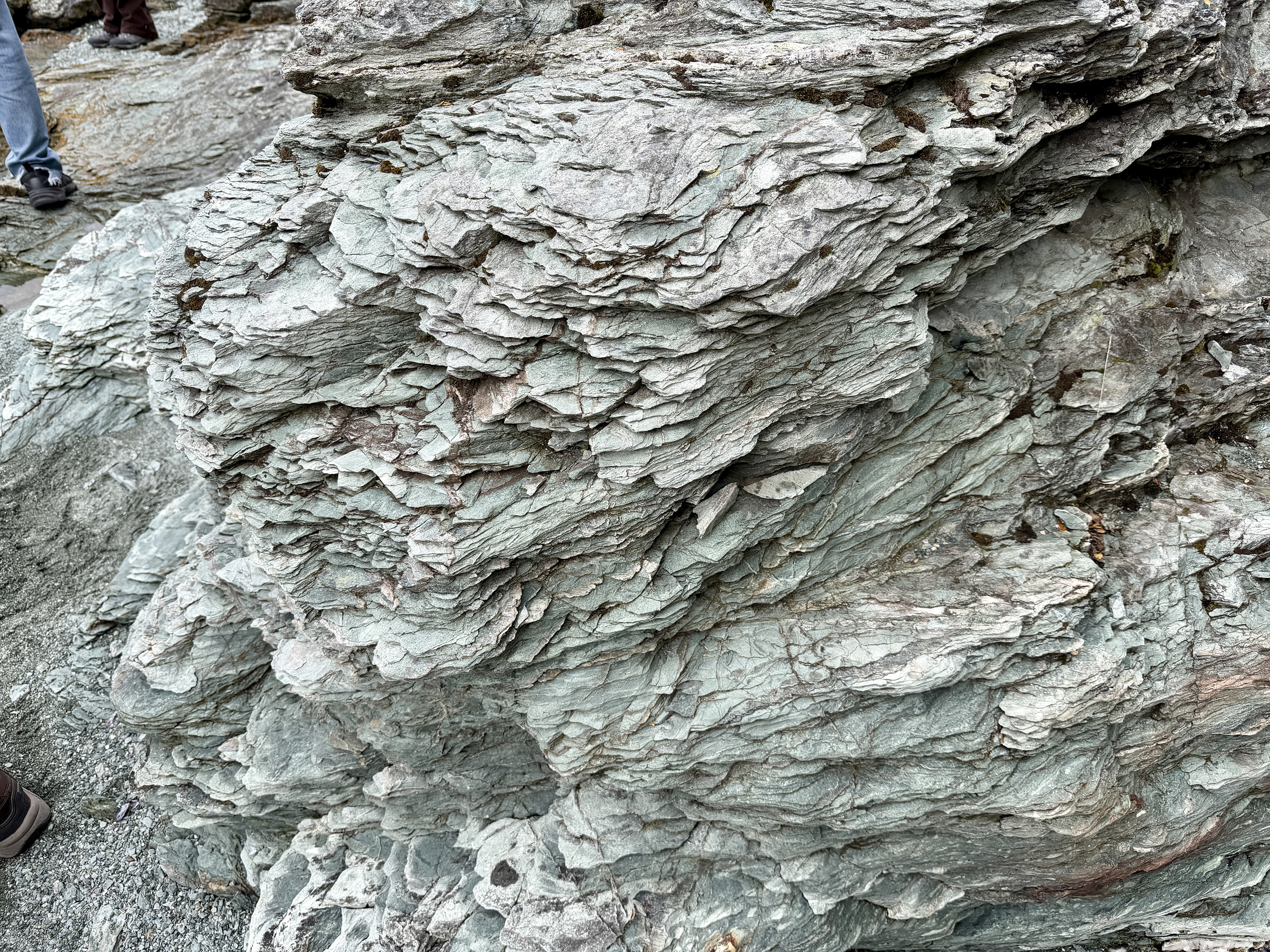
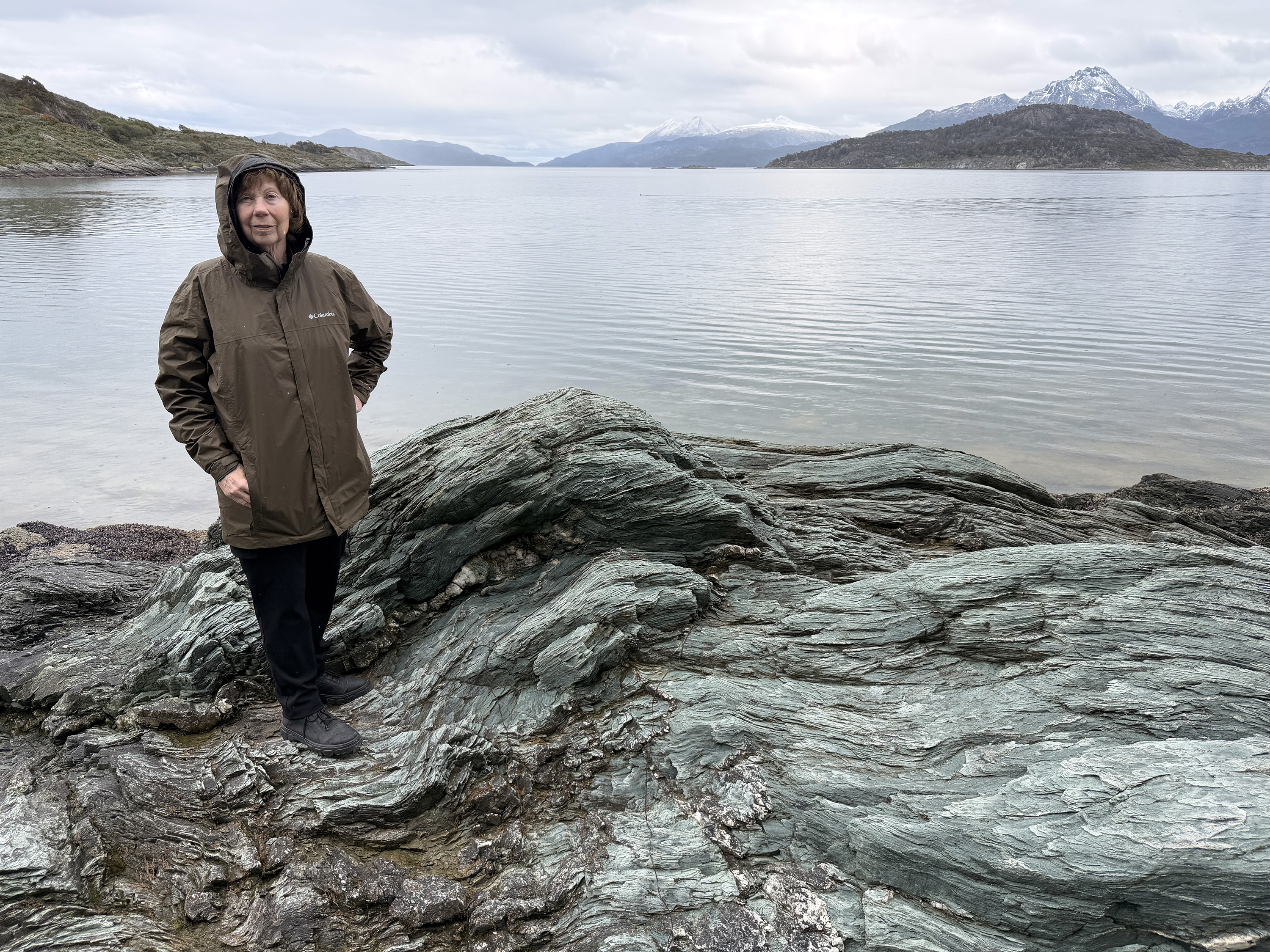
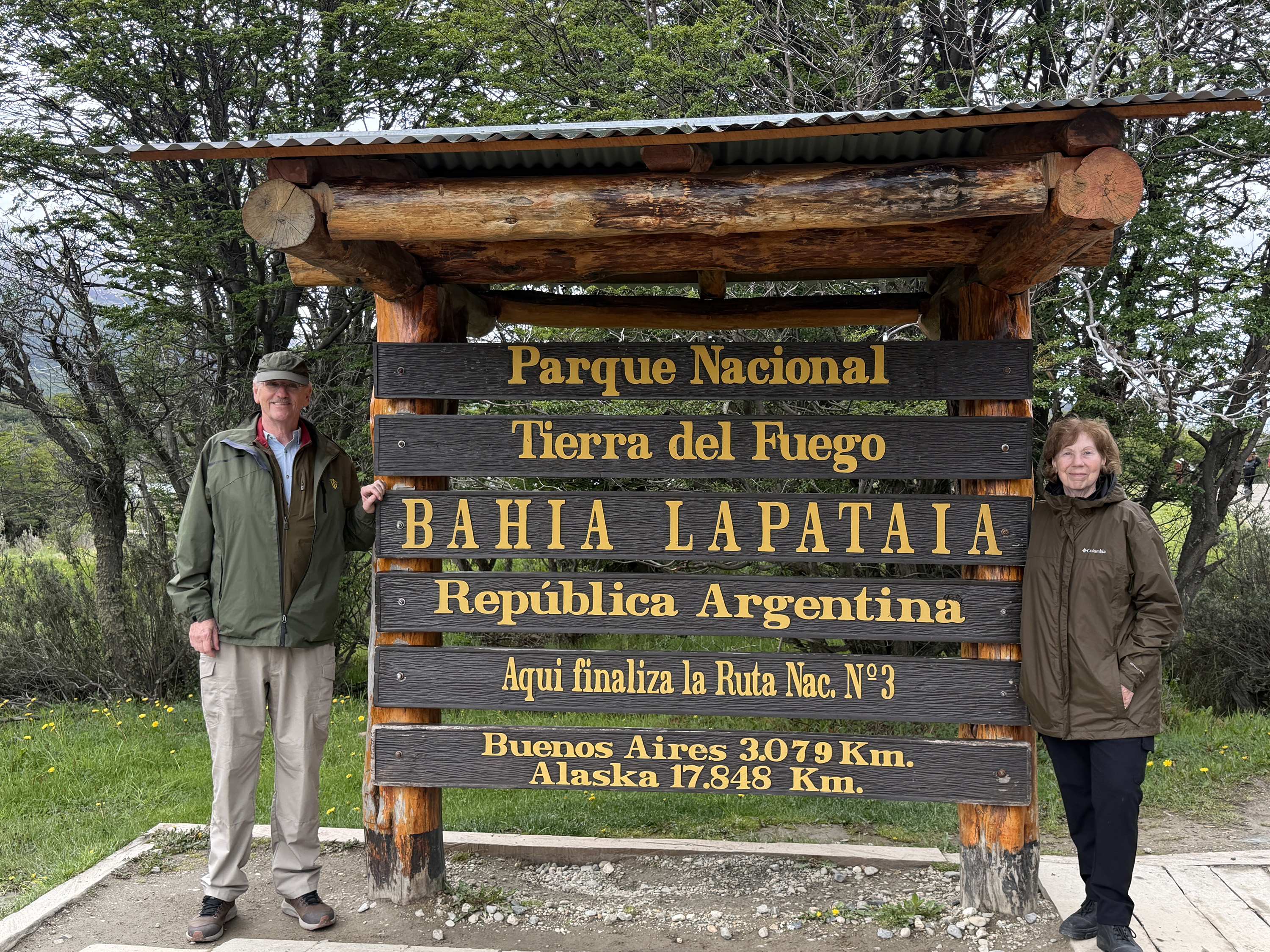
We stopped at the old airport to see a vintage DC3 and a beautiful view of the city waterfront and the dramatic mountains just behind. We drove downtown and had an hour and 45 minutes to explore the touristy areas and eat lunch. Four of us ate at a modest seafood restaurant, and I had a decent seafood paella. Then we drove about 40 minutes to Tierra del Fuego National Park and took a brief walk on the shore of the Beagle Channel (named after Darwin’s famous ship). Not much wildlife to report, but there were a lot of metamorphic rock formations that were unusual and pretty. Another drive put us on a dirt road, Route 3, that is the start of the Pan American Highway, reaching all the way to Alaska, and we posed for a photo at the sign marking the spot.
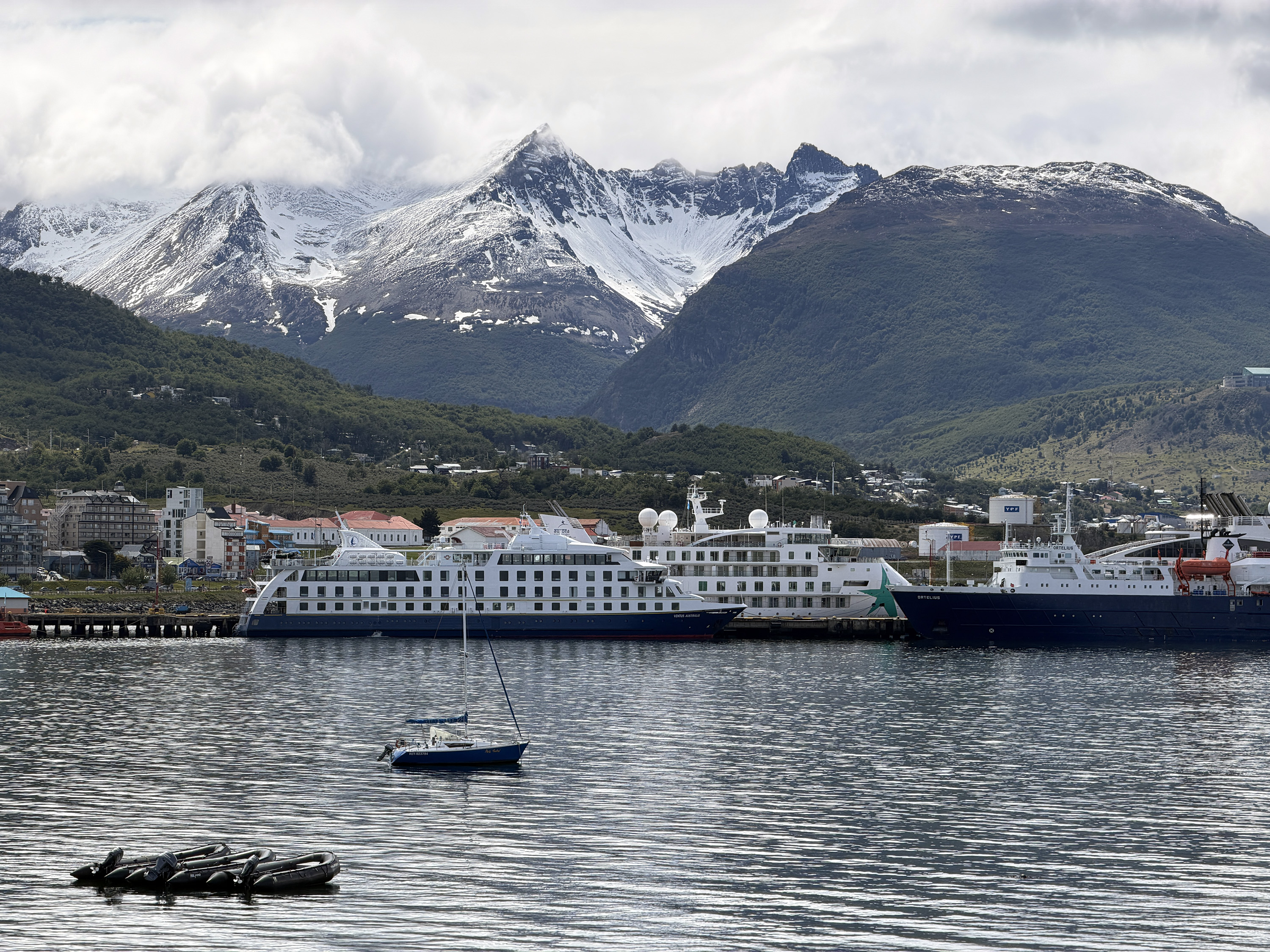
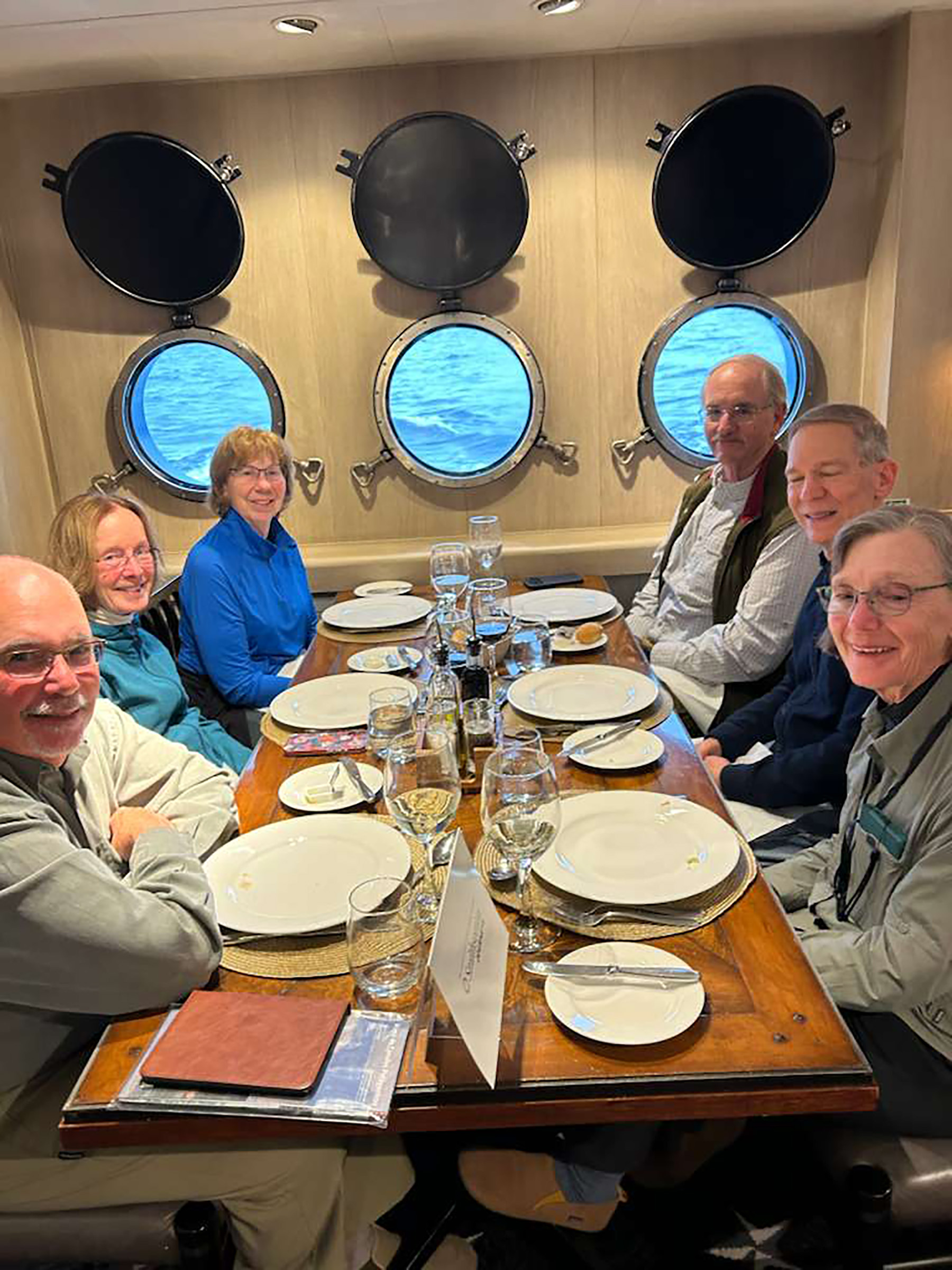
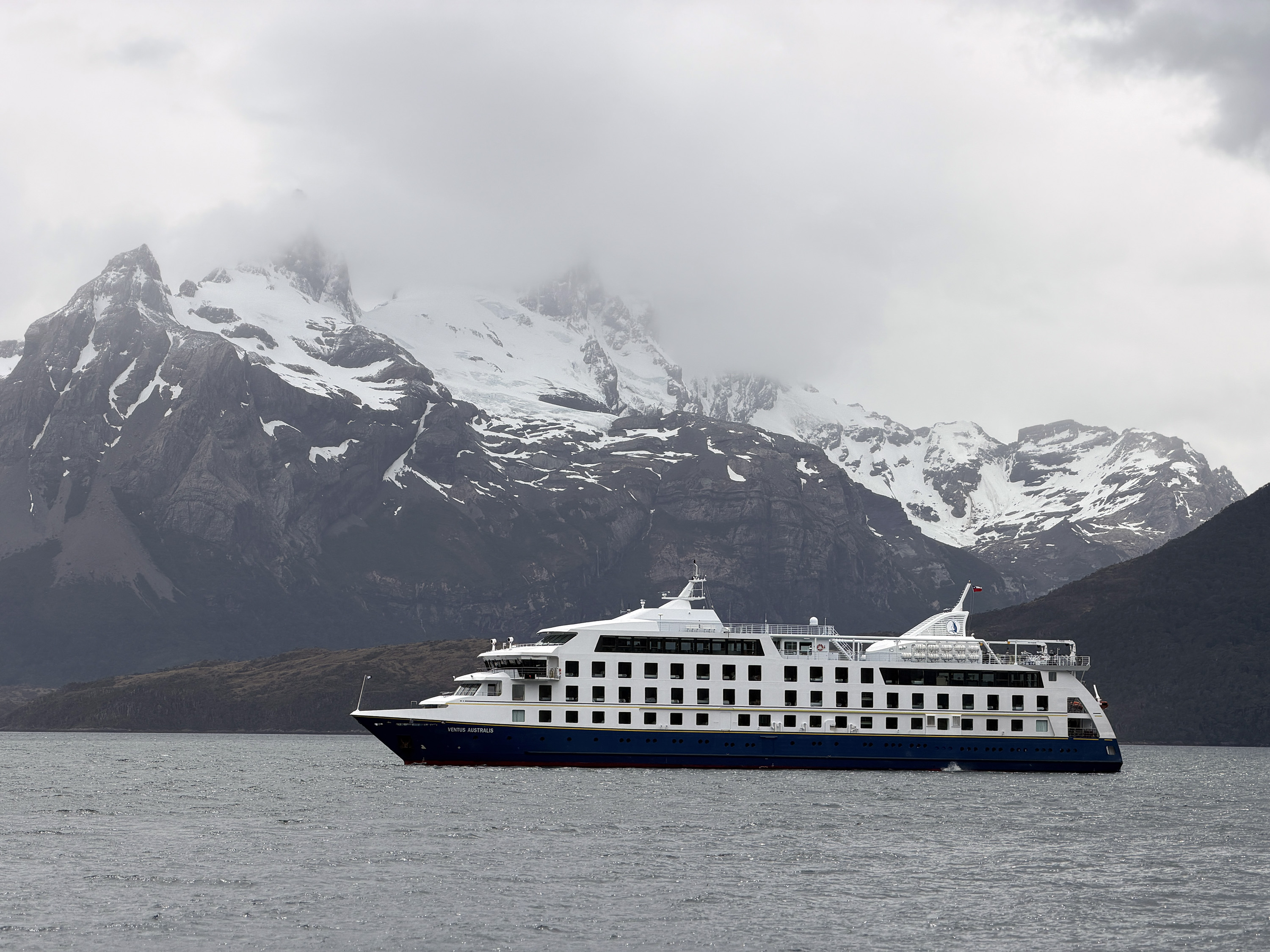
Back in town at 6 p.m., we boarded the small expedition ship Ventus Australis for our four-day tour through Patagonian waters. It has facilities that are dated and basic but comfortable enough. We attended an orientation and welcome session and then had dinner, which was okay. The big sacrifice I’m making for this part of our trip is that there will be long stretches without internet or phone connectivity (although at the moment I’m typing—Friday at 10—we have motored out a couple of miles and are anchored close enough to Ushuaia to get a decent cellular signal). The ship could have installed StarLink, but they consider disconnecting from daily life and concentrating on nature to be a feature, not a bug.
Saturday, November 22 — Cape Horn
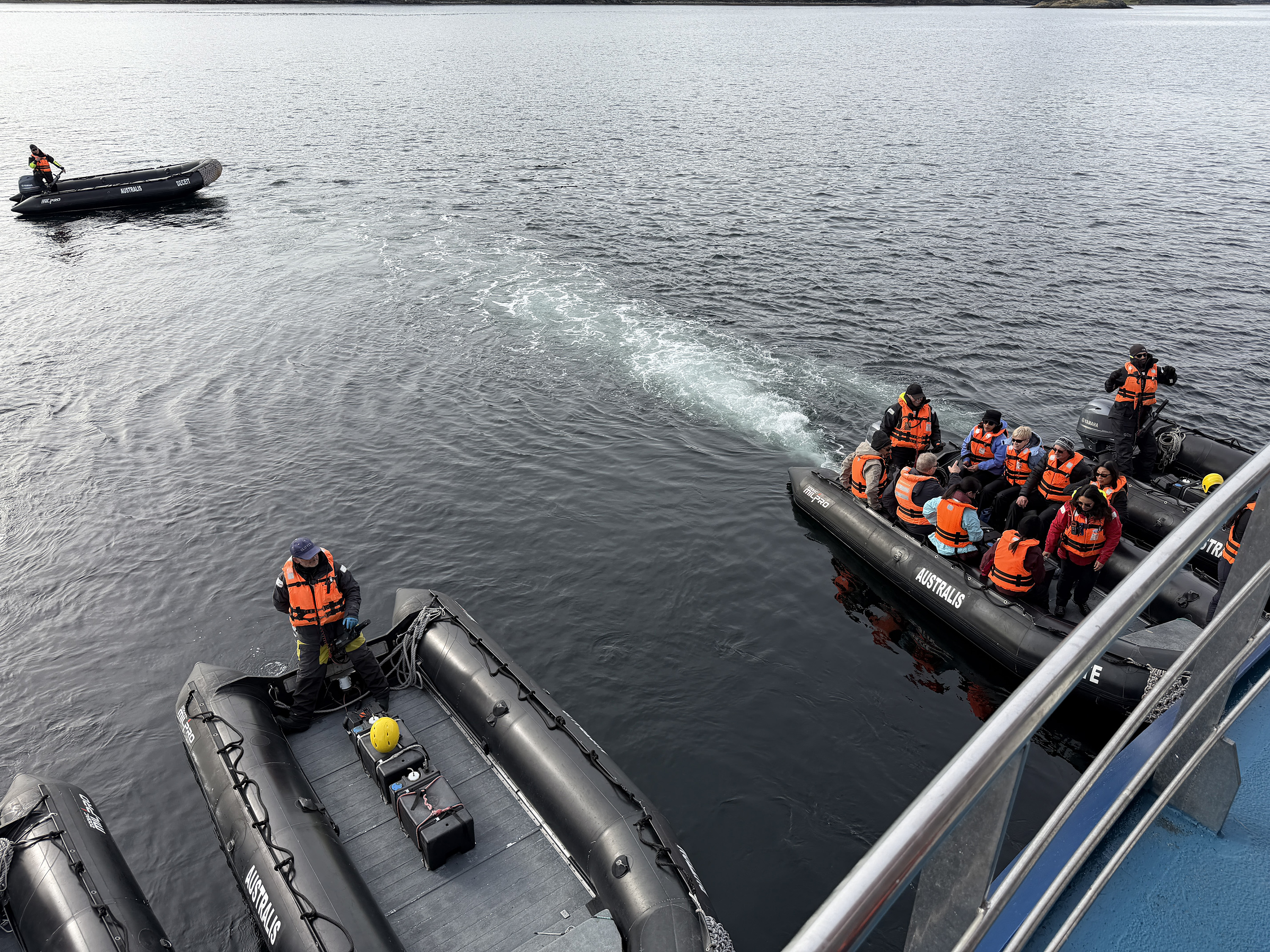
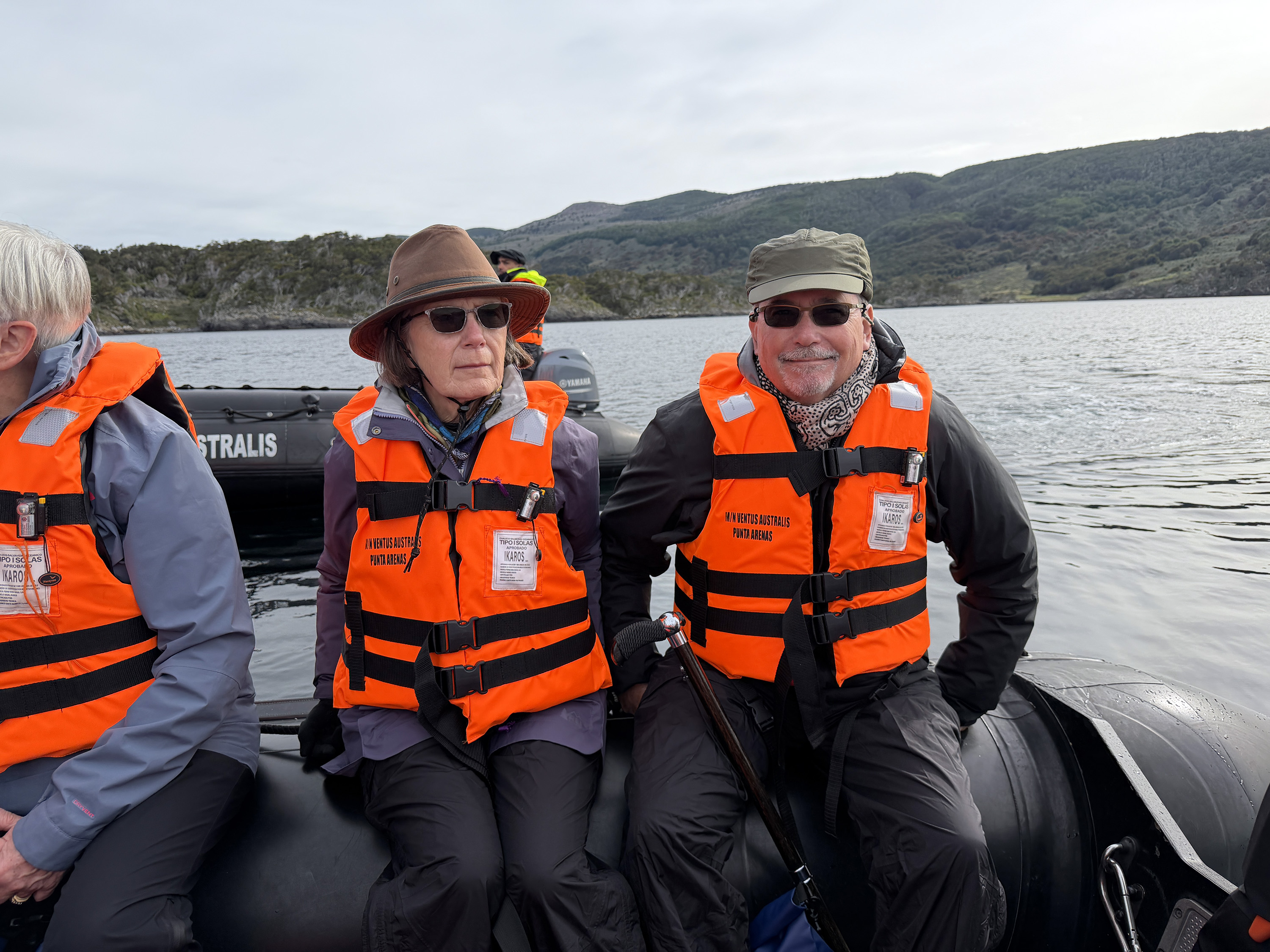
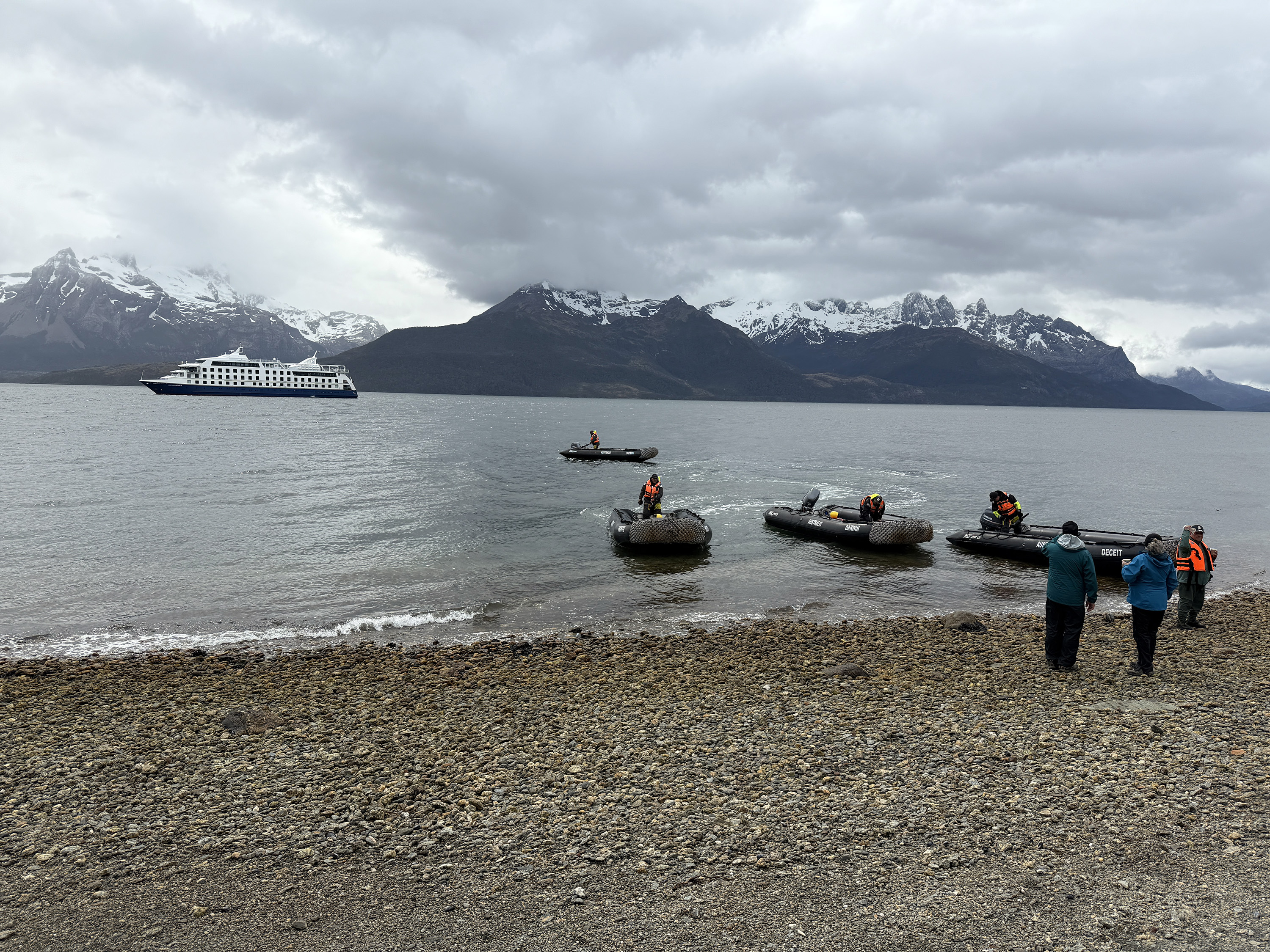
We slept well in a comfortable, albeit short, bed and went to “early riser” coffee and pastries. The breakfast buffet started at 7:30. At around 6, we weighed anchor and motored to Wulaia Bay, which is about 15 miles south of Ushuaia, but on the other side of Isla Navarino. We had a choice of three excursions: an easy coastal walk with some local history information, a moderately steep hike up a hill—Lu said it was 45°, but that seems unlikely—and a longer, more strenuous climb to an observation point. We chose the easiest. We kitted up in our waterproof gear, although the weather was only cloudy with a brisk wind, and boarded 14-passenger Zodiacs for a speedy trip to the shore, where a small dock greeted us.
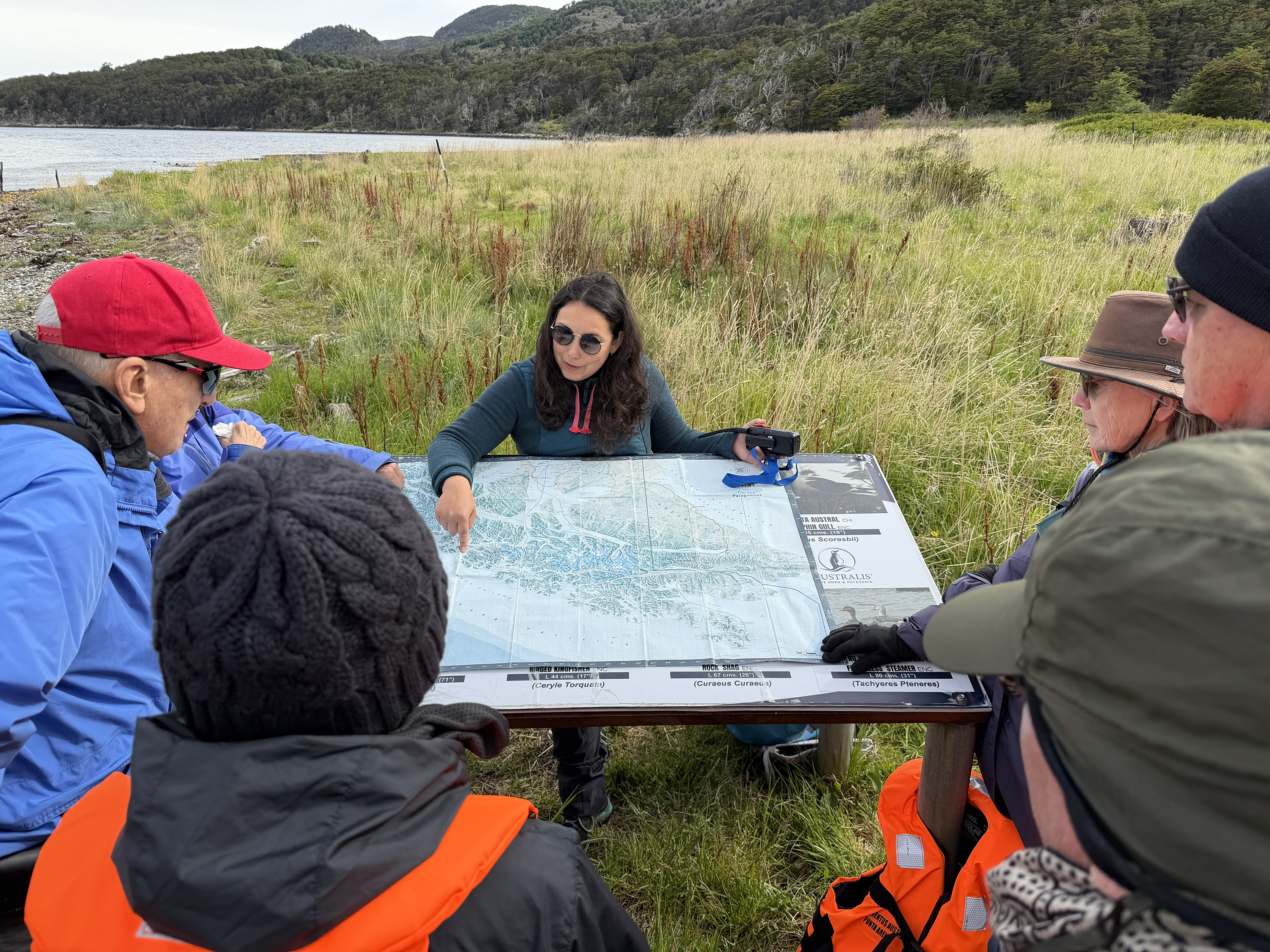
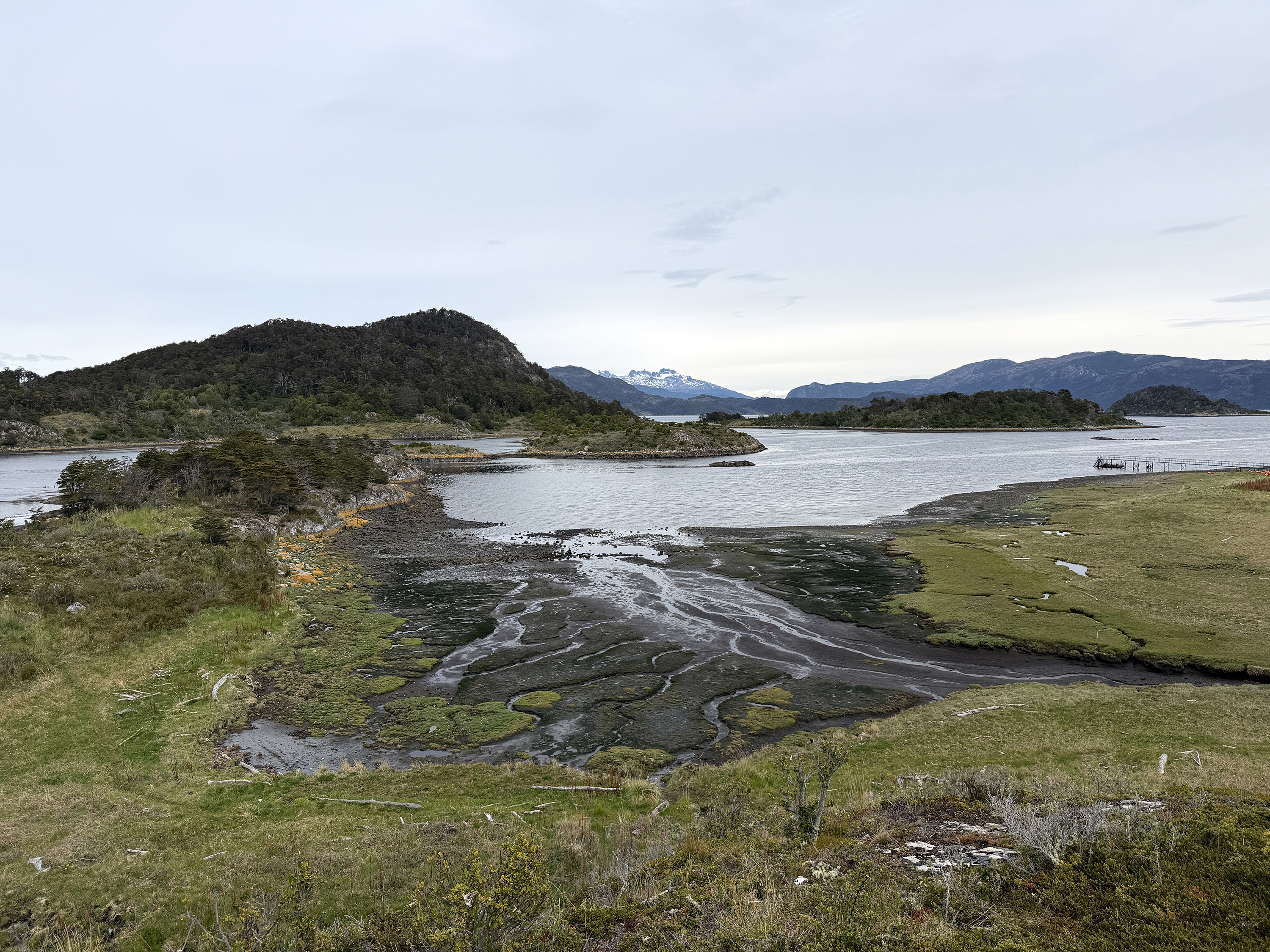
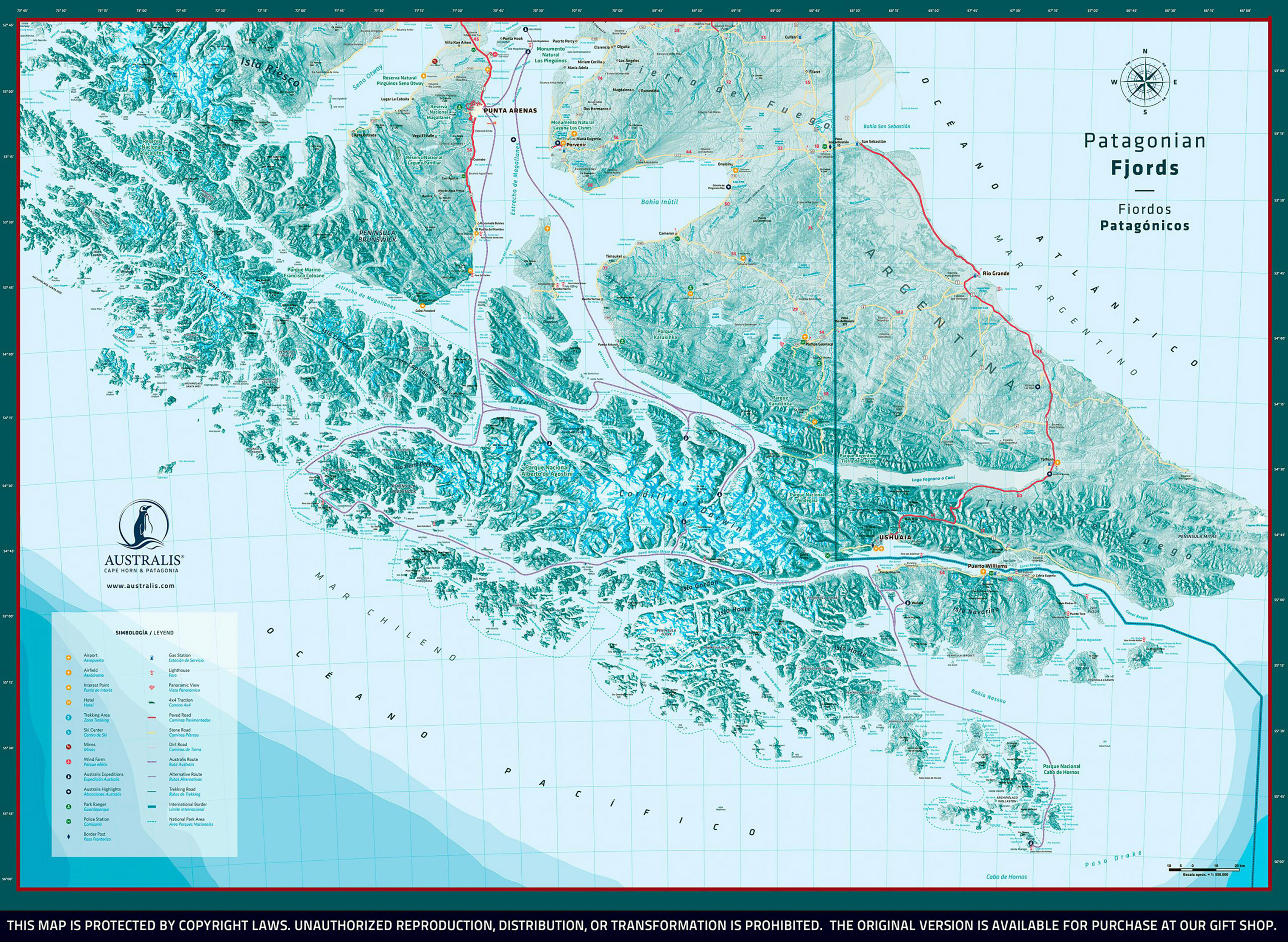
Our guide was a woman named Fabiola who was very conversant with the island’s history. We spent some time with a large relief map of Tierra del Fuego, and she informed us that Ushuaia is not actually the southernmost city in the world; the larger Chilean city of Puerto Williams is farther south by a few miles. We stopped in Wulaia because this was the base camp for HMS Beagle in its explorations of the Beagle Channel area. In the first expedition, the captain committed suicide from depression, and Robert Fitz-Roy took over. He transported three of the local Yamana tribe to England for education and promised to return them with knowledge to benefit their tribe. Cartographic data recorded by the expedition is supposedly still used today. The second expedition included a 22-year-old Charles Darwin. Fabiola described the eventual extermination of the local tribes and the loss of their spoken-only languages; the final speaker of Yamana died just a few years ago.
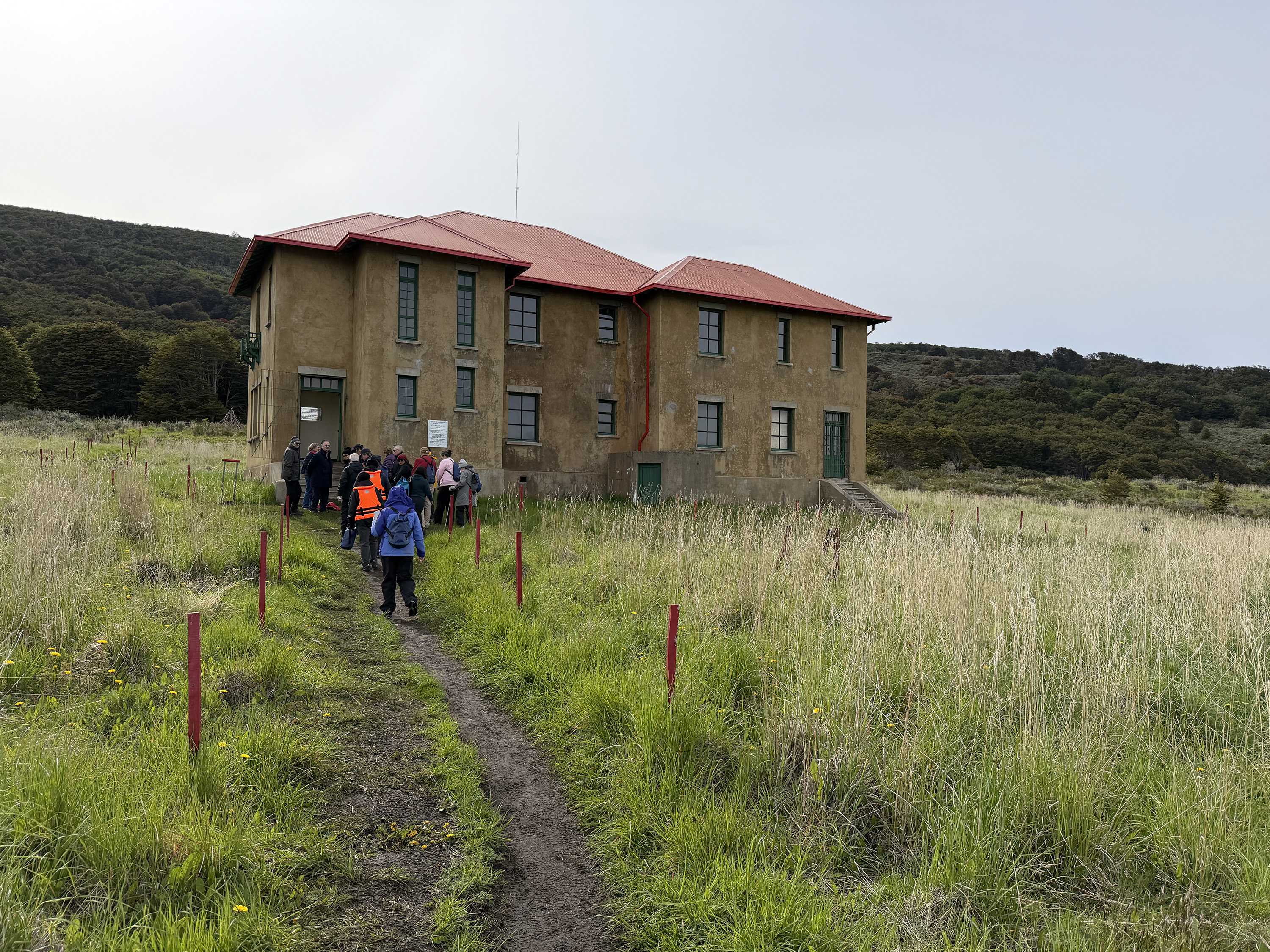
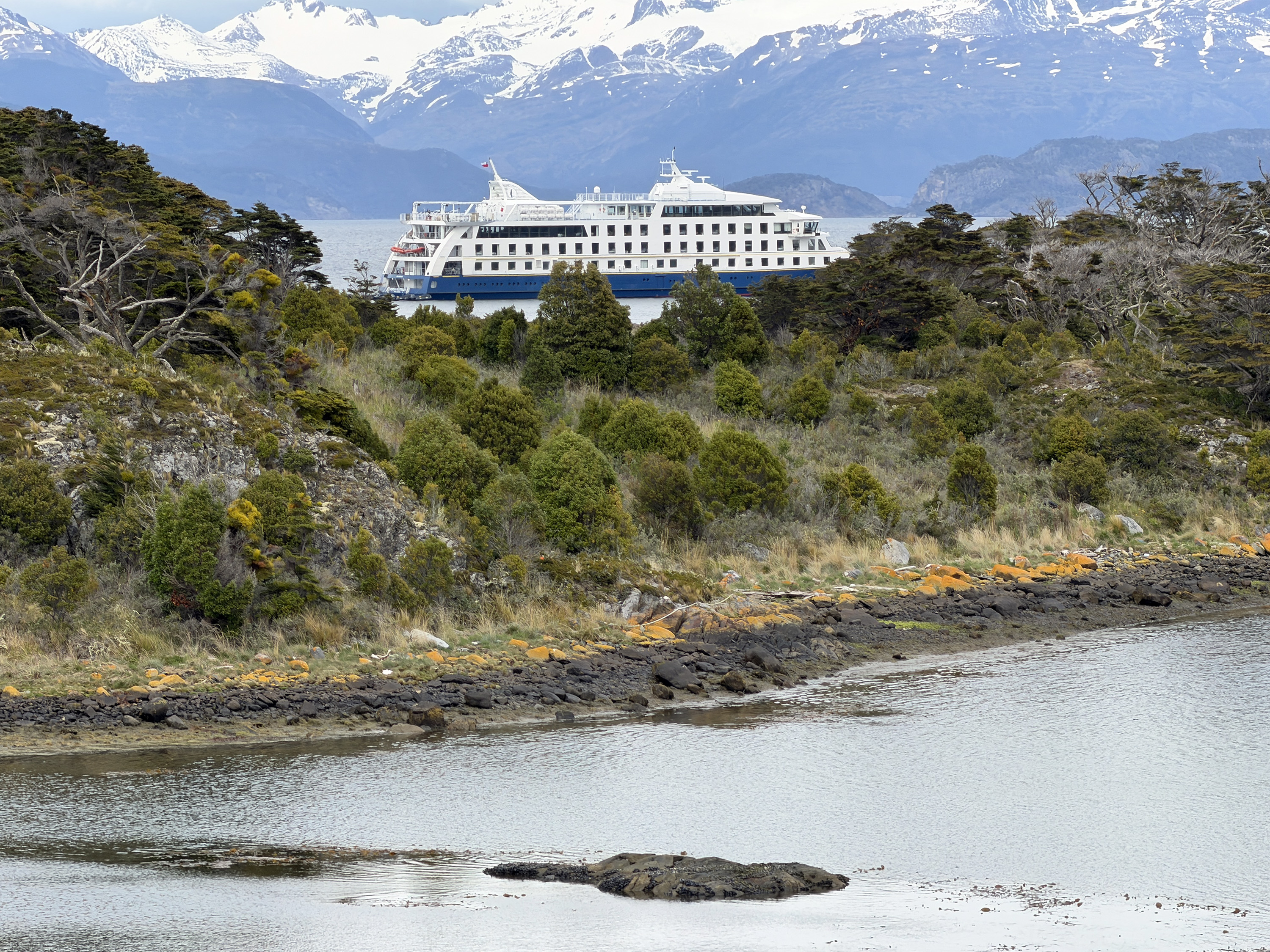
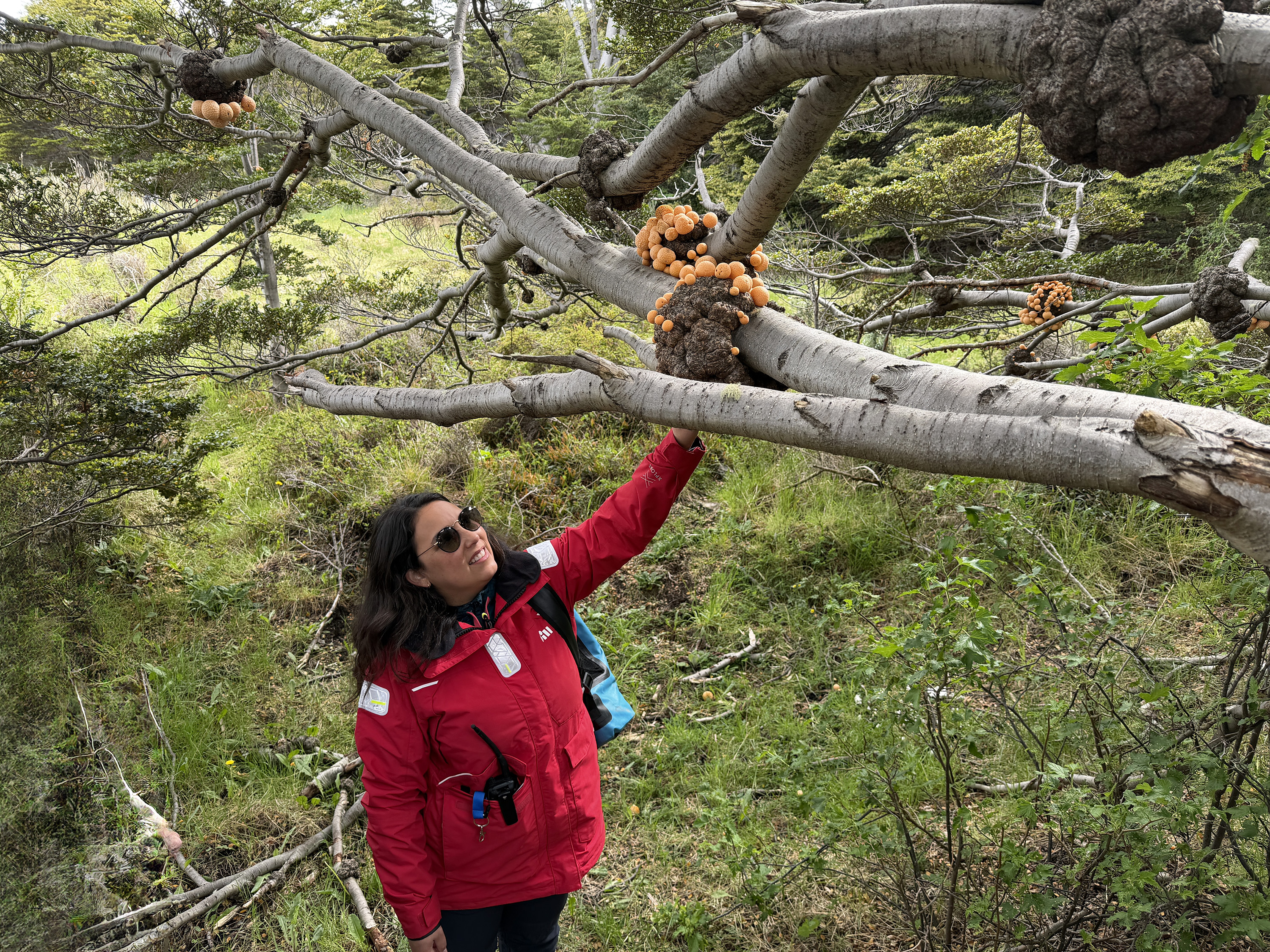
The area was turned into private lands and settled by immigrants, notably Croatians. In fact, the current president of Chile is of Croat heritage. We hiked up a small hill to see a monument to Vice Admiral Fitz-Roy and admire the view of our ship in the distance. We walked through the woods and saw evidence of feral pigs digging up roots. Also, a strange orange fungus in the shape of ping-pong balls clustered on tree limbs. It’s edible, but only Ray tried it; tasteless, he said. We finished after a couple of hours by visiting a museum housed in a former Chilean Army signal station. One of the cutesy tourist features here is that we were given postcards to address to friends back home, which were then dropped into a barrel. We were then supposed to sift through the existing cards and find one near our home so we could hand deliver it to the recipient. Right.
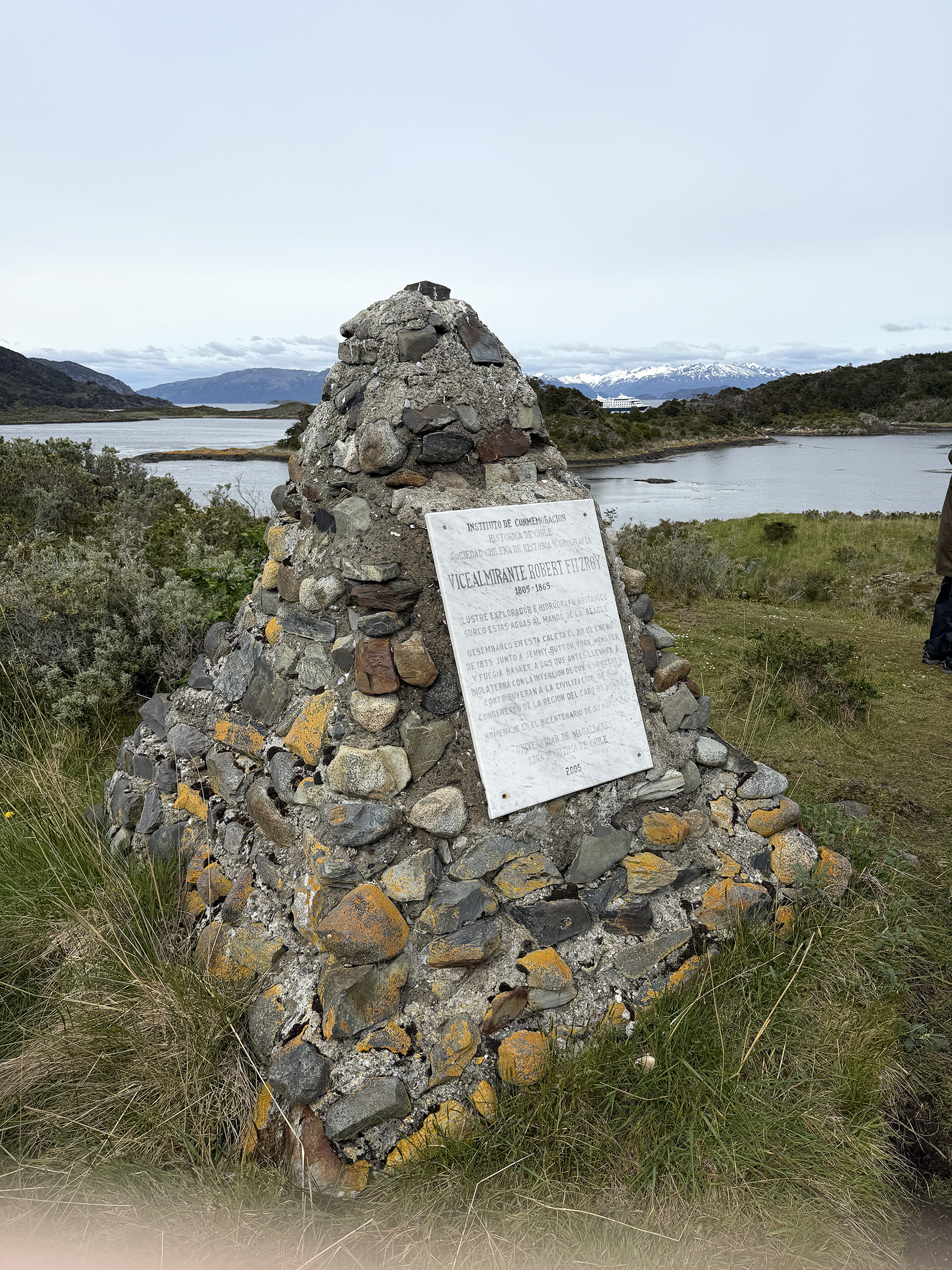
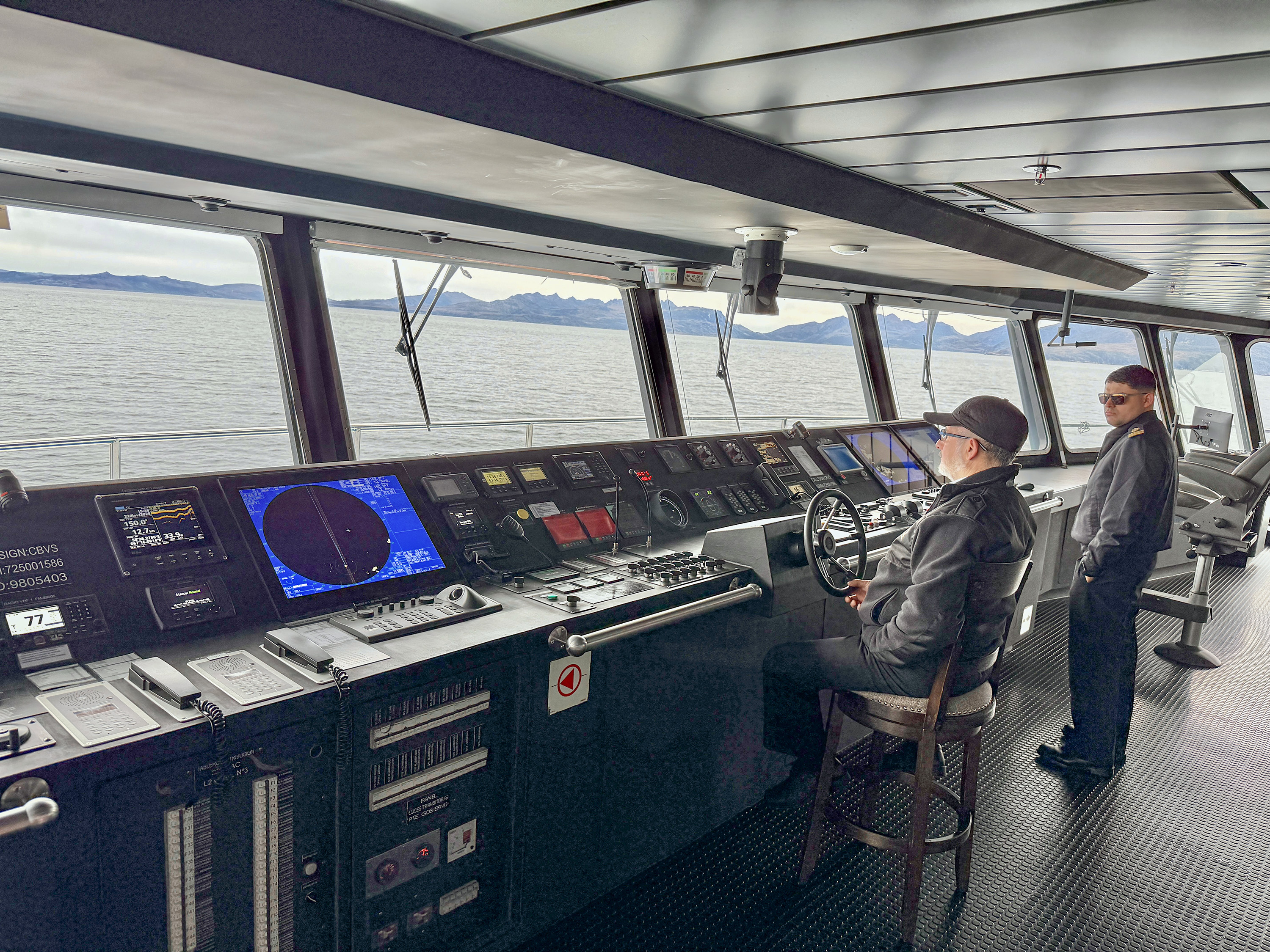
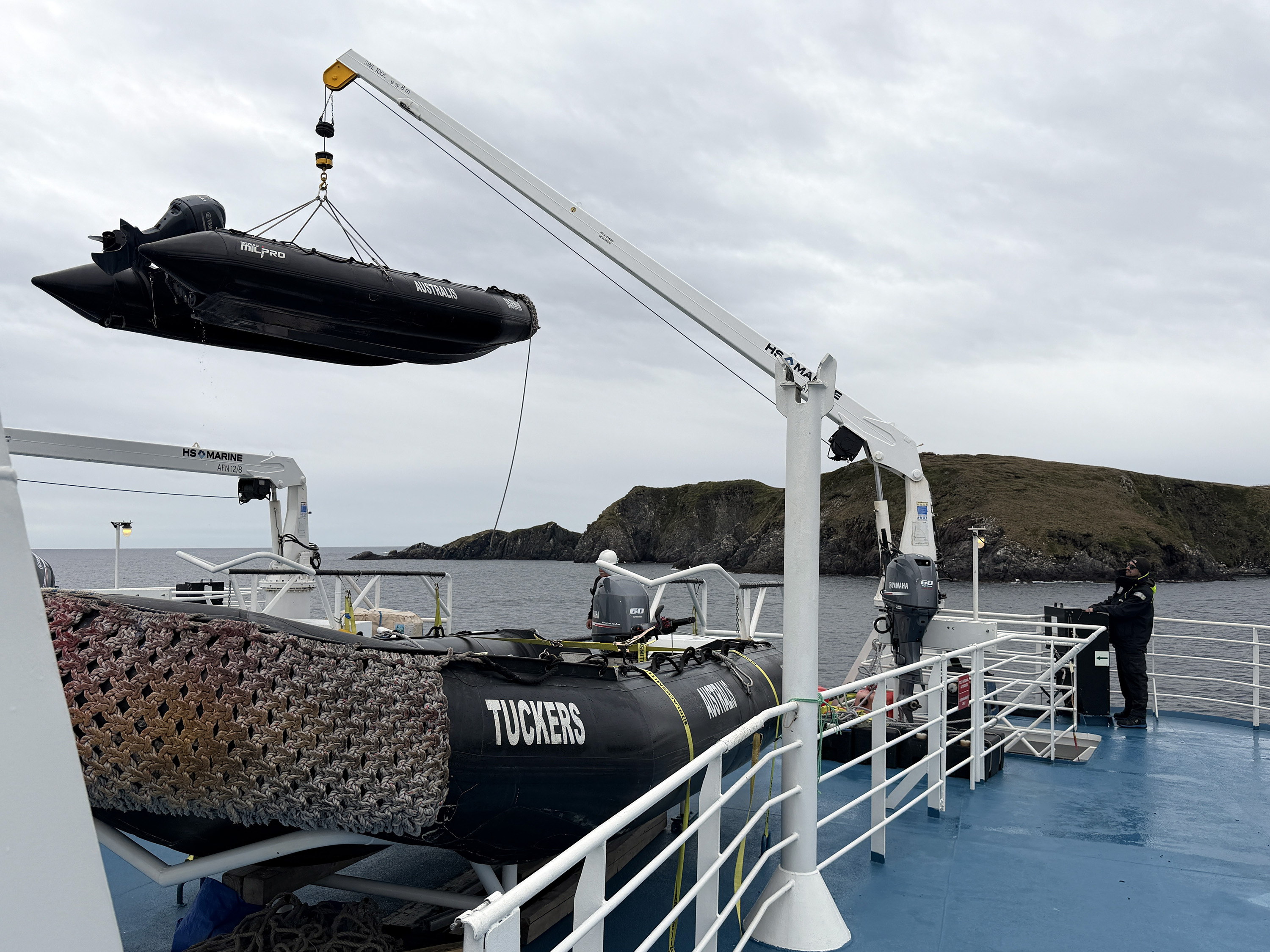
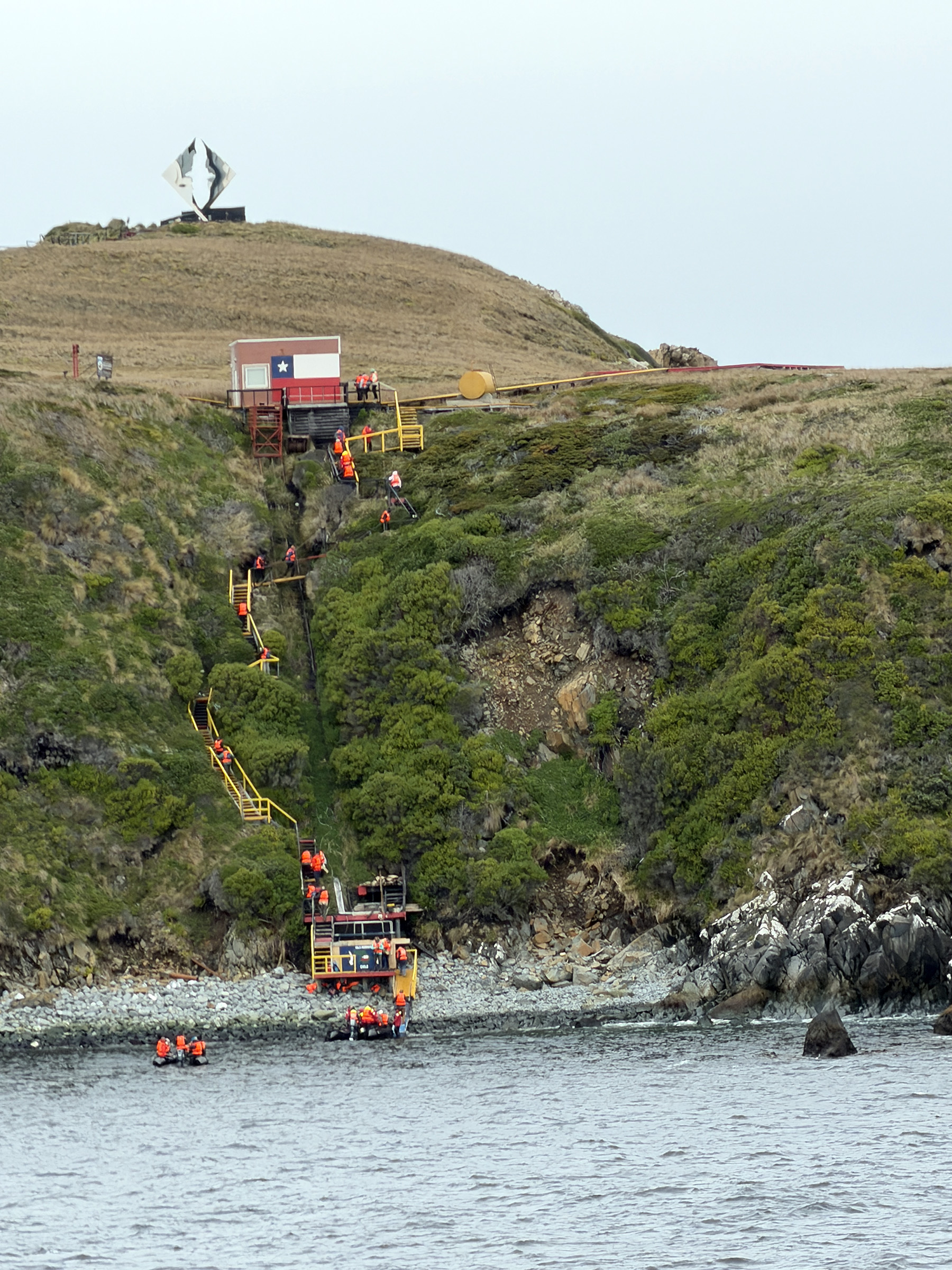
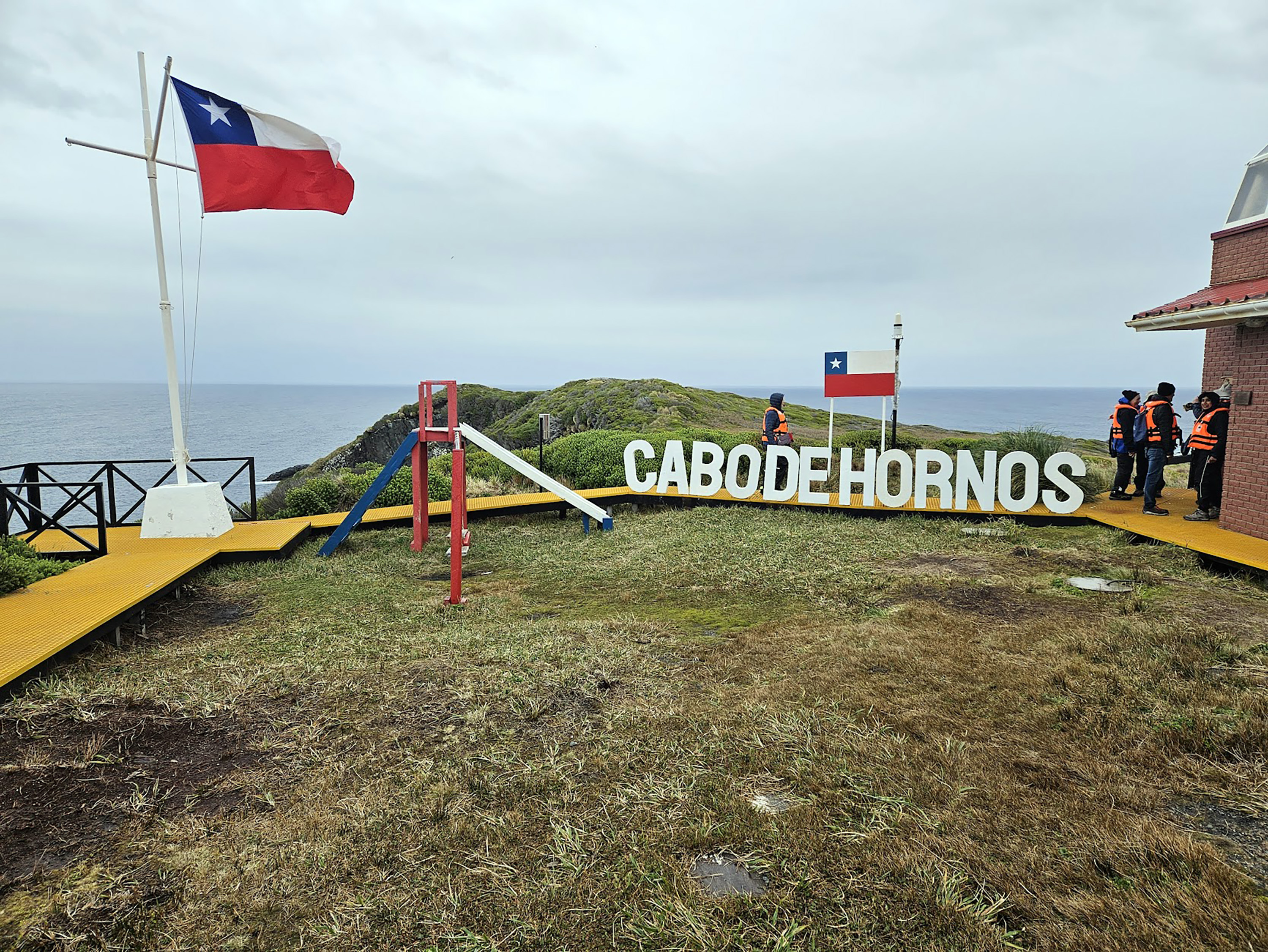
Lunch at 1 was a multi-course meal in the main dining room; there are no venues for casual or off-schedule dining on the ship. At 2:15, we attended a briefing on the afternoon excursion at Cape Horn and the one tomorrow at Pia Glacier. Then we had a private tour of the bridge, which was interesting—there is no automatic pilot on the ship, purposely designed that way because the waters here are unpredictable. We got to examine up close the large printed navigation chart of our course in the Cape Horn area, which will be auctioned off to a passenger on the last night. Then Allen gave his second lecture, this time about plate tectonics and glaciers. We reached Isla Hornos (Horn Island, 55° 57.5’ S) at 5:45, and decided not to go ashore. The Zodiac landing operation to a rocky beach looked sketchy for us elderly folks, and the activity included 170 steep steps up a cliff to see a monument or a lighthouse, so it didn’t seem worth the bother. We watched some of the action from the open deck. Our returning friends reported that they experienced rain and sleet that arrived after we went back inside, and that the landing on shore (no dock) soaked their feet and ankles with icy water. From our maps it looks like there are parts of the island more southerly than where our folks landed.
Dinner was at 8:15 again and was pretty good. (In general, food on board was not aimed at the Michelin-star set.) Our post-dinner entertainment was Kindle books and iPad videos I downloaded before the internet blackout started early this morning.
Sunday, November 23 — Pia and Porter Glaciers
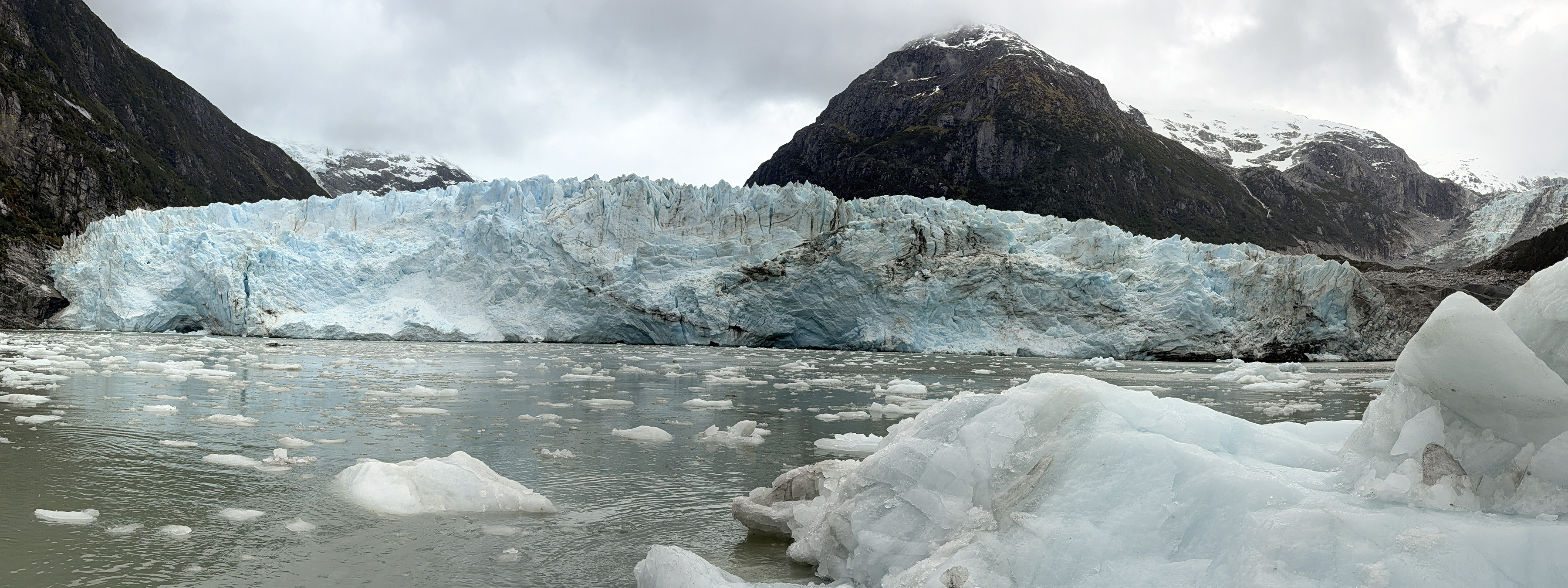
Overnight, Ventus motored north and into the Beagle Channel, headed west, then turned north into the Pia Fjord. Winds seemed calm, and a few rays of sunshine were breaking through the clouds. Once again, we were offered three choices for excursions, and we were advised that the easiest would offer the best glacier views, so that was it for us. We took Zodiacs for an easy landing on a large outcropping of metamorphic rocks, which I thought looked slippery but turned out to be easy to negotiate. The giant glacier was very close to us, and we heard a number of big crashes that sounded like thunder, but they represented internal movements. We just happened to miss any large calving events. The weather was reasonable with some light scattered rains. One lady in another group fell and injured her leg. I was impressed with how organized the ship’s response was, getting a crew of guys with a stretcher board to retrieve her and Zodiac back. Fabiola and Allen shared commentary duties.
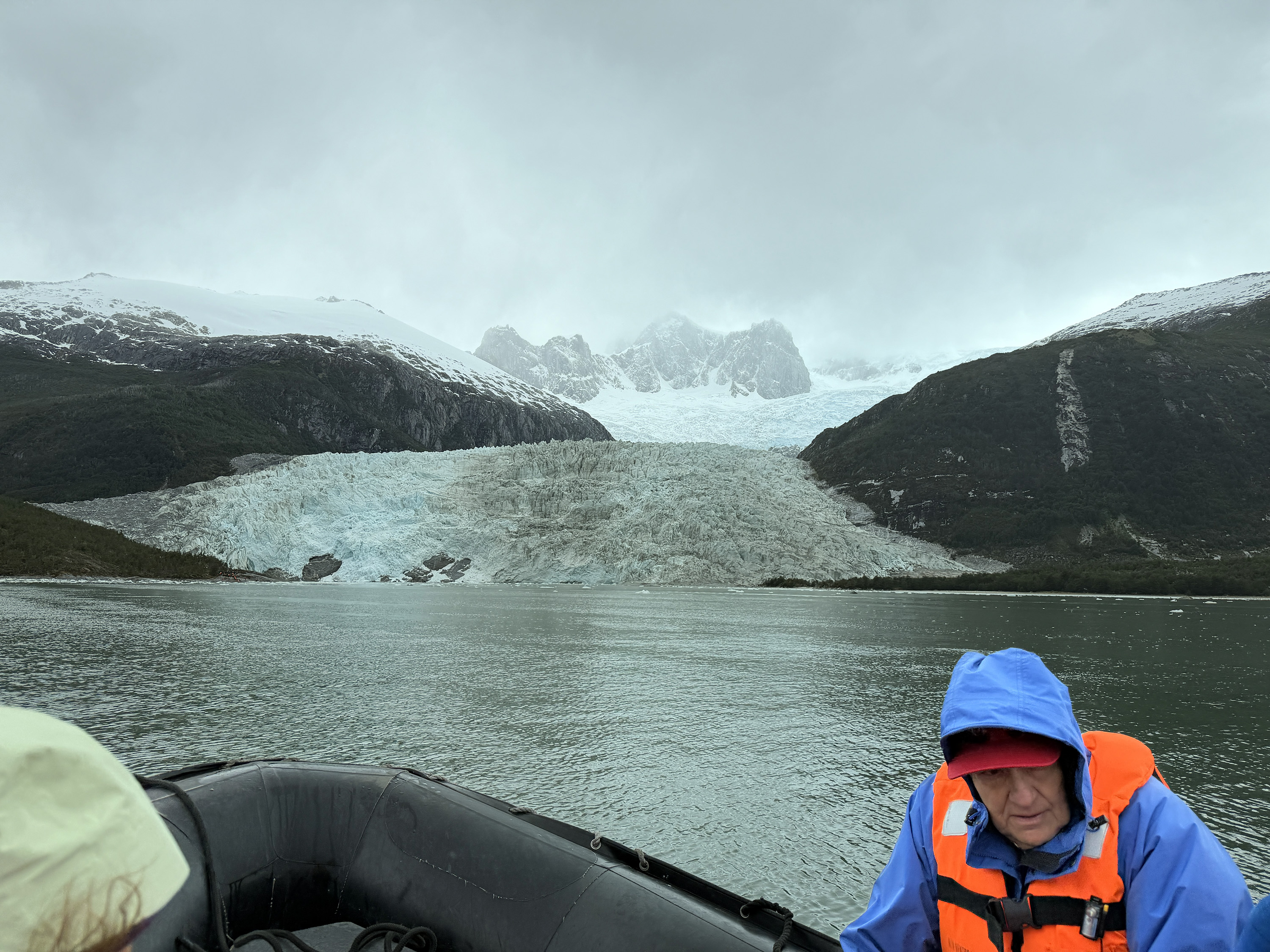
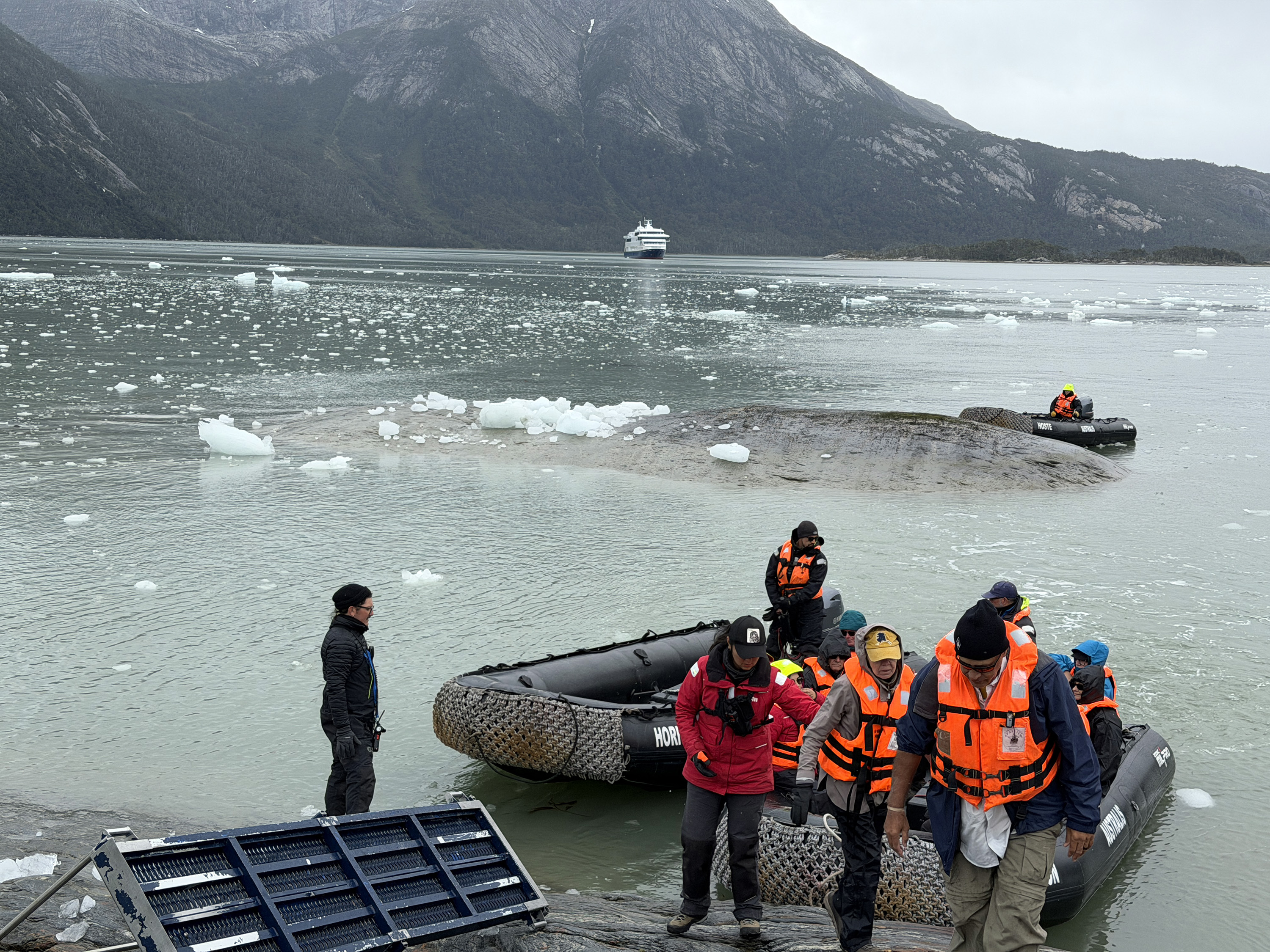
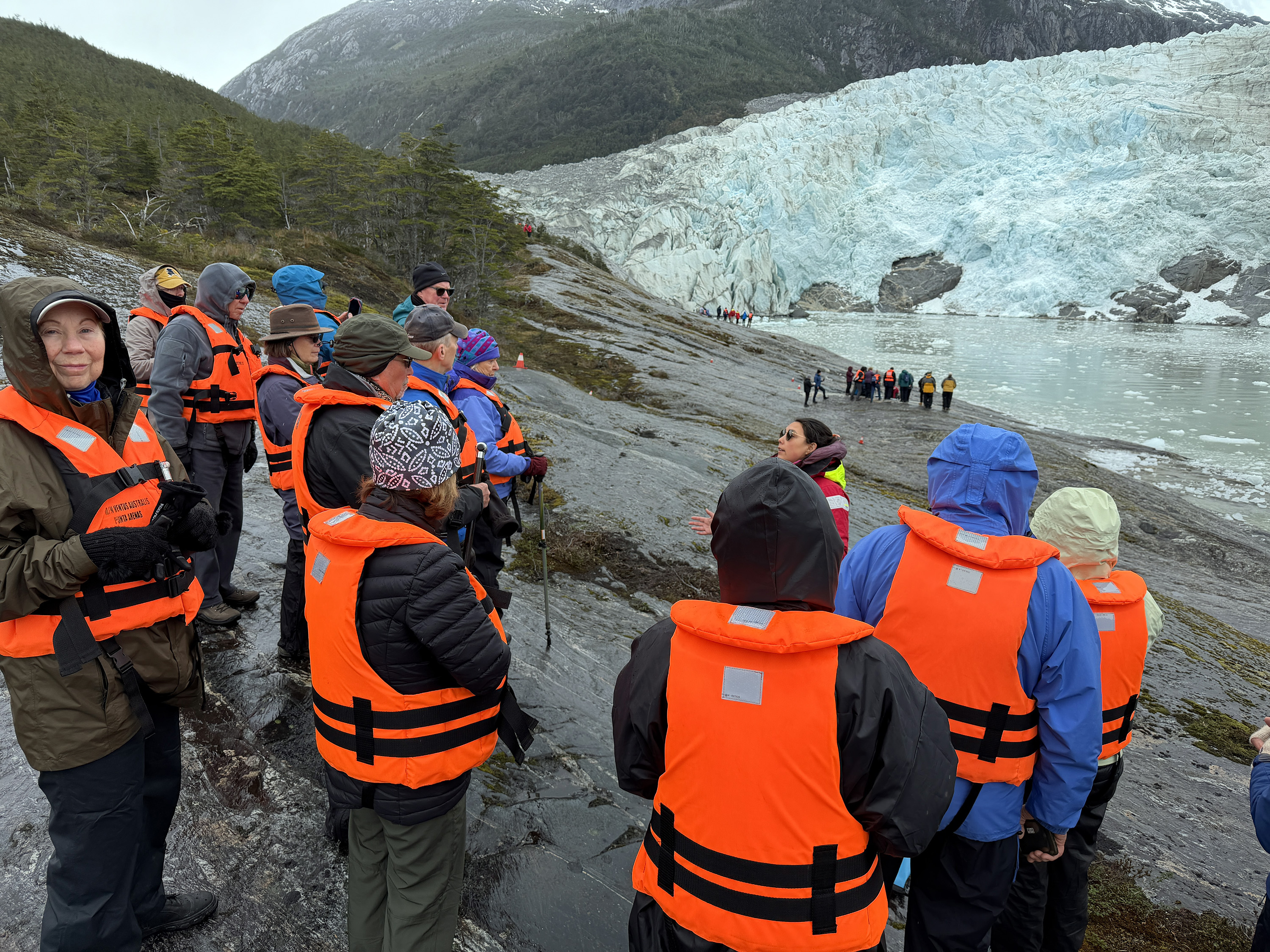
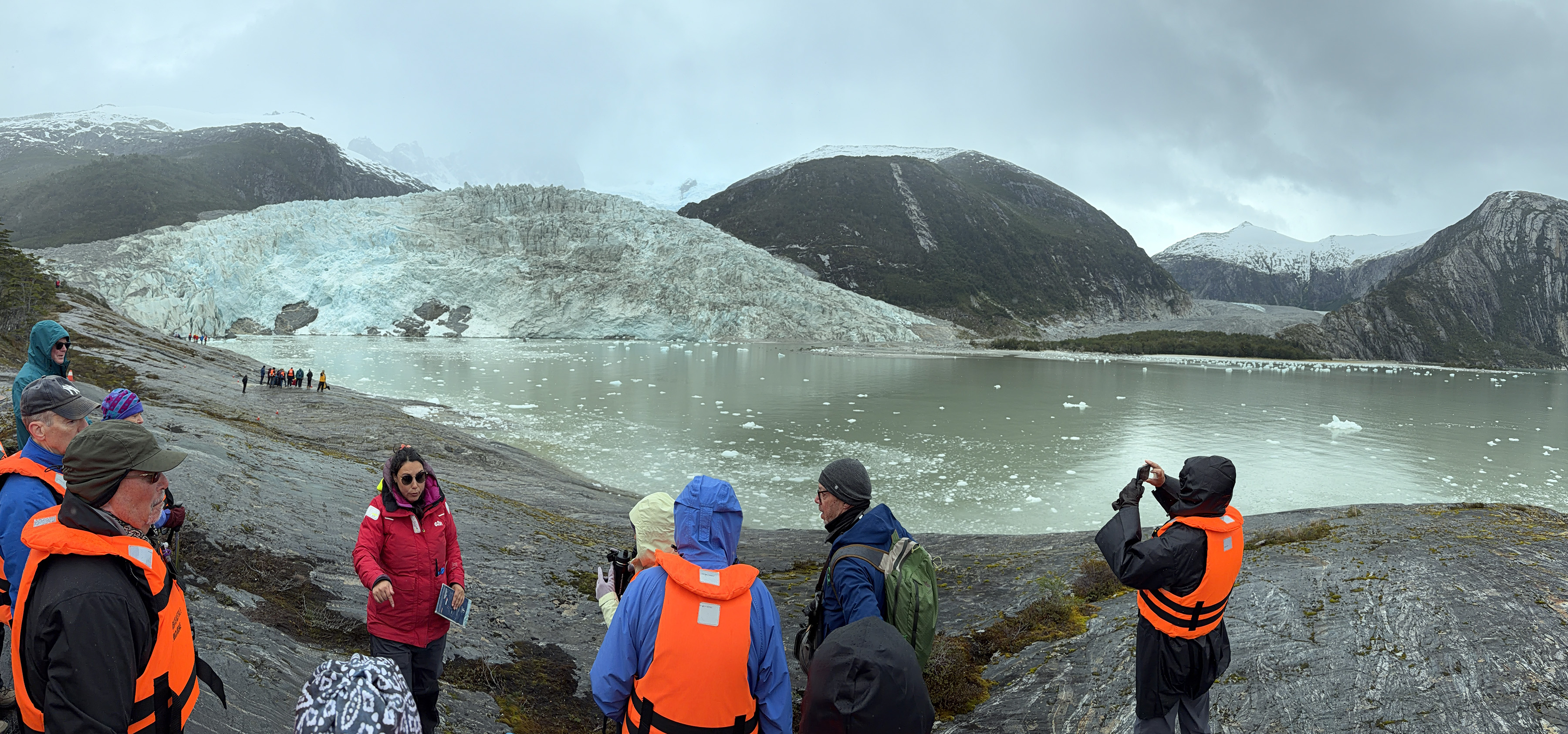
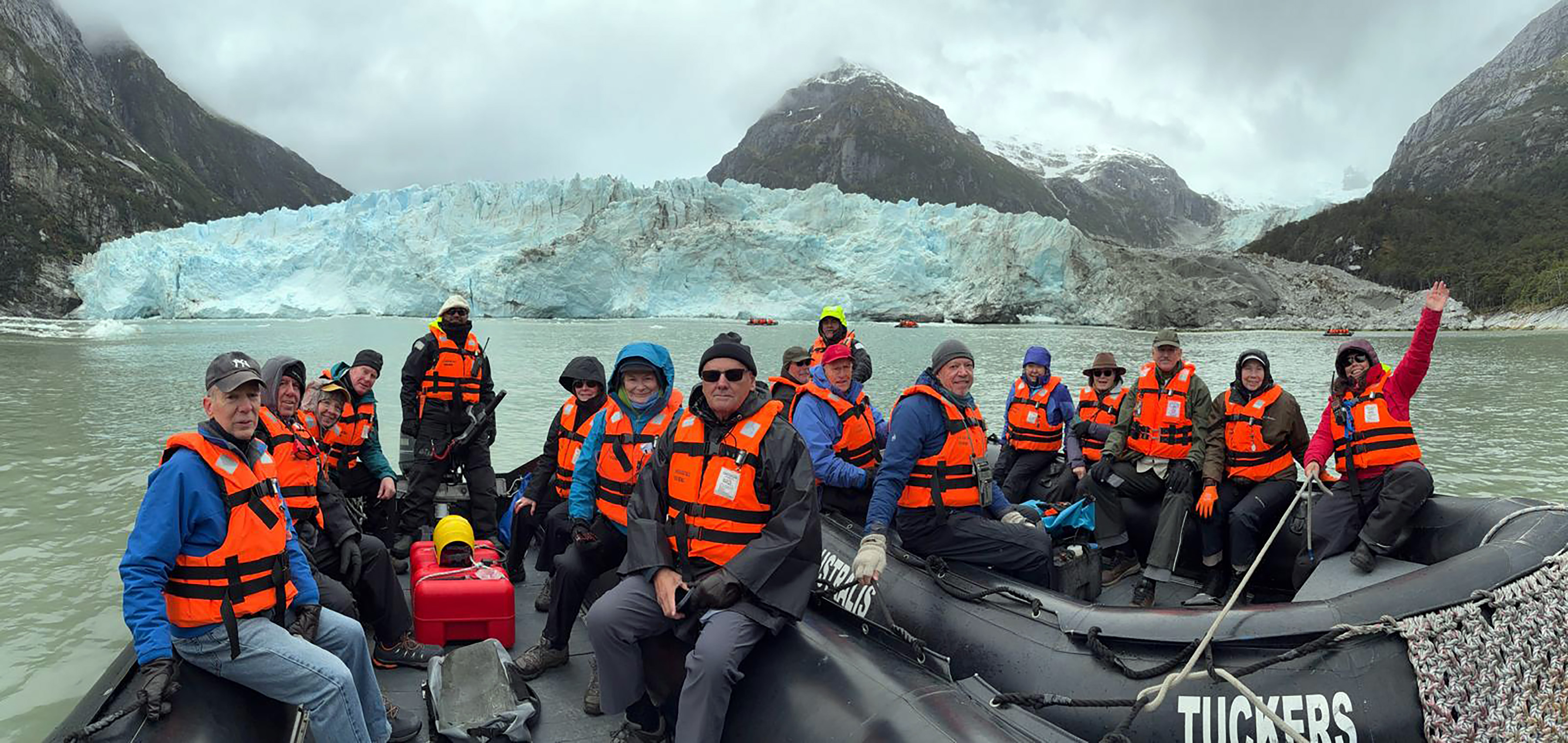
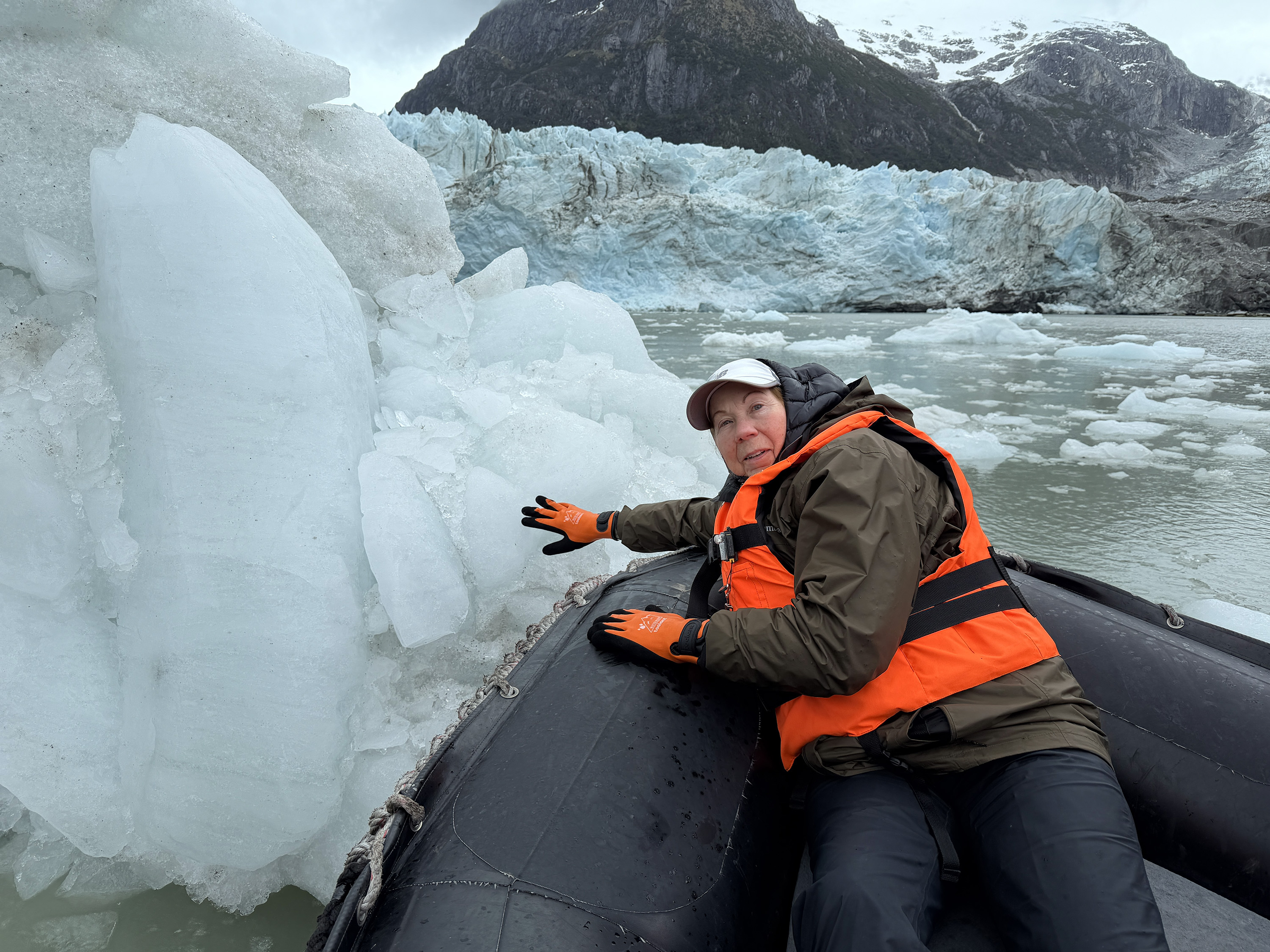
Back on board, we met in a lounge for a session with Lu about mate drinking and how pervasive and important it is to Argentines (and Patagonian Chileans). Lunch was decent. Our second excursion today is to Porter Glacier, which is farther up Pia Fjord from our current position. This Zodiac trip was for an hour, entirely in the boat without any land component, so we were advised to layer up even more than for the morning trip. The glacier was beautiful, and we saw one minor calving. We stopped at an iceberg to compare chunks of ice, one perfectly clear, the other riddled with large bubbles, probably representing an older and newer section of the glacier. Another berg rotated around, top to bottom, as a piece broke off. The high-speed Zodiac trip back to the ship was into a strong wind and very rough, but all in all, it was a fun afternoon.
At 5, we had another Allen lecture, “Glaciers and Climate Change,” which included some interesting discussions of isotopic geology and Milanković cycles. At 6:45, we attended a briefing on our glacier visits tomorrow and a lengthy presentation about Ferdinand Magellan and explorers before and after him. We were warned about the heavy seas we’ll experience tonight as we sail around the end of Tierra del Fuego island into the Pacific for a couple of hours. The ship has an open bar so we tried a favorite local drink, a Pisco Sour. (There is also a Calafate Sour, made with a berry similar to a seed-packed, sour blueberry.) Dinner was mostly good.
Monday, November 24 — Aguila and Condor Glaciers
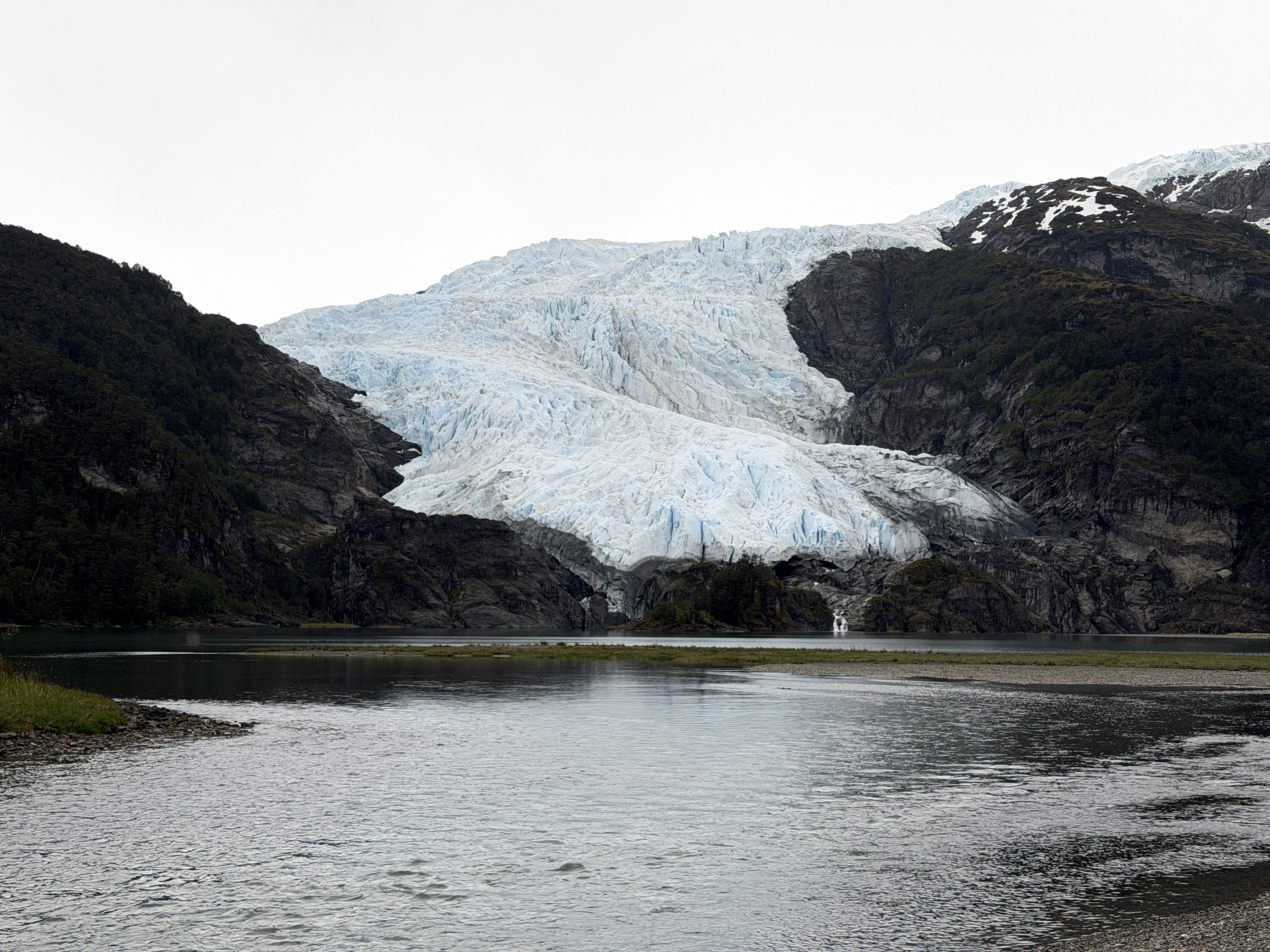
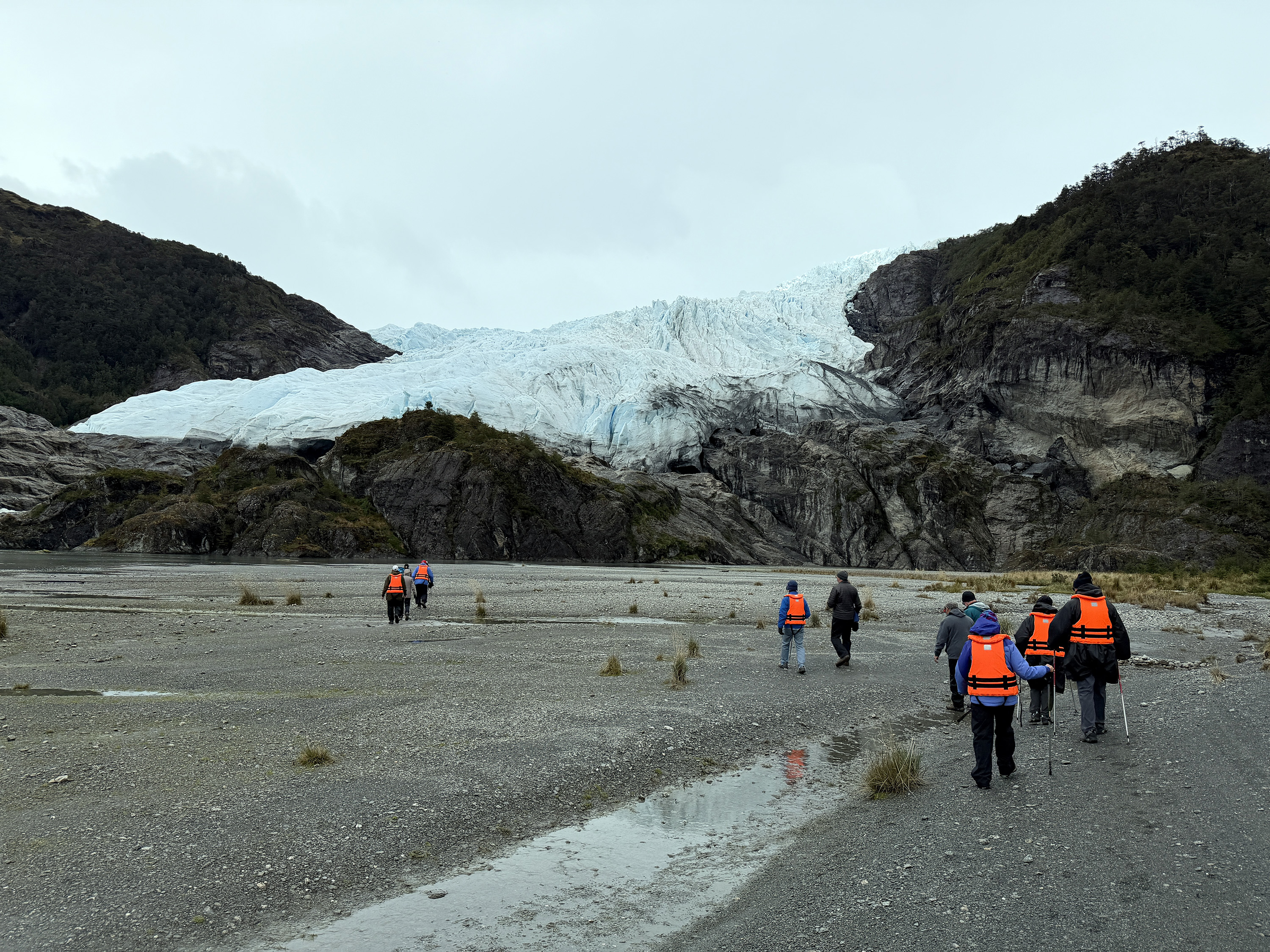
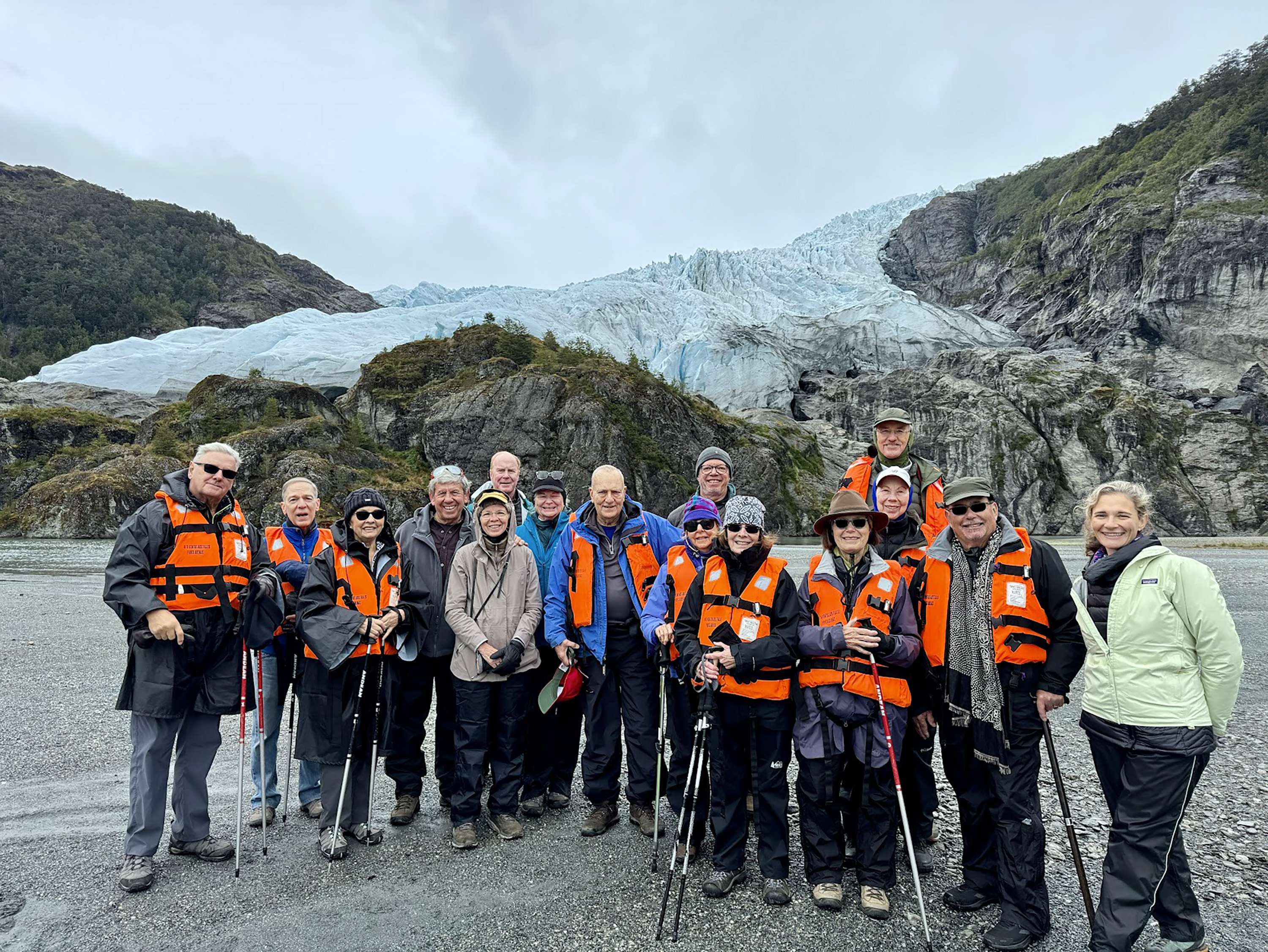
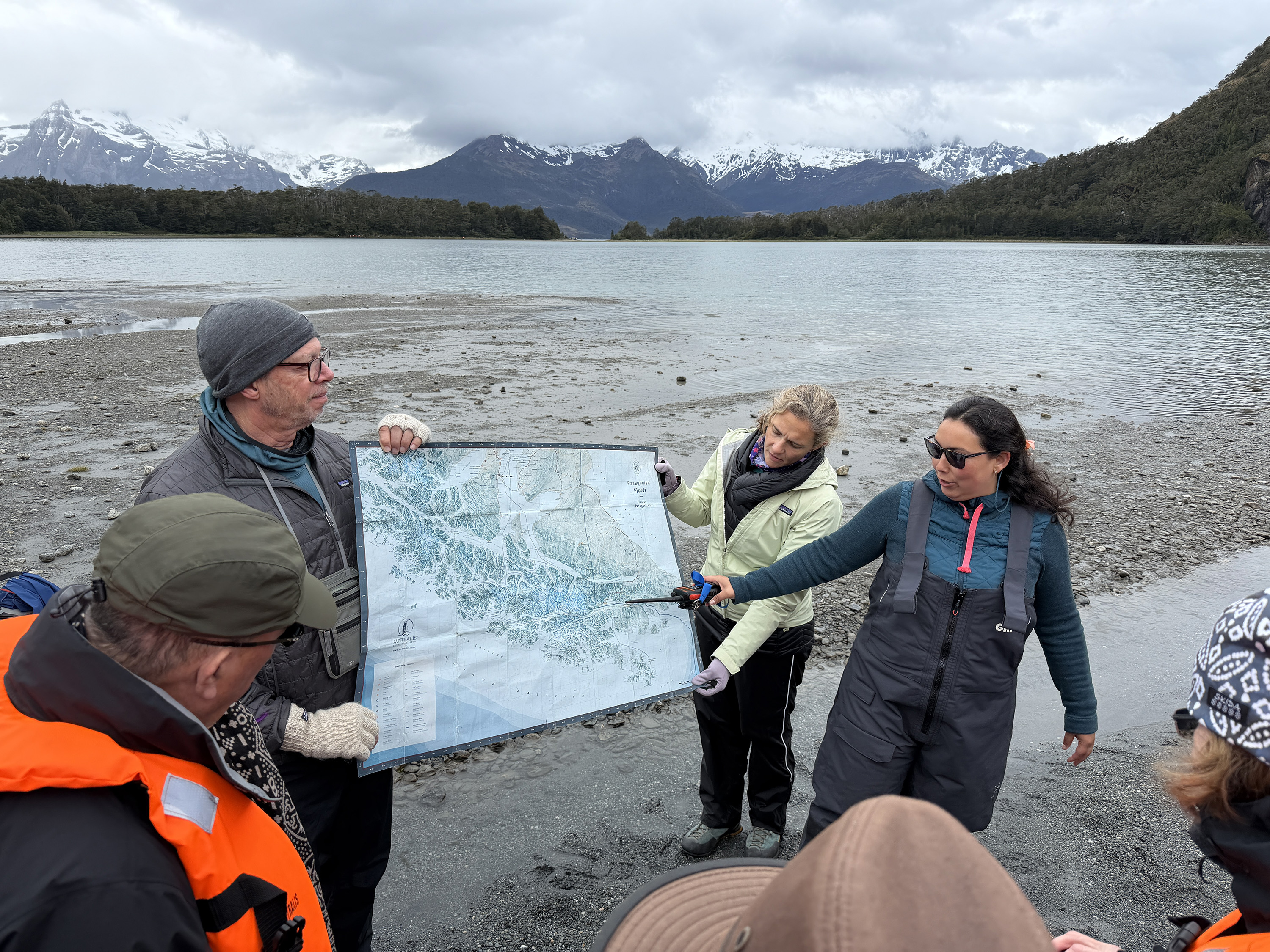
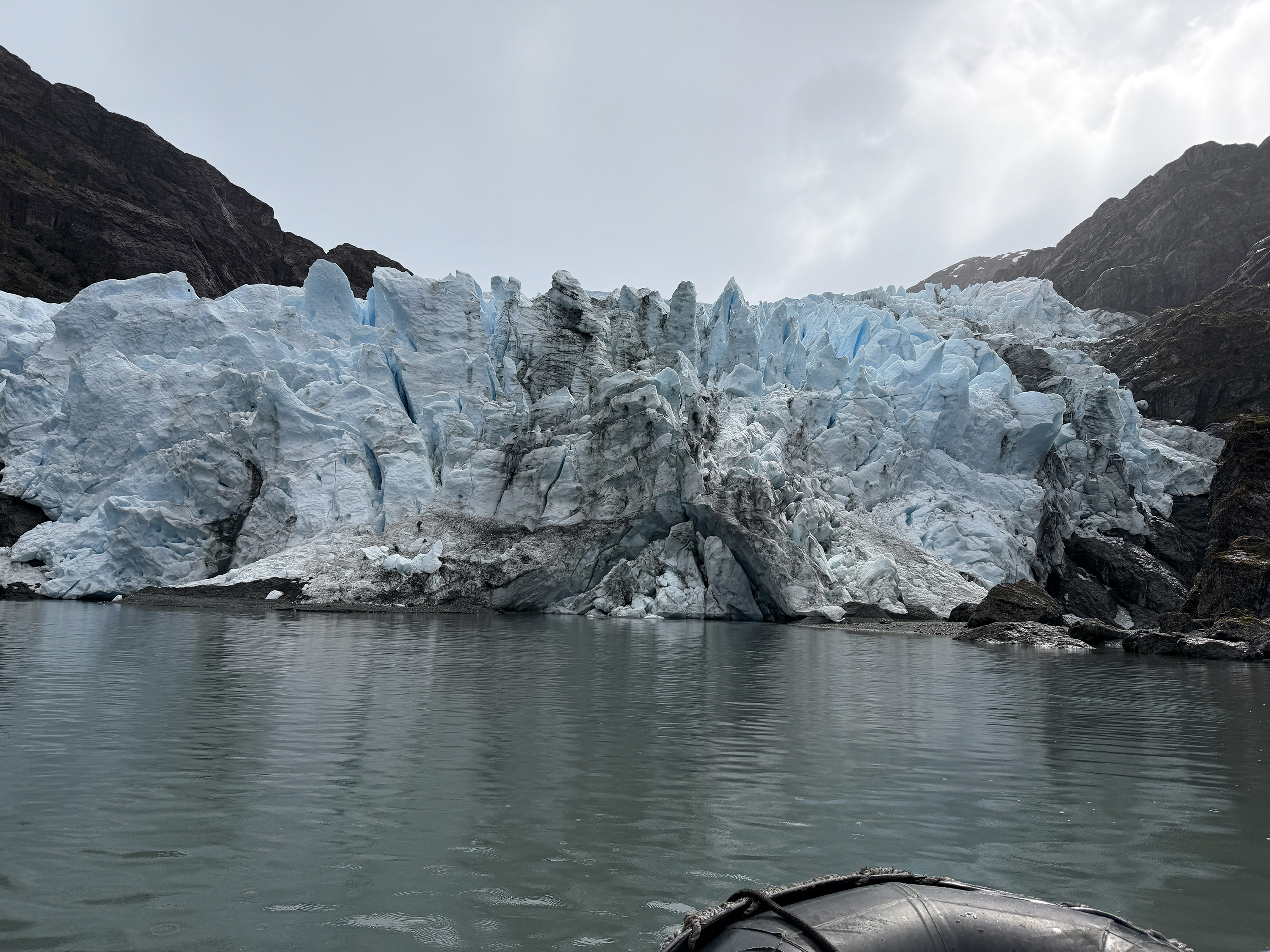
At about 2 a.m. the ship started seriously rolling in the Pacific, but it lasted only about a half hour, and we resumed sleep without consequence. We had secured all our items and doors as instructed. The ship proceeded east through Cockburn Channel, and we entered Alberto de Agostini National Park on the northern side of the Darwin ice field. Today features our final two glacier excursions. The weather started cool and overcast, which obscured the mountain peaks. We took another Zodiac to shore for a portable dock landing and walked a mile over a rocky beach that reaches an estuary at the base of Aguila (Eagle) Glacier. Lu told me that this is a name selected by the cruise company, but official maps may say Dinelli. This is a shallow estuary instead of a fjord because the glacier isn’t large enough to dig a big channel. We also took a brief looping walk through the humid forest and communed with nature. The tree roots here are prominent on the ground because they can’t get purchase in the rocks below. We studied a map of the area, and Allen pointed out where the South American tectonic plate was subsuming the Scotia plate. Another mile for the return walk, and we were greeted by hot chocolate (with or without whiskey) before motoring back to Ventus.
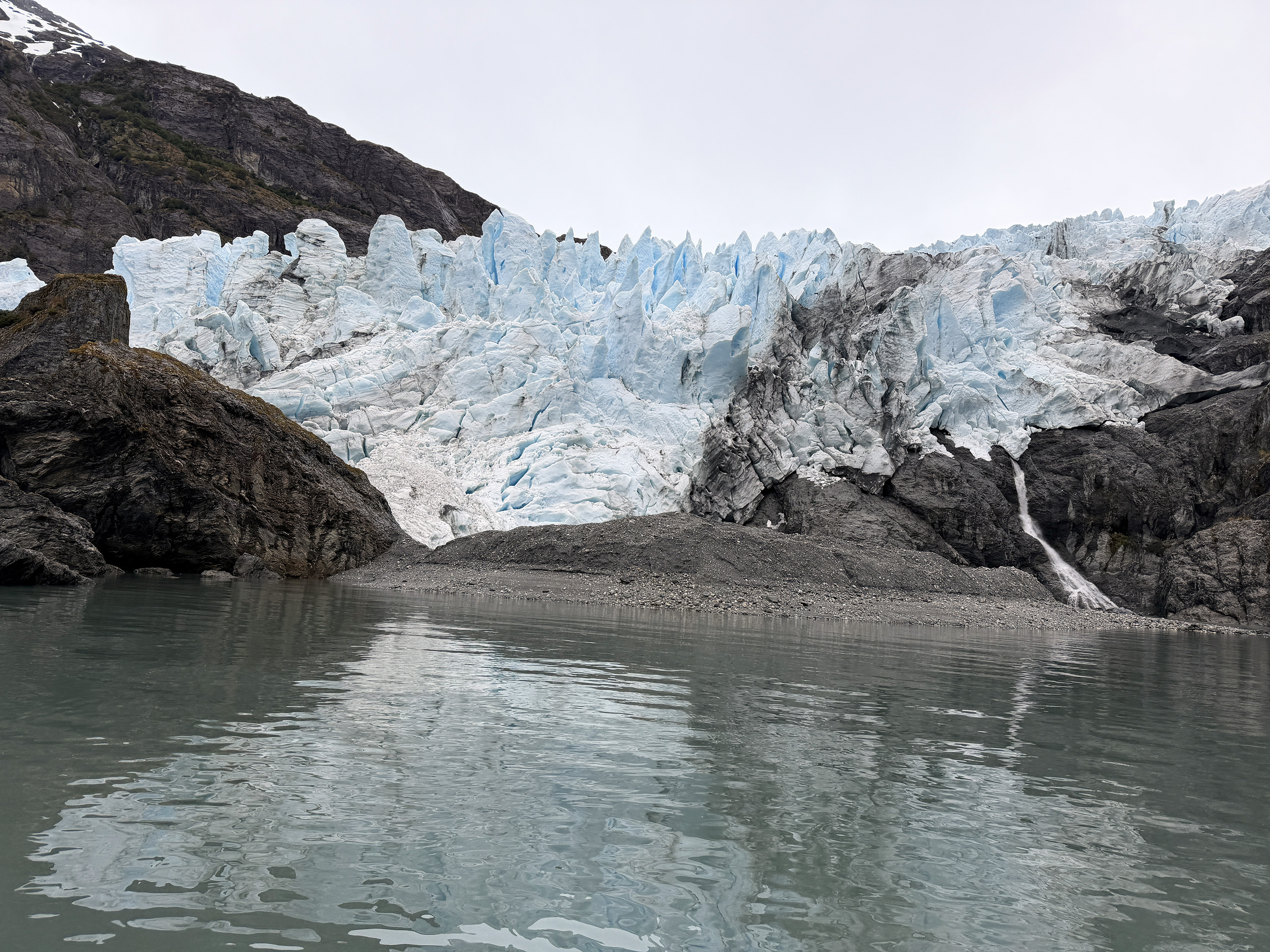
We met for a briefing about Tuesday’s visit to Magdalena Island and then lunch, today with Chilean specialties. Then we met with Lu for 40 minutes to grind through all the intricacies of disembarkation, Chilean customs, tipping on the ship, and preselecting four meals for the next few days. The second expedition today at 4 was like yesterday afternoon’s—a Zodiac drive-by of Condor Glacier. The visits today were scheduled for the tides. Aguila needed low tide for the beach walk, Condor needed high tide to slip over a submerged terminal moraine, with only a meter of clearance.
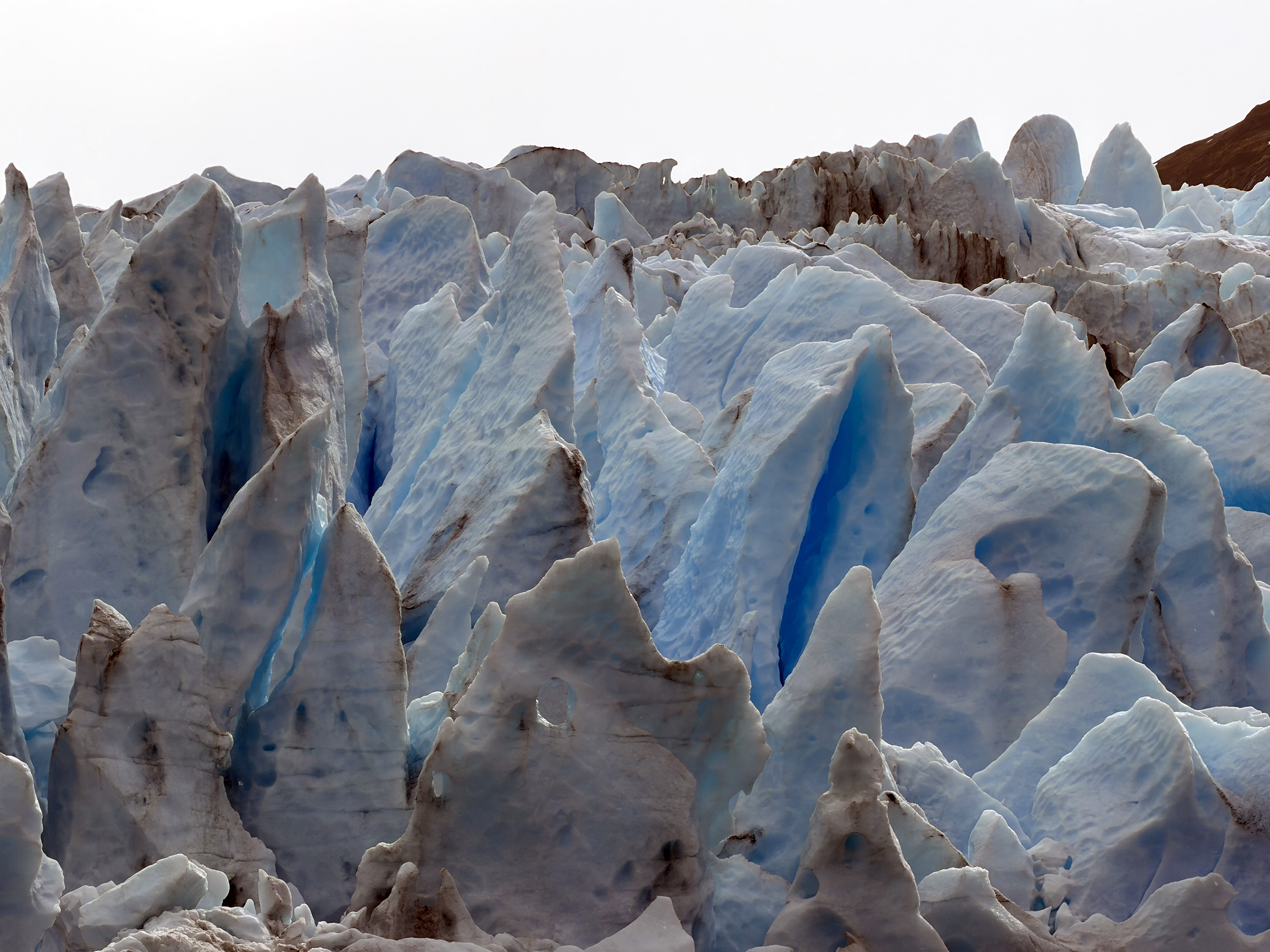
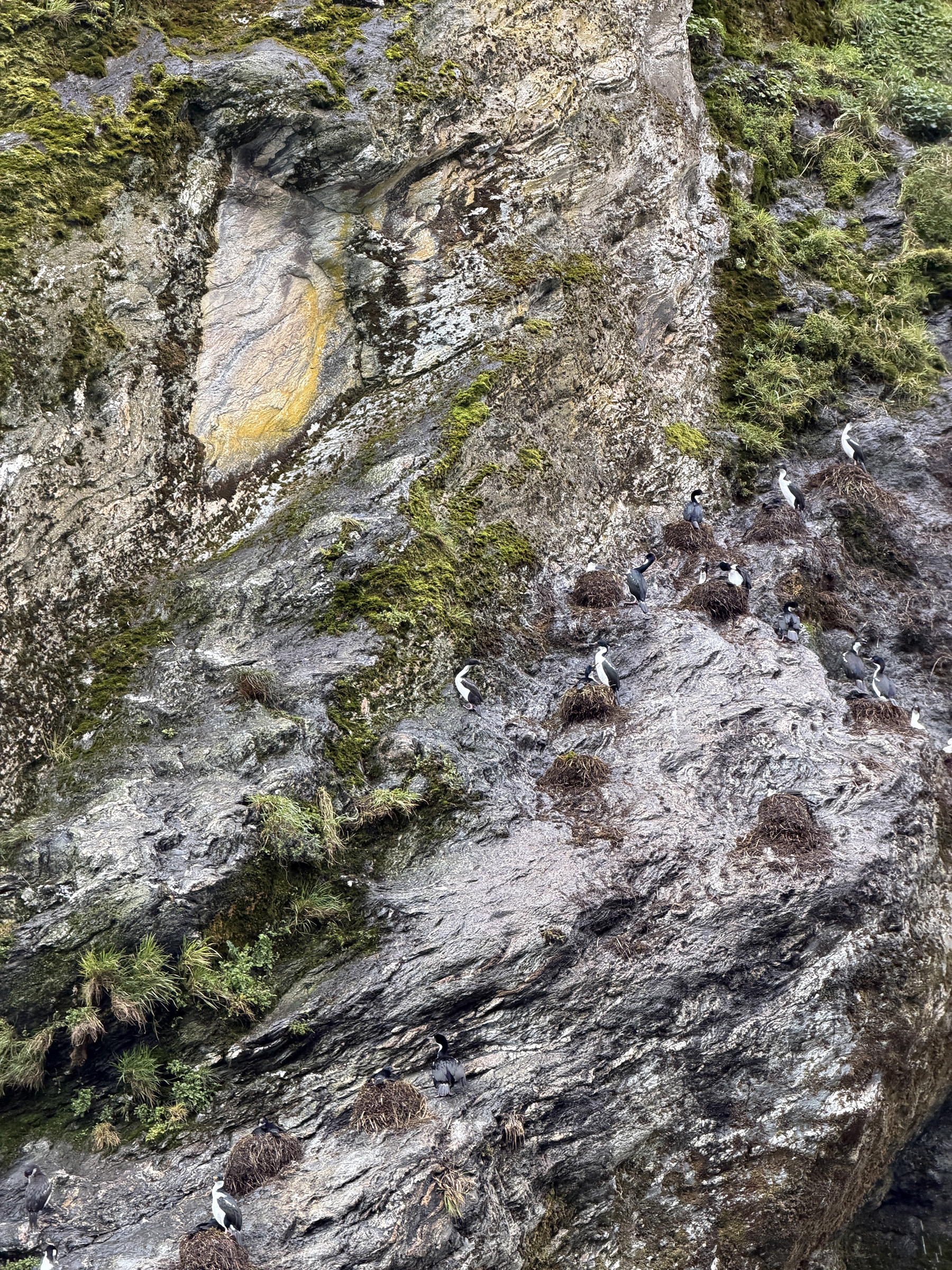
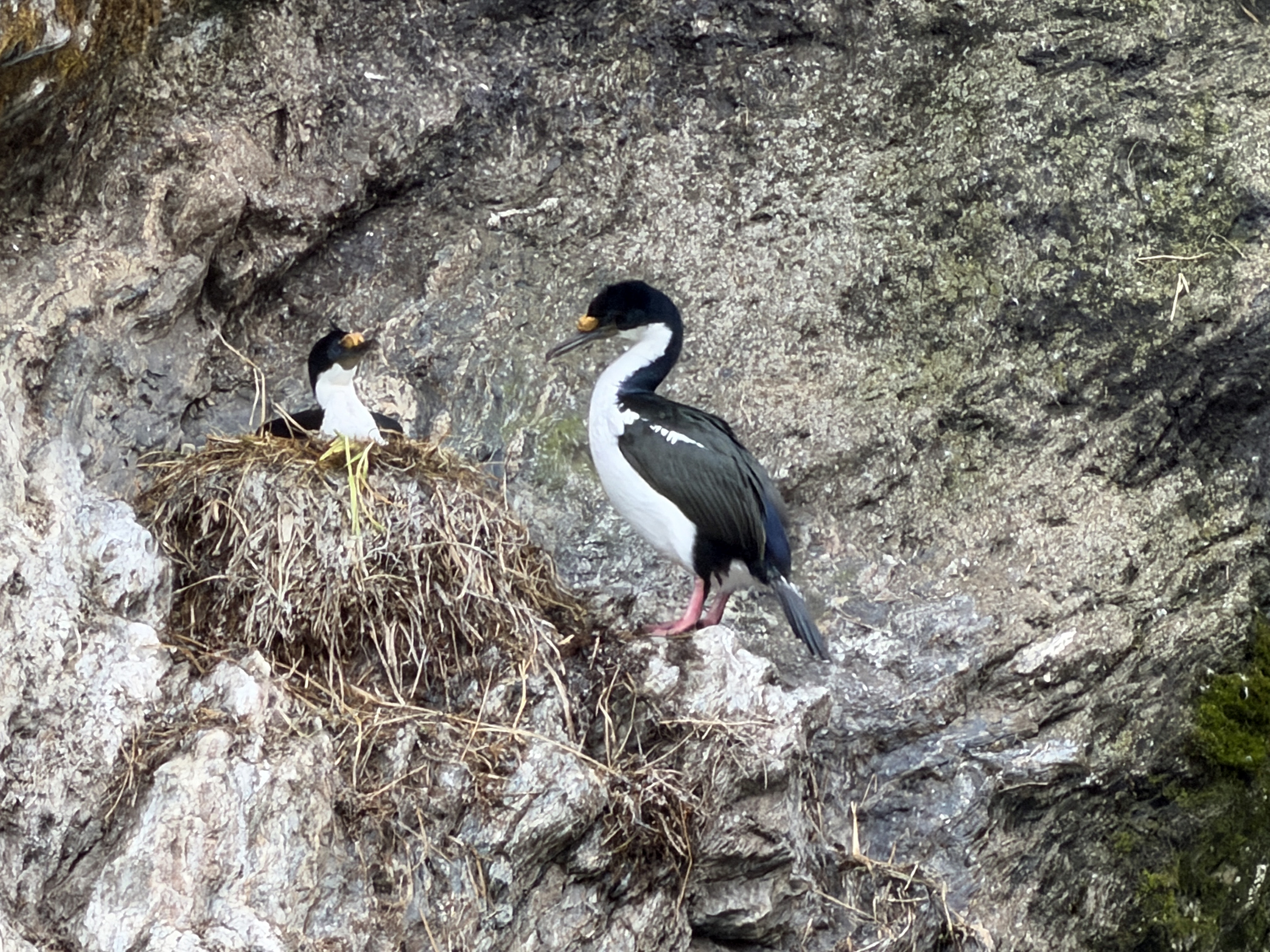
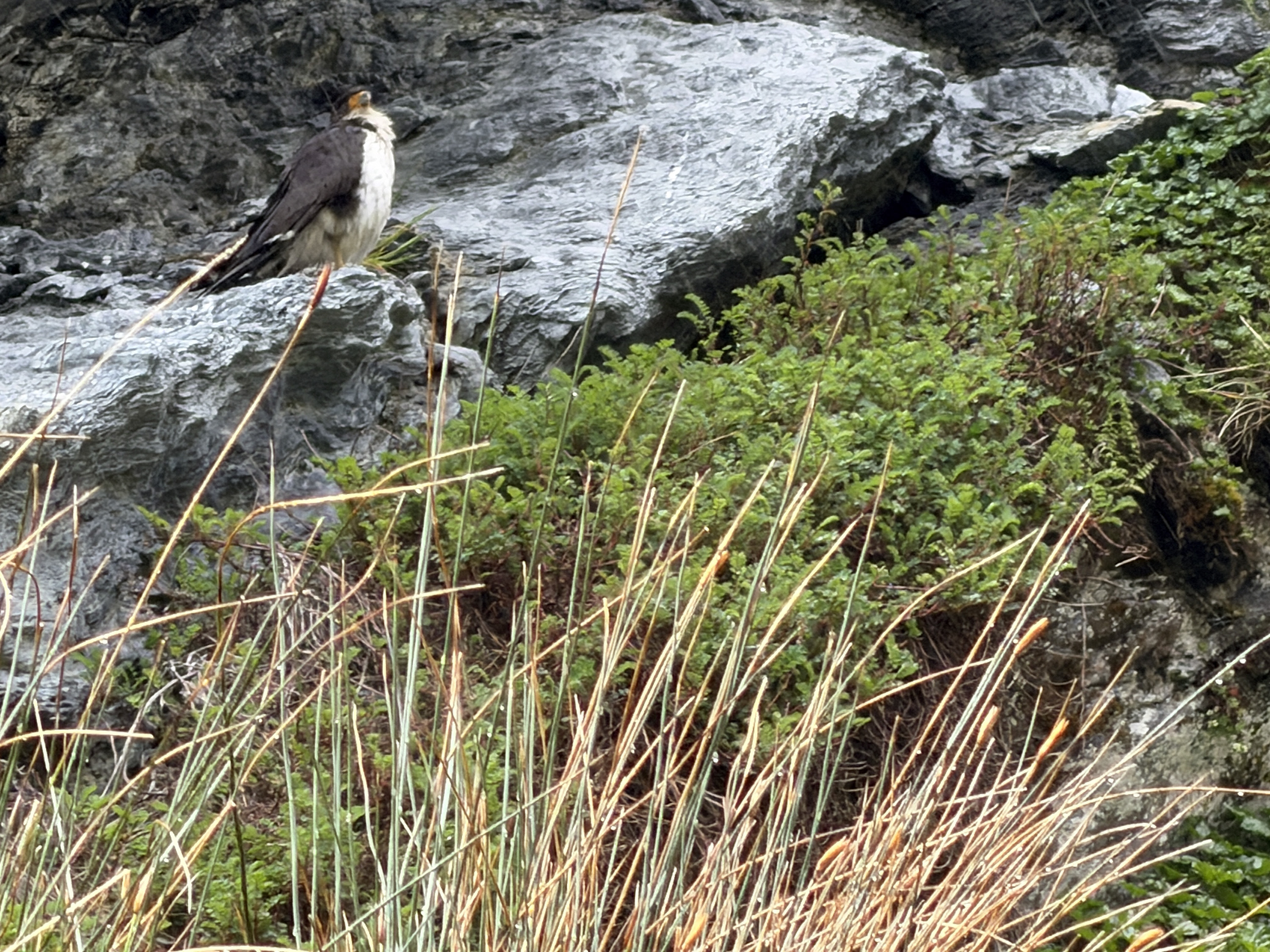
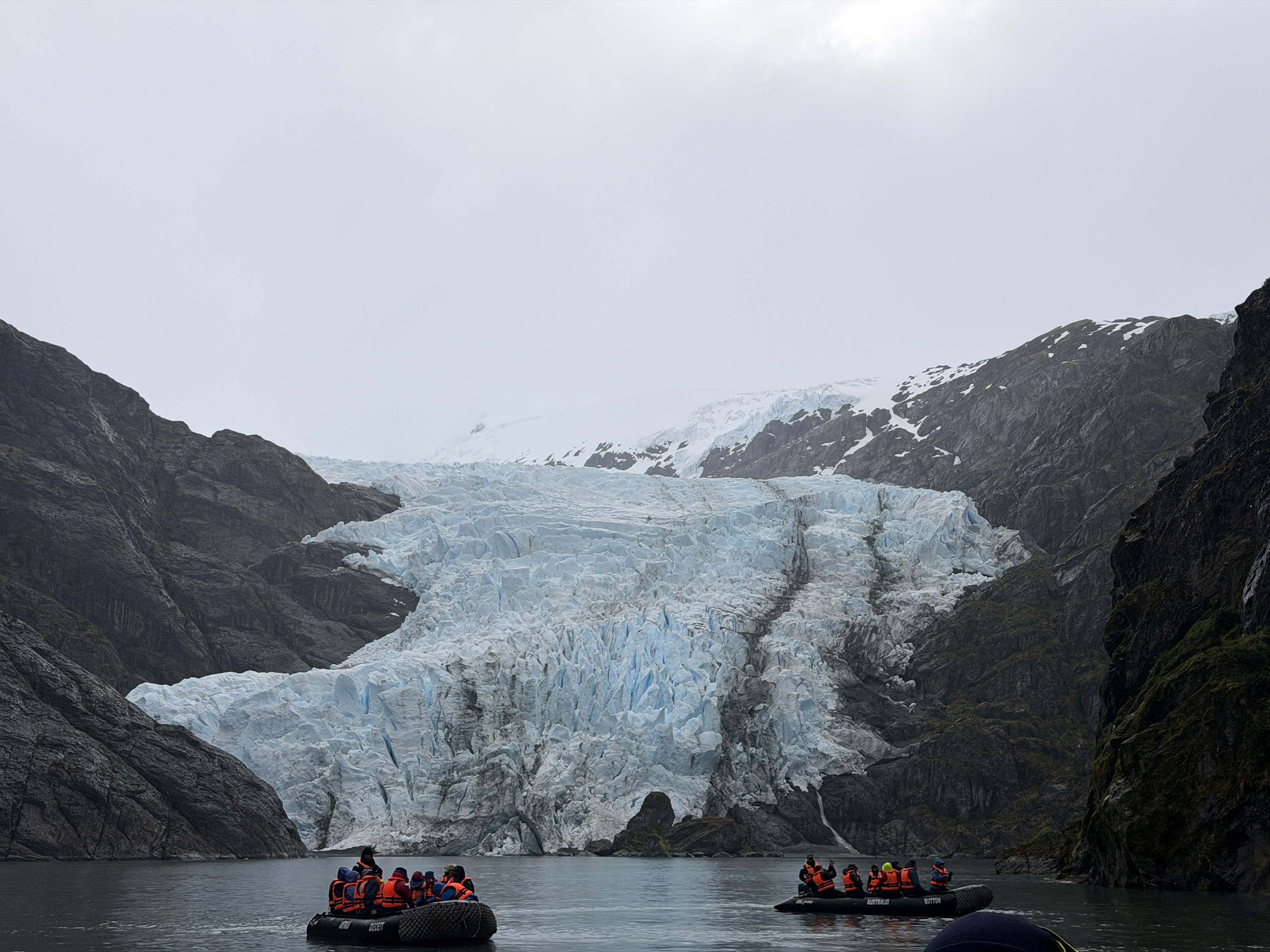
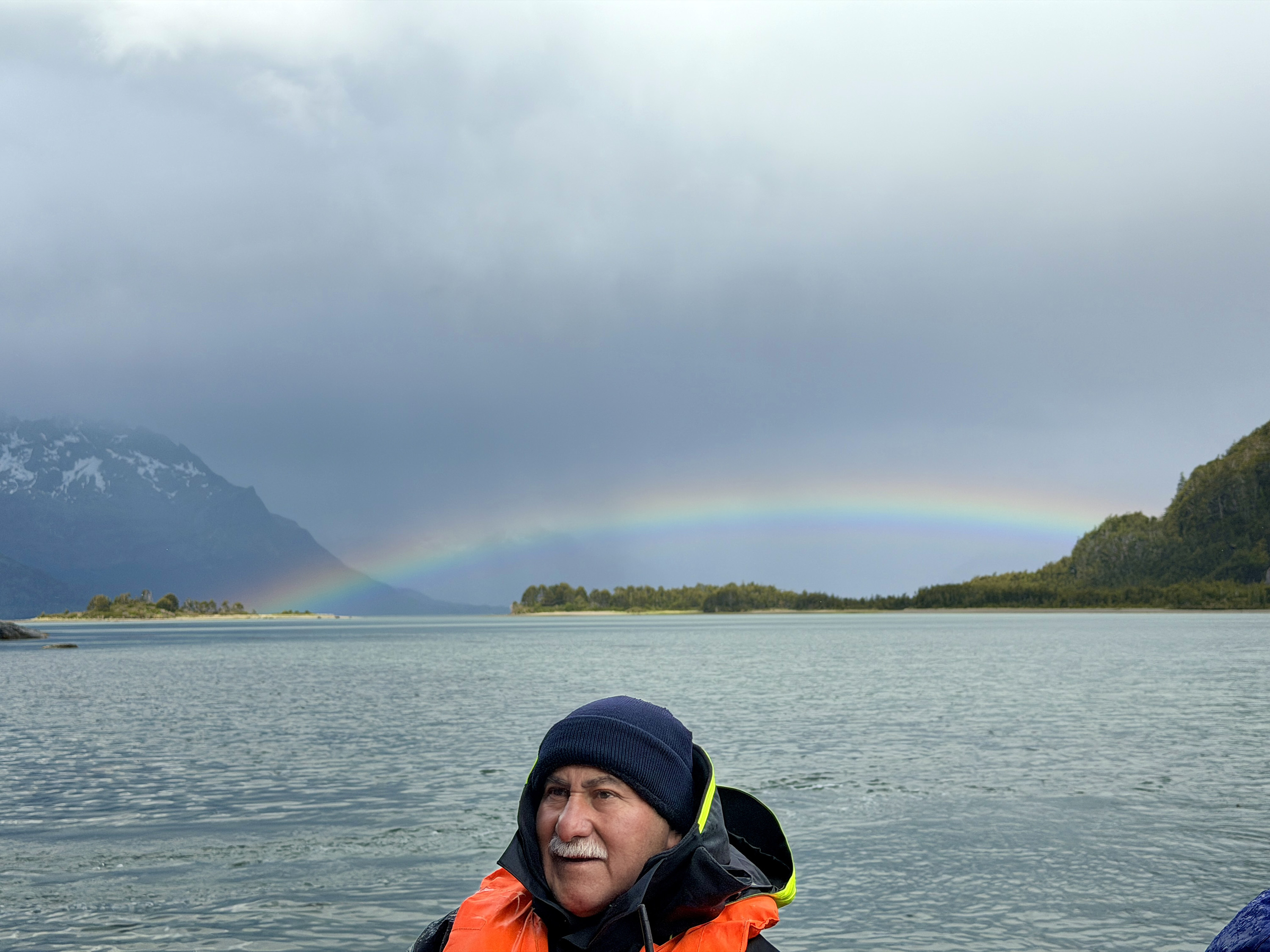
We had a good ride out to the fjord with the Condor Glacier, on a different branch than Aguila. It’s quite tall and has beautiful pointy séracs. We stopped to see some waterfalls and also a bunch of nesting cormorants. There was also an exotic bird called a breasted caracara. The ride back to the ship was really rough, bouncing on waves and hitting hard.
Tonight are the farewell ceremonies. There were toasts, a raffle for a ship’s flag, and an auction for the annotated navigation chart around Cape Horn, which went for $750 (to be donated to the crew). Nancy and I distributed tips to crew members we dealt with, plus another amount to be distributed equally to everyone. I was delighted to feel my Apple Watch vibrate at 11:20 p.m. to alert me that cellular coverage from Punta Arenas was in range. So I caught up on email and my New York Times crossword puzzles before going back to sleep.
Tuesday, November 25 — Magdalena Island and Punta Arenas
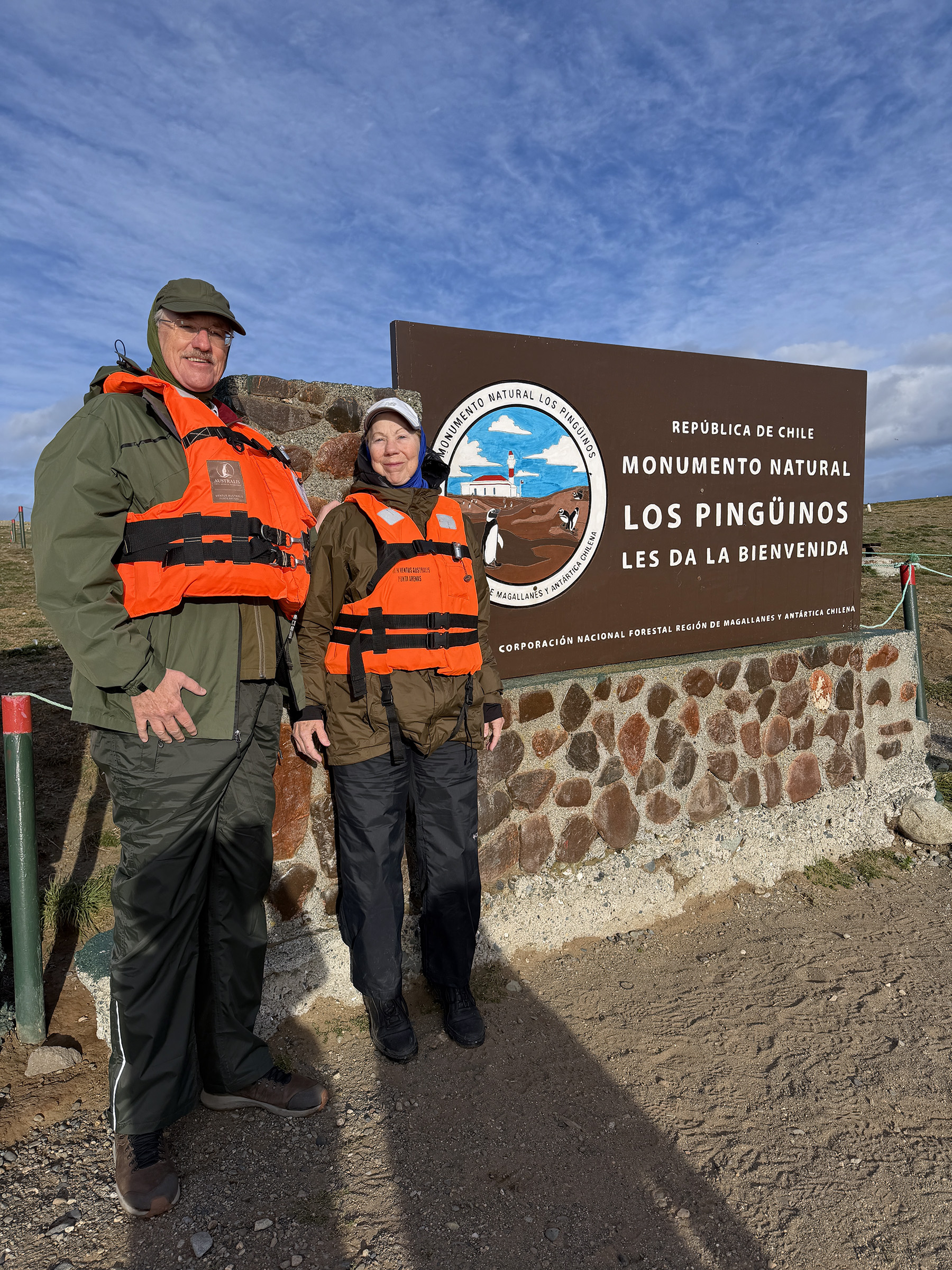
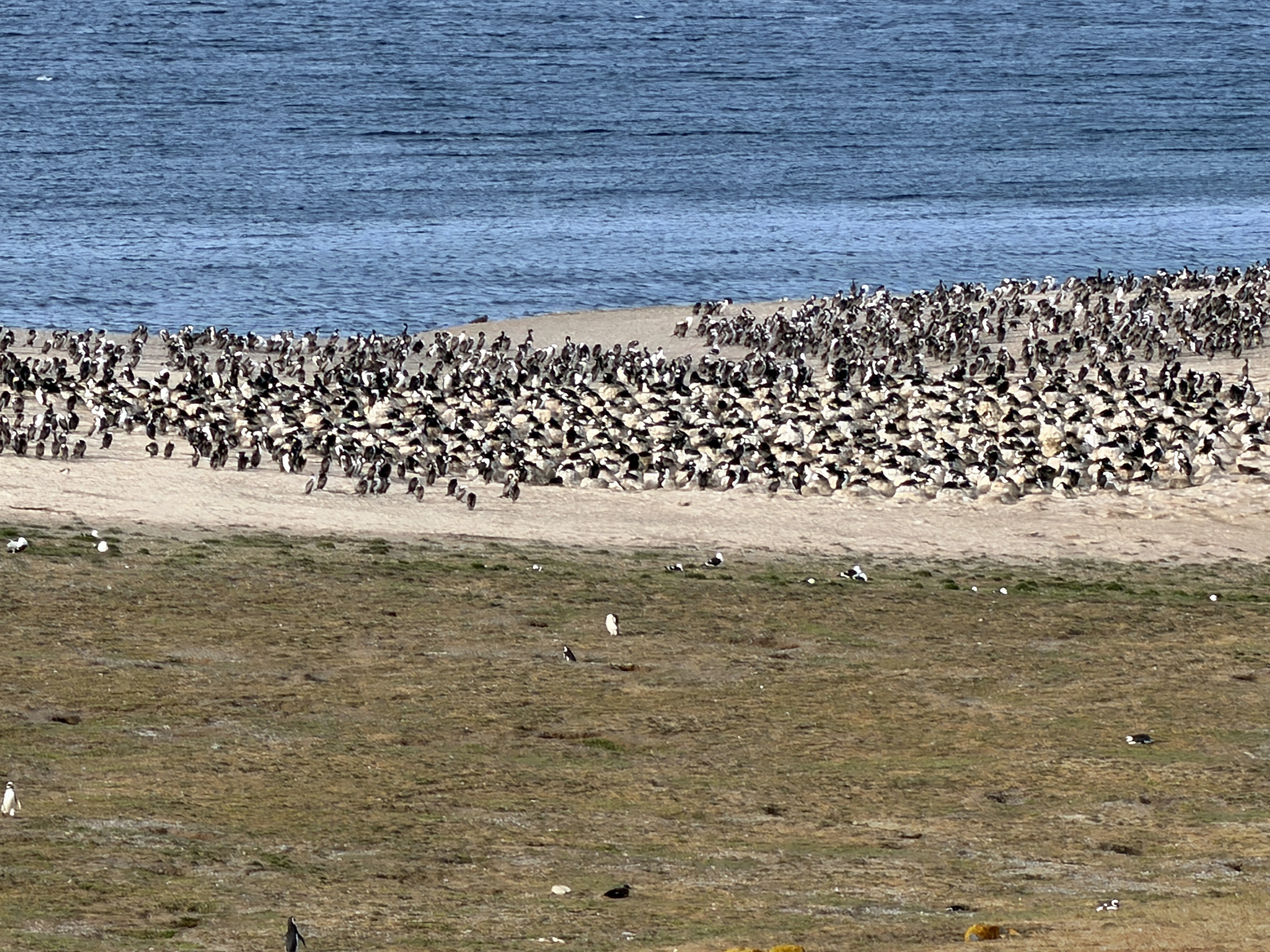
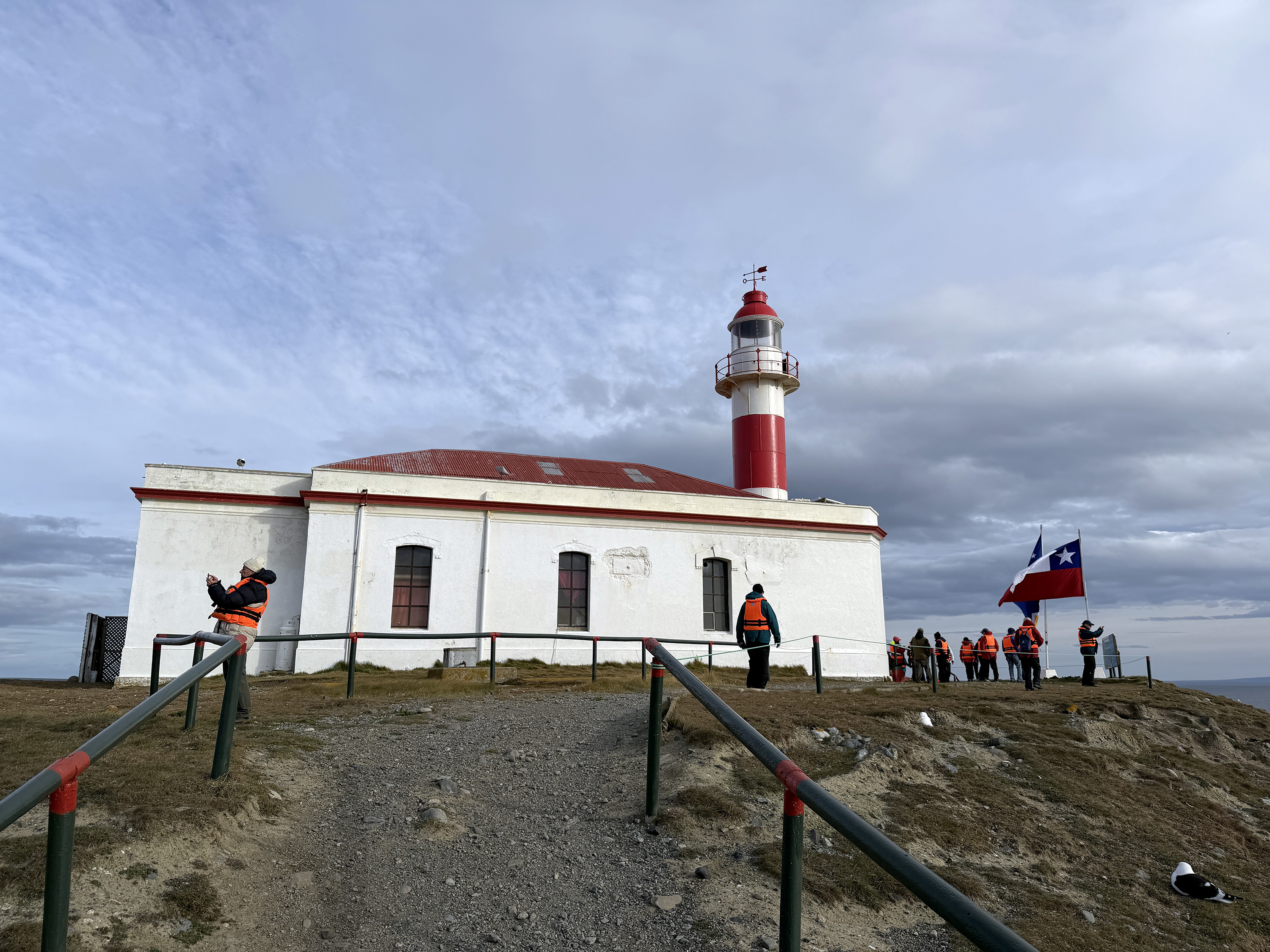
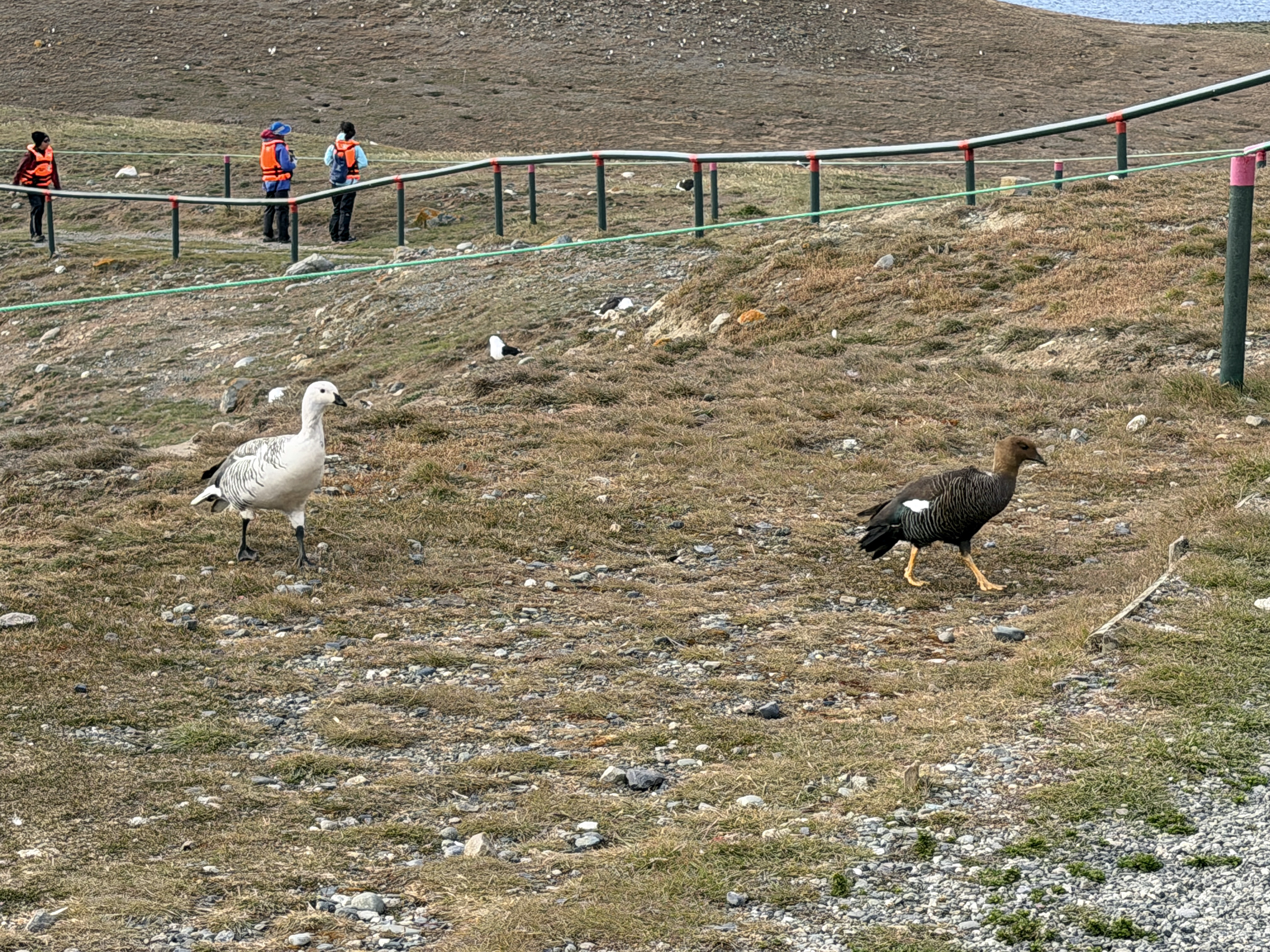
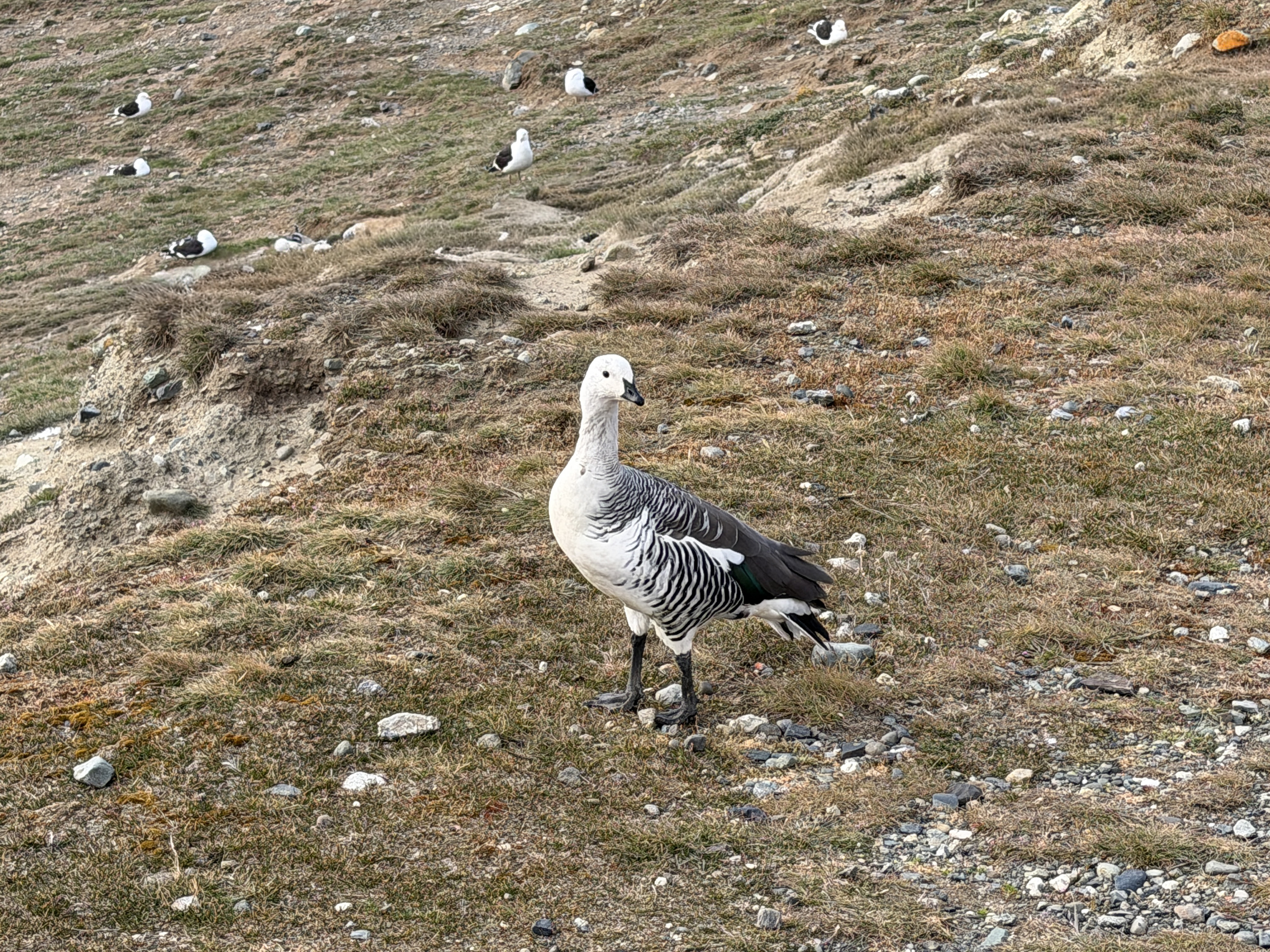
We arose early to a beautiful day. We took a Zodiac on a very calm ride to a pier on Magdalena Island, home to a national park for the Magellanic penguins. We walked a loop trail that went up a hill to a lighthouse/museum and back. There were a few hundred penguins near the roped-off path, many sitting on nests, others guarding deep burrows. There was a much larger colony on a beach quite a way off the path. Some of the males were calling in distinctive calls, like braying donkeys, trying to find their mates. But the island was really dominated by many thousands of large seagulls, also nesting, sometimes pestering penguins and each other.
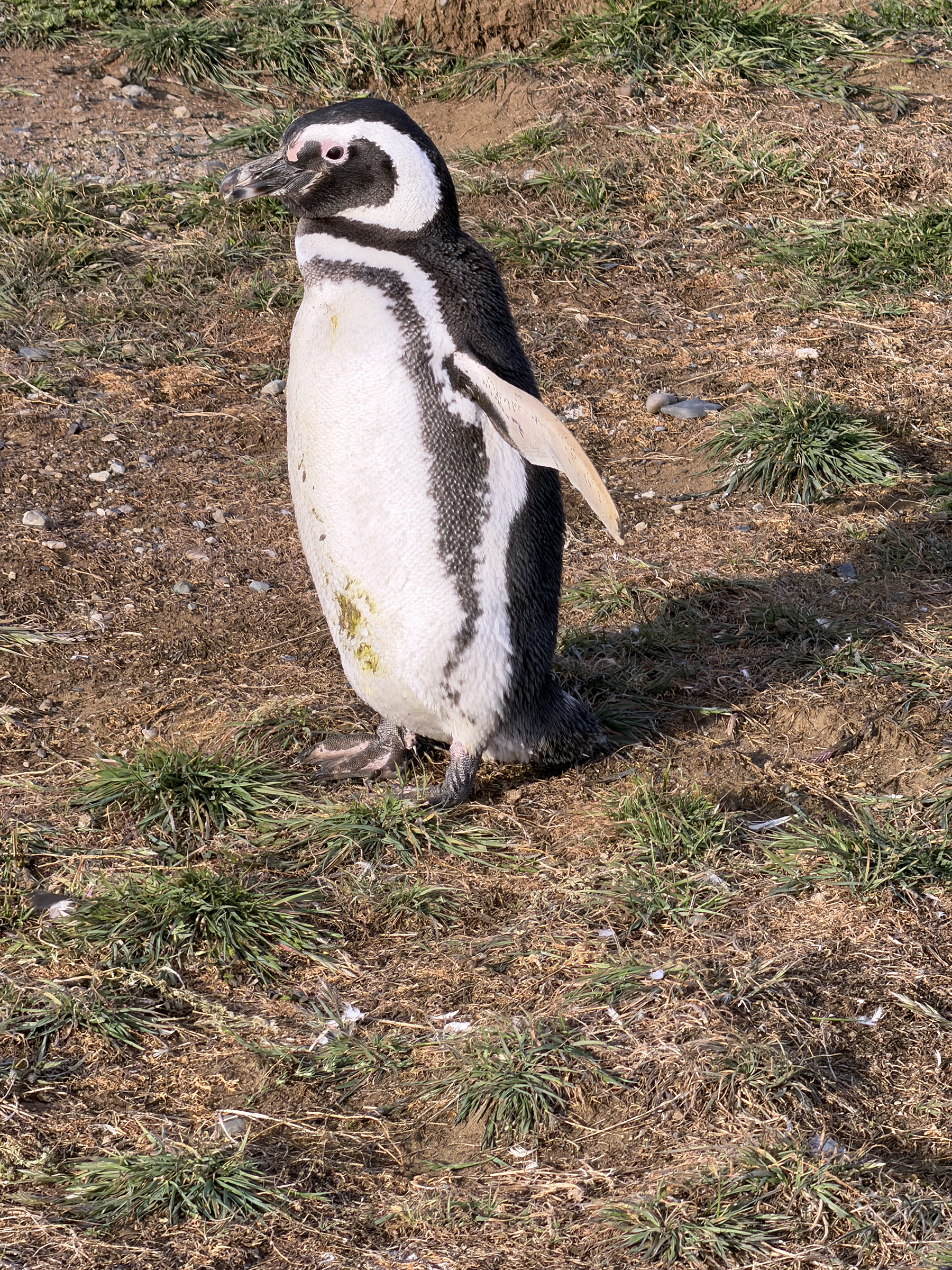
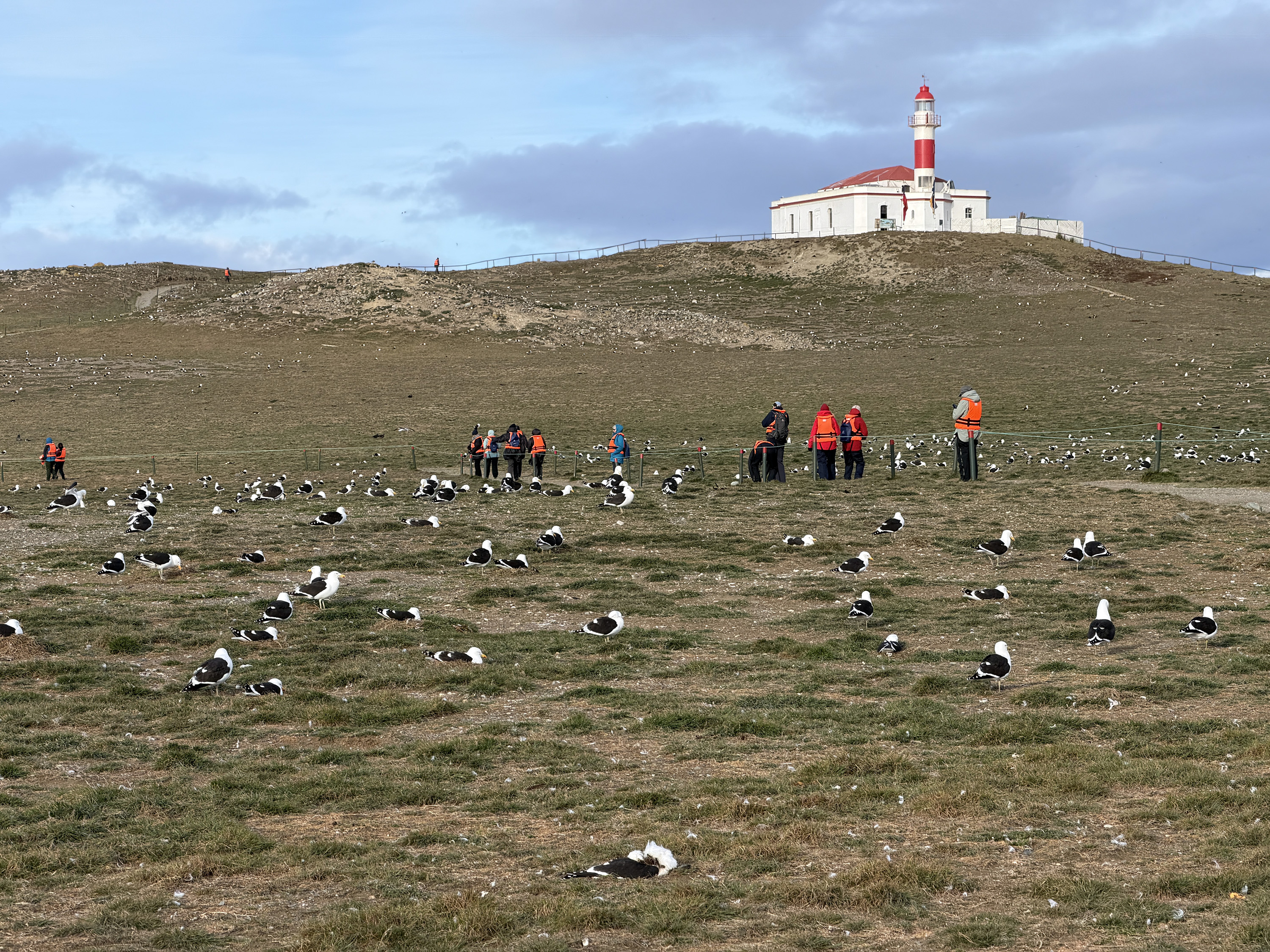
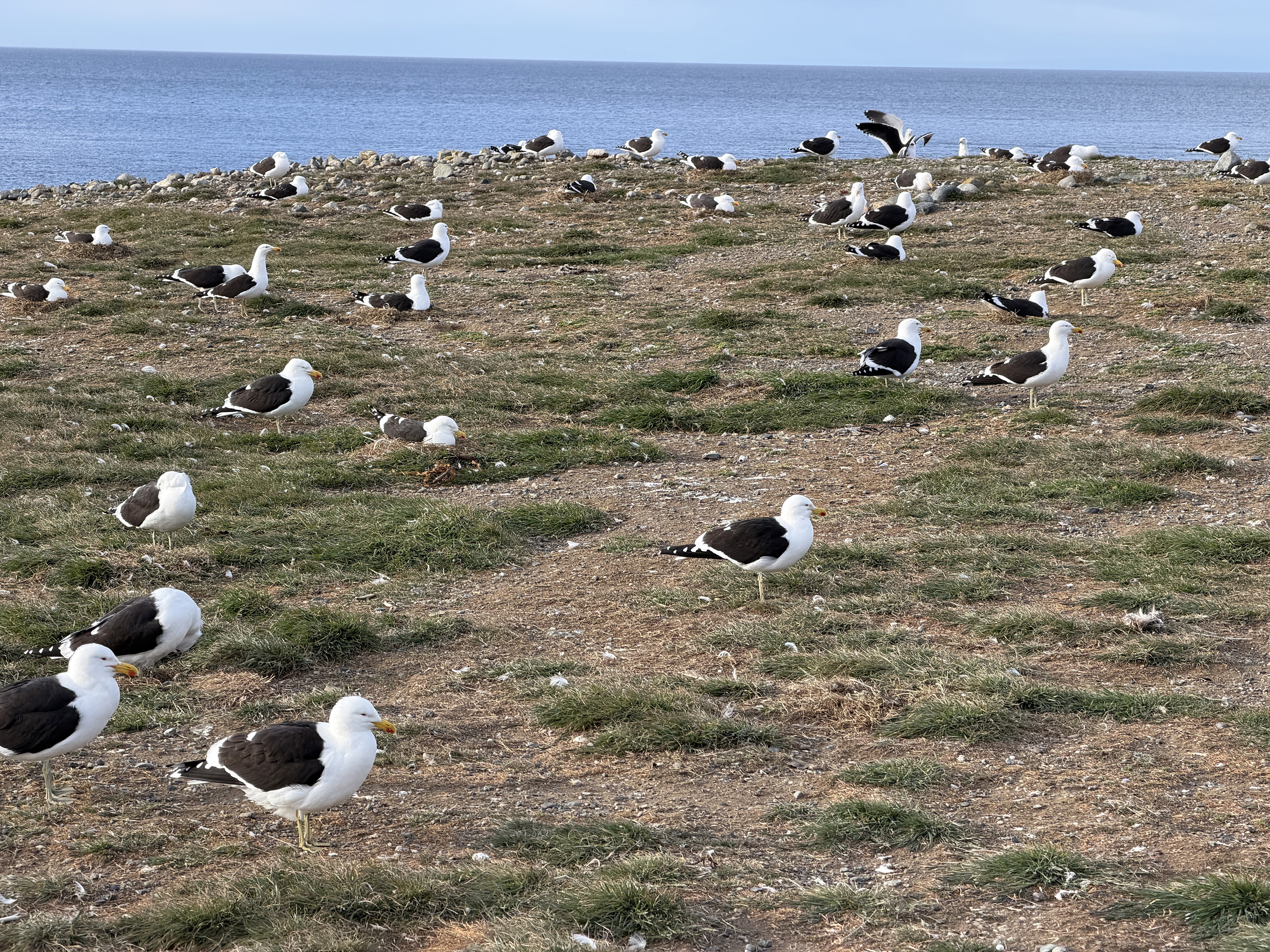
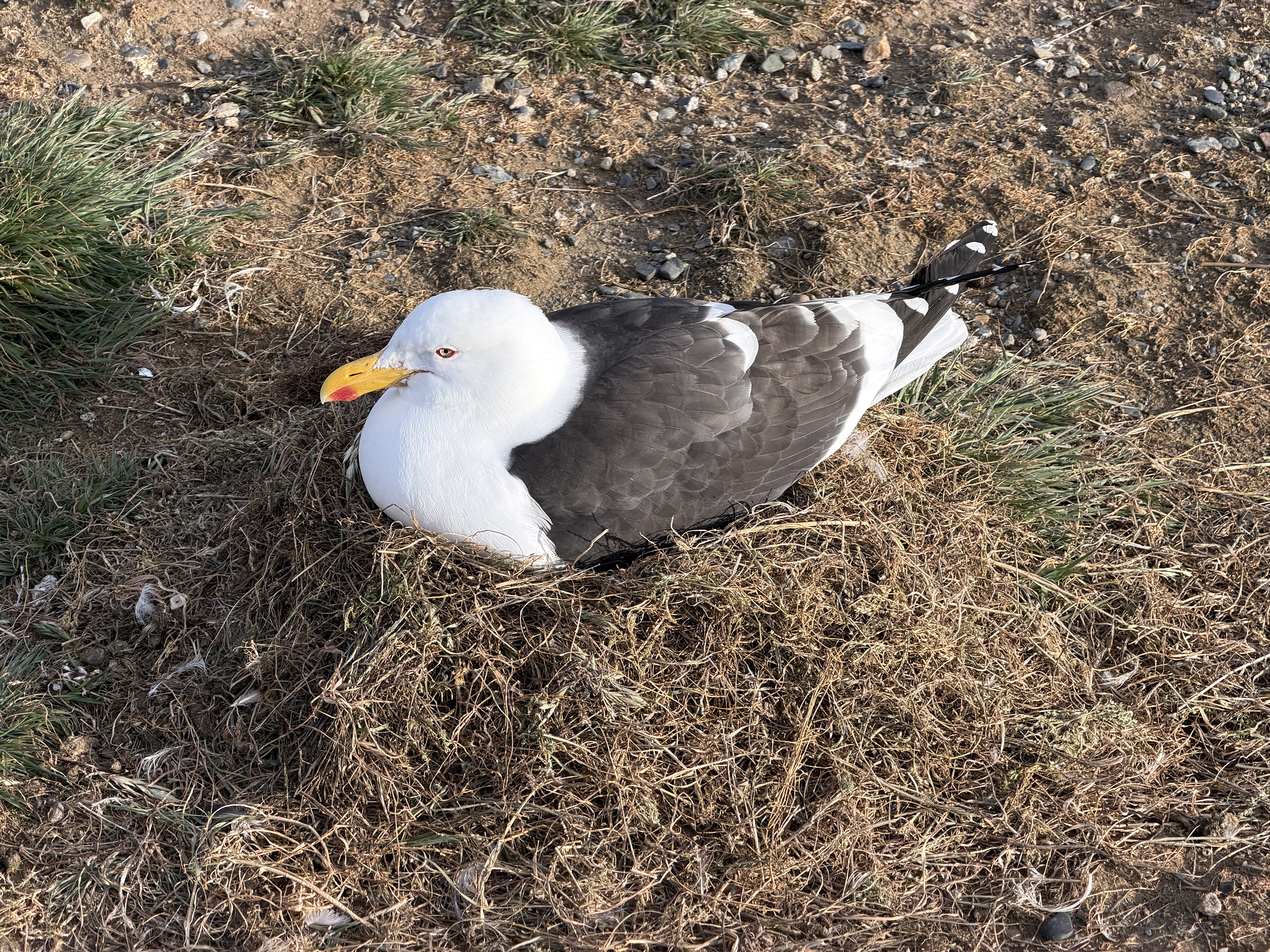
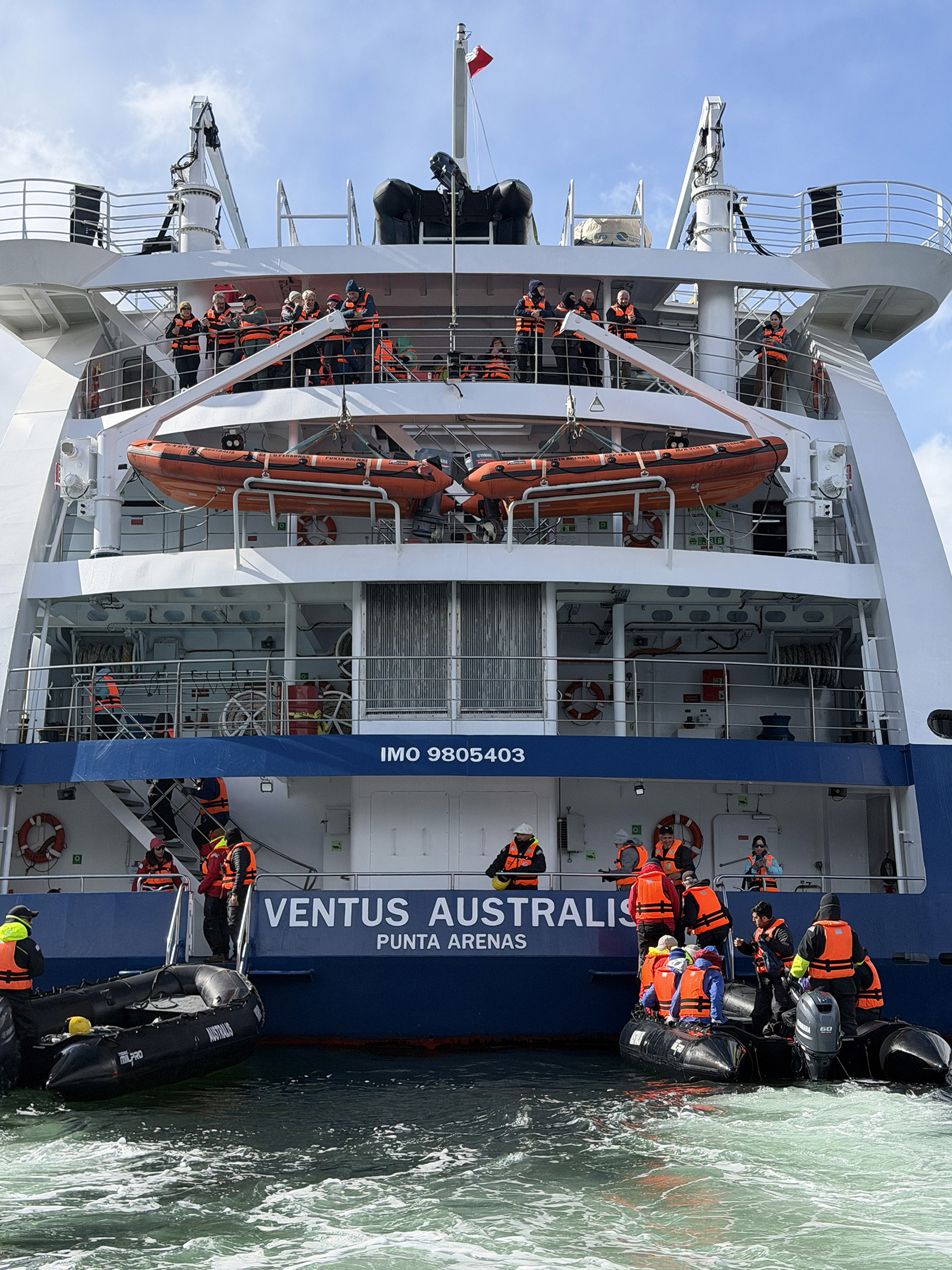
We ate breakfast after returning from the island and packed up, leaving our bags in the hall before 10. We met our group in a lounge to wait for docking. Ventus needed two tugboats to assist her to the pier. We left the ship at 11:30 and breezed through customs. We met our local guide, Pancho (Francisco), and boarded a nice big bus. We had a brief walking tour of the Plaza de Armas and then lunch at a nice restaurant called La Marmita.
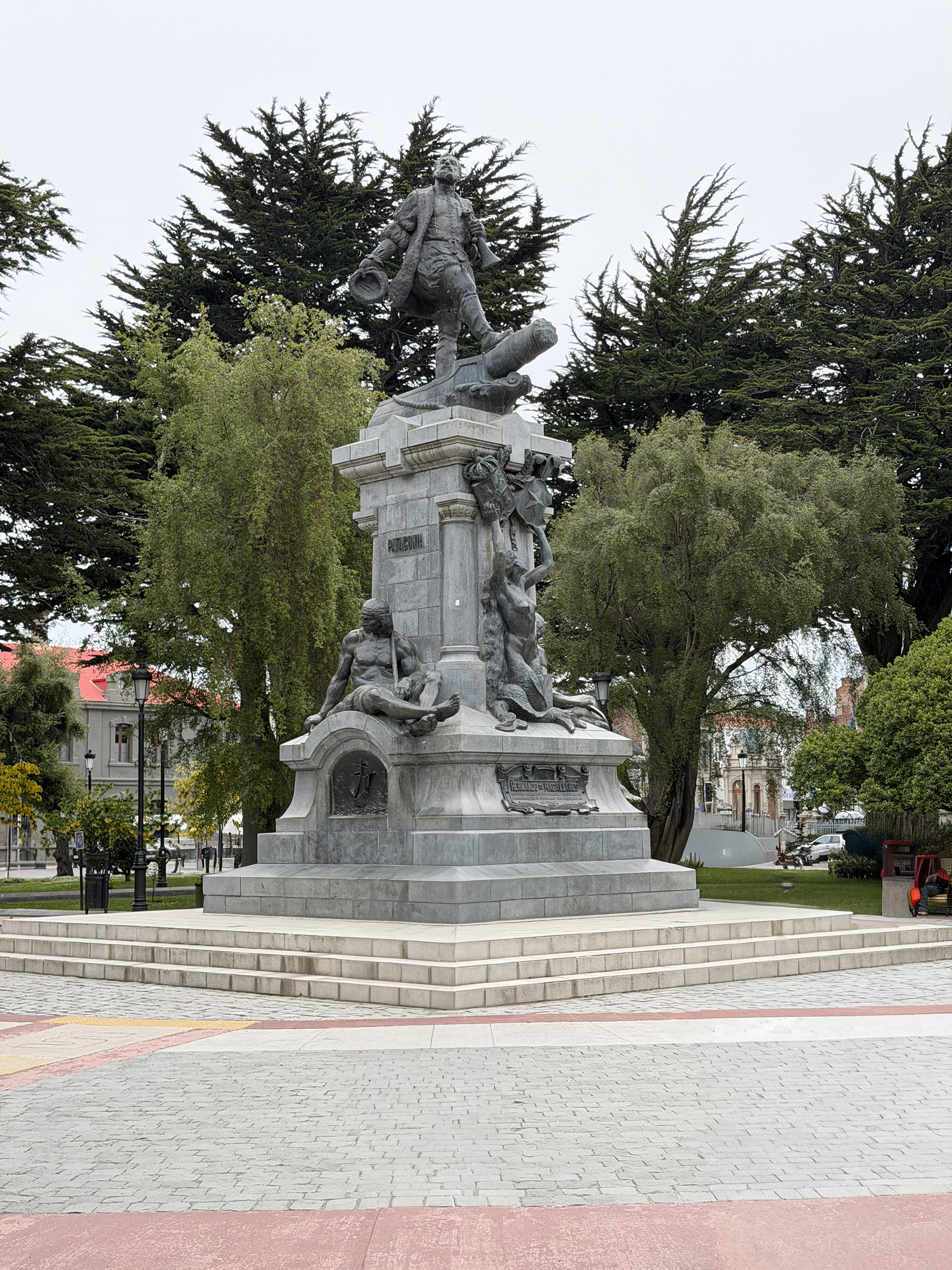
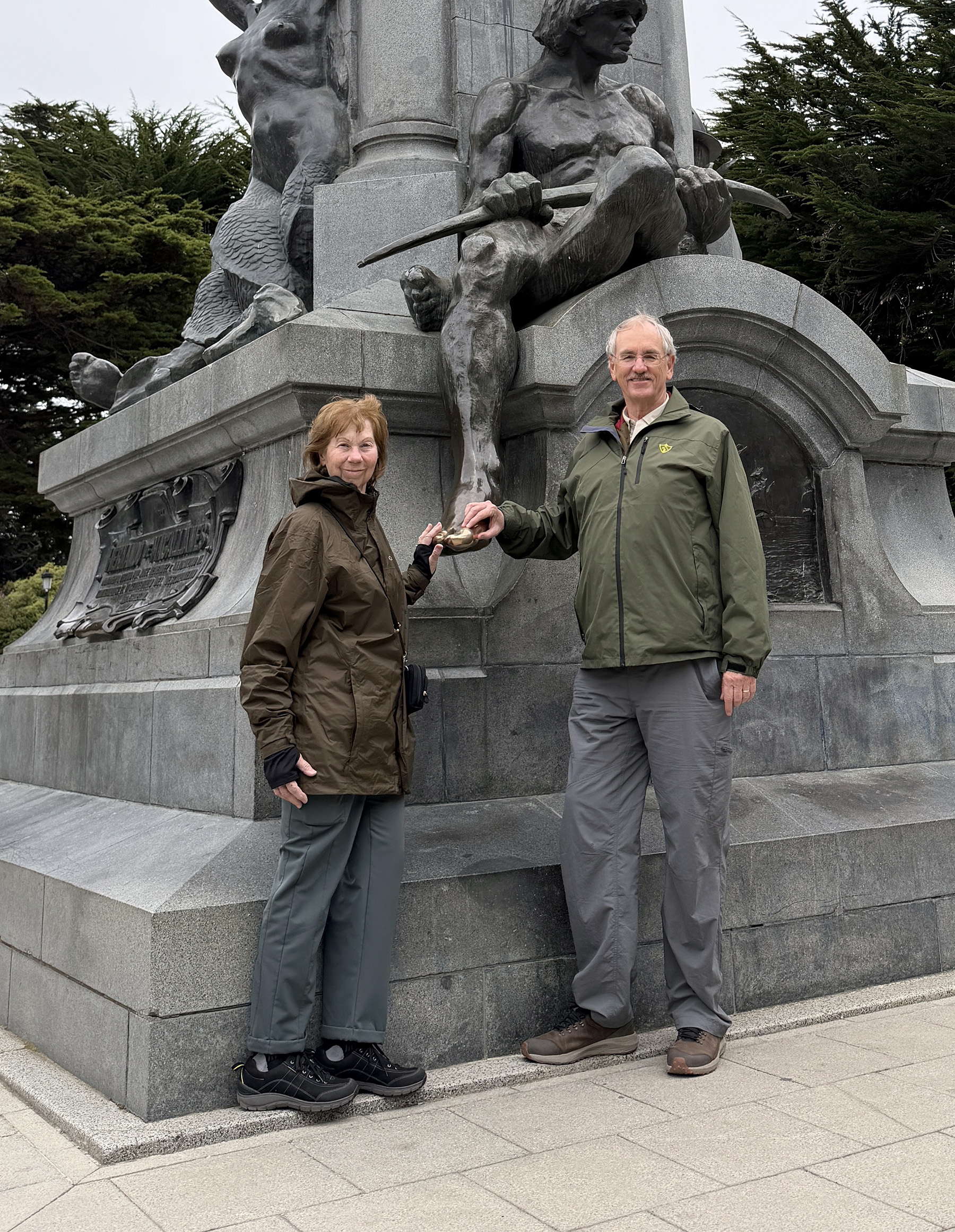
Then a 200-mile, 4.5-hour drive to Torres del Paine National Park (PINE-eh; "Towers of Blue" in the indigenous Aonikenk language), approximately 700 square miles and the most important national park in Chile, other than Easter Island. The drive traversed the Patagonia Steppe, a very flat landscape, for the first two and a half hours. We made a rest stop at a hotel, and Pancho gave us a map overview of the area. The final hour of the drive in the rain was on mostly winding mountainous, unpaved roads. The Rio Serrano Hotel and Spa is a really luxurious resort, and we are on “full board” (what used to be called the American Plan), in which we can eat and drink ourselves into oblivion. For dinner in the casual restaurant, we shared one medium pizza and a gargantuan “snack plate” of charcuterie with Ray and Pat, and it was way over the top. I also had Chilean pancakes (crêpes) filled with dulce de leche, a dish that could have provided enough calories to sustain a native village. And a nice selection of mocktails.