Hal Jespersen's World War II Japan Tour, October 2025 [Part 1]
This is my (Hal’s) report on a trip to study World War II in Japan and Okinawa, sponsored by the National WWII Museum. It is my second World War II trip with this organization. (The first, to study the US Eighth Air Force in England, is described here.)
Since this is a lengthy report, I have divided it into two pages.
Contents – Part 1

Sunday–Monday, September 28–29 — to Tokyo
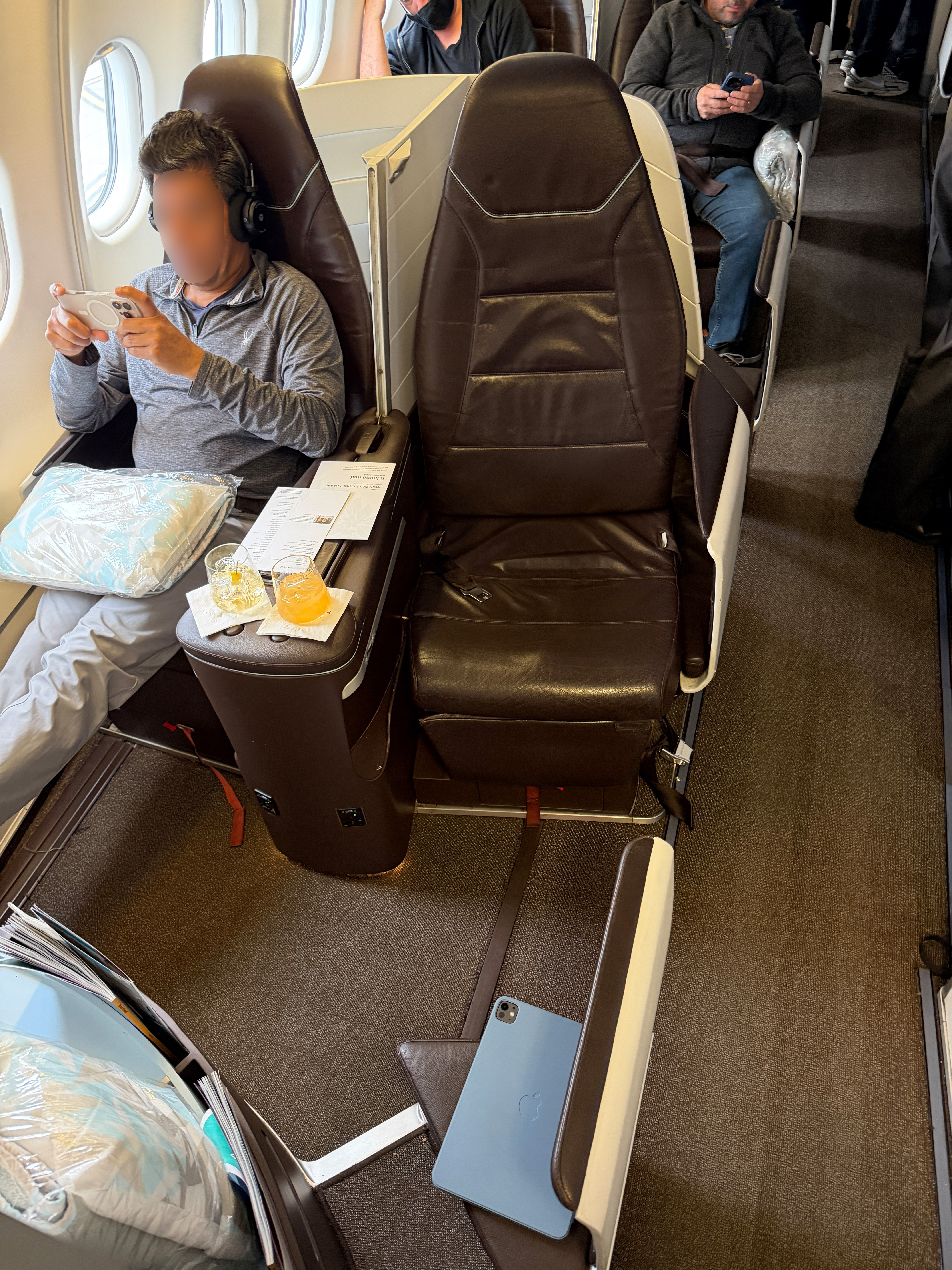
I flew from San Francisco on Hawaiian Airlines with a relatively short layover in Honolulu, landing at Tokyo's secondary airport, Haneda, late Monday afternoon. Japan is 16 hours ahead of San Francisco, which is easier to think of as 8 hours behind, but on the next day. Hawaiian uses the Alaska Lounge at SFO, and it is very nice. Their business class is rather basic with little of the privacy available on their competitors, but sitting in the first row I was actually able to stretch out fully flat. The flight had free StarLink internet access. It did less than 10 Mbs up and down, which is great, but dropped out somewhat frequently. My connection time did not allow a visit to the lounge in Honolulu. On the flight to Haneda, the StarLink was much more stable and the cabin service was better.
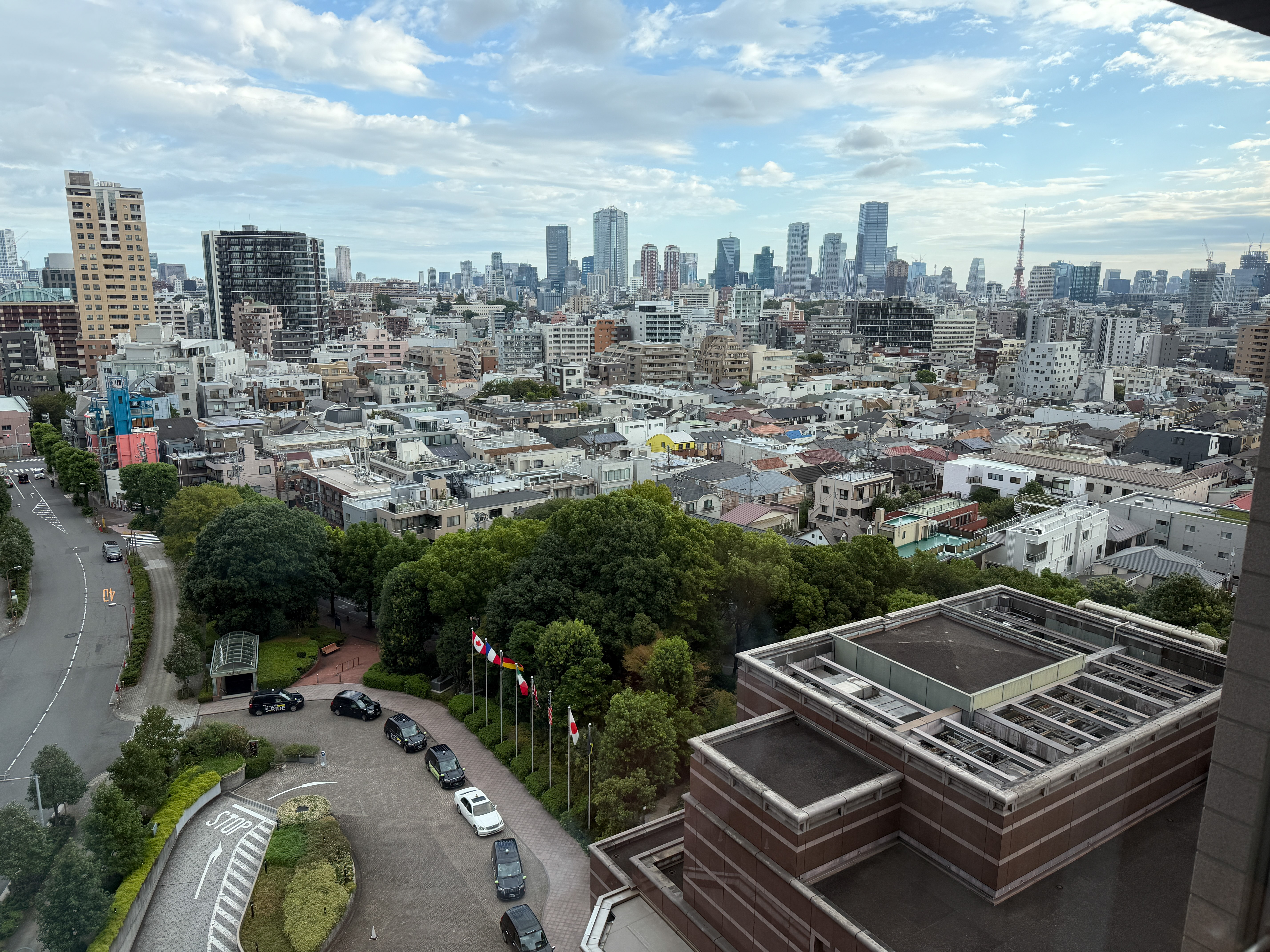
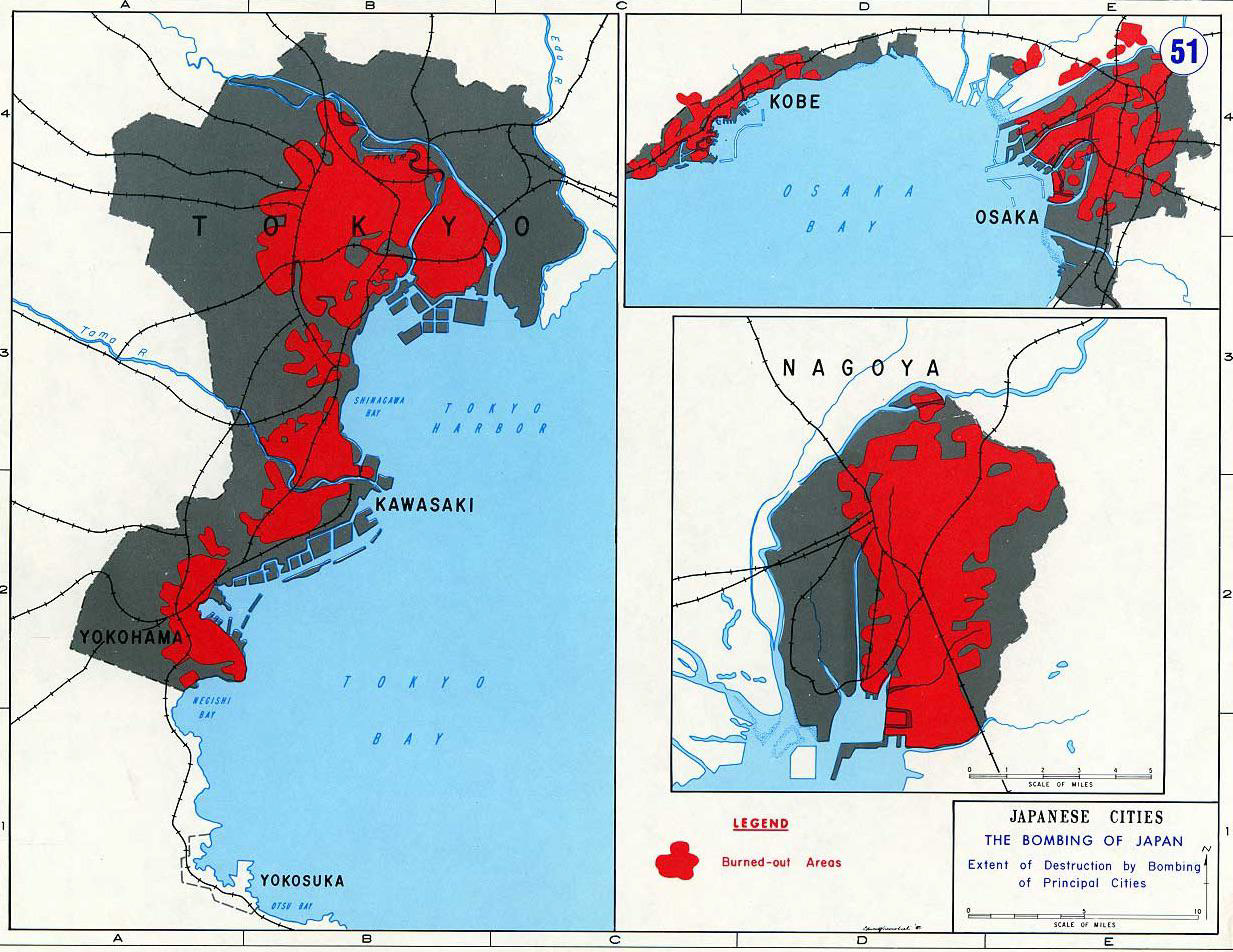
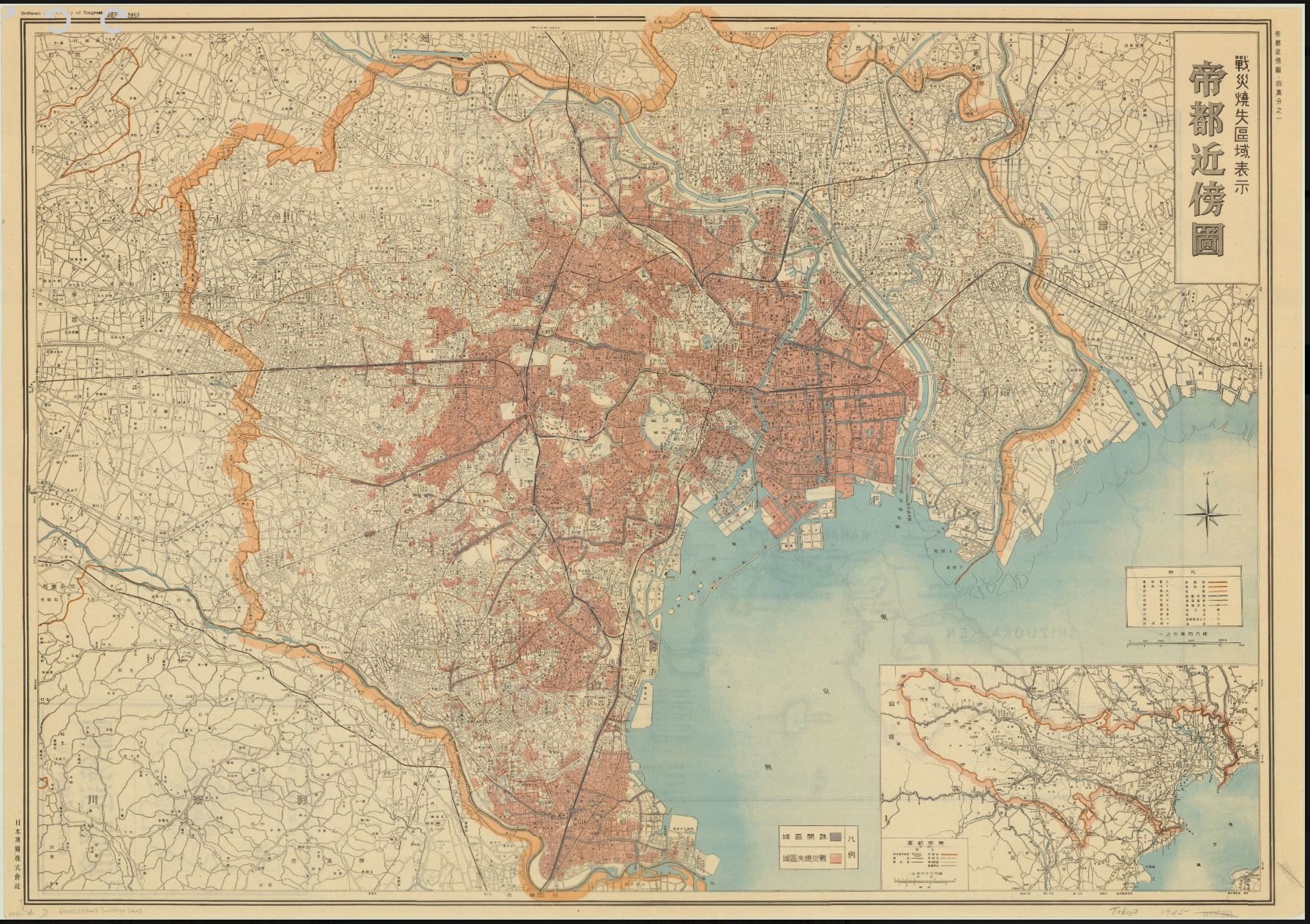
Haneda seems to be set up for massive crowds, and they handled about three plane loads at once expeditiously. The museum arranged a car service to take me to the hotel, the Westin Tokyo in the Ebisu district. The car was a Toyota Alphard minivan, which was quite luxurious. The driver was excellent, although not an English speaker. I felt bad that they don’t tip here. The hotel is quite ritzy and very comfortable, in a pleasant area with parks and a Galleria across the street. Checking some old maps, I believe this area was totally obliterated by U.S. firebombing in March 1945. I roamed around for a while looking for a light and inexpensive dinner, but this does not seem like the kind of neighborhood that hosts ramen shops and convenience stores. Not being very hungry after two substantial meals on the plane, I settled on an Okinawan ice cream cone. Even in the early evening, the weather is warm and humid. It looks like the weather forecast for the week is going to be mostly in the 80s.

Tuesday, September 30 — Tokyo on my own
I enjoyed an excellent breakfast buffet that had a wide assortment of both Japanese and American dishes. I lingered in the room a little, hoping to avoid a passing shower and the morning rush hour on the Tokyo train system. I walked to the Ebisu station about a half mile away. I took the JR Yamanote line north less than a couple of miles to the Shinjuku station. Navigating at Ebisu was super easy with good signage. The trip was 170 yen, or about $1.12. (I downloaded a payment card called PASMO to my Apple Wallet and just tapped the phone when I entered and exited stations.) Shinjuku Station is the world's busiest with 3.5 million daily passengers, but I was fortunate that Google Maps told me which car to get on at which platform and which exit to take from the station.
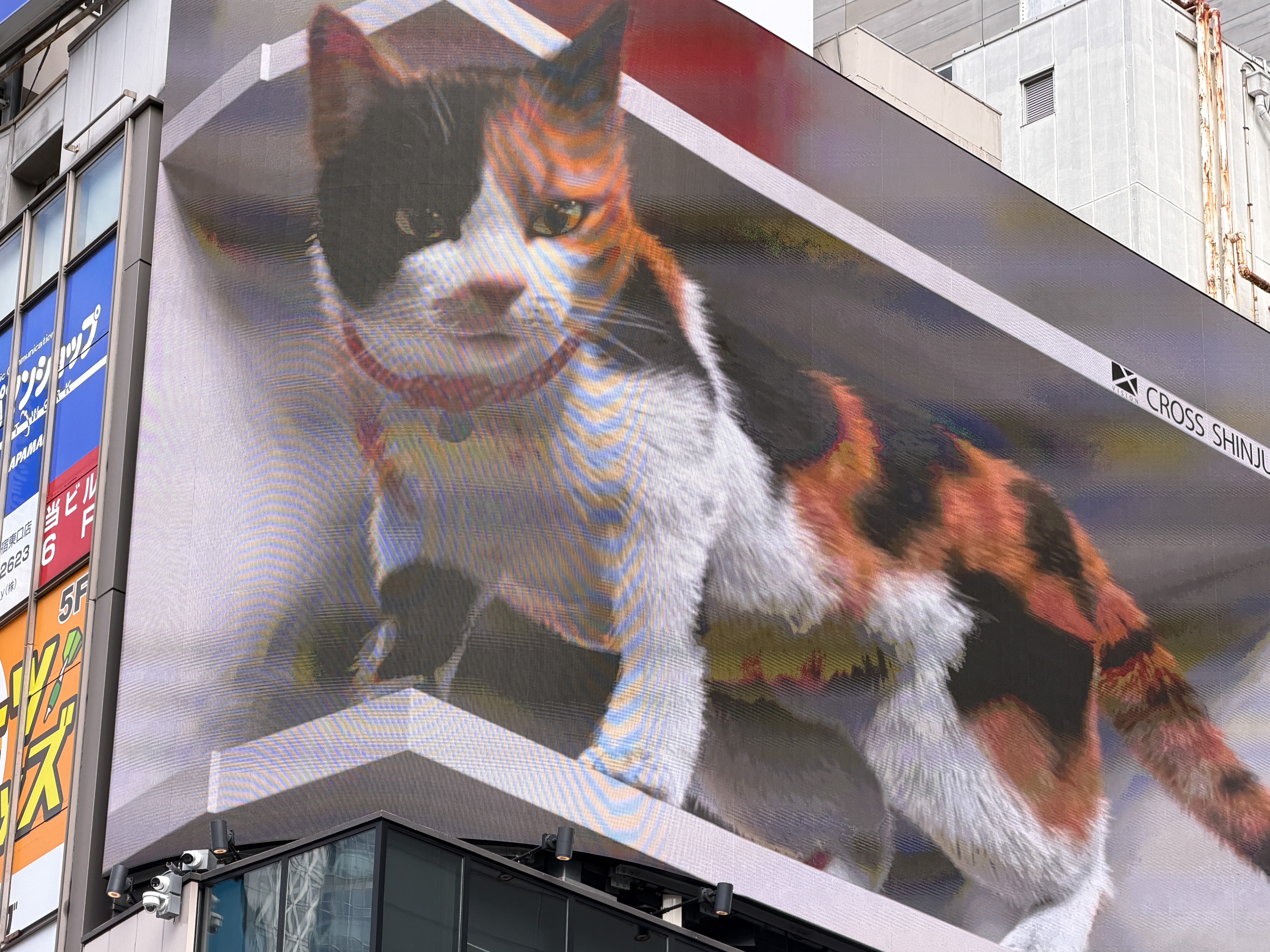
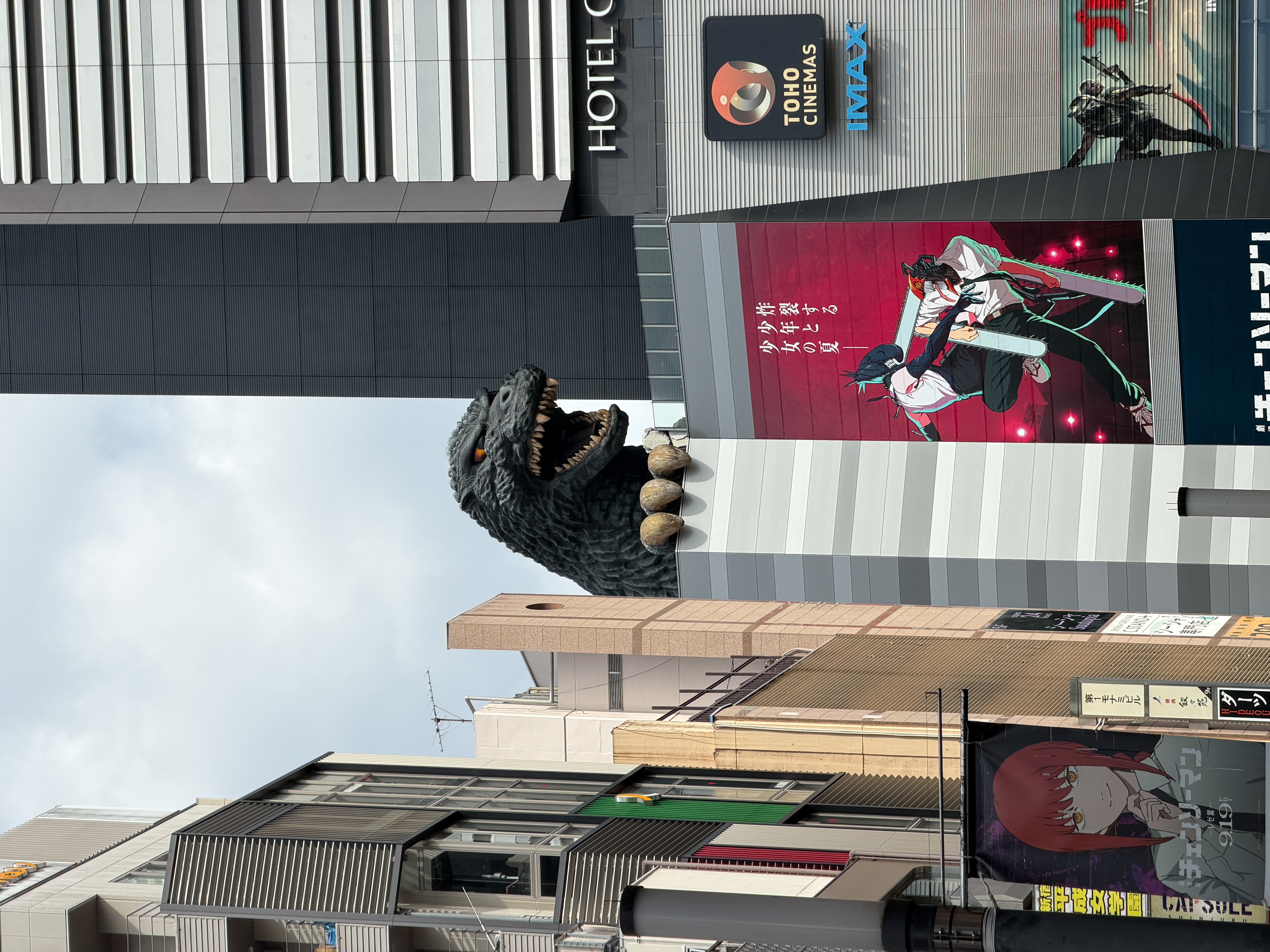
I only did a few things in the Shinjuku district. First was viewing the famous electronic billboard that shows a giant three-dimensional cat. Every video of the cat doing mischievous things was interspersed with lots of different ads and public announcements. Then I walked a few blocks to find a 12 m high head of Godzilla looming over the top of the tall Toho building. I was intrigued to hear a loud public street announcement in English warning visitors about "touts," a word I had not heard before, but I read online that tourists in Tokyo should be wary of "touts" in nightlife areas who may try to lure them into bars or restaurants with fake menus offering inflated prices, leading to scamming.
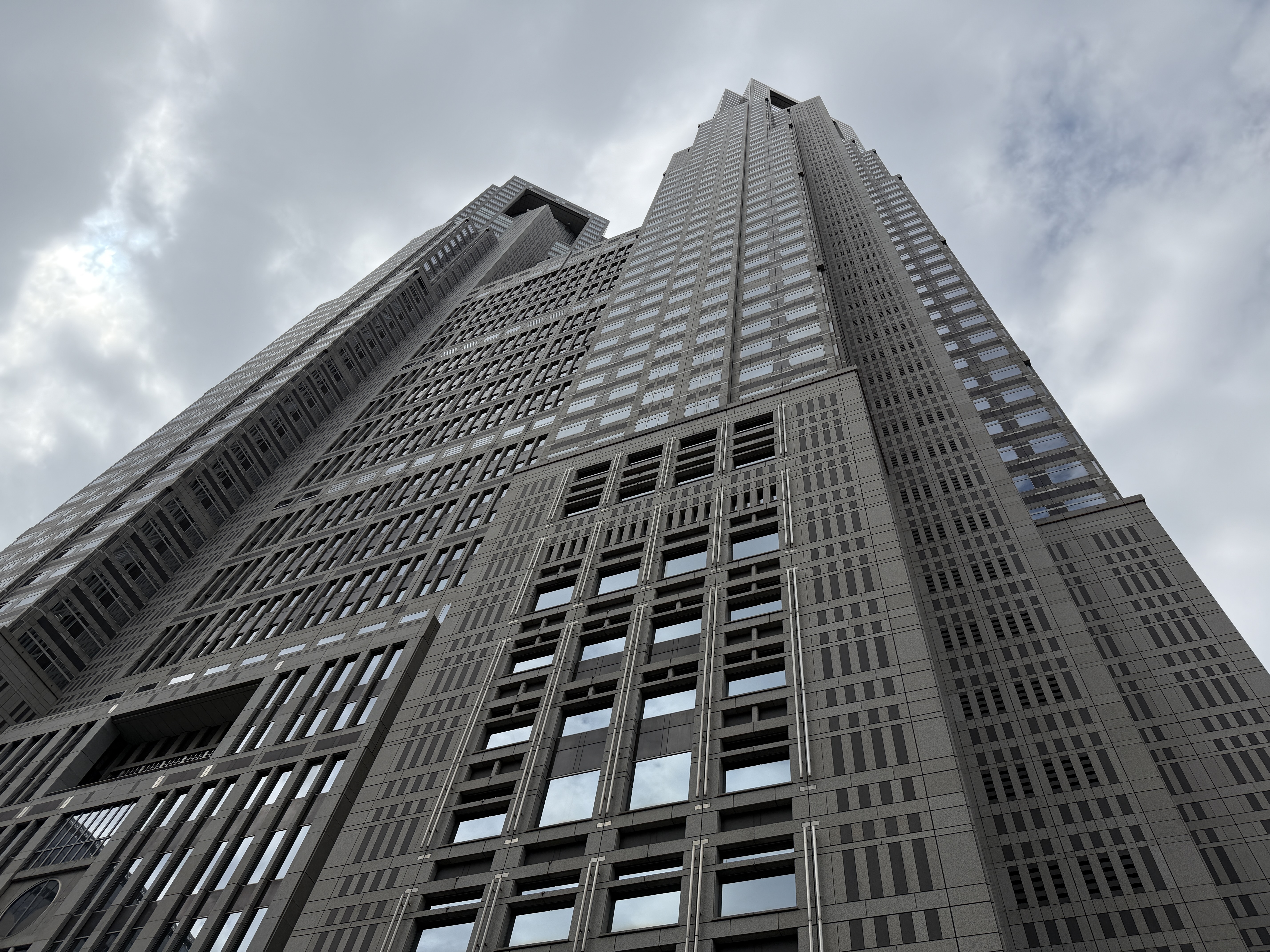
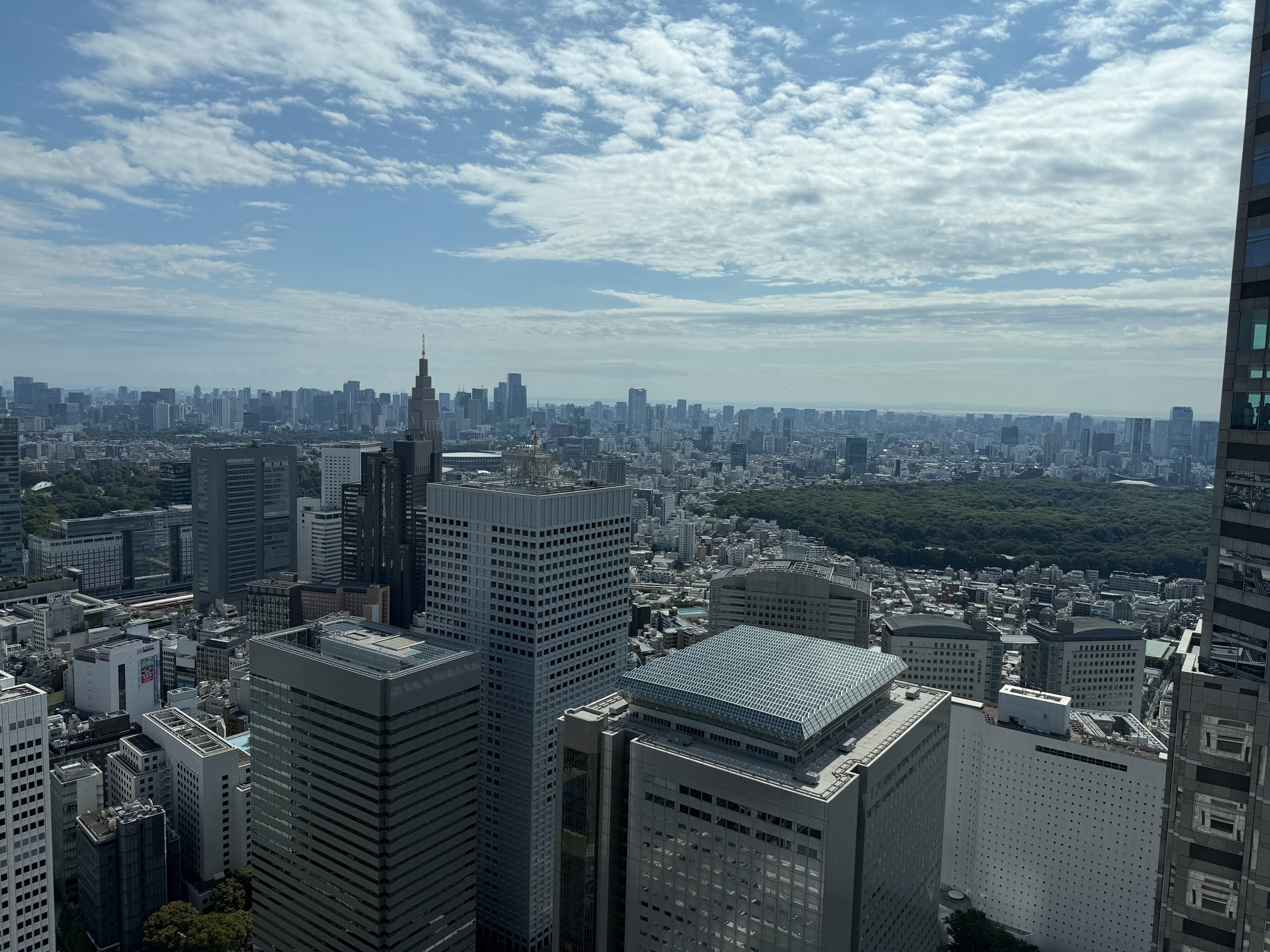
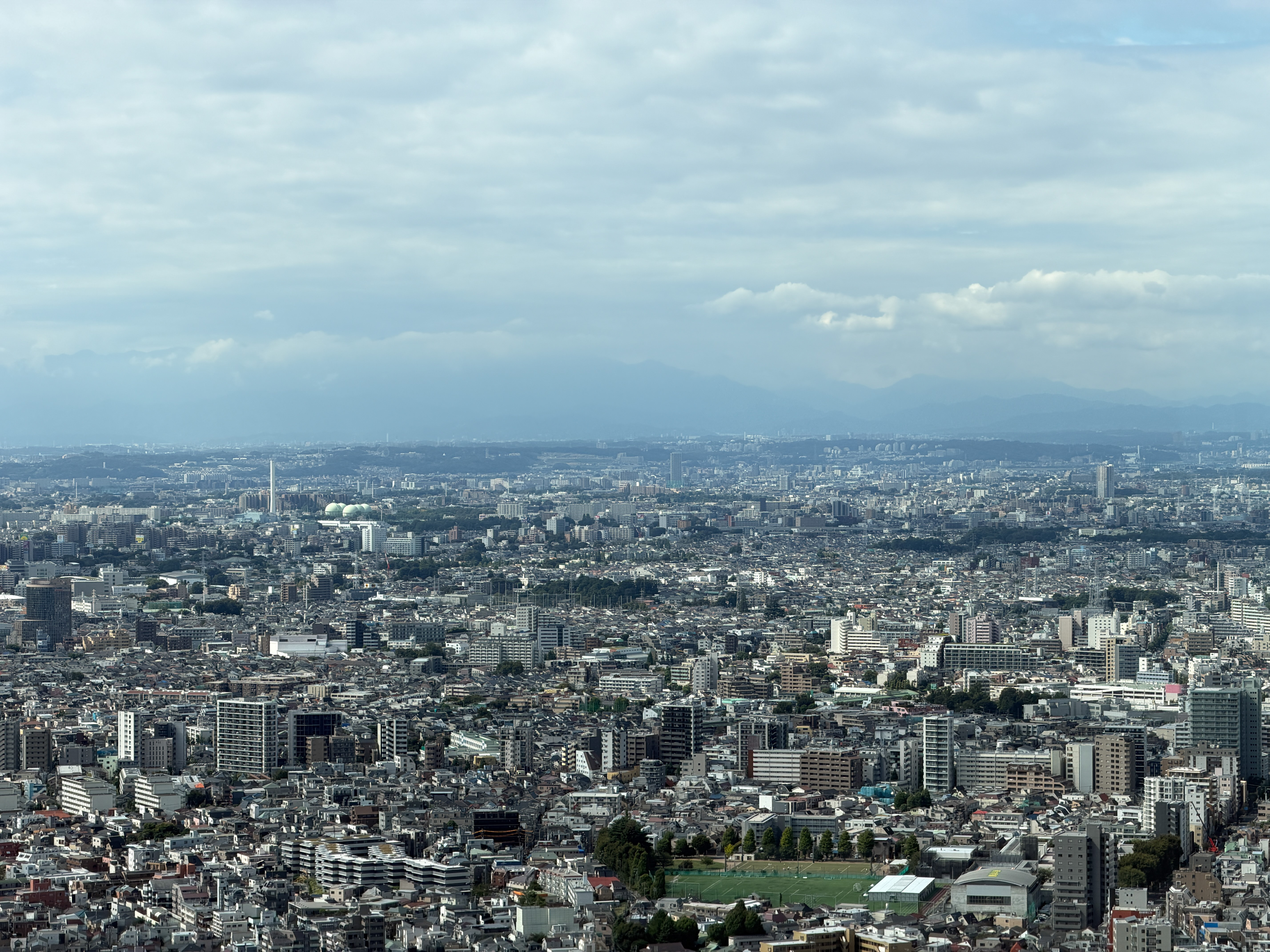
About a mile away was the Tokyo Metropolitan Government Office. I rode an elevator to the 45th floor for an observatory that provides a 360-degree view of the vast city stretching out into the distance. (Tokyo is the world's biggest mega-city with 37 million inhabitants. It goes on farther than you can see, even from 45 stories up.) I had hoped to see the fabled Mount Fuji, but the clouds did not allow it. If this had been a weekend evening, I could have witnessed an attack on the city by Godzilla projected onto the side of the government building. By this time, the humidity had sapped my strength, and I was drenched with sweat, so I needed to start setting lower expectations for my day. I walked back to Shinjuku Station, and this time I was totally lost. It is also a giant underground shopping mall, and I managed to enter at the totally wrong place. But I was eventually able to find my train, and I traveled a stop to the Shibuya station, which I believe is the second busiest in the world, even though it's less than a mile from the busiest.

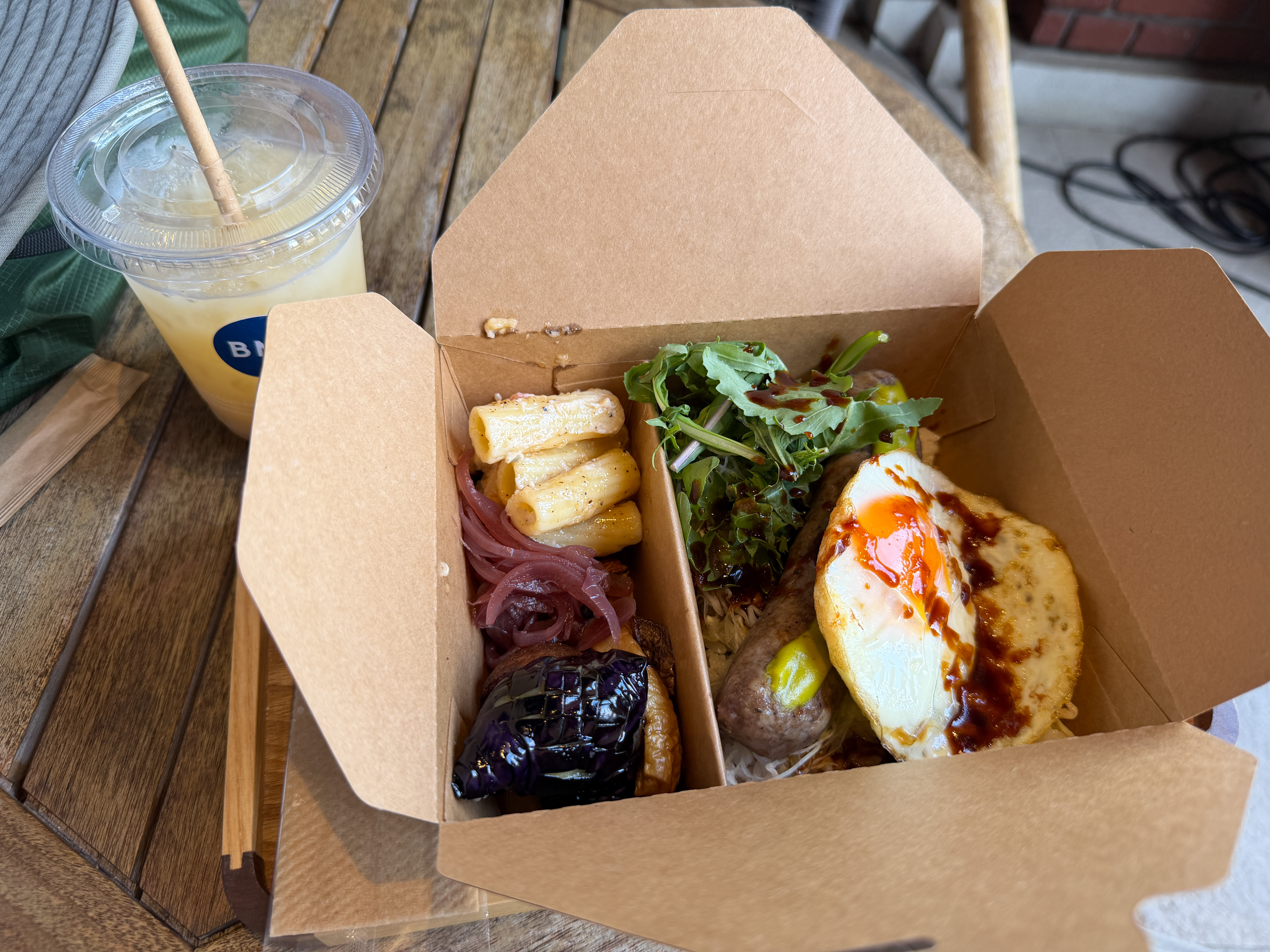
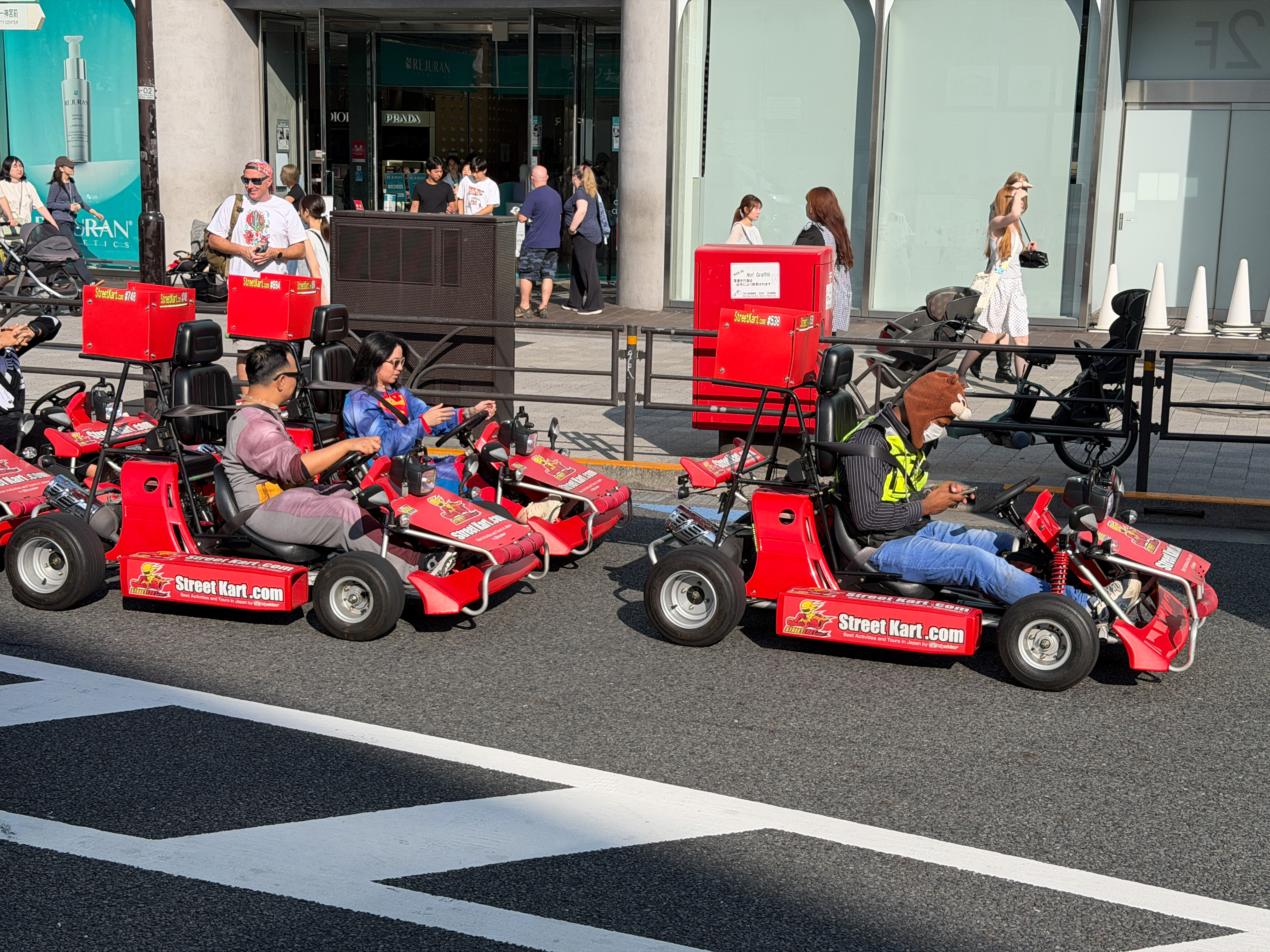
I crossed a famous large intersection that is called the Shibuya Scramble Crossing, where huge crowds cross in multiple directions at the same time. This would probably have been more impressive during rush hour—there were probably only 300 people crossing when I did. In general, I became disappointed that I was seeing some of these areas in broad daylight rather than at night with all of the garish neon signs. I looked around for a lunch spot, but nothing struck my fancy, so I proceeded back to Ebisu Station, heading for the hotel. I ate at a restaurant called Blue Note Place, in which I ordered a dish called the American Lunch Box, which is designed for those Americans who like to eat sausages and fried eggs and sticky rice for lunch with chopsticks. (I actually am one of those Americans. It was quite good.)
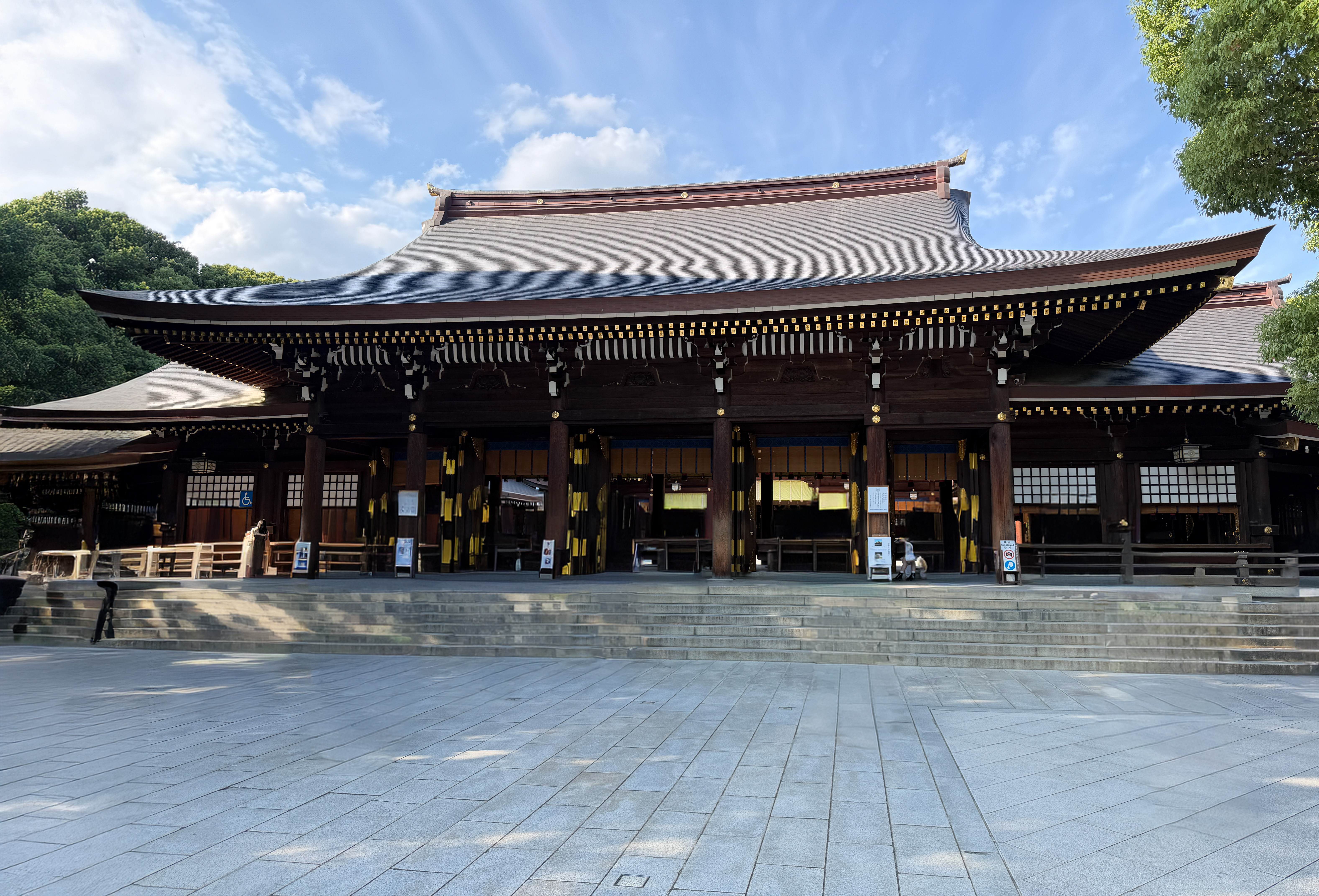
After I cooled down for a while in the hotel air conditioning, I decided I needed to get a little culture for the day. I took the train to Harajuku Station and visited the nearby Meiji Jingu Shinto Shrine. It is dedicated to the deified spirits of Emperor Meiji (died 1912) and his wife, Empress Shōken; although their souls are enshrined here, their bodies are buried near Kyoto. It is in the center of a beautiful 170-acre evergreen forest. The shrine was completed in 1920 and was destroyed during the U.S. bombing raids, but was obviously rebuilt. It is quite a lovely and peaceful place, although there are many tourists wandering around in shorts and t-shirts to detract from the ambiance. I could not take photographs inside the actual shrine, but I took some exterior ones. One interesting feature on the road approaching the shrine is a wall of sake barrels that have been painted in beautiful designs, with one barrel donated each year by the local sake brewers’ association.
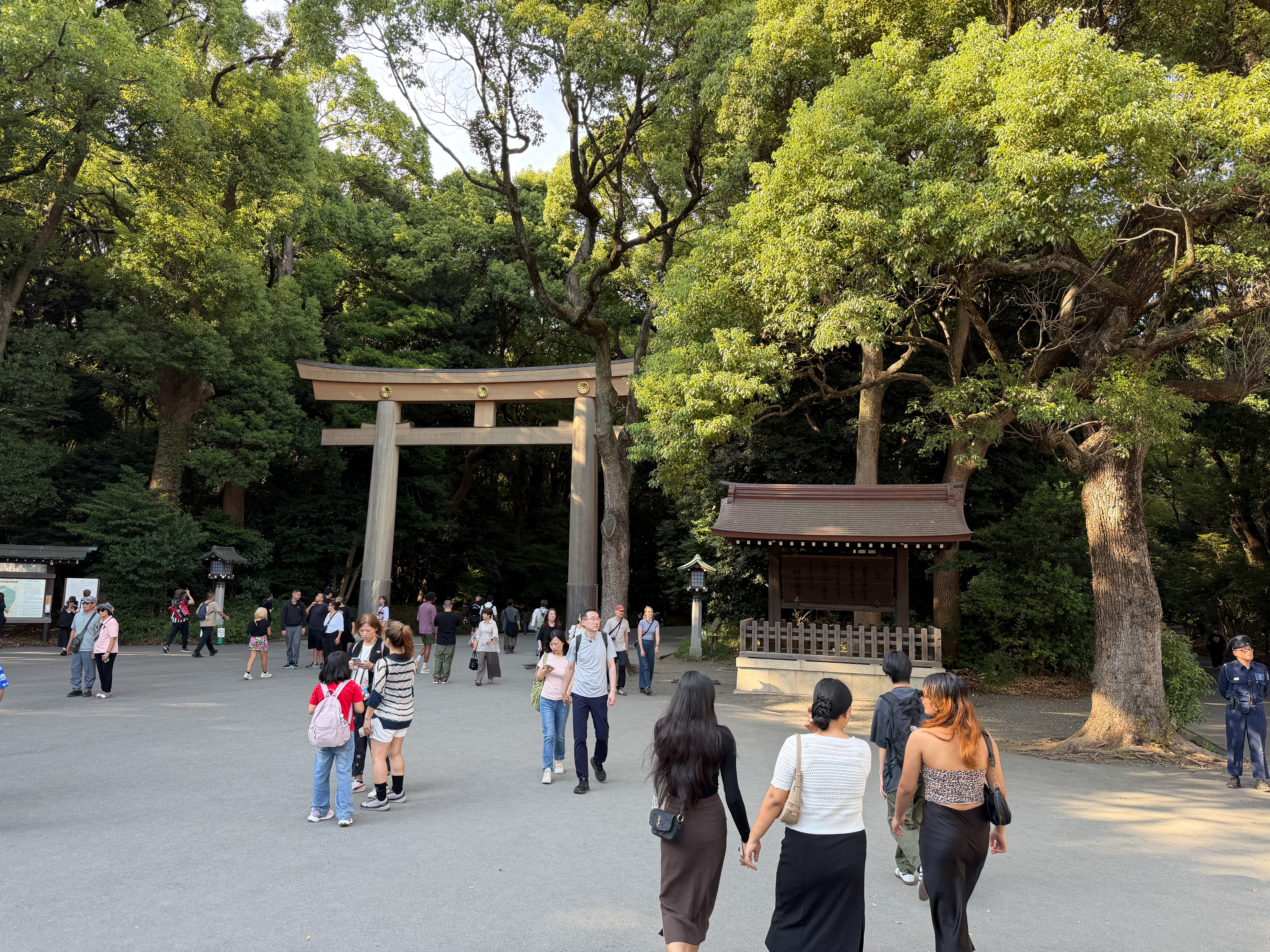
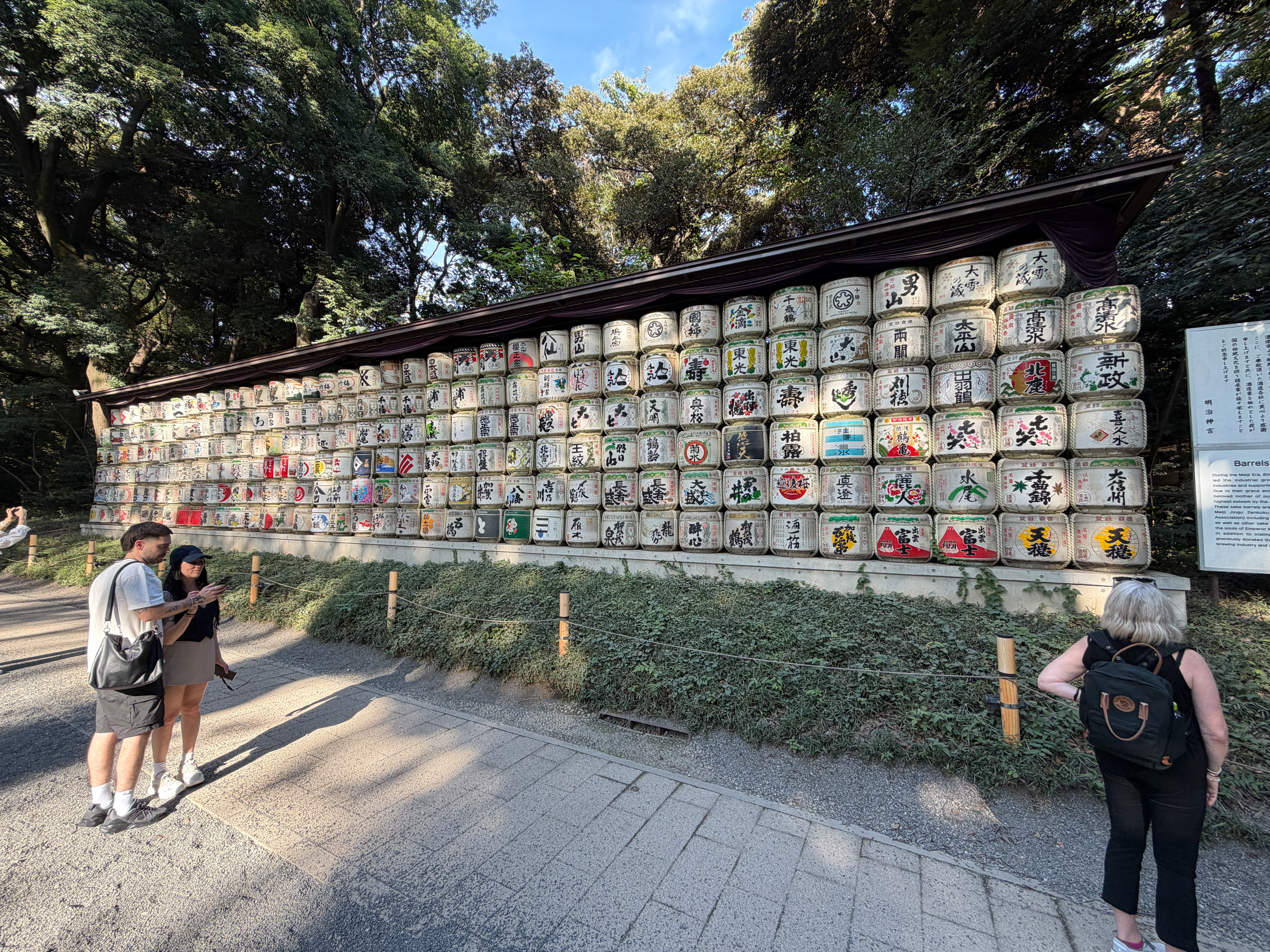
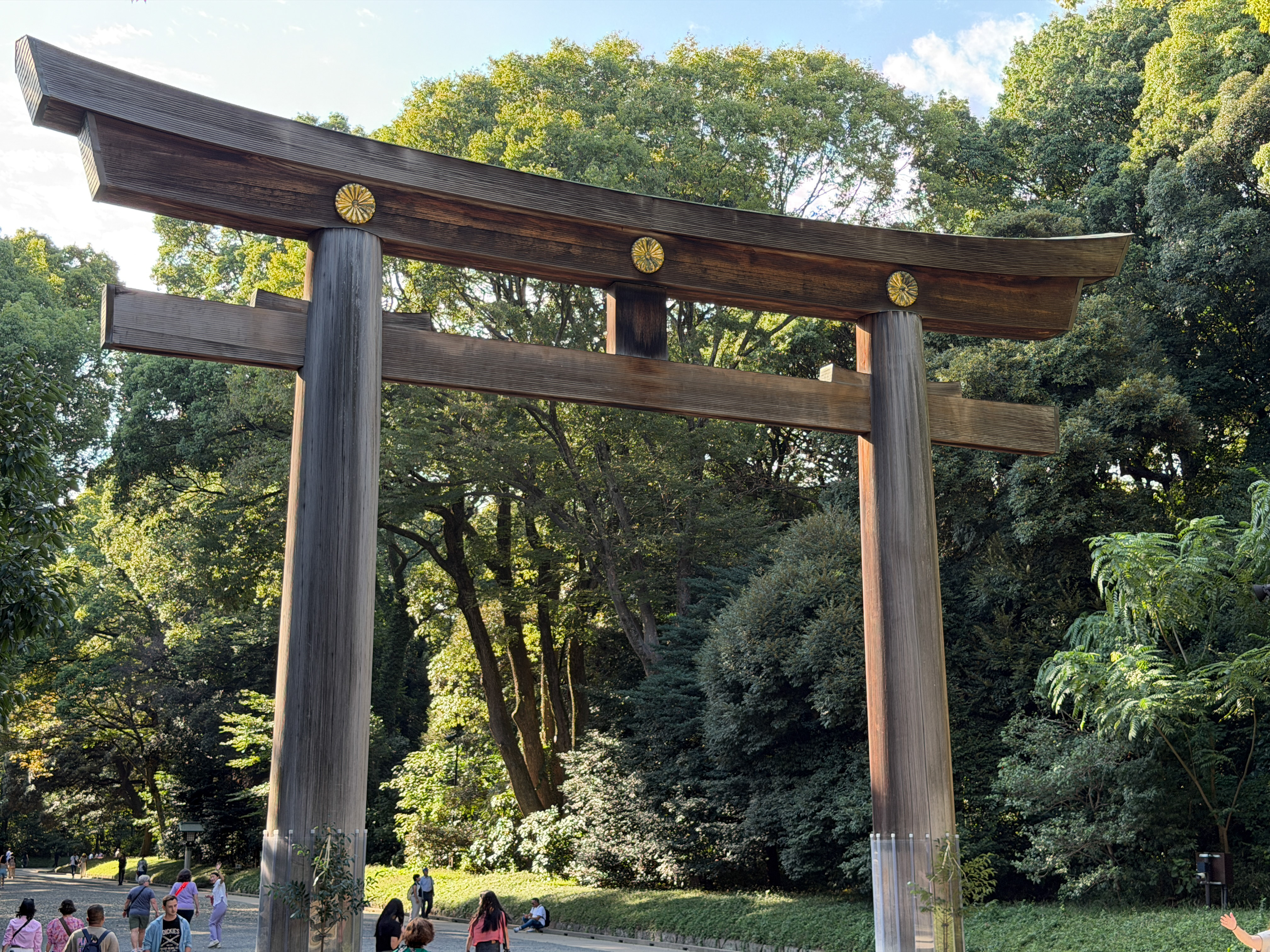
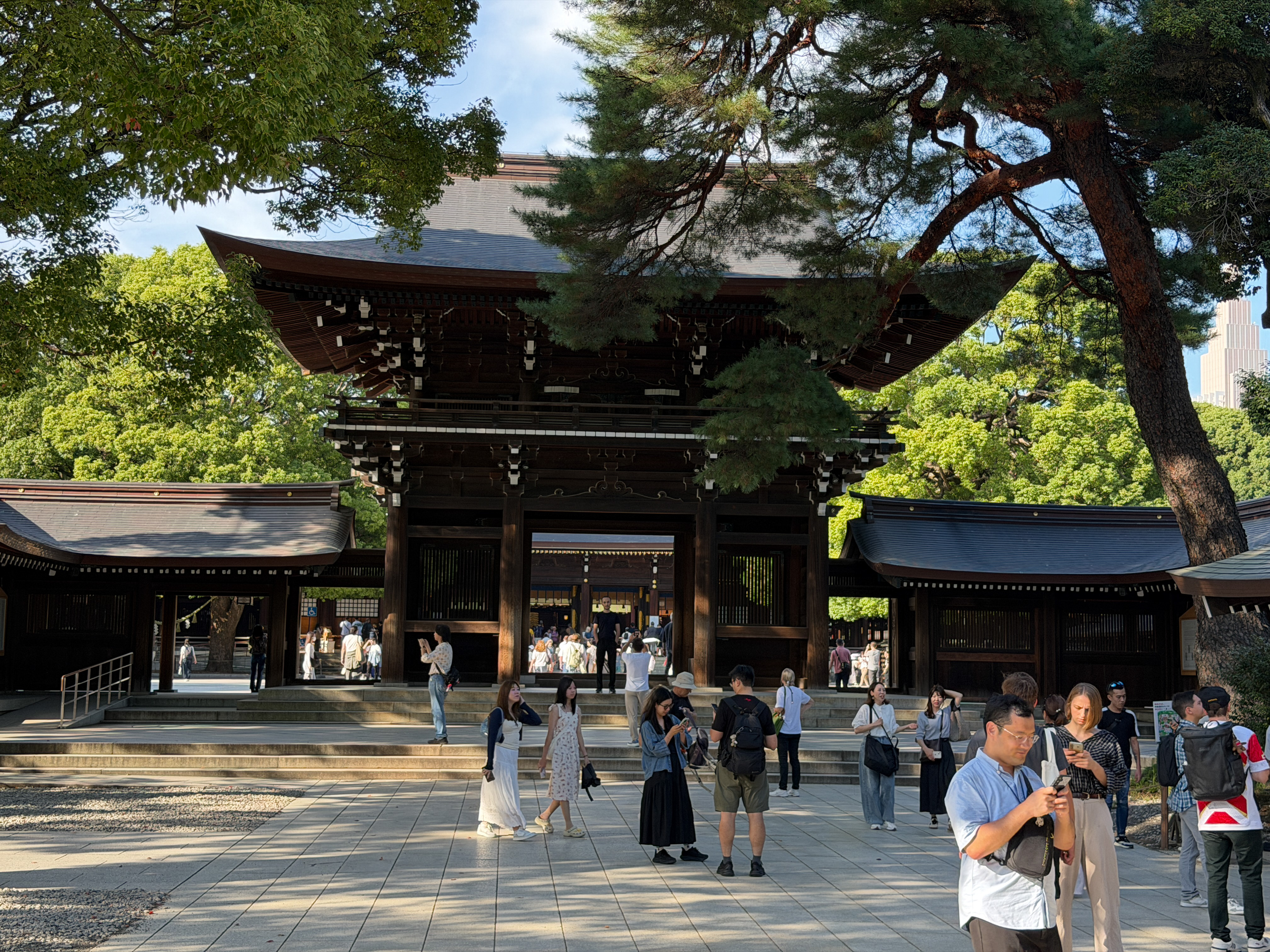
I considered going back to Shinjuku or Shibuya for dinner and to see the lights (including potentially a laser light show associated with that giant Godzilla head), but as I started to leave the hotel, an unexpected big rainstorm crashed in, so I settled for a restaurant across the street from the hotel, an Italian restaurant that had suboptimal pizza.
Wednesday, October 1 — Tokyo on my own, Welcome Dinner
I enjoyed another excellent breakfast buffet, this time opting for a Japanese main course of rice noodles cooked to order. I met a few of the tour participants at breakfast, and noted that some of them invested a lot more pre-travel time in Japan than I was willing to do. The weather forecast predicts rain throughout the day, so I initially anticipated being confined to my hotel room. However, the real weather outside seemed promising, so I decided to take a chance and venture out for a museum visit. I boarded a train to Tokyo Teleport Station and walked about a half-mile to Miraikan, the National Museum of Emerging Science and Innovation. This museum showcases innovative ways of guiding people—particularly children, it turns out—through emerging technologies.
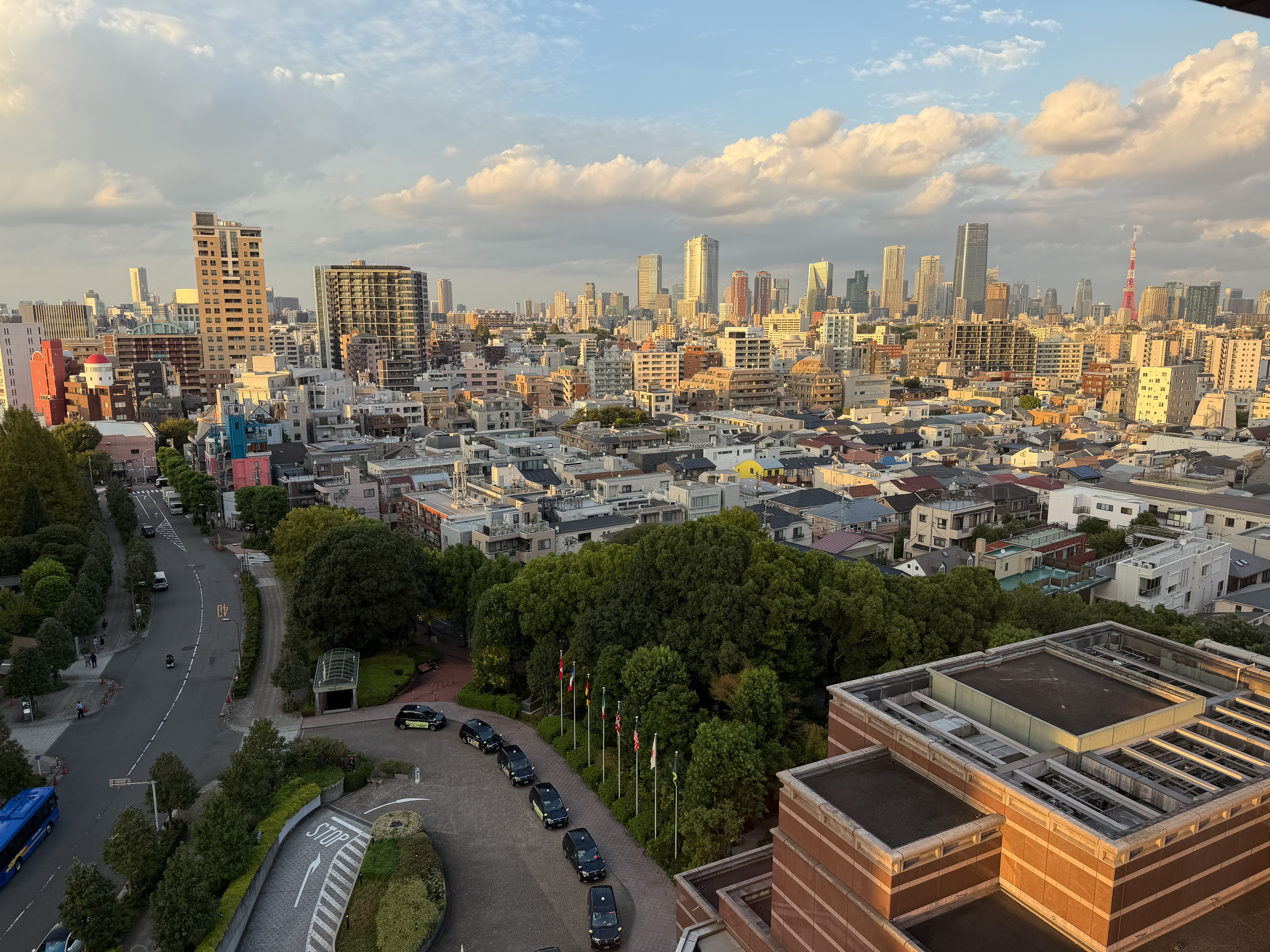
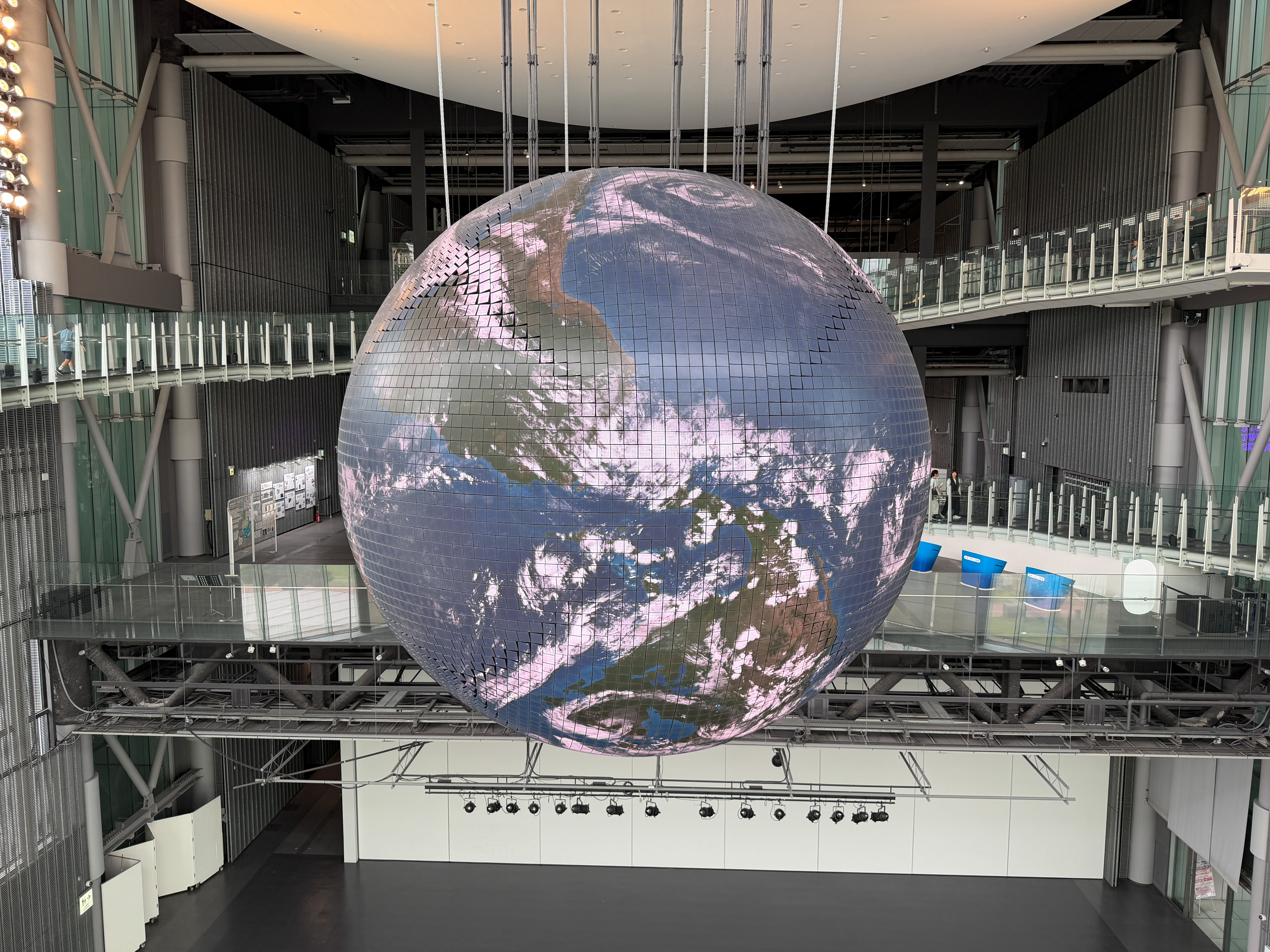
A major feature is a giant globe that shows weather patterns around the world and also at times displays data differences between countries; one I happened to see showed life expectancy differences. There is a section in which you can interact with small robots and exhibits about artificial intelligence. There is a section called the "Quantum Computing Disco," and I had no idea what that was about. There is a replica of a space station module and an exhibit about Japan's space program that is centered around their two workhorse rockets, the H-2 and H-3, including a complex rocket engine from the former. There were exhibits about deep-sea core drilling, biological cell development, and of course global warming. There was also a very elaborate mechanical display that wanted you to think about the hazards of technology and particularly carbon emissions. It featured large ball bearings moving around randomly on tracks and red balls that would slide randomly through a bunch of people silhouettes and mow them down.
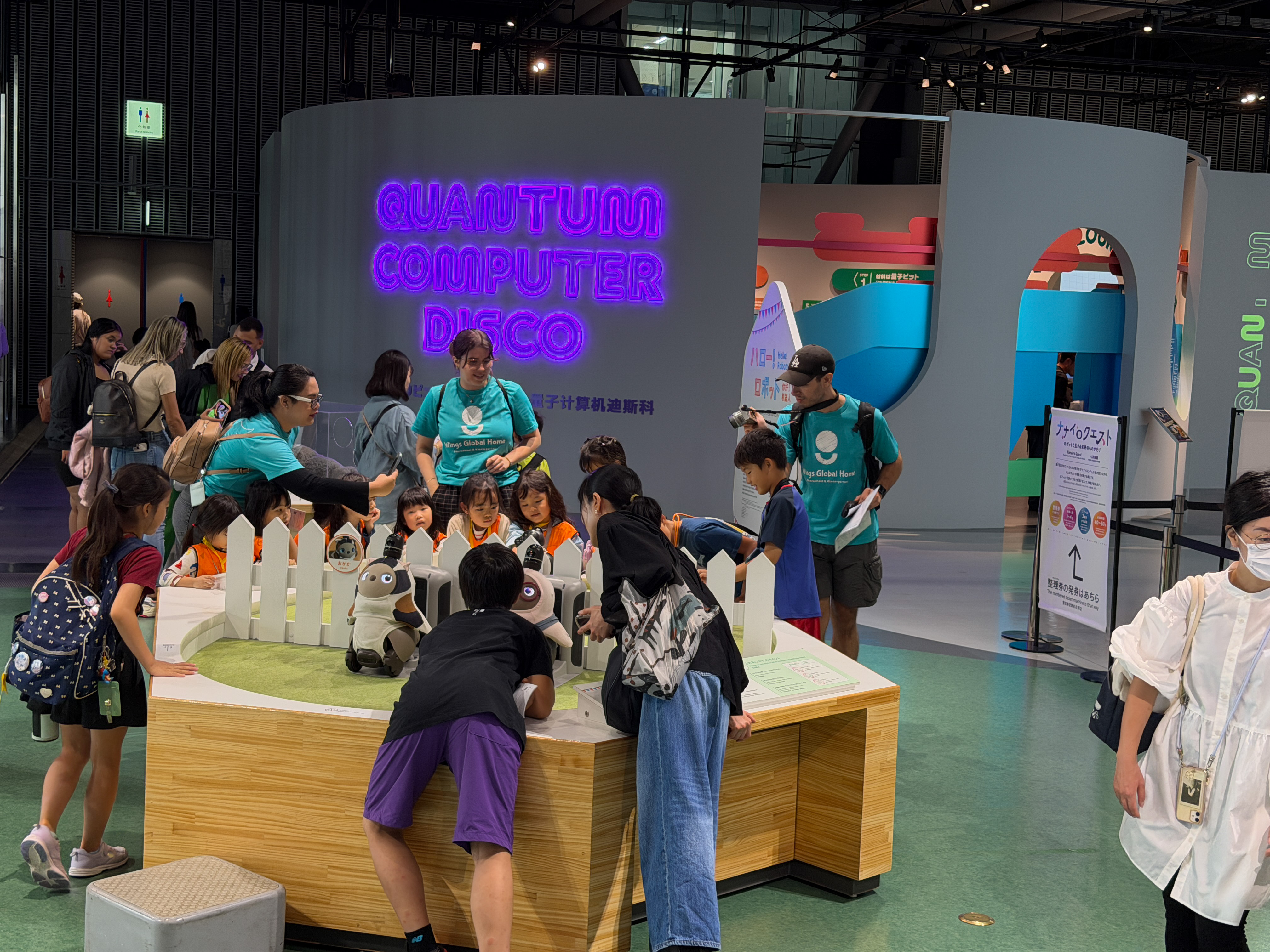

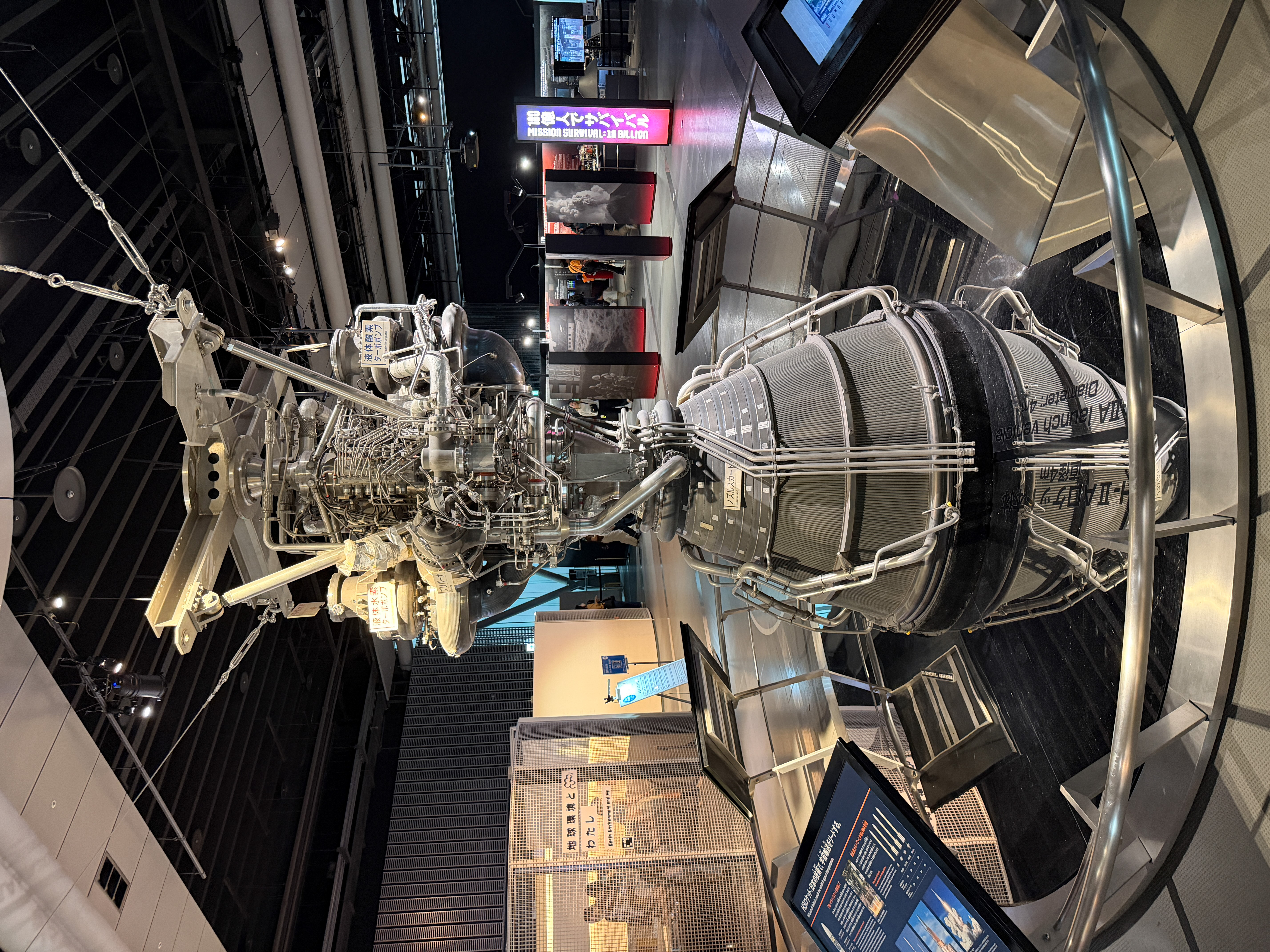
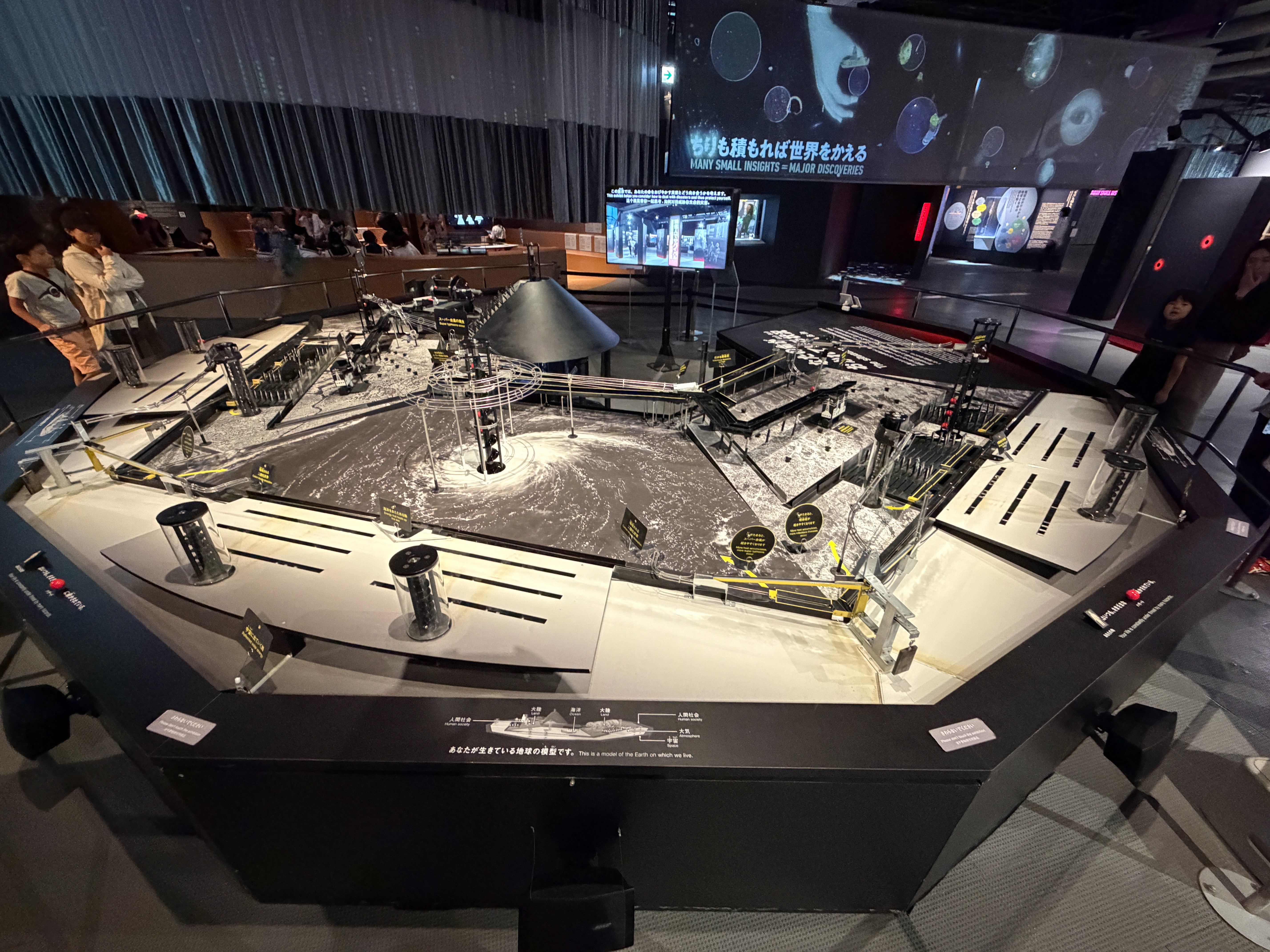
The good news about the museum is that it was visually interesting and extremely well labeled bilingually. The bad news is that it caters to large groups of very small children who are always manipulating displays in random ways. One thing I found interesting was that the majority of the groups of tiny children were led by gaijin and spoken to in English.
I returned by train to the hotel. I stopped at a convenience store and marveled at all of the prepared food items that were available on a very economical basis, offerings much more sophisticated than their counterparts in the U.S. I got two large flavored rice balls, a ham sandwich, and a hot chai tea latte, all for about six dollars. And throughout this lengthy expedition, not a single raindrop fell on me.
The World War II group met at 5:30 for a brief logistical introduction and then two lectures. Jon Parshall described the final year of the war from the summer 1944 invasions of Guam, Saipan, and Tinian. He had an interesting set of statistics comparing the casualties in the Battle of Okinawa vs. the Battle of the Bulge. The latter was a larger battle, but in a concentrated area, Okinawa had 13 times the casualties per square mile. James Fenelon presented a history of the 11th Airborne Division in its occupation of Japan. He included an interesting story about the 11th playing in a virtual Army-Navy game of football that was held in Manila in July 1945.
Following the brief lectures, we adjourned for a hosted dinner, a mediocre buffet that consisted of about 80% Japanese food. For those who have read some of my other trip reports, you will know that I dislike hotel buffets, but I guess with about 60 participants, it was not realistic to expect many banquet-style plated dinners on this trip.
Thursday, October 2 — Tokyo
Beautiful weather today, but still very warm and humid. Our large group has been divided in two. I’m assigned to the Blue bus and we are on a reverse itinerary from the Red bus, although meeting for lunch. Jon is on our bus today and we have a local guide, Yasiko (or “Helen” for some reason). She is moderately knowledgeable but with an accent that I had trouble understanding 100% of the time. We were given radio listening devices that are essential for this kind of tour, but I found that the audio quality was poor. (It took them a few days to realize that the microphone they were transmitting on was not working well.) Yasika spent about ten minutes giving us a very truncated history of Japan, focusing on samurais and their relationship to the emperors. The bus is rather uncomfortable for anyone larger than a typical Japanese.
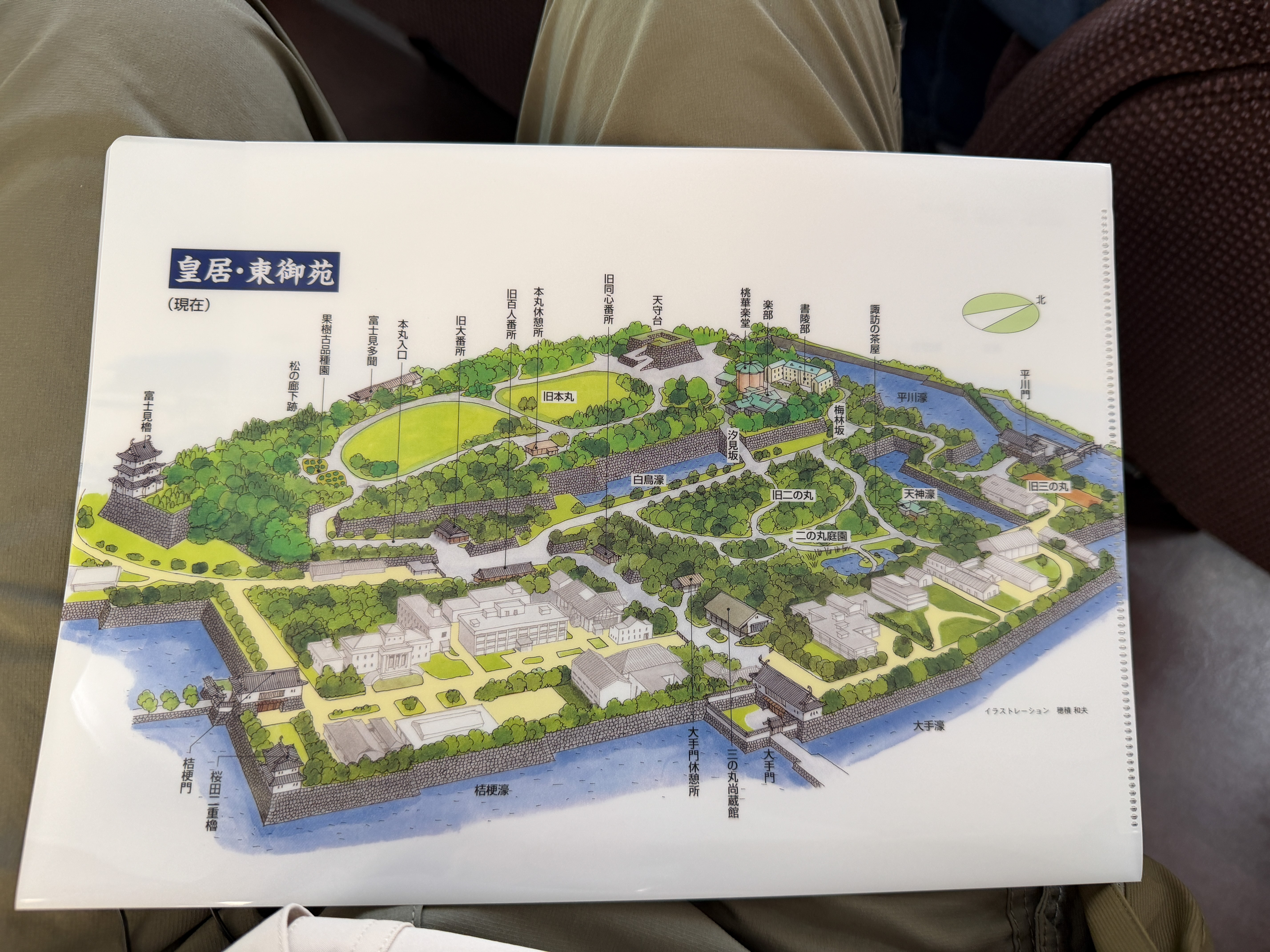
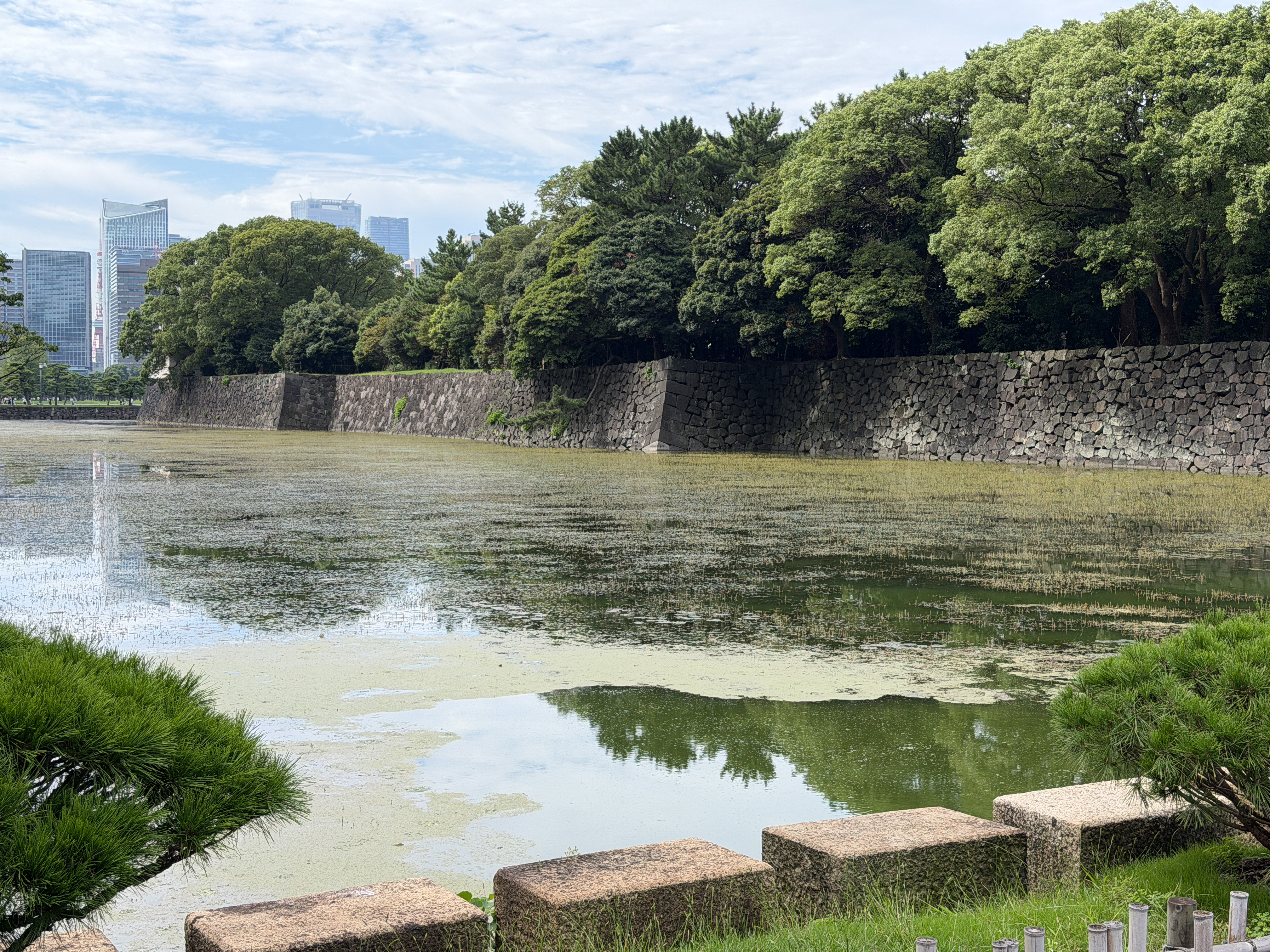
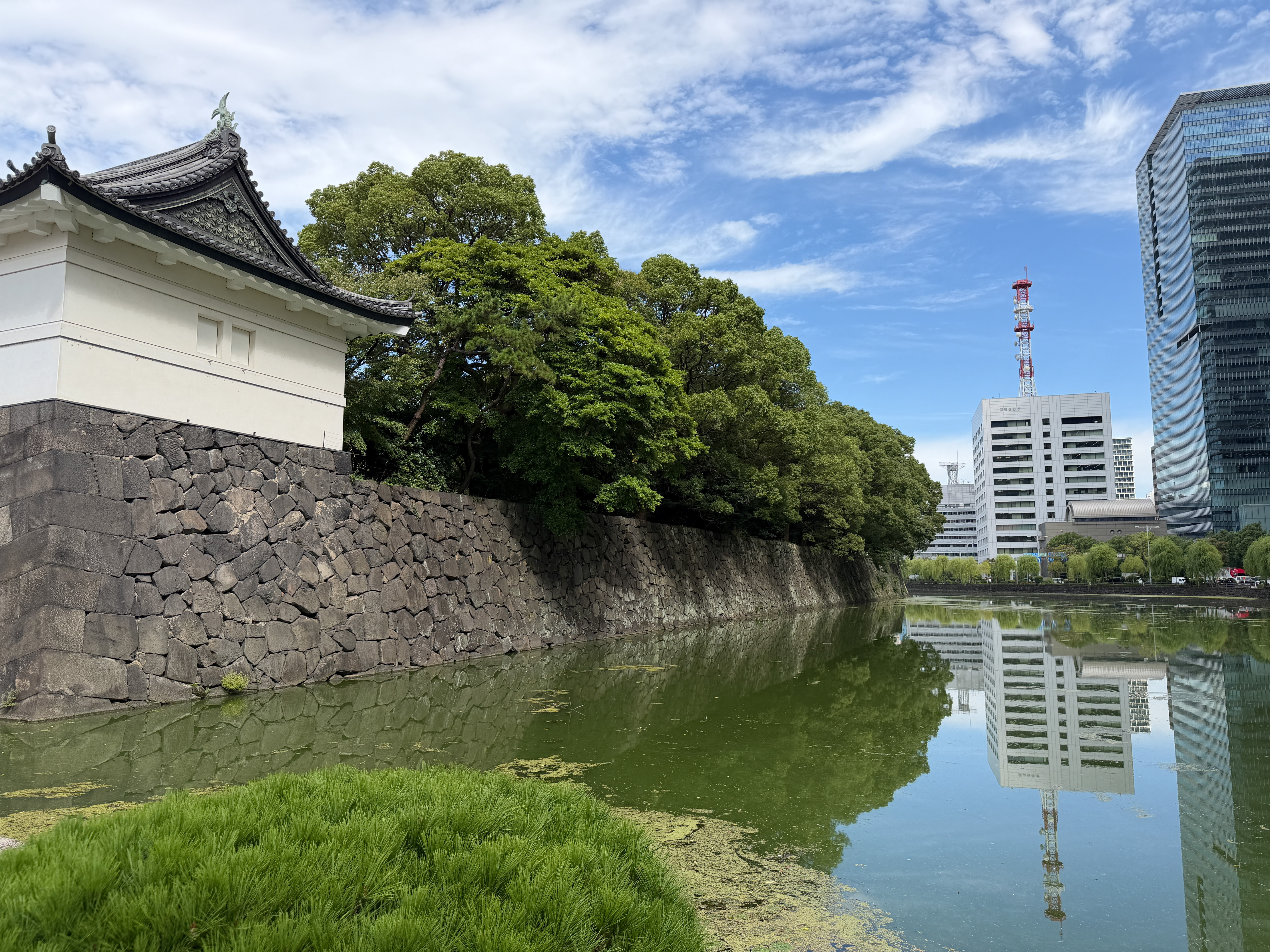
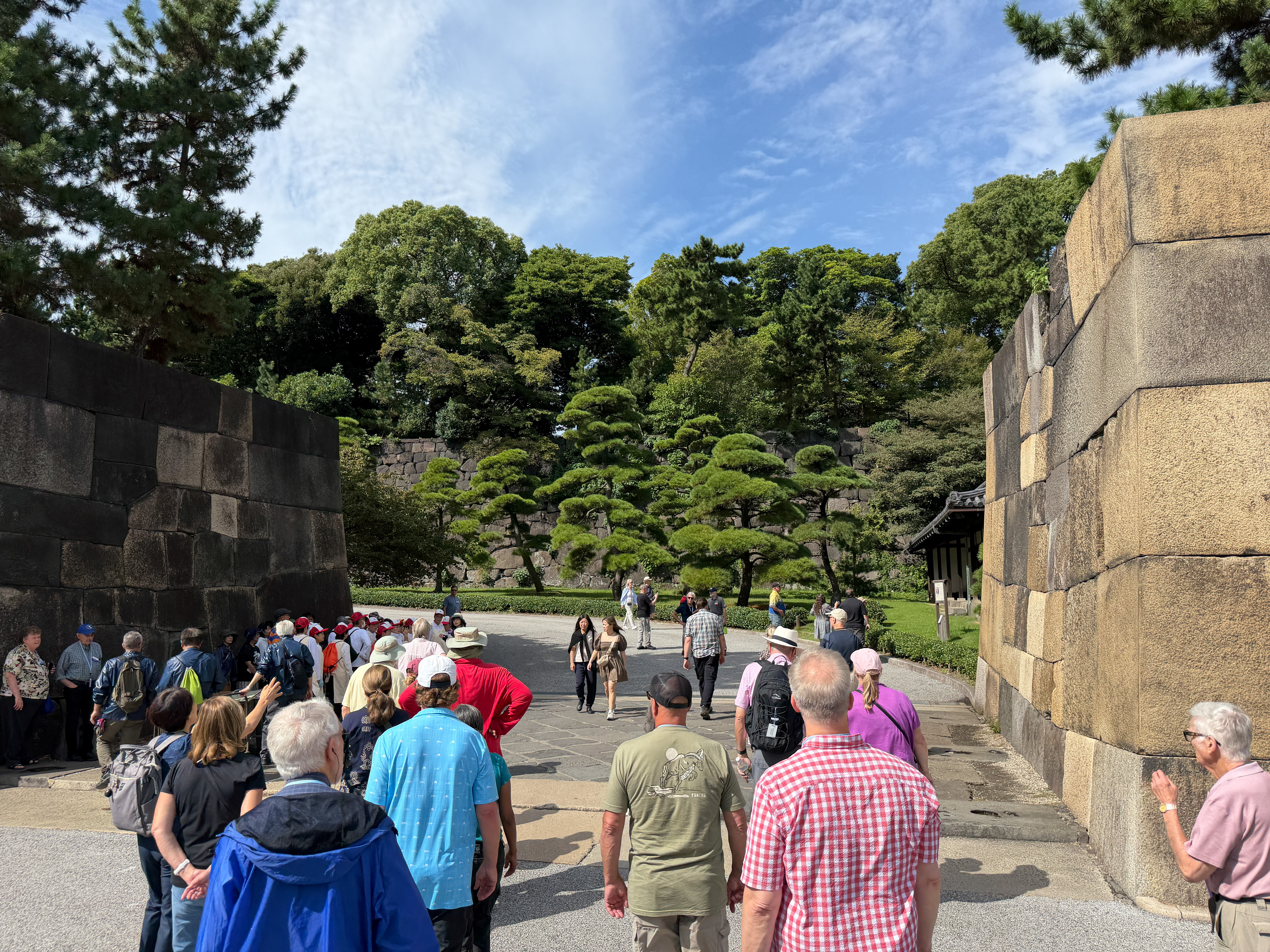
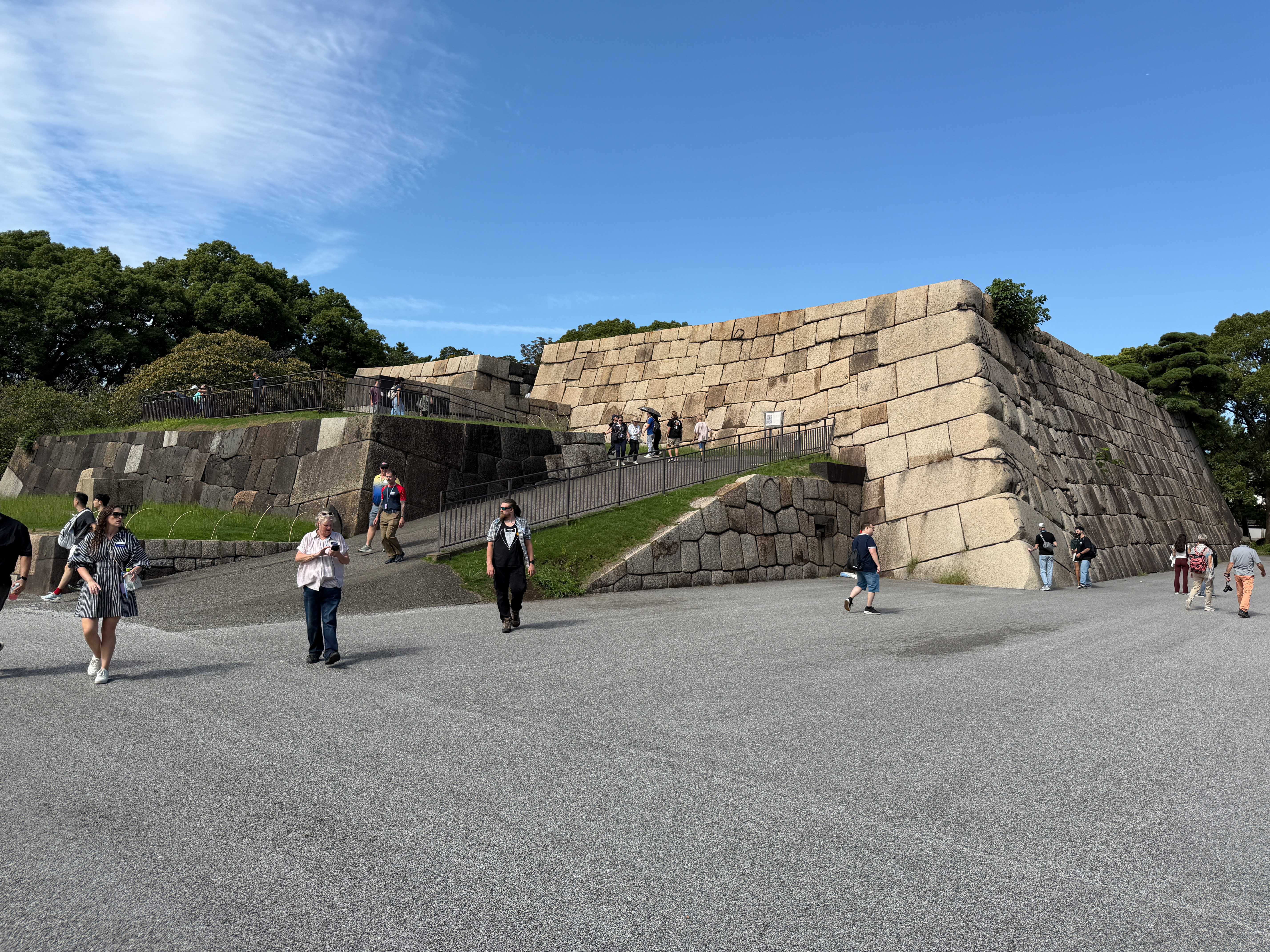
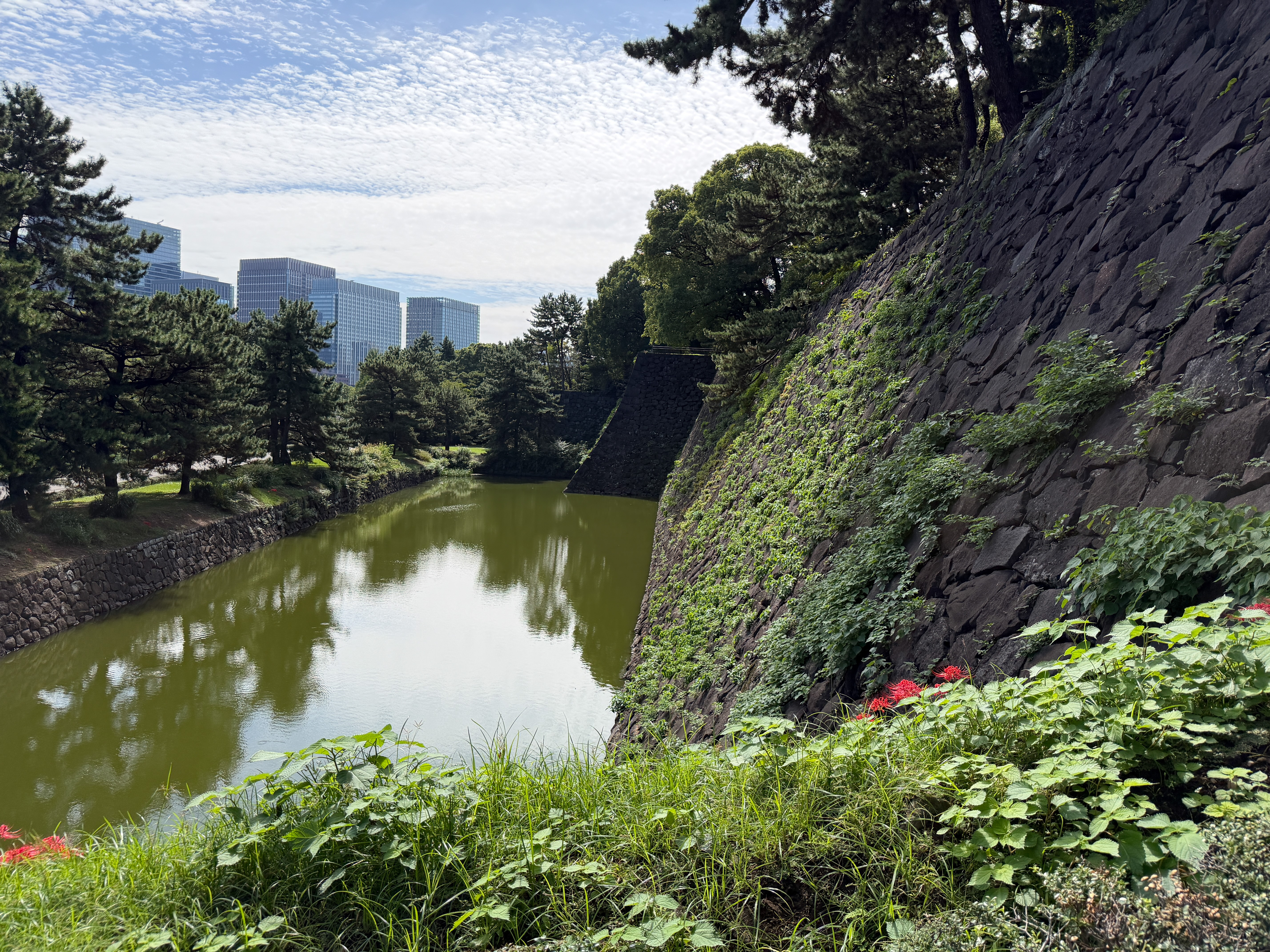
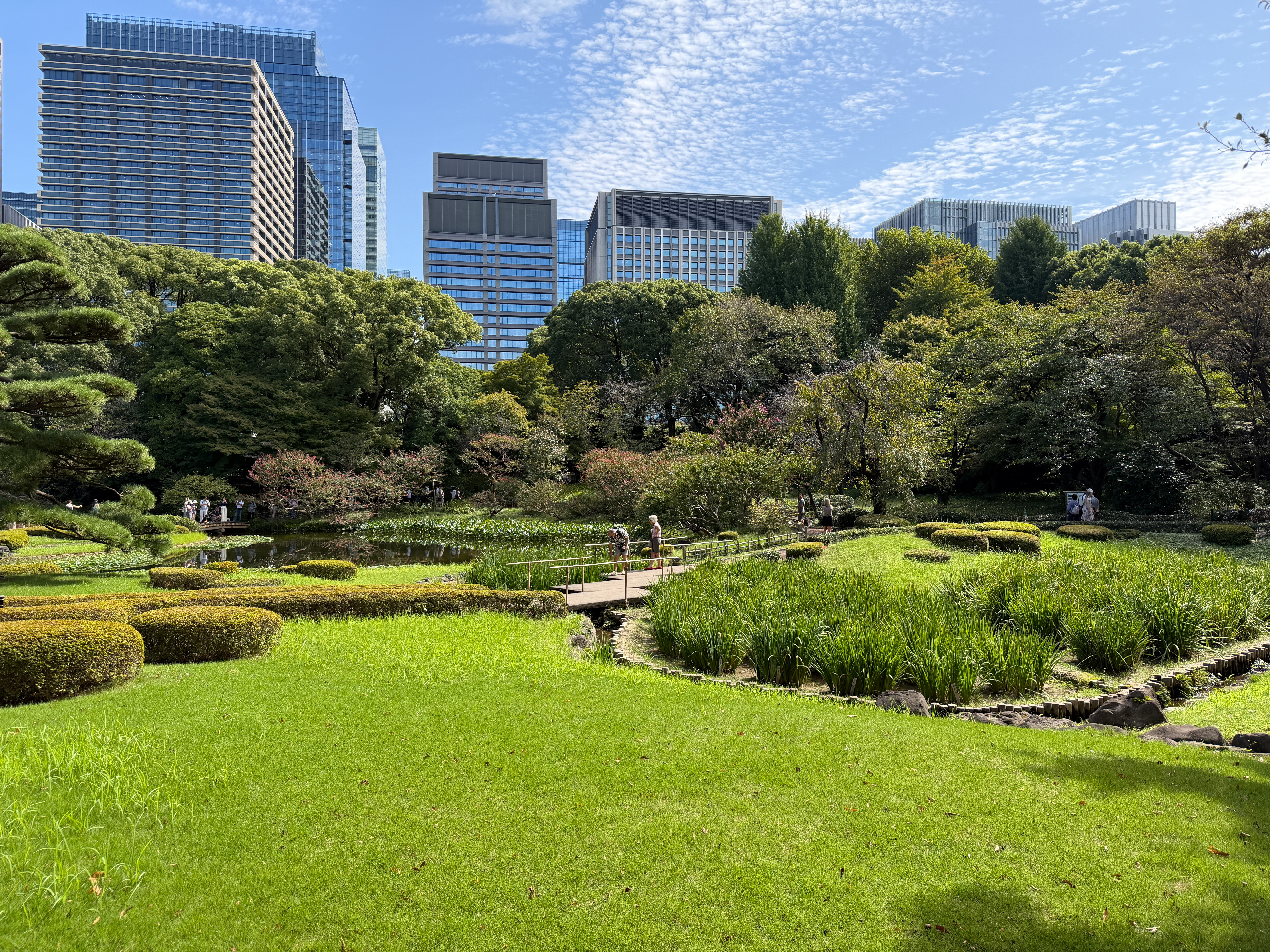
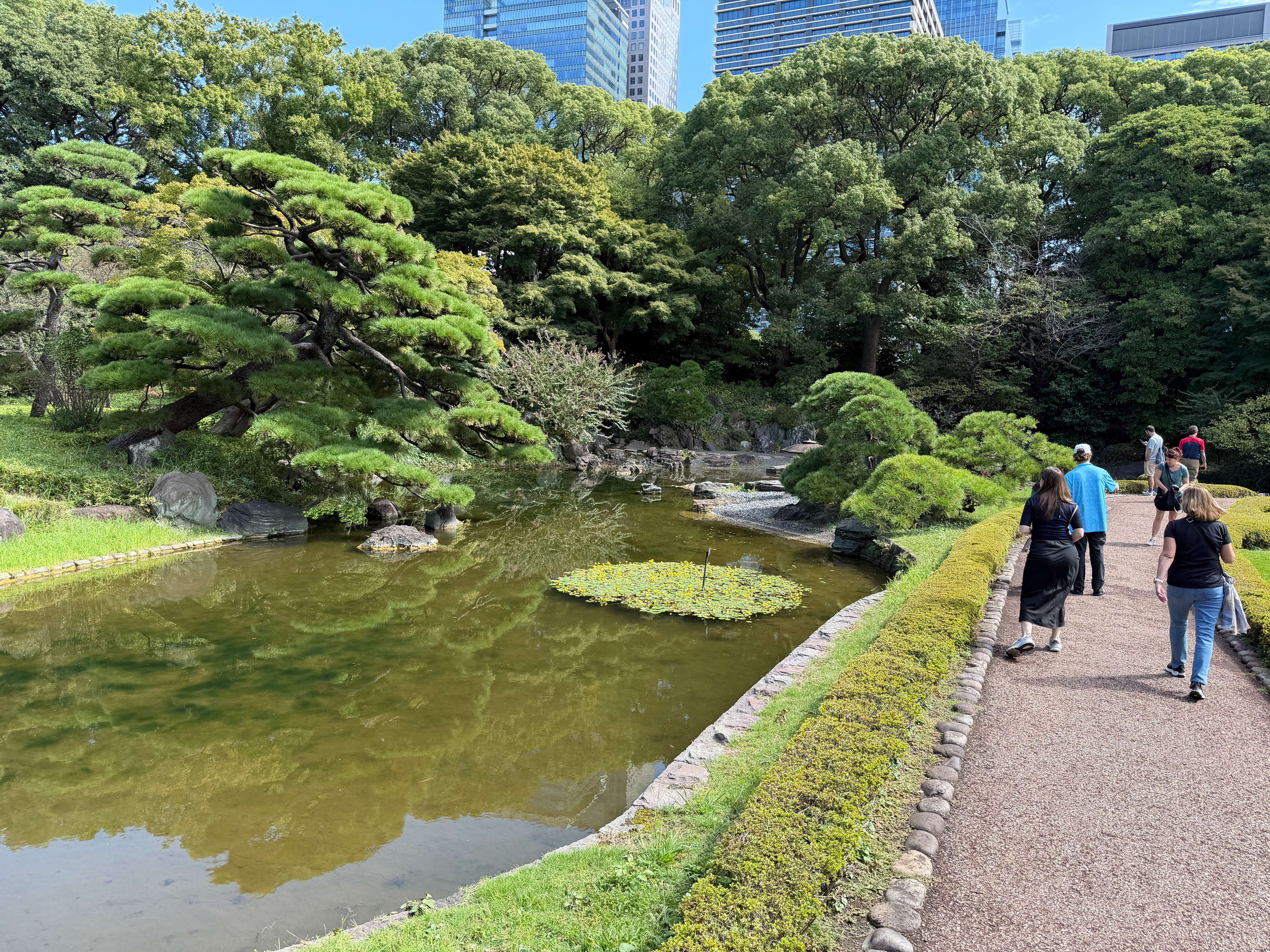
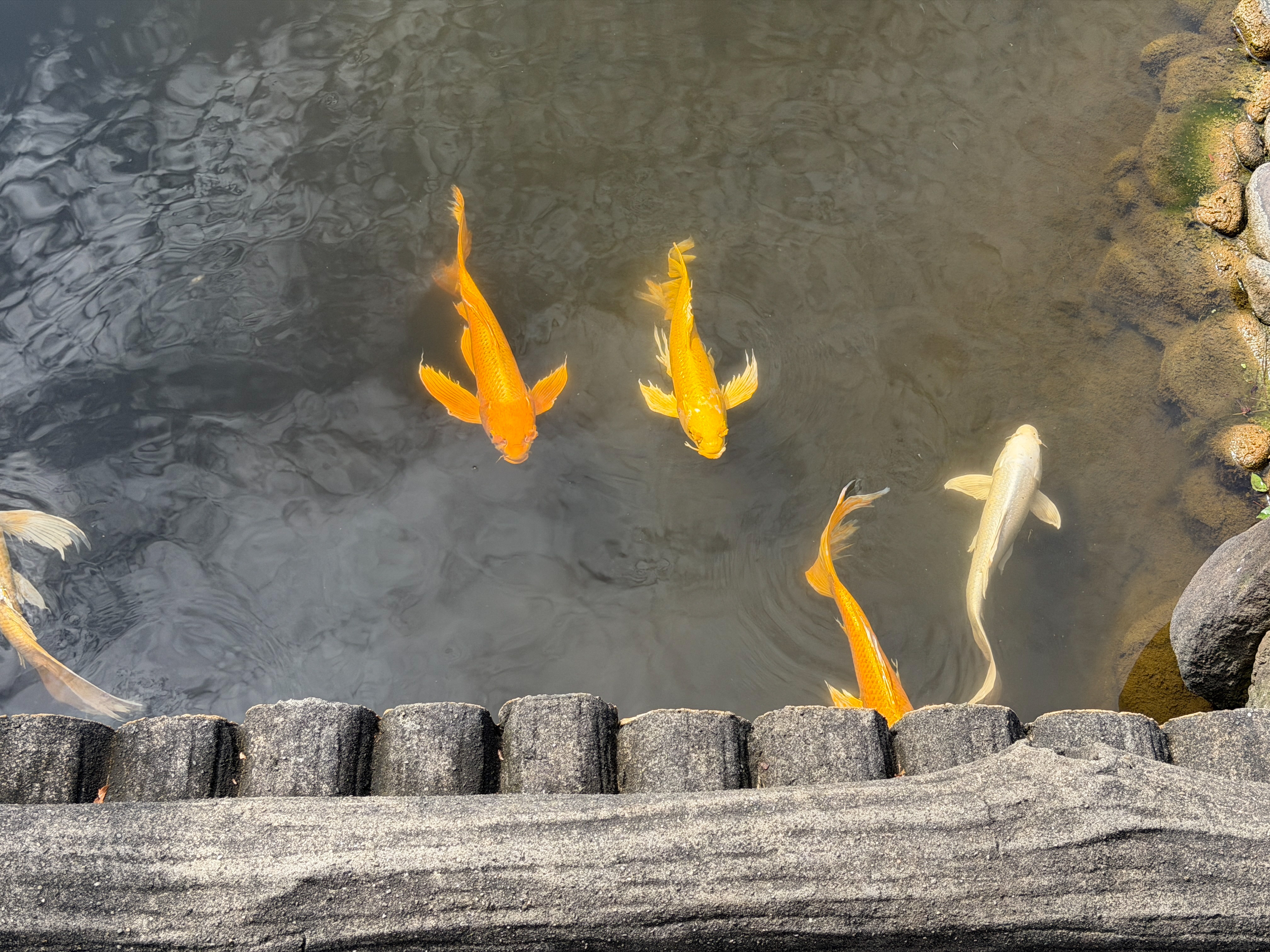
We drove to the grounds of the Imperial Palace and toured the East Gardens, 21 hectares, about one-fifth of the original palace grounds. This was the site of Edo Castle, which served as the residence of the Tokugawa shoguns and the center of political power during Japan's Edo period (1603–1867). Built in 1457, it became the Tokyo Imperial Palace after the restoration of imperial rule in 1868. It’s an attractive woodsy and grassy area without a lot of the flowers and vegetation we Americans associate with public gardens. It is surrounded by impressive moats, which look like small lakes and are 8 m deep. And there are massive stone walls throughout that use no masonry to stack the giant slabs of rock into a seamless construct. We climbed up the base of a tenshu (keep) that lost its 80 m superstructure in the 17th century. In a visitor center, there is a model of what it looked like. There was no WWII content in this visit.

Next was the National Showa Memorial Museum (Showa-Kan). It is a small space on two floors that illustrates the lives of civilians during the Shōwa period, 1935–64. (I found out that Hirohito was known as Emperor Shōwa.) No photos were allowed. The exhibits are entirely in Japanese, but they offered a phone app to be downloaded that provided summary narrations in English. They covered wartime rationing, militarism in the school system, student labor, homeland defense, and preparation for air raids. In the postwar section, they addressed the dire food shortages, black markets, and the fate of war widows and orphans.
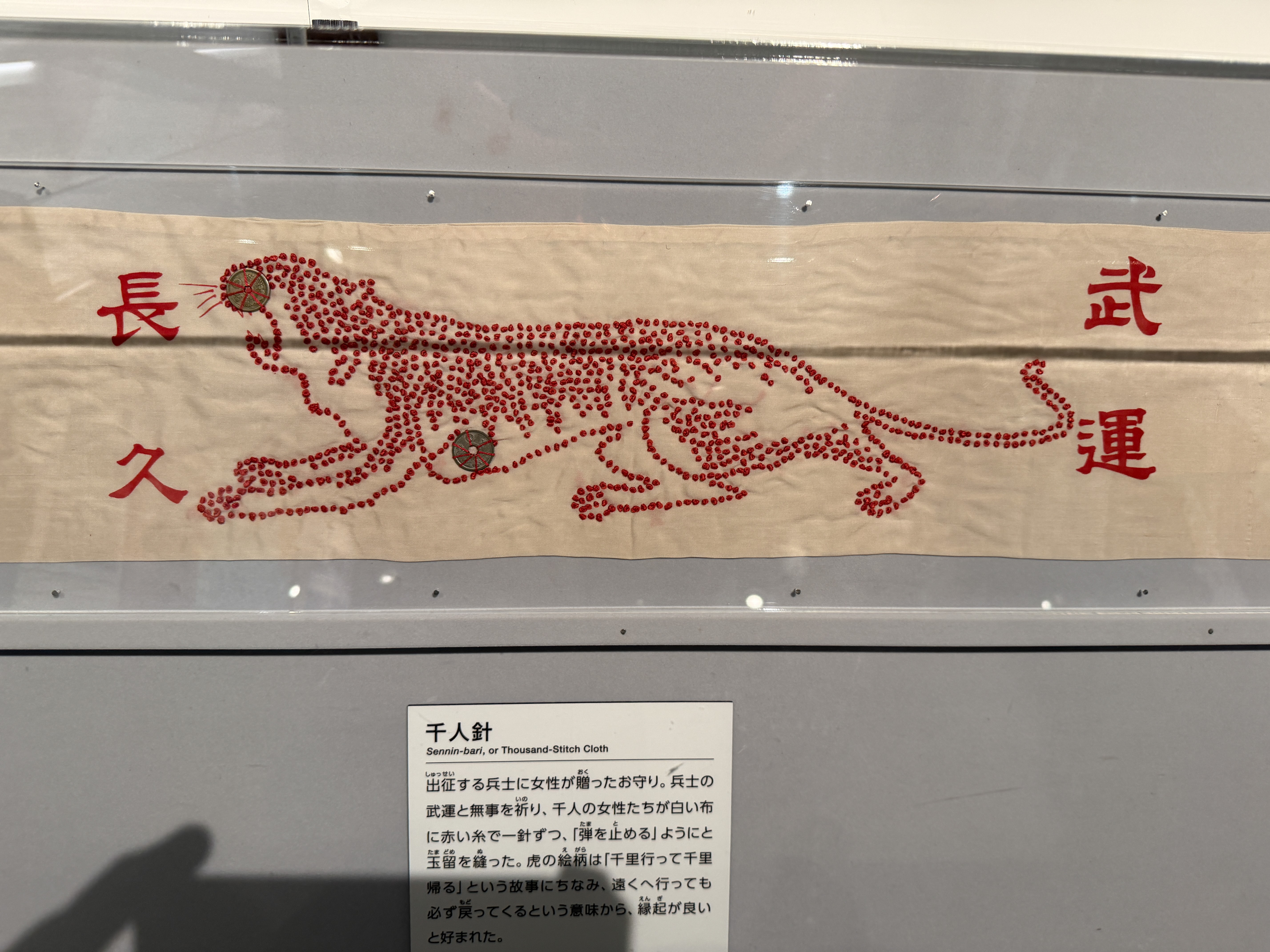
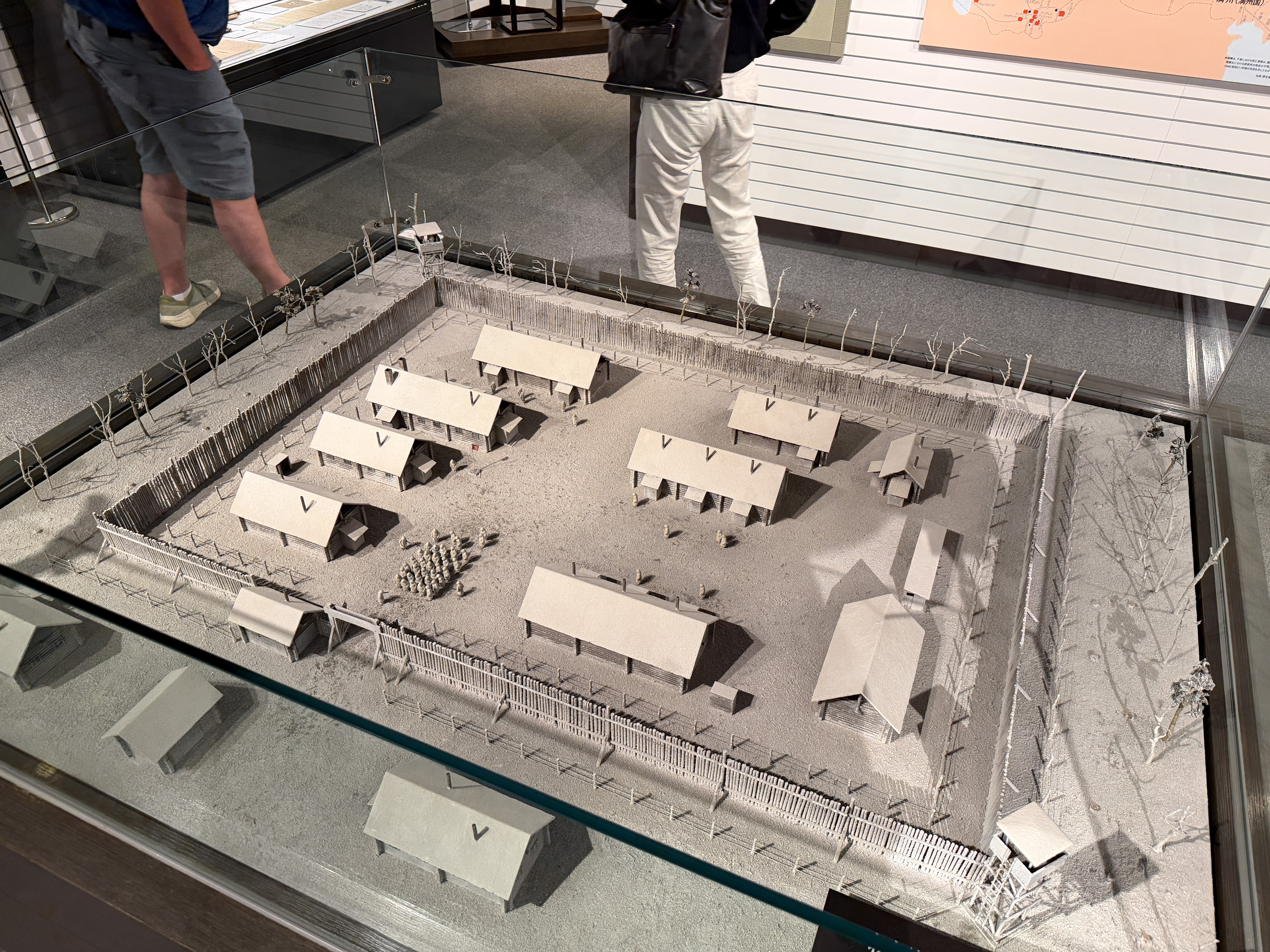
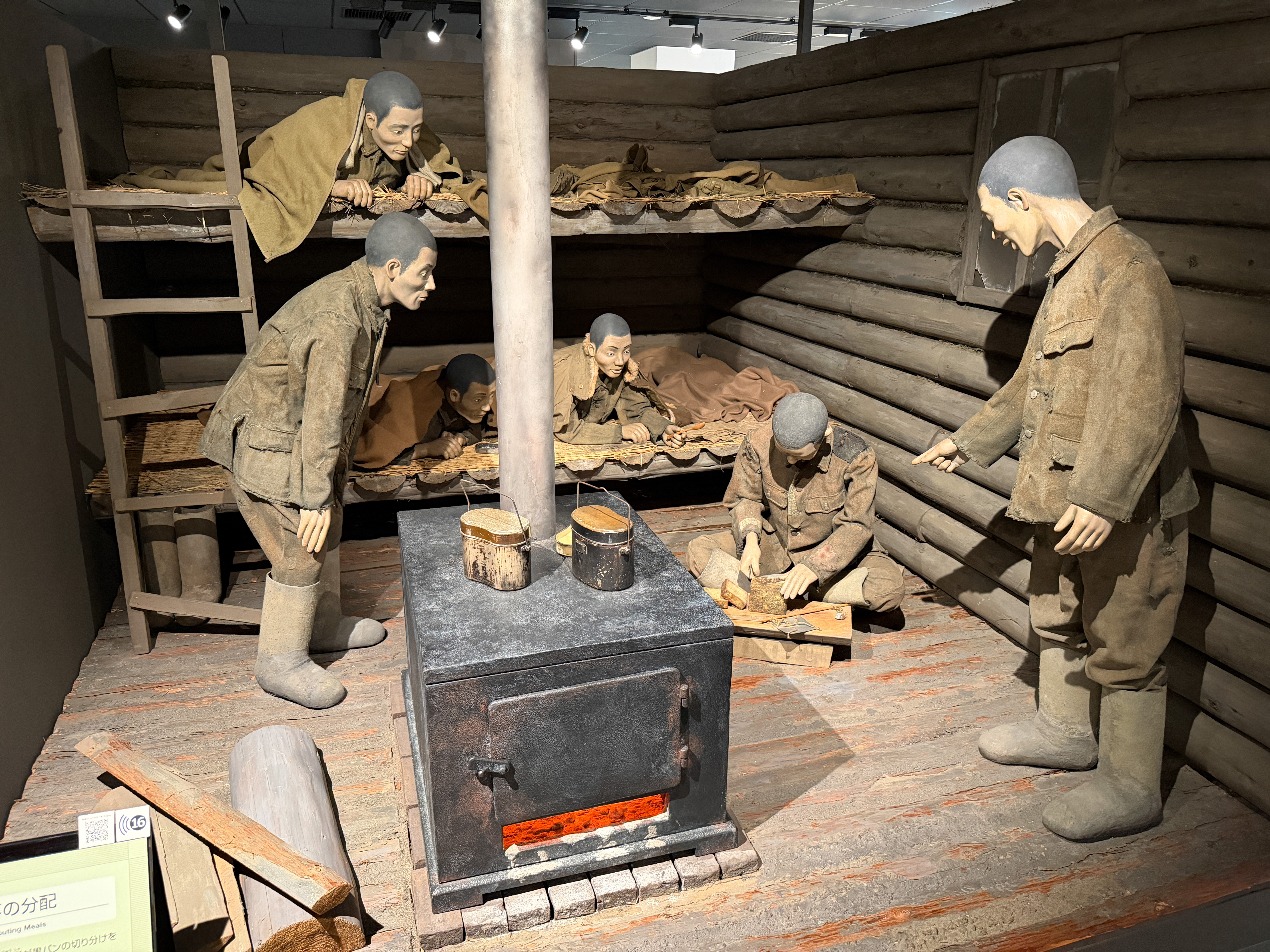
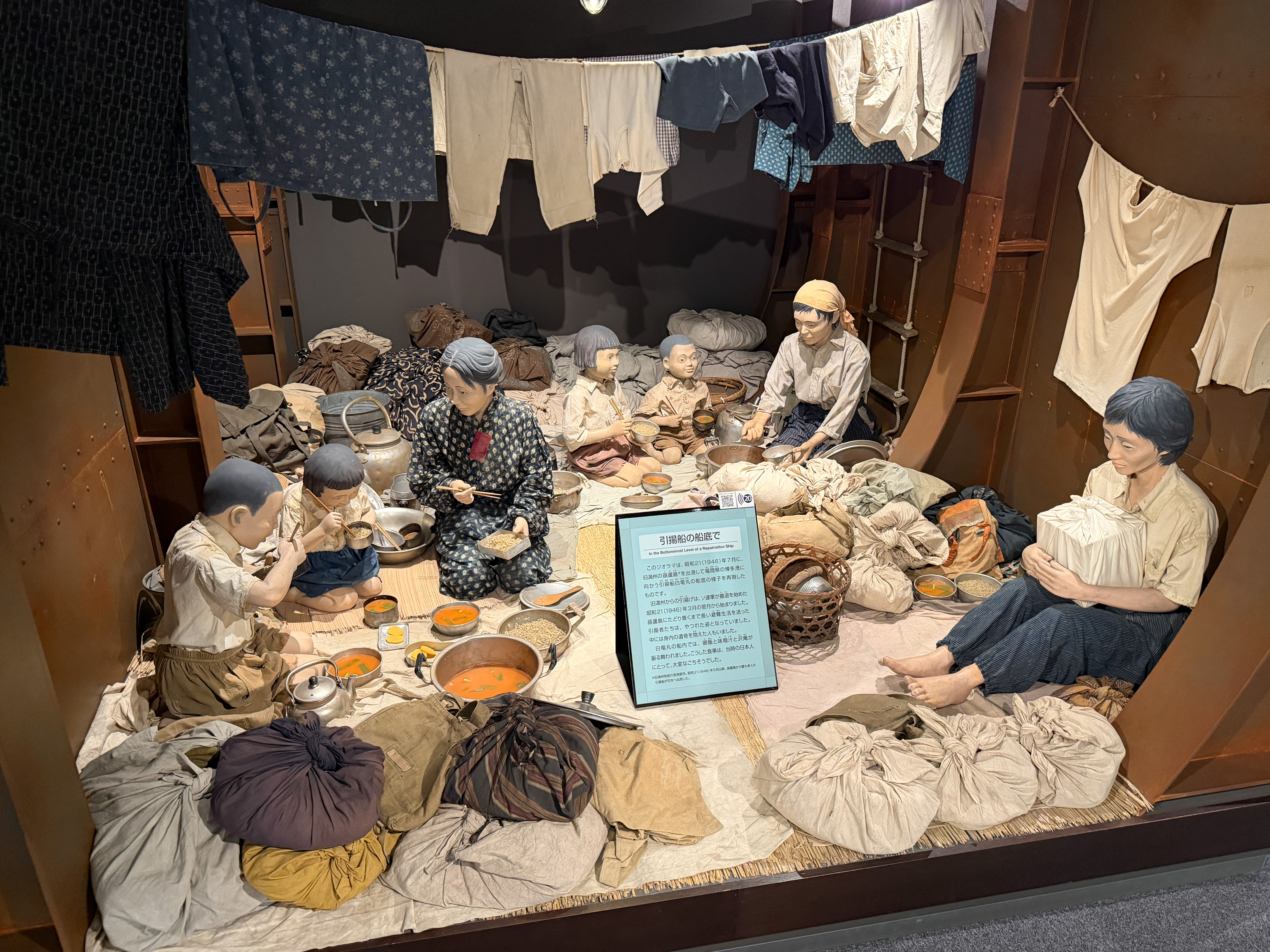
We met the other bus for a decent buffet lunch at the Hotel Metropolitan Edmont. Next was the Memorial Museum for Soldiers, Detainees in Siberia, and Postwar Repatriates, which is a small space on the 33rd floor of a Shinjuku office tower. Exhibits cover the life of Japanese soldiers, including the mandatory conscription system, a soldier's sense of duty, the draconian life of a soldier, and how the outlook of the war got worse over time. Then, after the Soviets invaded Manchuria in August 1945, they stole away 600,000 POWs and civilians to work at gulag slave labor camps, and exhibits document their fate. The exhibit text was about 98% Japanese, but headsets offering English commentary were available to only 20 of us. They displayed a very nice senninbari (“one thousand stitch”), which is a belt or strip of cloth stitched 1,000 times and given as a Shinto amulet by Japanese women to soldiers going away to war. The museum is nicely done, but you can absorb the major points in under 30 minutes. We were allotted 90.
Dinner was on our own tonight. I couldn't seem to arrange any dinner companions, so it was back to the convenience store for more sandwiches and rice balls.
Friday, October 3 — Tokyo
This morning, we had an interesting task: We had to turn in our checked luggage for transport to Hiroshima separately from the bullet train that we will be taking Saturday morning. The luggage truck will have at least a 10-hour drive. We have a different bus today, and I nabbed a seat meant for wheelchairs, I think, which had superlative legroom! James Fenelon rotated onto our bus as the historian of the day.
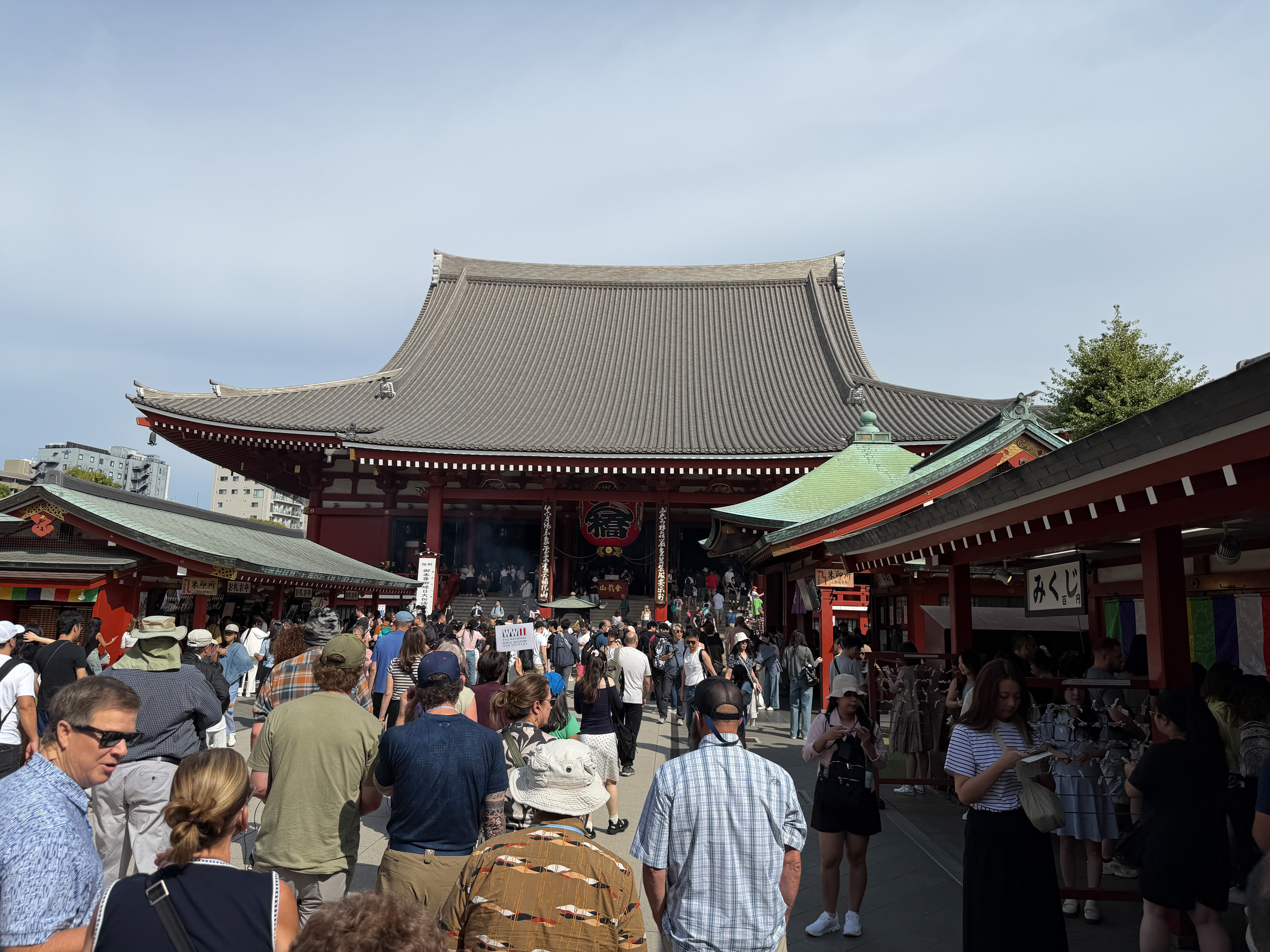
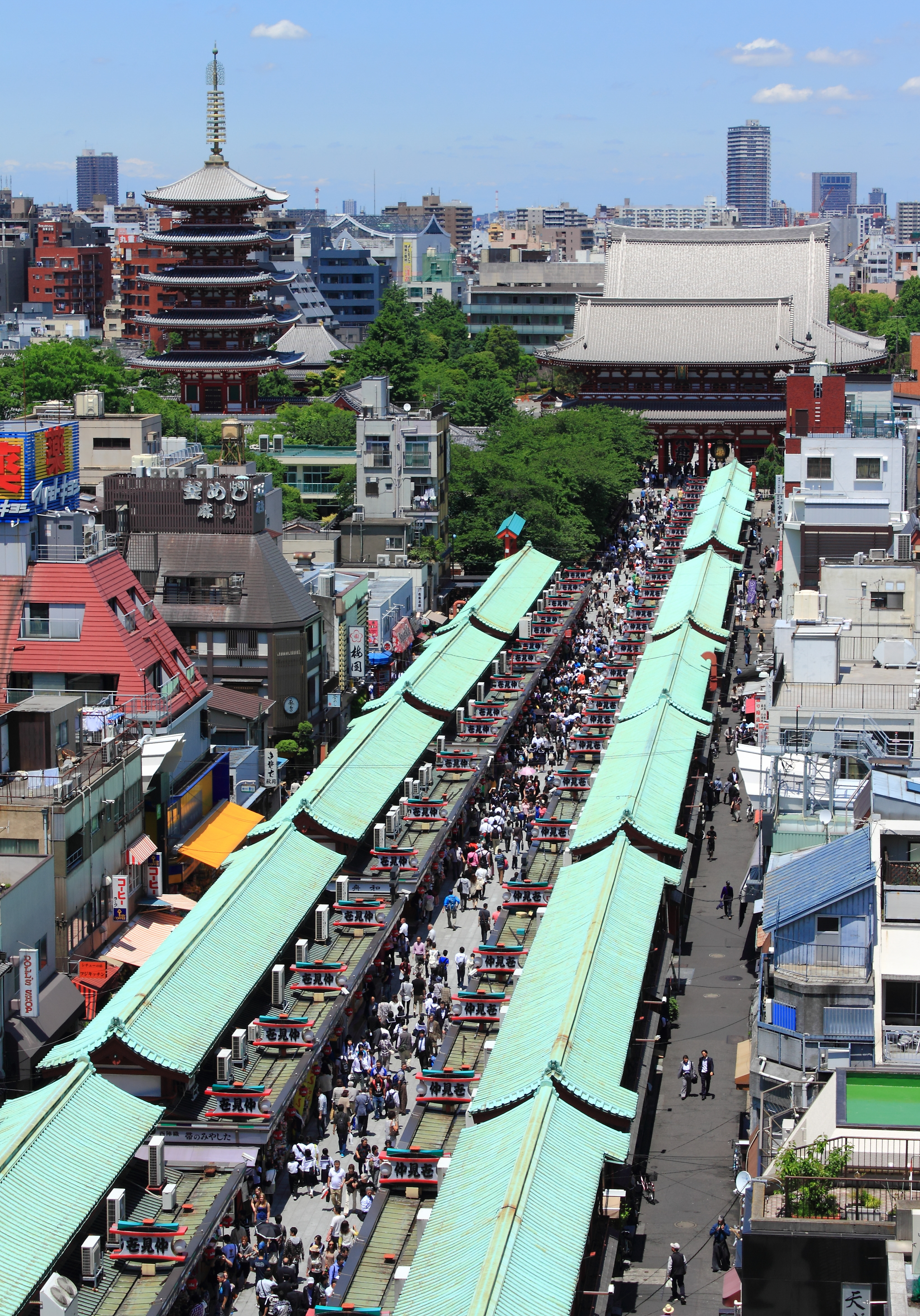
We drove about 40 minutes to Asakusa Sensō-ji Temple. (I have been surprised at how relatively light Tokyo traffic is for a city of this size. Jon Parshall told me that owning a car in Tokyo is super expensive.) Sensō-ji is Tokyo's oldest-established temple and one of its most significant. Structures in the temple complex include the main hall, a five-story pagoda, and large gates. The two-story Hōzōmon ("Treasure-House Gate") is impressive. The temple is the most widely visited religious site in the world with over 30 million visitors annually, and it was very easy to see that today because it was super crowded, shoulder to shoulder. The temple was destroyed during the March 1945 firebombing raids; the main hall was rebuilt in 1958 using concrete instead of the original wood.
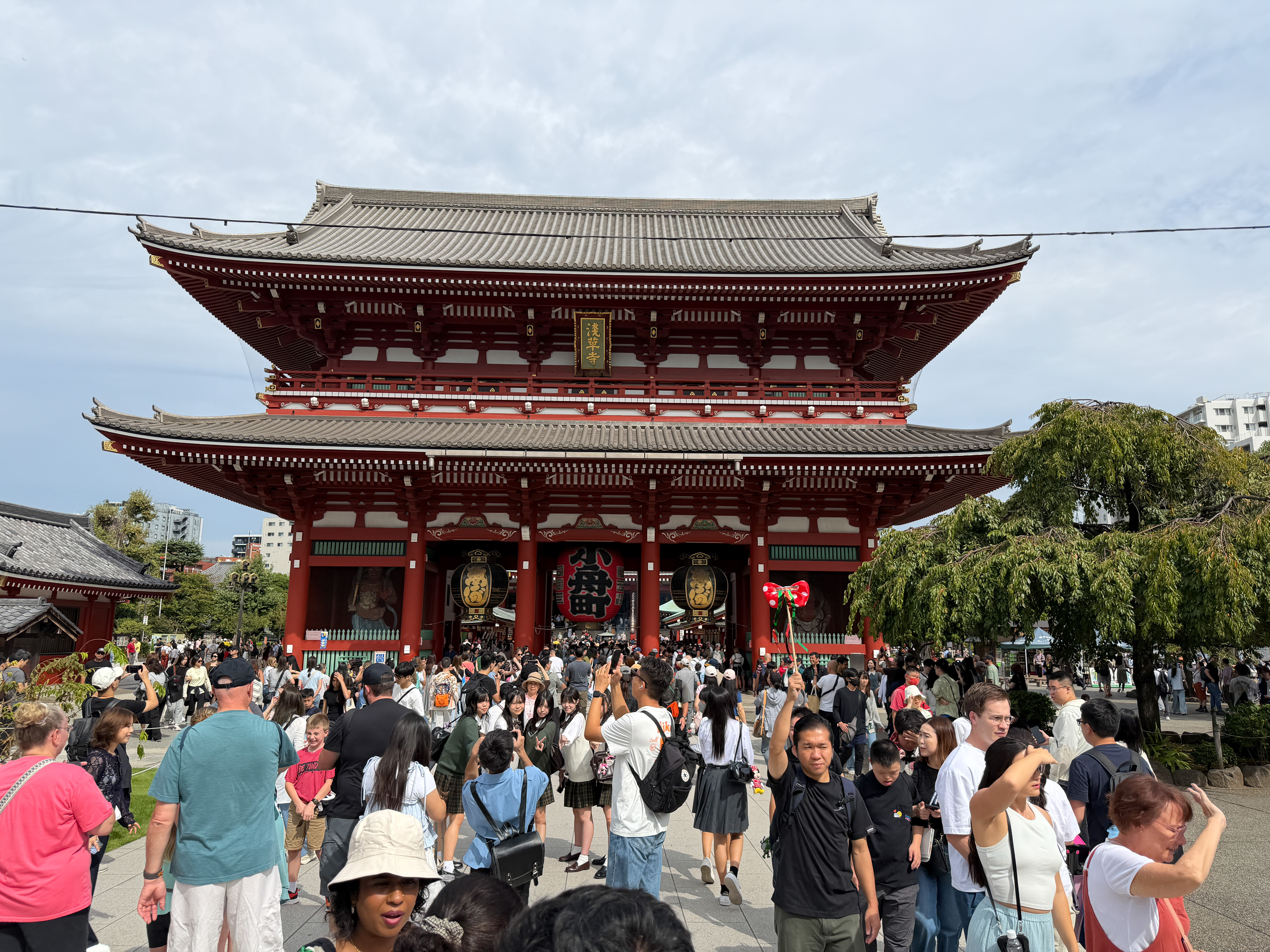
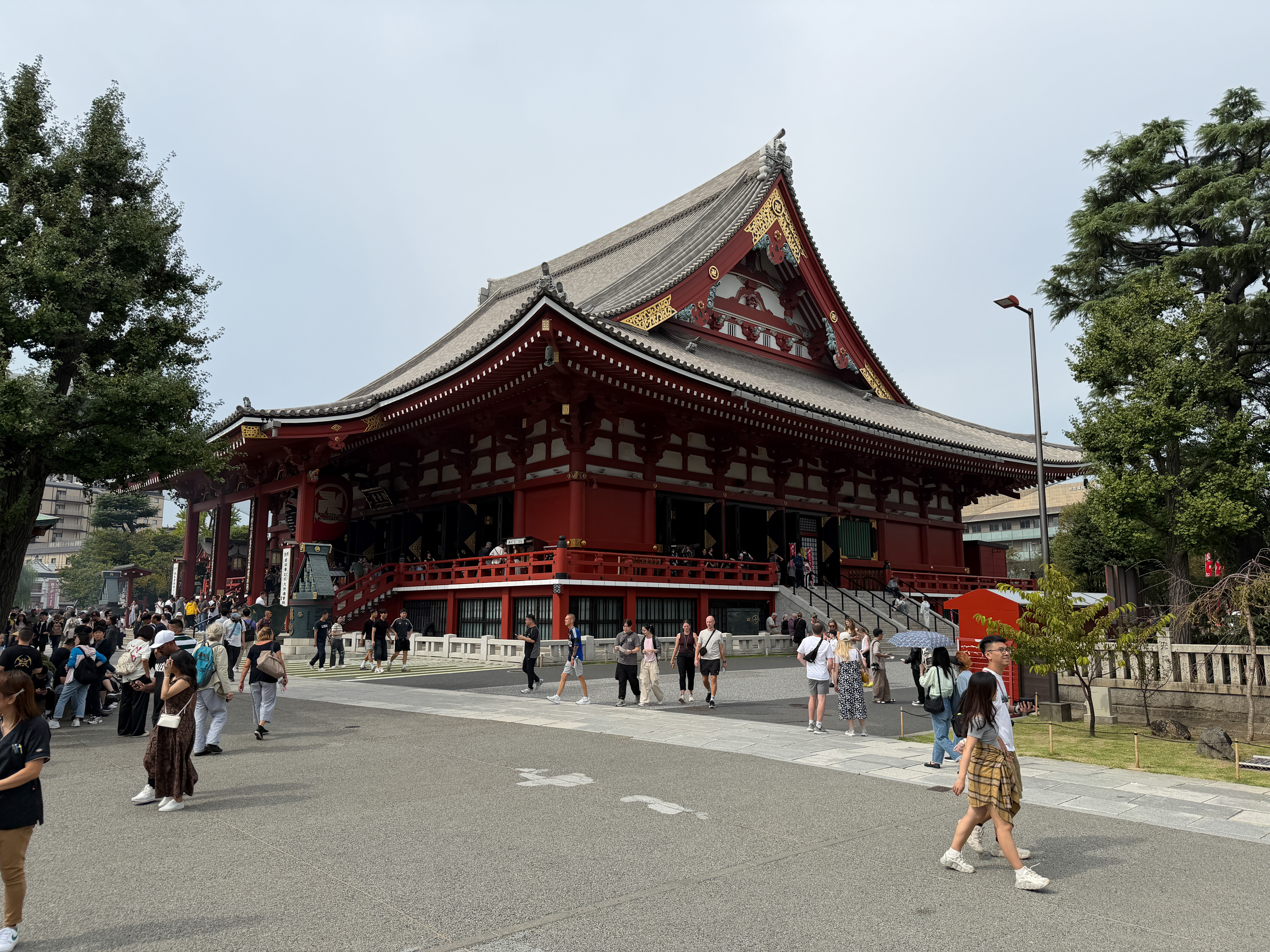
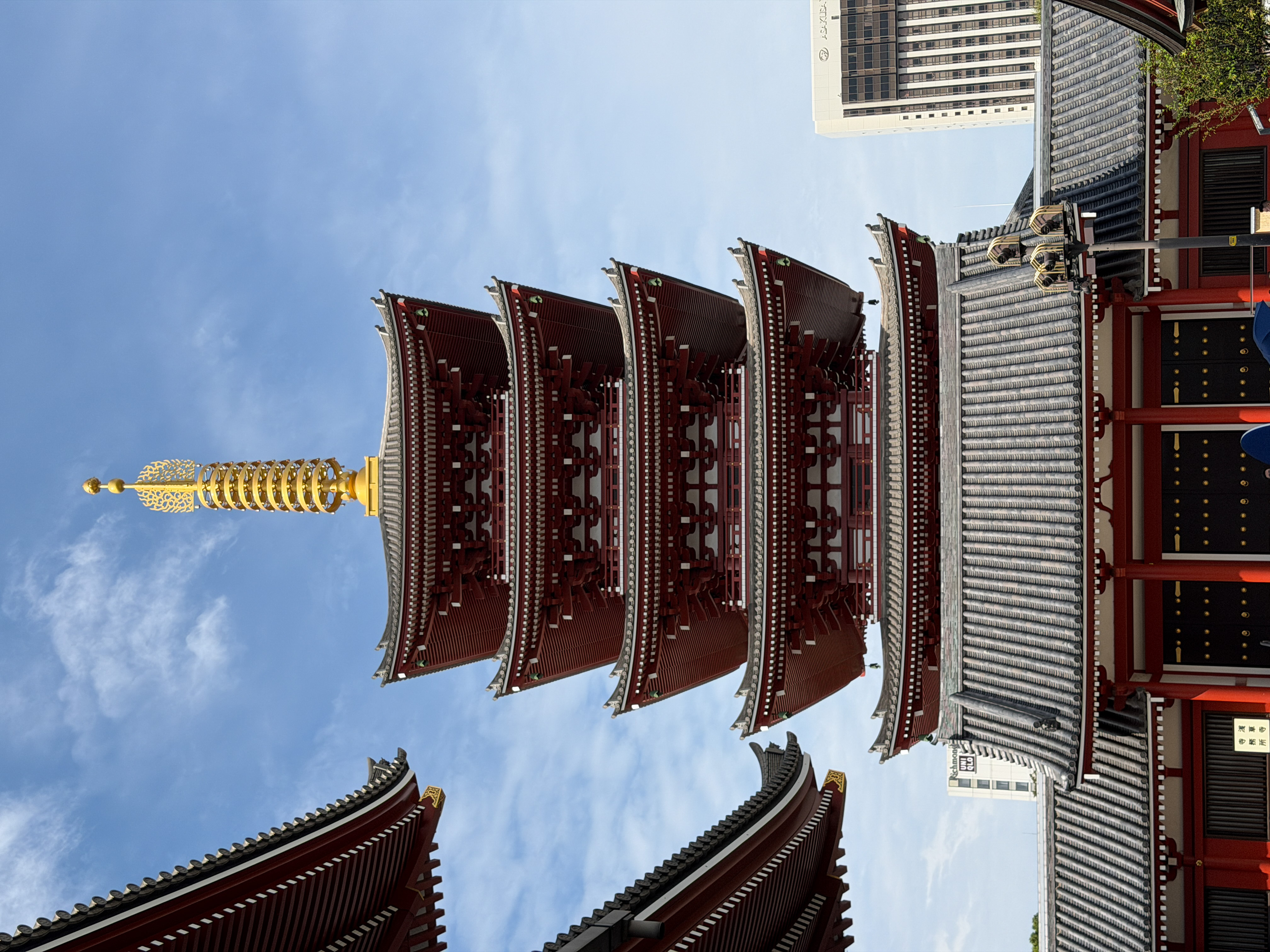
Two interesting aspects: we stopped at a massive Gingko tree that was a survivor of the firestorm. This was the only World War II content we got this morning. The itinerary for today was to go next to Akihabara, but it turned out that was a mistake, and we had to stay in the area of the temple. That is unfortunate because on my free days in Tokyo I wanted to visit it but did not because the itinerary said we were going there. We had three hours allotted here for the temple and lunch. Yasiko attempted to guide us around the various buildings, but I found it hard to understand her through The distorted radio signal. . So I spent about 90 minutes sitting in the shade on a wooden bench.
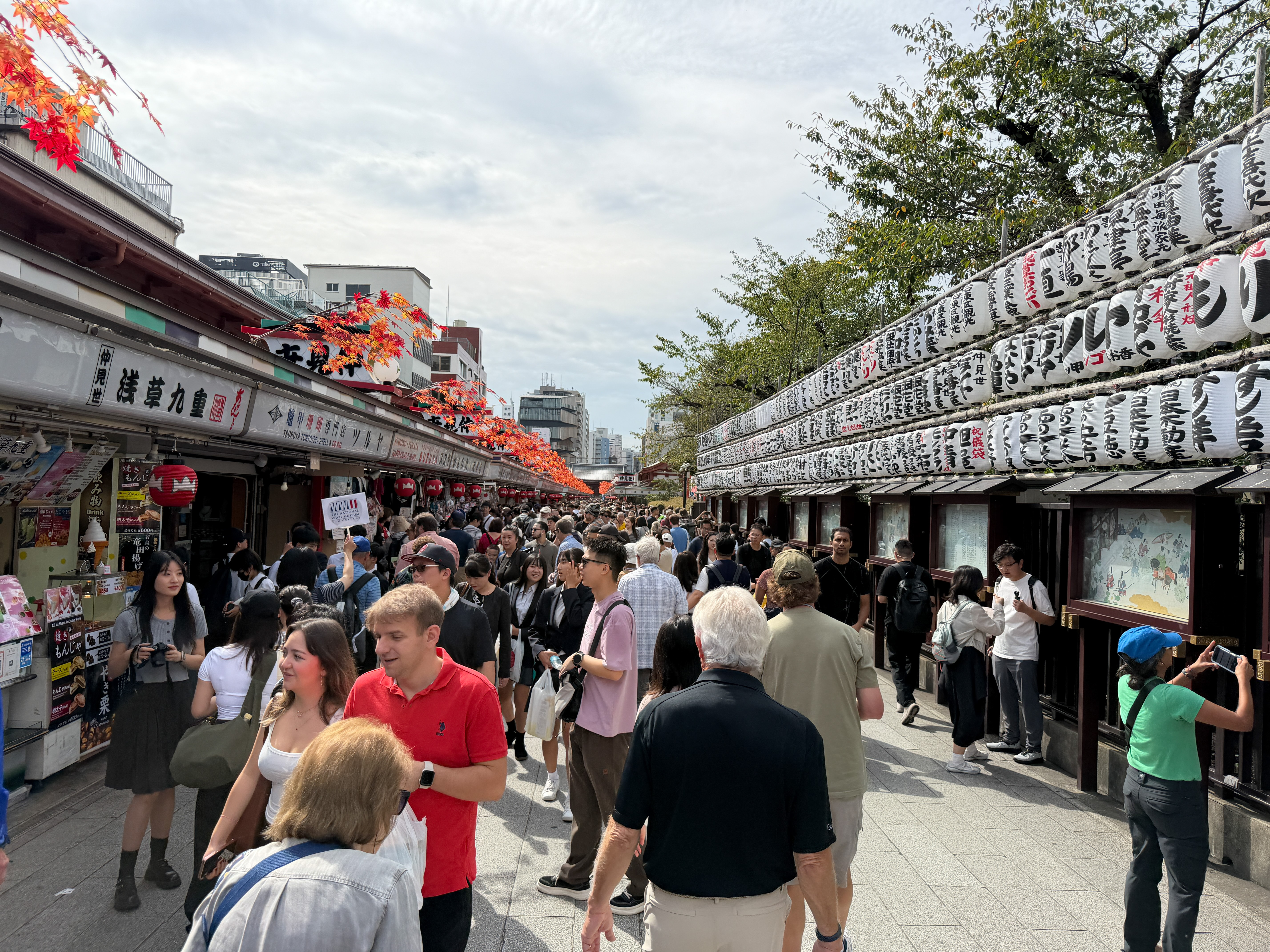
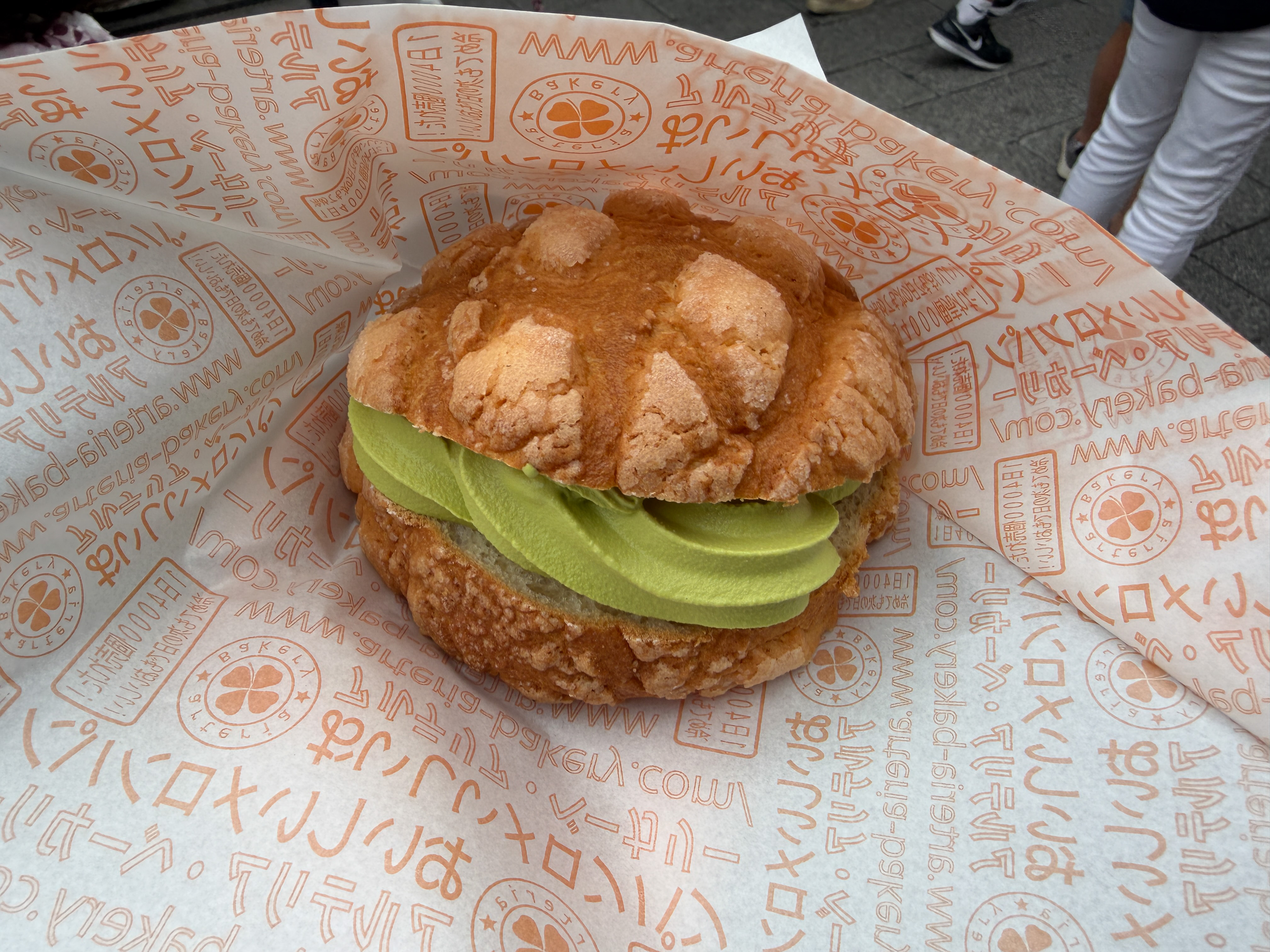
There is a narrow street, Nakamise-dōri, extending 250 m that is crammed with 72 touristy shops. It has origins from the 12th century but was rebuilt to western standards in the 19th. My lunch here was from various shops serving street food, which had to be consumed standing next to the shop; Japanese culture frowns on walking while eating. I had a “melon bun” with matcha ice cream, a churro, and a fried cake made of meat, potatoes, and cheese.
Before we returned to the bus, Yasiko took some of us into a small shrine for instructions on praying, which is a ritual quite different from what I’m used to. Since I don’t subscribe to this religion, I don’t think it was courteous for me to mimic these rituals. On the bus, Yasiko contrasted Buddhism (a religion and philosophy that began in India over 2,500 years ago with the teachings of Siddhartha Gautama, also known as the Buddha—"enlightened one") and Shintoism (the indigenous faith of Japan, characterized by the worship of nature and ancestors through sacred spiritual beings called kami).
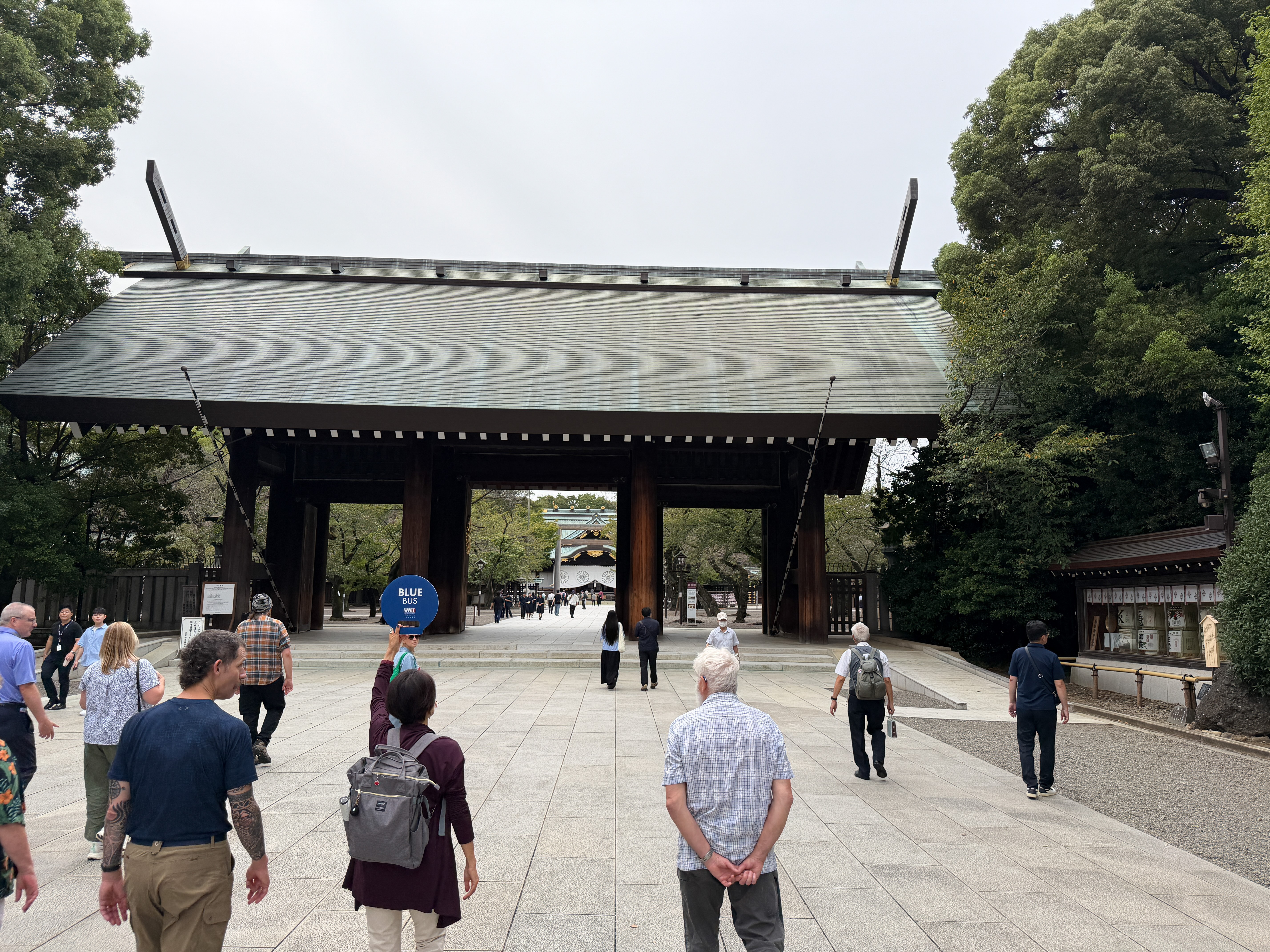
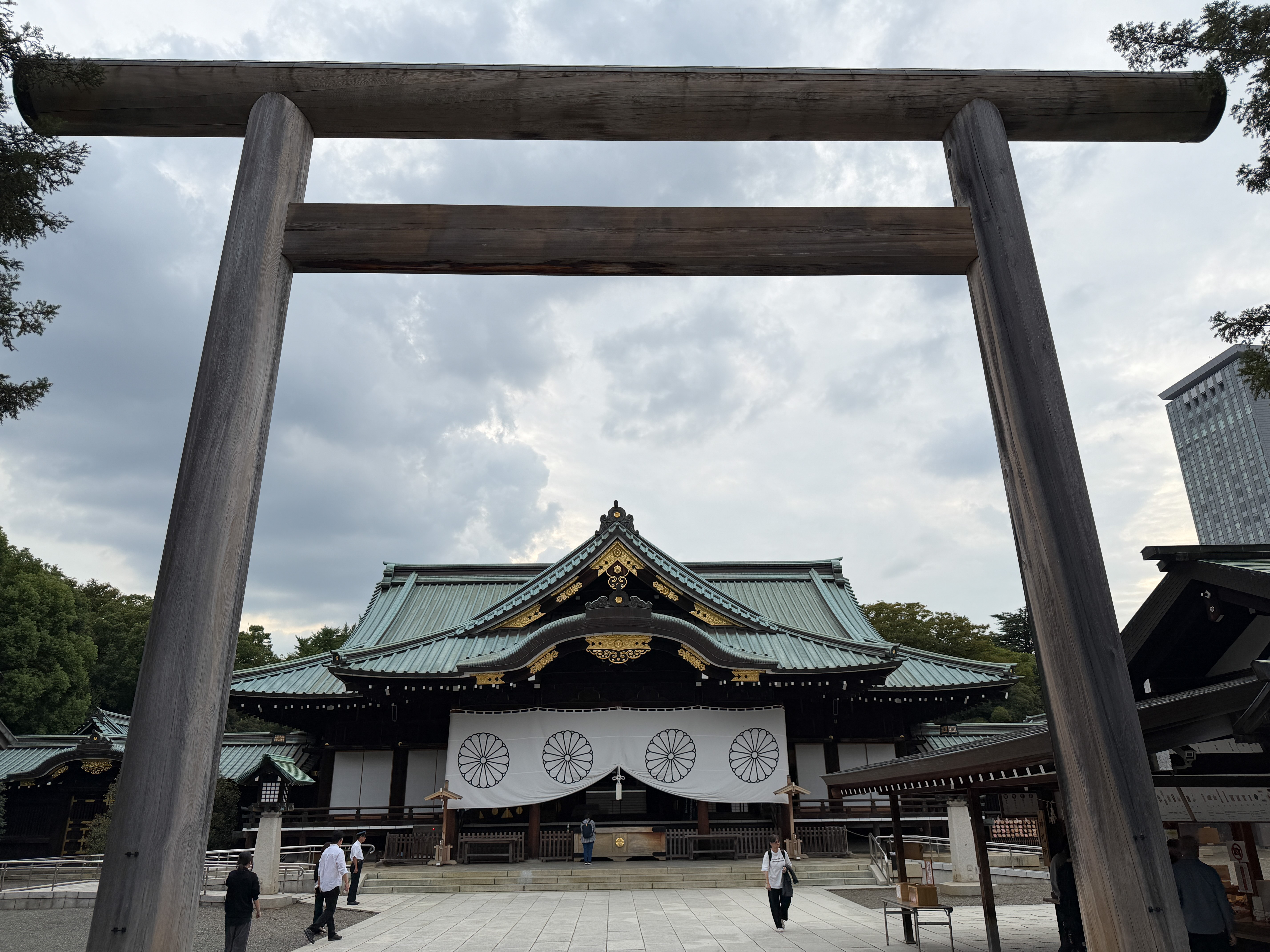
Next was Yūshūkan War Museum, which is situated within Yasukuni Jinga Shrine, established in 1869, at the start of the Meiji Restoration. The museum, which originally opened in 1882, is quite modern and stylish, and it has some English captions on exhibits. Unfortunately, many of the interesting history exhibits are in rooms where photographs are prohibited. I did manage to sneak one of a Pacific campaign map; I found the cartography to be excellent throughout, although the maps were almost exclusively labeled in Kanji. The museum covers the military history of Japan from the swords and armor of the samurai era (briefly) up through the end of WWII. Roomfuls of exhibits are presented about the opening of Japan by Commodore Perry, the period of modernization of the economy and military, the samurai rebellions during the Meiji Restoration, visits by imperial families to the shrine, the Sino-Japanese War, the Boxer Rebellion, the Russo-Japanese War (highlighted by an excellent film with subtitles), Japan in WWI, the Chinese Incidents (which is what they call all of their aggression in China through the 30s), and then a very extensive history of WWII.
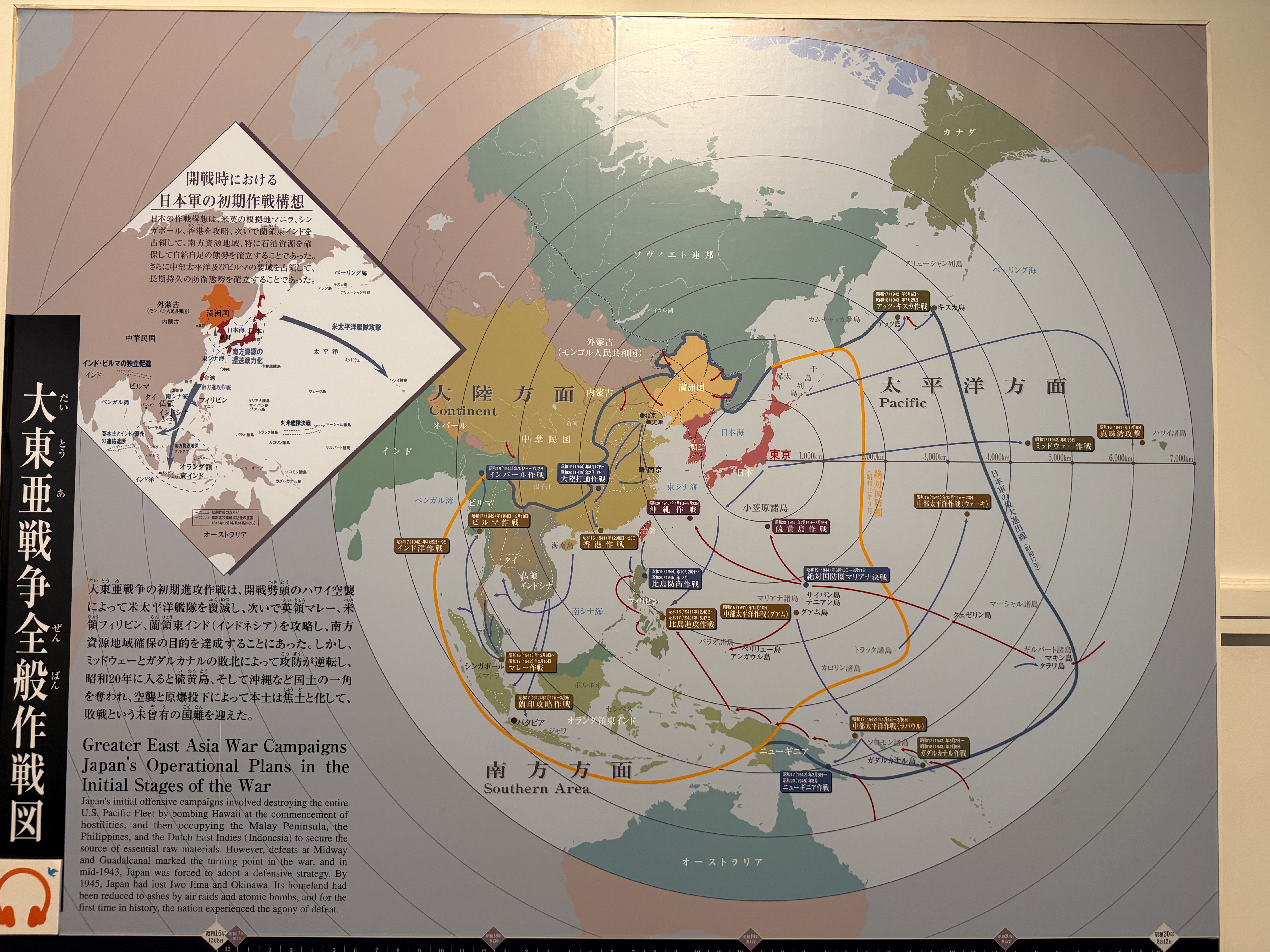
Of course, there’s a lot of whitewashing. No mention of the Rape of Nanking or any of the brutalities of the China Incidents. Or of the subjugation of Koreans or comfort women. Or of brutal POW camps. The defense of Saipan exhibit makes no mention of banzai attacks or mass suicides of civilians. The Kamikaze pilots are listed as the Special Attack Corps, and I could find no expressions of regret for their sacrifices. All of this came off as pretty saccharine. They could take a lesson from their former German allies about owning up to their history. Outside of these history exhibits, there are a number of aircraft, tanks, artillery, and naval weapons on display, for which photography was allowed. So, voilà!
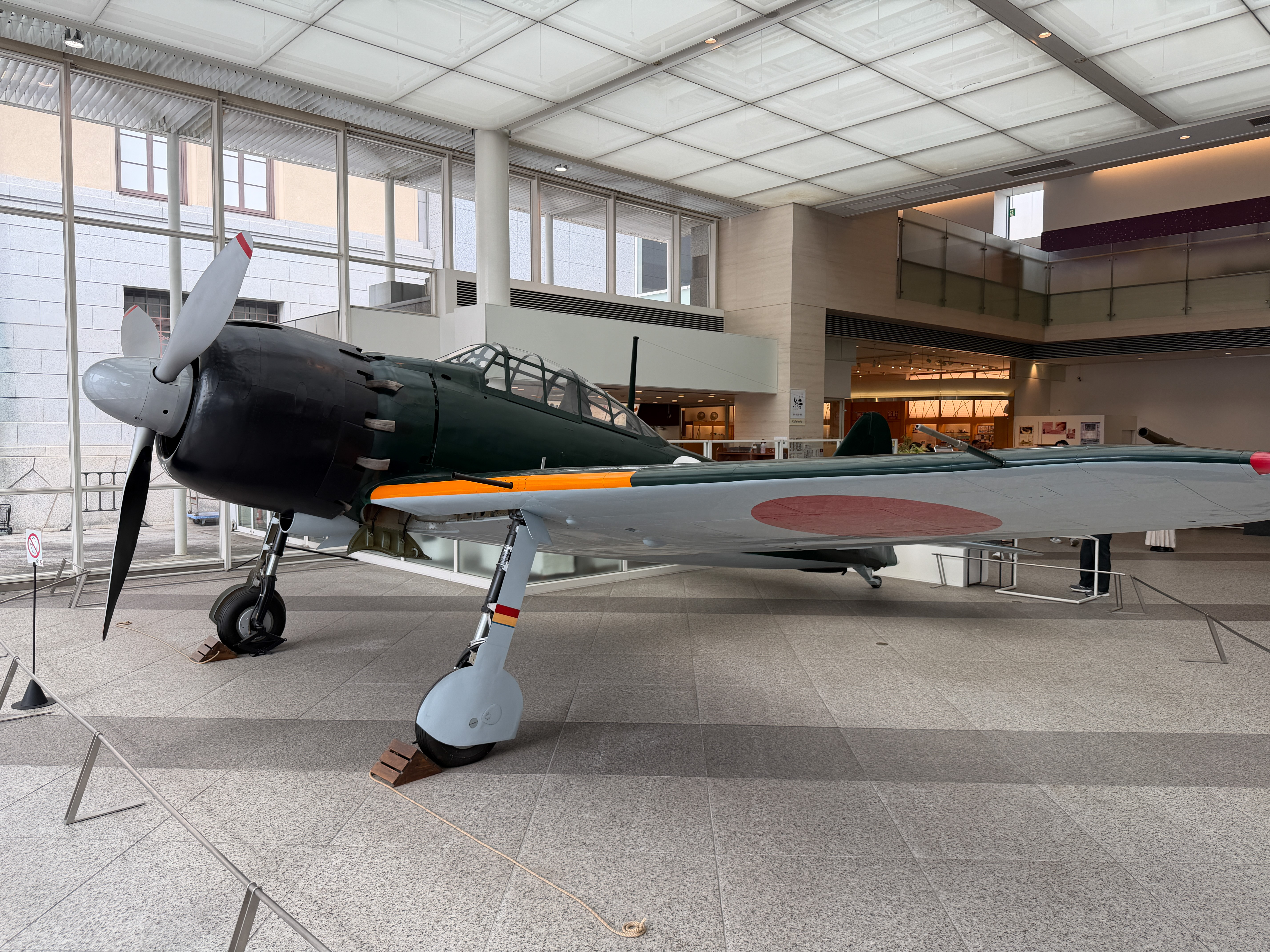
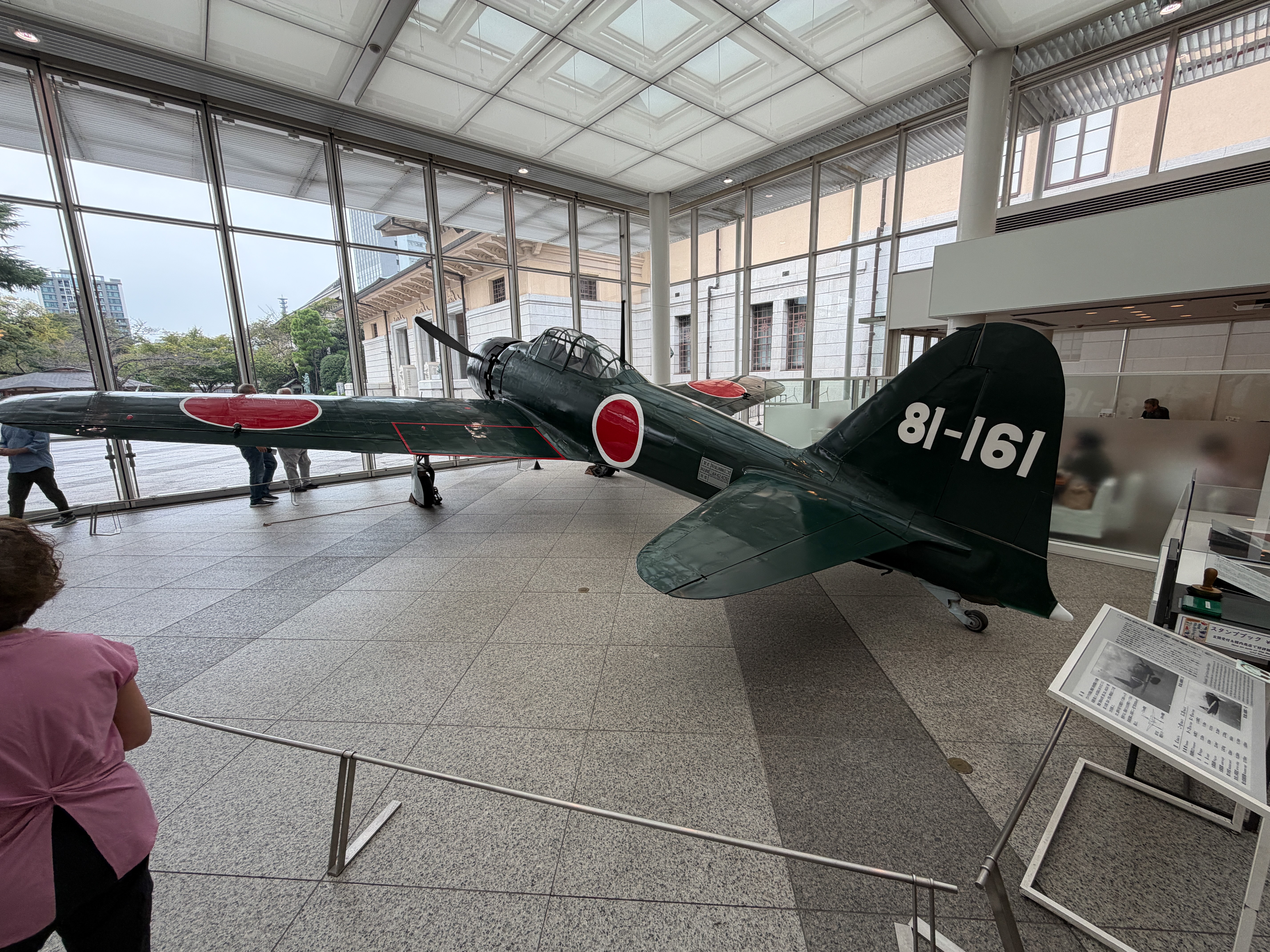
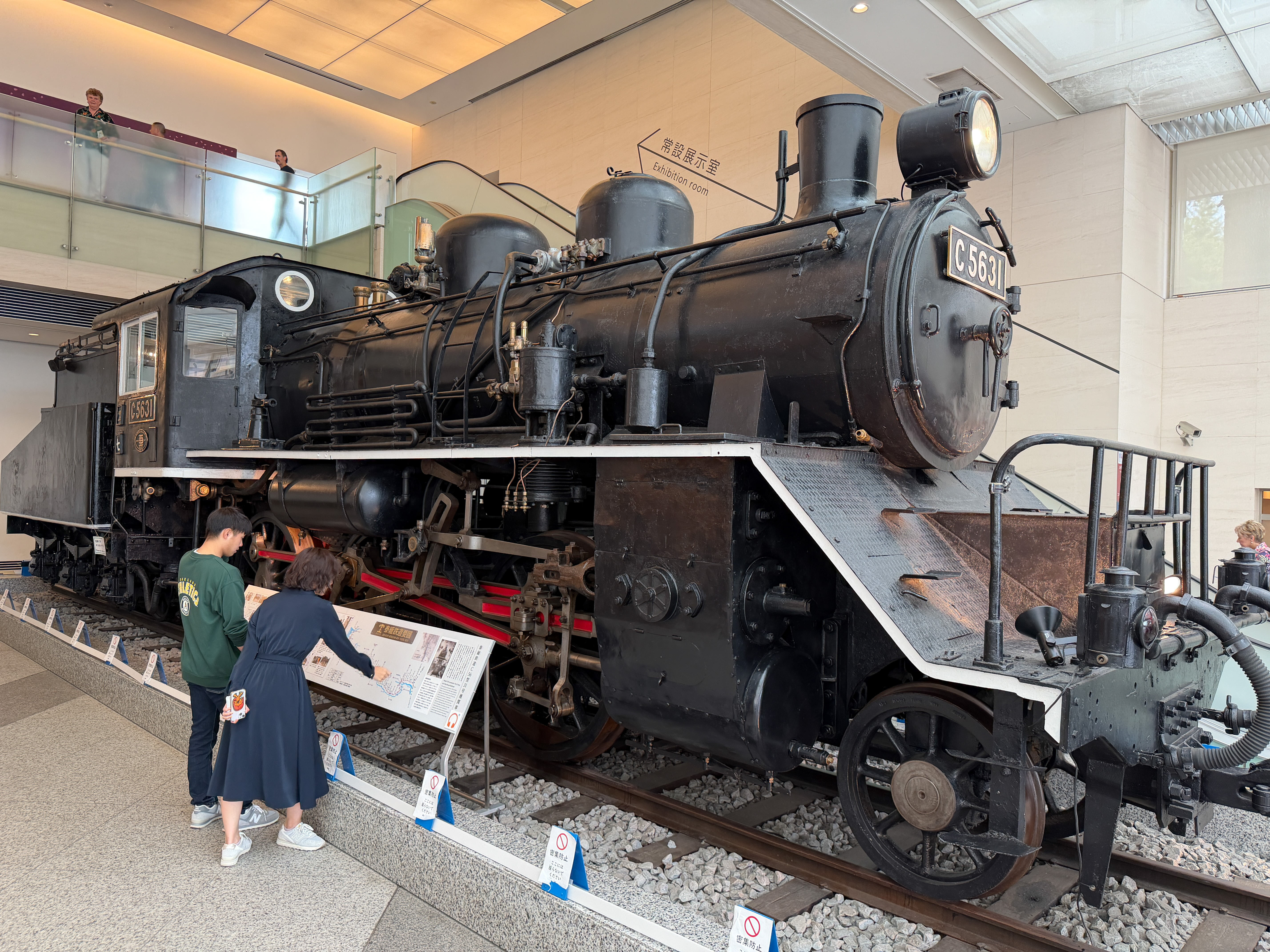
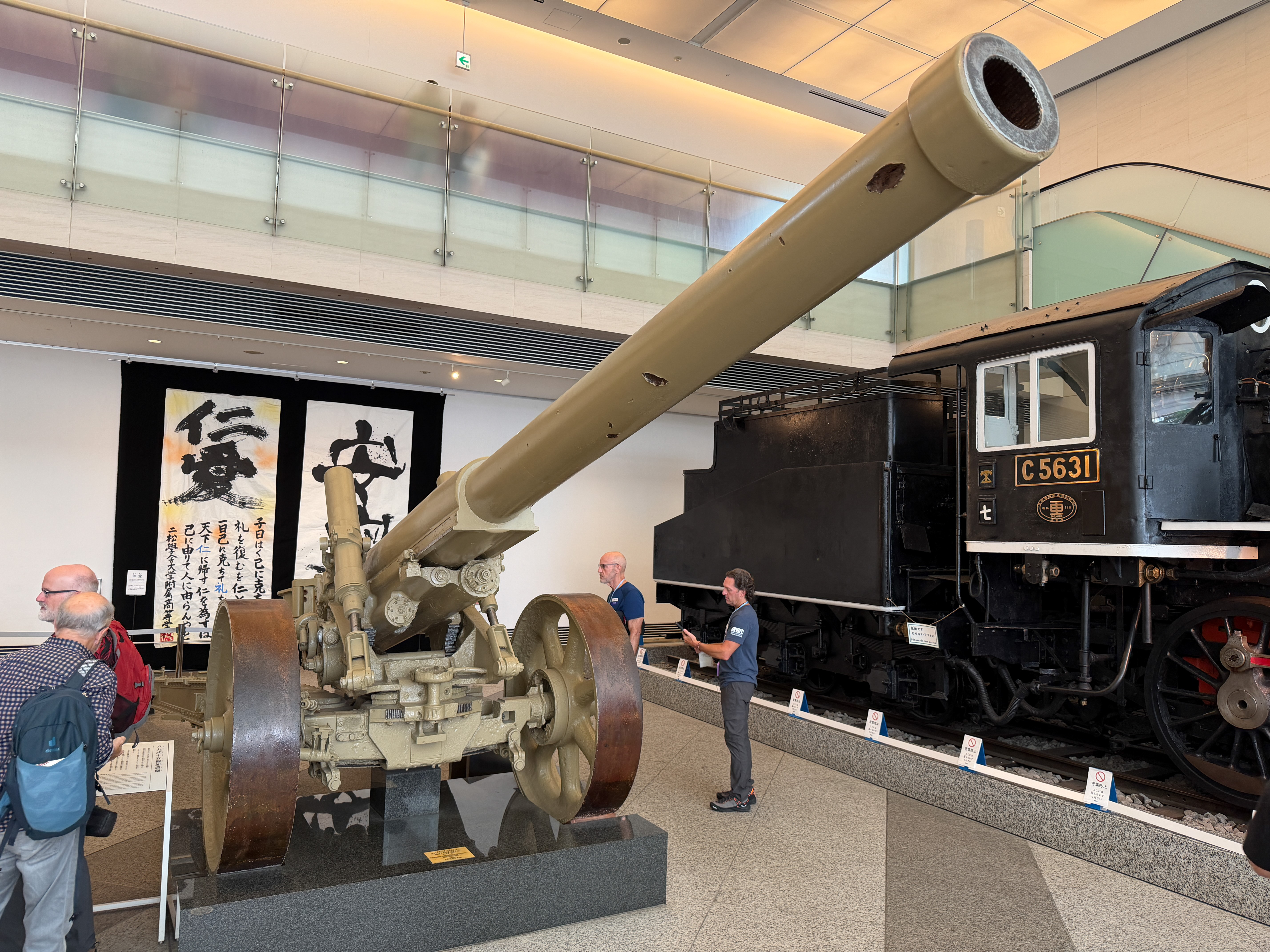
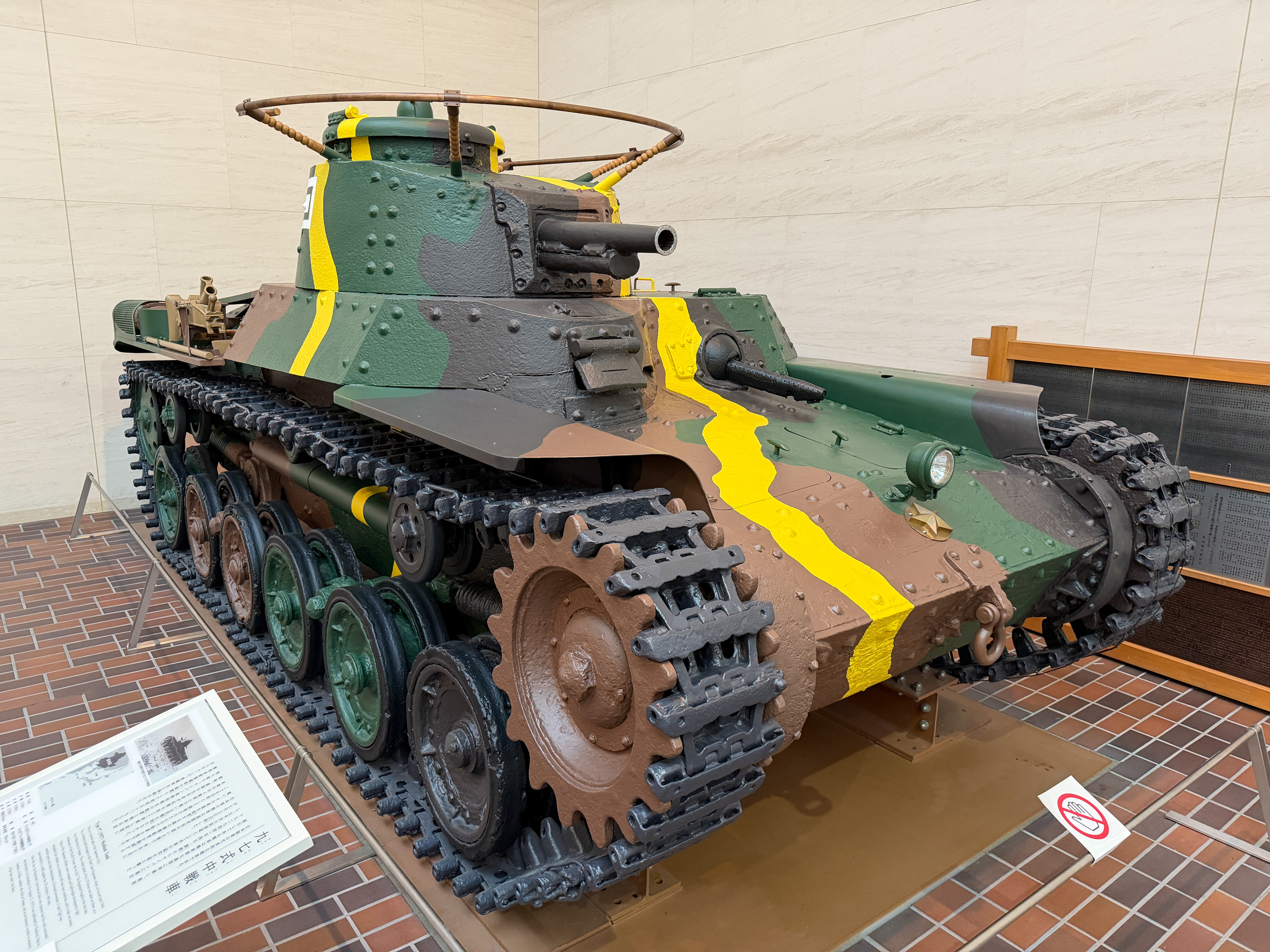
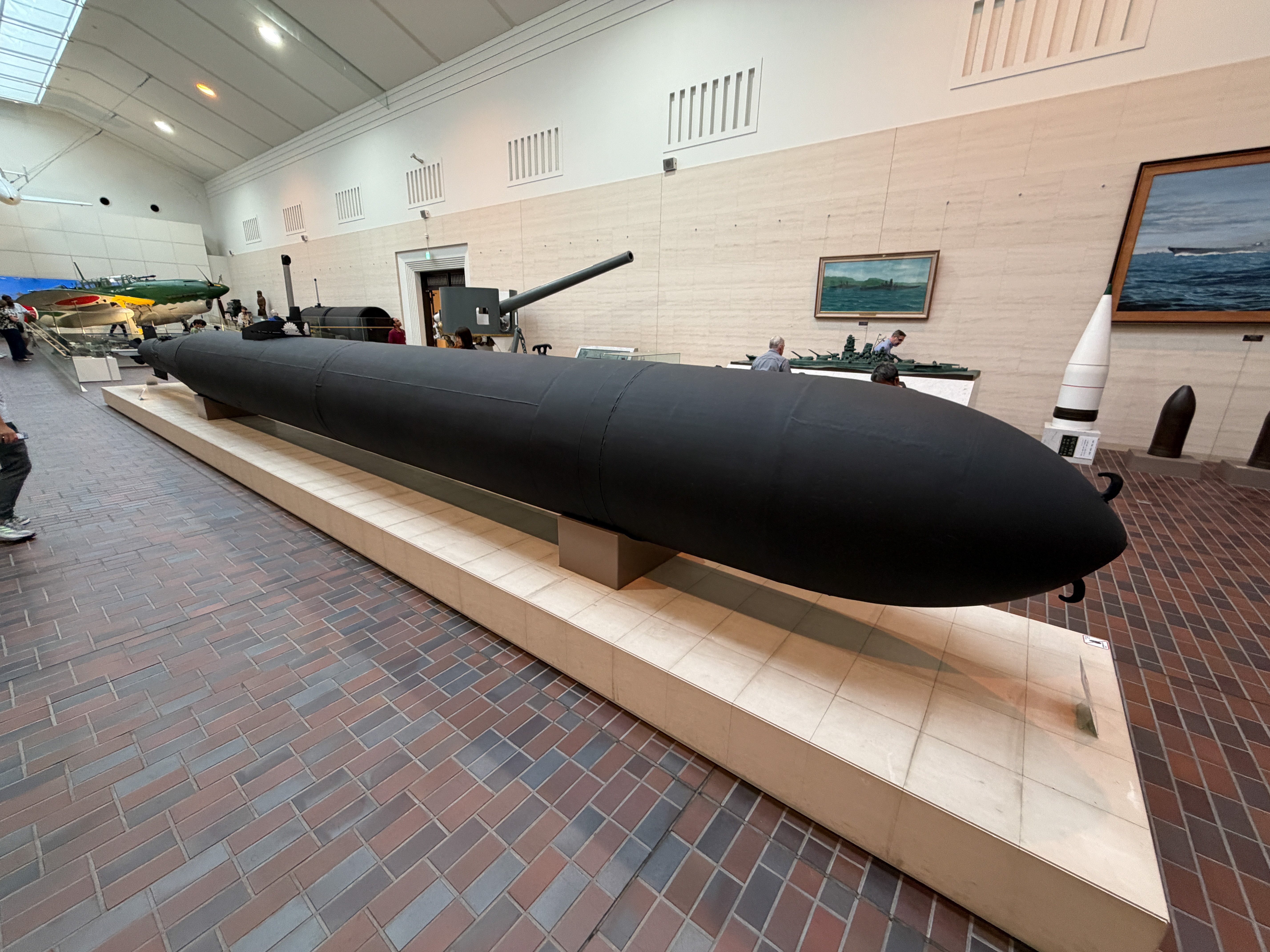
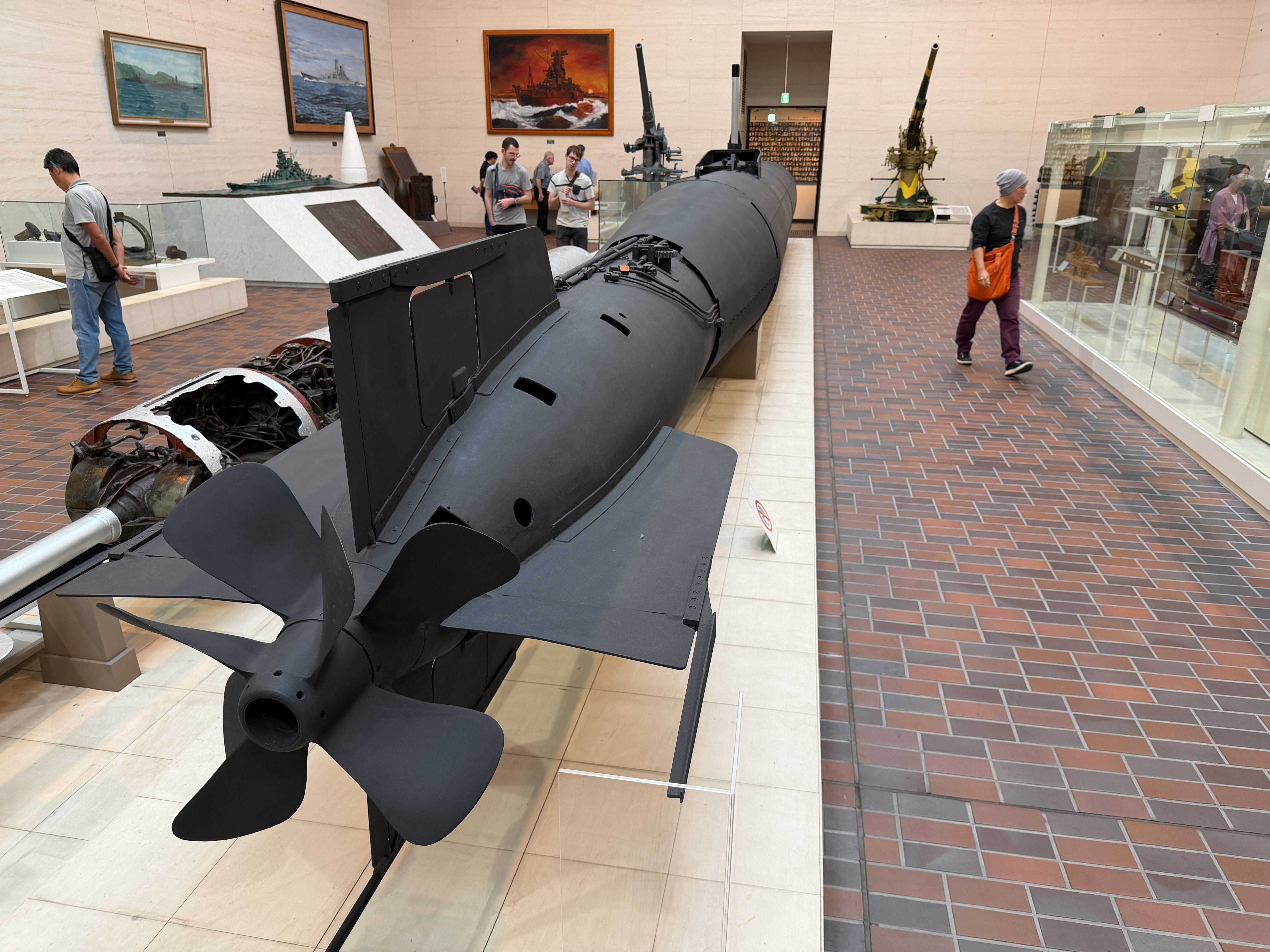
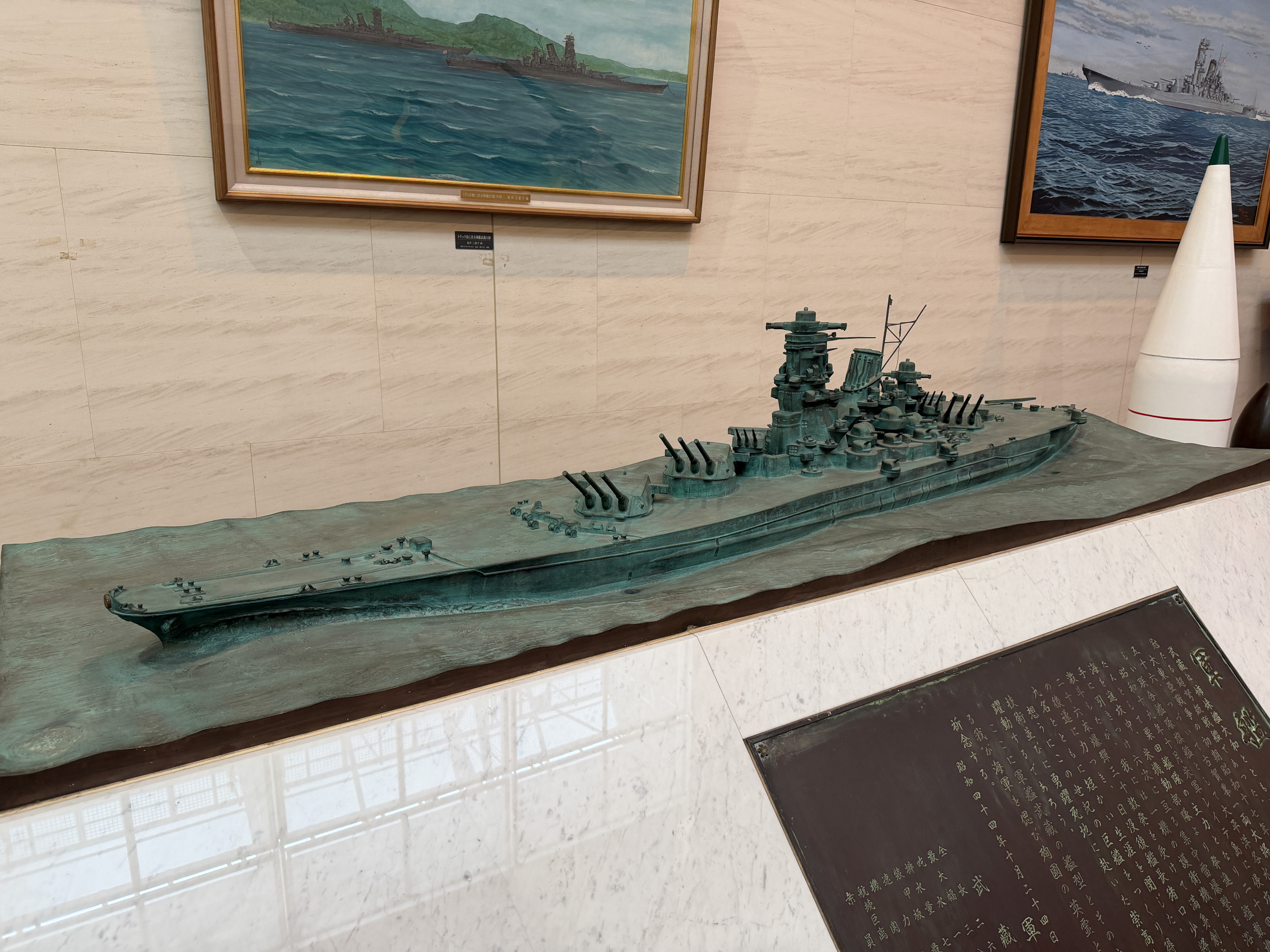
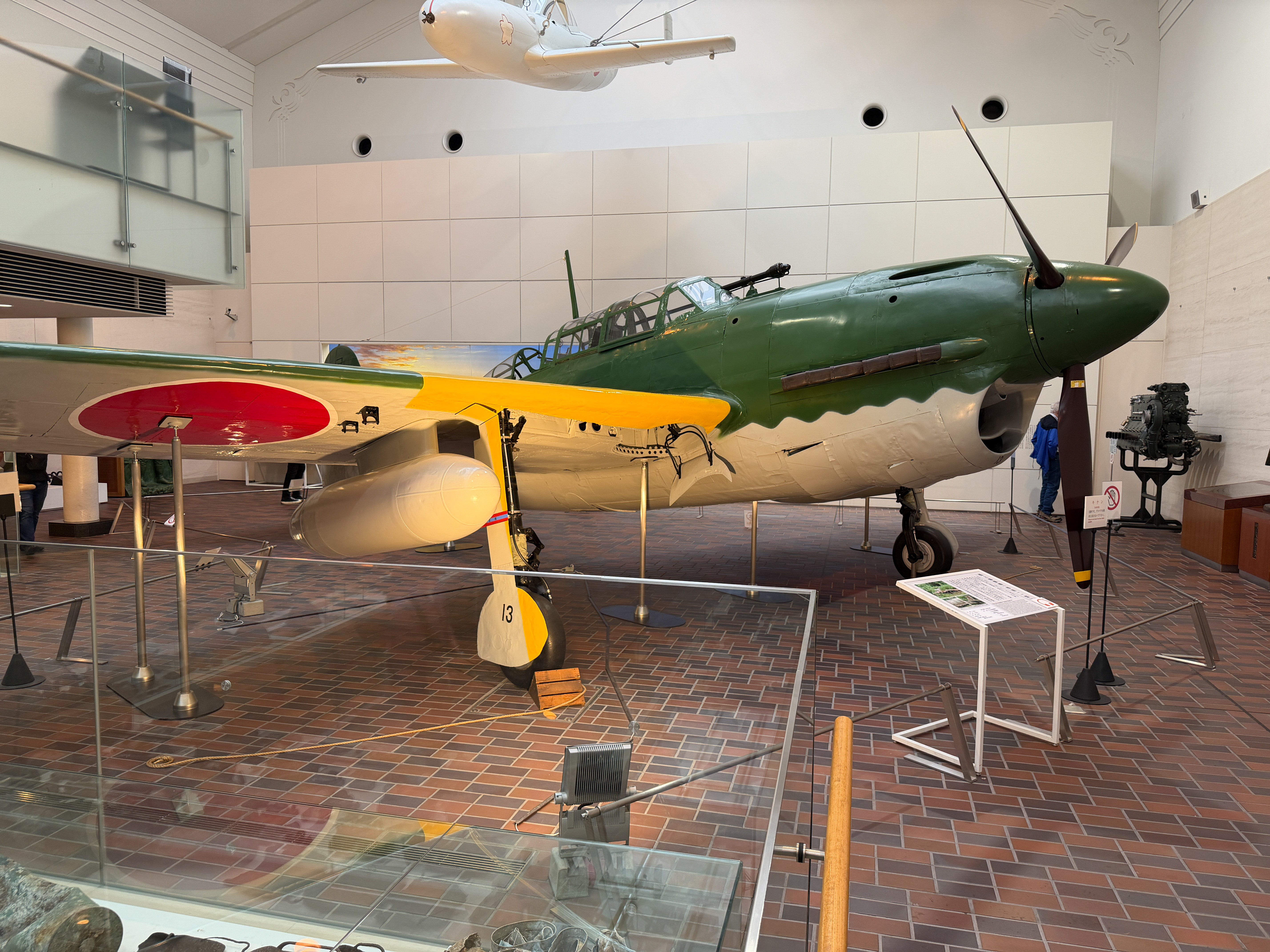
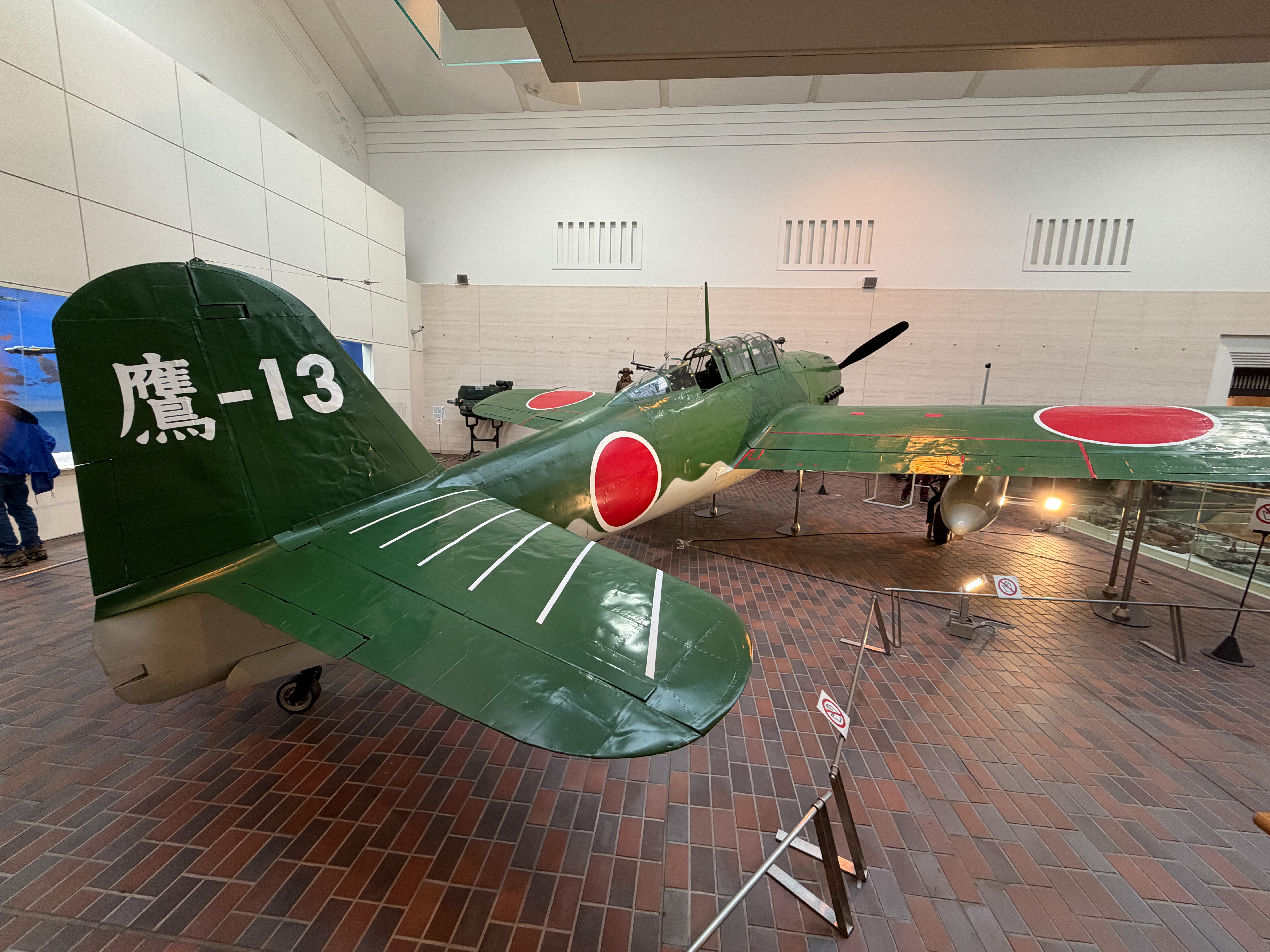
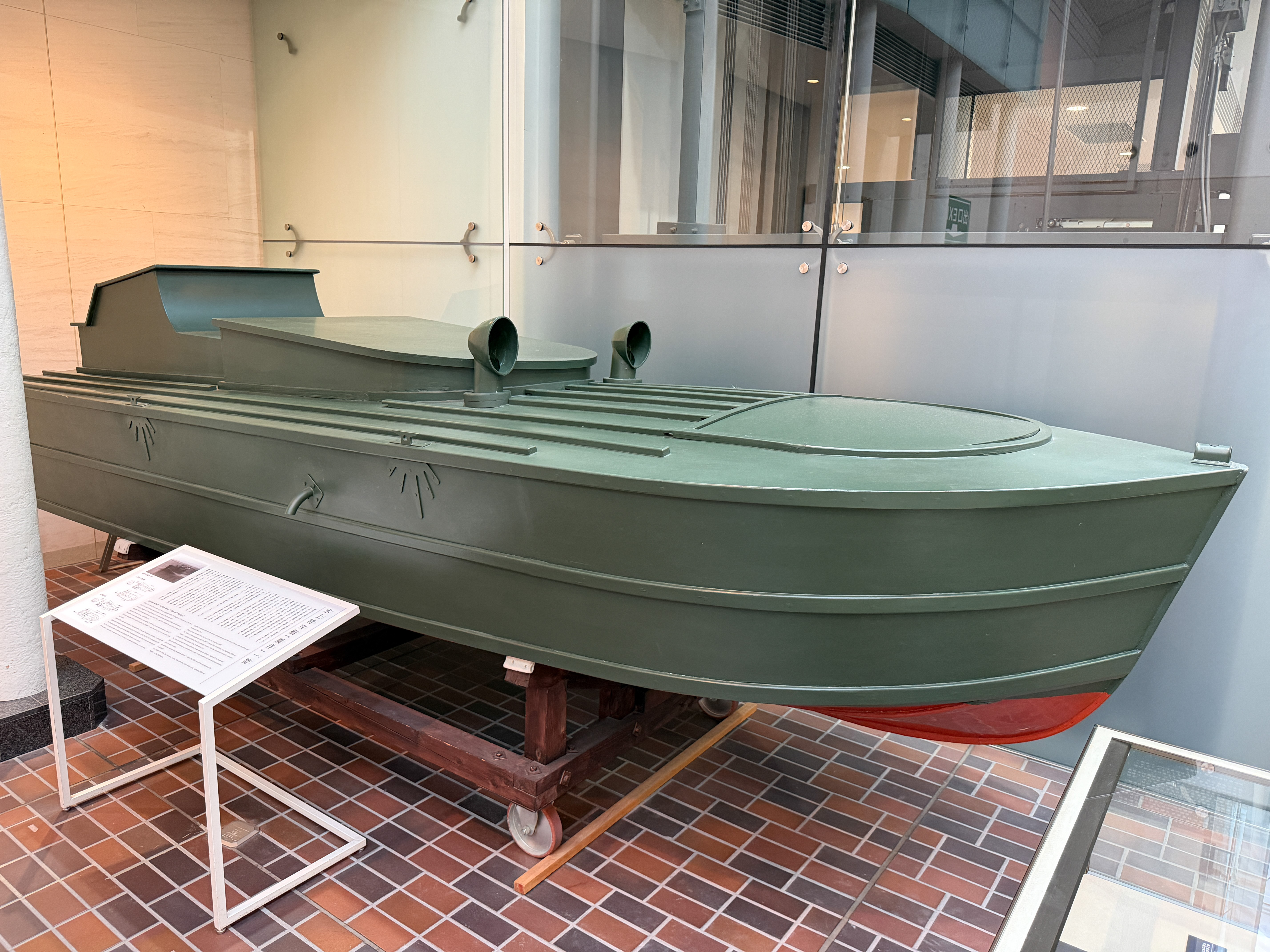
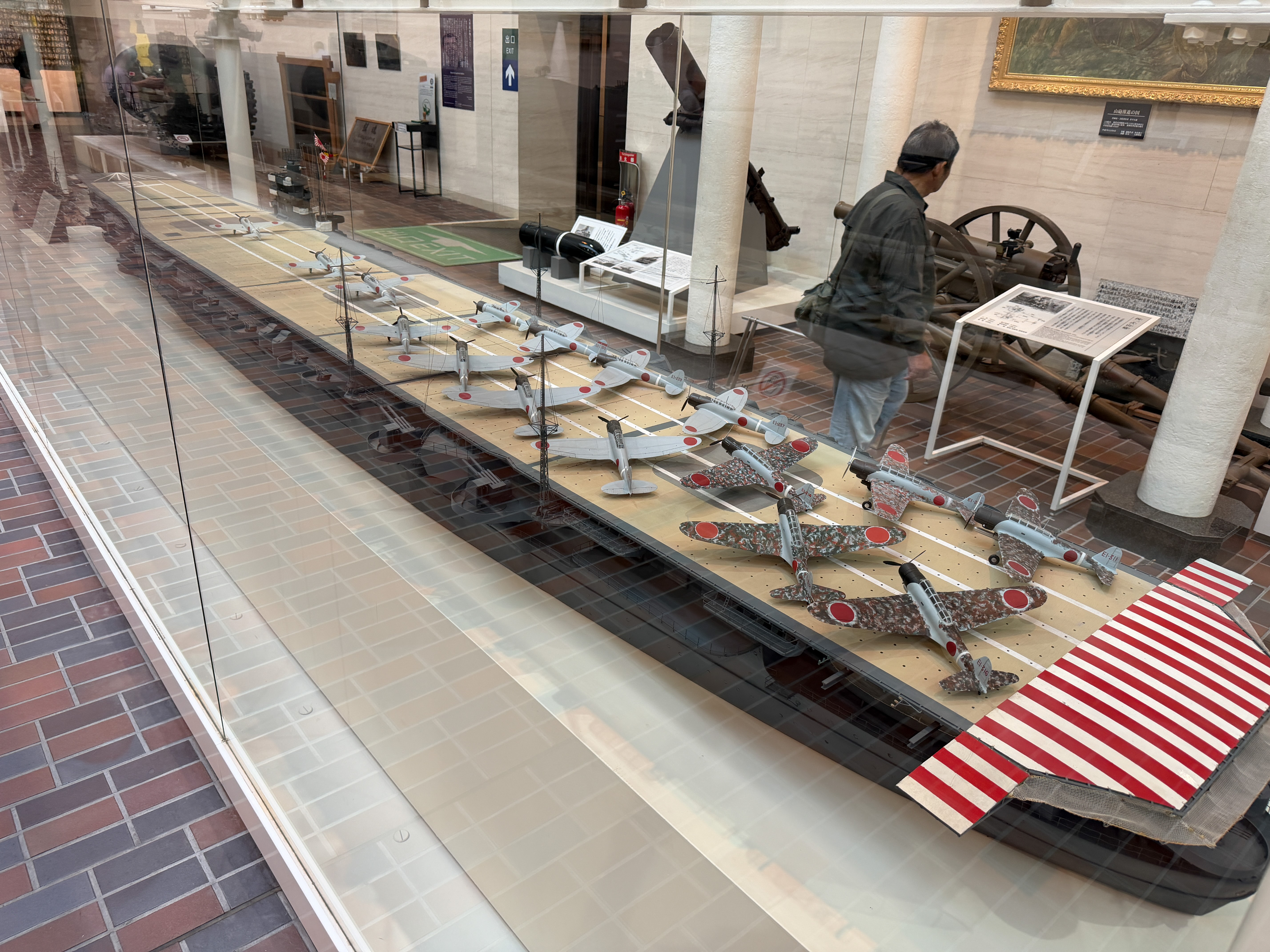
It was nice to get some concentrated WWII content. We had about 2 1/2 hours to visit the museum. I took a look at the shrine but didn’t enter. We finished with a 30-minute drive back to the hotel. Dinner was on our own again tonight, and I was able to link up with some newfound friends. One of the ladies was jonesing for Chinese soup dumplings, so we went to a Chinese restaurant near the train station. I had the dumplings and an order of Taiwanese fried chicken. Spicy!