Hal and Nancy’s Viking Western Mediterranean Cruise, March 2025
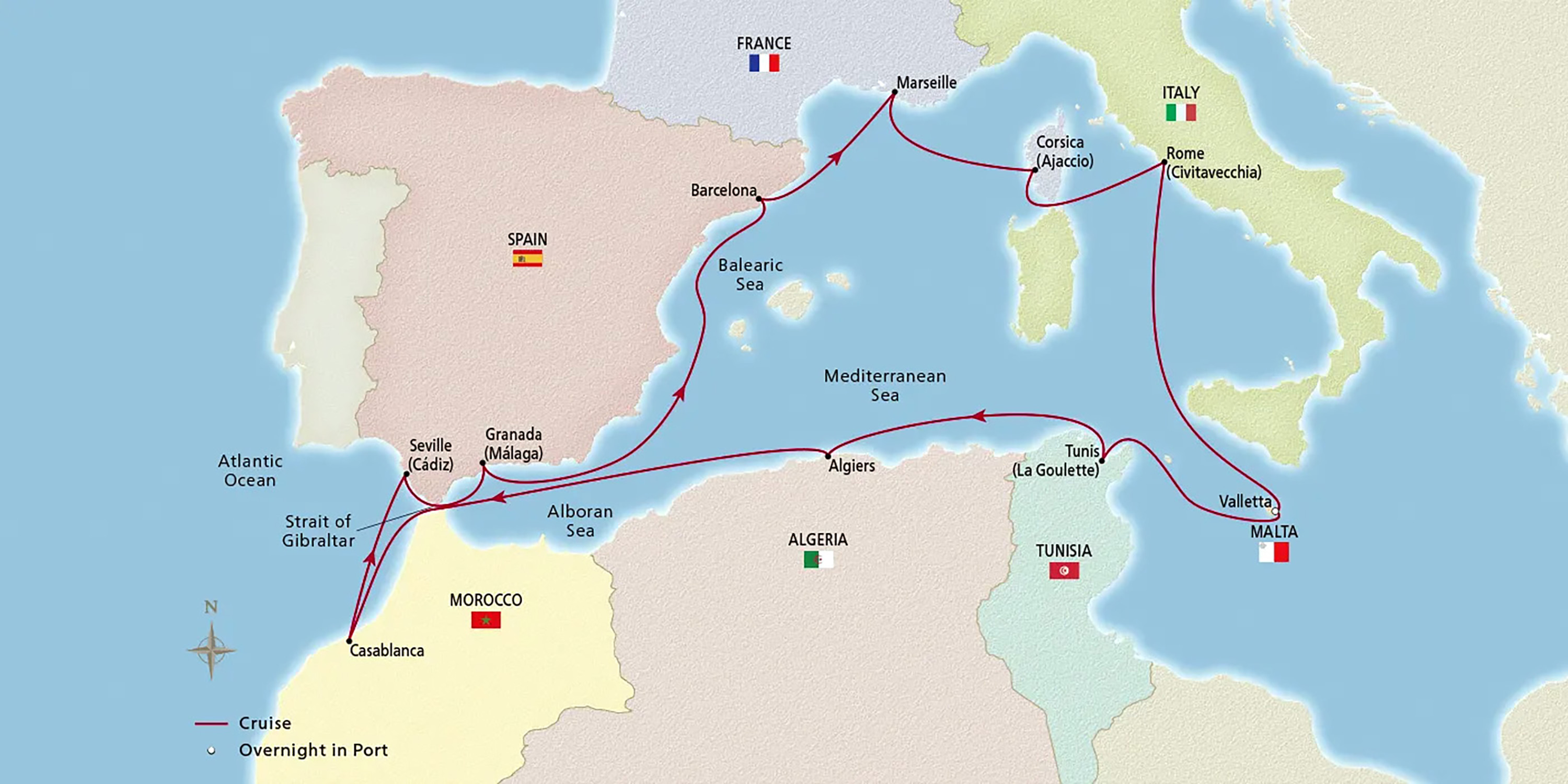
This is my (Hal’s) report on Hal and Nancy’s cruise through the Western Mediterranean and North Africa with Viking Cruises—Malta, Morocco & The Mediterranean—starting and ending in Barcelona. This is our second Viking Ocean cruise. We have also taken a Viking river cruise (Rhine Christmas Markets) and an expedition ship cruise (Great Lakes).
Unfortunately, travel problems caused us to miss the first day of the cruise, and medical problems caused us to drop out and miss the final nine days (of fifteen—North Africa and Spain). Since we had a few decent experiences between these events, we’re publishing our report anyway, warts and all. General comments about Viking are at the end.
Wednesday–Friday, March 11–13 — to Marseille
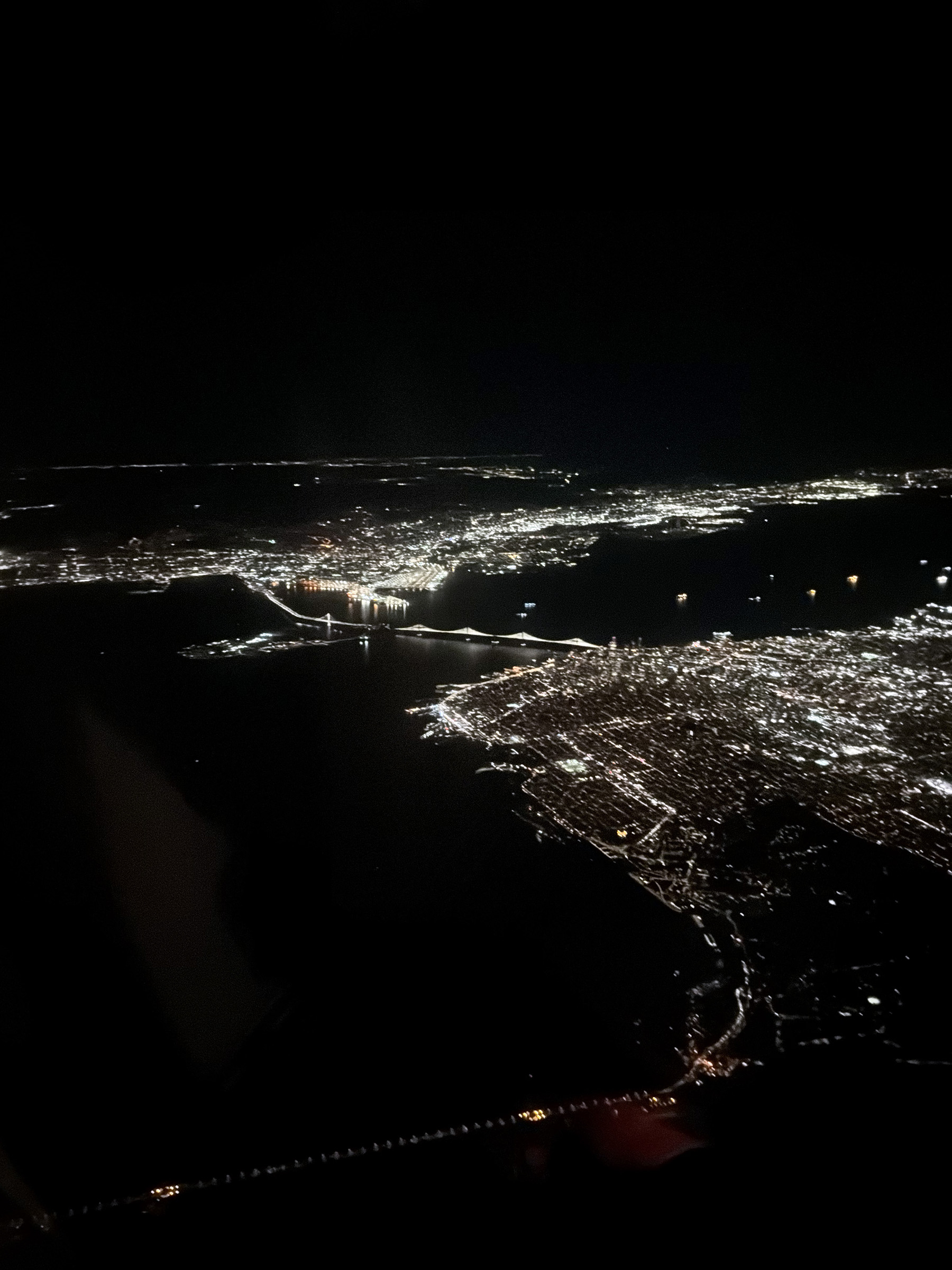
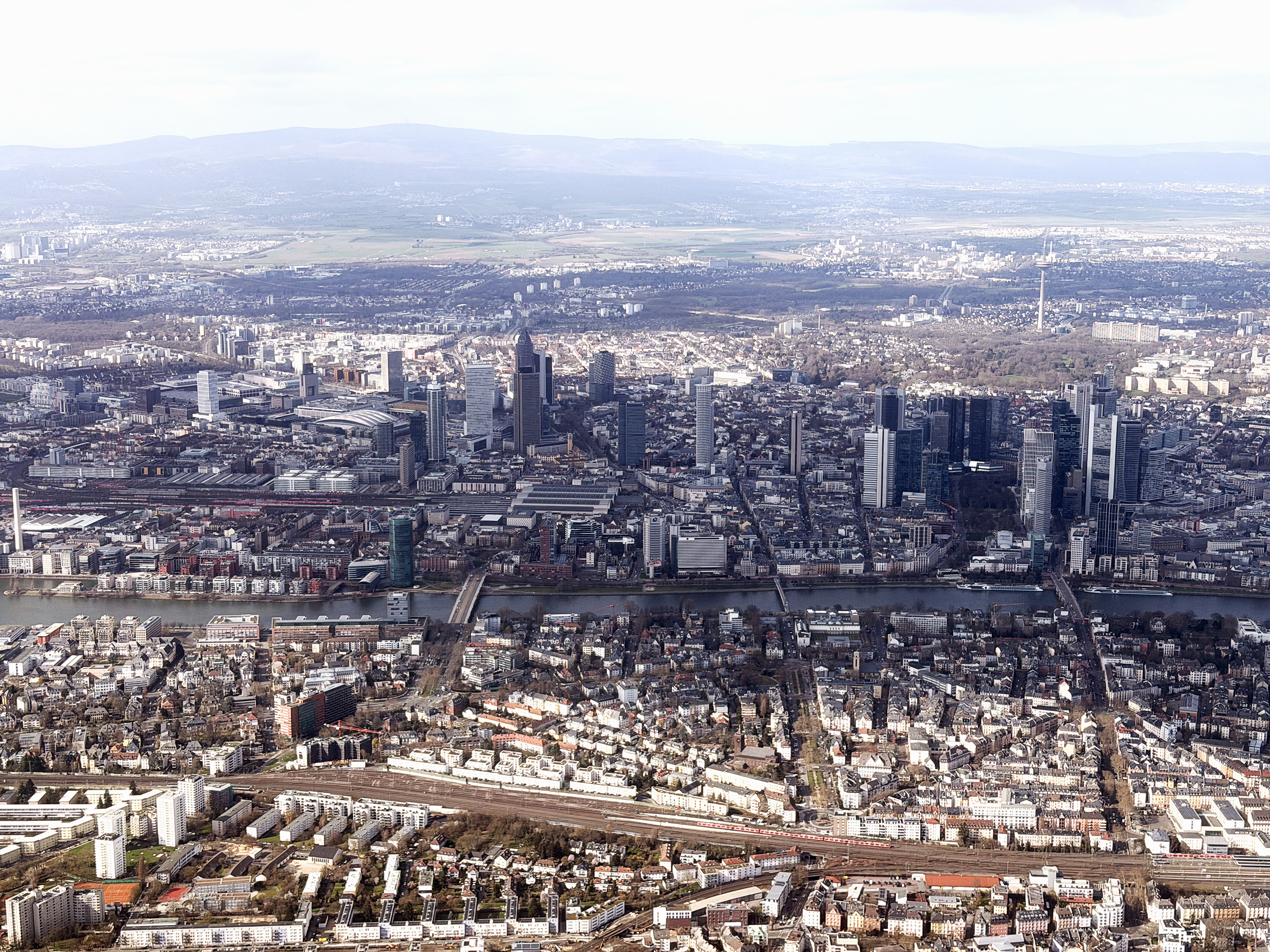
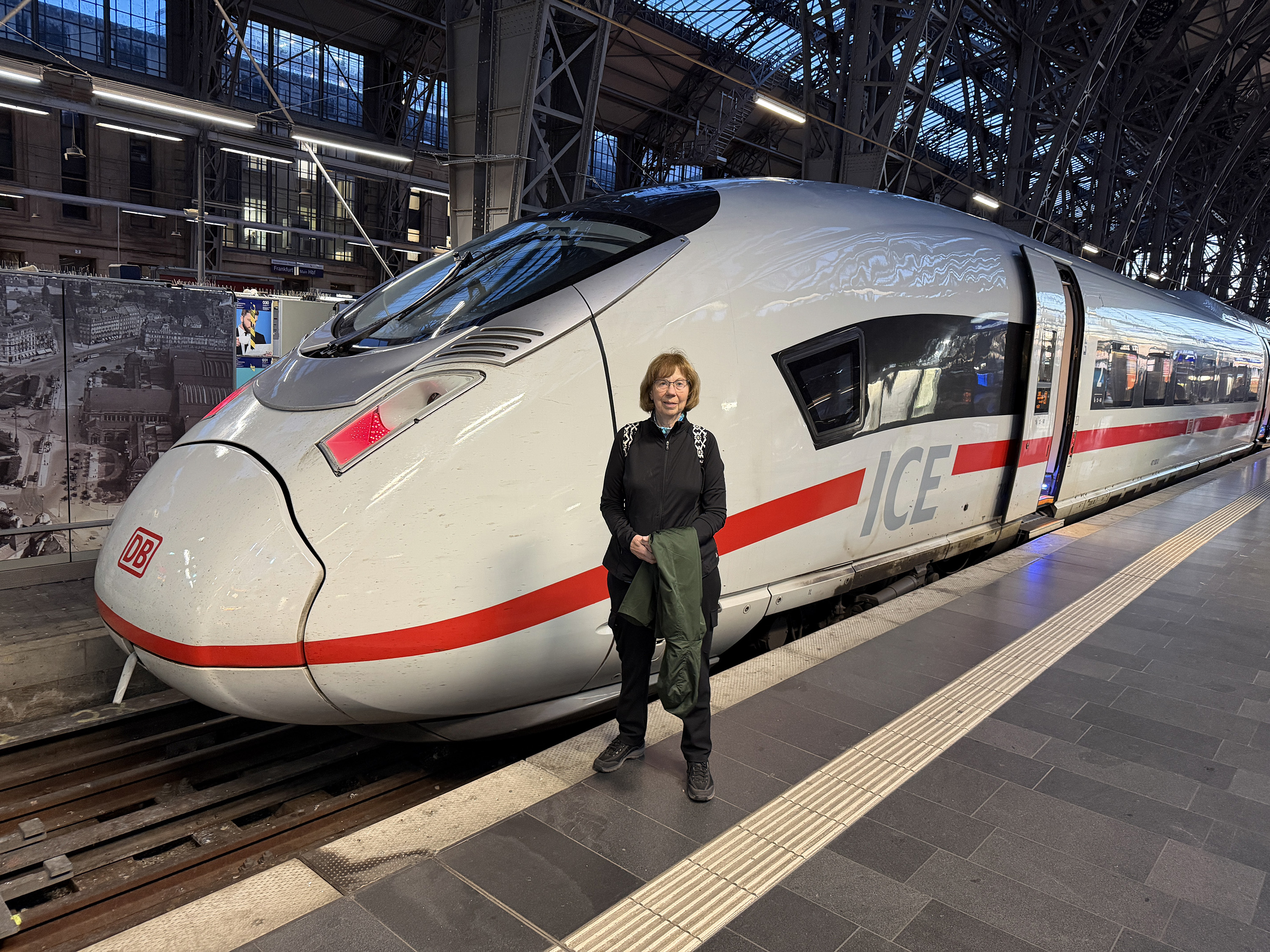
We flew on United Airlines from San Francisco to Frankfurt, and that’s where our travel troubles started to surface. The second leg of our trip to Barcelona was on a United code-share operated by Lufthansa, but their pilots’ union declared a two-day strike, and our flight was canceled. Despite having planned to arrive the day before, there was no way that we could get to Barcelona in time for the start of our cruise on Friday, so we scrambled for alternatives. After very brief immigration lines, we Ubered downtown to the Frankfurt Hauptbahnhof and took an evening Deutsche Bahn ICE train to Paris (4 hours). I got to practice my rudimentary German and got a yummy Bratwurst im Brötchen. The DB train was interesting: we puttered along slowly through four stops in Germany, but then sped up to 300km/h in France. Lousy WiFi.
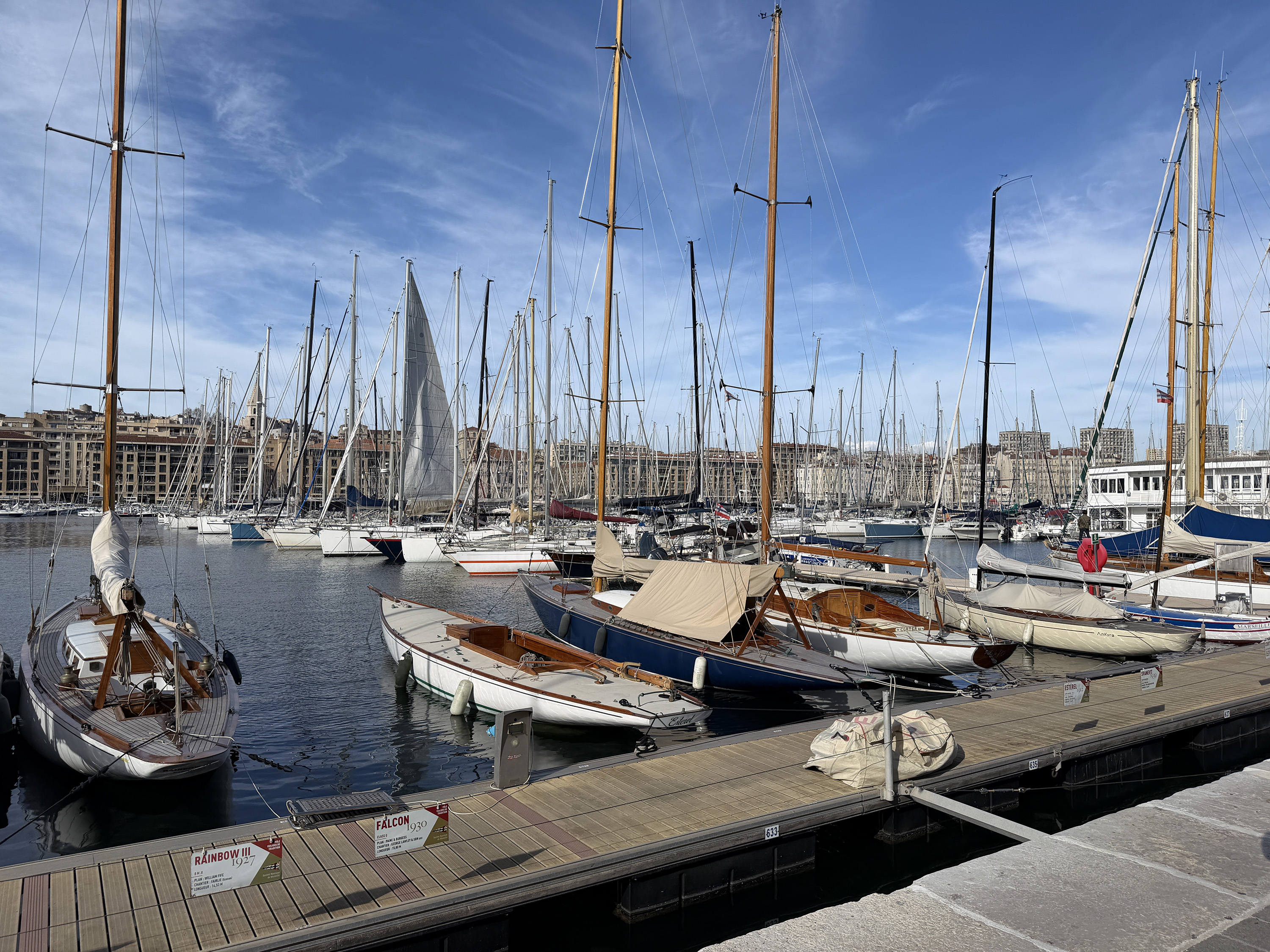
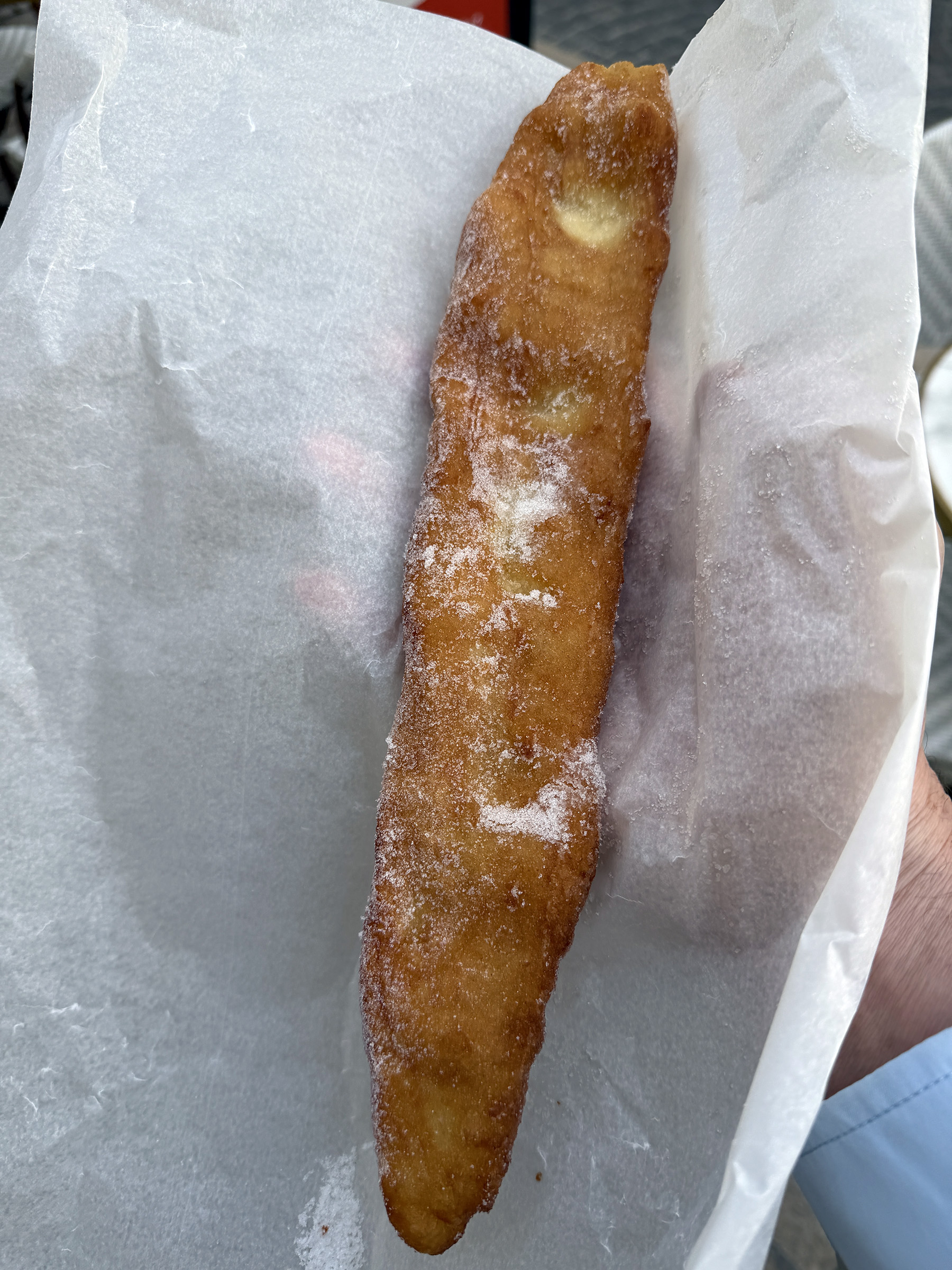
Overnight stay in Hotel d’Amiens, not far from the Gare de l’Est. Basic but comfortable. We arrived late Thursday night, exhausted. Then over to the Gare de Lyon on Friday for a non-stop Trenitalia Frecciarossa (Red Arrow) TGV (another 4 hours) to Marseille. The ride was very comfortable, with excellent WiFi for a change, and there was a lot of nice scenery to take in. Marseille weather is beautiful today, and we enjoyed a walk around the old port area. (In 2024, I visited Marseille and said it was a "dump," but that was mostly around the train station, and today’s area is quite different.) I tried a local specialty from a street vendor, a Chichi Sucre, which is very similar to a churro shaped like a baguette. We overnighted in the Radisson Blu Old Port Hotel, which was excellent. But this excursion to recover from the Lufthansa strike represented quite an expensive set of detours.
Saturday, March 14 — Marseille and Embarkation
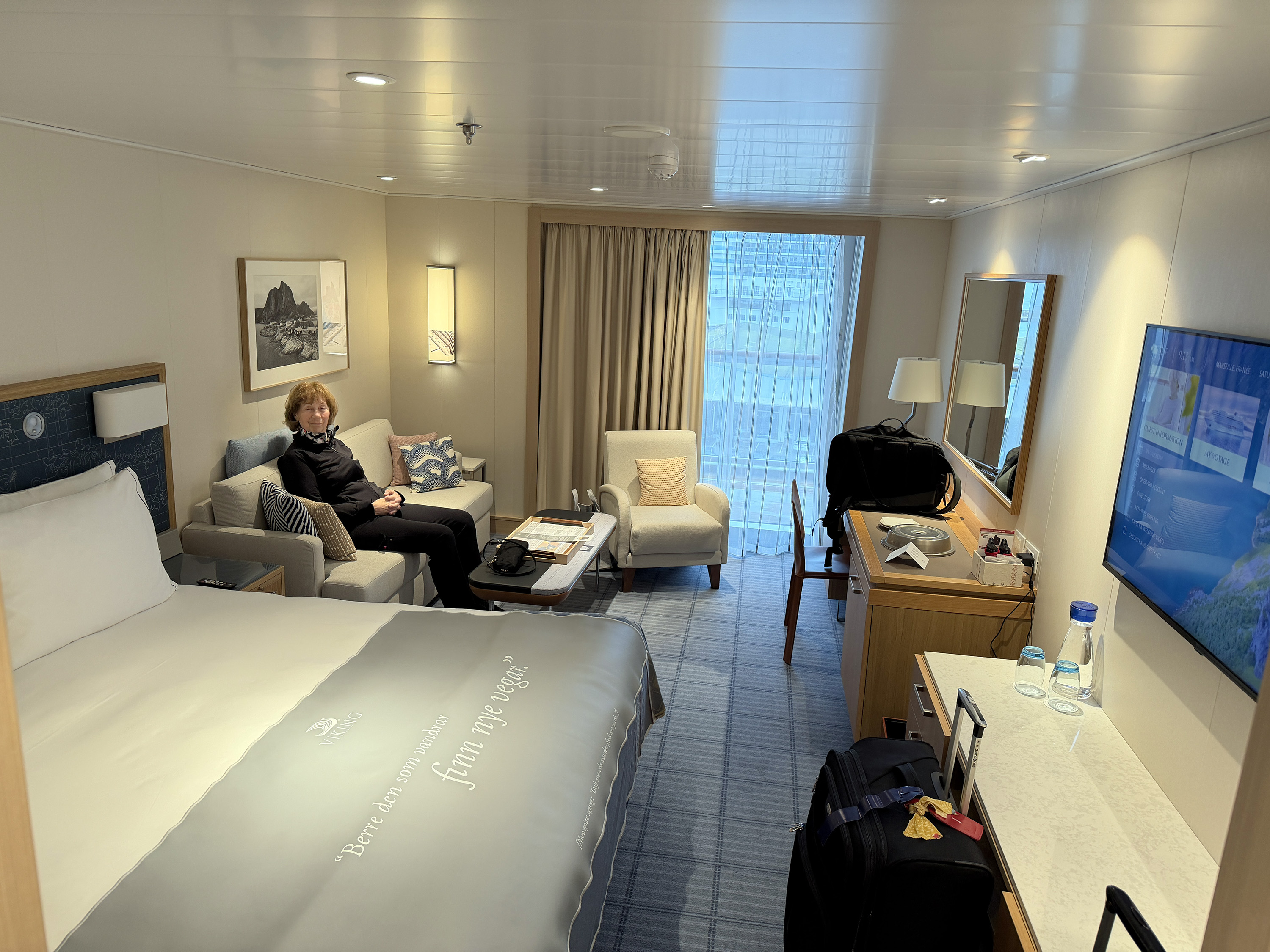
Happy Pi Day! We boarded our ship, the Viking Vesta, on her first port stop after leaving Barcelona. The cruise terminal is over 5 miles north of the city center. Two giant Italian cruise ships are also in port. It took some doing to get our Uber through multiple security checks, but the Viking crew was very accommodating in smoothly whisking us onboard despite our late arrival. We had booked an excursion to Aix-en-Provence, but decided to cancel because it was raining lightly and we needed to unpack and unwind. Our cabin is a “penthouse veranda” class, roomy and comfortable with the traditional elegant Scandinavian style that is a Viking trademark.
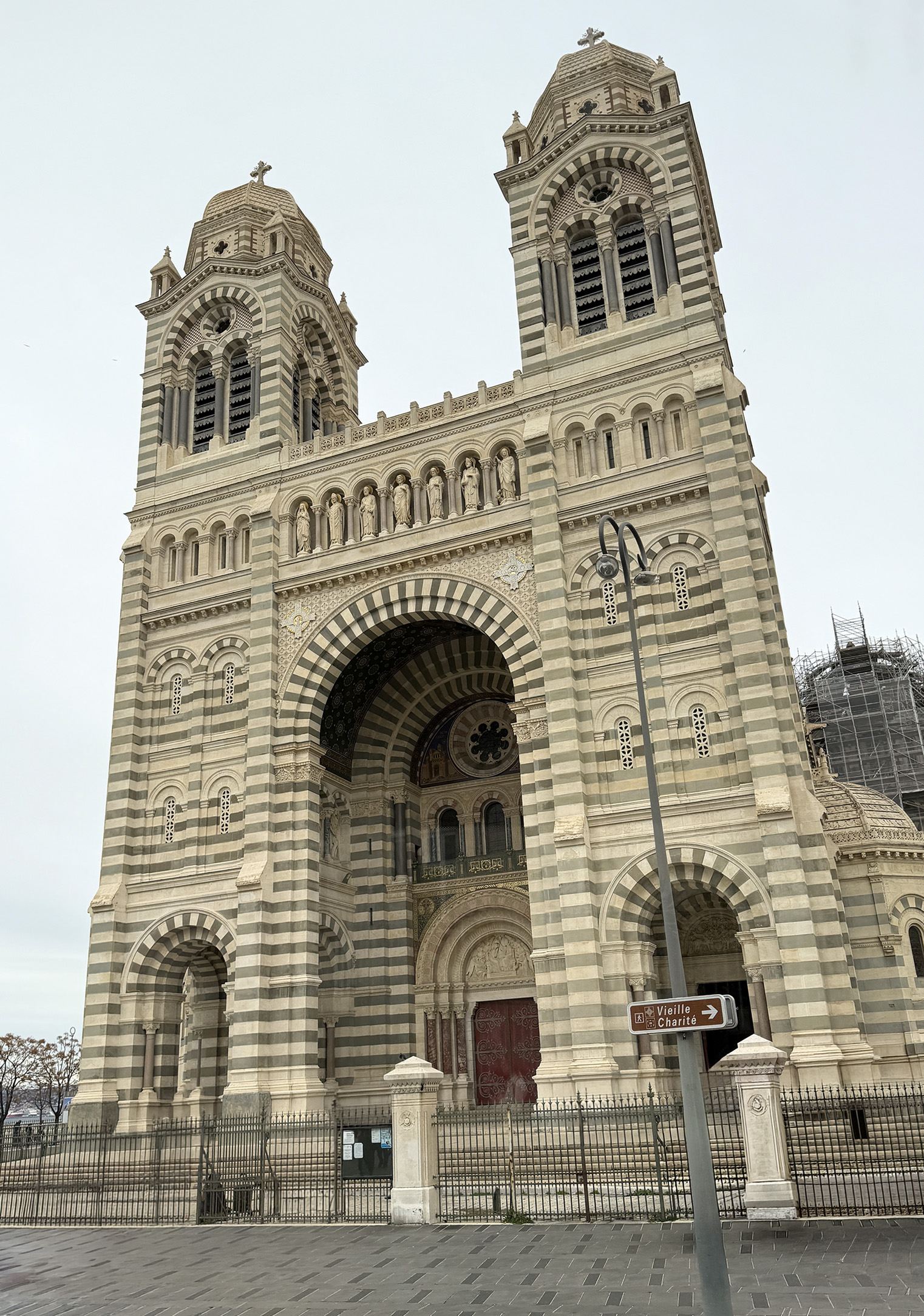
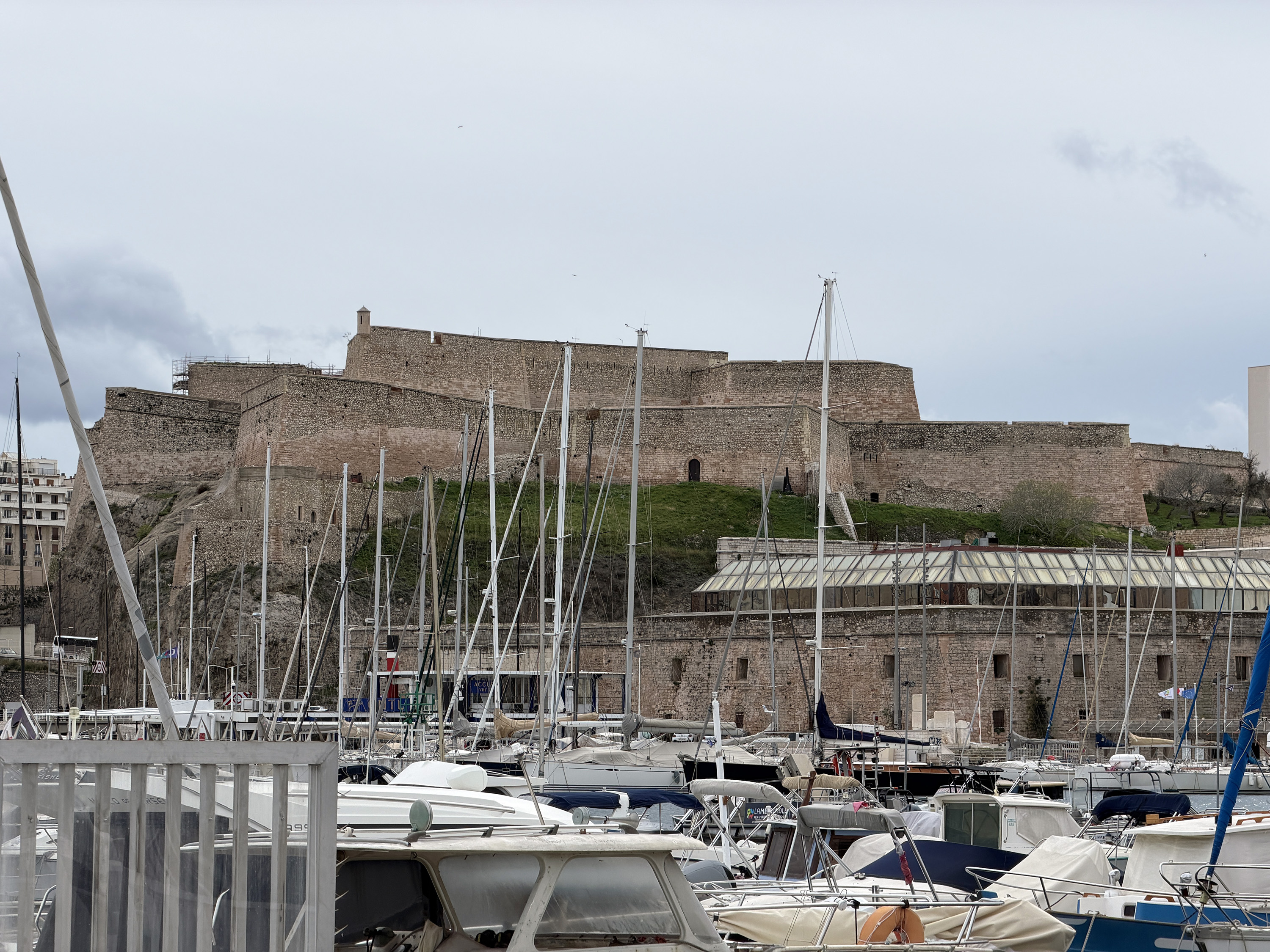
In the afternoon, there was a freebie excursion, Scenic Marseille. Some early showers gave way to sunny skies but still a bit chilly. Our tour guide was Audrey, very informative with perfect English. As we drove through the port, she told us that Marseille will get 750 cruise ships this year. Here are highlights from the 4-hour tour. We passed by the area called La Joliette, where in 49 BC Julius Caesar camped at the creek while he conducted the Siege of Massilia and then sacked the town. The Cathédrale la Major de Marseille was attractive, with a striped decor. Fort Saint-Jean and Fort St. Nicholas (the Citadel of Marseille) loomed over either side of the old port; the former faced outwards to the sea, the latter inwards to protect France (Louis XIV) from Marseille. Following the initial assaults of Operation Dragoon in August 1944, the Germans used St. Nicholas as their main position defending Marseille (unsuccessfully) against attacks by the French First Army. We drove on a major street, Rue de la République, known for its Haussmannian architecture. The biggest of the main streets is now a pedestrian mall, La Canebière.
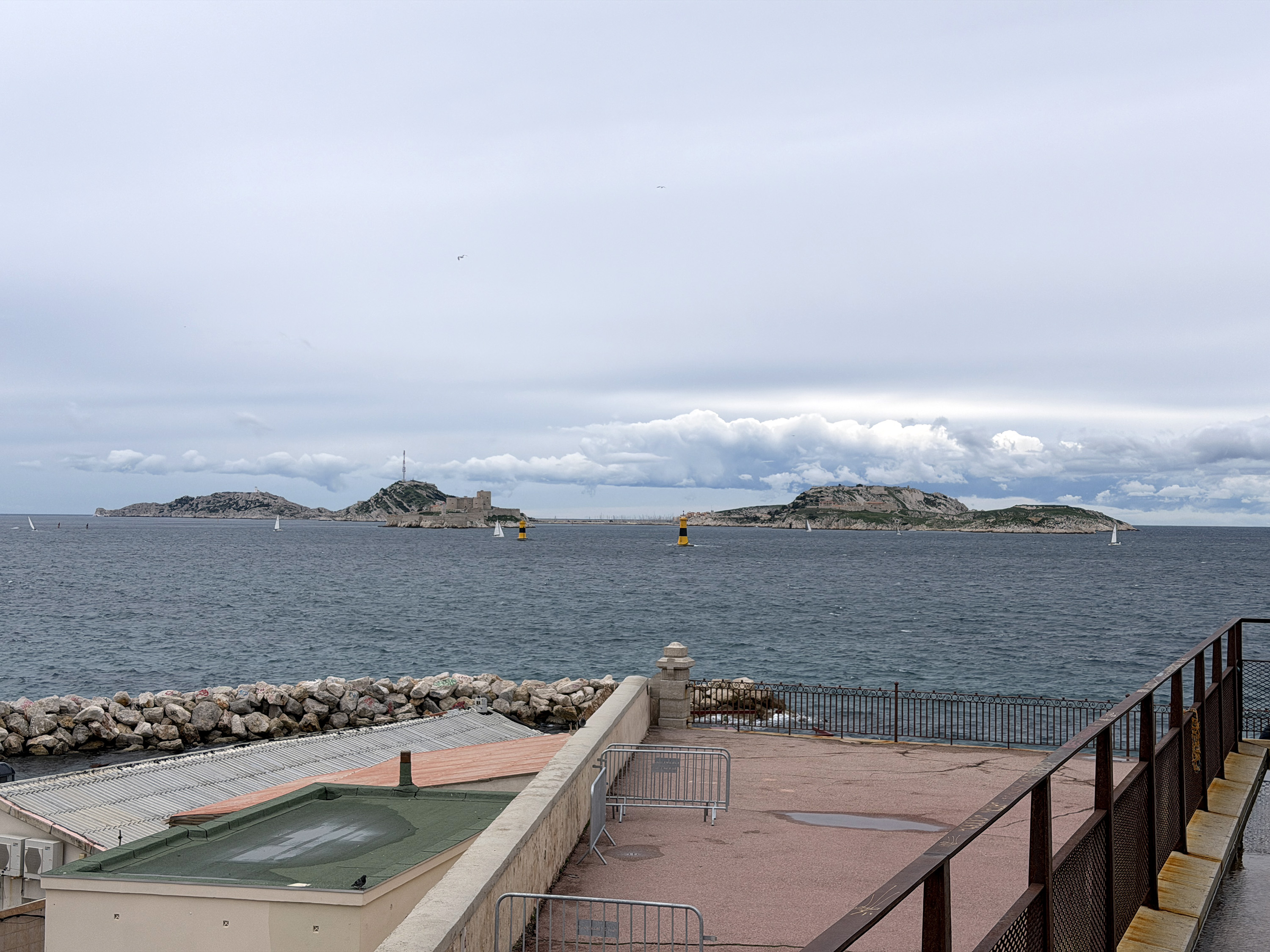
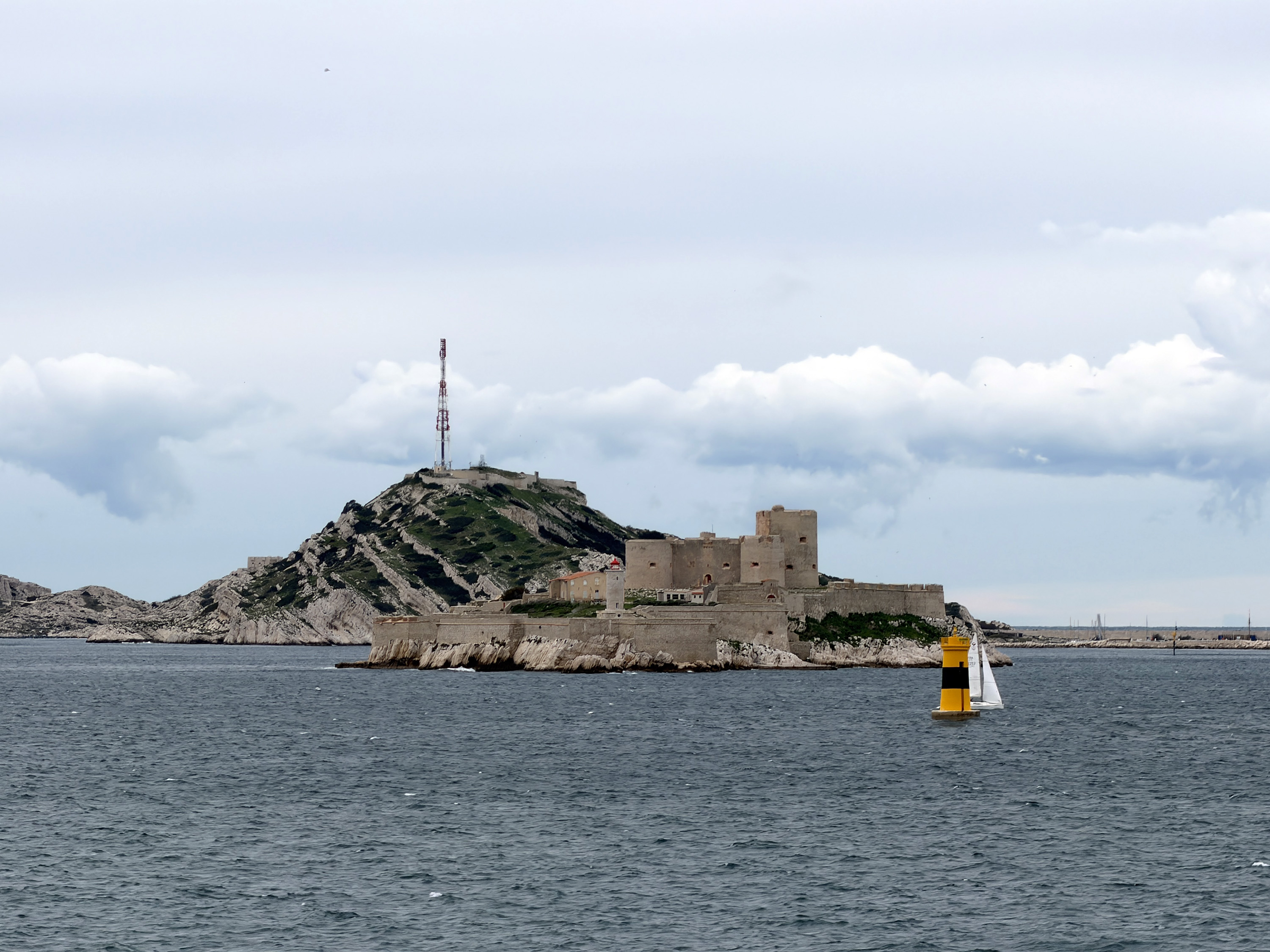
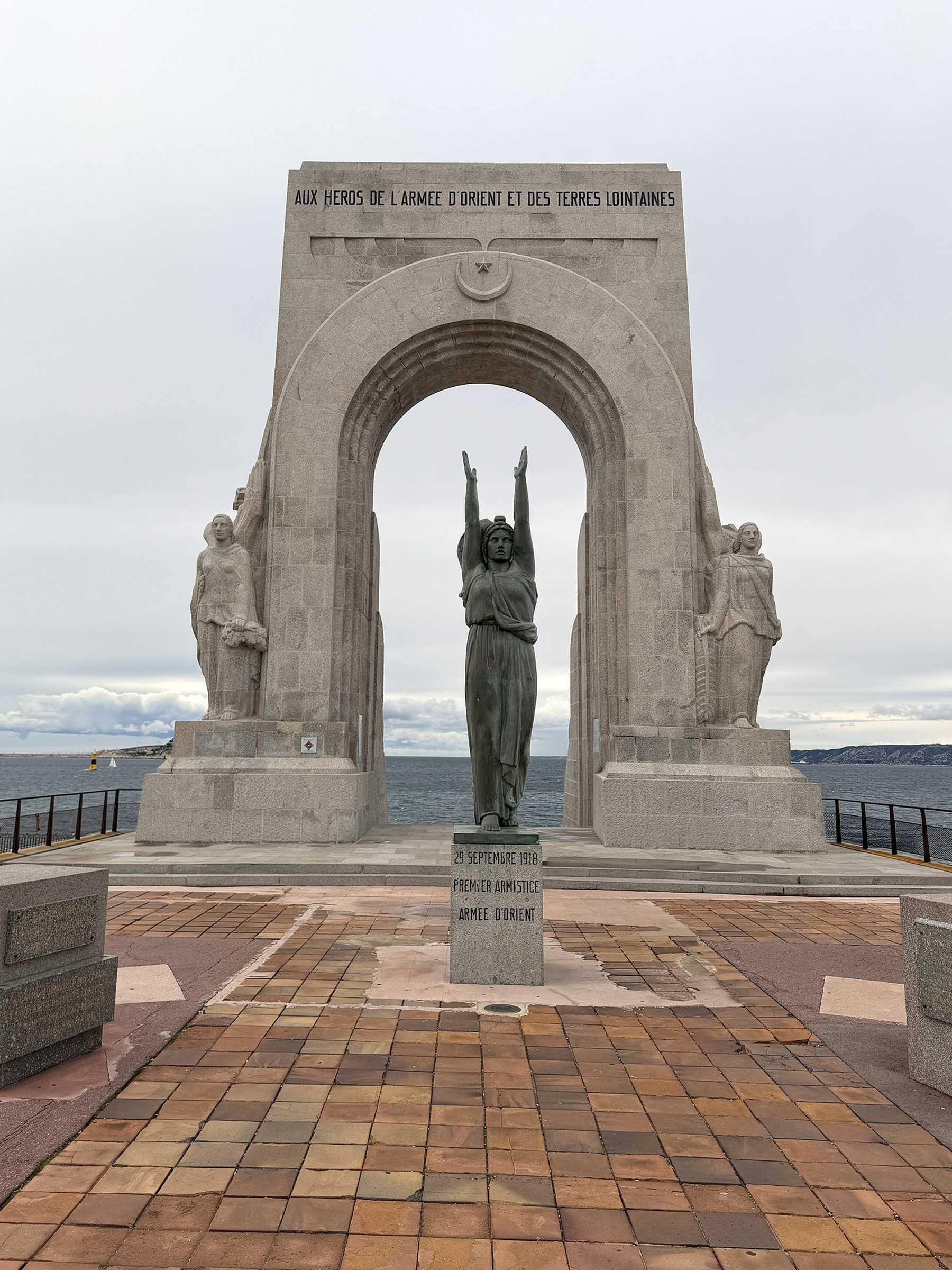
Outside of the main town overlooking the sea is the Corniche JFK. We got off here for photos. In the near distance were two small islands, one of which hosted Château d’If, the prison setting in the Count of Monte Cristo. There is also a large monument, the WWI Monument Aux morts de l’Armée d’Orient (the Army of the Orient and distant lands, meaning mostly North Africa and the Middle East). We passed a small cove where the 2024 Olympics sailing competition was held. At the southernmost end of Marseille was the district of La Goudes, which locals call “the end of the world.” Here we saw a statue of David, virtually identical to Michelangelo’s, but by another artist. We drove through an expensive residential area, Roucas Blanc, and then by the spectacular Basilique Notre-Dame de la Garde, the most important church in the city it overlooks from the highest geographical point. We finished up with an hour on our own to wander around the old port.
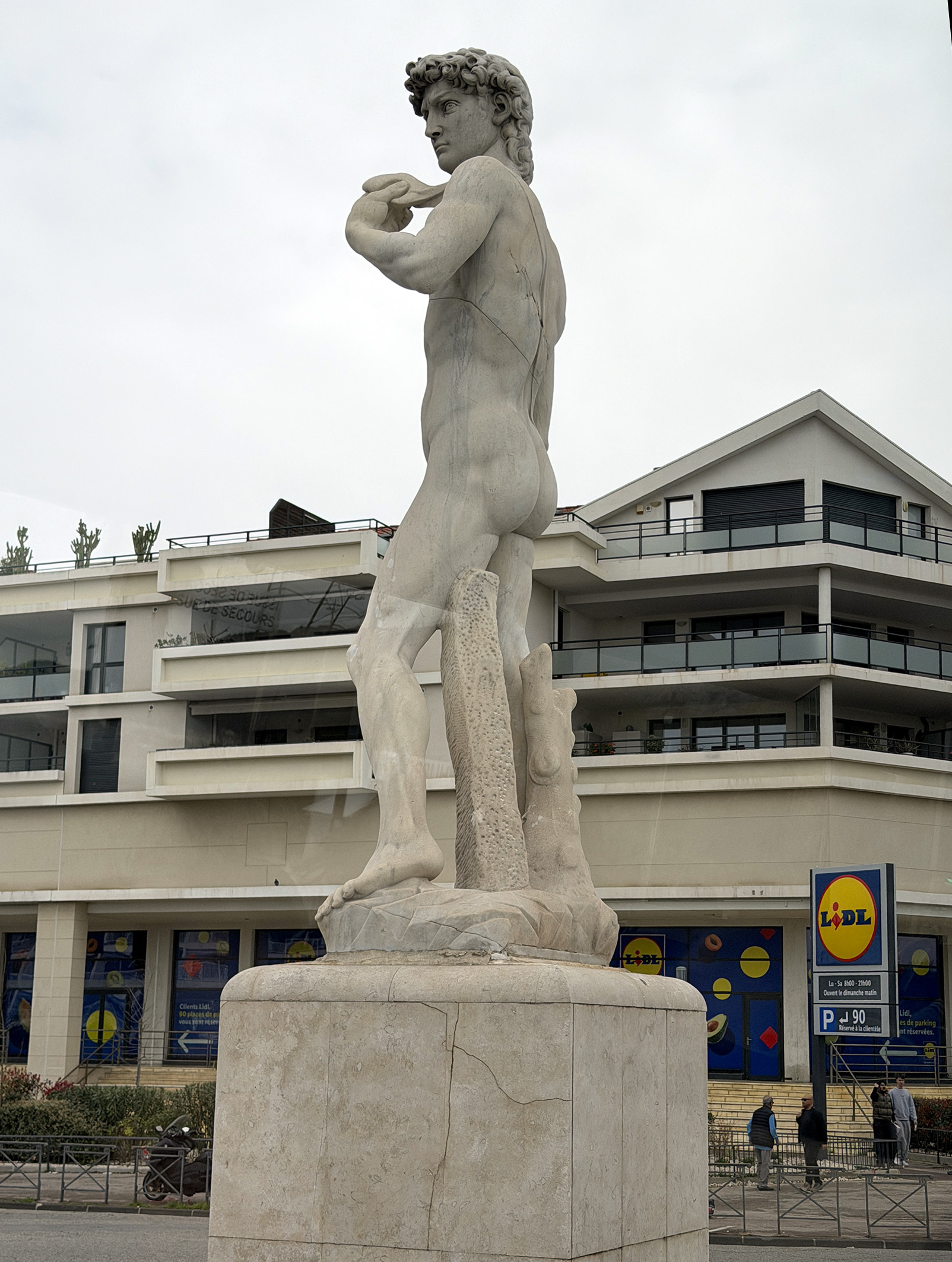
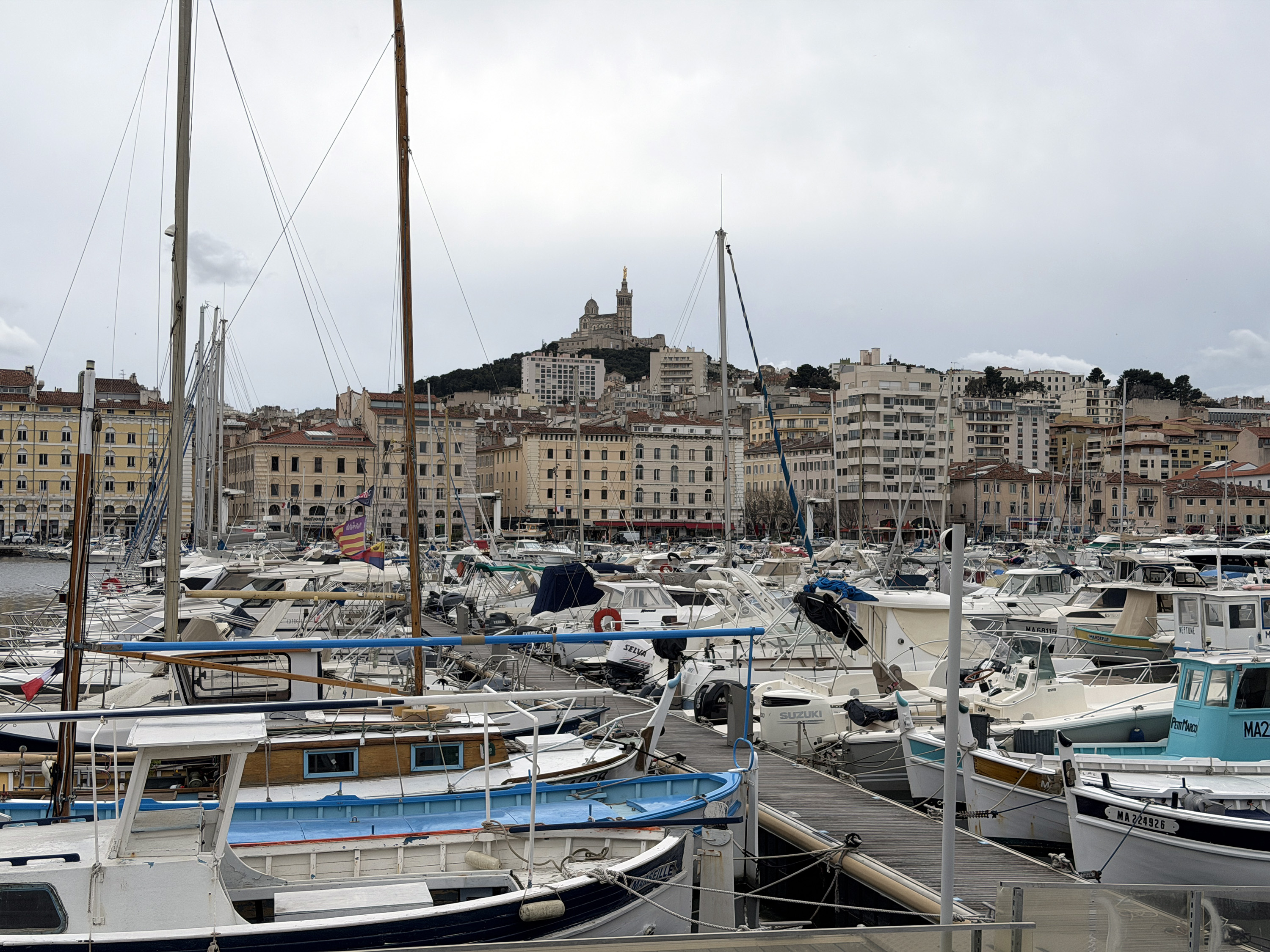
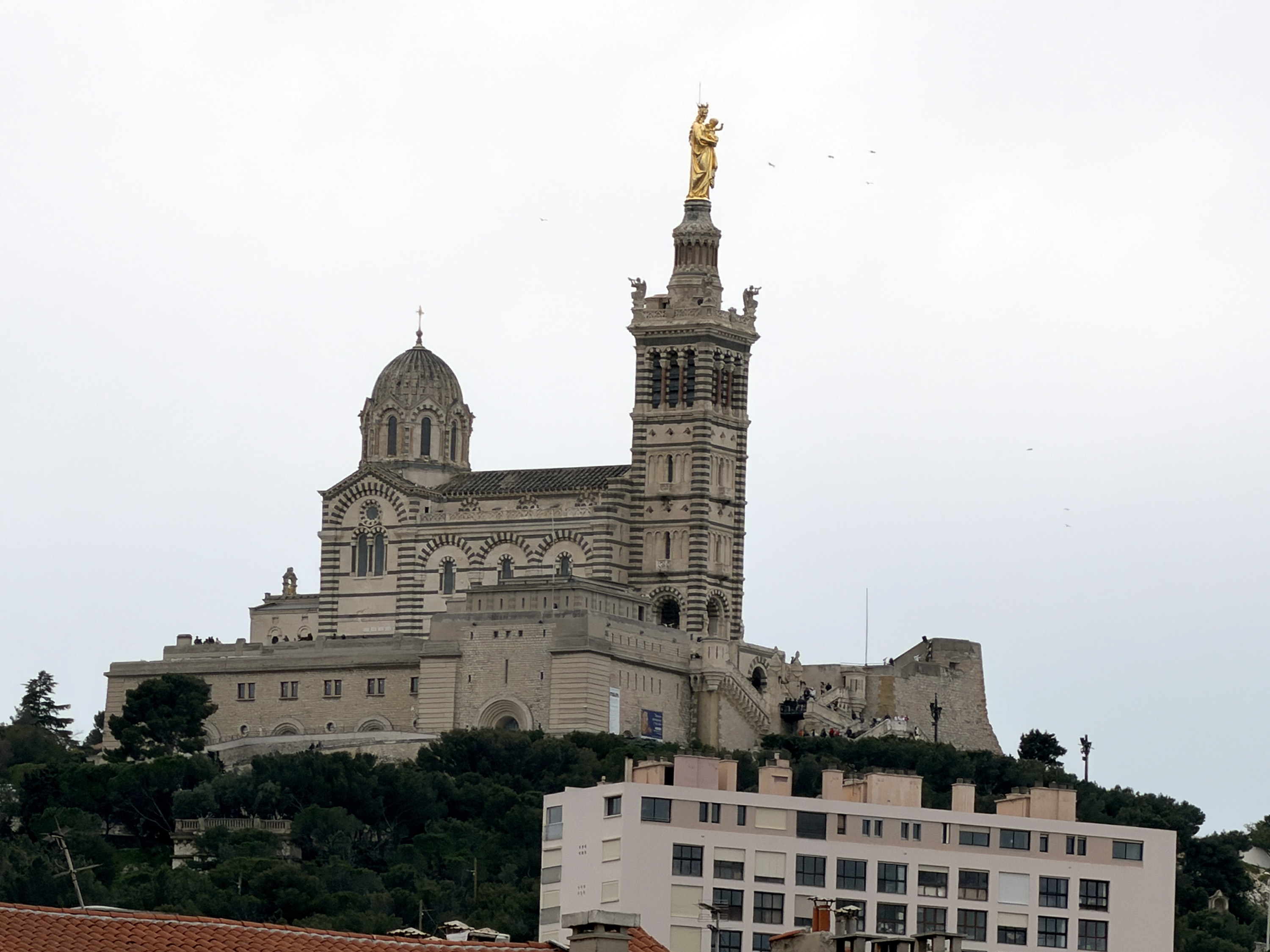
Vesta sailed at 6 p.m. We had dinner at one of the ship’s two specialty restaurants, Manfredi’s Italian. I won’t go into many dining comments on this trip, but their spaghetti carbonara is excellent. After dinner, we attended the traditional welcome show in the theater, introducing the captain and officers, and featuring musical numbers from all the entertainers.
Sunday, March 15 — Ajaccio, Corsica
The Ides of March! We arrived in Ajaccio (uh-ZHACK-see-oh), the capital of Corsica and birthplace of Napoleon Bonaparte, around 7 a.m. A chilly 50° with showers expected. For our included excursion, "Scenic Ajaccio," our guide is Didier, an affable older guy with excellent English. We drove through the sleepy town, which has only 75K inhabitants. The island was under seven centuries of Italian rule—Pisan, then Genoan—but has been French since losing a battle in 1769. (The same year Napoleon was born.) Corsica is now the French prefecture of Corse-du-Sud. The official language is French, but many of the inhabitants speak Corsican, which is much closer to Italian.
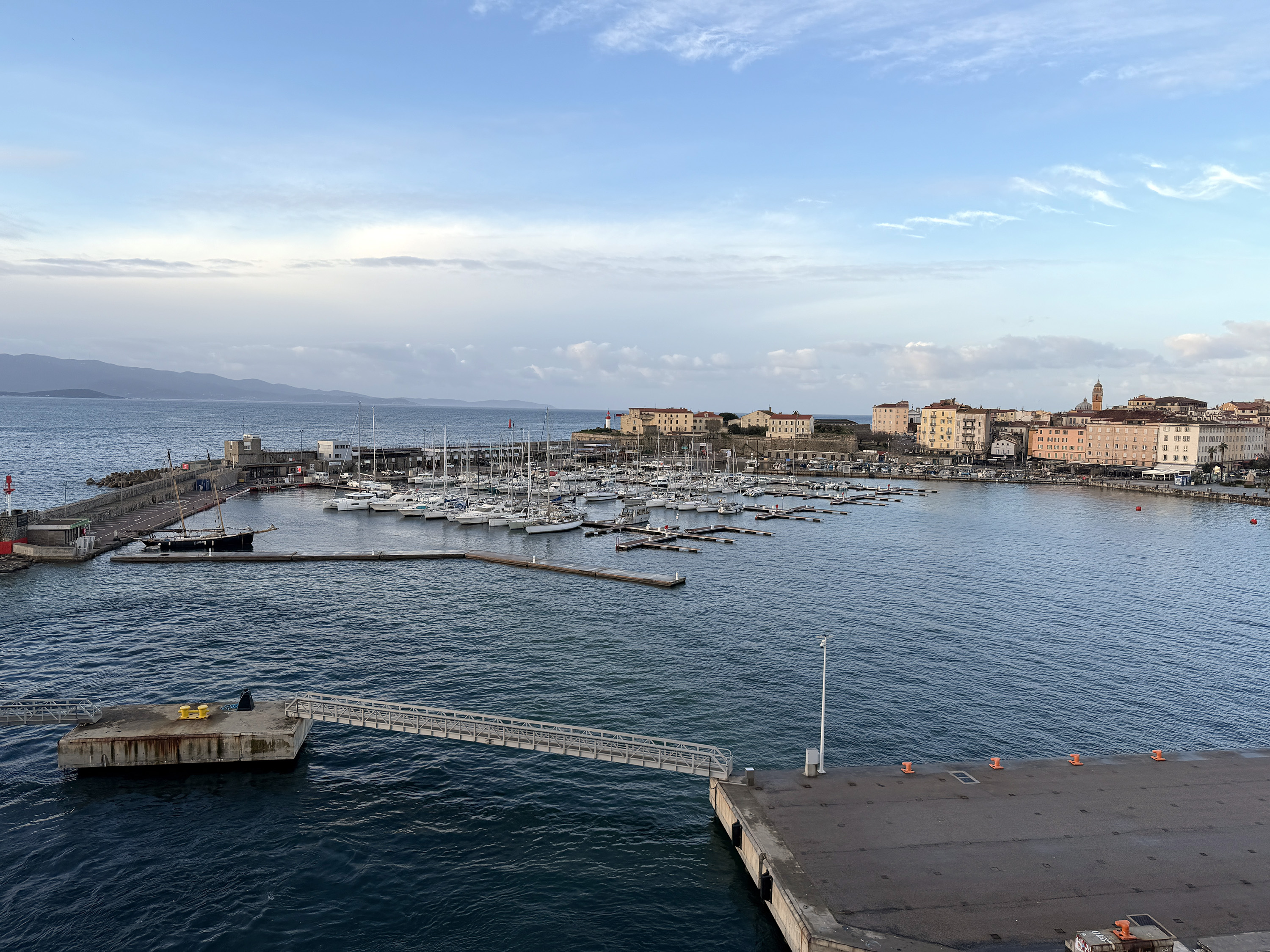
We drove 30 minutes along the gulf coast, which was pretty, but we had to use our imaginations to envision the undoubted summer charm of the area. We passed a cemetery that was bombed by the Luftwaffe in 1943; the locals turned out all of the lights in town and erected some lights there to fool the pilots. Ajaccio was the first French city liberated by the Allies in World War II (September 9, 1943).
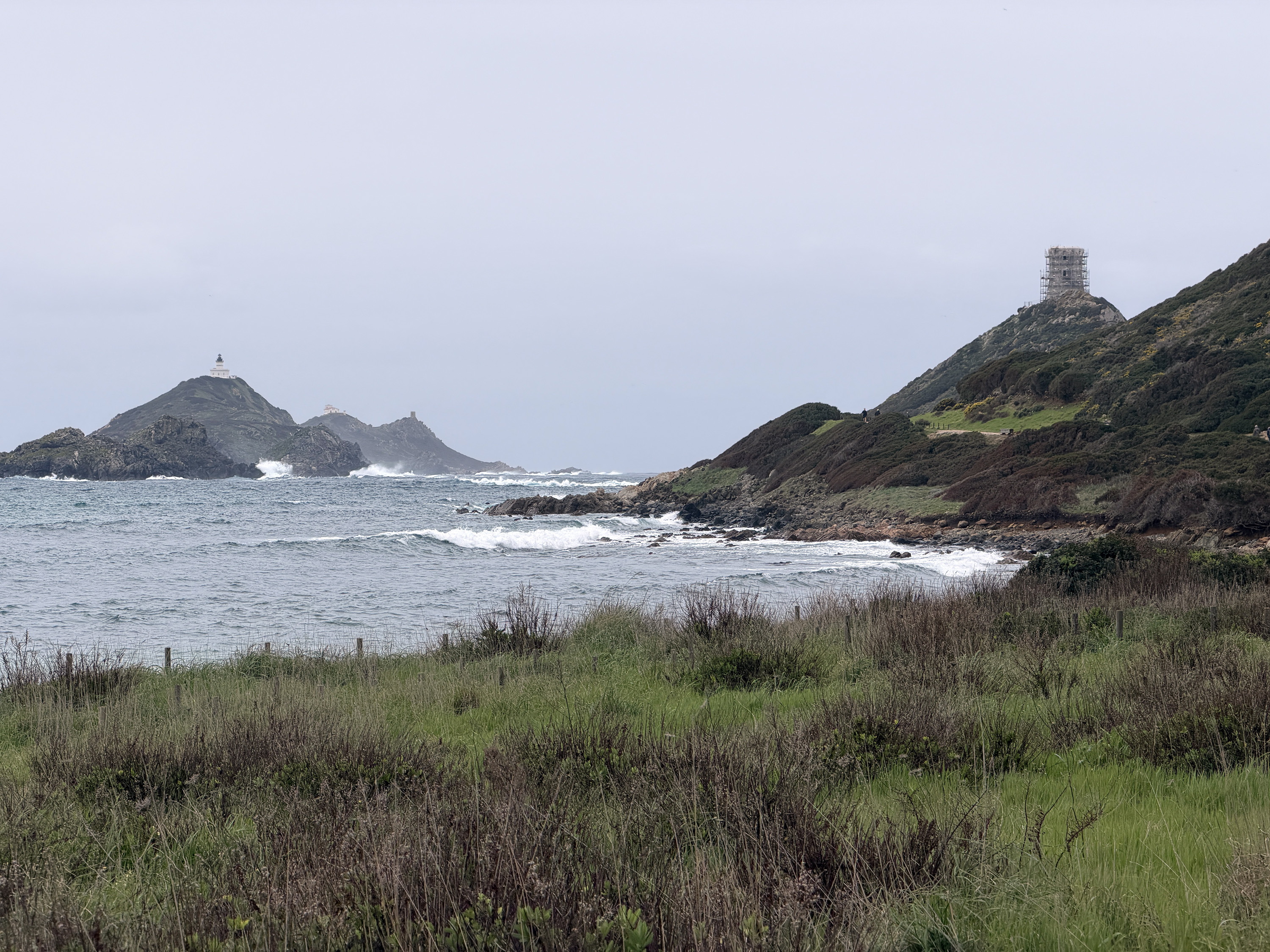
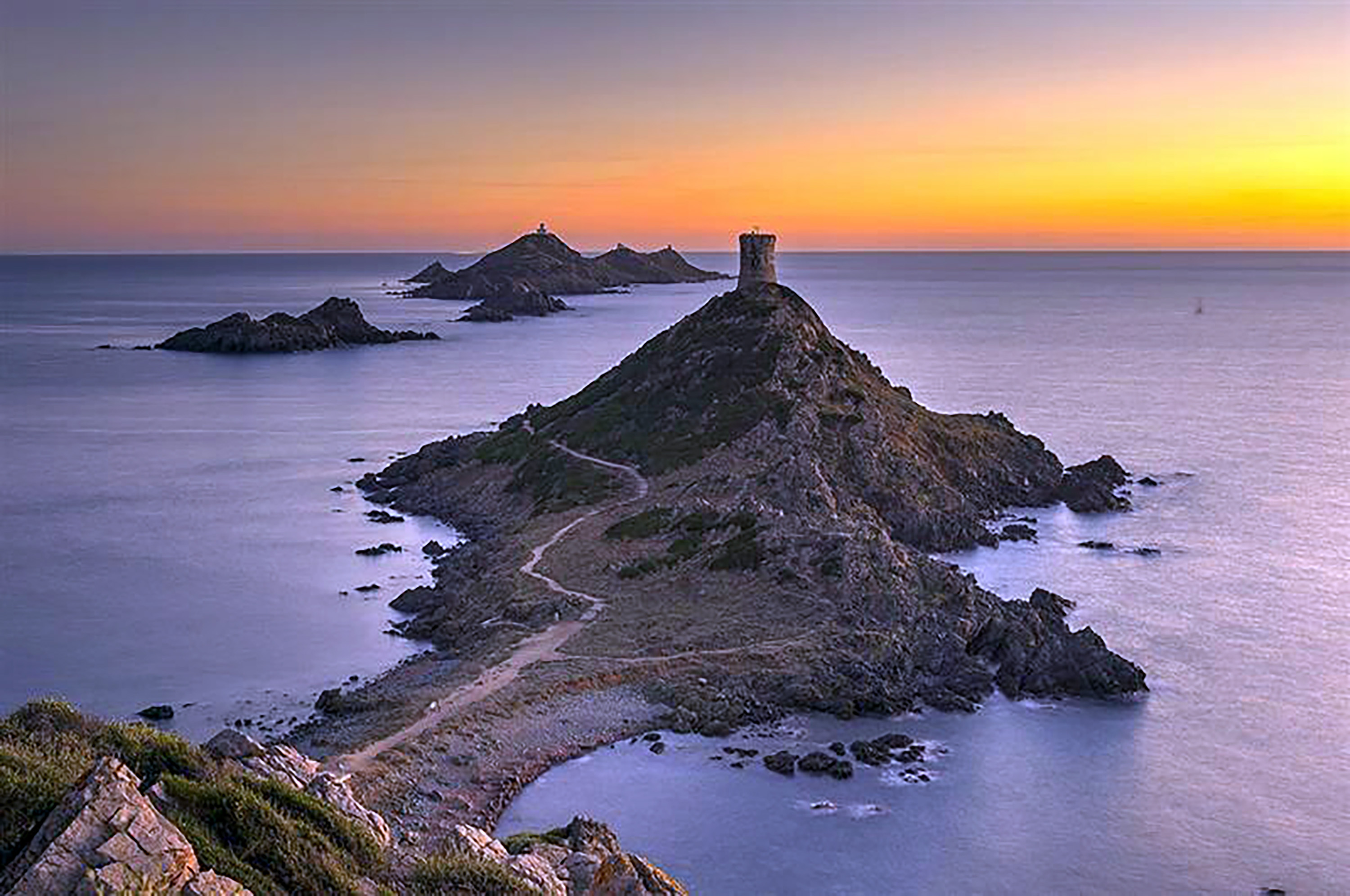
We eventually reached an overlook of the Îles Sanguinaires (Blood Islands), named for the color of the granite rocks at sunset. We stopped for 20 minutes, but there wasn’t much to see.
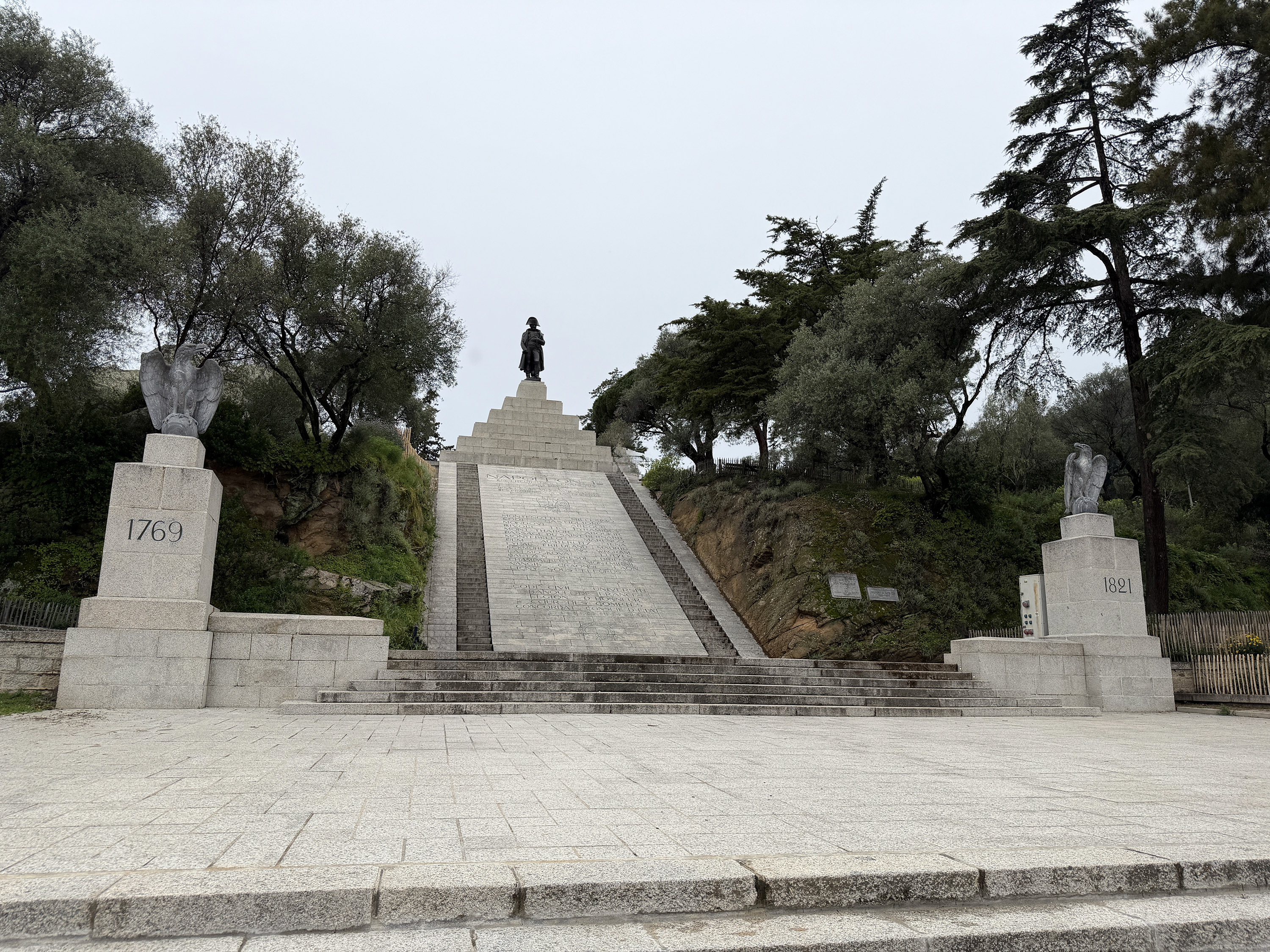
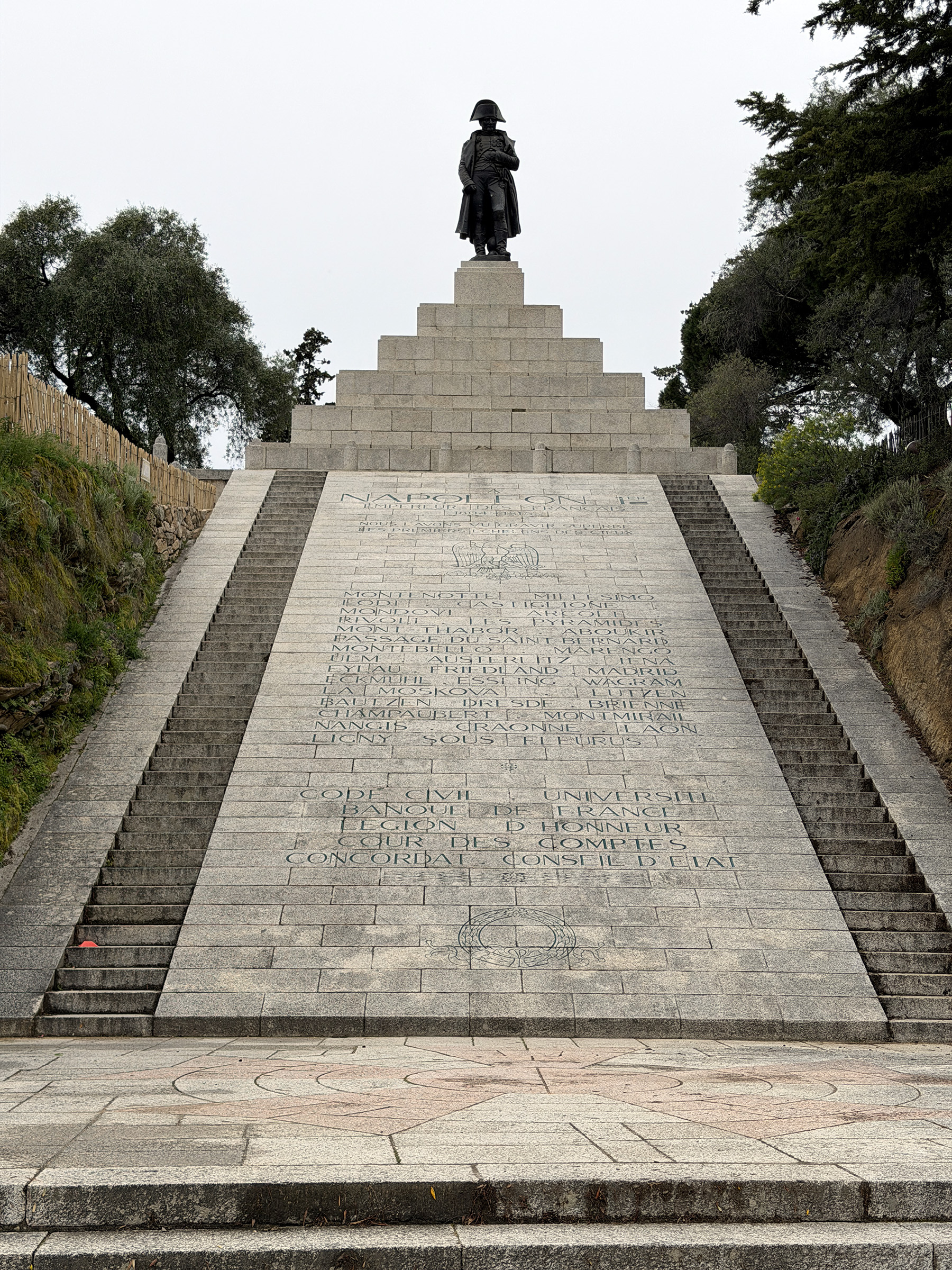
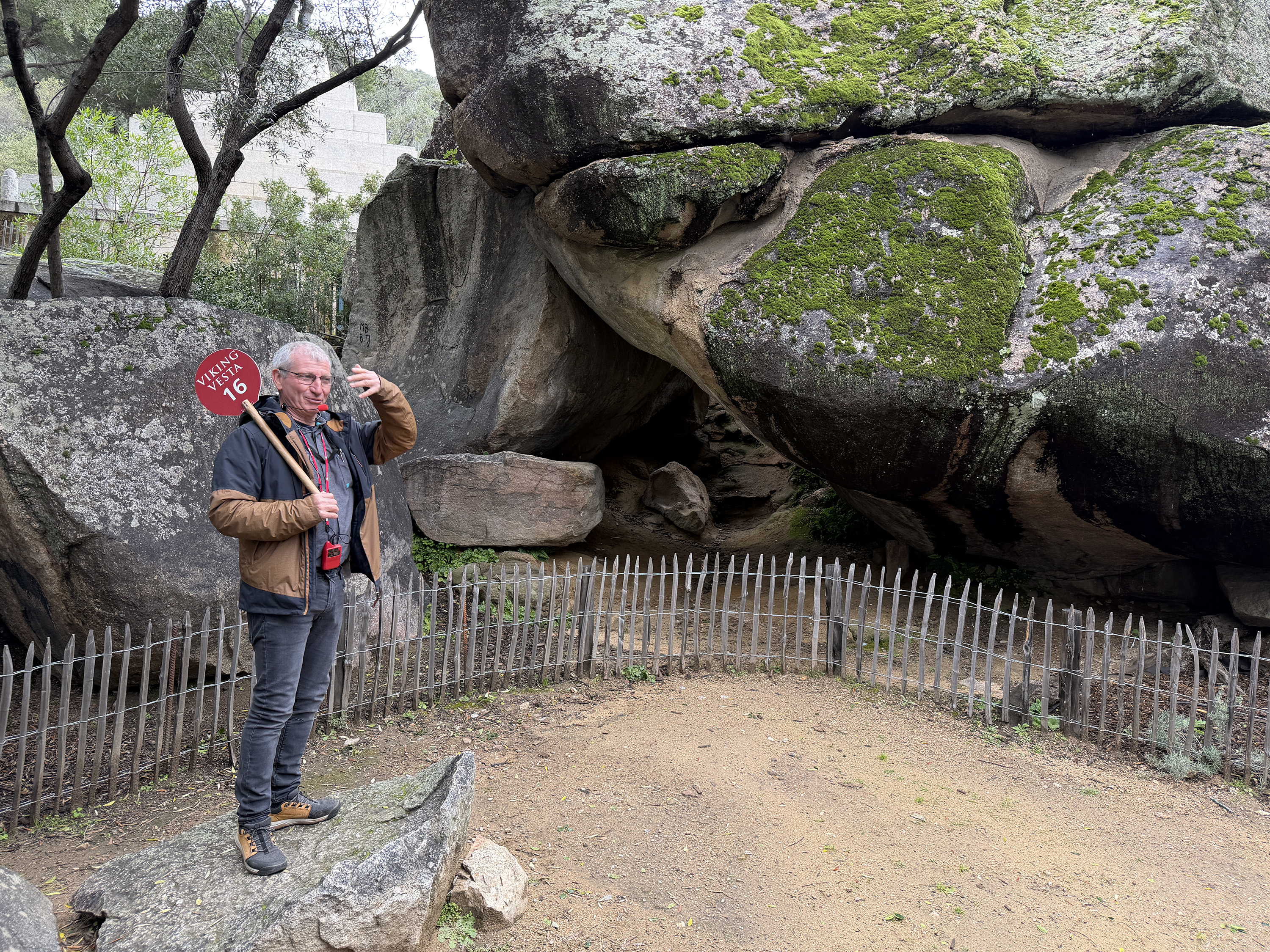
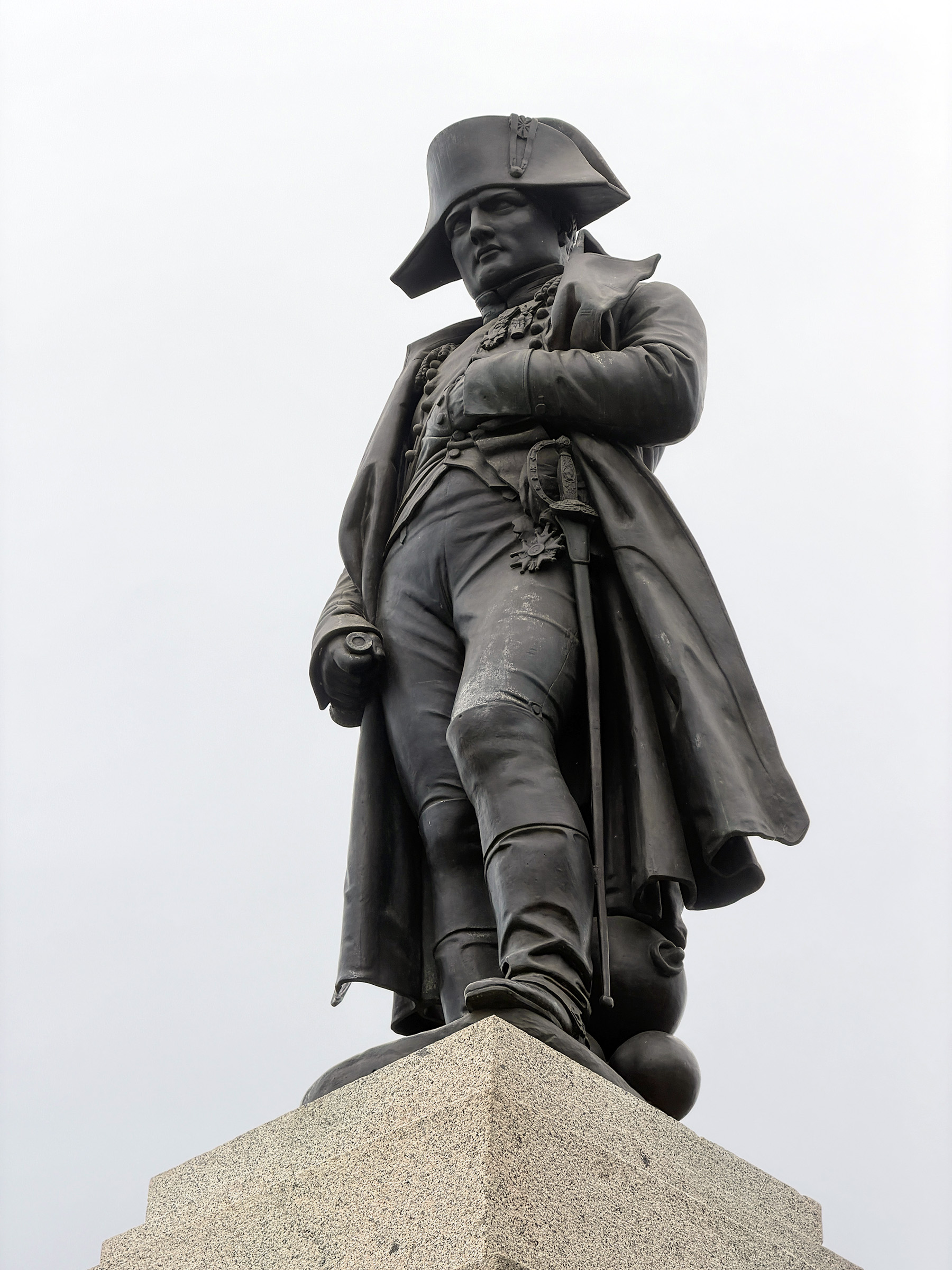
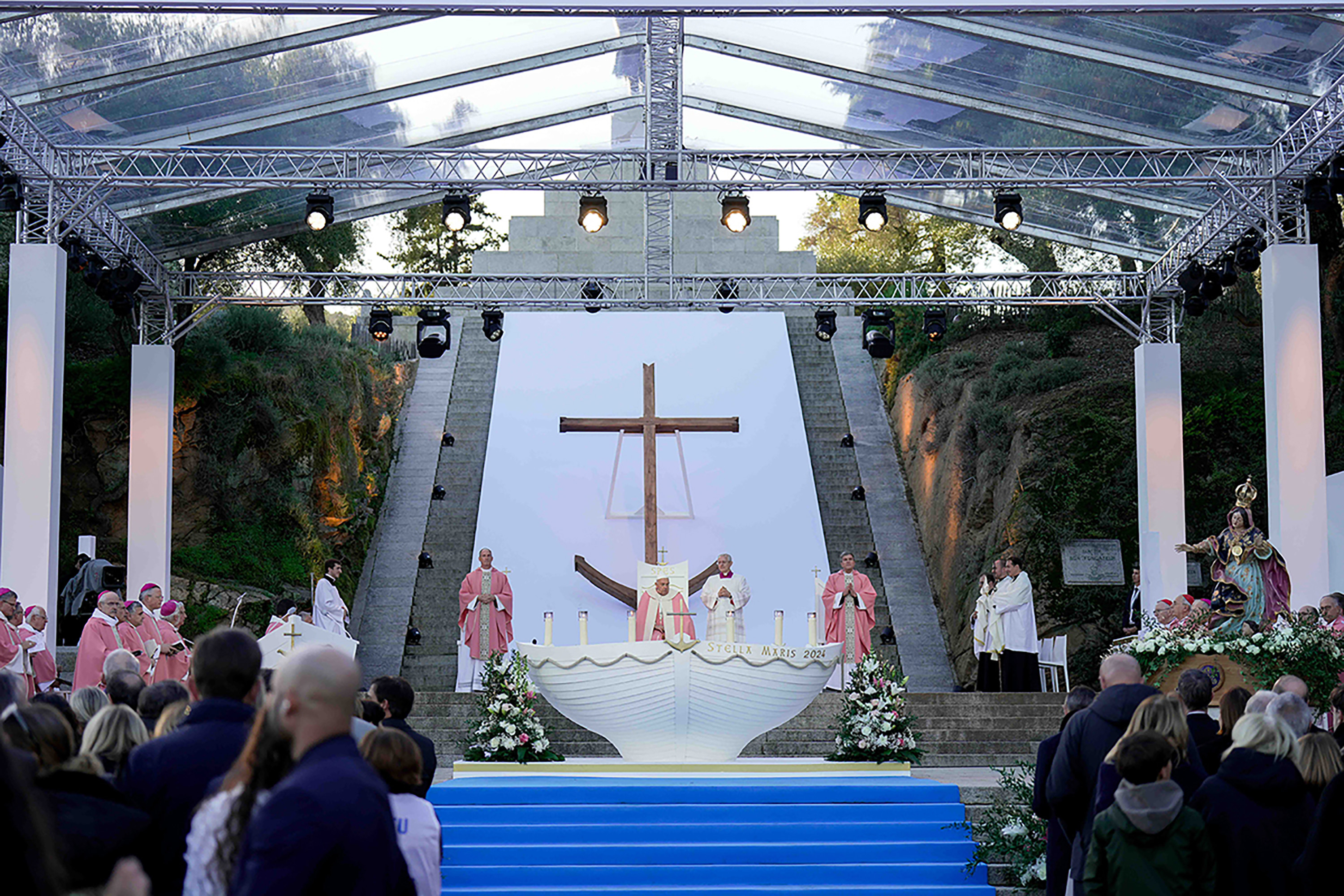
On the way back, Didier expounded on the lives of Napoleon and Pasquale Paoli (the island’s greatest statesman). We visited Austerlitz Square, where a large staircase monument commemorates Napoleon’s battles (only the winning ones) and civil achievements. Behind it is the Cave of Napoleon, which he hung around as a boy. The plaza below was the site of Pope Francis’s final foreign visit. Driving back into town, we had a choice: take a one-hour walk in the light rain to visit a church or stay on the bus to return to the ship. We chose the latter. It was a quiet afternoon on the ship. Viking doesn’t have many activities in comparison to other lines. There’s a port talk each afternoon, but we generally watch a replay of it on our cabin TV. Also, there is a fancy tea service. Dinner was at The Restaurant (main dining room). The evening show was the four ship vocalists performing “Legends.” Quite good.
Monday, March 16 — Civitavecchia/Rome
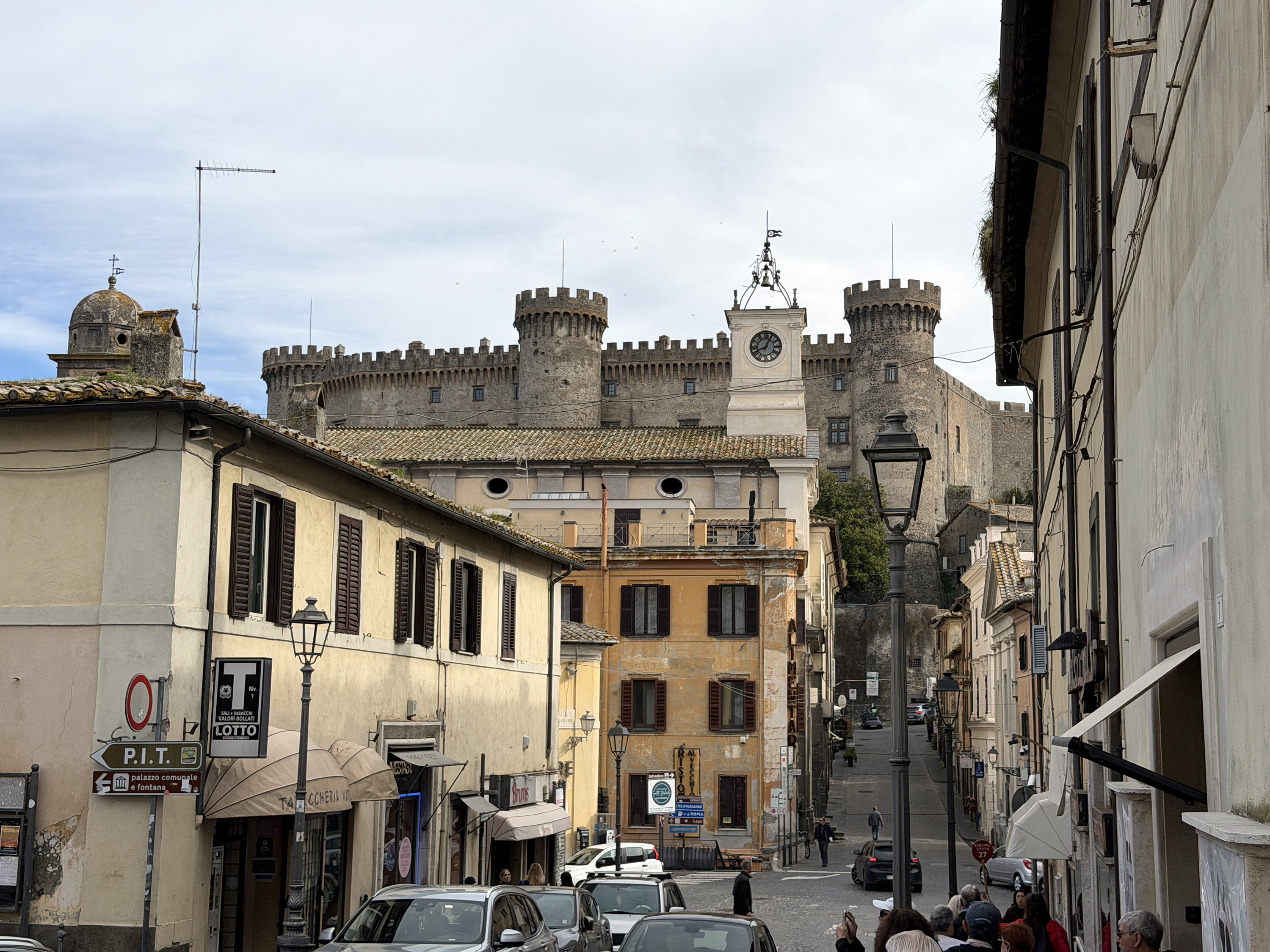
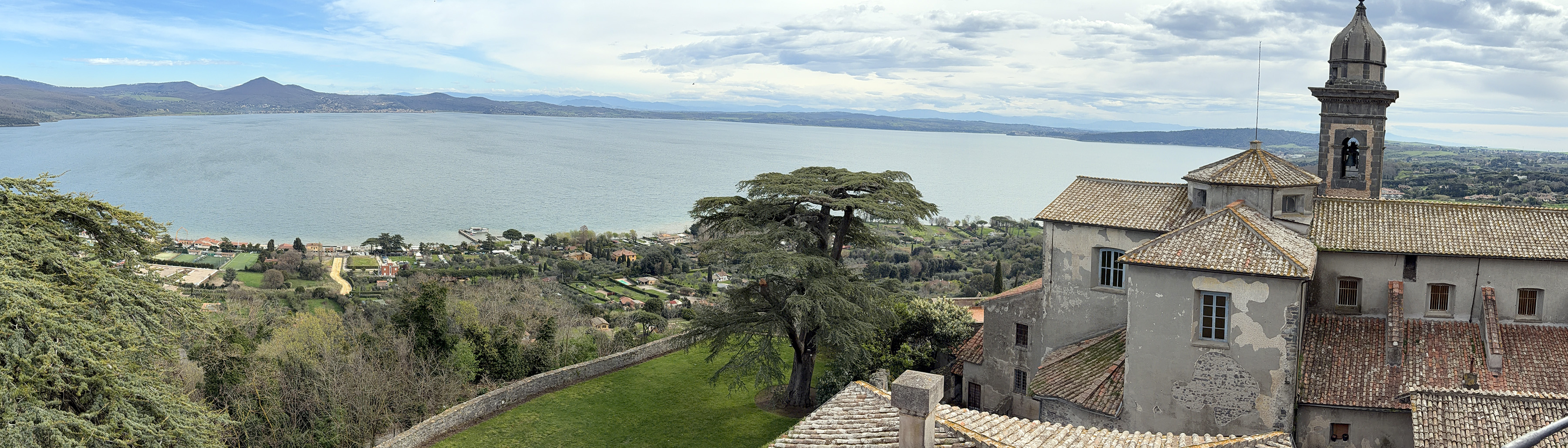
Beautiful sunny weather today, arriving at Rome’s distant cruise port around 7 a.m. We spent a few days in Rome a couple of years ago, so we didn’t fancy four hours of bus riding and a ten-hour day for a superficial return visit. Instead, we booked “Bracciano’s Castle and Carbonara Tasting,” at six hours the shortest of the excursions. Our guide was a nice young woman named Natalie, a representative of “Trumpy Tours.” We drove about an hour to the small town of Bracciano, overlooking beautiful Lago di Bracciano. Last year I was about 20 miles east of here visiting the Italian Air Force Museum.
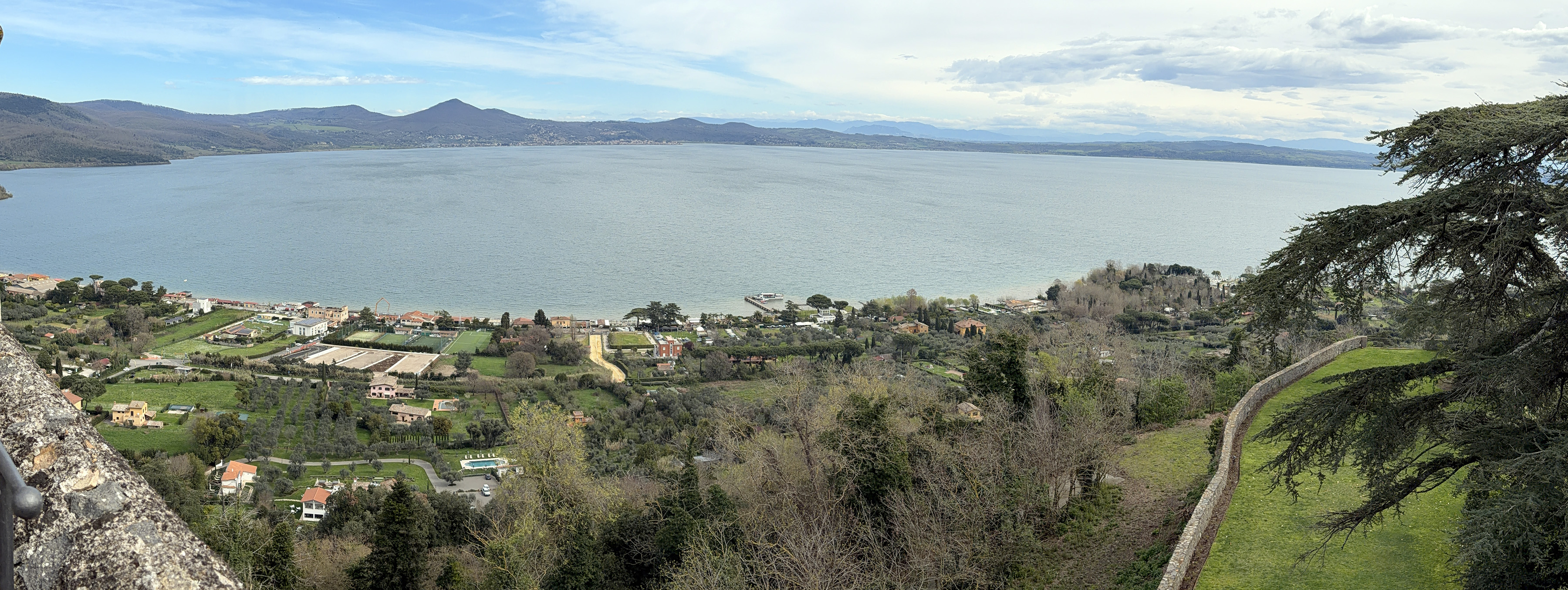
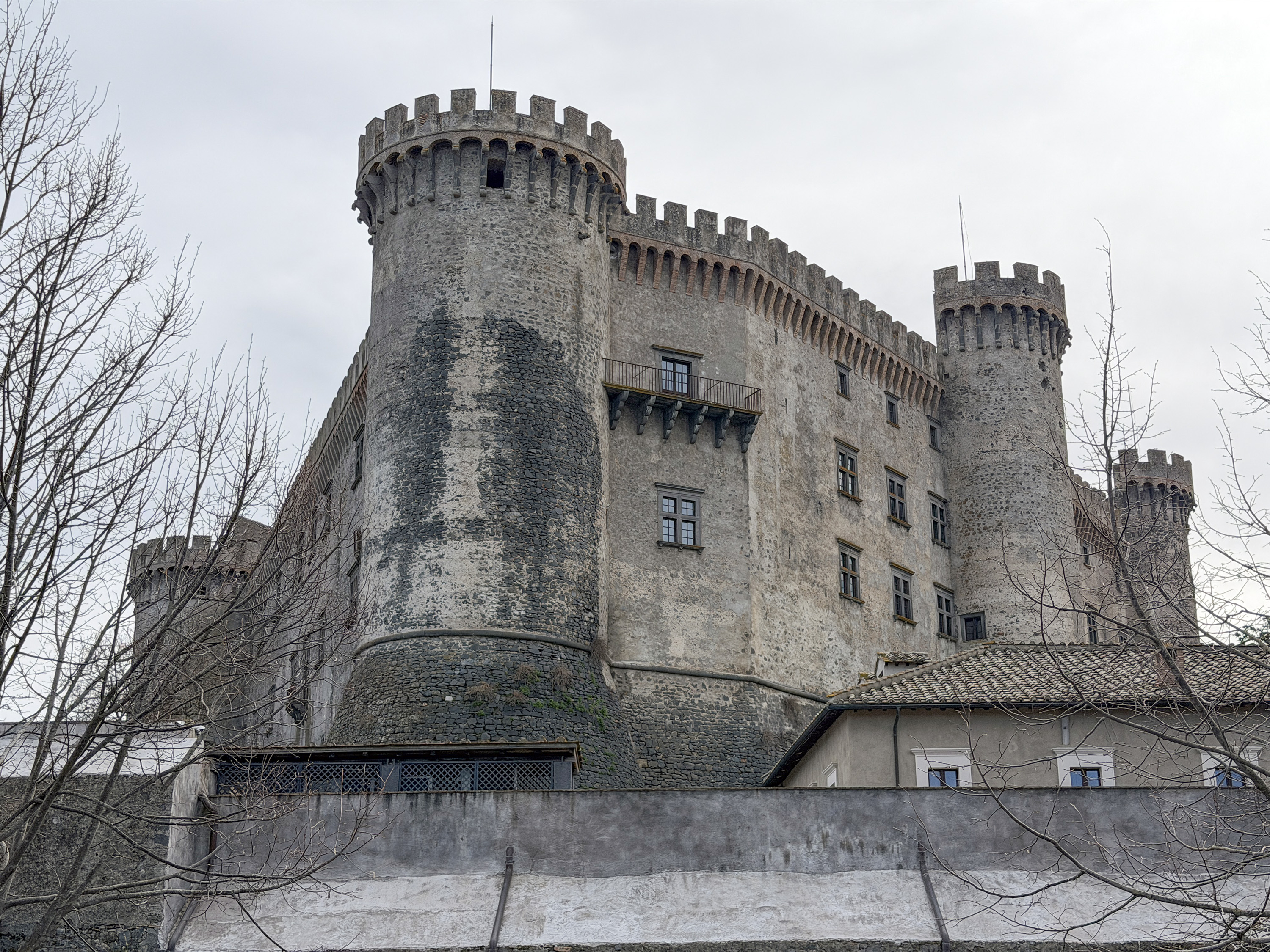
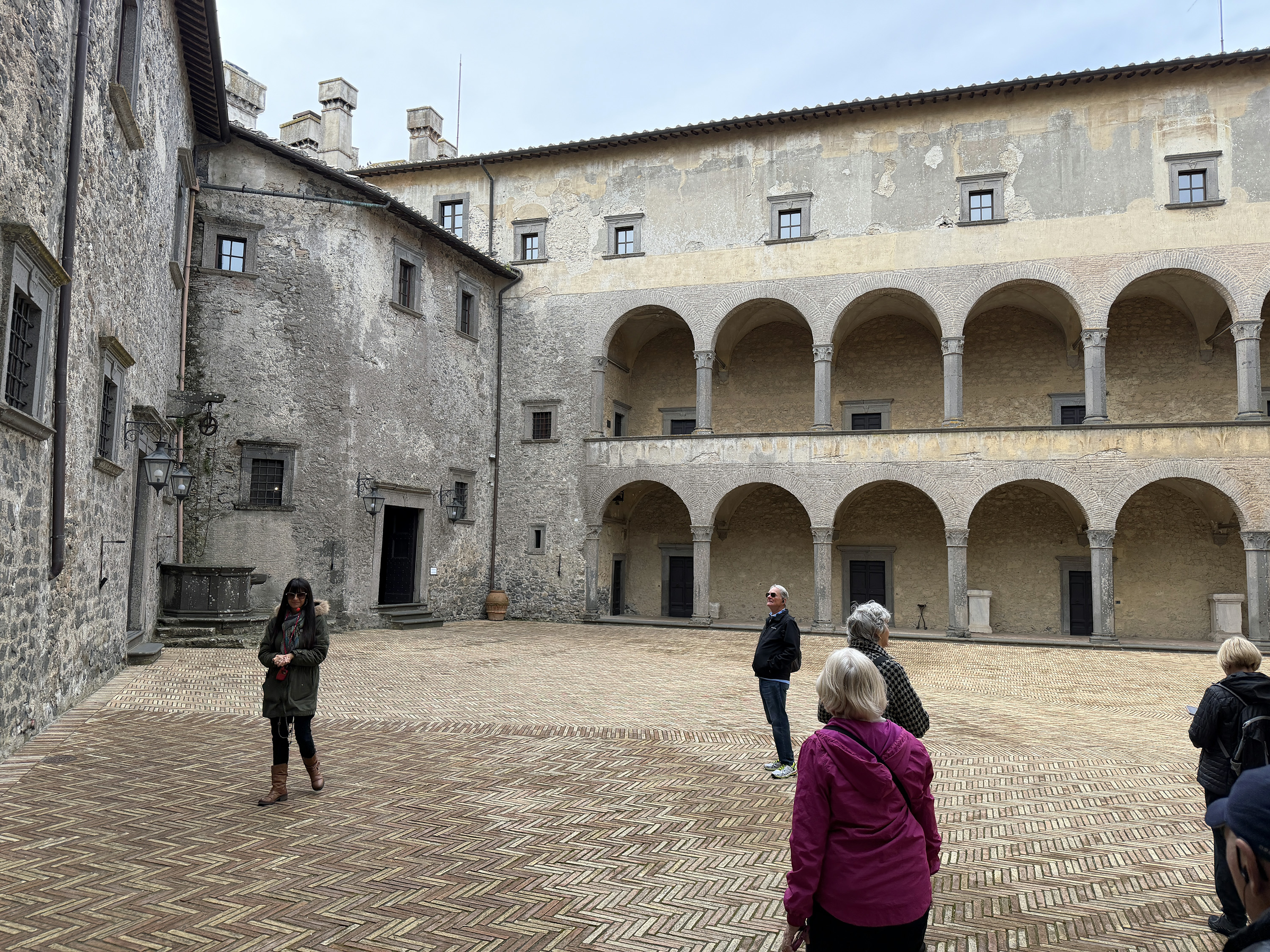
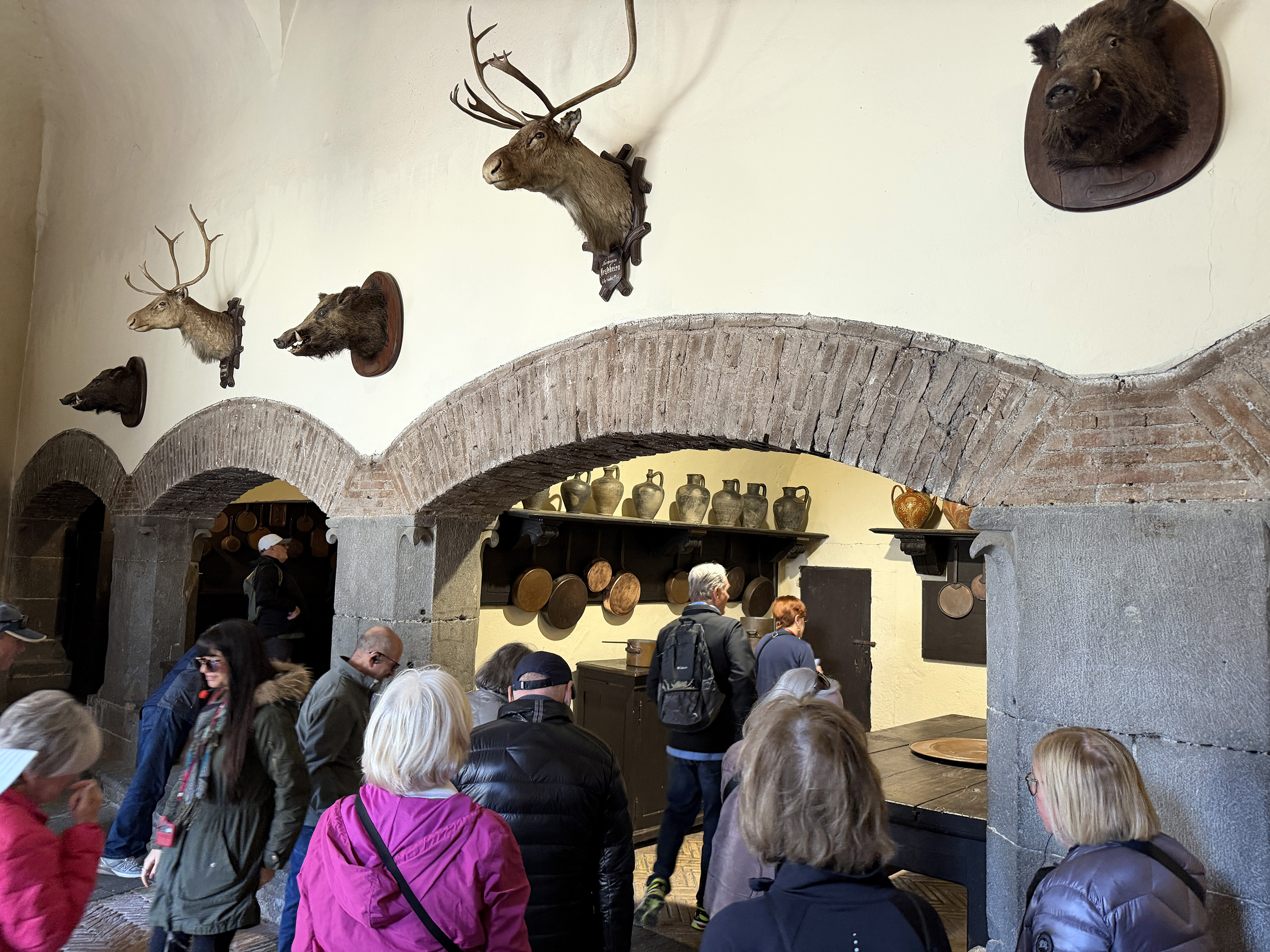
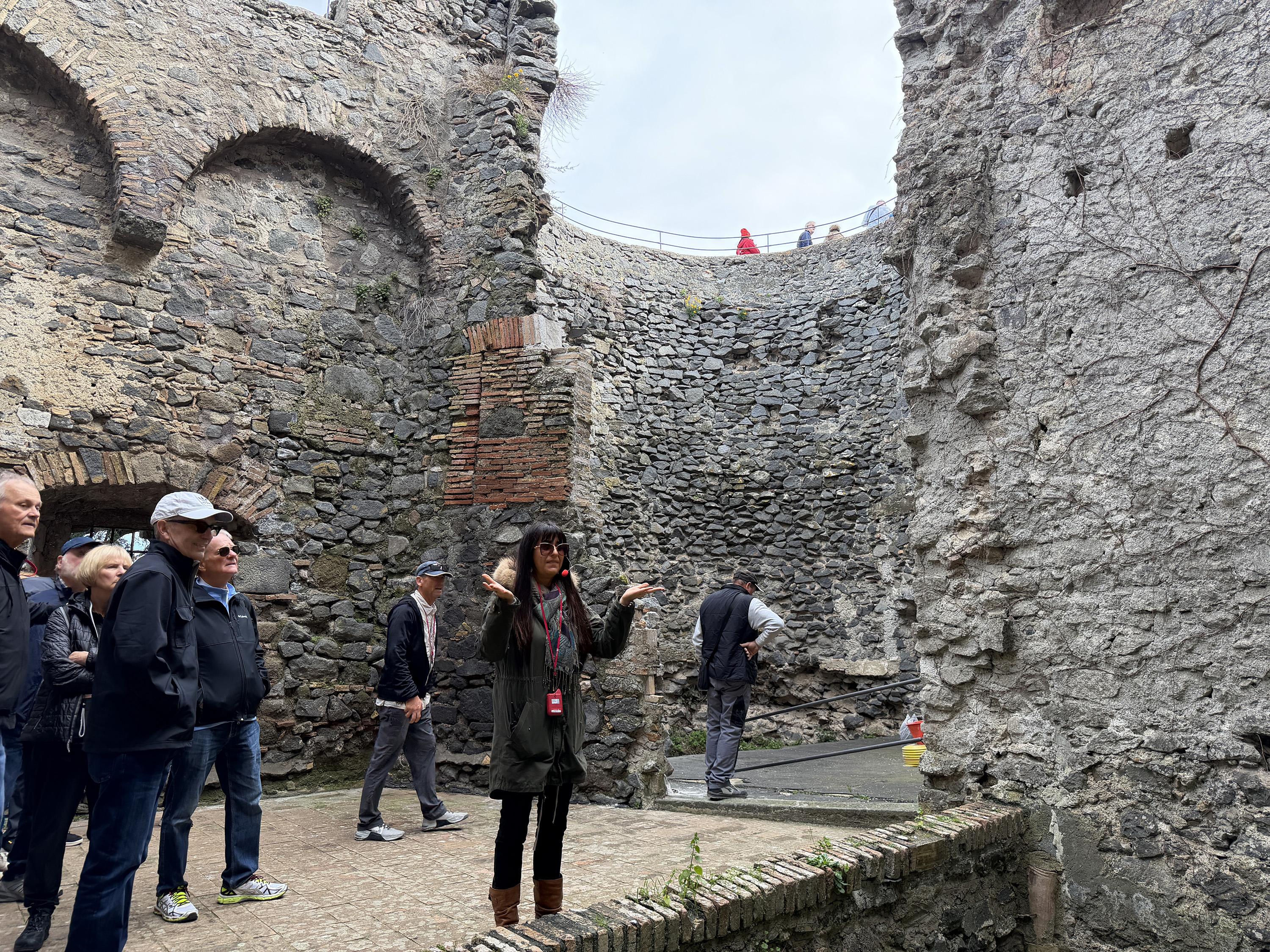
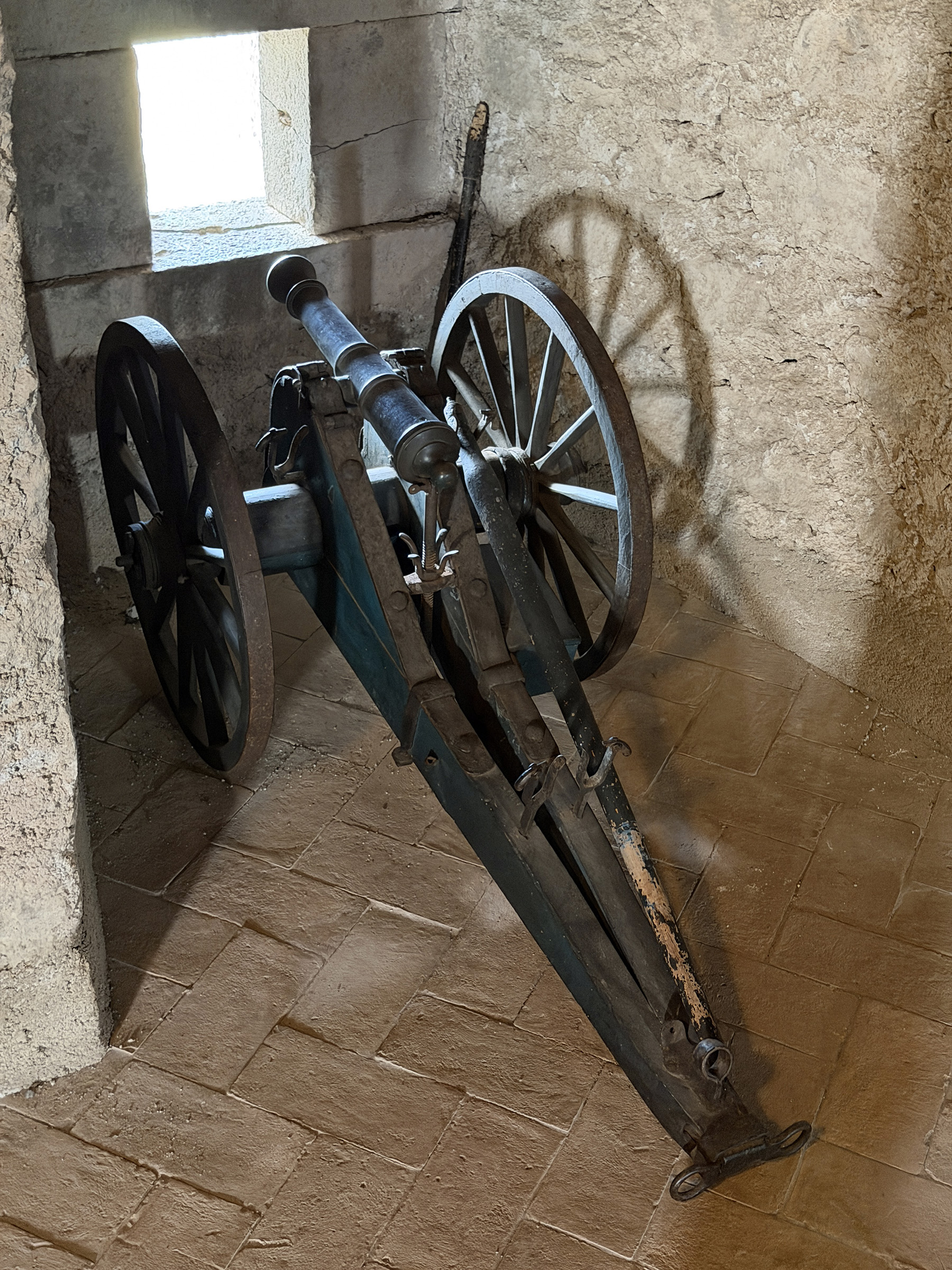
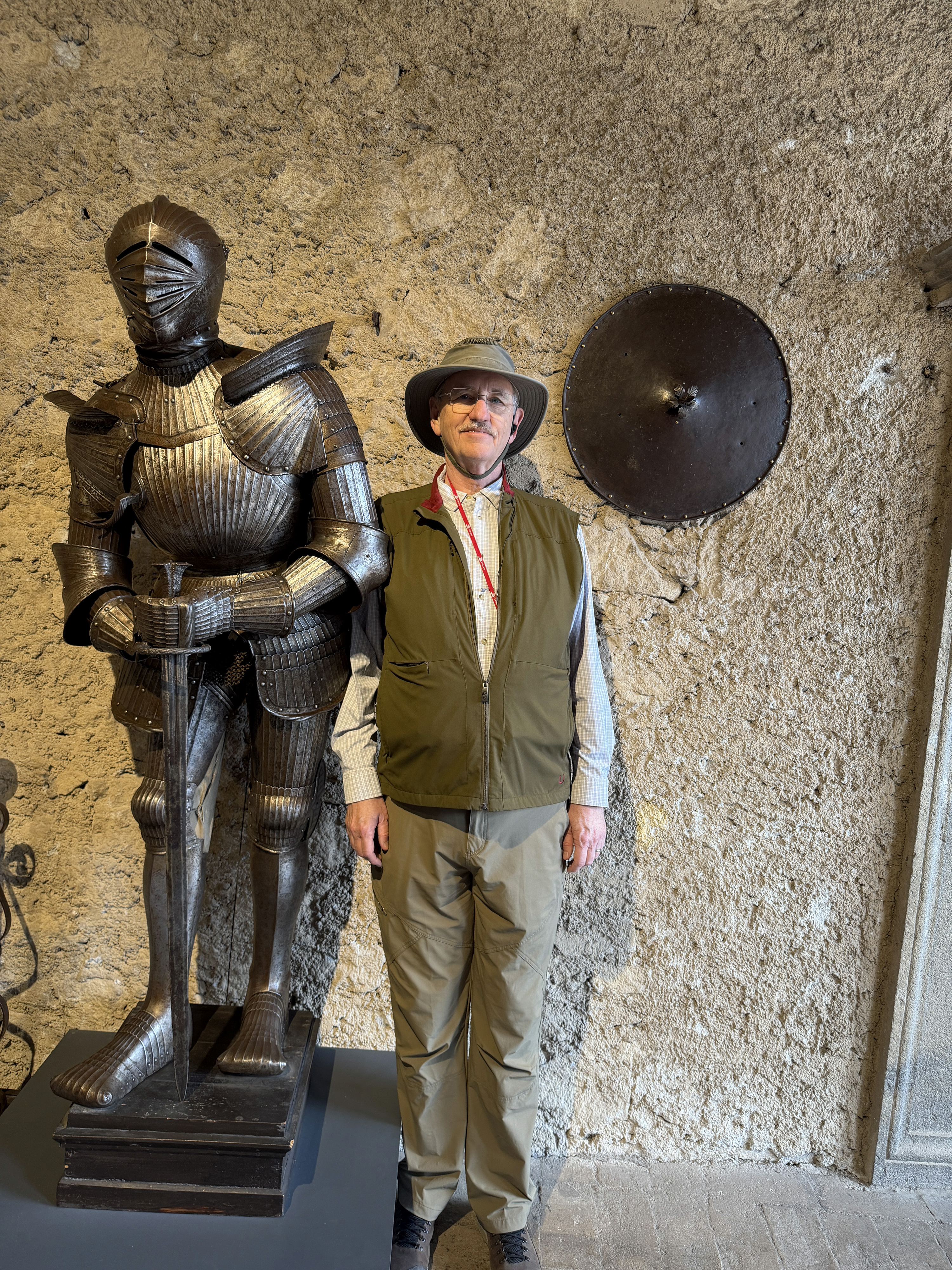
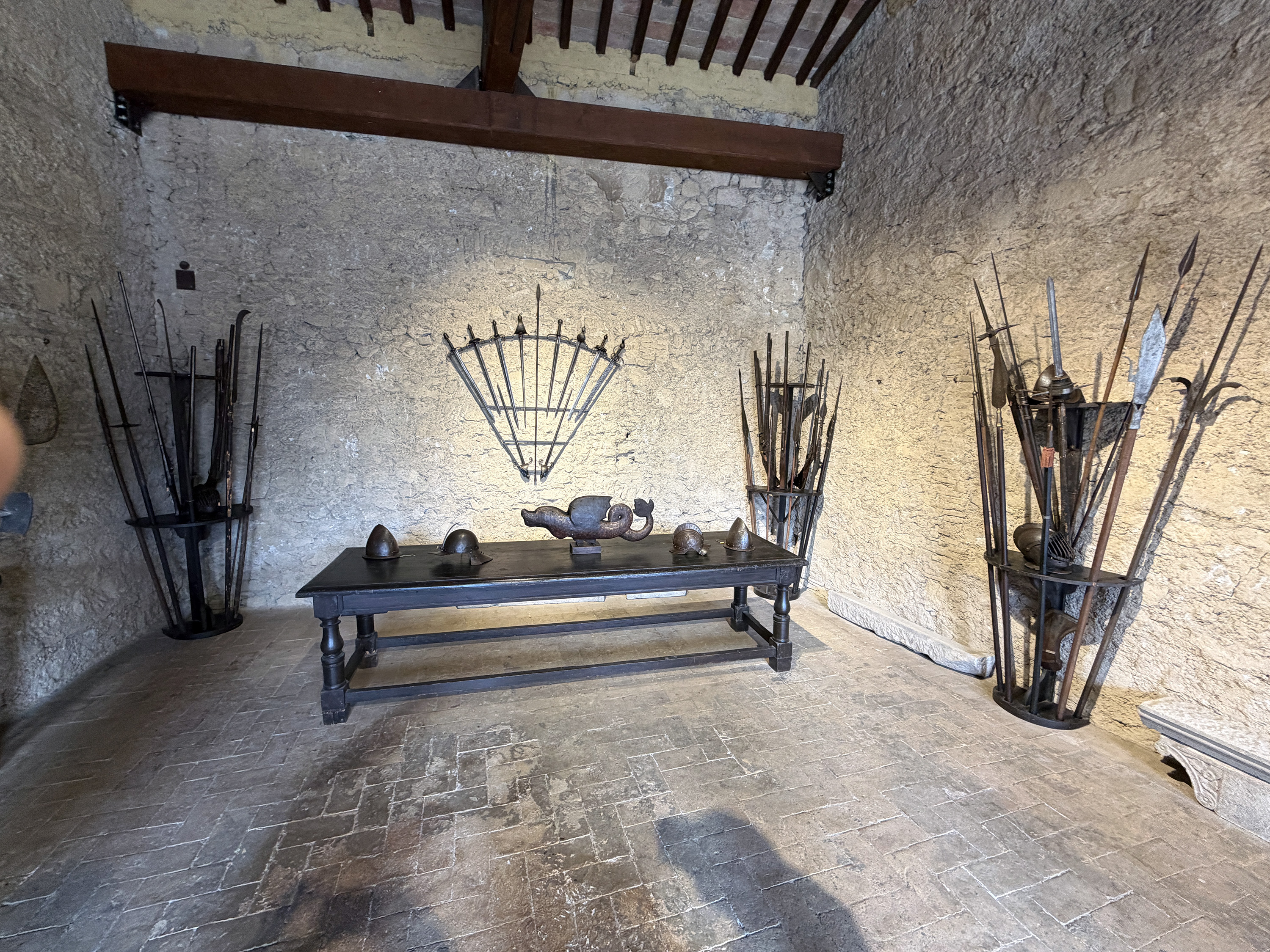
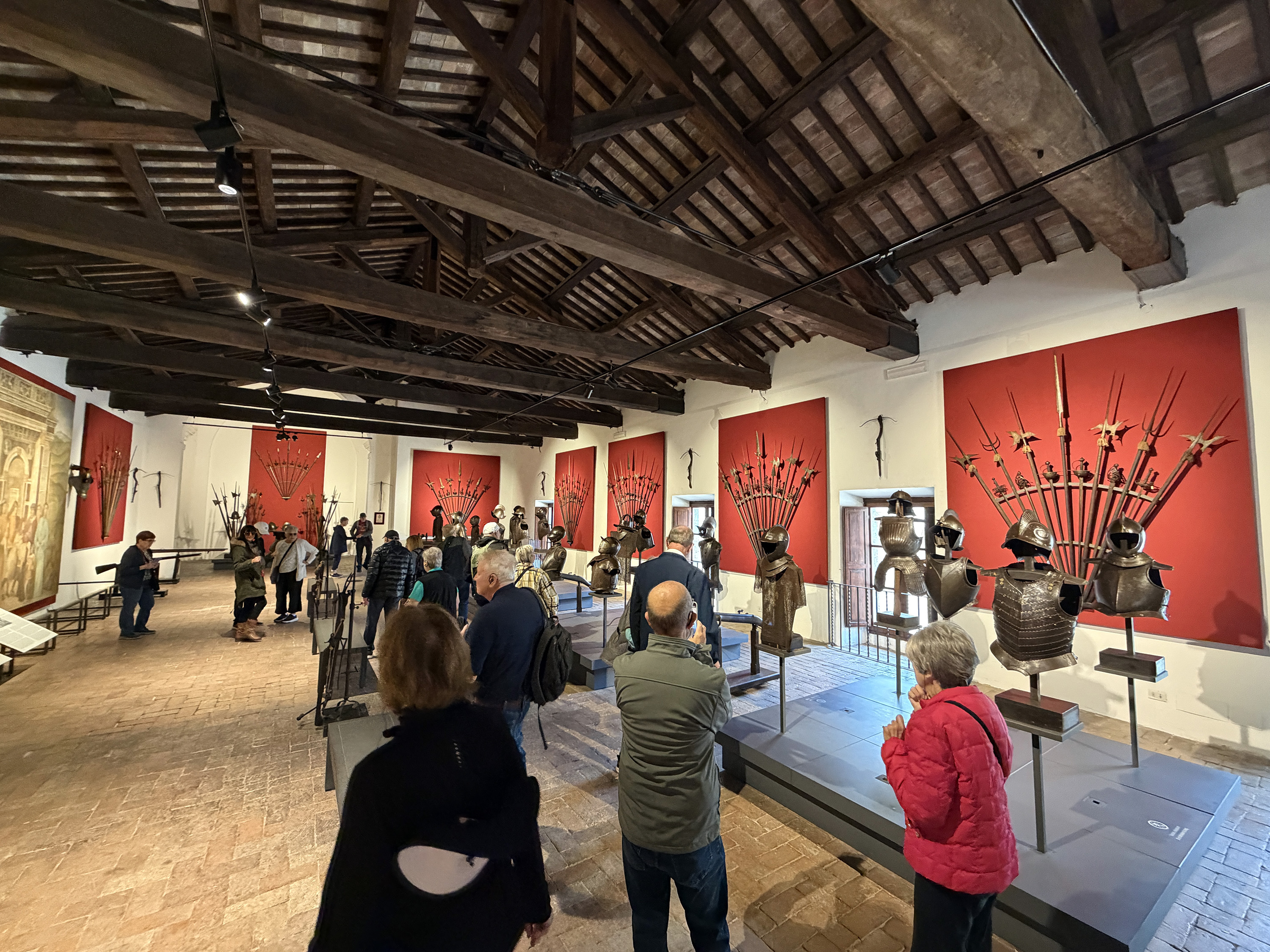
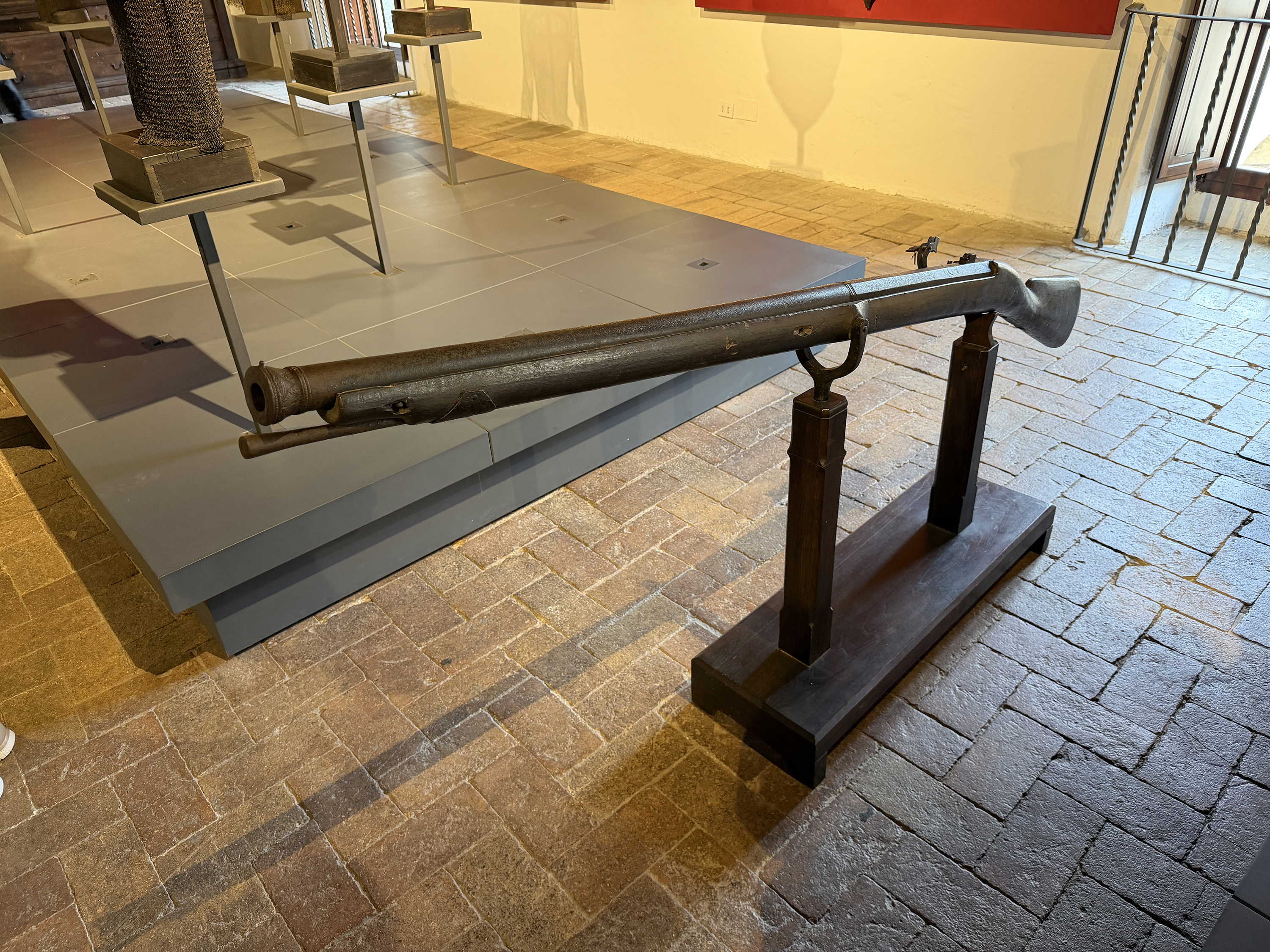
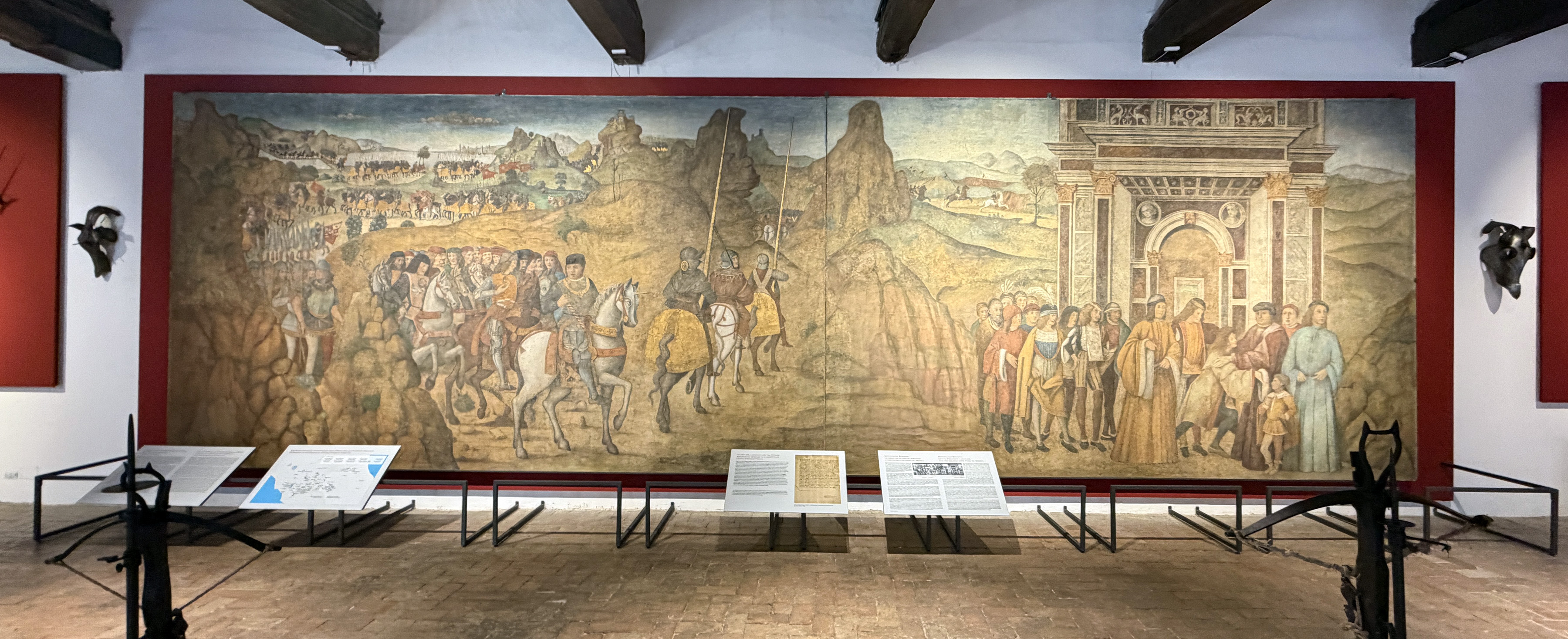
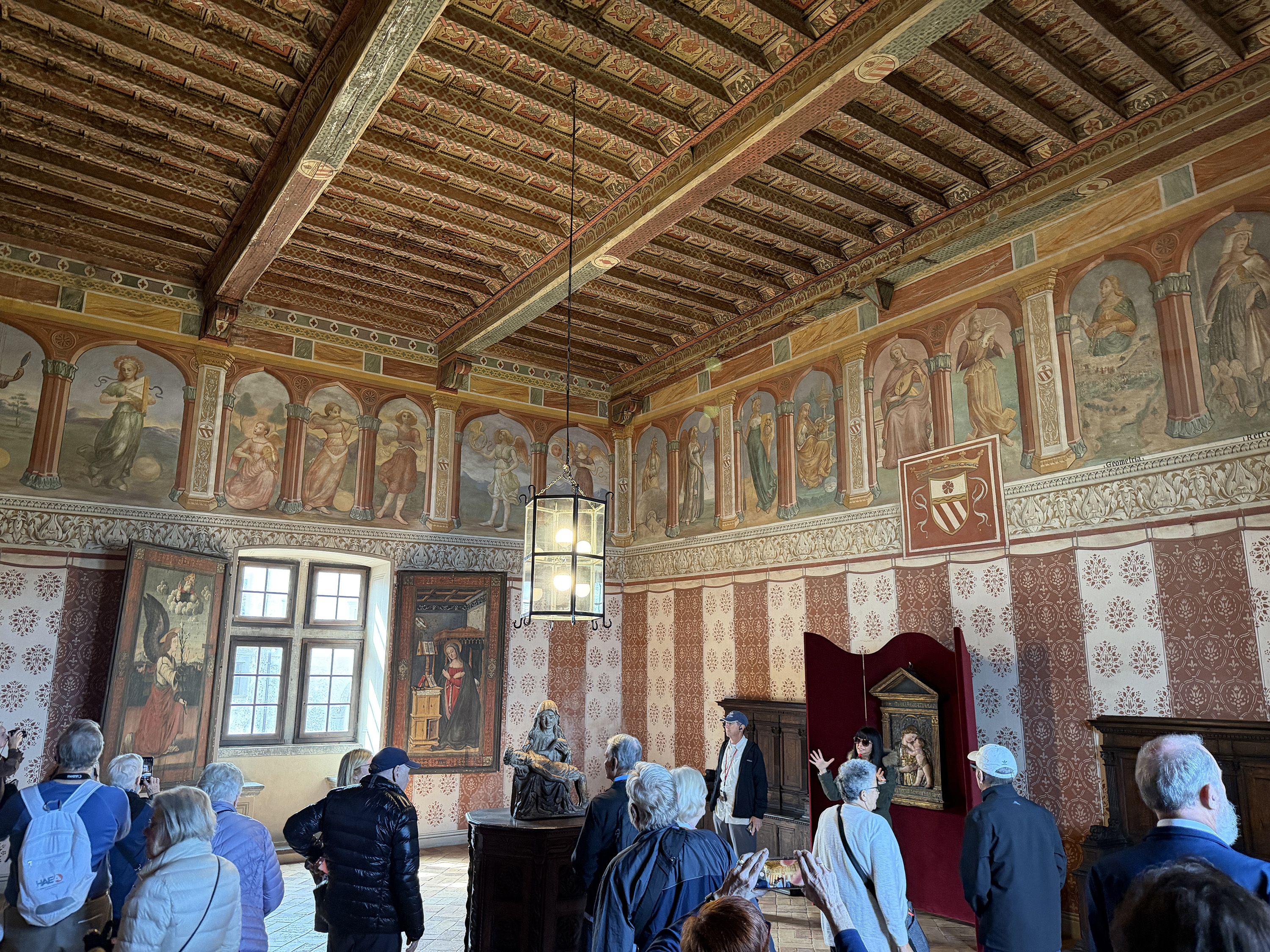
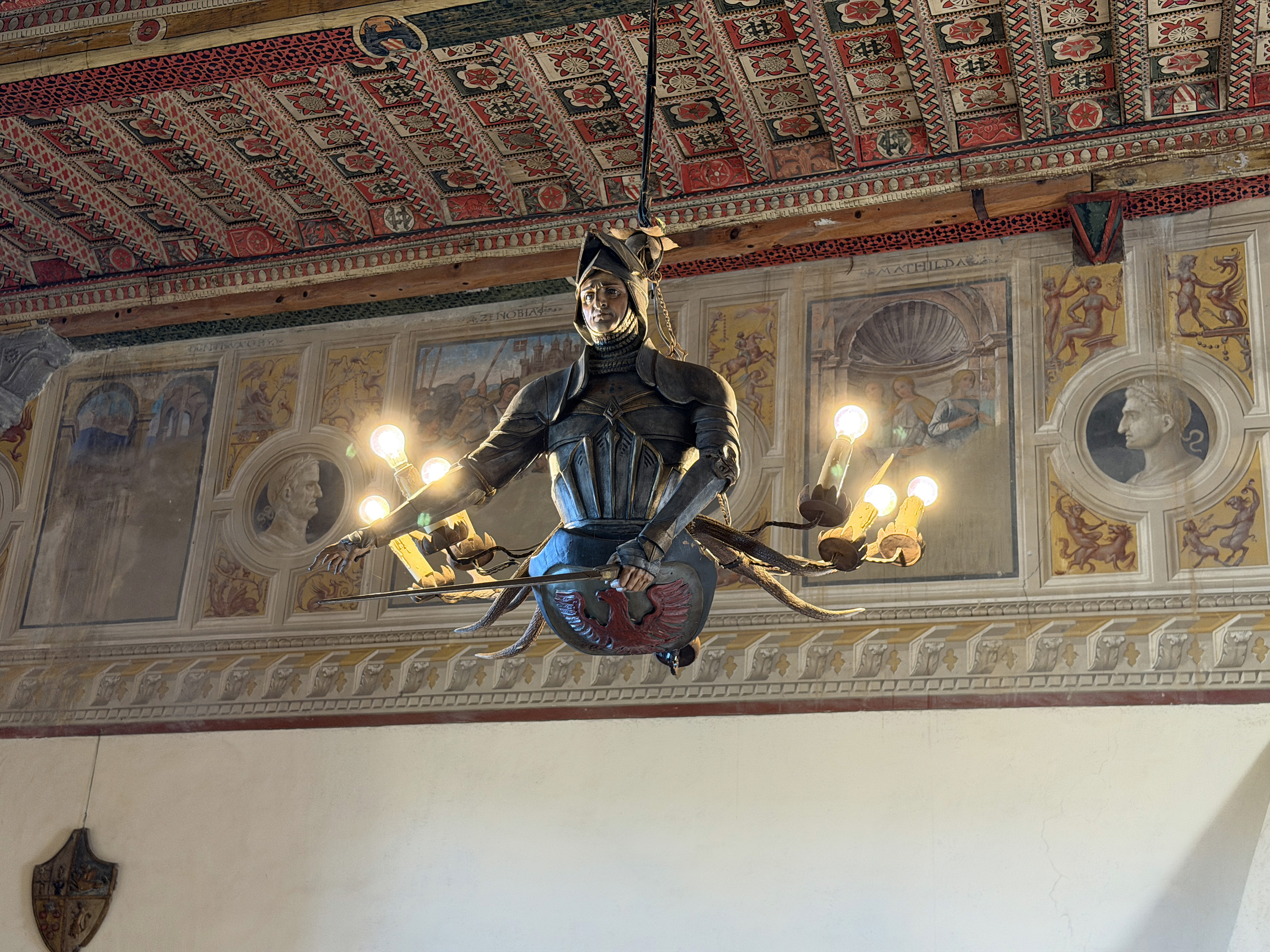
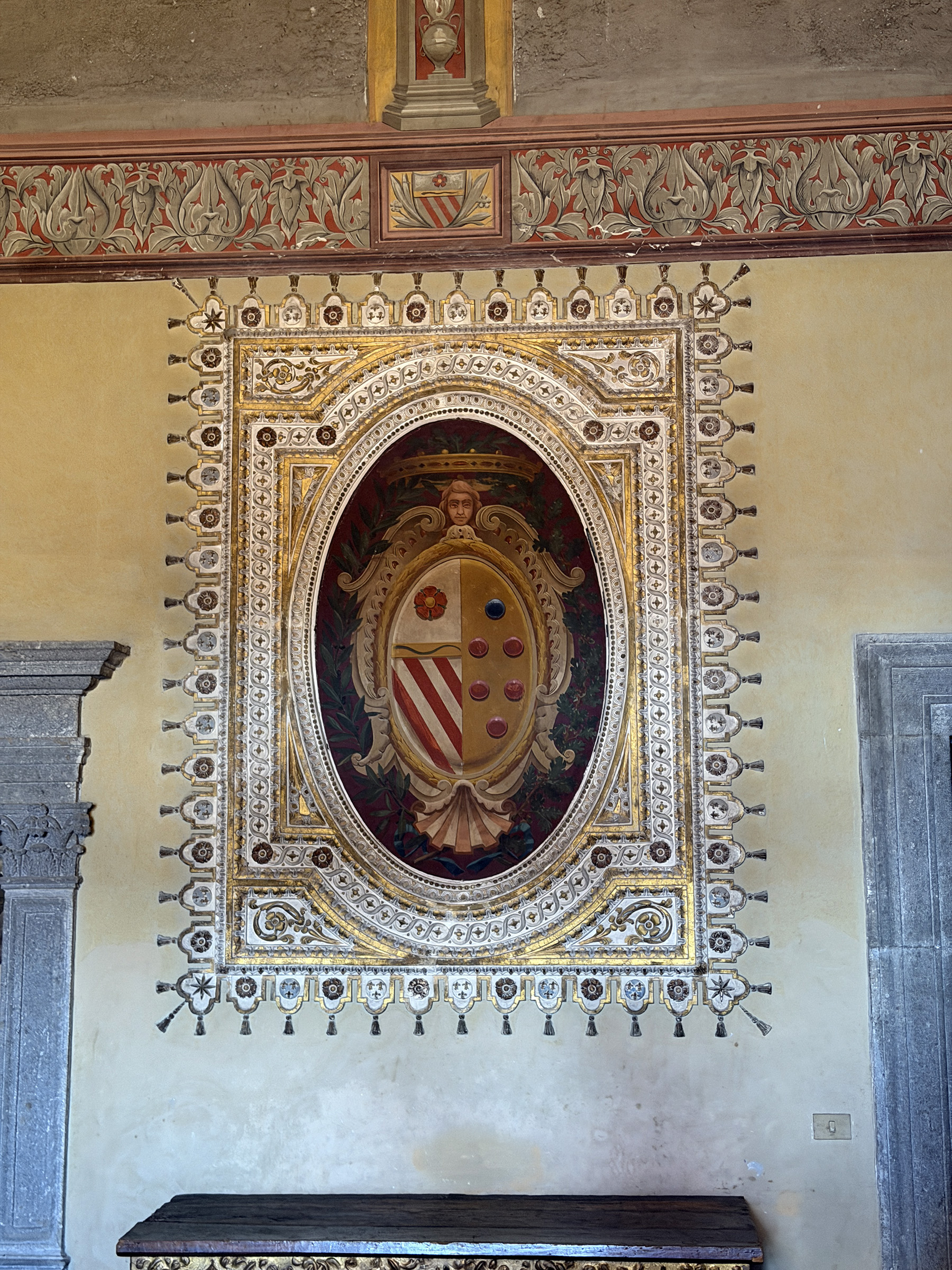
The castle (Castello Orsini-Odescalchi) is on the highest hill in town. We met a local guide, Moya. The castle was built between 1470 and 1485 first as a military fortress and then in the second half of the 16th century as a residential palace. The Orsini family—the dukes of Bracciano—were the builders and owners. Paola Orsini married Isabella de’ Medici—daughter of Cosimo—and Moya had a few stories to tell about her beauty and infidelities. In 1696, the property was purchased by the Odescalchi family of wealthy bankers from Florence. The castle is available for rent; Tom Cruise and Katie Holmes were married here in 2006. We enjoyed stunning views of the lake and town from the ramparts. Then we visited dozens of huge rooms, some with 7m ceilings and at least one with 14m. Kitchens, armories, libraries, bedrooms, ceremonial halls, etc. Lots of original fixtures and beautiful decorations. An impressive collection of armor and weapons. Of all the castles we’ve visited over the last 50 years, this one certainly ranks in the top five.
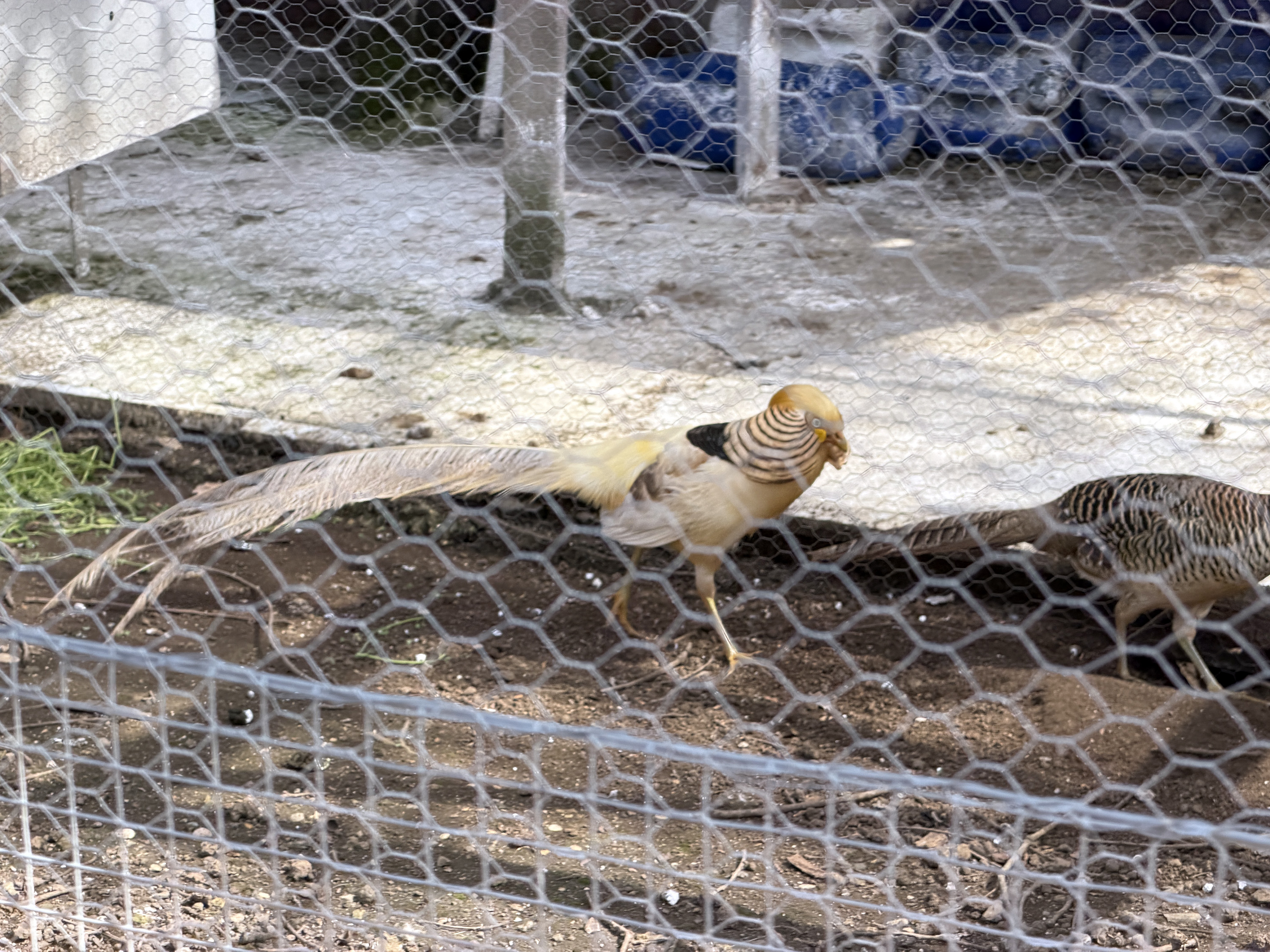
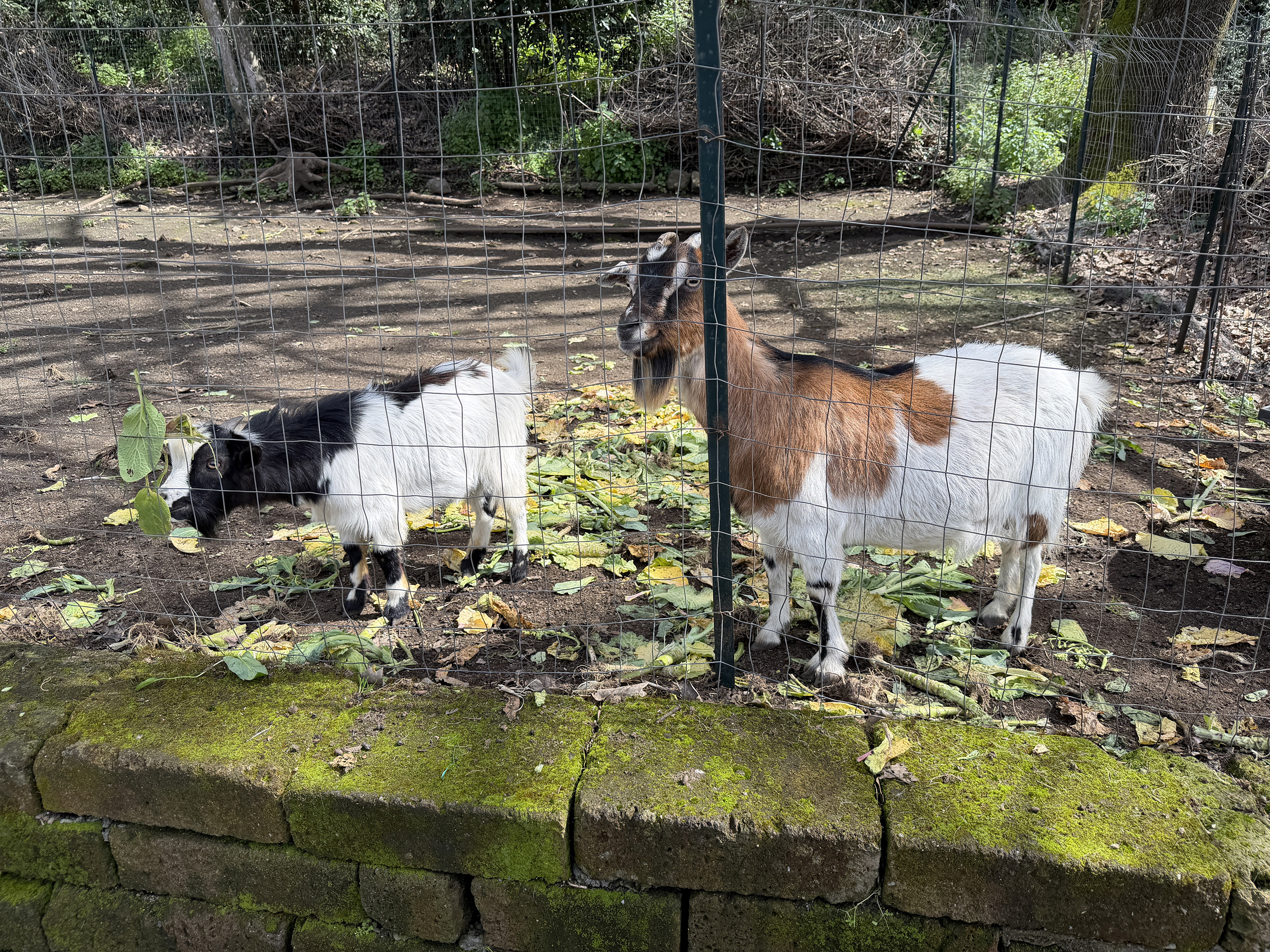
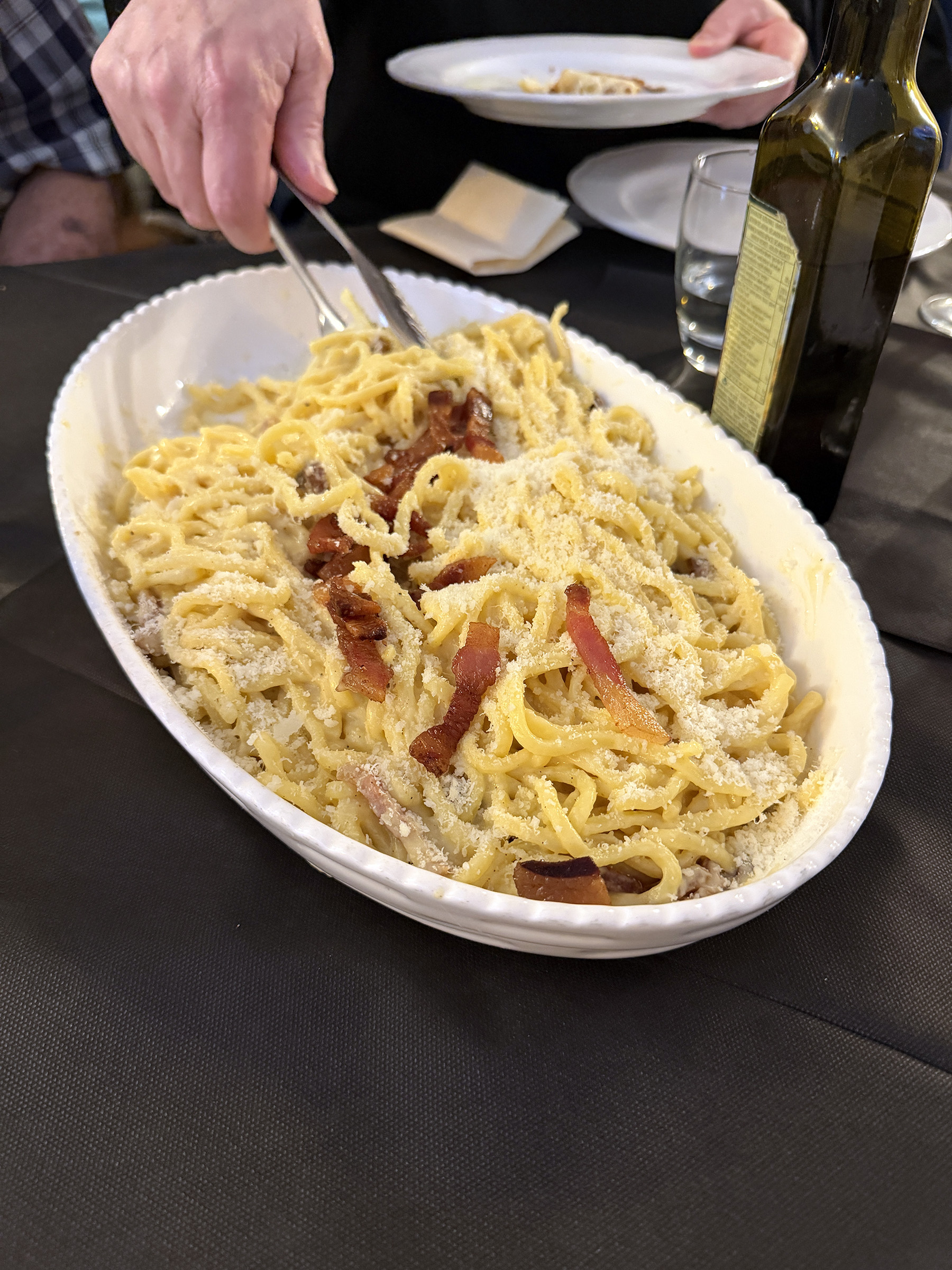
We drove to near the town of Tragiatella to visit a small farm (Agriturismo Il Casale delle Ginestre). The owner gave a brief tour of the gardens and a bunch of caged animals. They were all cute, but knowing their destiny saddened us. We saw a video about carbonara and then dug in family style. It was billed as a tasting, but we got ample seconds and thirds. Also, a modest Vino Rosso bottled from their own grapes. So none of these small animals were harmed on our behalf today. A great meal.
Vesta will not depart until after 9 p.m. so we had the opportunity to take a shuttle bus to wander in the port town of Civitavecchia, but decided against it. Dinner in The Restaurant again. On the pool deck, they showed an abbreviated telecast of the Oscar ceremonies, and a local group of opera singers, Accademia Vocale, performed in the theater. This group was excellent—a basso, baritone, tenor, mezzo, and soprano sang opera highlights with a piano accompaniment. All were good, but the little guy tenor was outstanding. None of the canned music and dancing of a typical small cruise ship routine, just good-natured entertainment on a higher plane.
Tuesday, March 17 — At Sea
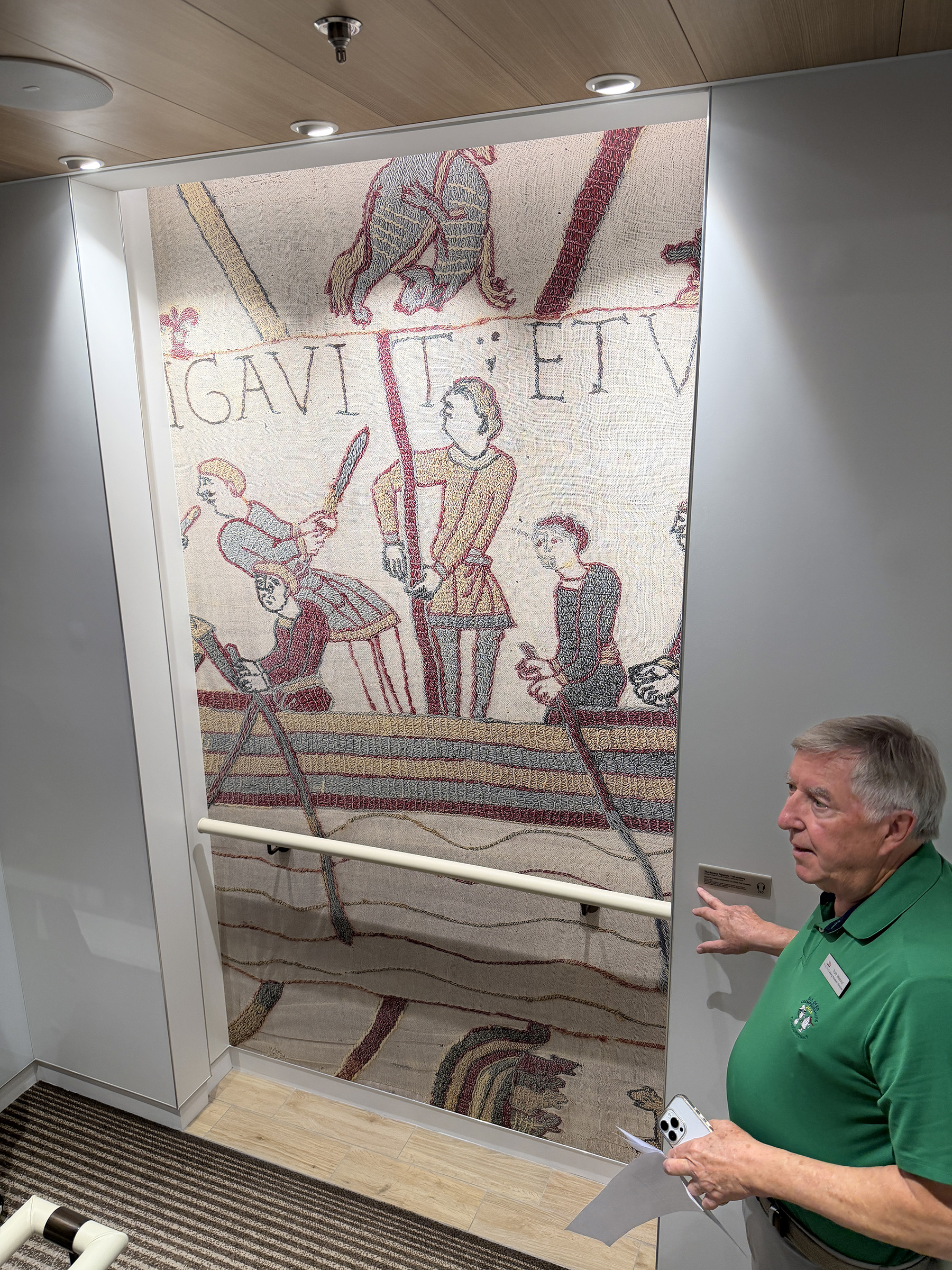
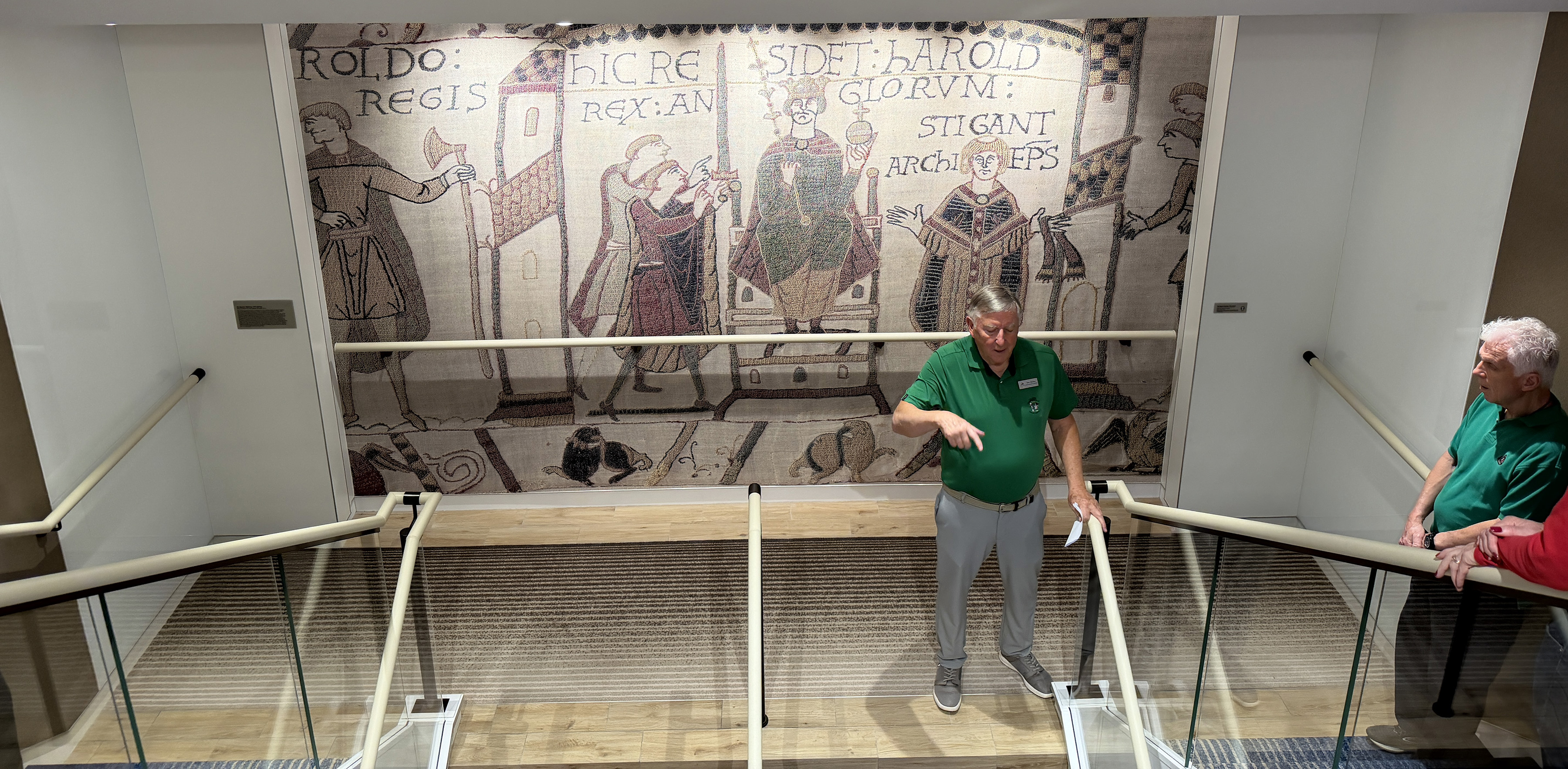
Today was for rest, with little happening on the way to Malta. Typical cruise ship trivia, talks, and even a cornhole contest. We took a guided tour of the ship’s reproductions of the Bayeux tapestries, spread out in 16 pieces at stairway landings. The original is 230 feet long, 20 inches high, so the selected pieces here are greatly blown up in high quality to be wall-sized. Apparently, the ship’s internal color schemes are lifted directly from these tapestries. Well, they are actually embroidered linen, not true woven tapestries. It was an interesting tour, and I learned a lot about Edward the Confessor, King Harald, William the Conqueror, and the Battle of Hastings. There was a showing of the final Downton Abbey movie. At the World Cafe (buffet) it was Italian Night, all quite authentic and good. The evening show was the assistant cruise director singing about her life.
Wednesday, March 18 — Valletta, Malta
We awoke to significant ship rolling as we approached the port of Valletta. Vesta squeezed herself into the harbor, and it was calm. We heard that the giant MSC cruise ship we have shared itineraries with could not make it in. Apparently, the prevailing wind was directly lined up with the narrow mouth of the harbor, making it too choppy for the big ship. So that meant there were 6,000 fewer tourists in the city today. It’s interesting to note that Valletta is Europe’s smallest capital city—only around 5,000 residents.
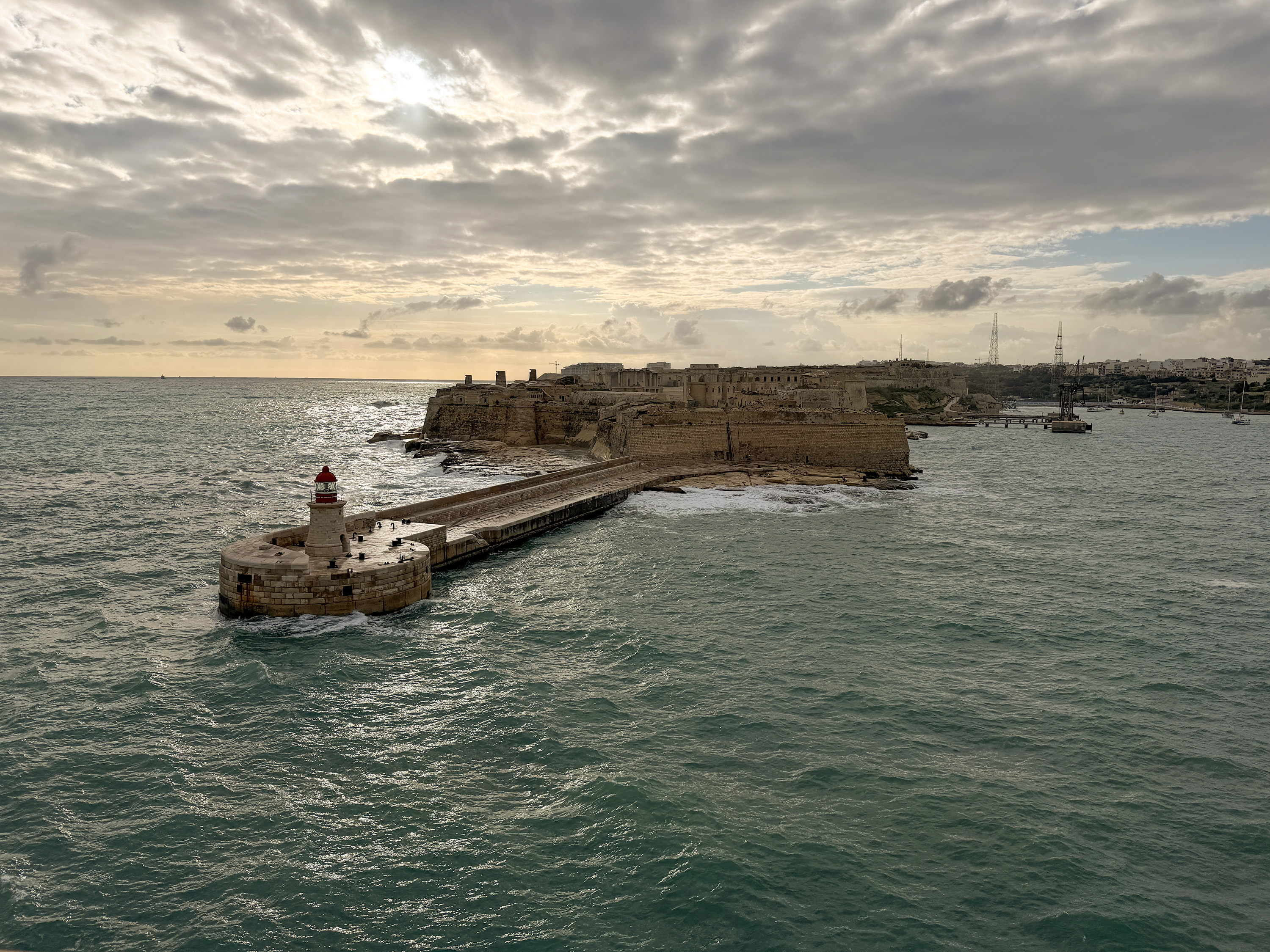
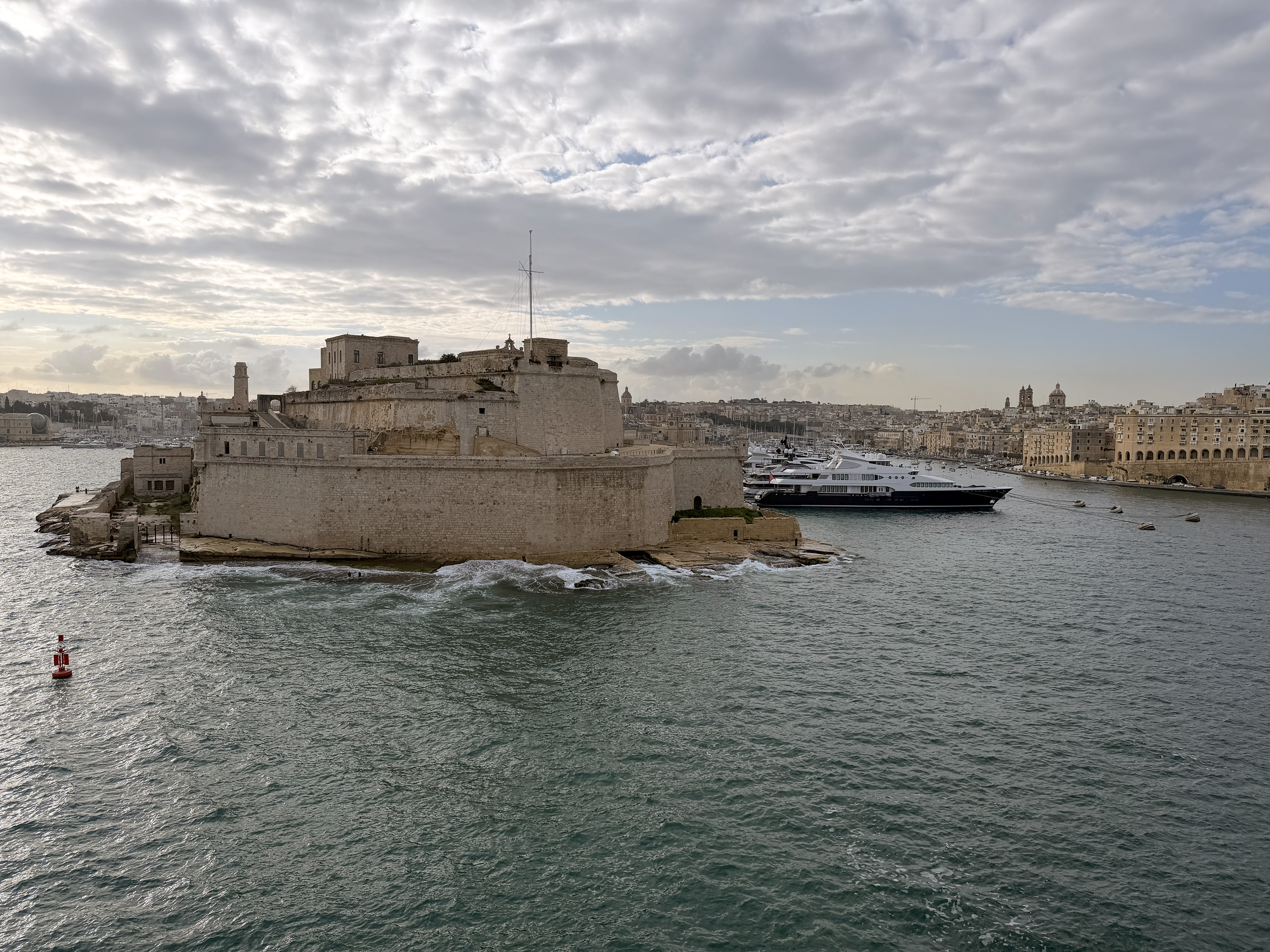
Our excursion today is “Valletta and the Knights of Malta.” We bused a short way into town and then started walking, listening to our guide John describe highlights of Maltese and Knights history. The island has been through a lot: seized by Rome from Carthage in the Second Punic War; occupied by the Byzantines; conquered by Arabs; besieged by the Ottomans; seized by Napoleon; ruled by the British until 1964. (The British influence is still here, with English as one of two official languages and cars driving on the left.)
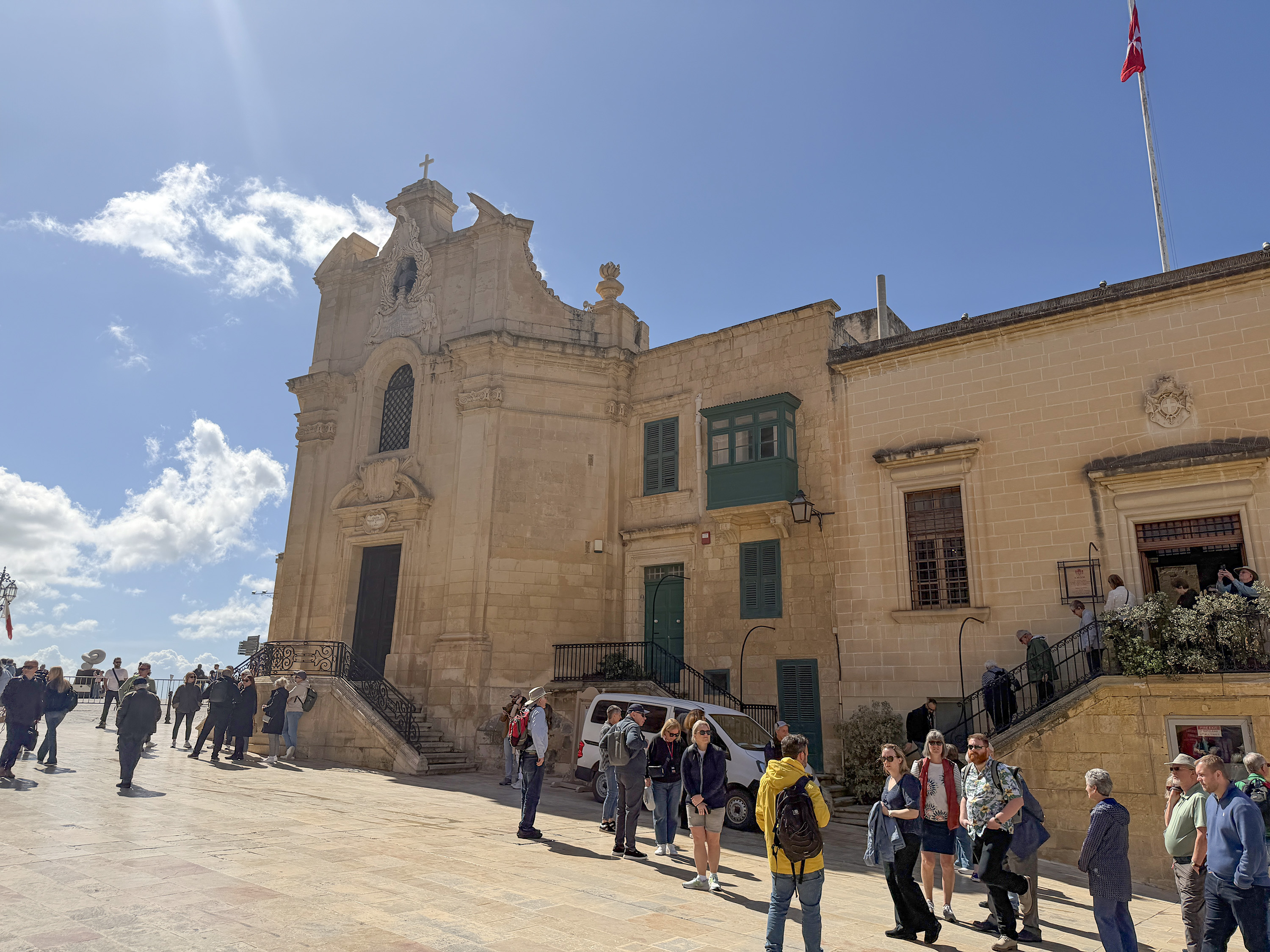
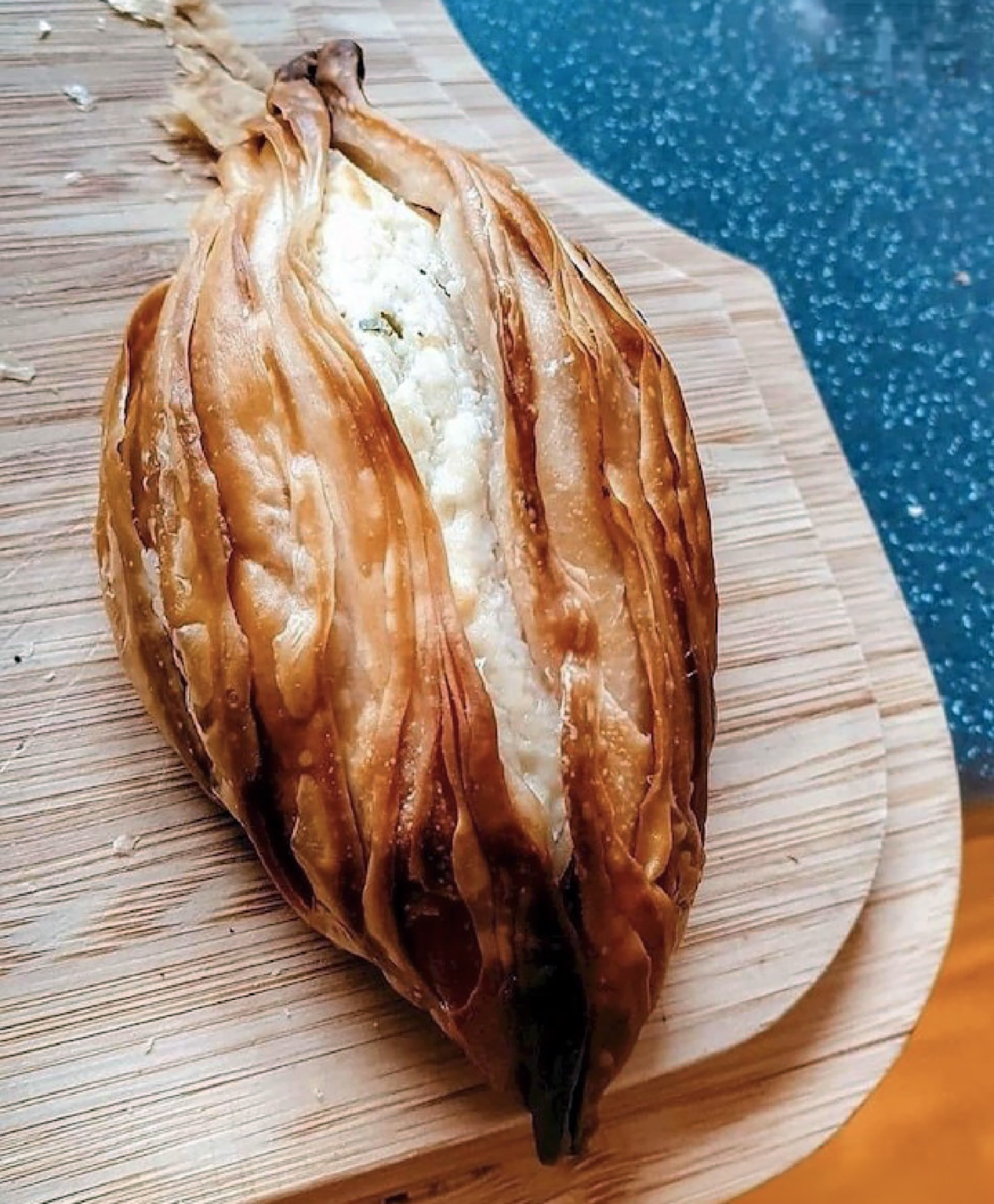
We visited the local headquarters of the Sovereign Military Hospitaller Order of Saint John of Jerusalem, of Rhodes and of Malta on a private tour. This is the organization known as the Knights of Malta, formed in 1048 to support the Jerusalem hospital of St. John the Baptist, fifty years before the Crusades. The Knights took up a military mission as they were driven across the Mediterranean and besieged by the Ottomans: Cyprus, Rhodes, and then finally Malta in 1530. They also became wealthy as corsairs, or pirates. But unlike their rivals, the Knights Templar, disbanded in the 14th century, they survived to the current day with a strong medical and social work focus: ambulances, hospitals, hospices, etc. It is the oldest charitable organization in the world. There are 13,500 Knights in a number of countries and they employ 52,000 medical workers. They are a sovereign government body that has no territory, but UN observer status and embassies in over one hundred countries. We spent about an hour in their HQ with Dane, who did a PowerPoint presentation about all their good work. The building was bombed by the Luftwaffe in 1943 and later restored. Their world HQ is in Rome, just near the Spanish Steps. The Knights hosted us with a snack of Pastizzi, a local stuffed pastry.
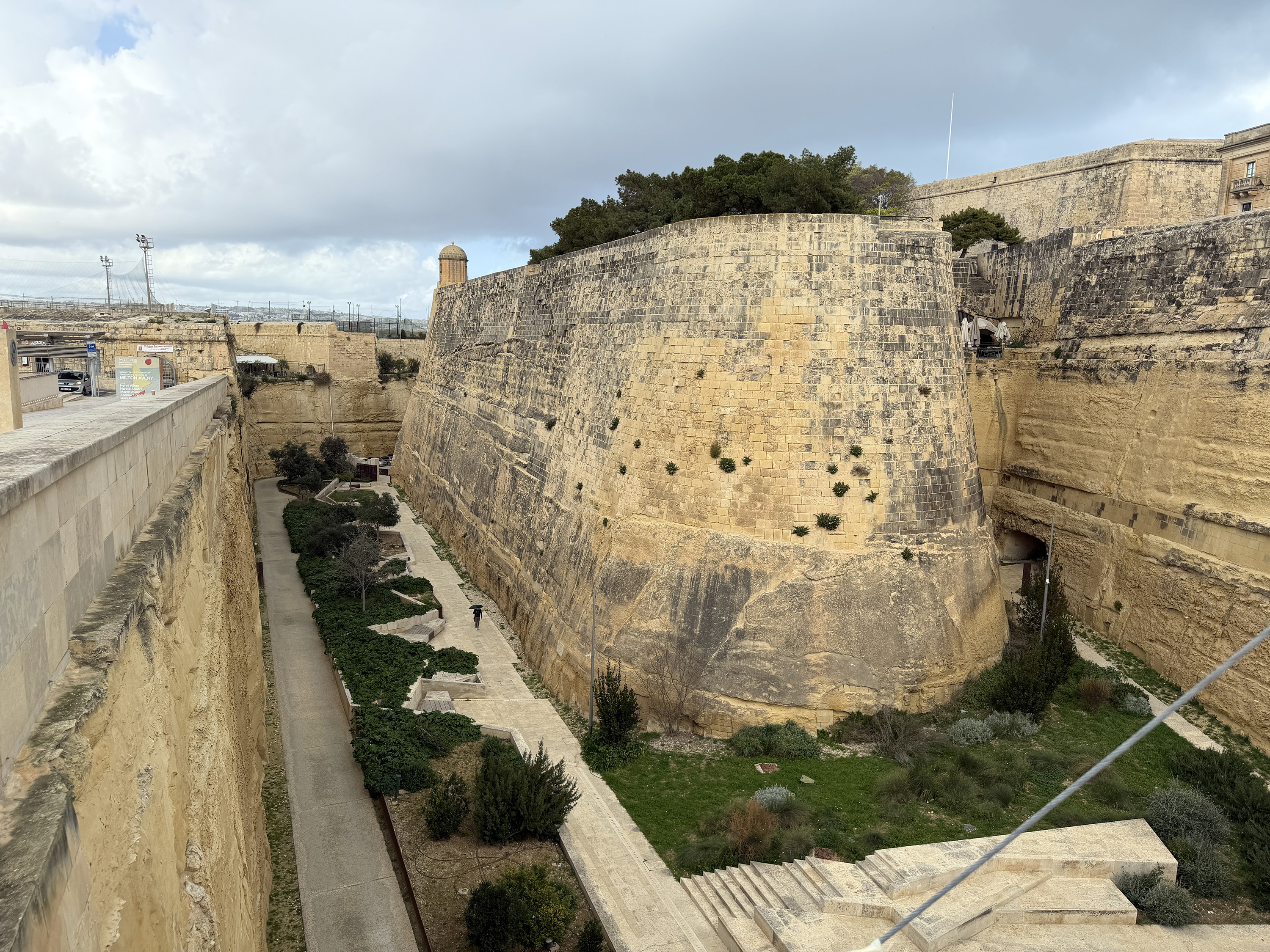
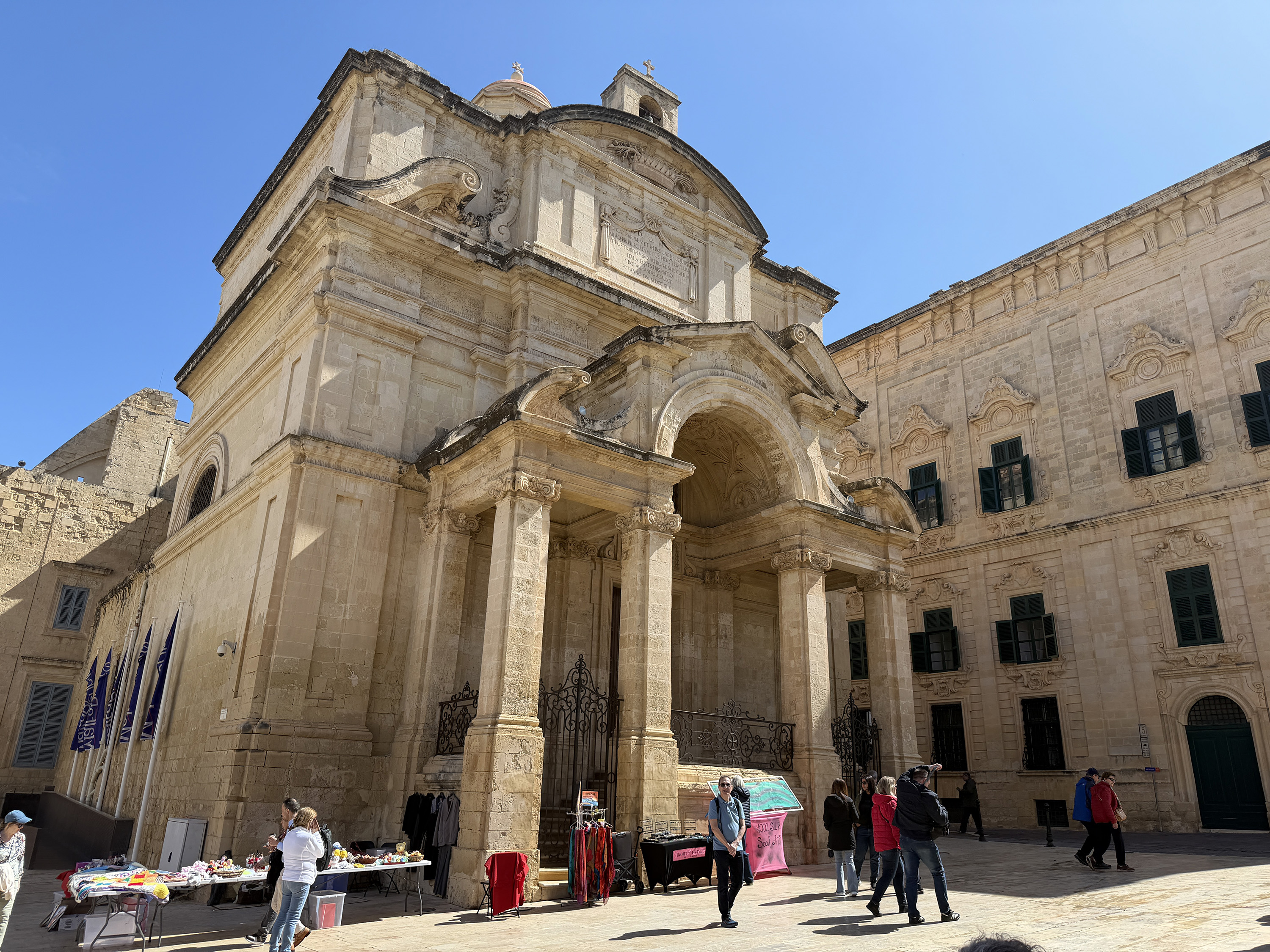
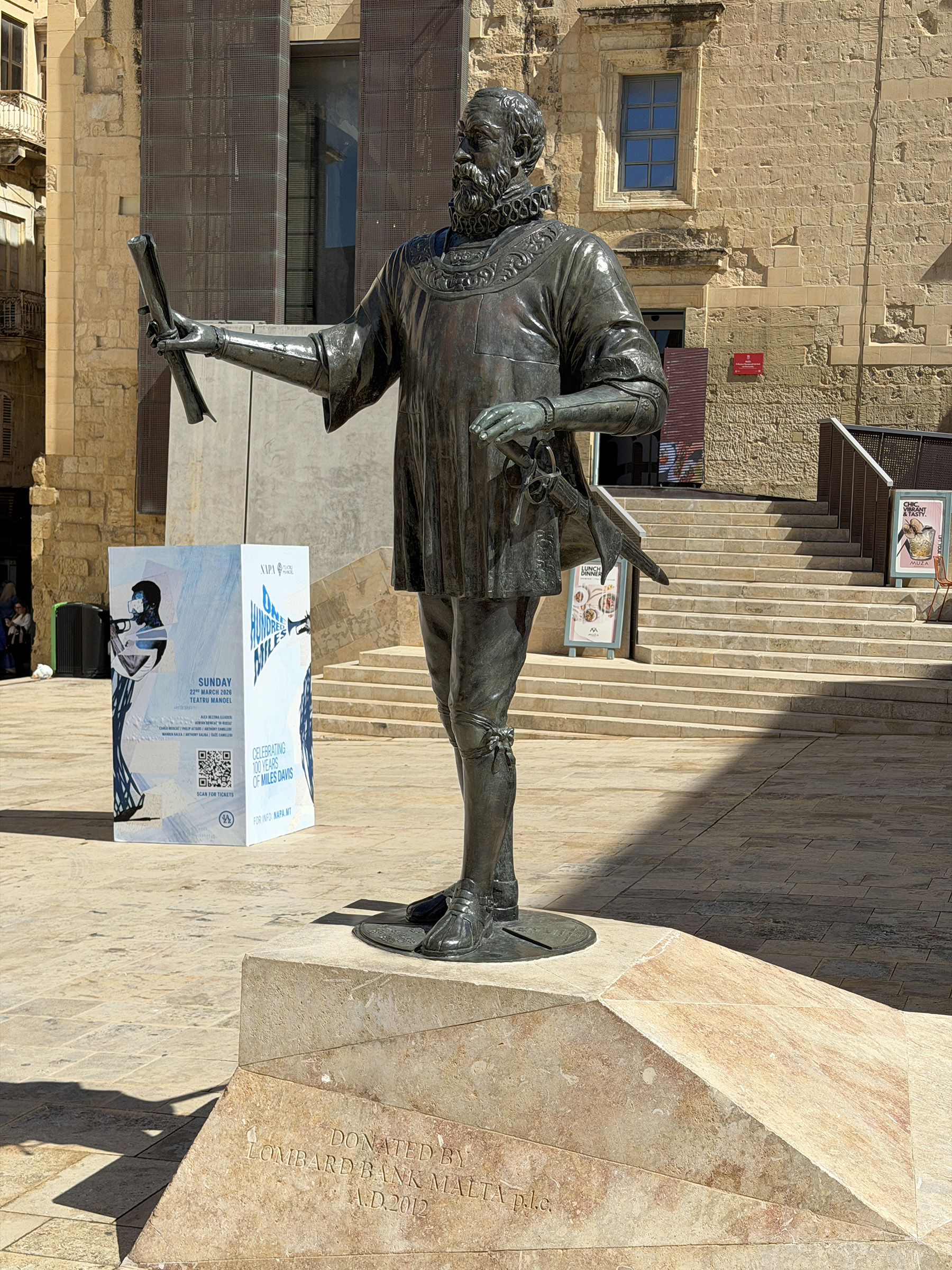
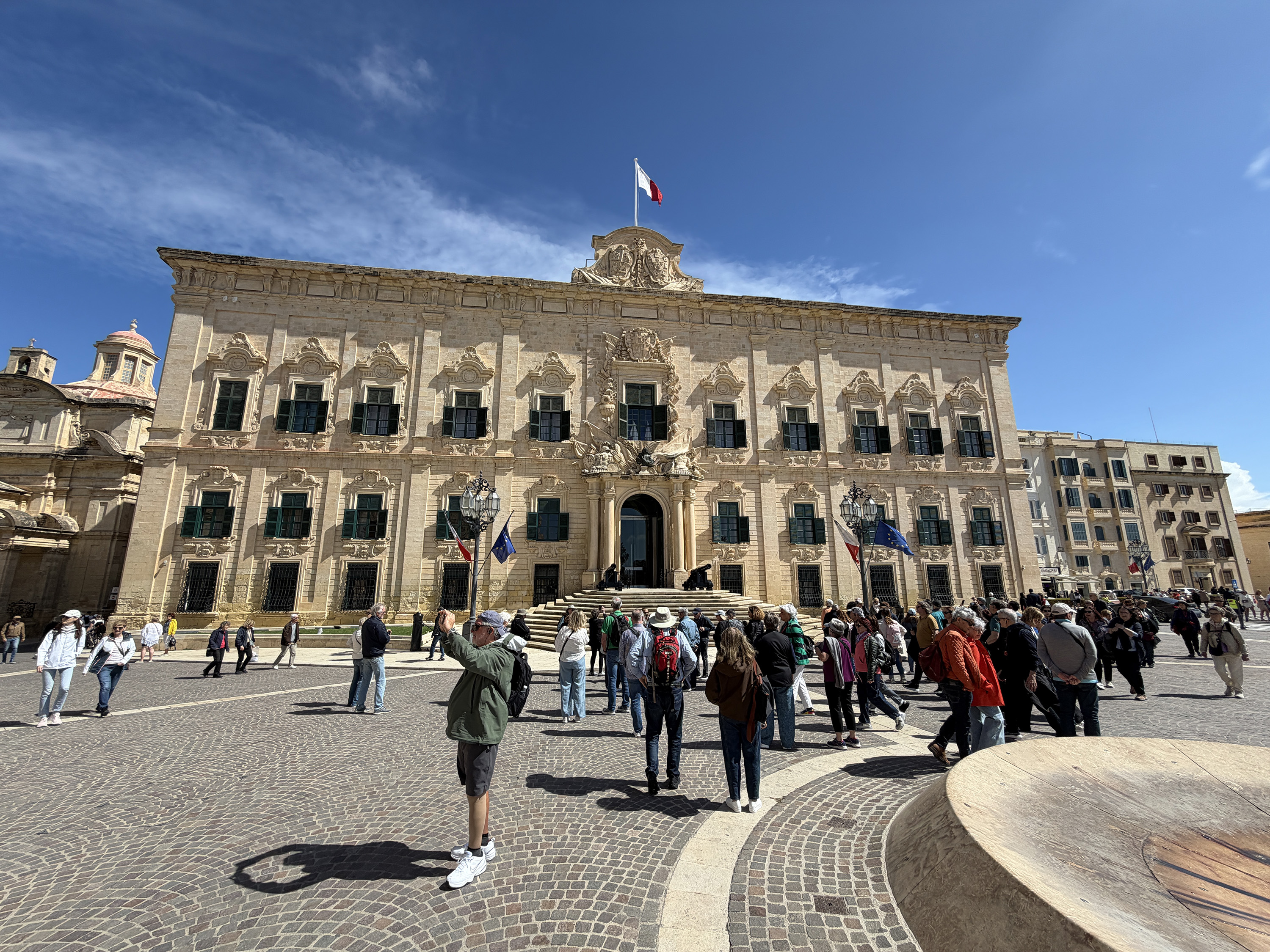
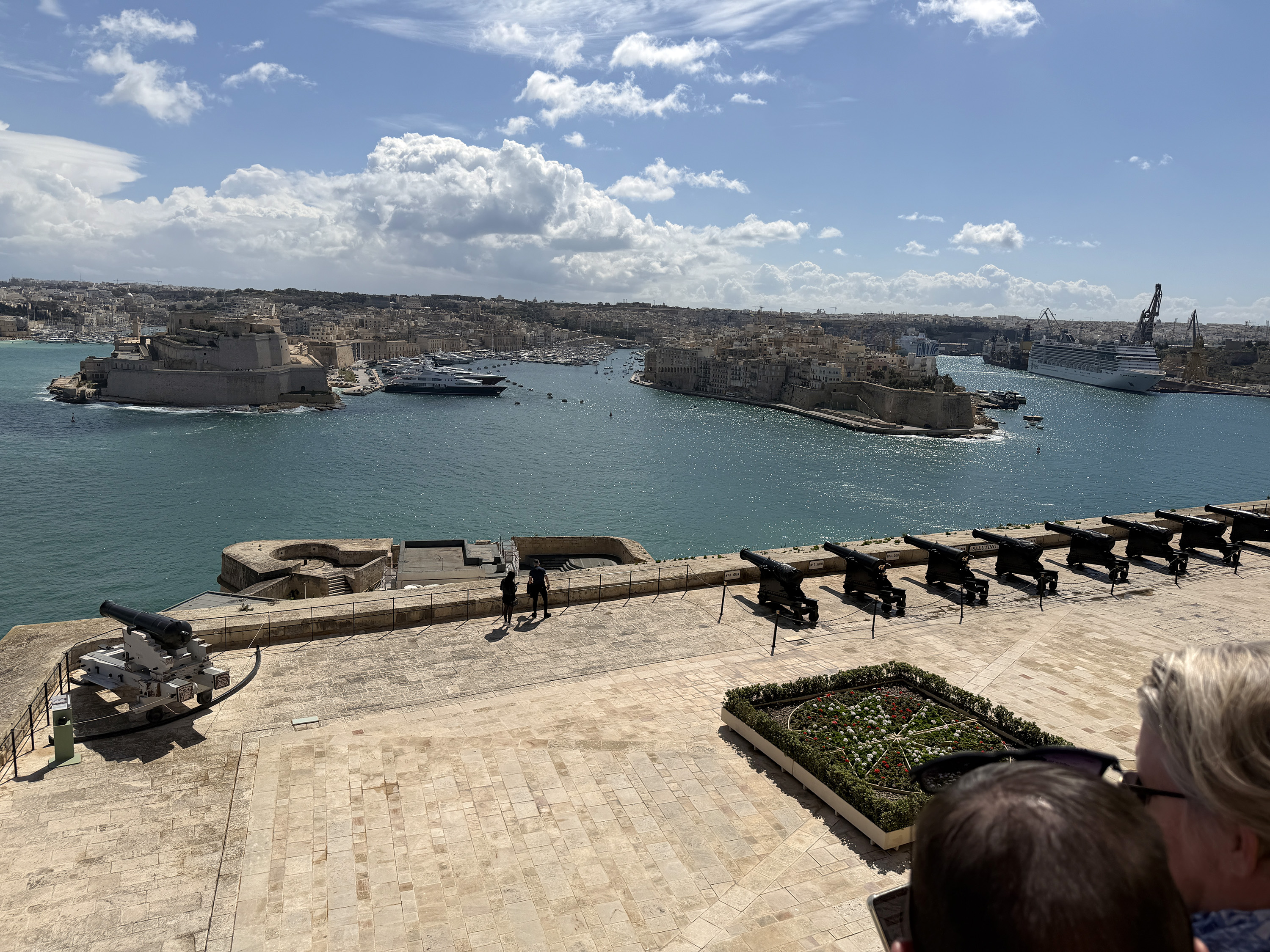
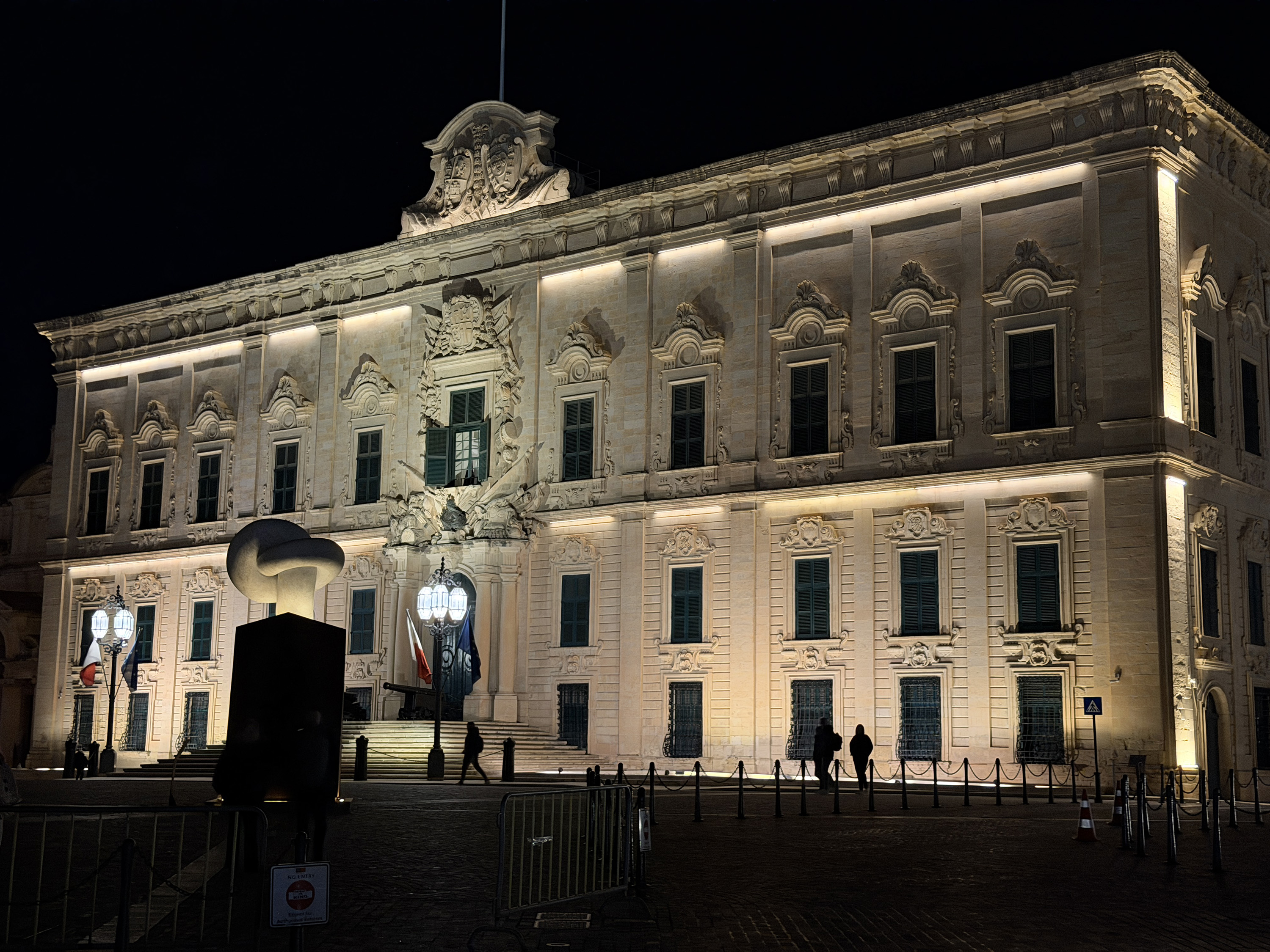
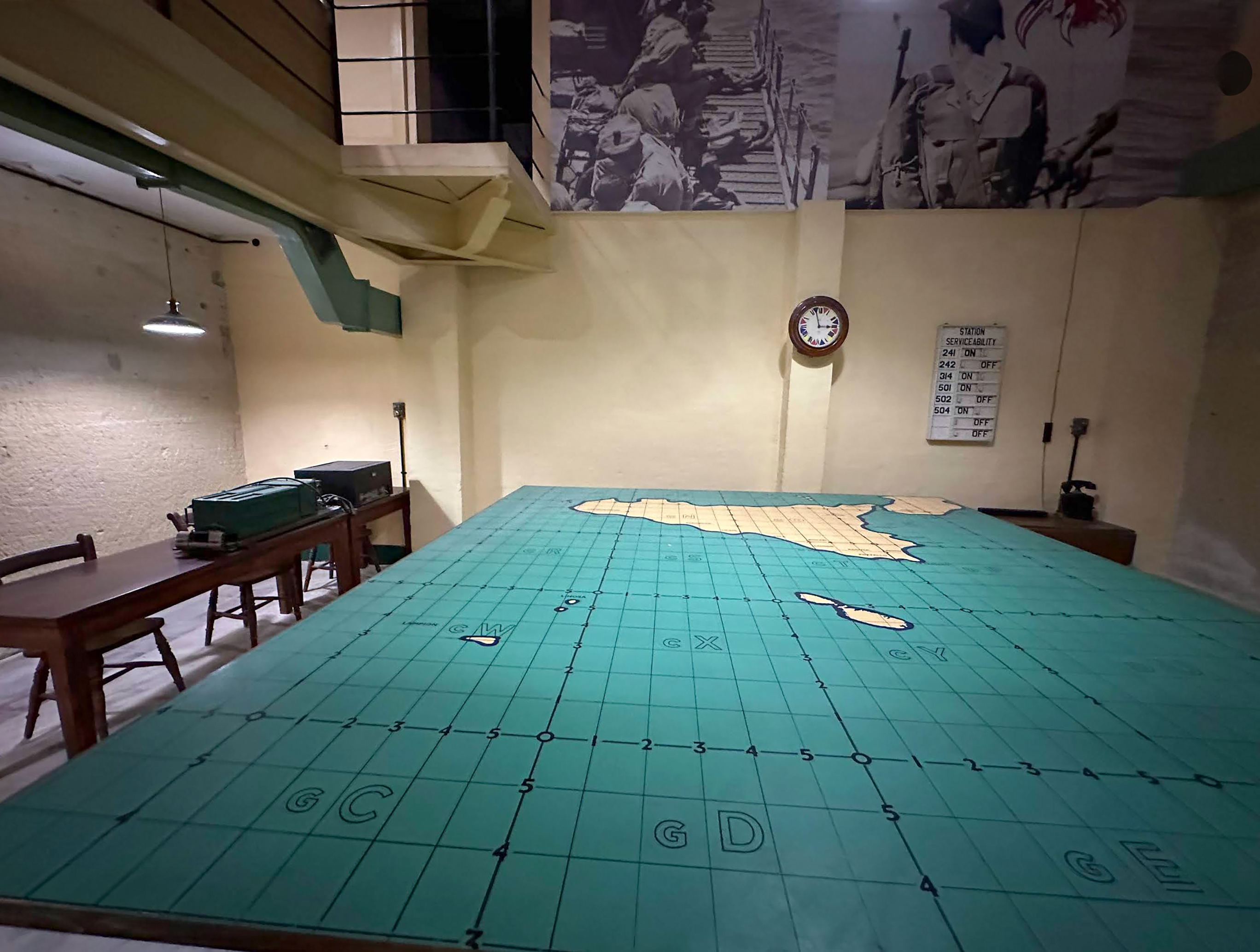
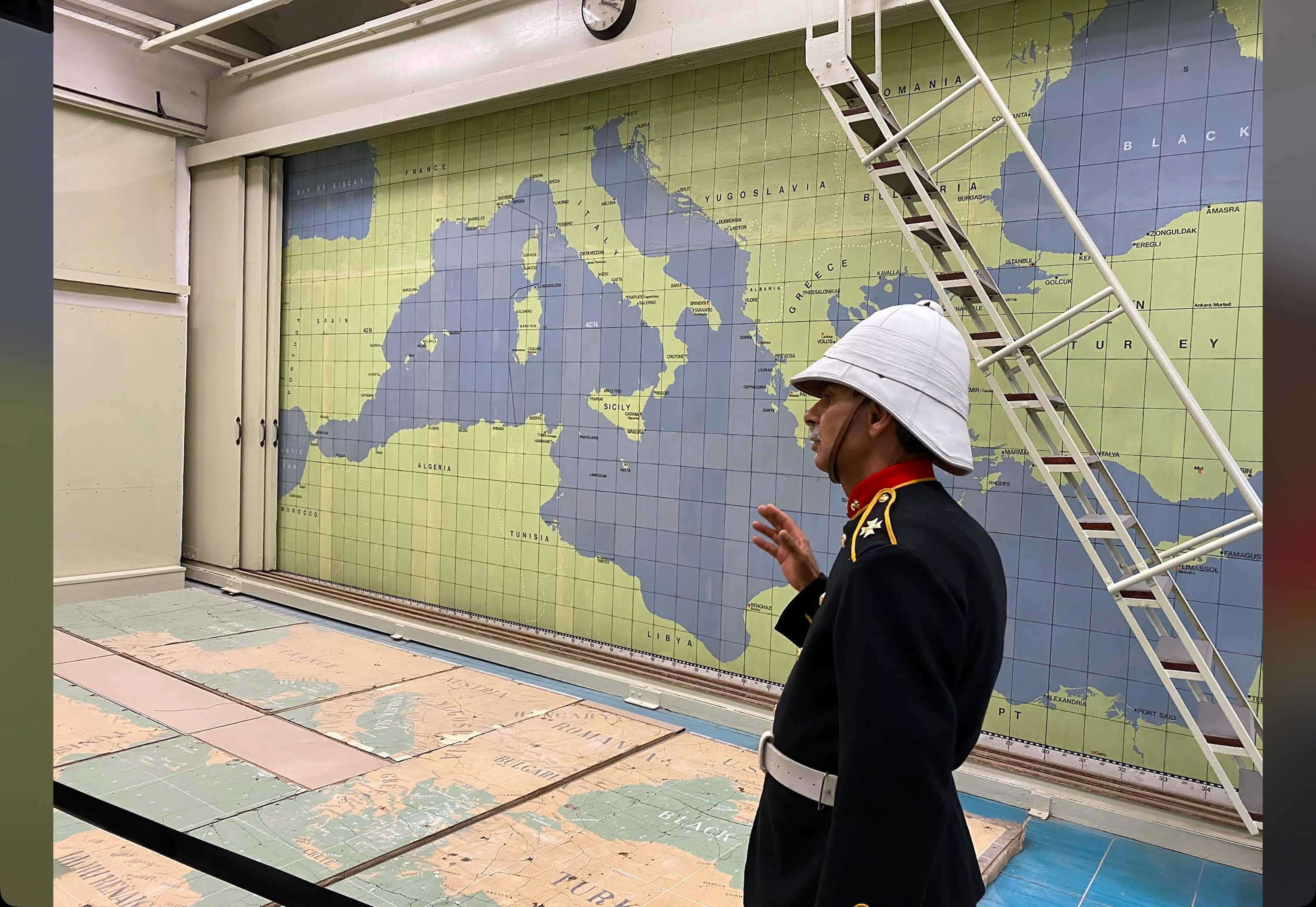
Outside, we saw a statue of Jean Parisot de Valette, for whom the city is named. He led the defense in the 1565 Great Siege. We passed by the Auberge de Castille (Il-Berġa ta’ Kastilja), where traveling knights were housed, but is now the prime minister’s residence. We crossed a pretty square, Barrakka Gardens, that was 50 meters above the underground headquarters of Eisenhower’s Operation Husky in 1943 (the Lascaris War Rooms). There is an overlook of the harbor that features the daily firing of a signal gun at noon.
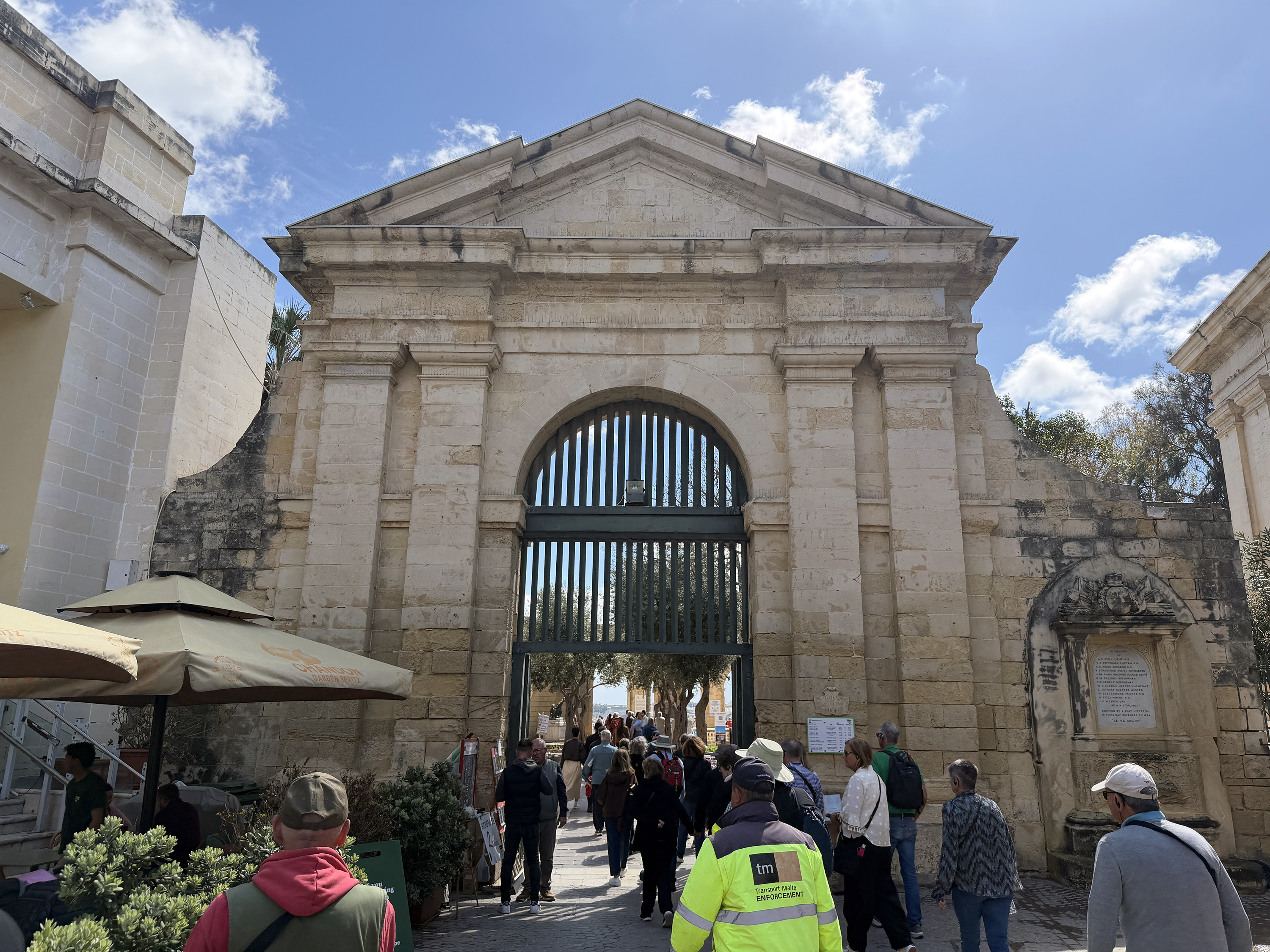
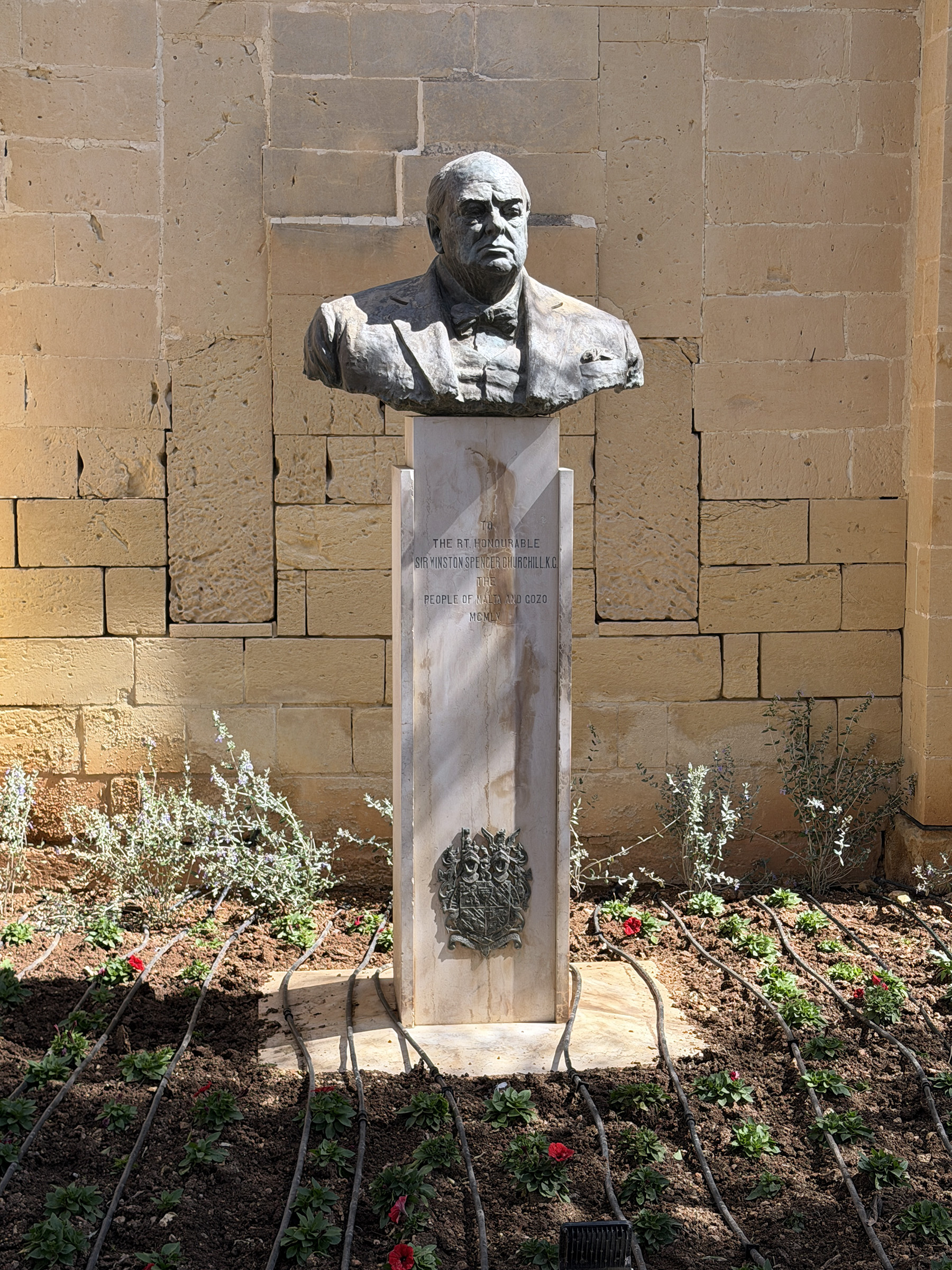
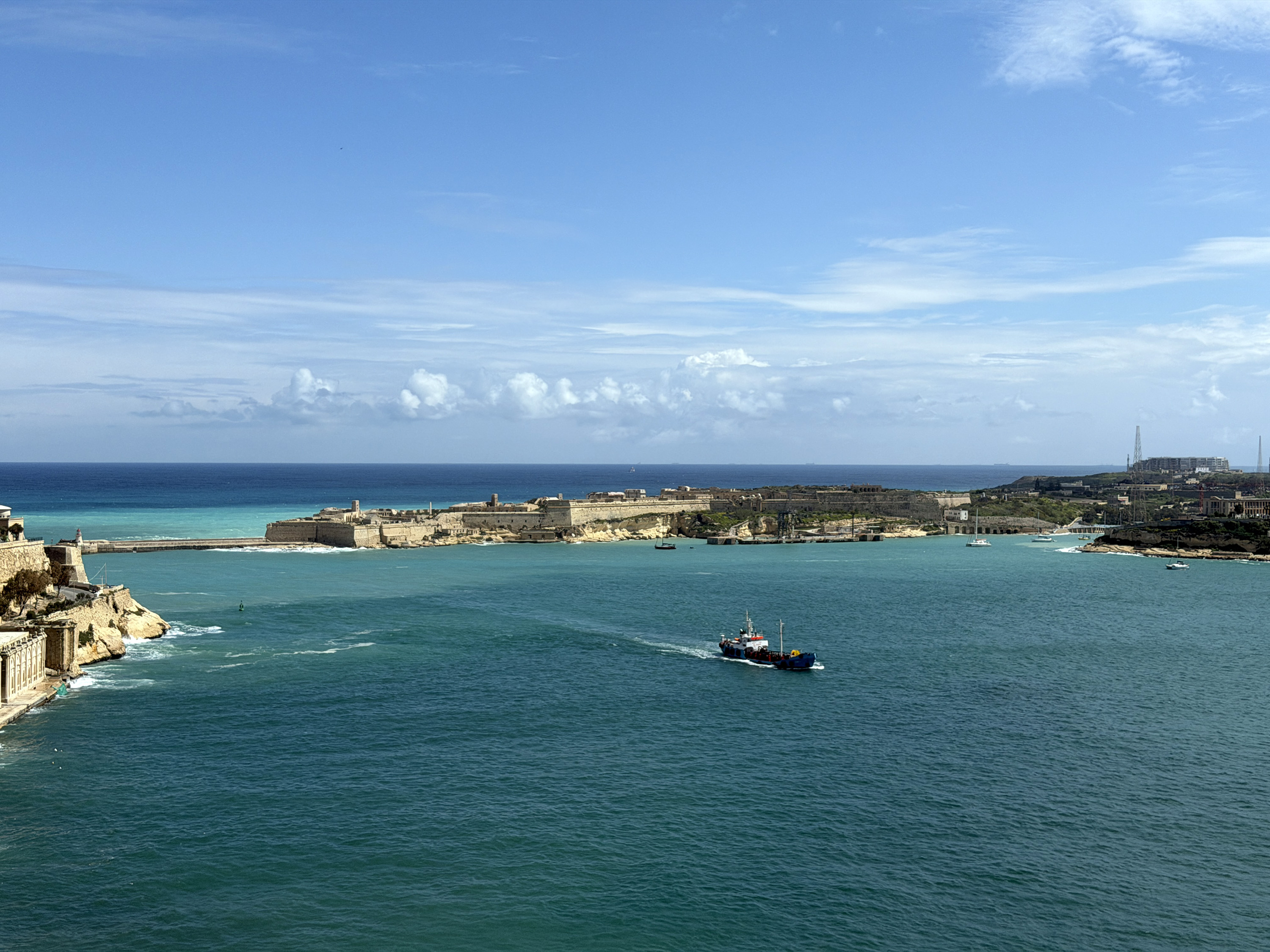
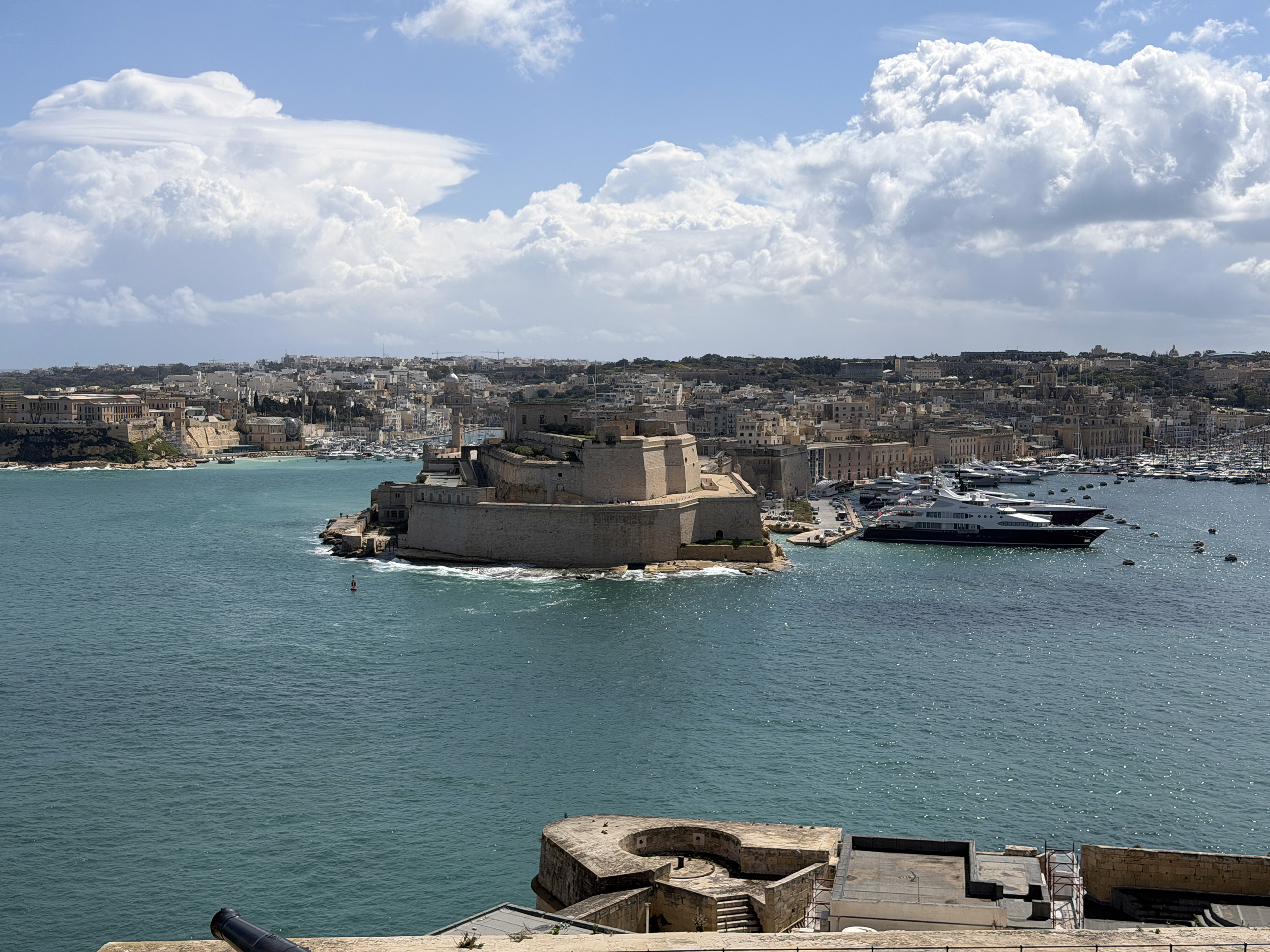
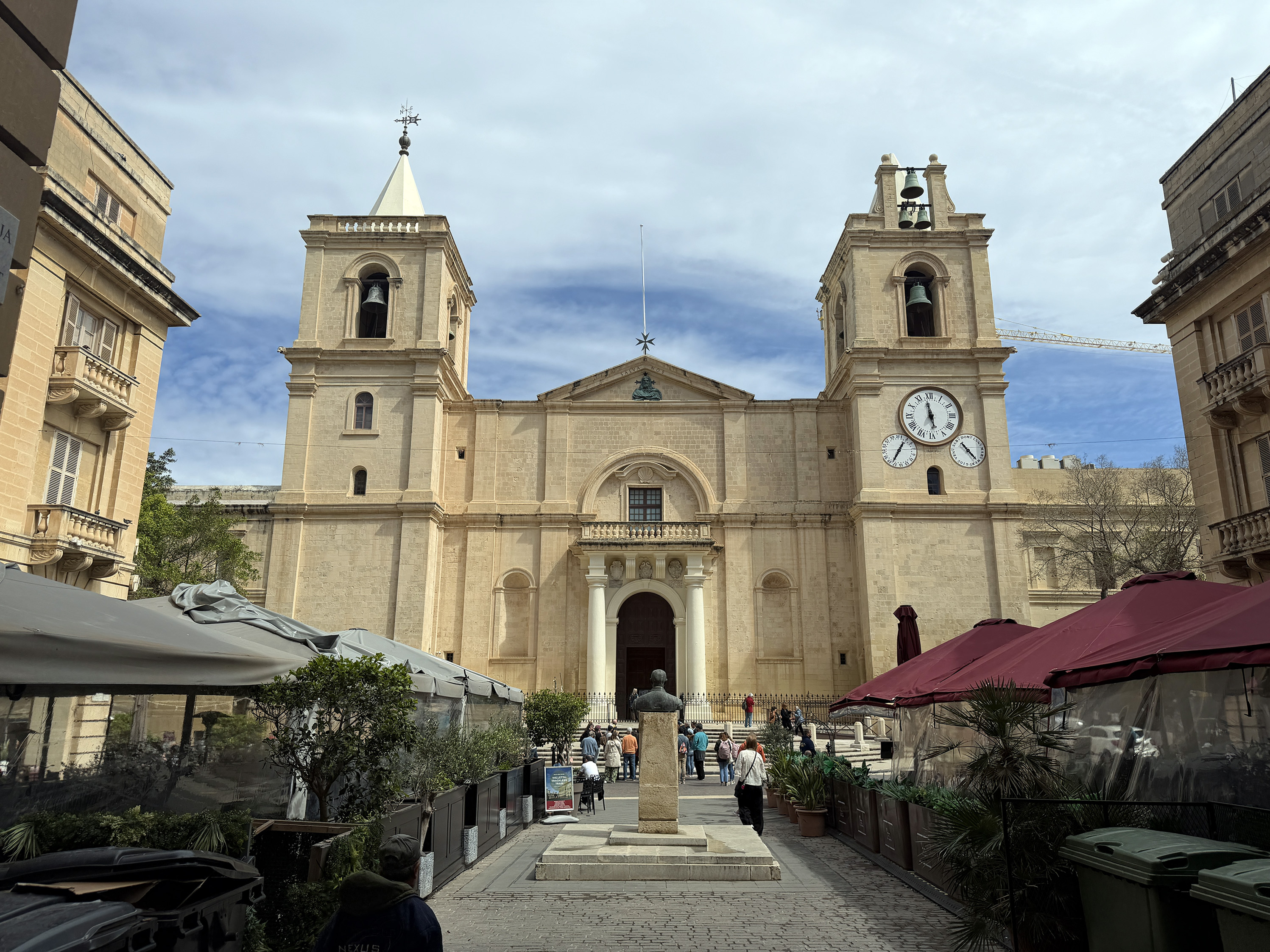
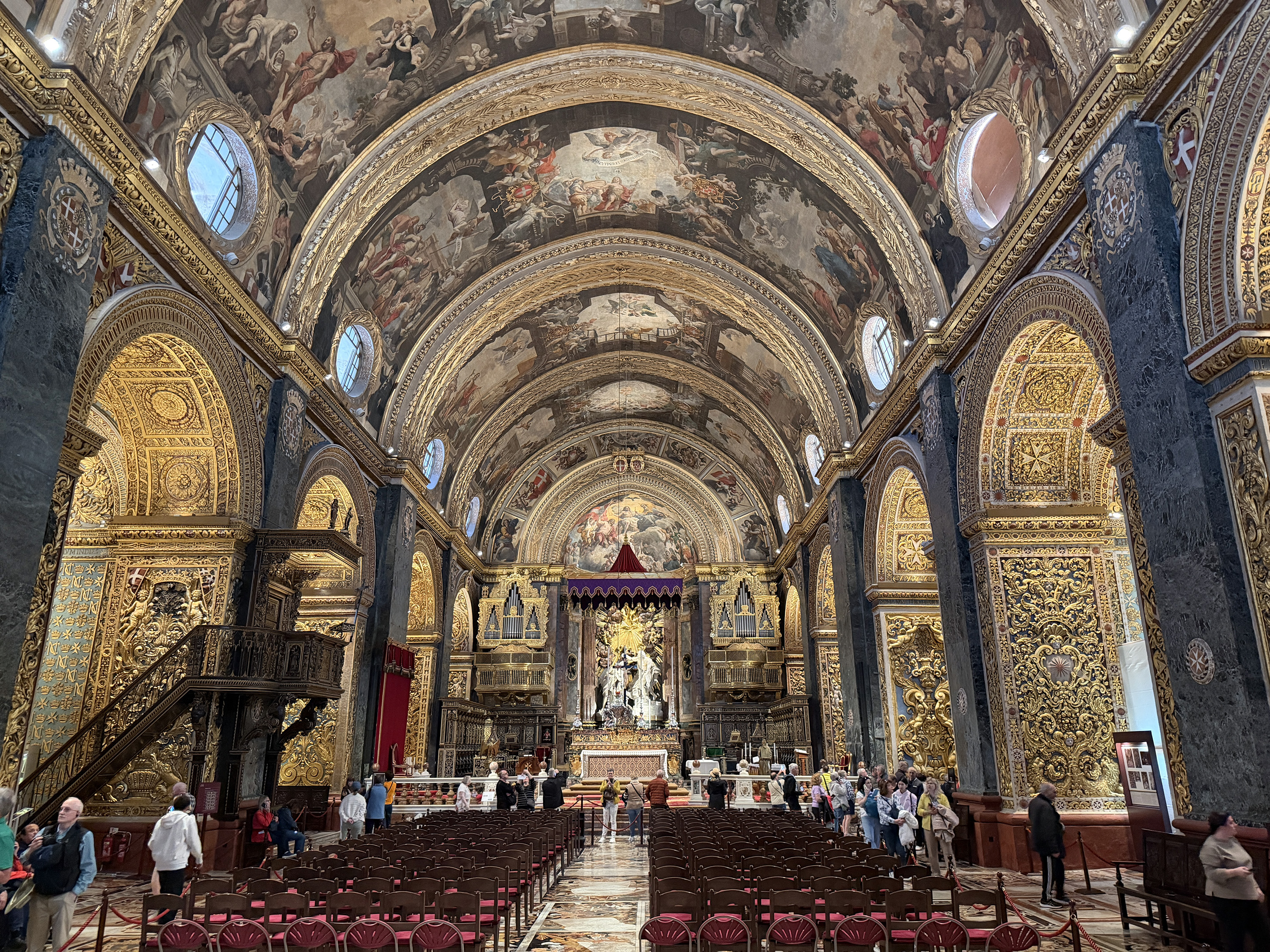
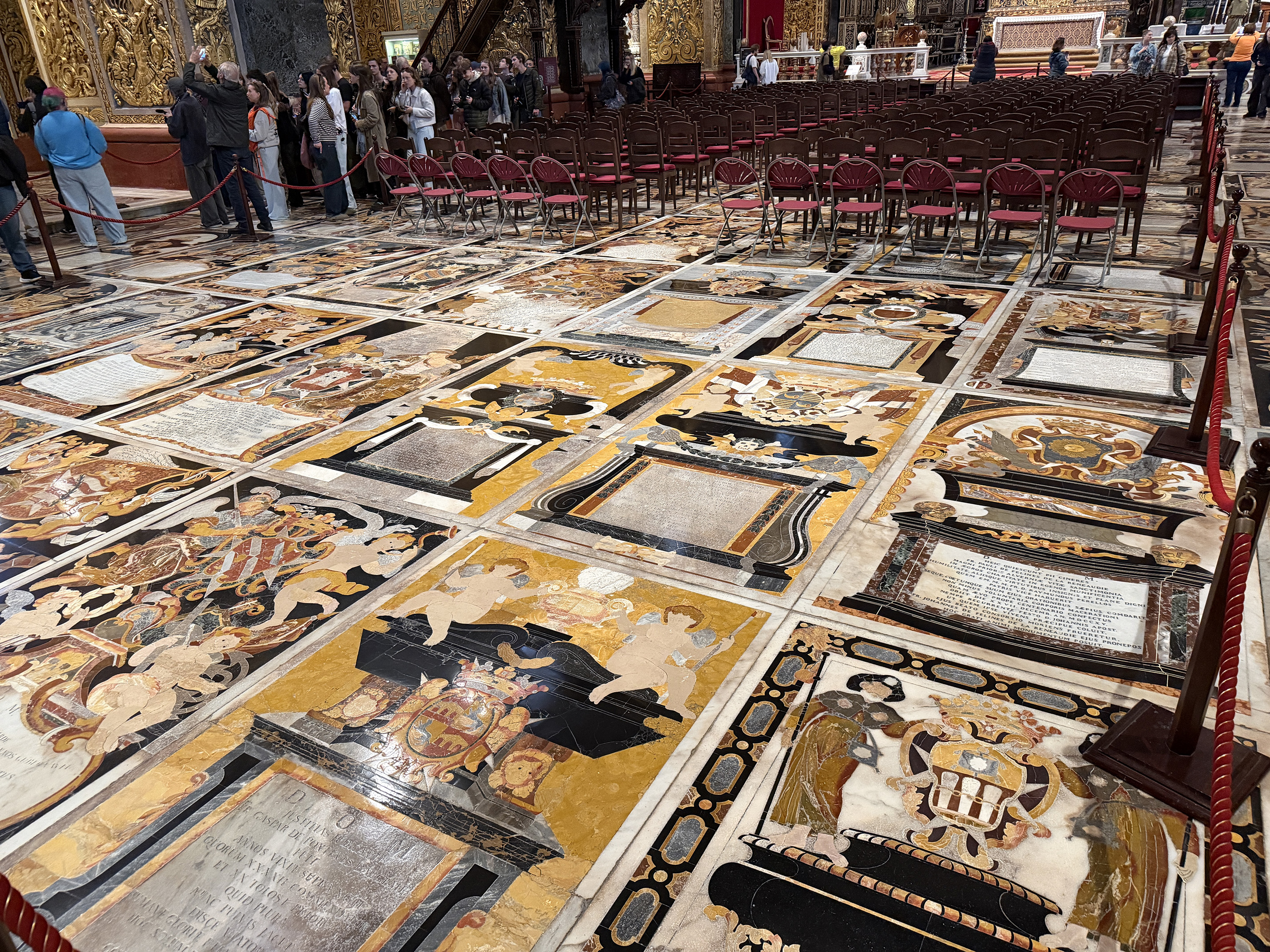
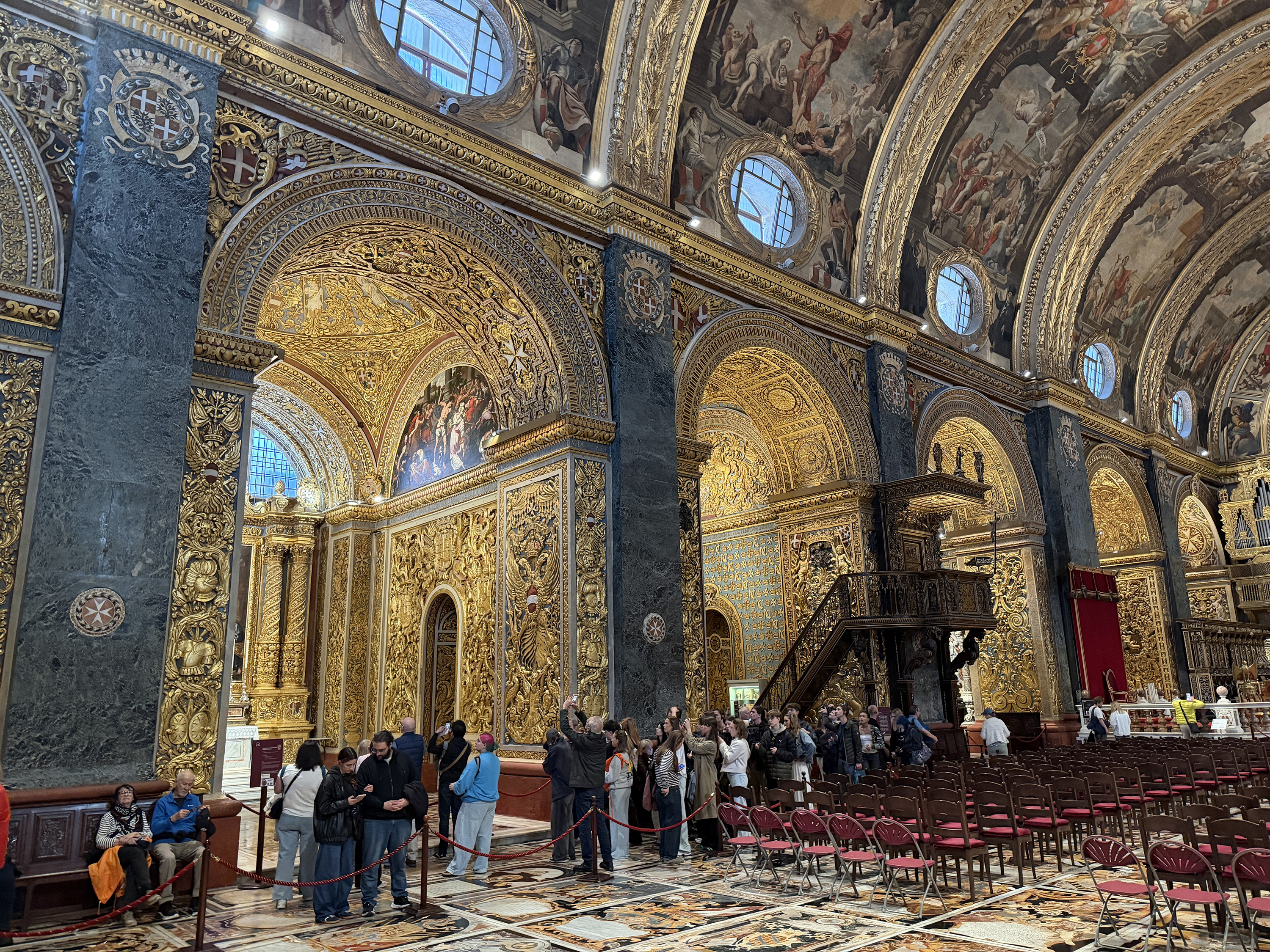
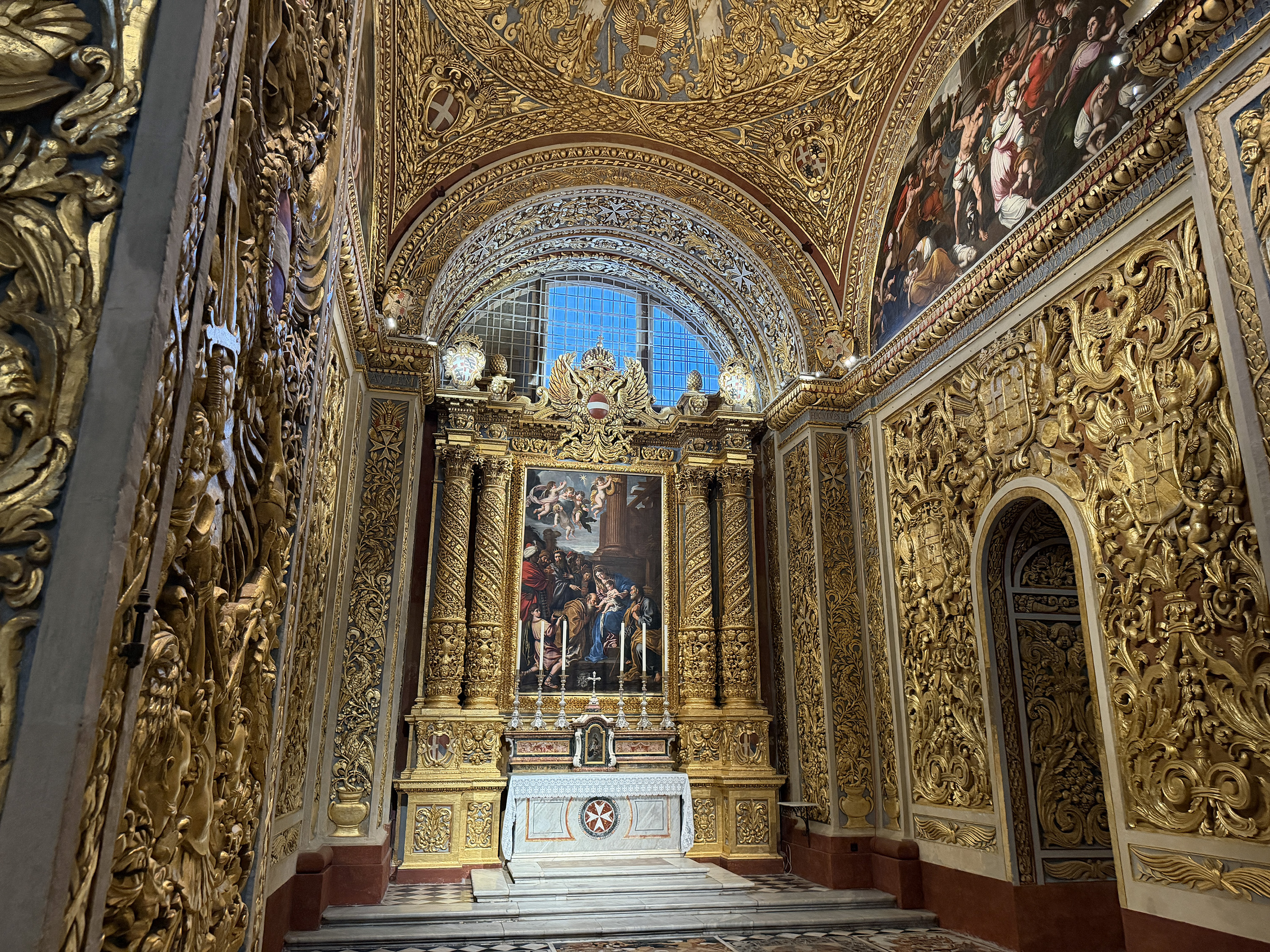
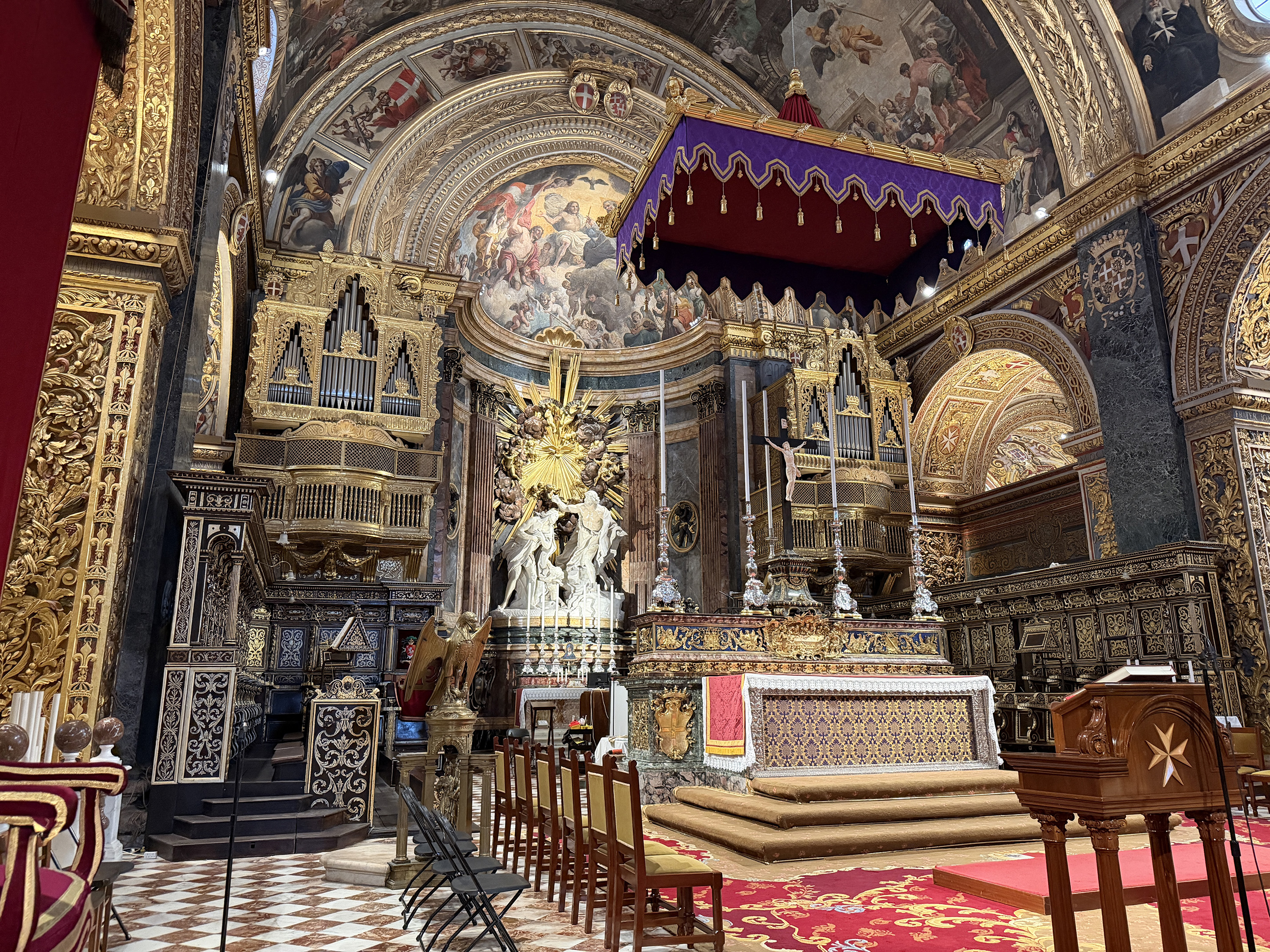
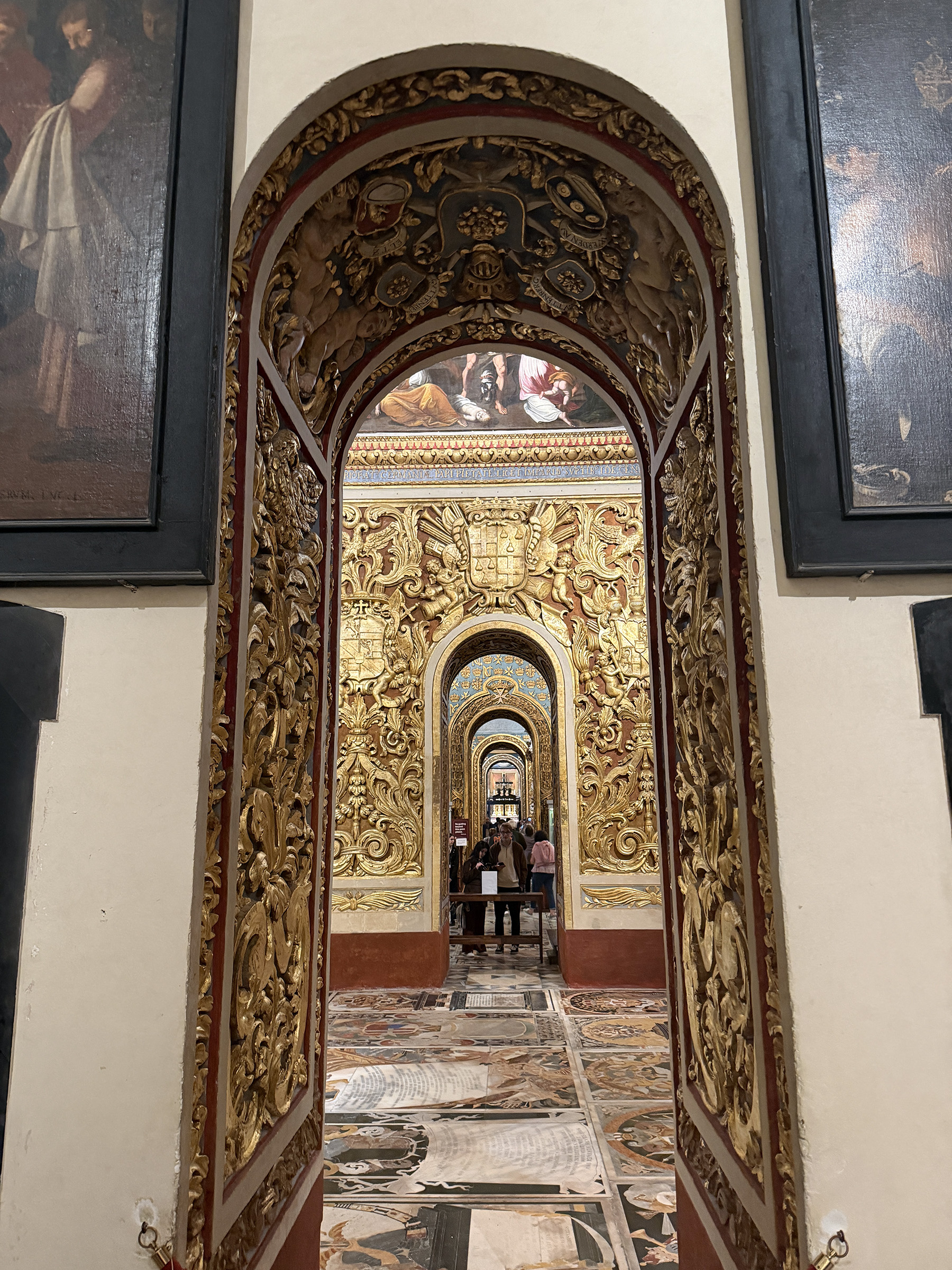
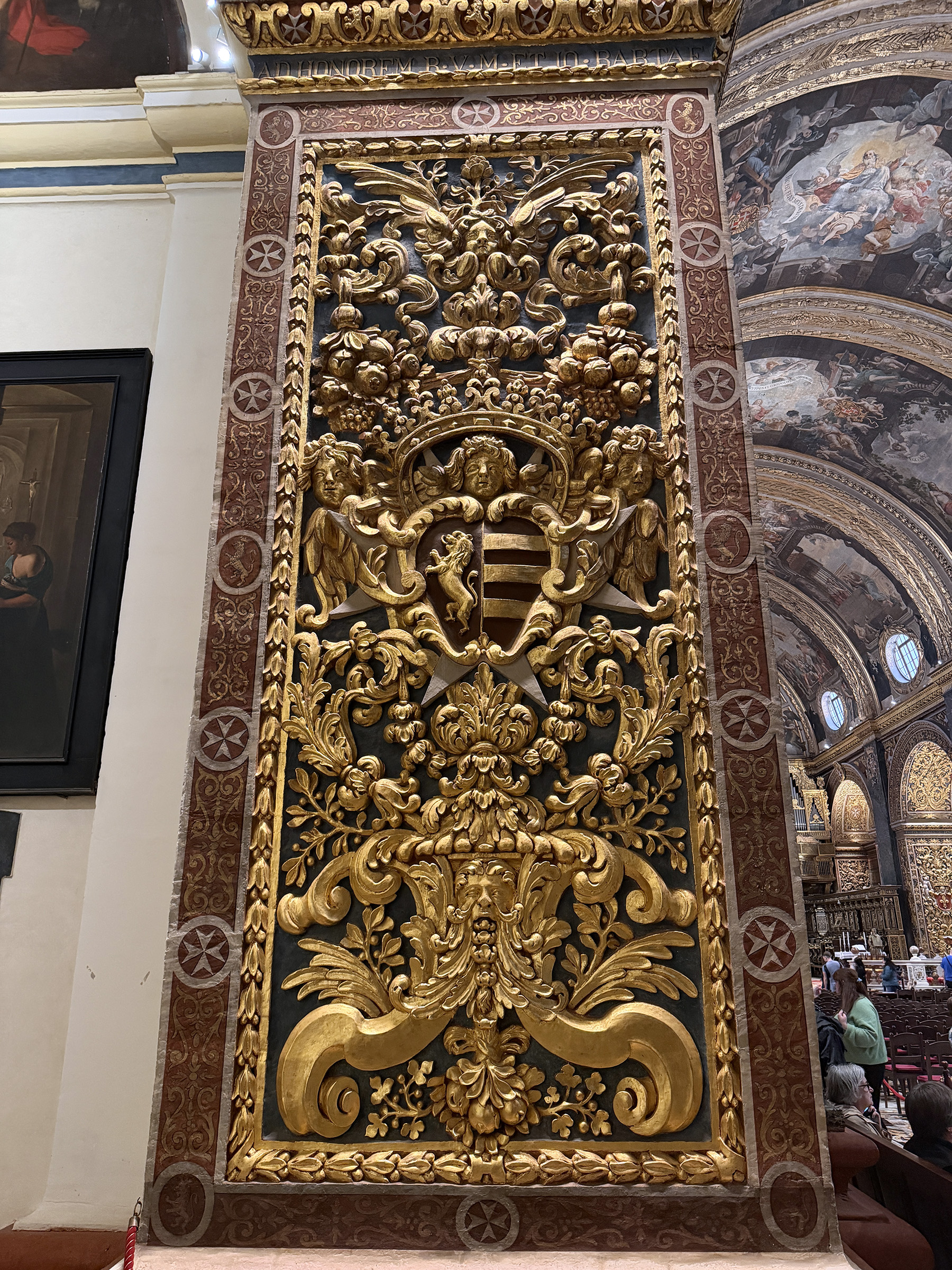
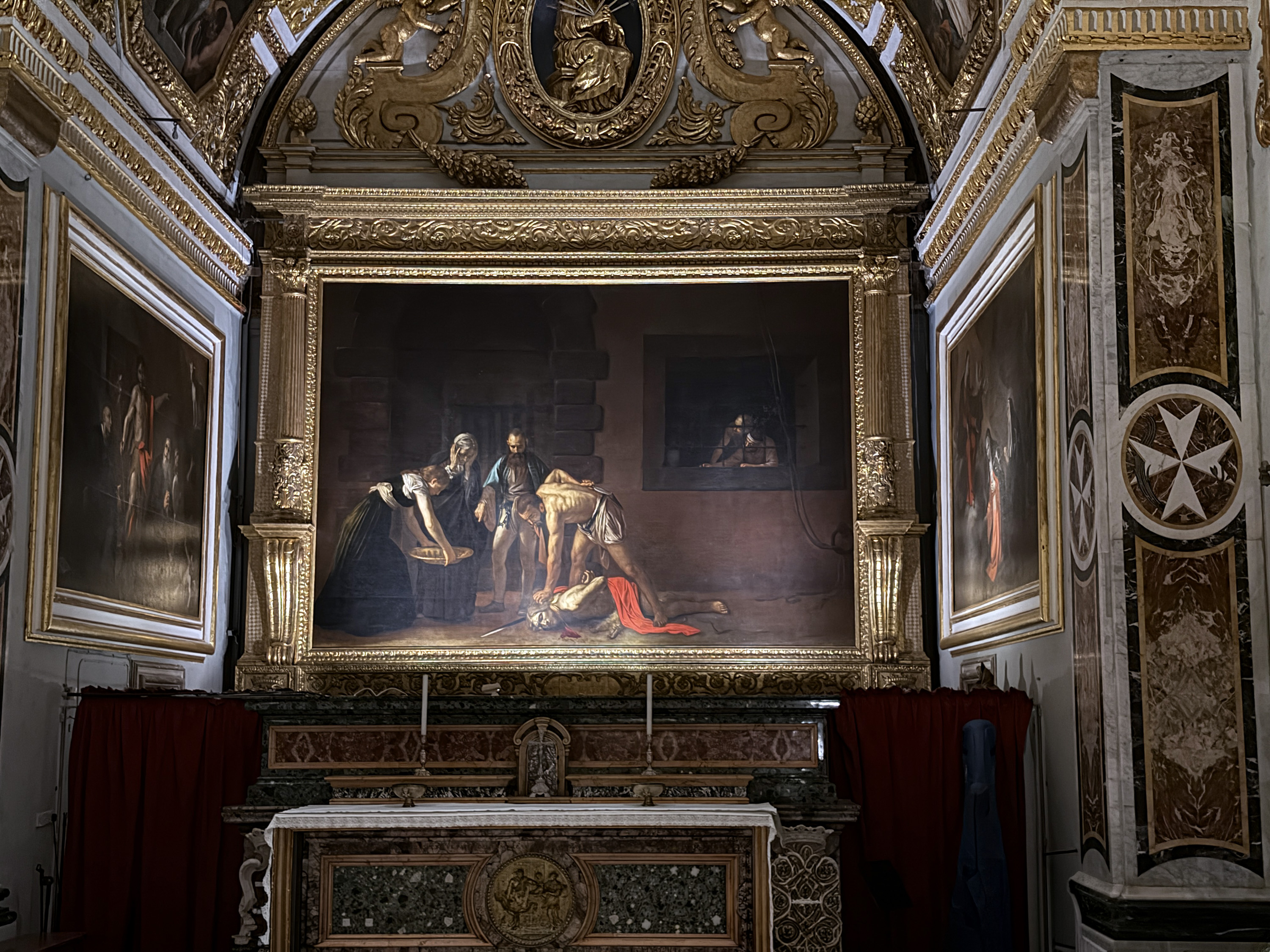
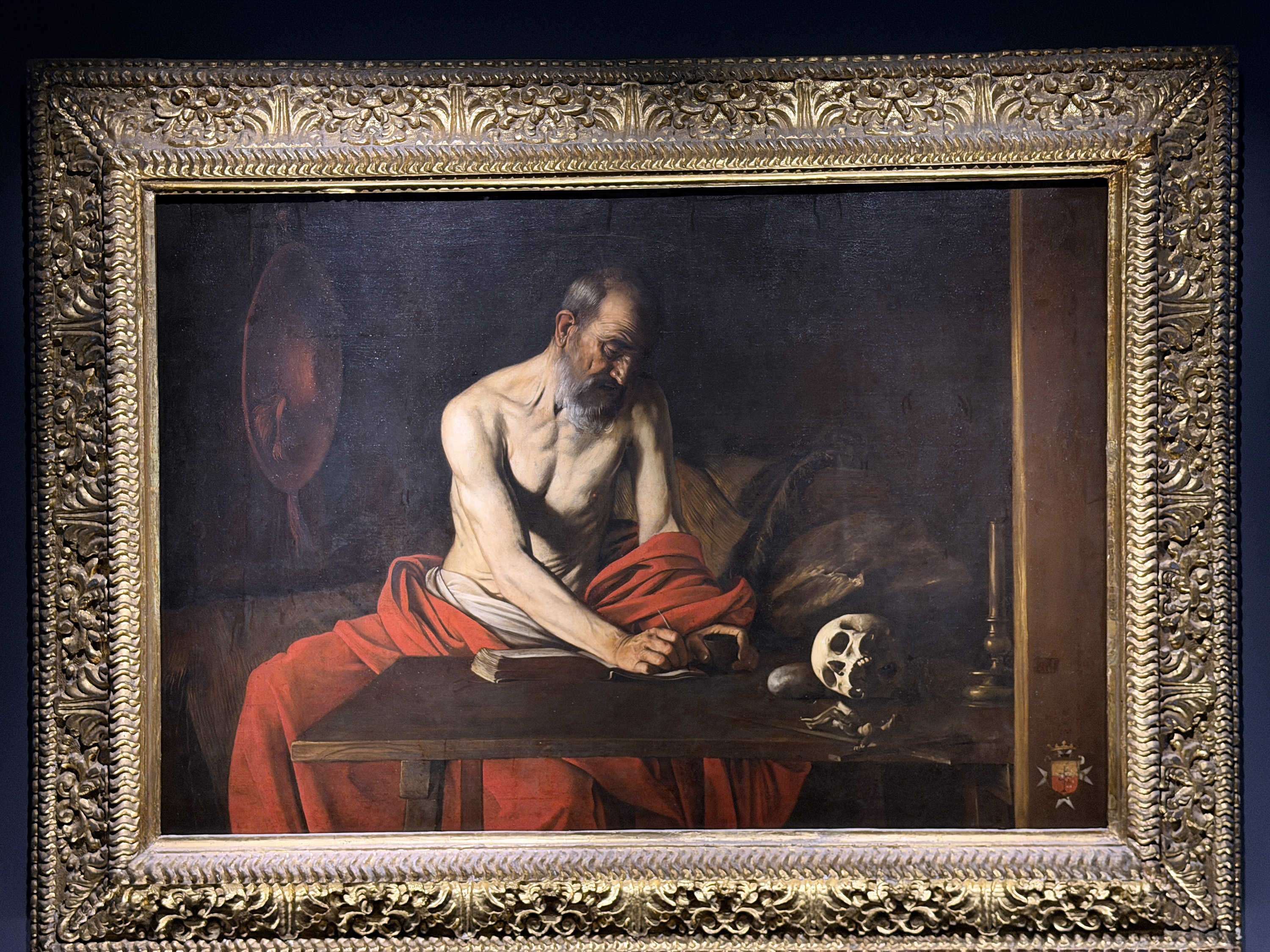
Our final visit was a lengthy one to St. John’s Co-Cathedral (Konkatidral ta’ San Ġwan), built by the Knights in 1577, soon after the Great Siege. The title "Co-Cathedral" indicates that the church shares the official seat (the cathedra) of the Archbishop of Malta with the older Cathedral of St. Paul in Mdina. This is a really spectacular cathedral, overwhelming with gilt decor (12 kg of gold), numerous artworks, statues, dramatic deeply carved bas-reliefs, and gorgeous inlaid marble floors. It amazes me that images on those floors can withstand all the foot traffic. A highlight is two large Caravaggio paintings from 1608: The Beheading of St. John the Baptist and St. Jerome Writing. The former work is the only one the artist ever signed. Caravaggio (Michelangelo Merisi da Caravaggio) was running away from a murder rap and Papal death sentence when he took up this work in exchange for a knighthood. There are dozens of other beautiful paintings on the walls and ceilings, but not by him.
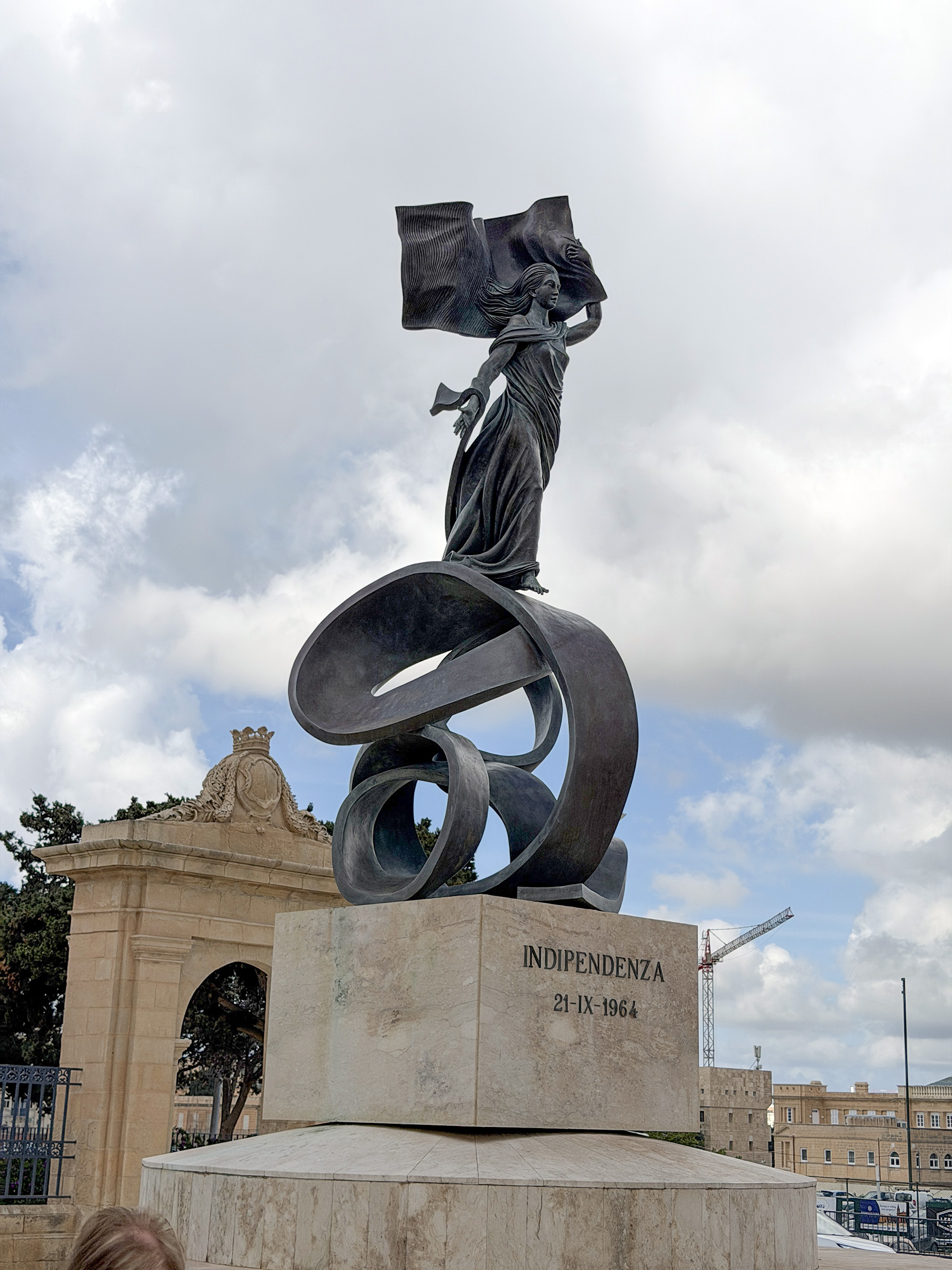
On the way back to the bus we saw the Malta Independence statue and a big 17th century fountain honoring Neptune and two of his tritons, near the Order’s Grandmaster’s Palace.
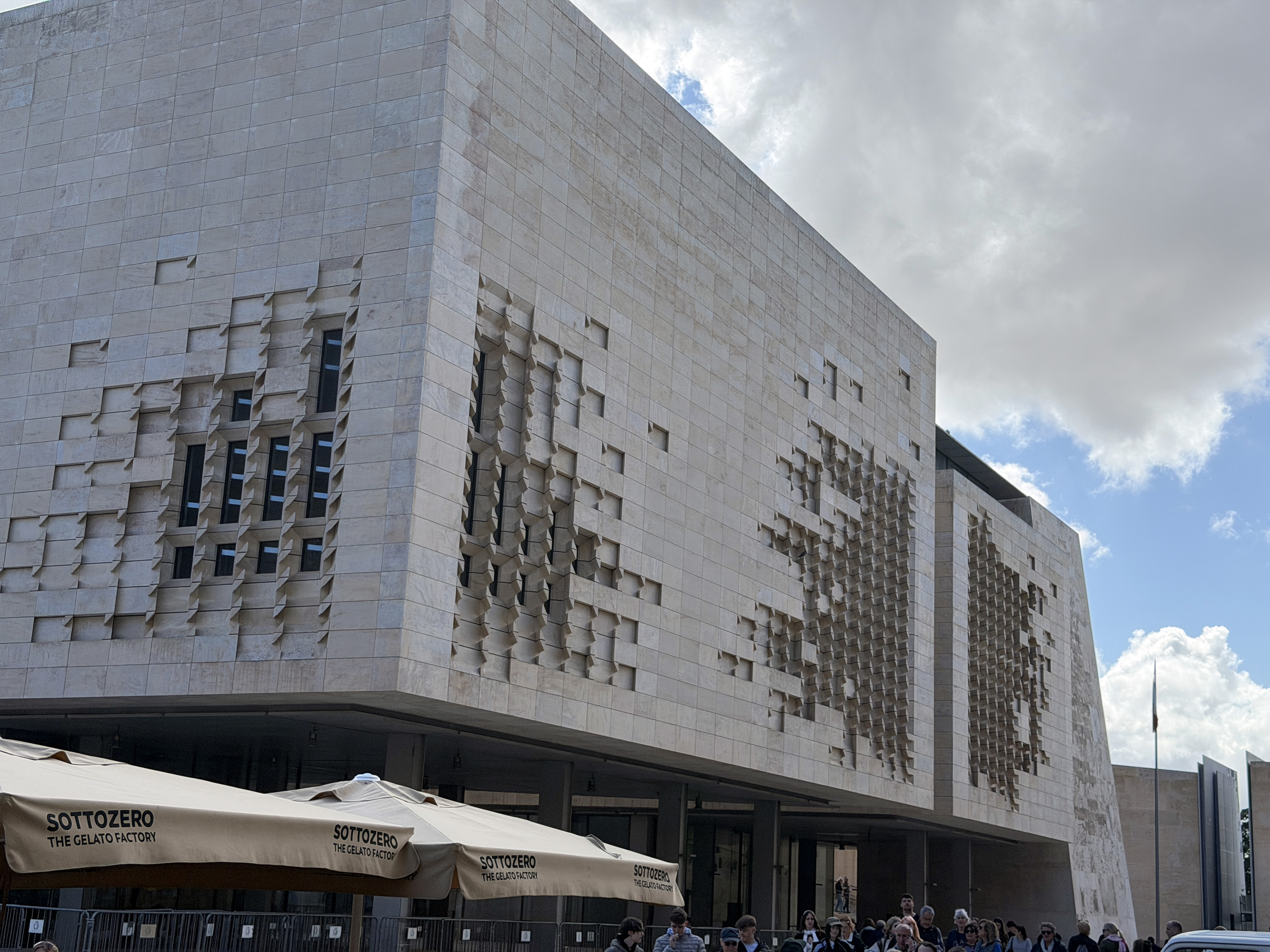
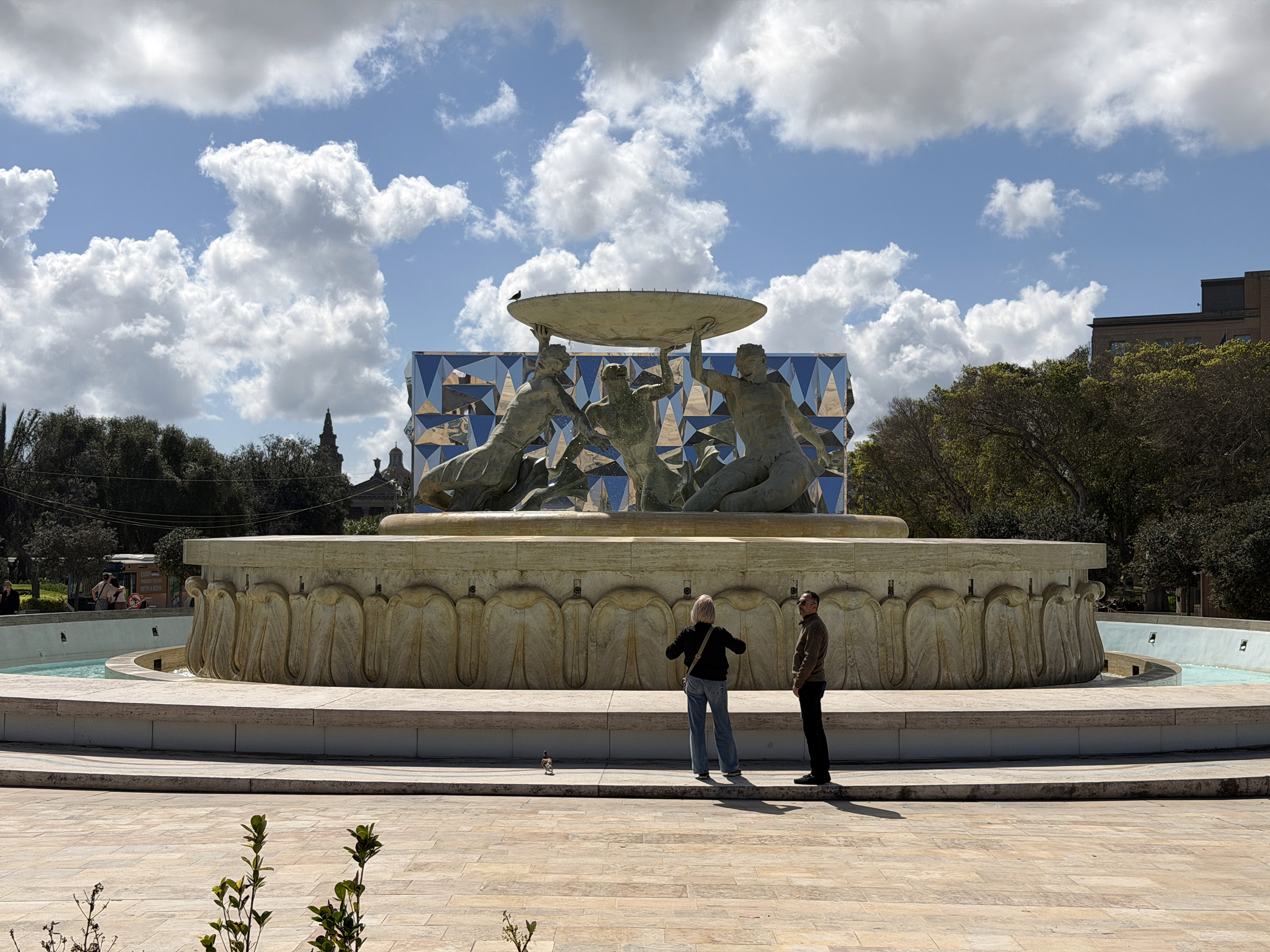
The ship is overnighting here and a lot of our fellow passengers walked into town for an afternoon or evening, taking advantage of a nearby elevator to climb the steep hill from the port, but we decided to chill out. The evening show was a local ethnic dance performance.
Thursday, March 19 — Malta Medical Abort
I have avoided talking about medical issues so far, but today they came to a head. Nancy has had problems all week, including atrial fibrillation, chest pain, and gastrointestinal distress. She’s mostly stayed in the cabin, missed most shore excursions, and avoided food. Today the ship’s doctor became concerned about low blood pressure and sent us to the local hospital. He was aware that over the next six days we were scheduled to be either at sea or in three North African ports, not as good for cardiology diagnosis and treatment as Malta would be.
So Guest Services and I frantically packed up our bags while Nancy went by ambulance to the Mater Dei hospital, which is a very large, well-equipped and modern teaching hospital in which every one of the staff speaks English. After numerous tests, the doctors ordered her to stay overnight for diagnosis and treatment of an infection that was exacerbating her Afib condition. It later turned out to be pericarditis, not an infection. It’s currently unknown when we’ll be available to travel, so the ship sails on without us to Tunisia, Algeria, Casablanca, Seville, Grenada, and Barcelona.
I checked in to a downtown hotel, the Embassy Valletta, which was nice, but I overlooked the problem of it being on a narrow alley, not a street, and my Uber dumped me a few hilly blocks away with two large suitcases to maneuver. And the hotel is fully booked for the next day. I had a good pizza dinner and a nice walk around the vibrant city. Quite touristy with a zillion outdoor restaurants. It is interesting to observe that 50% of the city was destroyed by German bombing during the war, but they have rebuilt it in a manner that you would never be able to tell. It still looks very medieval.
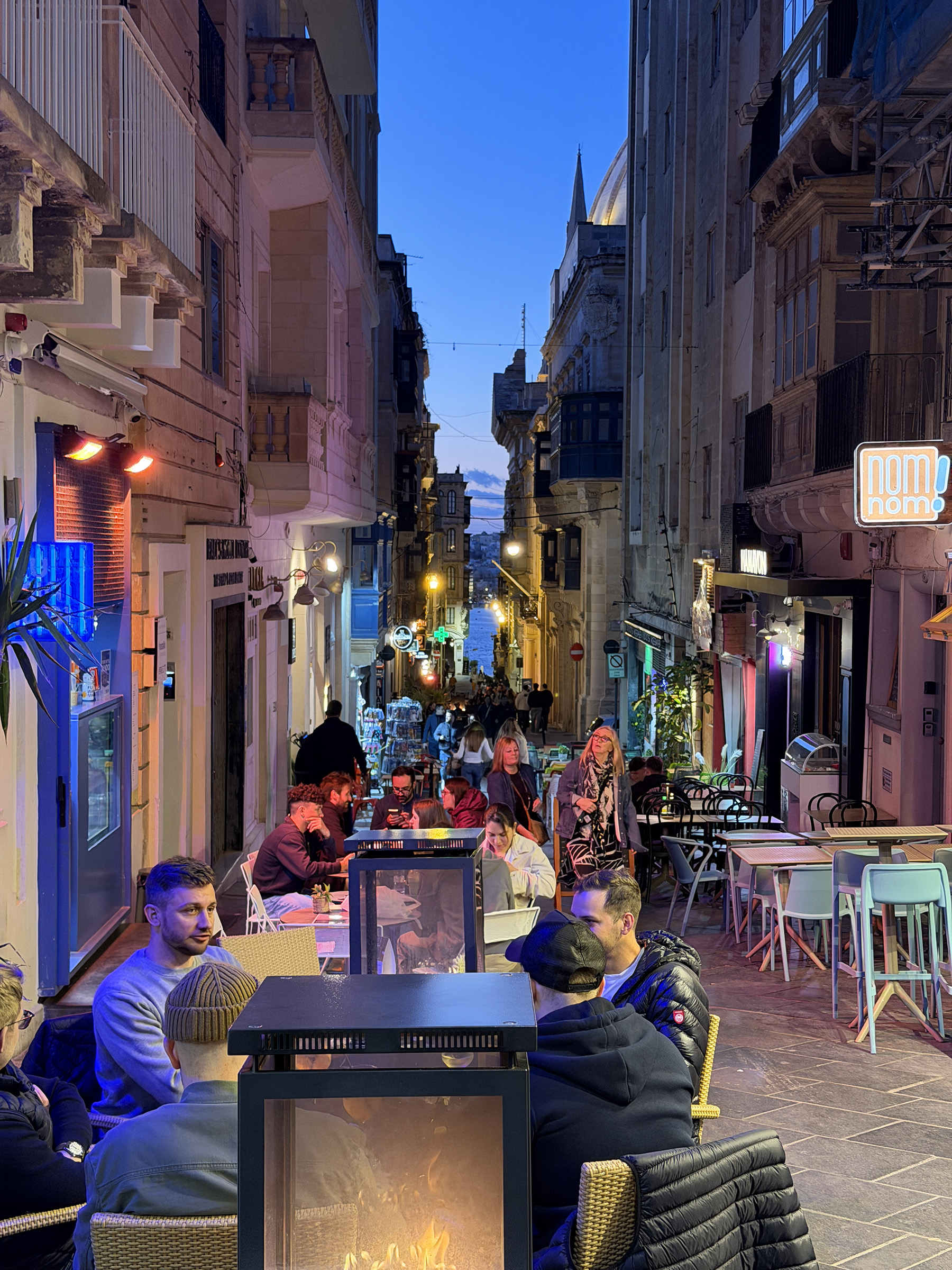
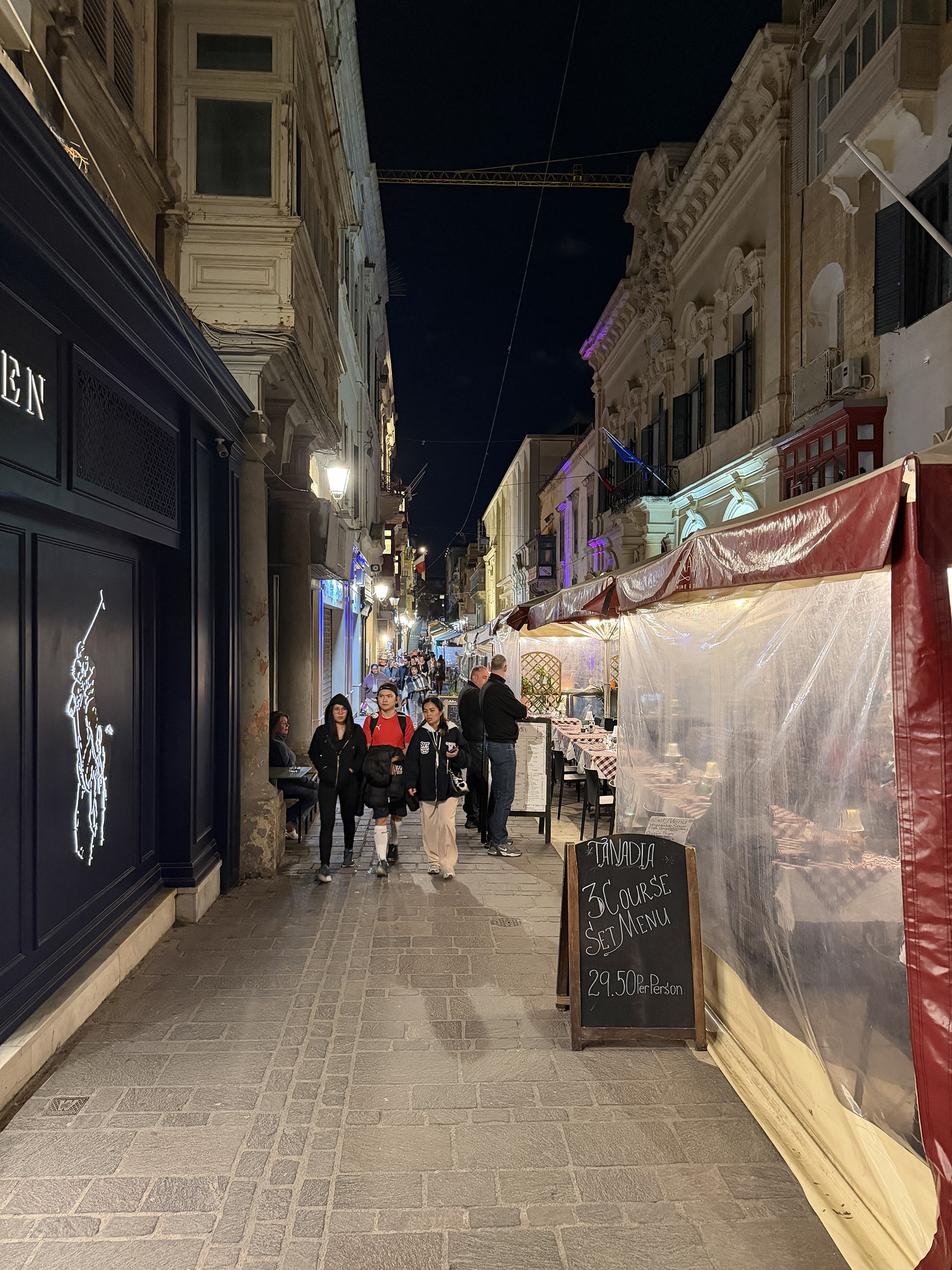
Friday, March 20 — Valletta Hospital
Back at the hospital, I found that visiting hours are tight and strictly enforced by security guards, so I had to do a lot of waiting. Nancy will be at least another night here. The doctors here seem very competent, but some of the nurses are not as friendly or accommodating as their US counterparts—also very competent, but no-nonsense. Patients are in wards of five beds. I spent most of the day at the hospital and then back downtown to a new hotel, the Manoel.
Saturday, March 21 — Valletta Hospital
Nancy has one more test before discharge, but they kept us waiting until after 7 p.m. for it. The tab for the ambulance, three days and two nights, and lots of tests was about $2,000, which is so much cheaper than in the US; I expect our travel insurance will cover it. My second hotel was also full tonight, so I booked a three-day stay at a rental apartment called 136 Old Bakery. Very nice suite, although we had a devil of a time getting access to it; map directions from the manager showed the property on the other side of the street and we fruitlessly punched the code numbers into a keypad owned by someone else.
Sunday, March 22 — Valletta
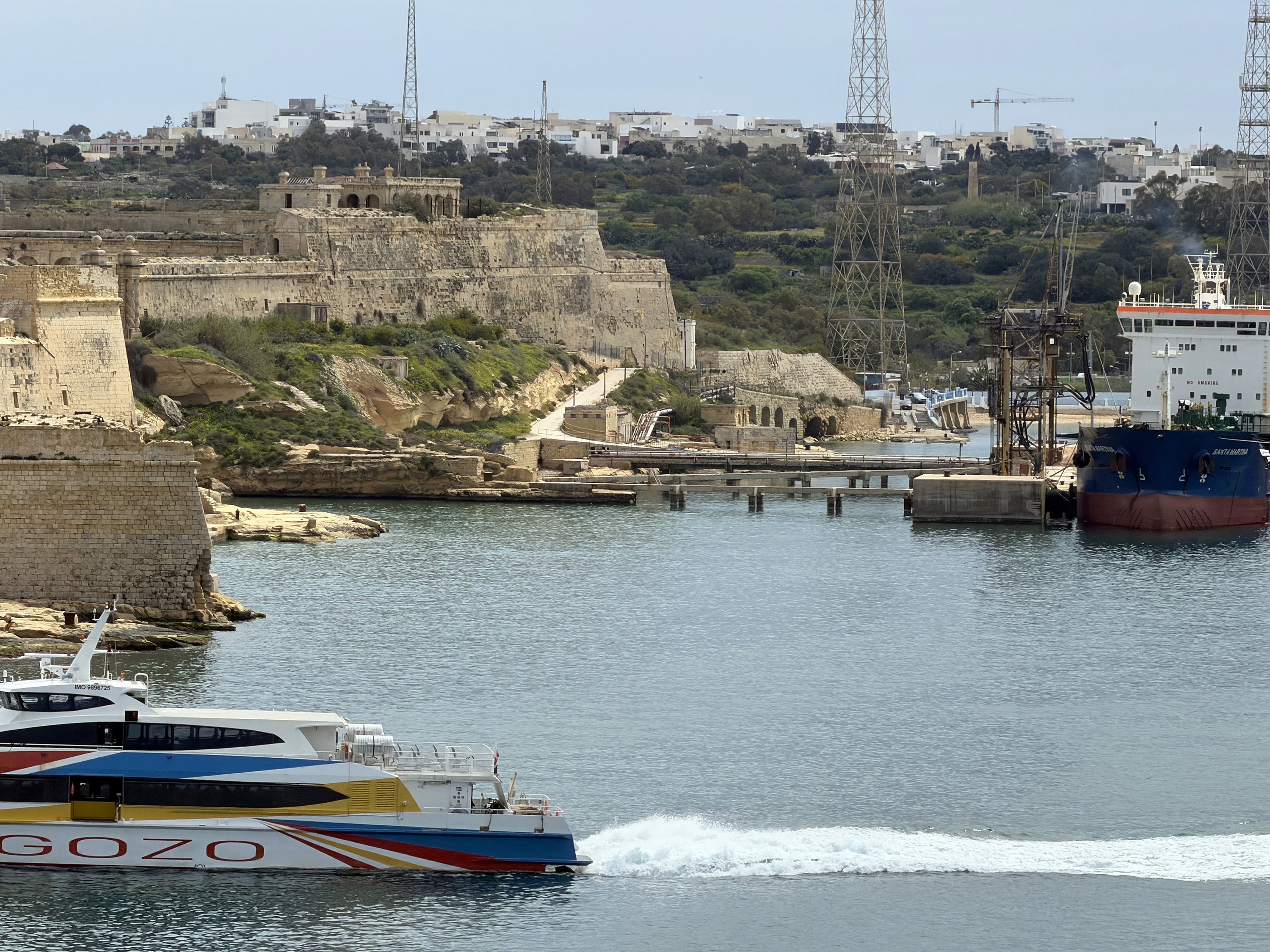
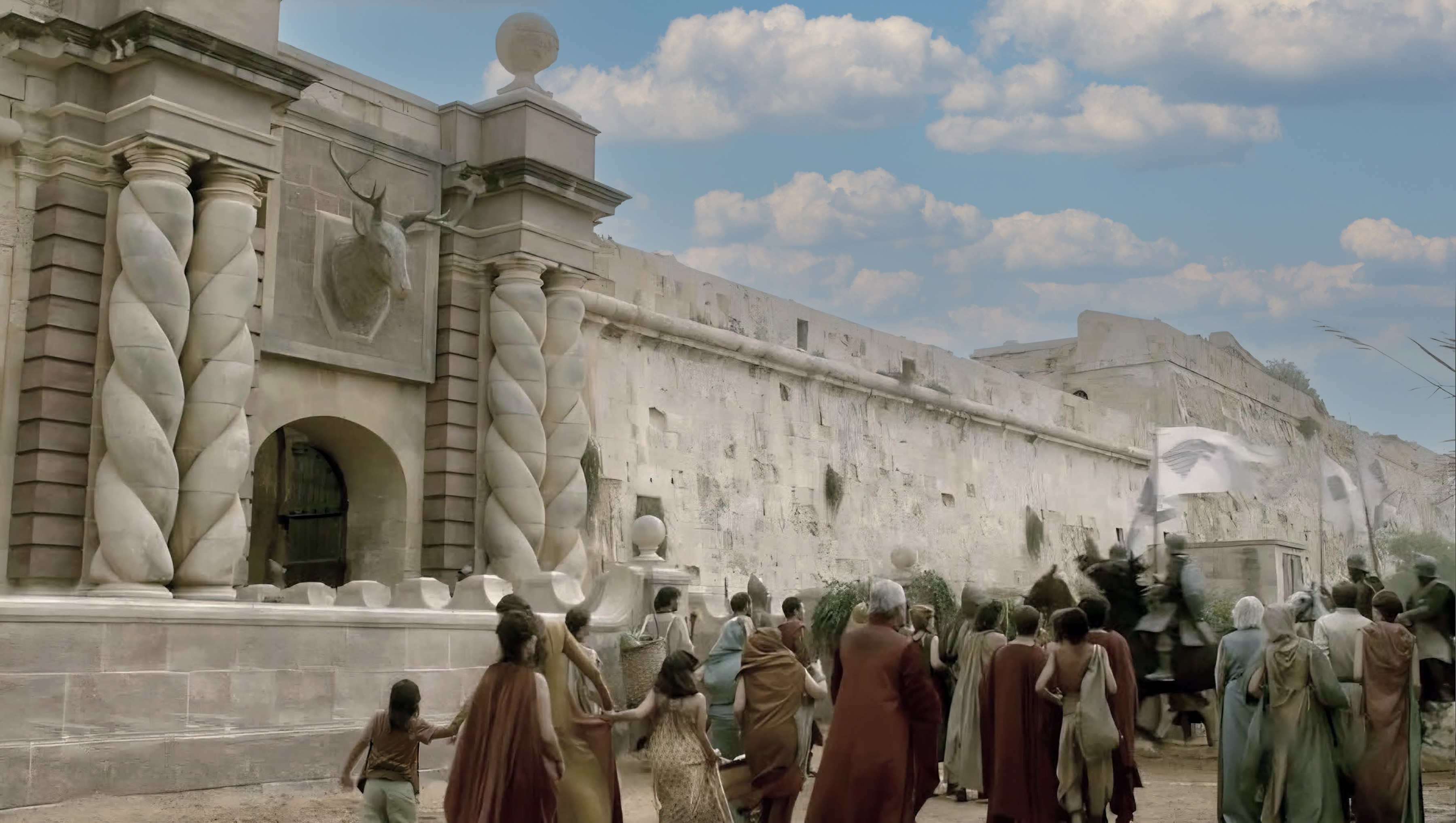
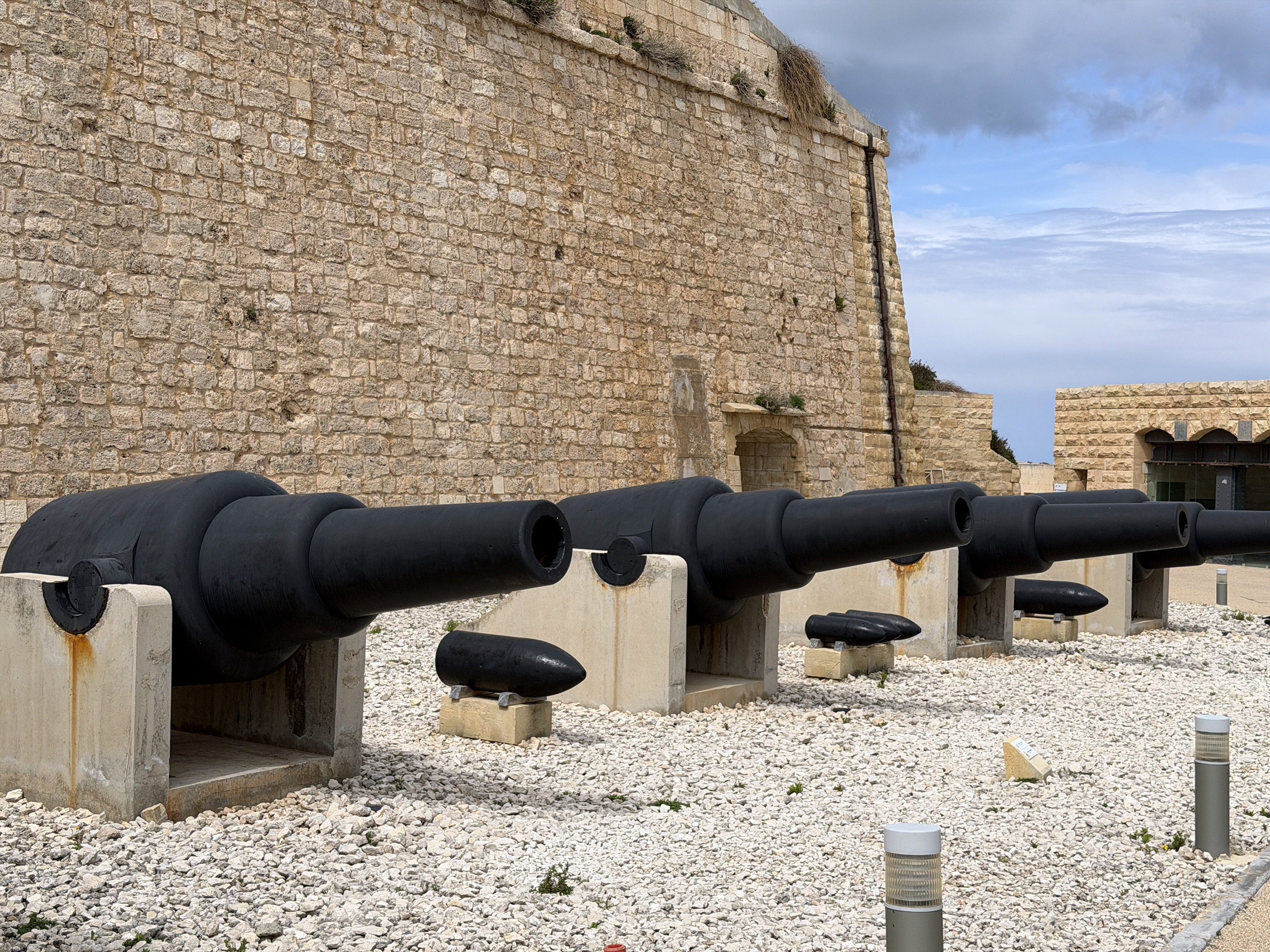
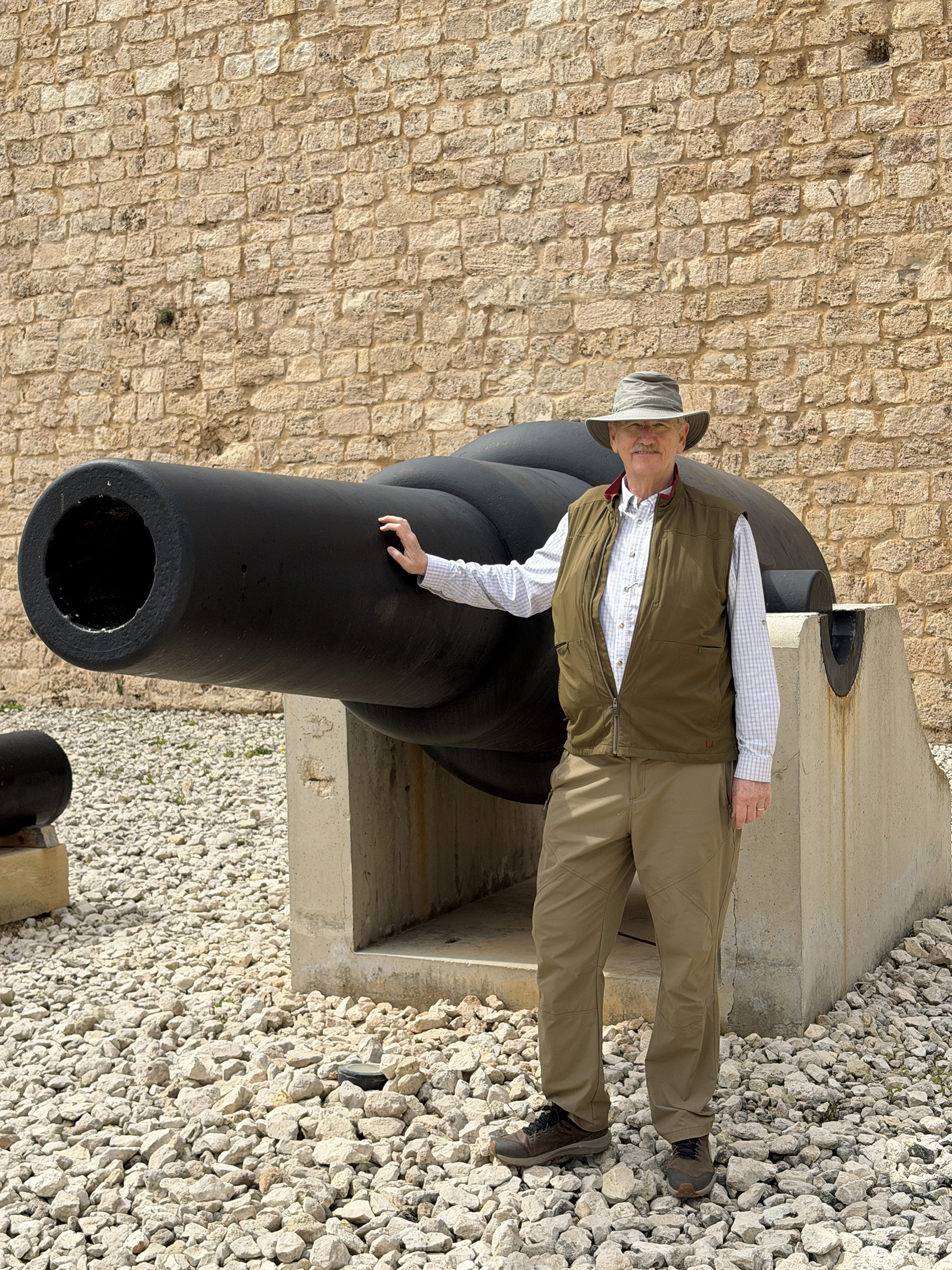
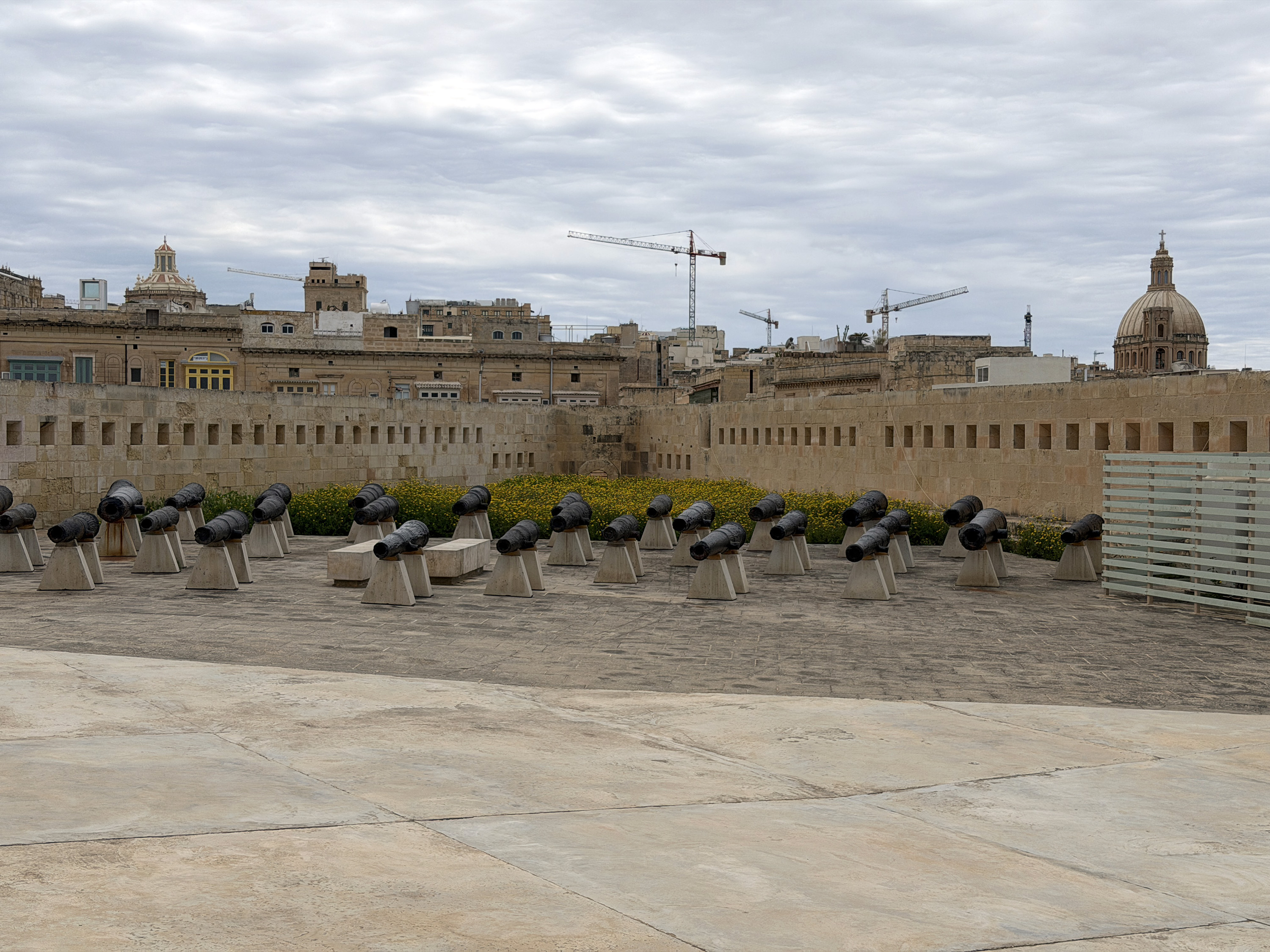
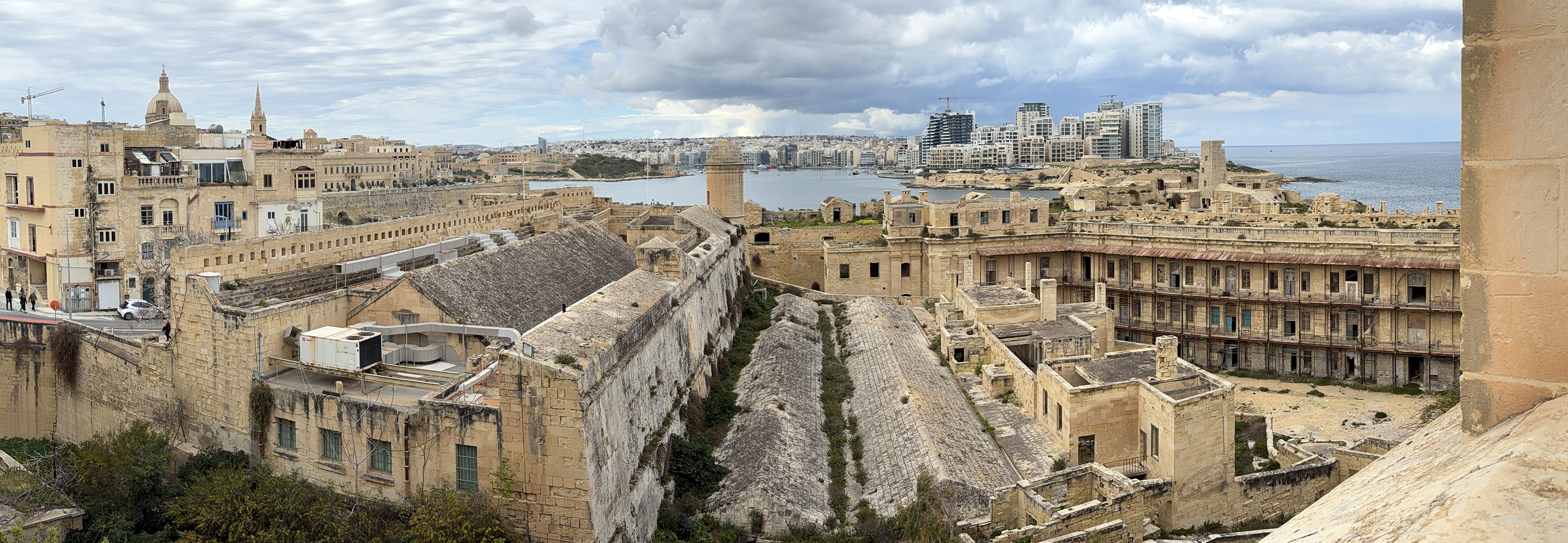
Today is a recuperation day for Nancy, but she encouraged me to get out and do something. I had to cancel a Viking shore excursion about “Wartime Malta,” so I had a few catch-up opportunities. Fort Elmo is right at the tip of the peninsula that hosts downtown Valletta. It was built by the Knights to defend the harbor and was expanded over the years. They are currently hosting an art exhibition called Malta Biennale 26, which I mostly ignored. Up on the parapets, there were great views of the harbor, and I almost caught a glimpse of King’s Gate in Rinella Bay, where Ned Stark arrived at King’s Landing in Season 1 of Game of Thrones. (The next season, they moved KL to Dubrovnik.) There are many big gun barrels on display outside, none of them identified. The mighty one I posed with had a muzzle diameter of 11.5 inches.
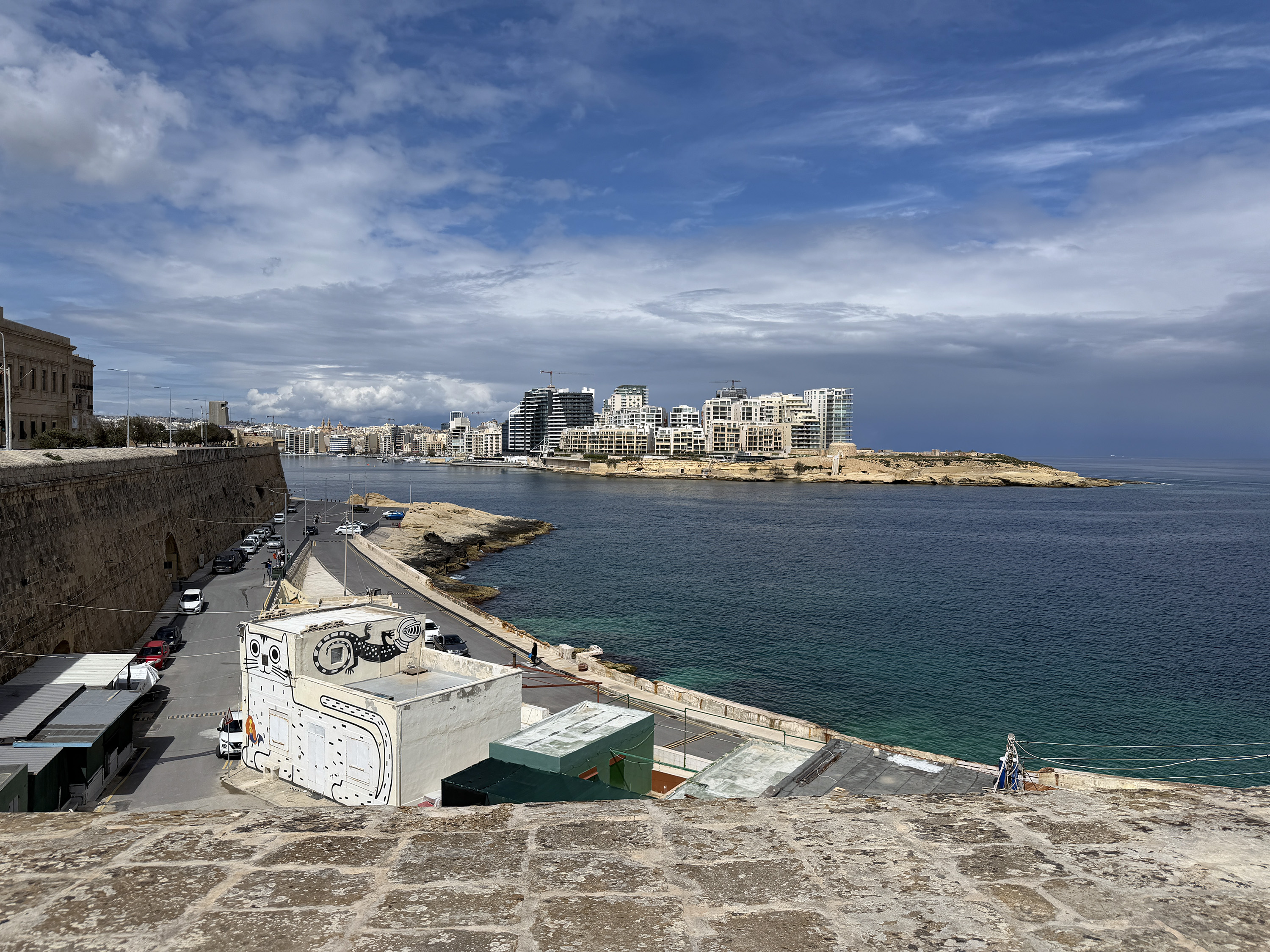
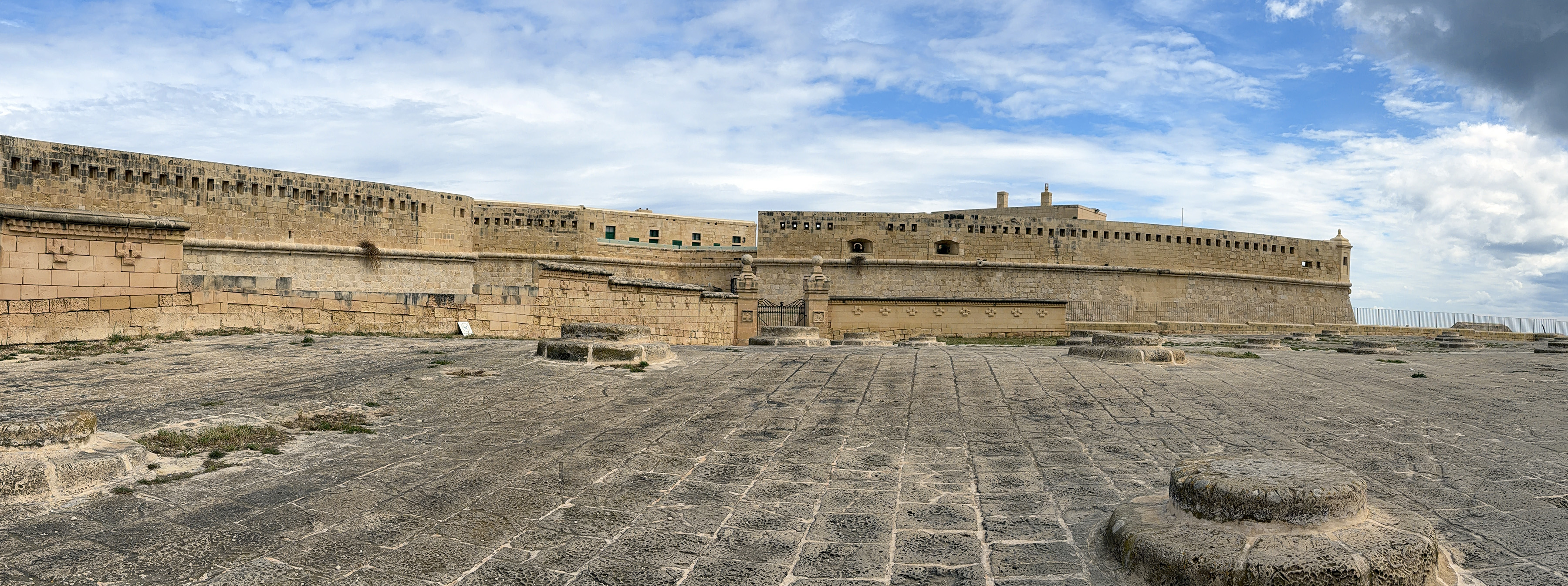
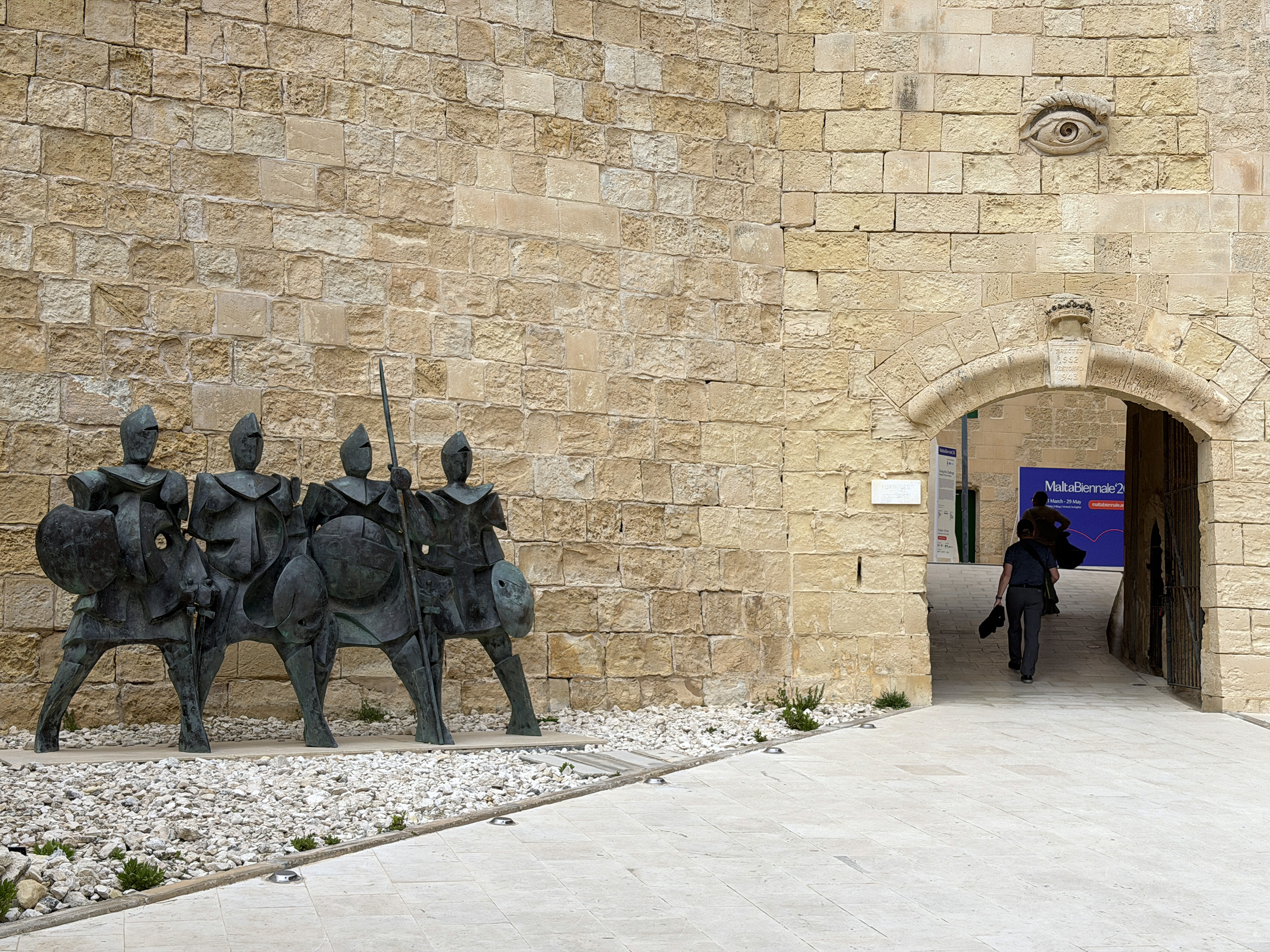
The fort is in pretty good repair and quite impressive, but the real draw here is the National War Museum. It’s small but very well done, covering history from the arrival of the Knights to World War II. (No mentions of the Phoenicians, Carthaginians, Romans, or Arabs.) All bilingual displays are done up in a modern style. Brief movies about the Great Siege (June–September 1565) were assembled from animated portions of historic frescos. The Ottomans attacked and eventually took Fort Elmo, but reinforcements from Sicily helped the Knights drive them off the island. This was a really significant battle because it halted Ottoman expansion in the western Mediterranean and probably saved Italy and Sicily from Muslim conquest. It was also one hella vicious battle, with crucifixions and human heads used as cannonballs.
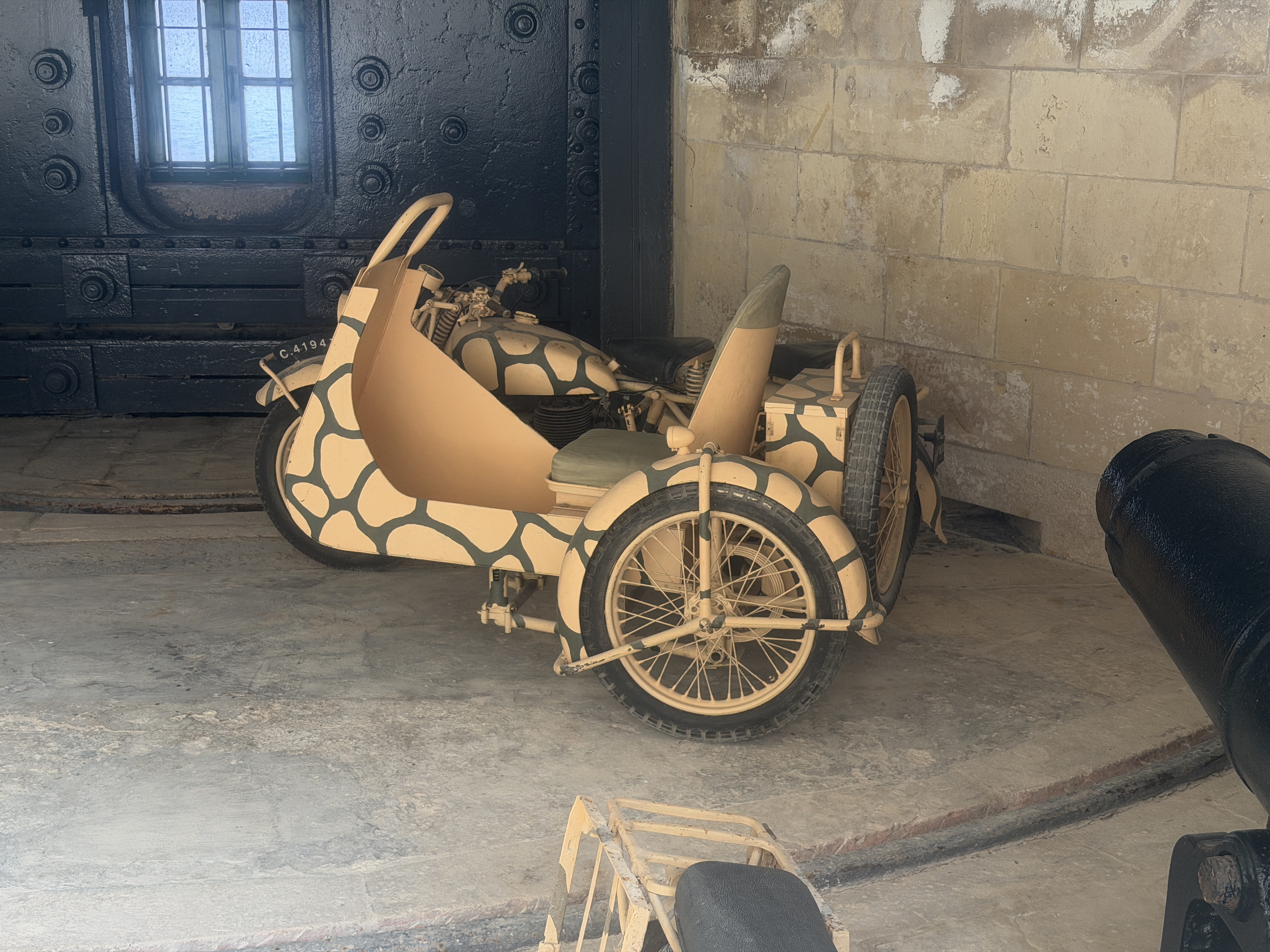
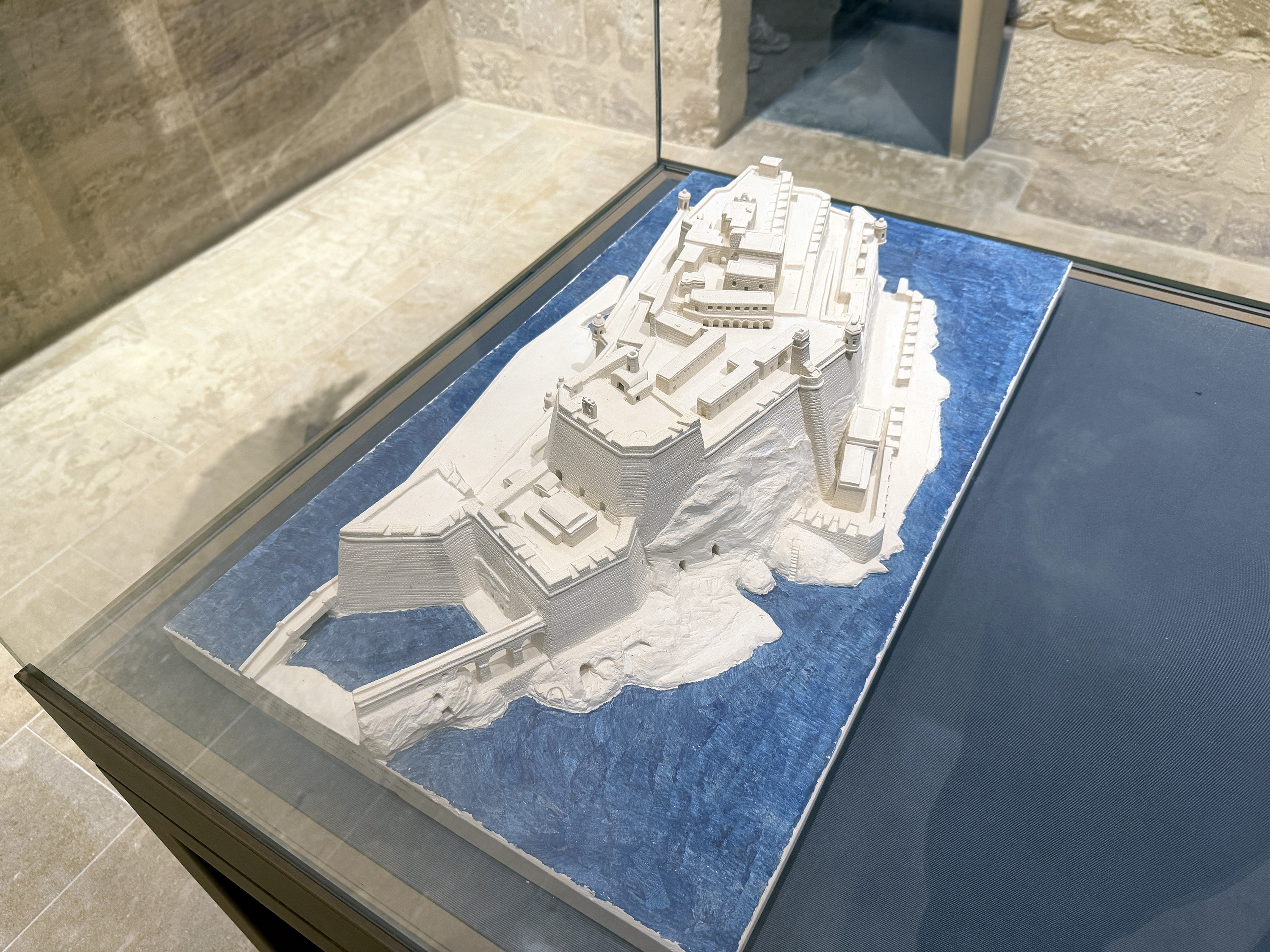
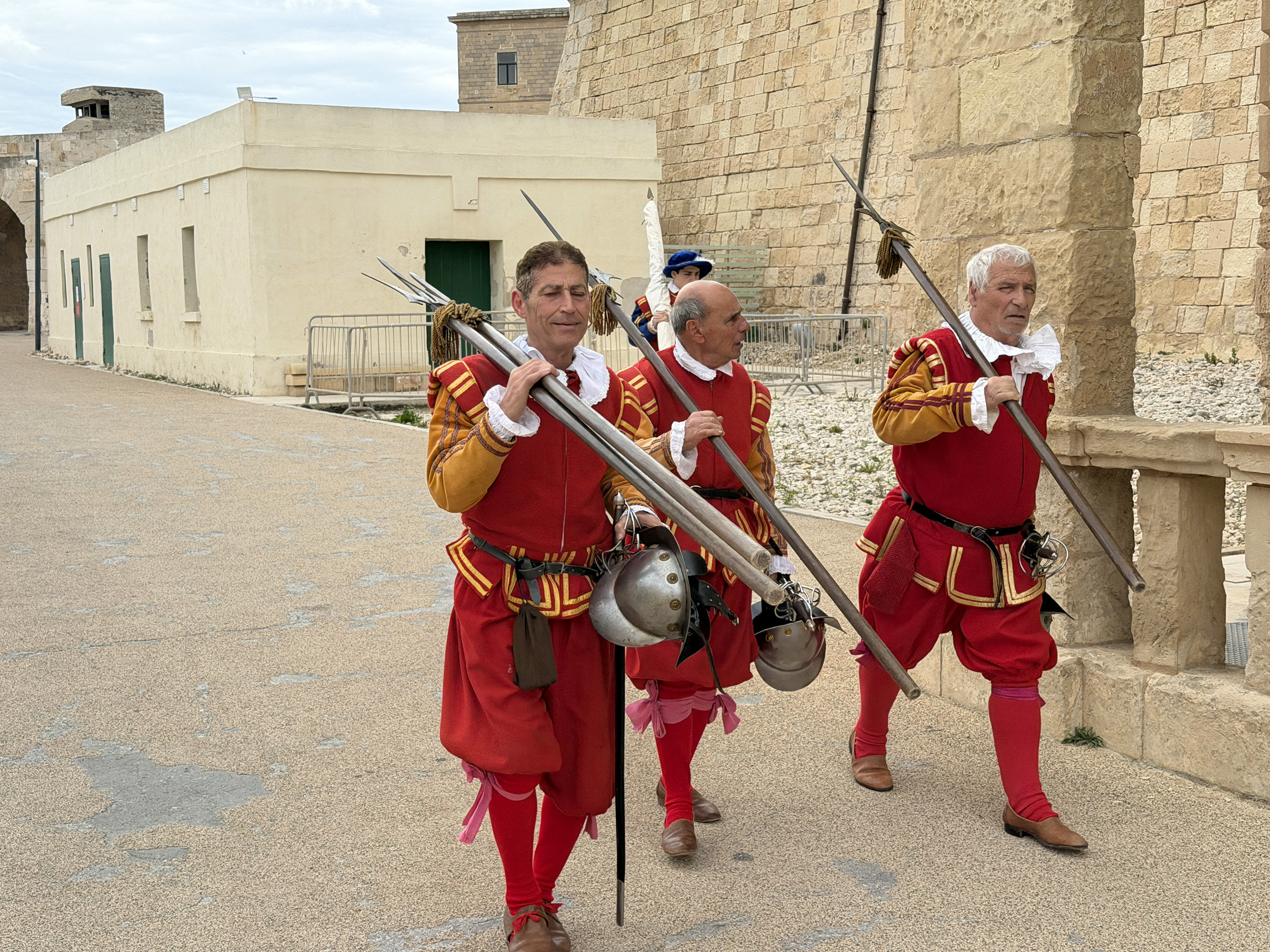
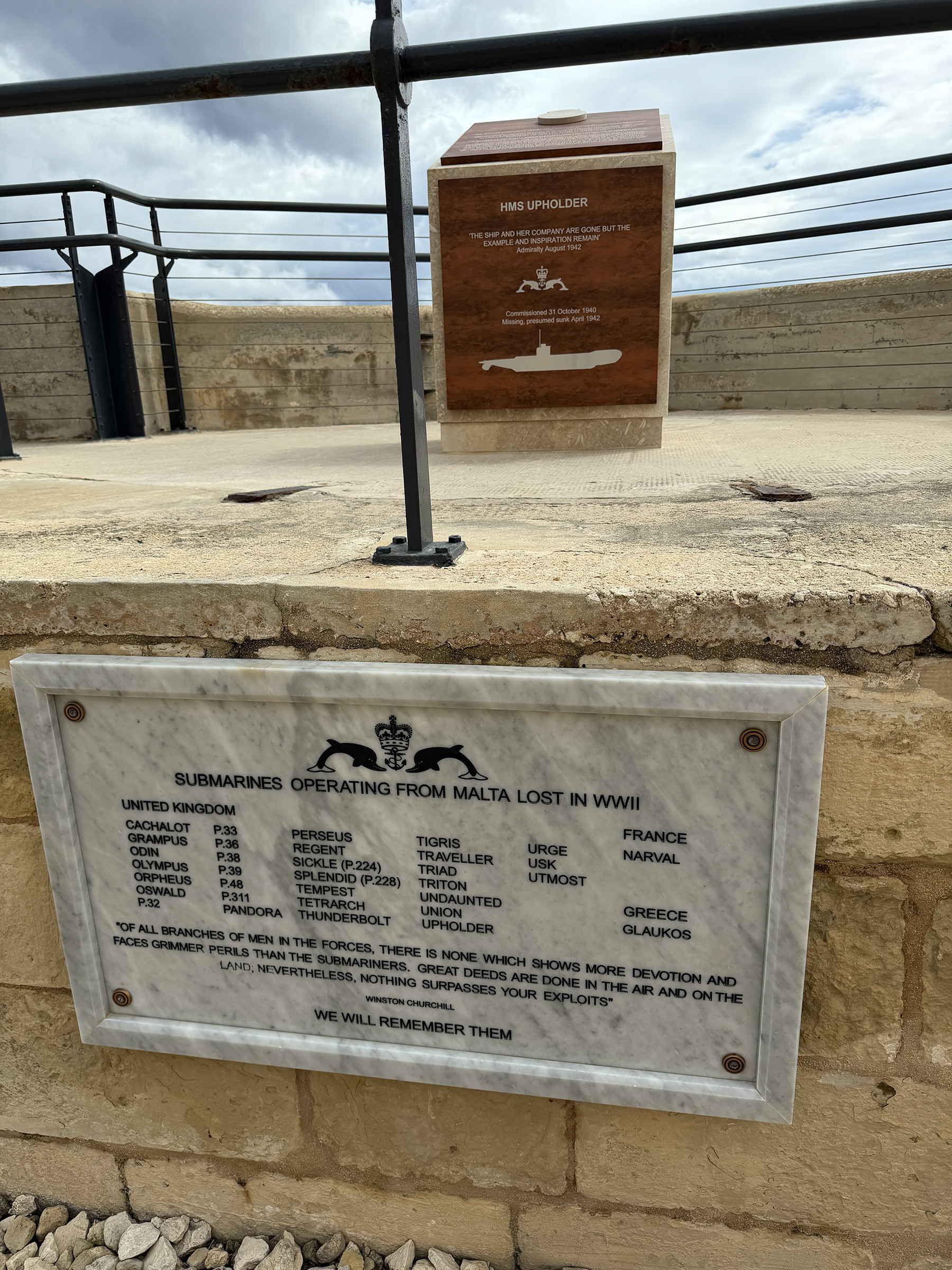
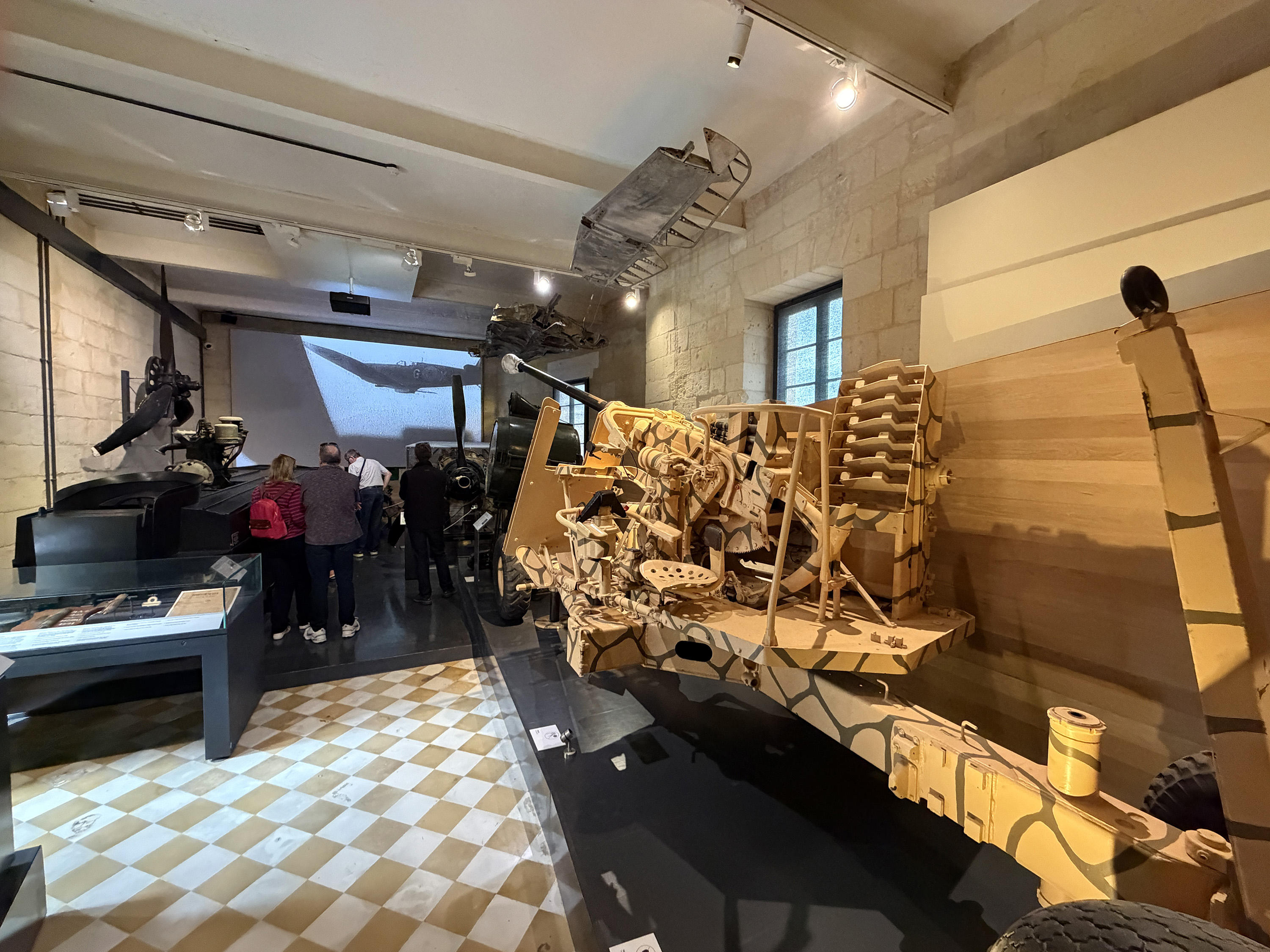
They cover Napoleon’s takeover and then rescue by the Brits, some minor comments about WWI, and then a lot about WWII, focusing on life on the island amidst horrendous bombing, but also the air and sea battles. There are monuments outside commemorating all the British submarine crews lost. There was a particularly interesting video exhibit about the SS Ohio, a US-built but British-crewed oil tanker, which played a key role in Operation Pedestal, one of the fiercest and most heavily contested of the Malta convoys, in August 1942. Despite overwhelming German air and torpedo attacks on the convoy and its naval escorts, Ohio reached Malta successfully, although she was so badly damaged that she had to be effectively scuttled in order to offload her cargo, and never sailed again. The tanker is fondly remembered in Malta, where to this day it is considered the savior of the beleaguered island.
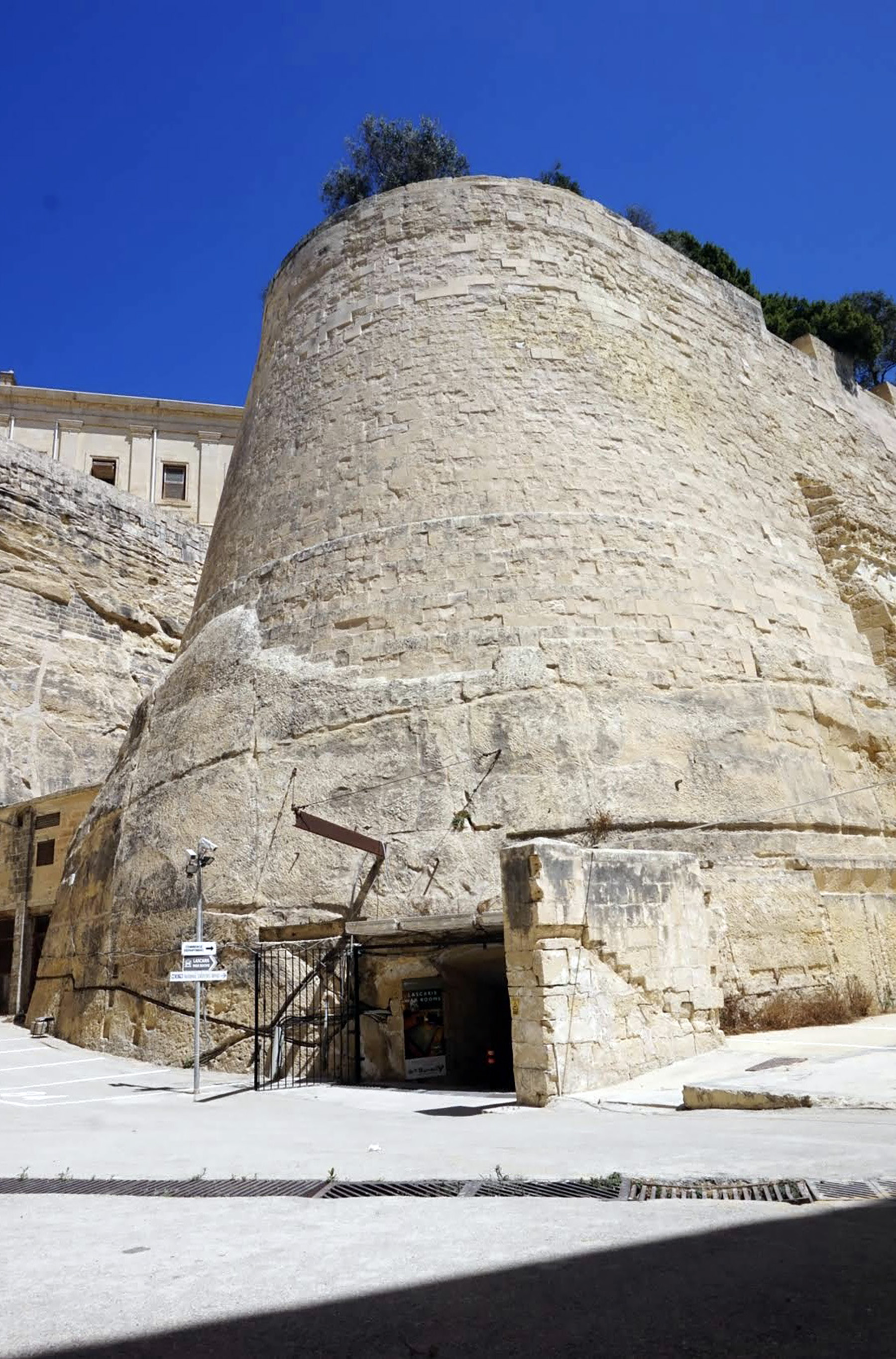
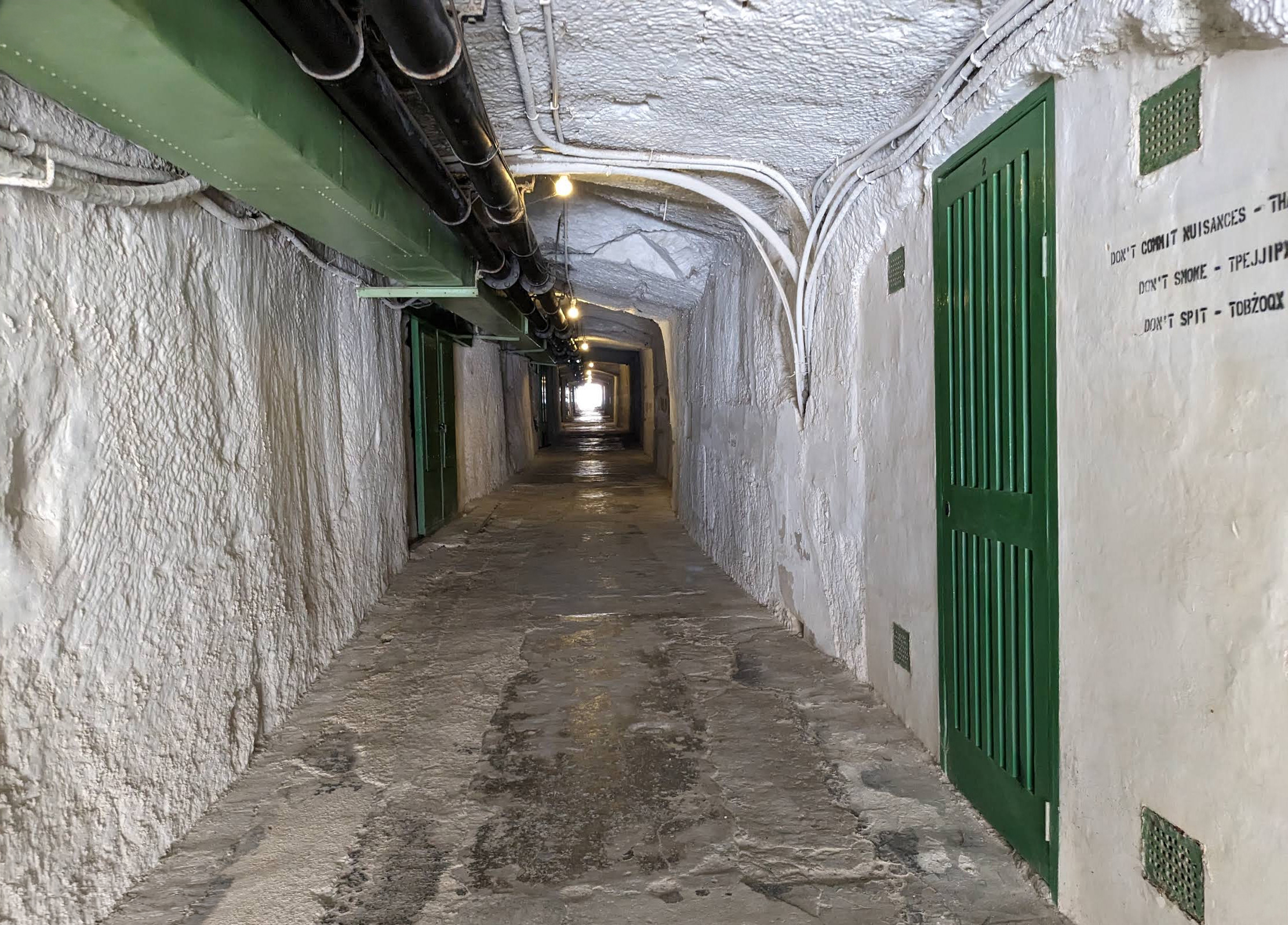
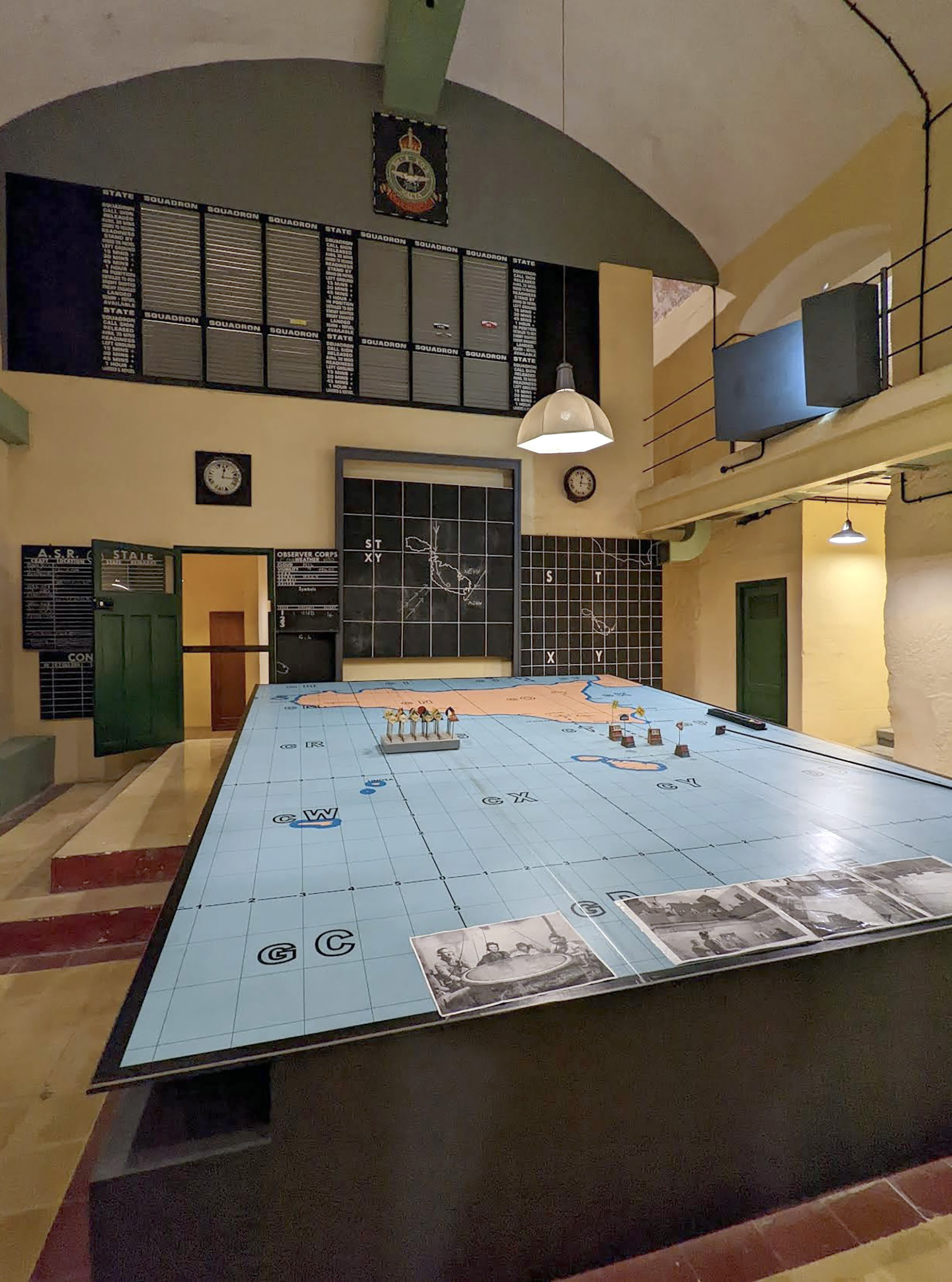
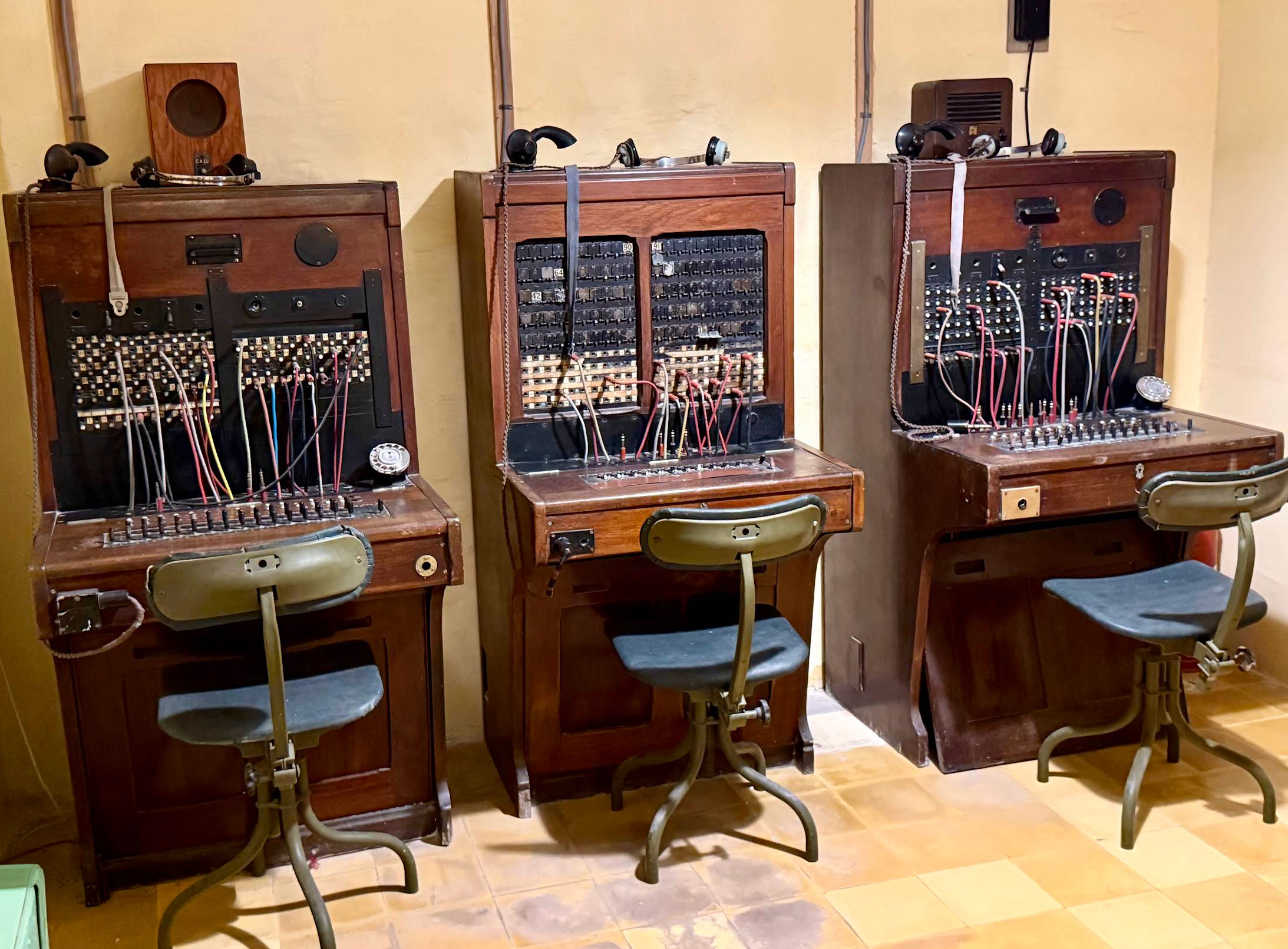
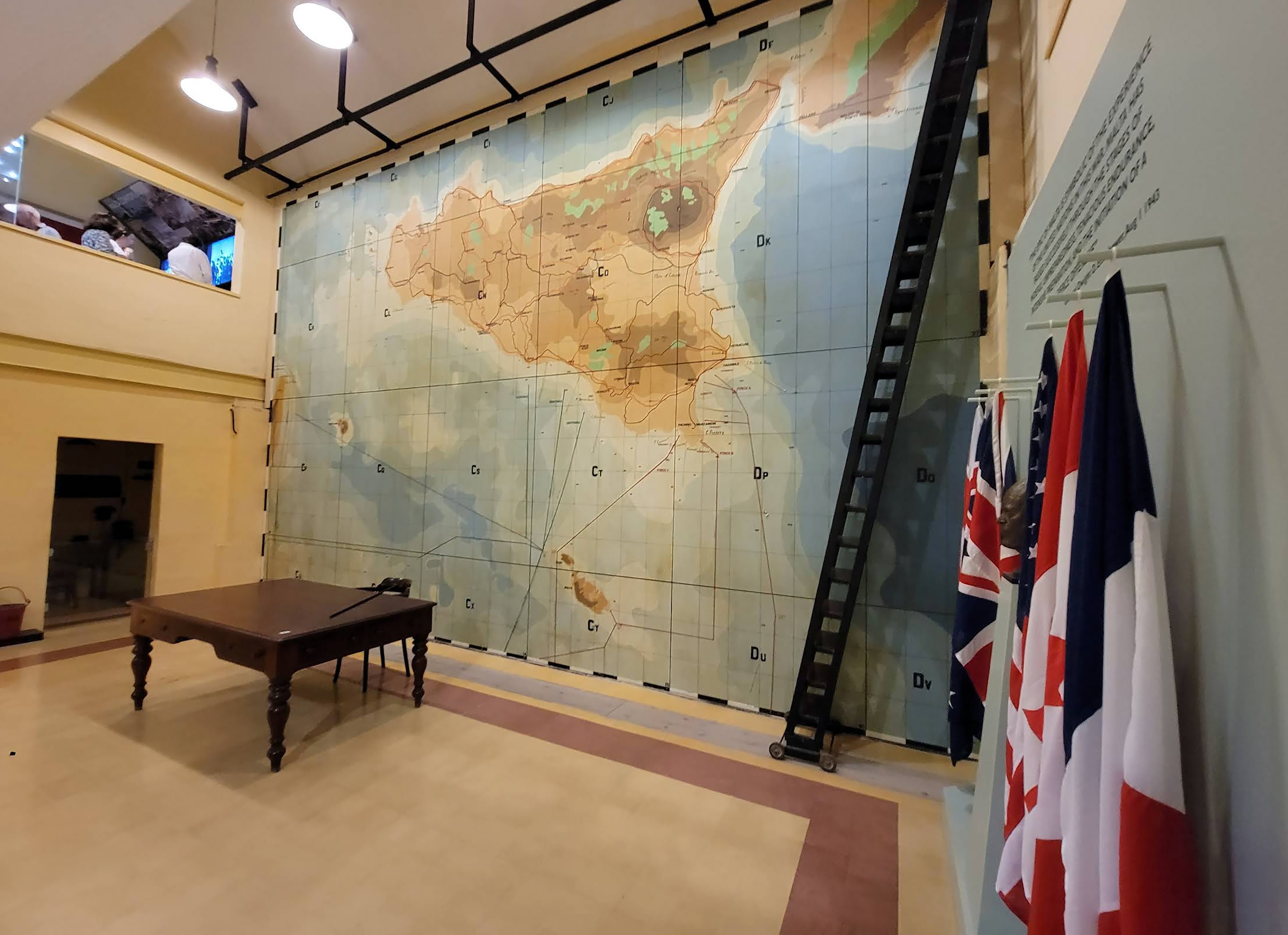
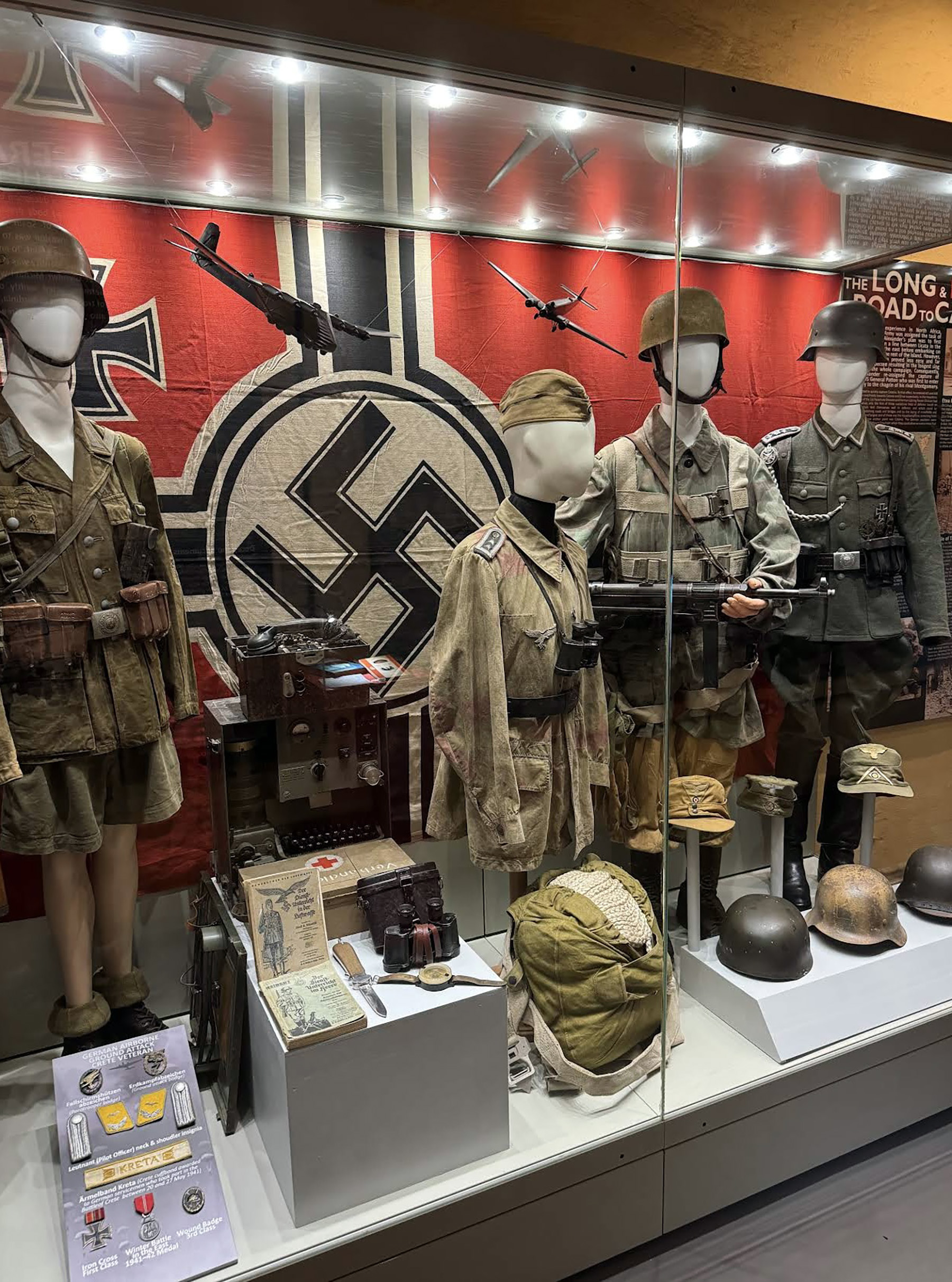
I had hoped to visit the Lascaris War Rooms, Eisenhower’s HQ about a half mile away, but they are closed on Sundays. I nabbed some photos from the internet to show what I missed. I know quite a bit about Operation Husky already, so I’m not crying about it, but it would have been nice to see those giant maps in person.
Monday, March 23 — Frankfurt
Our original itinerary was to disembark Viking in Barcelona next Saturday, fly Lufthansa to Frankfurt, and then United to San Francisco. But we’re leaving today with Lufthansa from Malta to Frankfurt, overnighting in the airport Sheraton, and then United home. Changing these reservations was moderately expensive, but we’re told that our travel insurance should cover it.
The Malta airport is small and nice. We got wheelchair service for Nancy and access to a really decent lounge, based on our Star Alliance status. Lots of local dishes on their buffet. The wheelchair was a new experience for us. One guy pushed Nancy through security and up a restricted elevator to the lounge. She kept the chair in the lounge, and another guy retrieved us to go to the gate and then onto a special truck with elevator lifts. While other passengers came by bus and climbed stairs, we were lifted up to the door on the other side of the plane! Everyone was friendly and accommodating. The Lufthansa flight was crowded, and seats were pretty small, but it was only a 2.5-hour trip.
At Frankfurt, we got wheelchair service again, using secret restricted elevators to get to baggage claim. Then our assistant put us on an electric cart to take us to the Sheraton in Terminal 1, otherwise quite a long walk. What a service! The hotel is very large—1,060 rooms, one of the largest in Europe, I am told—and I erred in not asking for a room close to the elevator.
Tuesday, March 24 — Home
The hotel provided us a wheelchair (ein Rollstuhl) to get back to the lobby where we met more attendants working for the airport. They escorted us through everything from the hotel to the gate, quite a long hike, including a handy bypass around a lengthy immigration line.
Our United flight was nonstop and comfortable and we also received arrival wheelchair service through immigration and baggage. We got to our house early evening. Even shortened involuntarily, it was a long trip. Our cat sitter reported that a big heatwave hit the Bay Area while we were away, and our house was 90° one day. Poor Zoe! She was a bit annoyed when we returned home.
This may be our last Viking cruise for a while. It is an elegant ship, beautifully decorated, with a great crew. Our cabin was spacious and comfortable. Food was good—not Michelin star restaurant competitive, but consistently above average (except for their so-so pizza). Entertainment in the evenings was pretty standard small-ship singing and dancing. Enrichment lectures, once or twice a day, were decent, if a bit dry. Shore excursions were well managed and of decent quality, including the free ones, which were generally just scenic bus or downtown walking tours. So all that is good, but we felt that on sea days, or on afternoons following a morning shore excursion, there simply wasn’t enough to do outside our cabin. Some people would congregate in common areas to drink and listen to classical music, but since we don’t drink anymore, that’s pretty hollow entertainment for us. We have a couple of cruises planned with Regent Seven Seas in the next two years and we’ll see whether we’ve just cruised ourselves out.